
Organizational Behavior   21-slide PPT PowerPoint presentation template (PPTX)
$29.00

Organizational Behavior (21-slide PPT PowerPoint presentation slide deck (PPTX)) Preview Image
Log in to unlock full preview.
Organizational Behavior (21-slide PPT PowerPoint presentation slide deck (PPTX)) Preview Image
Arrow   Click main image to view in full screen.

Organizational Behavior – PowerPoint PPTX Template

PowerPoint (PPTX) 21 Slides FlevyPro Document

$29.00
FlevyPro price: FREE (included in subscription)
This framework is developed by a team of former McKinsey and Big 4 consultants. The presentation follows the headline-body-bumper slide format used by global consulting firms.
Add to Cart


Immediate download
Free lifetime updates

ORGANIZATIONAL BEHAVIOR PPT TEMPLATE DESCRIPTION

Editor Summary A 21-slide PowerPoint presentation titled Organizational Behavior that explains 4 Organizational Design components and their interaction to influence workforce behavior. Read more

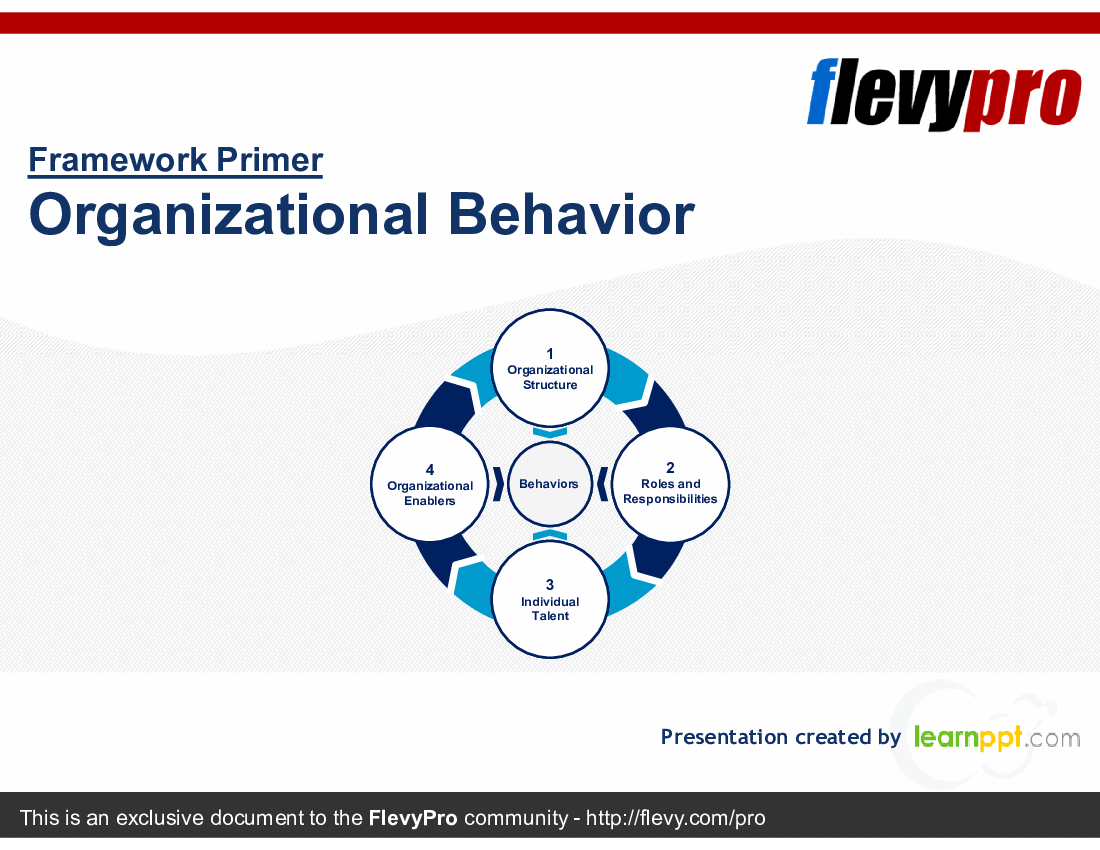
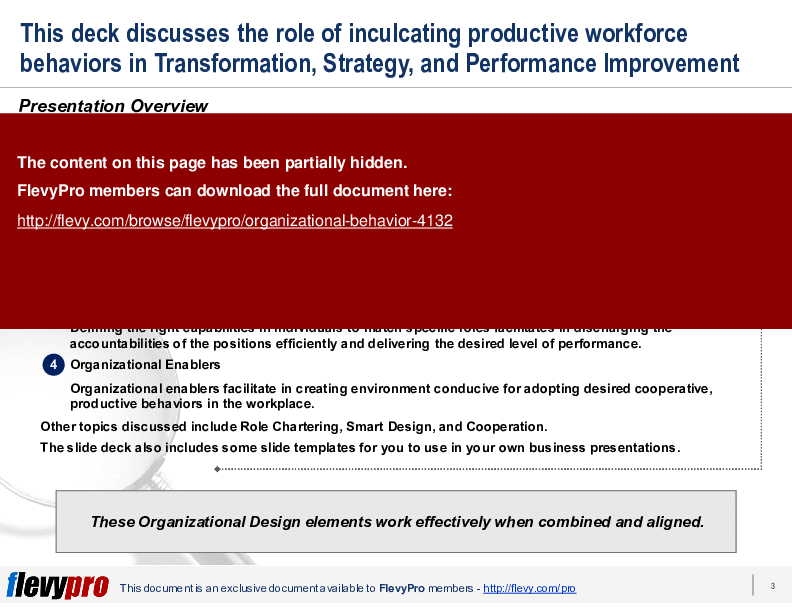
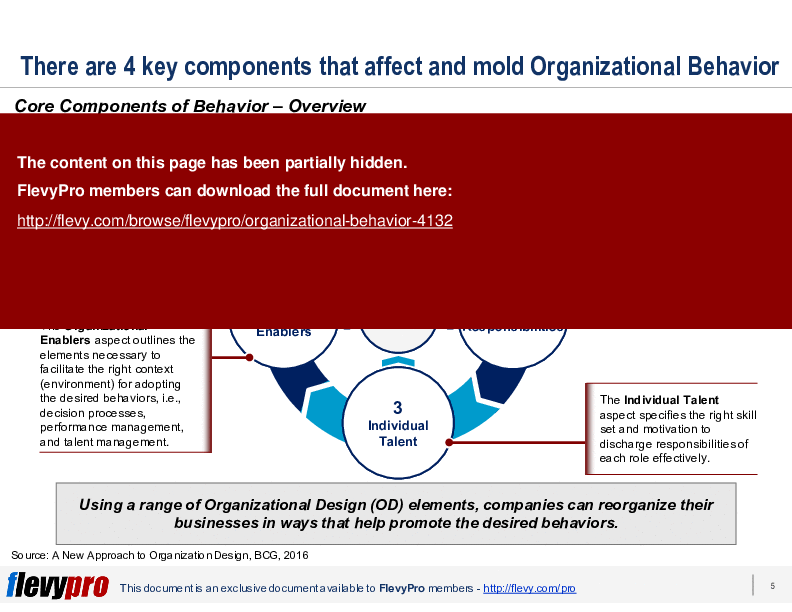
This presentation provides a detailed understanding of the 4 Organizational Design (OD) elements that act as building blocks for yielding the desired behaviors in the workforce:

1. Organizational Structure
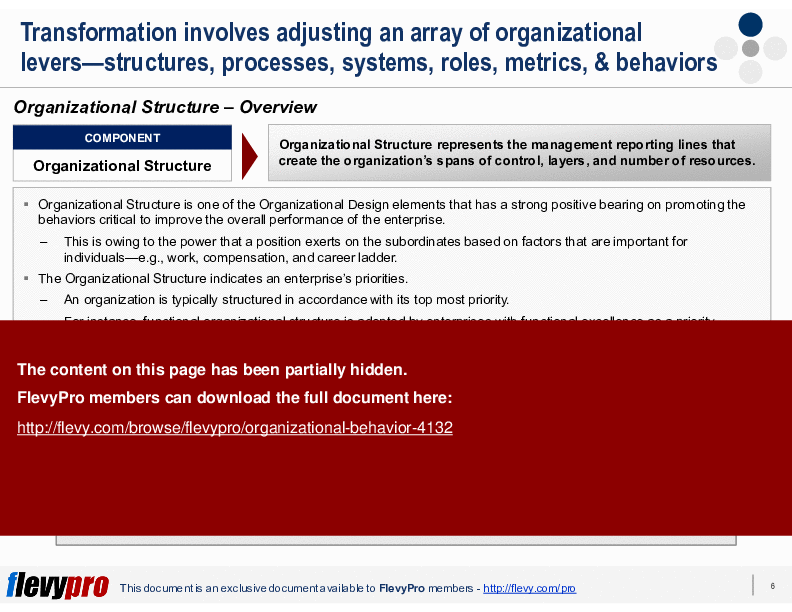
Organizational Structure represents the management reporting lines that create the organization’s spans of control, layers, and number of resources.

2. Roles & Responsibilities
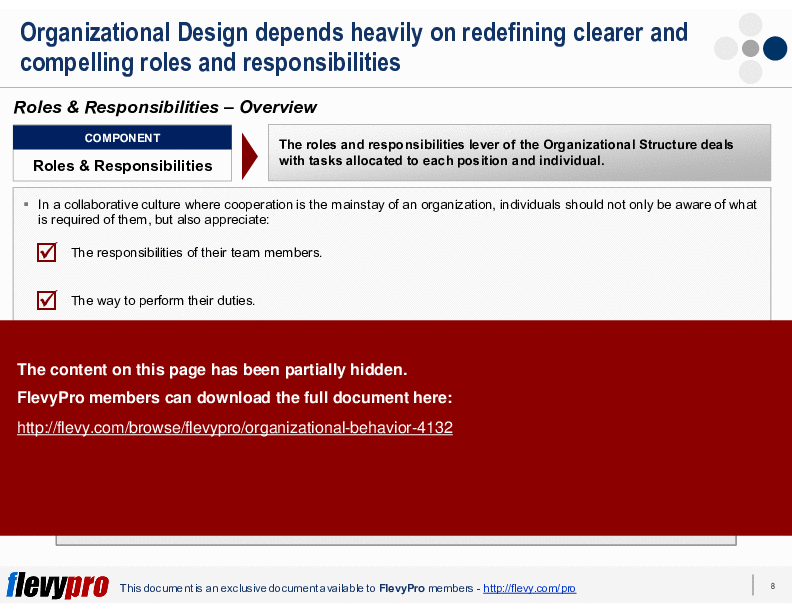
Roles and responsibilities deal with tasks allocated to each position and individual. OD depends heavily on redefining clearer and compelling roles and responsibilities.

3. Individual Talent
Defining the right capabilities in individuals to match specific roles facilitates in discharging the accountabilities of the positions efficiently and delivering the desired level of performance.

4. Organizational Enablers
Organizational enablers facilitate in creating environment conducive for adopting desired cooperative, productive behaviors in the workplace.

These Organizational Design elements work effectively when combined and aligned. Other topics discussed include Role Chartering, Smart Design, and Cooperation.

The slide deck also includes some slide templates for you to use in your own business presentations.

The Organizational Behavior presentation delves into the intricacies of aligning organizational structure, roles, individual talent, and enablers to drive optimal performance. It provides a comprehensive framework for understanding how these elements interact to foster a productive and cooperative workplace culture. The PPT emphasizes the critical role of clear role chartering and smart design in minimizing complexities and enhancing cooperation among team members.

This slide deck is an essential tool for executives aiming to transform their organizational dynamics. It offers actionable insights into leveraging organizational design to achieve strategic goals. The inclusion of practical templates allows for immediate application, making it a valuable resource for leaders looking to implement effective organizational behavior strategies.

Got a question about this document? Email us at flevypro@flevy.com.

MARCUS OVERVIEW

This synopsis was written by Marcus [?] based on the analysis of the full 21-slide presentation.


Executive Summary
The Organizational Behavior presentation is designed to enhance workplace performance by integrating key Organizational Design (OD) elements. Developed by former consultants from McKinsey and the Big 4, this deck provides insights into the 4 critical components of organizational behavior: Organizational Structure, Roles and Responsibilities, Individual Talent, and Organizational Enablers. By understanding and applying these components, corporate executives and consultants can foster a cooperative and productive work environment, ultimately driving transformation and performance improvement.

Who This Is For and When to Use
•  Corporate executives focused on organizational transformation and performance improvement
•  HR leaders responsible for talent management and organizational culture
•  Change management consultants guiding organizations through structural changes
•  Team leaders aiming to enhance collaboration and accountability within their teams

Best-fit moments to use this deck:
•  During organizational restructuring initiatives to clarify roles and responsibilities
•  In workshops aimed at improving team dynamics and cooperation
•  When developing training programs to upskill employees and align talent with organizational needs

Learning Objectives
•  Define the 4 key components of Organizational Behavior and their impact on performance
•  Build a framework for implementing effective Organizational Design strategies
•  Establish clear roles and responsibilities to enhance team collaboration
•  Identify and develop individual talent to meet organizational demands
•  Create an environment that fosters cooperative behaviors among employees
•  Utilize Organizational Enablers to support decision-making and performance management

Table of Contents
•  Overview (page 1)
•  Components of Organizational Behavior (page 3)
•  Smart Design (page 13)
•  Templates (page 16)

Primary Topics Covered
•  Organizational Structure - This component outlines management reporting lines, spans of control, and layers of hierarchy that influence workforce behavior.
•  Roles and Responsibilities - This section interprets individual and shared accountabilities, promoting teamwork and cooperation within the organization.
•  Individual Talent - Focuses on matching the right skills and motivations to specific roles, ensuring effective performance and accountability.
•  Organizational Enablers - Discusses elements that create a conducive environment for adopting desired behaviors, including decision-making processes and performance management systems.
•  Role Chartering - A technique for defining roles in detail to enhance autonomy and cooperation while minimizing complexity.
•  Smart Design - An approach that integrates organizational levers with workforce behaviors to improve overall performance.

Deliverables, Templates, and Tools
•  Organizational Structure template for visualizing management reporting lines
•  Roles and Responsibilities framework to clarify accountabilities
•  Individual Talent assessment tool for evaluating skill alignment
•  Organizational Enablers checklist for assessing supportive processes
•  Role Chartering guide to define key positions and their responsibilities
•  Smart Design framework to align organizational structure with desired behaviors

Slide Highlights
•  Overview of the 4 components of Organizational Behavior and their interconnections
•  Visual representation of Organizational Structure and its impact on behavior
•  Role Chartering slide detailing the 6 key factors for defining roles
•  Smart Design approach illustrating the relationship between organizational levers and performance
•  Templates for practical application in organizational settings

Potential Workshop Agenda
Understanding Organizational Behavior (90 minutes)
•  Introduce the 4 components of Organizational Behavior
•  Discuss the importance of alignment in Organizational Design
•  Interactive session on defining roles and responsibilities

Applying Smart Design (60 minutes)
•  Explore the Smart Design approach to organizational transformation
•  Group activity to identify organizational pain points and strategic priorities

Customization Guidance
•  Tailor the Organizational Structure template to reflect your specific reporting lines and spans of control
•  Modify the Roles and Responsibilities framework to align with your organization's unique accountabilities
•  Adjust the Individual Talent assessment tool to focus on skills relevant to your industry

Secondary Topics Covered
•  The importance of cooperation in organizational success
•  Strategies for fostering a collaborative culture
•  The role of leadership in driving desired behaviors
•  Metrics for measuring success in Organizational Design initiatives

Topic FAQ

What are the core components of organizational behavior that influence workplace performance?

Organizational behavior in this approach is built from 4 interdependent components: Organizational Structure, Roles and Responsibilities, Individual Talent, and Organizational Enablers. Together they determine reporting lines, accountabilities, skill alignment, and the processes that support desired behaviors, summarized as the 4 components.

How does role chartering improve team cooperation and reduce complexity?

Role chartering defines positions in detail by specifying accountabilities, decision-making rights, and required skills, which reduces overlaps and ambiguity. It clarifies autonomy and interfaces between roles, helping teams coordinate work more effectively using the Role Chartering guide.

What are organizational enablers and how do they support behavior change?

Organizational enablers are the processes and systems that create conditions for desired behaviors, such as decision-making processes and performance management systems. They help translate role expectations into day-to-day actions and are assessed using an Organizational Enablers checklist.

How should I assess individual talent to ensure people fit their roles?

Assess individual talent by mapping required capabilities and motivations to role accountabilities, identifying gaps, and targeting development. The presentation includes an Individual Talent assessment tool to evaluate skill alignment against role requirements and inform training priorities.

What should I look for when choosing an organizational behavior slide deck for workshops?

Look for a deck that explains core OD components (structure, roles, talent, enablers), includes practical templates and a workshop agenda, and offers customization guidance to reflect your reporting lines and spans of control, such as templates and a workshop agenda.

How much time should I plan for a basic workshop to introduce organizational behavior concepts?

A sample agenda in the presentation schedules about 90 minutes to introduce the 4 components and an additional 60 minutes to apply Smart Design in group work, totaling approximately 150 minutes for the 2 sessions described.

After a merger, which frameworks help clarify reporting lines and accountabilities?

Use an Organizational Structure template to map reporting lines, a Roles & Responsibilities framework to allocate tasks and shared accountabilities, and Role Chartering to specify decision rights and skills for key positions, starting with the Organizational Structure template.

How can leaders measure the success of organizational design initiatives?

Success is measured through outcome metrics tied to behavior change, including employee engagement, productivity levels, and the effectiveness of teamwork and collaboration, with those metrics cited as employee engagement, productivity levels, and teamwork effectiveness.

Document FAQ
These are questions addressed within this presentation.

What are the 4 components of Organizational Behavior?
The 4 components are Organizational Structure, Roles and Responsibilities, Individual Talent, and Organizational Enablers, each playing a critical role in shaping workplace behavior.

How can this presentation help in organizational transformation?
This presentation provides a structured approach to understanding and implementing Organizational Design elements that drive performance improvement and foster cooperation.

What is Role Chartering?
Role Chartering is a technique used to define key positions in detail, focusing on accountabilities, decision-making rights, and required skills to enhance cooperation and minimize complexity.

How does Smart Design relate to Organizational Behavior?
Smart Design integrates organizational levers with workforce behaviors, ensuring that structural elements support the desired performance outcomes.

Can the templates be customized for specific organizations?
Yes, the templates can be tailored to reflect the unique needs and structures of your organization.

What are Organizational Enablers?
Organizational Enablers are elements that create an environment conducive to adopting desired behaviors, including decision-making processes and performance management systems.

How do I measure the success of Organizational Design initiatives?
Success can be measured through metrics such as employee engagement, productivity levels, and the effectiveness of teamwork and collaboration.

What is the significance of Individual Talent in this framework?
Individual Talent ensures that the right skills and motivations are matched to specific roles, which is essential for effective performance and accountability.

Glossary
•  Organizational Structure - The framework that outlines management reporting lines and spans of control.
•  Roles and Responsibilities - The defined accountabilities and tasks associated with each position.
•  Individual Talent - The skills and motivations of employees that align with their roles.
•  Organizational Enablers - Processes and systems that support desired behaviors in the workplace.
•  Role Chartering - A method for detailing roles to enhance cooperation and minimize complexity.
•  Smart Design - An approach that links organizational levers with workforce behaviors to improve performance.
•  Cooperation - The collaborative efforts of individuals working towards common goals.
•  Performance Management - The processes used to assess and improve employee performance.
•  Decision-making Processes - The structured methods for making organizational decisions.
•  Talent Management - Strategies for recruiting, developing, and retaining skilled employees.
•  Accountabilities - The responsibilities assigned to individuals or teams within the organization.
•  Key Performance Indicators (KPIs) - Metrics used to evaluate success in achieving objectives.
•  Leadership Traits - Characteristics that define effective leadership within an organization.
•  Collaboration - The act of working together to achieve a common goal.
•  Organizational Pain Points - Challenges or issues that hinder organizational performance.
•  Strategic Priorities - The key focus areas that drive organizational goals and objectives.
•  Change Management - The process of guiding individuals and organizations through transitions.
•  Capacity Development - Initiatives aimed at enhancing the skills and capabilities of employees.
•  Workforce Behavior - The actions and attitudes of employees in the workplace.
•  Employee Engagement - The level of commitment and involvement an employee has towards their organization.
•  Organizational Culture - The shared values, beliefs, and practices that shape the behavior of individuals within an organization.

ORGANIZATIONAL BEHAVIOR PPT TEMPLATES

Integrating Organizational Levers and Behavioral Insights

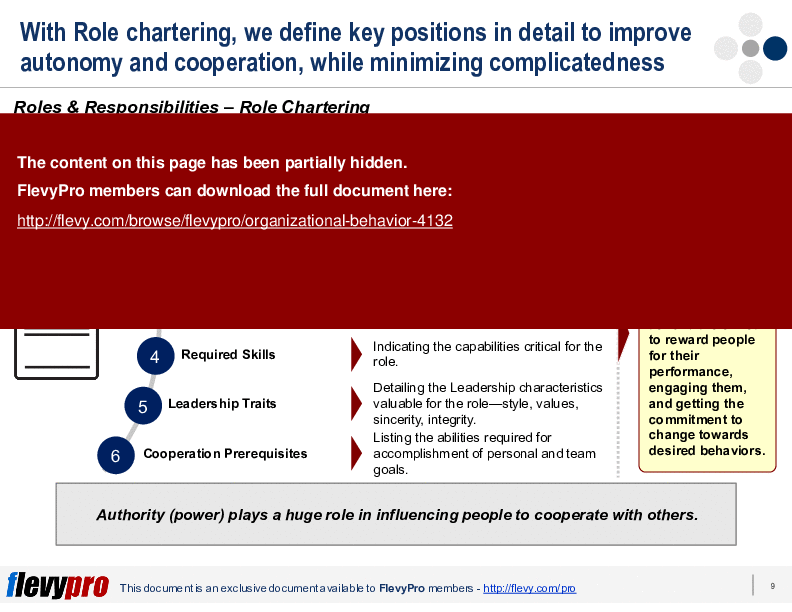
Defining Roles for Enhanced Organizational Cooperation

Key Organizational Enablers for Productive Workforce Behaviors

Optimizing Organizational Structure for Enhanced Performance

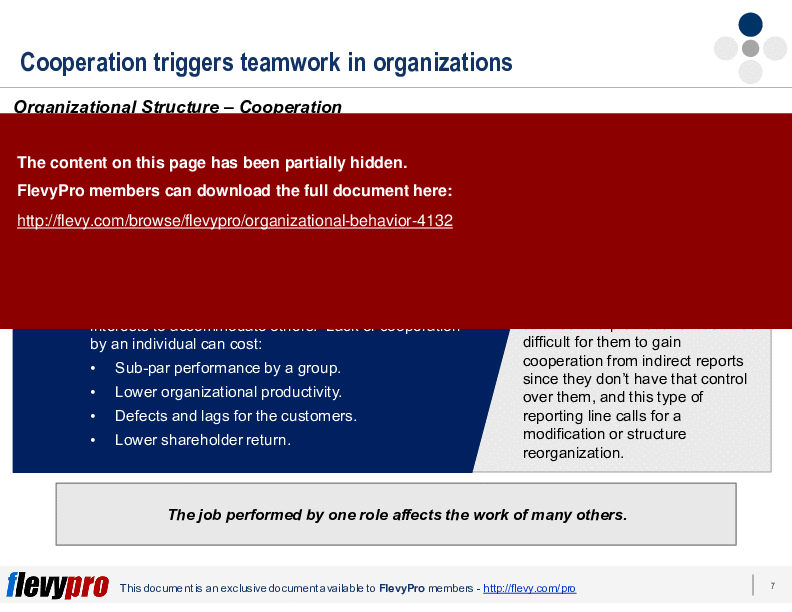
Enhancing Collaboration through Defined Roles and Responsibilities

Source: Best Practices in Organizational Design, Organizational Behavior PowerPoint Slides: Organizational Behavior PowerPoint (PPTX) Presentation Slide Deck, LearnPPT Consulting


$29.00
FlevyPro price: FREE (included in subscription)
This framework is developed by a team of former McKinsey and Big 4 consultants. The presentation follows the headline-body-bumper slide format used by global consulting firms.
Add to Cart
  

Did you need more documents?

Consider a FlevyPro subscription from $39/month. View plans here.

For $10.00 more, you can download this document plus 2 more FlevyPro documents. That's just $13 each.

ABOUT FLEVYPRO

This document is part of the FlevyPro Library, a curated knowledge base of documents for our FlevyPro subscribers.

FlevyPro is a subscription service for on-demand business frameworks and analysis tools. FlevyPro subscribers receive access to an exclusive library of curated business documents—business framework primers, presentation templates, Lean Six Sigma tools, and more—among other exclusive benefits.

Click here to learn more about FlevyPro and its benefits.

Did you know?
The average daily rate of a McKinsey consultant is $6,625 (not including expenses). The average price of a Flevy document is $65.


Trusted by over 10,000+ Client Organizations
Since 2012, we have provided business templates to over 10,000 businesses and organizations of all sizes, from startups and small businesses to the Fortune 100, in over 130 countries.
AT&T GE Cisco Intel IBM Coke Dell Toyota HP Nike Samsung Microsoft Astrazeneca JP Morgan KPMG Walgreens Walmart 3M Kaiser Oracle SAP Google E&Y Volvo Bosch Merck Fedex Shell Amgen Eli Lilly Roche AIG Abbott Amazon PwC T-Mobile Broadcom Bayer Pearson Titleist ConEd Pfizer NTT Data Schwab


Read Customer Testimonials

 
"As an Independent Management Consultant, I find Flevy to add great value as a source of best practices, templates and information on new trends. Flevy has matured and the quality and quantity of the library is excellent. Lastly the price charged is reasonable, creating a win-win value for "

– Jim Schoen, Principal at FRC Group
 
"As a consulting firm, we had been creating subject matter training materials for our people and found the excellent materials on Flevy, which saved us 100's of hours of re-creating what already exists on the Flevy materials we purchased."

– Michael Evans, Managing Director at Newport LLC
 
"Flevy is now a part of my business routine. I visit Flevy at least 3 times each month.

Flevy has become my preferred learning source, because what it provides is practical, current, and useful in this era where the business world is being rewritten.

In today's environment where there are so "

– Omar Hernán Montes Parra, CEO at Quantum SFE
 
"Flevy.com has proven to be an invaluable resource library to our Independent Management Consultancy, supporting and enabling us to better serve our enterprise clients.

The value derived from our [FlevyPro] subscription in terms of the business it has helped to gain far exceeds the investment made, making a subscription a no-brainer for any growing consultancy – or in-house strategy team."

– Dean Carlton, Chief Transformation Officer, Global Village Transformations Pty Ltd.
 
"The wide selection of frameworks is very useful to me as an independent consultant. In fact, it rivals what I had at my disposal at Big 4 Consulting firms in terms of efficacy and organization."

– Julia T., Consulting Firm Owner (Former Manager at Deloitte and Capgemini)
 
"Last Sunday morning, I was diligently working on an important presentation for a client and found myself in need of additional content and suitable templates for various types of graphics. Flevy.com proved to be a treasure trove for both content and design at a reasonable price, considering the time I "

– M. E., Chief Commercial Officer, International Logistics Service Provider
 
"I have used Flevy services for a number of years and have never, ever been disappointed. As a matter of fact, David and his team continue, time after time, to impress me with their willingness to assist and in the real sense of the word. I have concluded in fact "

– Roberto Pelliccia, Senior Executive in International Hospitality
 
"As a niche strategic consulting firm, Flevy and FlevyPro frameworks and documents are an on-going reference to help us structure our findings and recommendations to our clients as well as improve their clarity, strength, and visual power. For us, it is an invaluable resource to increase our impact and value."

– David Coloma, Consulting Area Manager at Cynertia Consulting


Customers Also Bought These Documents


Customers Also Like These Documents

Explore Templates on Related Management Topics


Your Recently Viewed Documents
Download our FREE Organization, Change, & Culture, Templates

Download our free compilation of 50+ slides and templates on Organizational Design, Change Management, and Corporate Culture. Methodologies include ADKAR, Burke-Litwin Change Model, McKinsey 7-S, Competing Values Framework, etc.