
This framework is developed by a team of former McKinsey and Big 4 consultants. The presentation follows the headline-body-bumper slide format used by global consulting firms.
Editor Summary
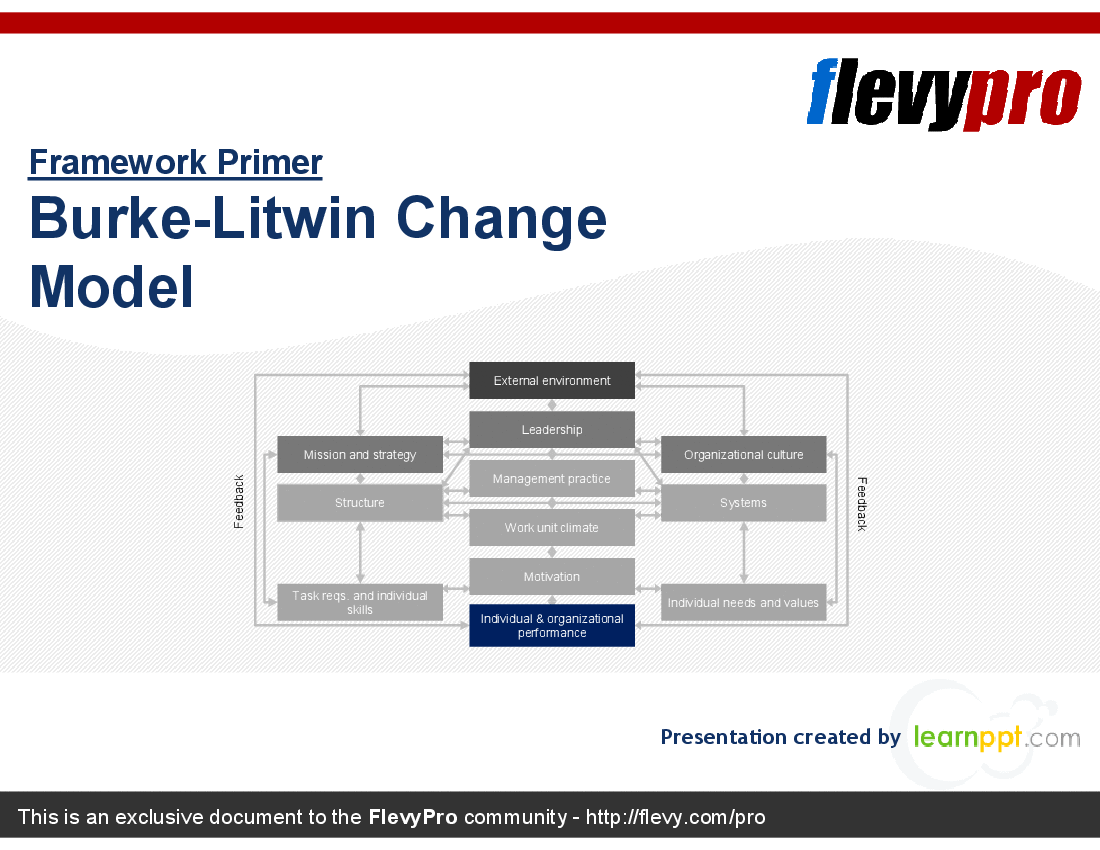
26-slide PowerPoint presentation (PPT) titled "Burke-Litwin Change Model" by LearnPPT Consulting that explains the Burke-Litwin conceptual framework and its 12 critical drivers: External Environment; Mission and Strategy; Leadership; Organizational Culture; Structure; Systems; Management Practices; Work Climate; Task and Individual Skills; Individual Needs and Values; Motivation; Individual and Organizational Performance.
Read moreIncludes slide templates for business presentations. Used by HR leaders, change managers, and organizational development consultants for diagnostic and planning work. Available on Flevy with immediate digital download.
Use this presentation when external shifts (changing demographics, globalization, or technology) or internal performance gaps require a structured organizational diagnosis and planned change approach.
HR business partners mapping gaps in motivation, individual needs, and work climate across employee groups using the model's 12 drivers.
Change managers tracing cause-and-effect between leadership, culture, systems, and performance to plan interventions.
Strategy or transformation leads aligning mission and strategy with structure and systems during redesign efforts.
Organizational development consultants building executive-ready diagnostic slides using the included templates.
The model applies a systems perspective and multidimensional diagnosis consistent with consulting practice for diagnosing and planning change.
Organizations are continually searching for innovative ways of enhancing competitiveness. This is brought about by evolving external factors such as changing demographics, globalization, and technology. Because of changing dynamics, it has required managers to rapidly rethink and retool their organizational management strategies.
Coming up with the appropriate strategies calls for increasing need for organizational diagnosis in developing and maintaining a Competitive Advantage. Researchers believe that in conducting organizational diagnosis, organizational effectiveness must be viewed from a systems perspective using a multidimensional approach in assessing the factors affecting an organization's performance and overall effectiveness.
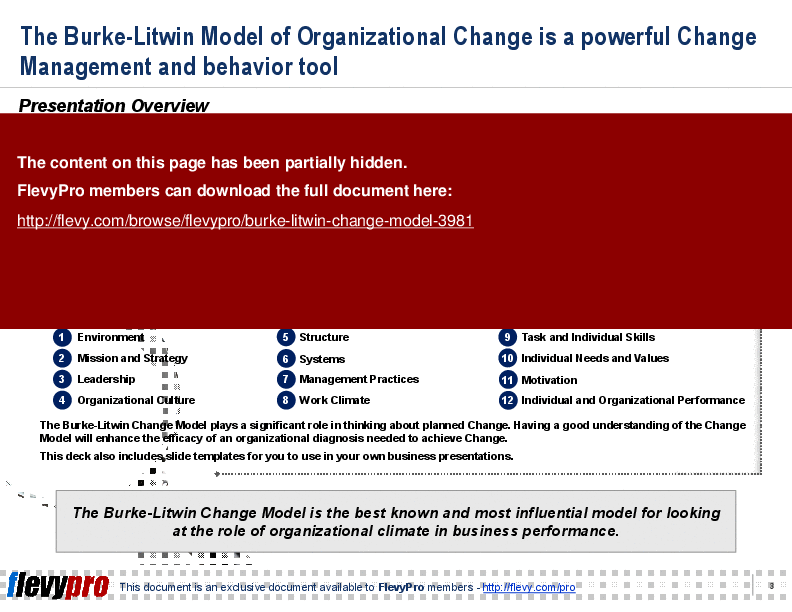
The Burke-Litwin Change Model is seen as a conceptual framework that can best describe the relationships between different features of the organization, as well as its context and effectiveness. According to Burke and Litwin (1992), Change models are not meant to be prescriptive. They are meant to provide a means to diagnose, plan, and manage Change. Using the Burke-Litwin Change Model will provide organizations an effective diagnostic tool to improve overall organizational performance. In fact, the Burke-Litwin Change Model is the best known and most influential model for looking at the role of organizational climate in business performance.
This presentation provides a comprehensive discussion on the Burke-Litwin Change Model and the 12 critical drivers or dimensions of Change.
1. External Environment
2. Mission and Strategy
3. Leadership
4. Organizational Culture
5. Structure
6. Systems
7. Management Practices
8. Work Climate
9. Task and Individual Skills
10. Individual Needs and Values
11. Motivation
12. Individual and Organizational Performance
The Burke-Litwin Change Model plays a significant role in thinking about planned Change. Having a good understanding of the Change Model will enhance the efficacy of an organizational diagnosis needed to achieve Change.
This deck also includes slide templates for you to use in your own business presentations.
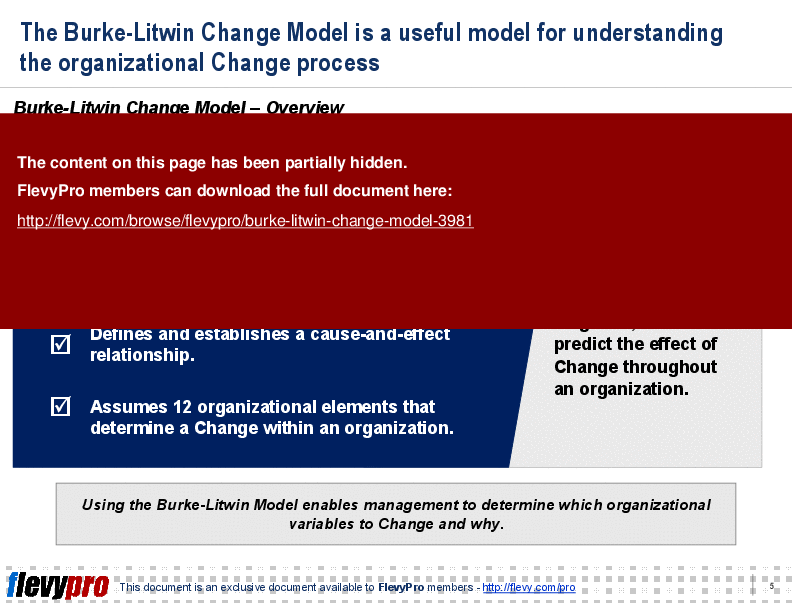
The Burke-Litwin Change Model is a powerful tool for understanding the cause-and-effect relationships within an organization. It provides a structured approach to diagnose and predict the impact of Change across various organizational dimensions.
What is the Burke-Litwin Change Model and what does it explain?
The Burke-Litwin Change Model is a conceptual framework for diagnosing, planning, and managing organizational change by describing cause-and-effect relationships among organizational elements. It links context and effectiveness through 12 interrelated drivers, helping practitioners assess how areas like leadership and systems influence performance, across 12 critical drivers.
What are the 12 drivers or dimensions in the Burke-Litwin model?
The model identifies 12 drivers: External Environment; Mission and Strategy; Leadership; Organizational Culture; Structure; Systems; Management Practices; Work Climate; Task and Individual Skills; Individual Needs and Values; Motivation; Individual and Organizational Performance. These dimensions structure a systems-based diagnostic across 12 named elements.
How can organizations use the Burke-Litwin model for diagnosis?
Organizations map current-state observations onto the model's cause-and-effect relationships to identify which drivers (e.g., leadership, systems, culture) are affecting performance, then prioritize interventions that address root causes. The framework supports structured diagnosis, planning, and management across the 12 drivers.
How does organizational climate feature in the Burke-Litwin approach?
The Burke-Litwin model explicitly links organizational climate to business performance, treating work climate as a distinct driver that interacts with motivation, management practices, and leadership to affect outcomes. It is commonly cited for examining the role of climate in performance, including work climate and motivation drivers.
What should I look for when choosing a Burke-Litwin presentation or template for executives?
Look for clear coverage of the conceptual model, a full list of the 12 drivers, practical diagnostic guidance, presentation-ready slides or templates, author attribution, and an editable PPT format. The presence of slide templates and a complete list of the 12 drivers is a useful buying criterion, such as a 26-slide PPT.
How can I assess the value of a Burke-Litwin slide deck for my team?
Evaluate whether the deck supports diagnostic steps (mapping cause-and-effect), identifies the 12 drivers, and supplies templates for communicating findings to stakeholders. Confirm format and authorship to match team needs; for example, the Flevy "Burke-Litwin Change Model" is a 26-slide PPT by LearnPPT Consulting.
I need to restructure after a merger — how can the Burke-Litwin model help prioritize changes?
Use the model to diagnose which drivers (mission and strategy, structure, systems, culture, leadership) were disrupted by the merger, map their interdependencies, and sequence interventions that restore alignment between mission, structure, systems, and performance. The approach focuses on these named drivers.
What is the best way to present Burke-Litwin findings to an executive audience?
Emphasize key cause-and-effect links (e.g., leadership → culture → motivation → performance), summarize diagnostics across the 12 drivers, and use concise, slide-ready visuals to show priorities and recommended interventions. Slide templates that illustrate the 12 drivers can support executive briefings and presentations.
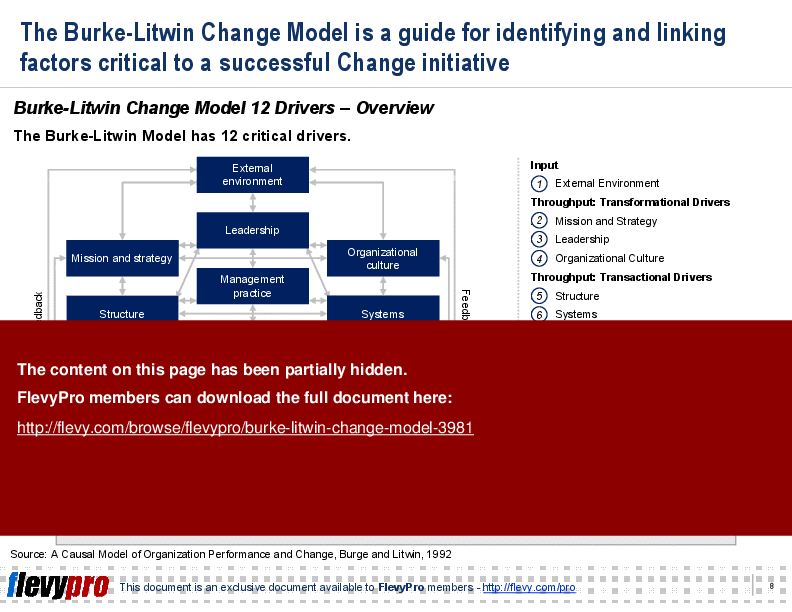
The Burke-Litwin Change Model is a framework for identifying and linking essential factors that contribute to effective change initiatives within organizations. It categorizes 12 critical drivers into inputs, transformational drivers, transactional drivers, and outputs. The external environment influences the organization’s mission and strategy, setting the direction for leadership and organizational culture. Leadership impacts management practices and the work climate. Transformational drivers—mission and strategy, leadership, and organizational culture—shape core values and guiding principles, while transactional drivers—structure, systems, and management practices—align daily functions with strategic goals. Motivation and individual needs are significant for employee engagement and satisfaction, influencing organizational performance. The model highlights feedback loops between drivers, indicating that change is an iterative process essential for achieving desired outcomes.
This PPT slide outlines "Transactional Factors" influencing organizational performance, categorized into 3 main drivers: Structure, Systems, and Management Practices. The "Structure" driver emphasizes hierarchical organization, detailing how departments and formal communication channels shape operations and influence decision-making. The "Systems" driver focuses on policies and procedures that support employees, including IT and facility management, which enhance employee engagement and operational efficiency. The "Management Practices" driver examines how managers execute strategic objectives, highlighting the need for alignment between management actions and organizational goals. While transactional factors are easier to modify, their impact on performance is significant, guiding leaders in structural and procedural changes that align with strategic objectives.
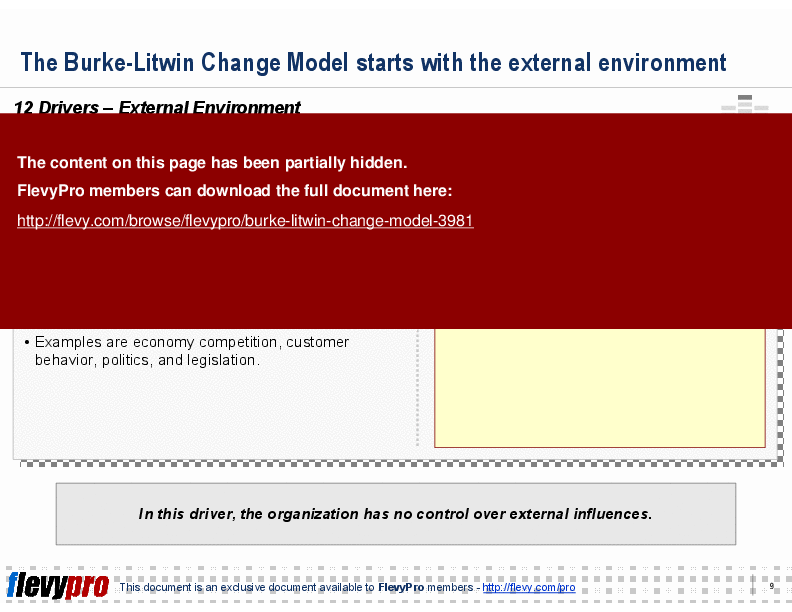
This PPT slide outlines a critical component of the Burke-Litwin Change Model, focusing on the external environment as a key driver for organizational change categorized under the "INPUT" section. Factors such as economic conditions, competition, customer behavior, politics, and legislation significantly impact organizational operations and adaptation. Recognizing these external influences creates a necessity for change, enabling organizations to respond effectively and remain competitive. Organizations have limited control over these external factors, which can pose challenges; however, analyzing them allows for better preparation for operational shifts. This proactive approach is essential for strategic planning and risk management, reinforcing the model's relevance in today’s fast-paced business environment.
The Burke-Litwin Change Model outlines a structured three-step approach for managing organizational change. The first step involves identifying the source of the need for change through analysis of internal and external factors. Understanding the root cause is essential for effective change management. The second step requires assessing the current situation, evaluating existing processes, resources, and organizational dynamics to identify gaps needing improvement. The final step incorporates all affected elements into the change plan, considering stakeholders, processes, and systems impacted by the change. This comprehensive methodology enhances the likelihood of successful implementation by aligning all organizational elements with change objectives.
This PPT slide outlines the second step in the Burke-Litwin Change Model, focusing on assessing the current situation within an organization. Key drivers of change include the external environment, which influences organizational dynamics. The alignment between mission and strategy is critical; discrepancies can lead to employee misalignment and reduced engagement. Leadership styles and their effectiveness in driving change are essential for fostering a supportive transformation environment. Organizational culture, including unwritten rules, can conflict with goals, hindering progress. The organizational structure analysis reveals role definitions and decision-making processes, identifying potential bottlenecks. Lastly, scrutinizing systems, policies, and procedures is necessary to ensure they support desired changes, forming a comprehensive approach to effective change management.
This PPT slide presents a framework linking individual and organizational performance outcomes to change initiatives. It emphasizes measuring effectiveness at individual, departmental, and organizational levels through metrics such as turnover rates, productivity, quality standards, efficiency, and customer satisfaction. This comprehensive evaluation approach assesses how changes impact both employees and the organization. Additionally, it highlights the importance of considering external factors, indicating that organizational performance involves adapting to external challenges and opportunities. The cyclical relationship between performance metrics and influencing factors underscores the necessity for continuous assessment and adaptation in effective change management. This framework provides insights for structuring change initiatives and measuring their success.
Source: Best Practices in Change Management, Performance Management PowerPoint Slides: Burke-Litwin Change Model PowerPoint (PPT) Presentation Slide Deck, LearnPPT Consulting
This framework is developed by a team of former McKinsey and Big 4 consultants. The presentation follows the headline-body-bumper slide format used by global consulting firms.
For $10.00 more, you can download this document plus 2 more FlevyPro documents. That's just $13 each.
ABOUT FLEVYPRO
This document is part of the FlevyPro Library, a curated knowledge base of documents for our FlevyPro subscribers.
FlevyPro is a subscription service for on-demand business frameworks and analysis tools. FlevyPro subscribers receive access to an exclusive library of curated business documents—business framework primers, presentation templates, Lean Six Sigma tools, and more—among other exclusive benefits.
The average daily rate of a McKinsey consultant is $6,625 (not including expenses). The average price of a Flevy document is $65.
Trusted by over 10,000+ Client Organizations
Since 2012, we have provided business templates to over 10,000 businesses and organizations of all sizes, from startups and small businesses to the Fortune 100, in over 130 countries.
"As an Independent Management Consultant, I find Flevy to add great value as a source of best practices, templates and information on new trends. Flevy has matured and the quality and quantity of the library is excellent. Lastly the price charged is reasonable, creating a win-win value for
the customer, Flevy and the various authors. This is truly a service that benefits the consulting industry and associated clients. Thanks for providing this service.
"
– Jim Schoen, Principal at FRC Group
"Flevy is now a part of my business routine. I visit Flevy at least 3 times each month.
Flevy has become my preferred learning source, because what it provides is practical, current, and useful in this era where the business world is being rewritten.

many challenges and there is the need to make the right decisions in a short time, with so much scattered information, we are fortunate to have Flevy. Flevy investigates, selects, and puts at our disposal the best of the best to help us be successful in our work.
"
– Omar Hernán Montes Parra, CEO at Quantum SFE
"I have used Flevy services for a number of years and have never, ever been disappointed. As a matter of fact, David and his team continue, time after time, to impress me with their willingness to assist and in the real sense of the word. I have concluded in fact
that it is not at all just a repository of documents/resources but, in the way that David and his team manage the firm, it is like dealing with consultants always ready to assist, advise and direct you to what you really need, and they always get it right.
I am an international hospitality accomplished senior executive who has worked and lived during the past 35 years in 23 countries in 5 continents and I can humbly say that I know what customer service is, trust me.
Aside from the great and professional service that Flevy's team provide, their wide variety of material is of utmost great quality, professionally put together and most current.
Well done Flevy, keep up the great work and I look forward to continue working with you in the future and to recommend you to a variety of colleagues around the world.
"
– Roberto Pelliccia, Senior Executive in International Hospitality
"Last Sunday morning, I was diligently working on an important presentation for a client and found myself in need of additional content and suitable templates for various types of graphics. Flevy.com proved to be a treasure trove for both content and design at a reasonable price, considering the time I
saved. I encountered a download issue during the ordering process. However, a quick email to Flevy's support team, even on a Sunday (!!!), resulted in assistance within less than an hour, allowing me to download the content I needed. Fantastic job, Flevy! I give 5 stars for both content/price and customer service. Thank you!
"
– M. E., Chief Commercial Officer, International Logistics Service Provider
"[Flevy] produces some great work that has been/continues to be of immense help not only to myself, but as I seek to provide professional services to my clients, it gives me a large "tool box" of resources that are critical to provide them with the quality of service and outcomes they are expecting."
– Royston Knowles, Executive with 50+ Years of Board Level Experience
"As a niche strategic consulting firm, Flevy and FlevyPro frameworks and documents are an on-going reference to help us structure our findings and recommendations to our clients as well as improve their clarity, strength, and visual power. For us, it is an invaluable resource to increase our impact and value."
– David Coloma, Consulting Area Manager at Cynertia Consulting
"I have found Flevy to be an amazing resource and library of useful presentations for lean sigma, change management and so many other topics. This has reduced the time I need to spend on preparing for my performance consultation. The library is easily accessible and updates are regularly provided. A wealth of great information."
– Cynthia Howard RN, PhD, Executive Coach at Ei Leadership
"My FlevyPro subscription provides me with the most popular frameworks and decks in demand in today’s market. They not only augment my existing consulting and coaching offerings and delivery, but also keep me abreast of the latest trends, inspire new products and service offerings for my practice, and educate me
Download our free compilation of 50+ slides and templates on Organizational Design, Change Management, and Corporate Culture. Methodologies include ADKAR, Burke-Litwin Change Model, McKinsey 7-S, Competing Values Framework, etc.