
Editor Summary
Post Merger Integration (PMI) Best Practice Framework is a 28-slide PPTX consulting-grade presentation by STRATICX that outlines governance, phased integration, communication, cultural alignment, risk management, and synergy capture for combining 2 companies.
Read moreThe framework includes 6 key steps and deliverables such as a PMI framework template, communication plan template, risk assessment panel structure, integration initiative prioritization matrix, cultural integration assessment tool, and Corporate Control Tower guidance, sold as a digital download on Flevy.
Designed for situations where 2 companies are merging and leaders must define governance, capture synergies, manage cultural alignment, and maintain operational continuity.
Corporate executives aligning merger strategy and acquisition vision by defining leadership, operating model, and strategic objectives.
Integration leaders establishing a Corporate Control Tower, assigning responsibilities, and coordinating cross-unit activities.
Project management teams prioritizing initiatives and tracking integration timelines while maintaining core business focus.
Change managers running cultural integration workshops and deploying a cultural integration assessment tool.
The frameworkâs structured governance, phased (initial, mid, full) integration approach, and emphasis on prioritization and measurable KPIs reflect the structured, hypothesis-driven consulting practice associated with McKinsey, Bain, and BCG.
This document provides a guide and framework for best practice in post merger integration.
Post merger integration is the process of combining two separate companies in a way that quickly creates the most value and fulfils the expectations outlined in the acquisition vision.
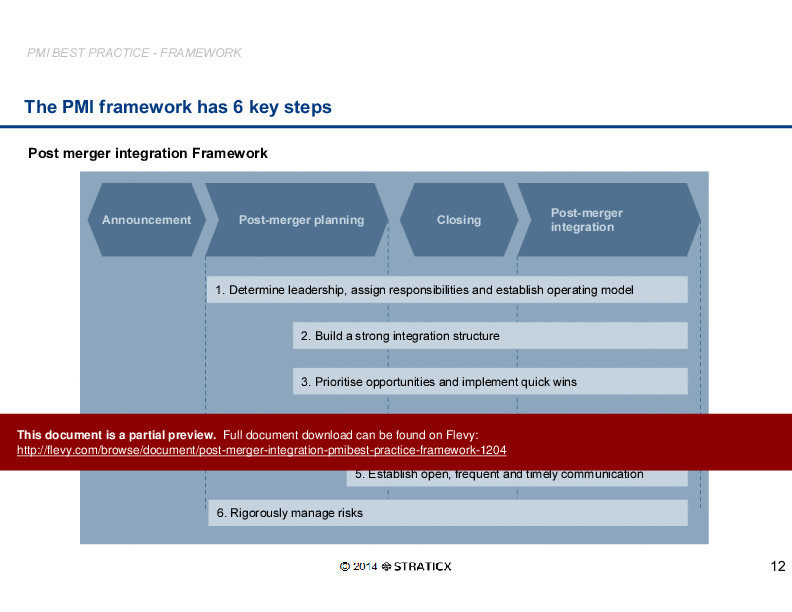
The framework comprises of six key steps:
1. Determine leadership, assign responsibilities and establish operating model
2. Build a strong integration structure
3. Prioritise opportunities and implement quick wins
4. Actively address cultural issues
5. Establish open, frequent and timely communication
6. Rigorously manage risks
This document is equally suitable for consultants and those in a corporate role.
This comprehensive framework also emphasizes the importance of aligning integration activities with the overarching corporate strategy. By ensuring that the acquisition strategy is at the forefront of target identification, due diligence, and final merger decisions, companies can streamline the integration process and maximize value capture. The PPT provides actionable insights into pre-merger identification and planning, helping organizations to identify and target companies with the desired capabilities, assess barriers to the deal, and create detailed plans on value capture.
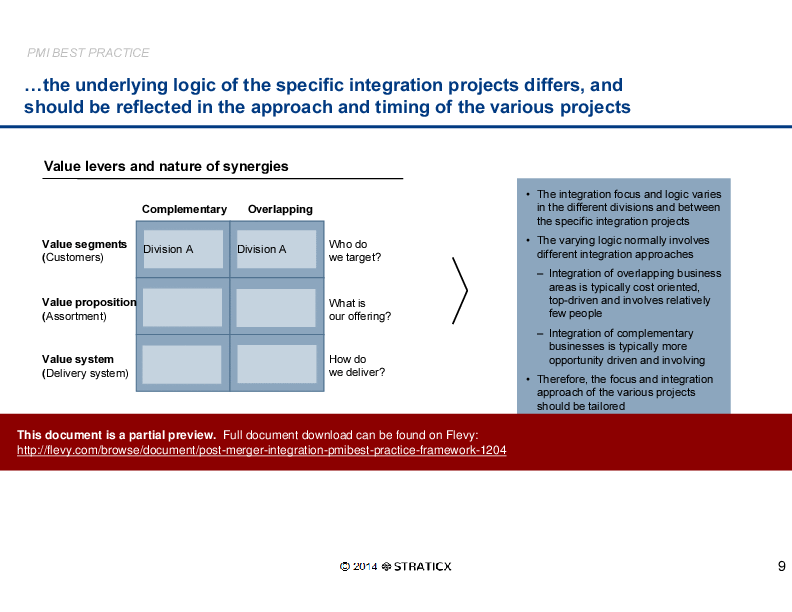
The framework highlights the necessity of tailoring integration approaches based on the specific logic and focus of different divisions. Integration of overlapping business areas typically involves cost-oriented, top-down strategies, while complementary business integrations are more opportunity-driven. This differentiation is crucial for addressing the unique challenges and opportunities presented by each integration project, ensuring that the approach and timing are appropriately aligned with the nature of the synergies involved.
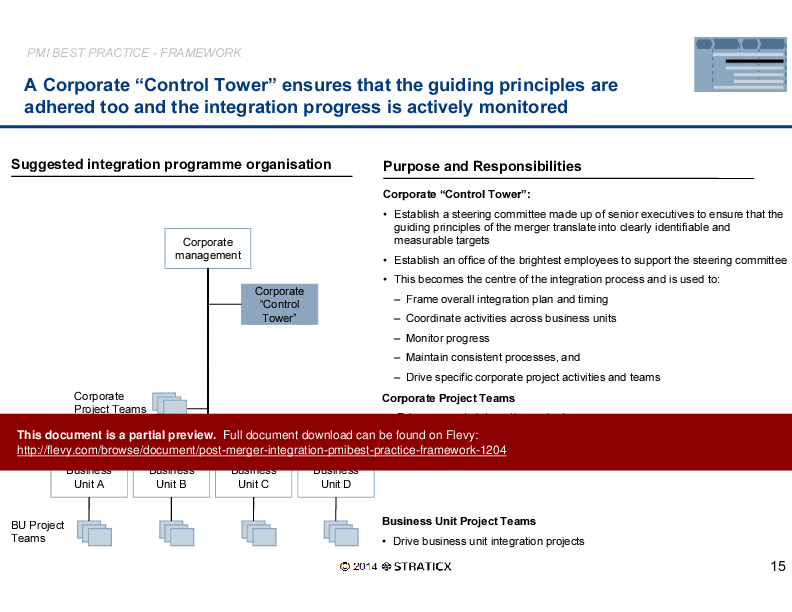
A key component of the framework is the establishment of a Corporate "Control Tower" to oversee the integration process. This central structure, comprising senior executives and top talent, ensures that guiding principles are adhered to and progress is actively monitored. By framing the overall integration plan, coordinating activities across business units, and maintaining consistent processes, the Control Tower drives the successful execution of integration activities, ultimately leading to the realization of projected synergies and value creation.
Got a question about the product? Email us at support@flevy.com or ask the author directly by using the "Ask the Author a Question" form. If you cannot view the preview above this document description, go here to view the large preview instead.
MARCUS OVERVIEW
This synopsis was written by Marcus [?] based on the analysis of the full 28-slide presentation.
Executive Summary
The Post Merger Integration (PMI) Best Practice Framework is a comprehensive guide designed to navigate the complexities of merging 2 companies effectively. This consulting-grade presentation, akin to McKinsey, Bain, or BCG-quality, outlines critical strategies and best practices to ensure a successful integration process. By leveraging this framework, corporate executives and integration leaders can identify potential pitfalls, align their merger strategies, and implement actionable plans that maximize value creation. The framework emphasizes the importance of clear communication, strategic alignment, and a structured approach to integration, ultimately enabling organizations to achieve their merger objectives.
Who This Is For and When to Use
• Corporate executives overseeing merger and acquisition strategies
• Integration leaders responsible for executing post-merger plans
• Project management teams tasked with coordinating integration efforts
• Change management professionals focused on cultural integration
• Finance leaders monitoring synergy realization and cost management
Best-fit moments to use this deck:
• During pre-merger planning to align on integration strategies
• At the onset of post-merger integration to establish governance and roles
• In workshops aimed at addressing cultural integration challenges
• For ongoing assessments of integration progress and risk management
Learning Objectives
• Define the key components of a successful post-merger integration strategy
• Identify common pitfalls in the PMI process and how to avoid them
• Establish a structured approach to integration planning and execution
• Communicate effectively with stakeholders throughout the integration process
• Manage risks and ensure alignment with the overall merger strategy
• Capture synergies and realize value from the merger effectively
Table of Contents
• Introduction to Post Merger Integration (page 1)
• Common Pitfalls in PMI (page 5)
• Key Steps for Successful Integration (page 12)
• Integration Framework Overview (page 13)
• Establishing a Corporate Control Tower (page 15)
• Maintaining Core Business Focus (page 16)
• Phases of Integration (page 17)
• Prioritizing Integration Initiatives (page 18)
• Managing Cultural Integration (page 22)
• Communication Strategies in PMI (page 25)
• Risk Management in PMI (page 26)
Primary Topics Covered
• Common Pitfalls - Identifies frequent challenges in PMI, including under-communication and lack of momentum, which can jeopardize merger success.
• Integration Framework - A structured approach that outlines the necessary steps for effective post-merger integration, ensuring alignment with corporate strategy.
• Corporate Control Tower - Establishes a governance structure to monitor integration progress and adherence to merger principles.
• Core Business Focus - Strategies to maintain operational continuity during integration, ensuring minimal disruption to existing business activities.
• Phases of Integration - Details the 3 phases of integration: initial, mid, and full integration, each with specific objectives and timelines.
• Cultural Integration - Emphasizes the importance of aligning corporate cultures and managing employee expectations throughout the merger process.
Deliverables, Templates, and Tools
• PMI framework template for structured integration planning
• Communication plan template for stakeholder engagement
• Risk assessment panel structure for identifying and managing integration risks
• Integration initiative prioritization matrix to focus on high-impact actions
• Cultural integration assessment tool to evaluate and align organizational cultures
• Governance structure outline for establishing a Corporate Control Tower
Slide Highlights
• Overview of common pitfalls in PMI with statistical insights
• Framework for establishing a Corporate Control Tower to oversee integration
• Phased approach to integration with timelines and key activities
• Strategies for maintaining core business focus during the integration process
• Cultural integration challenges illustrated through case studies
Potential Workshop Agenda
Integration Strategy Alignment Session (90 minutes)
• Review key components of the PMI framework
• Identify potential pitfalls and mitigation strategies
• Establish roles and responsibilities for integration teams
Cultural Integration Workshop (60 minutes)
• Discuss cultural challenges and alignment strategies
• Develop a communication plan for stakeholders
• Create action items for addressing cultural issues
Risk Management Planning Session (90 minutes)
• Identify and assess potential risks in the integration process
• Develop a risk management plan with mitigation strategies
• Assign responsibilities for ongoing risk monitoring
Customization Guidance
• Tailor the PMI framework to reflect specific organizational structures and cultures
• Adjust communication plans to suit different stakeholder groups
• Incorporate unique merger objectives and synergy targets into the integration strategy
• Modify risk assessment protocols to align with organizational risk management practices
Secondary Topics Covered
• Strategies for capturing synergies and maximizing value
• Techniques for effective stakeholder communication during PMI
• Best practices for aligning corporate cultures post-merger
• Methods for tracking integration progress and success metrics
• Insights into managing employee expectations and morale during transitions
Topic FAQ
What are the typical phases of a post-merger integration project?
Post-merger integration is commonly organized into 3 phases: initial integration, mid-integration, and full integration. Each phase has distinct objectives, activities, and timelines to move from immediate stabilization to full operational and strategic alignment. Flevy's Post Merger Integration (PMI) Best Practice Framework describes these 3 phases.
What is a Corporate Control Tower and how does it support integration?
A Corporate Control Tower is a governance structure of senior executives and top talent that frames the overall integration plan, coordinates activities across business units, enforces guiding principles, and monitors progress against targets. It centralizes decision rights and reporting to ensure consistent execution and oversight via the Corporate Control Tower.
How should we approach cultural integration after an acquisition?
Address cultural integration by assessing cultural fit, running targeted workshops to surface differences, communicating frequently to manage expectations, and defining specific actions to align values and behaviors. Use a cultural integration assessment tool to diagnose gaps and create targeted interventions, ending with prioritized cultural action items and the cultural integration assessment tool.
What should I look for when choosing a PMI toolkit or template set?
Look for templates and tools that cover governance, phased planning, communication, risk management, initiative prioritization, and cultural assessment. A useful set includes a PMI framework template, communication plan template, risk assessment panel structure, and an integration initiative prioritization matrix such as those listed in Flevy's Post Merger Integration (PMI) Best Practice Framework and the integration initiative prioritization matrix.
When should we implement quick wins during integration to build momentum?
Quick wins should be identified and implemented early, during the initial integration activities, to create momentum and confidence while larger initiatives are planned and resourced. Prioritize opportunities that offer high impact with lower effort and ensure they align with the acquisition vision, focusing on implementing quick wins.
Our leadership team is smallâwhat PMI elements can a compact team run effectively?
A compact leadership team can determine leadership and operating model, build a lean integration structure, prioritize high-impact initiatives, run focused cultural workshops, and oversee a scaled risk assessment process. These activities map to the frameworkâs first 3 steps and can be coordinated through a streamlined governance model or a smaller risk assessment panel.
How can we measure whether our integration is succeeding?
Measure integration success with KPIs that track synergy realization, employee engagement, and overall business performance post-merger. Regular progress reviews, governance reporting from the Corporate Control Tower, and specific metrics tied to prioritized initiatives provide quantifiable evidence of progress as described in Flevy's Post Merger Integration (PMI) Best Practice Framework, including KPIs such as synergy realization.
How should I assess cost versus value when buying PMI templates and frameworks?
Assess cost versus value by comparing coverage of essential templates (governance, communication, risk, prioritization, cultural assessment), relevance to your merger type, and customization guidance. As a reference point, Flevy's Post Merger Integration (PMI) Best Practice Framework is a 28-slide PPTX sold on Flevy that includes these core templates and tools, with the 28 slides serving as a scope indicator.
Document FAQ
These are questions addressed within this presentation.
What are the most common pitfalls in post-merger integration?
Common pitfalls include under-communication, lack of momentum, and unrealistic synergy expectations, which can significantly hinder merger success.
How can we ensure effective communication during the integration process?
Establish a clear communication plan that addresses key stakeholders, provides timely updates, and encourages open dialogue throughout the integration.
What is a Corporate Control Tower, and why is it important?
A Corporate Control Tower is a governance structure that oversees the integration process, ensuring adherence to merger principles and monitoring progress against established targets.
How should we prioritize integration initiatives?
Focus on initiatives that offer the greatest impact with the least effort, using a prioritization matrix to guide decision-making.
What role does cultural integration play in PMI?
Cultural integration is crucial for aligning organizational values and practices, which can significantly affect employee morale and the overall success of the merger.
How can we manage risks during the integration process?
Implement a risk assessment panel to identify, analyze, and prioritize risks, developing a management plan to address potential challenges proactively.
What are the phases of post-merger integration?
The integration process typically consists of 3 phases: initial integration, mid-integration, and full integration, each with specific objectives and timelines.
How can we measure the success of our integration efforts?
Success can be measured through key performance indicators (KPIs) that track the realization of synergies, employee engagement, and overall business performance post-merger.
Glossary
• Post Merger Integration (PMI) - The process of combining 2 companies to achieve strategic objectives and maximize value.
• Corporate Control Tower - A governance structure that oversees the integration process and ensures adherence to merger principles.
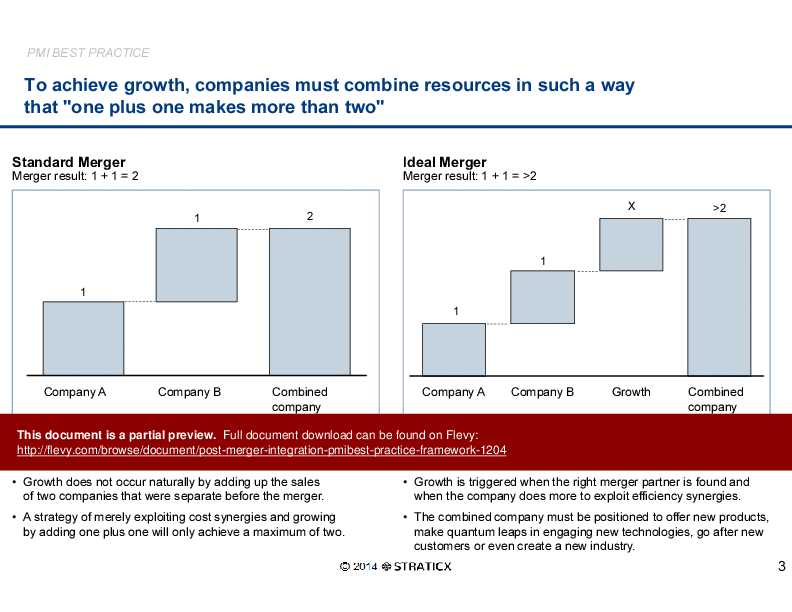
• Synergy - The additional value created from the merger that exceeds the sum of the individual companies.
• Cultural Integration - The process of aligning the values, beliefs, and behaviors of 2 merging organizations.
• Risk Assessment Panel - A group responsible for identifying and managing risks associated with the integration process.
• Integration Initiative - Specific actions or projects aimed at achieving integration objectives.
• Stakeholder - Individuals or groups with an interest in the outcome of the merger, including employees, customers, and investors.
• Communication Plan - A strategy for conveying information to stakeholders during the integration process.
• Value Creation - The process of generating additional worth from the merger through synergies and efficiencies.
• Employee Engagement - The level of commitment and involvement employees have towards the organization during the integration.
• Key Performance Indicator (KPI) - A measurable value that demonstrates how effectively a company is achieving key business objectives.
• Integration Framework - A structured approach outlining the steps and processes for successful post-merger integration.
• Merger Type - The classification of mergers based on strategic objectives, such as scale, stream, concentric, or lateral.
• Quick Wins - Immediate, tangible results achieved during the integration process that build momentum and confidence.
• Operational Continuity - The ability of a business to maintain its operations during the integration process.
• Strategic Alignment - The process of ensuring that the integration efforts are in line with the overall corporate strategy.
• Due Diligence - The investigation and evaluation of a potential merger target to assess its value and risks.
• Cultural Fit - The degree to which the cultures of 2 merging organizations align and complement each other.
• Integration Timeline - A schedule outlining the key milestones and activities involved in the integration process.
• Change Management - The approach to managing the transition and transformation of an organization during the integration.
This PPT slide outlines a structured approach for post-merger management framework establishment. It emphasizes timely assignment of responsibilities, suggesting that within the first 2 weeks post-announcement, the top 3 layers of senior management should be selected to define roles clearly. The middle section addresses the appointment of middle and line management, ensuring adequate staffing and a clear chain of command. A complete organizational structure is vital for operational efficiency, with all personnel assigned appropriately. This structured approach aids in a smooth transition post-merger and fosters stability among employees, providing actionable steps for executives to navigate post-merger integration successfully.
This PPT slide outlines a structured framework for Post-Merger Integration (PMI) consisting of 6 critical steps. The framework begins with the "Announcement" phase, focusing on initial communication strategies. The second step, "Post-merger planning," involves determining leadership roles, assigning responsibilities, and establishing an operating model, which is essential for accountability and governance. The third step emphasizes building a robust integration structure to facilitate collaboration and streamline operations. The fourth step addresses cultural integration, aligning values and practices to enhance employee engagement and retention. The fifth step highlights the necessity of open, frequent communication to maintain transparency and trust among stakeholders. This framework serves as a comprehensive guide for organizations navigating the complexities of PMI, underscoring the importance of leadership, structure, and communication in achieving successful merger outcomes.
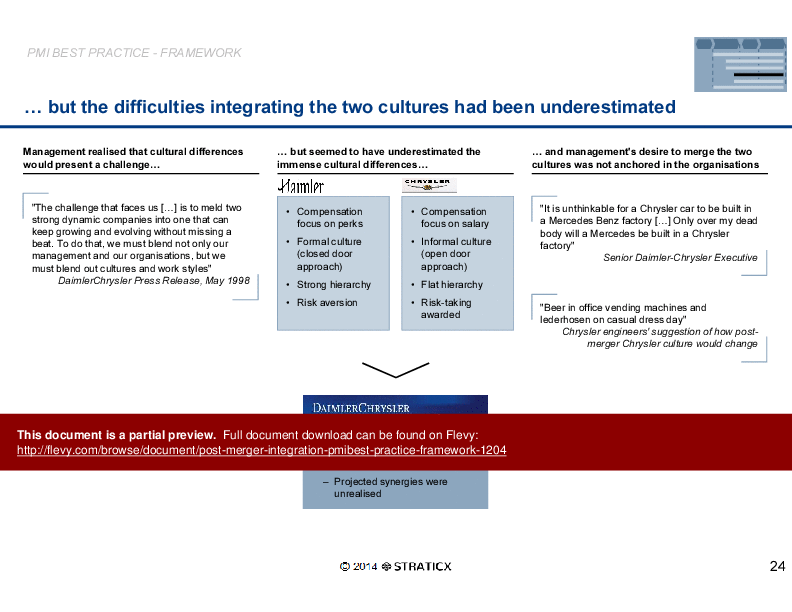
This PPT slide analyzes the Daimler-Chrysler merger, highlighting key financial metrics and market positions. In 1998, Daimler generated USD 69 billion in revenue, while Chrysler reported USD 61 billion. Daimler's high-value product range averages USD 80 thousand, focusing on engineering excellence and international presence, contrasting with Chrysler's average product range of USD 20 thousand, emphasizing production excellence and a national focus. Initially viewed as a strategic fit, the merger projected short-term cost synergies of USD 1.4 billion and medium-term benefits of USD 3.0 billion. However, anticipated advantages may not have materialized, as evidenced by geographic sales imbalances, with Daimler's sales heavily concentrated in Europe compared to Chrysler's US focus. This case study underscores the necessity of aligning core competencies and market strategies in mergers.
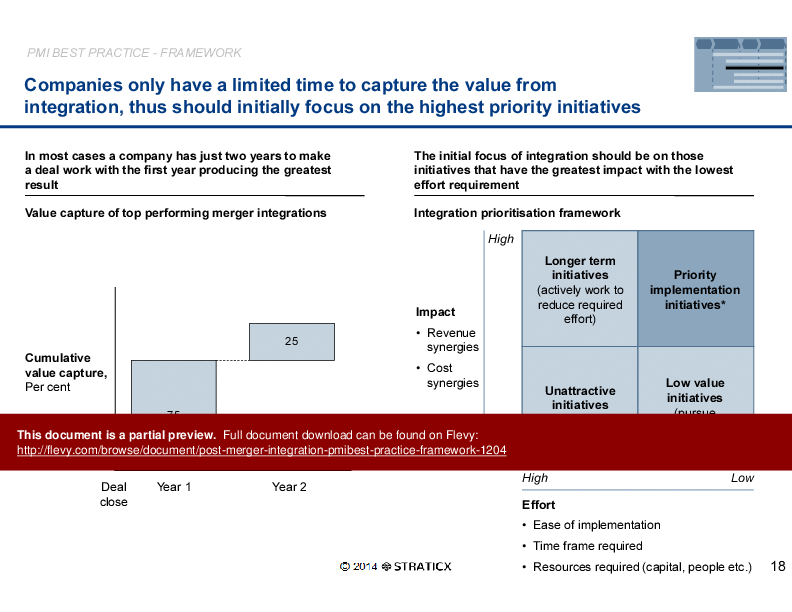
Companies face critical time constraints during post-merger integration, typically having a two-year window to realize full deal benefits. The first year is crucial, with 75% of value captured, highlighting the urgency for swift action. An integration prioritization framework categorizes initiatives by impact and effort, focusing on high-impact, low-effort initiatives for immediate attention. The framework includes 4 quadrants: "Longer term initiatives," "Priority implementation initiatives," "Unattractive initiatives," and "Low value initiatives." This structured approach enables effective resource allocation and maximizes merger synergies. Concentrating on high-impact initiatives early ensures smoother integration and improved financial outcomes.
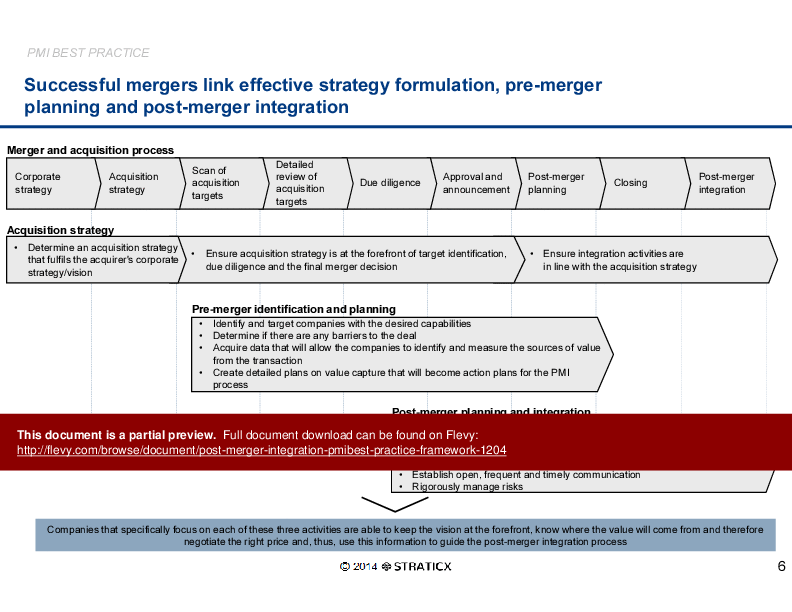
This PPT slide outlines a structured approach to mergers and acquisitions, detailing the merger and acquisition process through key stages: corporate strategy, acquisition strategy, target scanning and review, due diligence, approval and announcement, post-merger planning, closing, and post-merger integration. The acquisition strategy must align with the acquirer's corporate strategy, guiding target identification and due diligence. Pre-merger planning involves identifying potential targets, assessing deal barriers, and evaluating value sources. Post-merger integration requires clear leadership roles, a robust integration structure, quick wins, cultural issue management, and rigorous risk management to ensure a smooth transition and successful integration.
This PPT slide outlines a framework for effective post-merger integration (PMI) with 5 critical components. "Merger context" emphasizes the importance of industry dynamics, external forces, and internal alignment in shaping the merger. "Merger rationale and aspirations" focuses on articulating clear reasons and desired outcomes for the new entity. The third component, "Synergies," highlights the need to identify and capture synergies to achieve these aspirations. "Design decisions and integration planning" addresses the management of the integration process through a structured approach to ensure synergies are realized. Lastly, "Communication planning" underscores the necessity of clear stakeholder communication to minimize risks and ensure organizational alignment. A well-defined merger context is vital for establishing the integration approach and clarity in aspirations is essential for successful execution.
This PPT slide presents a framework for understanding merger types based on strategic objectives: Scale, Stream, and Concentric. Scale mergers aim for economies of scale in mature industries, dominating around 70% of merger activities, particularly in competitive, deregulated environments. Stream mergers involve vertical integration along the value chain, exemplified by a beer brewer acquiring pubs to enhance supply chain control and operational efficiencies. Concentric mergers focus on expanding value propositions within the same customer base, such as an automaker entering the technology sector to leverage existing customer relationships. Aligning merger types with strategic objectives is crucial for successful integration.
This PPT slide addresses post-merger integration challenges, emphasizing the need to effectively merge distinct entities to maximize value. Key issues identified include under-communication, cited by 58% of respondents, which can lead to misunderstandings. Unrealistic synergy expectations and excessive company integration were noted by 47%, indicating alignment struggles. Additional challenges include a lack of a master plan and momentum, both at 37%, highlighting the necessity for structured approaches. Insufficient commitment from top management, at 32%, underscores the importance of strong leadership. Lastly, uncertain strategic concepts and slow integration speed, both at 26%, stress the need for clear strategies and rapid execution to capitalize on merger opportunities.
Source: Best Practices in Post-merger Integration PowerPoint Slides: Post Merger Integration (PMI) Best Practice Framework PowerPoint (PPTX) Presentation Slide Deck, STRATICX
Straticx is redefining strategy and innovation consulting through online access to high value consulting partners, who work with senior executives and boards of corporations to frame key business issues, develop hypothesis, apply structured problem solving and commercial acumen to drive development of solutions. The partners all have 10+ consulting experience covering a broad range of sectors and
... [read more] have delivered a range of engagements such as corporate and business unit strategy, business transformation, business case development, M&A, and operational improvement.
Since 2012, we have provided business templates to over 10,000 businesses and organizations of all sizes, from startups and small businesses to the Fortune 100, in over 130 countries.
"I have used Flevy services for a number of years and have never, ever been disappointed. As a matter of fact, David and his team continue, time after time, to impress me with their willingness to assist and in the real sense of the word. I have concluded in fact
that it is not at all just a repository of documents/resources but, in the way that David and his team manage the firm, it is like dealing with consultants always ready to assist, advise and direct you to what you really need, and they always get it right.
I am an international hospitality accomplished senior executive who has worked and lived during the past 35 years in 23 countries in 5 continents and I can humbly say that I know what customer service is, trust me.
Aside from the great and professional service that Flevy's team provide, their wide variety of material is of utmost great quality, professionally put together and most current.
Well done Flevy, keep up the great work and I look forward to continue working with you in the future and to recommend you to a variety of colleagues around the world.
"
– Roberto Pelliccia, Senior Executive in International Hospitality
"FlevyPro provides business frameworks from many of the global giants in management consulting that allow you to provide best in class solutions for your clients."
– David Harris, Managing Director at Futures Strategy
"Last Sunday morning, I was diligently working on an important presentation for a client and found myself in need of additional content and suitable templates for various types of graphics. Flevy.com proved to be a treasure trove for both content and design at a reasonable price, considering the time I
saved. I encountered a download issue during the ordering process. However, a quick email to Flevy's support team, even on a Sunday (!!!), resulted in assistance within less than an hour, allowing me to download the content I needed. Fantastic job, Flevy! I give 5 stars for both content/price and customer service. Thank you!
"
– M. E., Chief Commercial Officer, International Logistics Service Provider
"Flevy.com has proven to be an invaluable resource library to our Independent Management Consultancy, supporting and enabling us to better serve our enterprise clients.
The value derived from our [FlevyPro] subscription in terms of the business it has helped to gain far exceeds the investment made, making a subscription a no-brainer for any growing consultancy – or in-house strategy team."
– Dean Carlton, Chief Transformation Officer, Global Village Transformations Pty Ltd.
"As a niche strategic consulting firm, Flevy and FlevyPro frameworks and documents are an on-going reference to help us structure our findings and recommendations to our clients as well as improve their clarity, strength, and visual power. For us, it is an invaluable resource to increase our impact and value."
– David Coloma, Consulting Area Manager at Cynertia Consulting
"FlevyPro has been a brilliant resource for me, as an independent growth consultant, to access a vast knowledge bank of presentations to support my work with clients. In terms of RoI, the value I received from the very first presentation I downloaded paid for my subscription many times over! The
quality of the decks available allows me to punch way above my weight â it's like having the resources of a Big 4 consultancy at your fingertips at a microscopic fraction of the overhead.
"
– Roderick Cameron, Founding Partner at SGFE Ltd
"The wide selection of frameworks is very useful to me as an independent consultant. In fact, it rivals what I had at my disposal at Big 4 Consulting firms in terms of efficacy and organization."
– Julia T., Consulting Firm Owner (Former Manager at Deloitte and Capgemini)
"As a consulting firm, we had been creating subject matter training materials for our people and found the excellent materials on Flevy, which saved us 100's of hours of re-creating what already exists on the Flevy materials we purchased."
– Michael Evans, Managing Director at Newport LLC
Save with Bundles
This document is available as part of the following discounted bundle(s):
Receive our FREE presentation on Operational Excellence
This 50-slide presentation provides a high-level introduction to the 4 Building Blocks of Operational Excellence. Achieving OpEx requires the implementation of a Business Execution System that integrates these 4 building blocks.