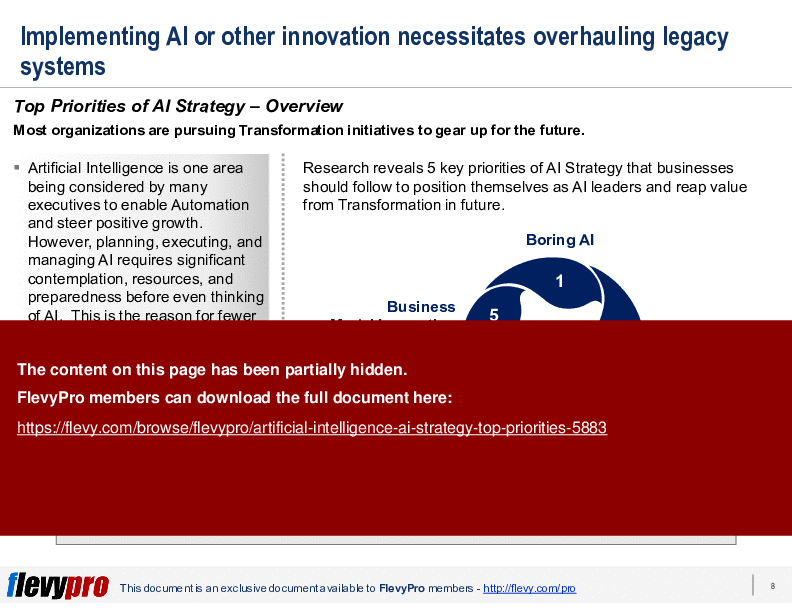

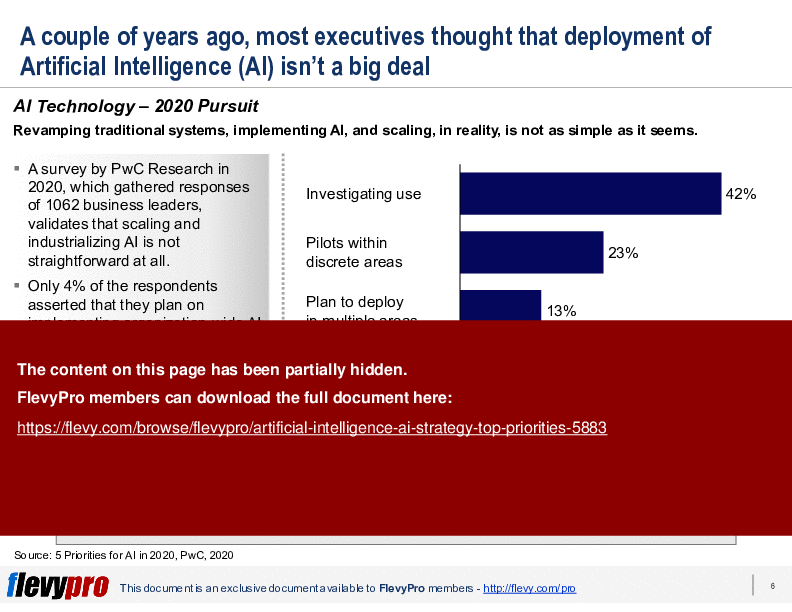

Revamping traditional systems, implementing AI, and scaling, in reality, is not as simple as it seems. PwC's 2020 Research validates that scaling and industrializing AI is not straightforward at all. Only 4% of the survey respondents asserted that they plan on implementing organization-wide AI in 2020. Whereas, a year earlier, the same survey revealed 20% of the executives planning to do that.
This shows a significant decrease in the number of senior leaders thinking of executing AI. The reason for this drop is attributed mainly to the lack of preparedness required for enterprise-wide AI implementation.
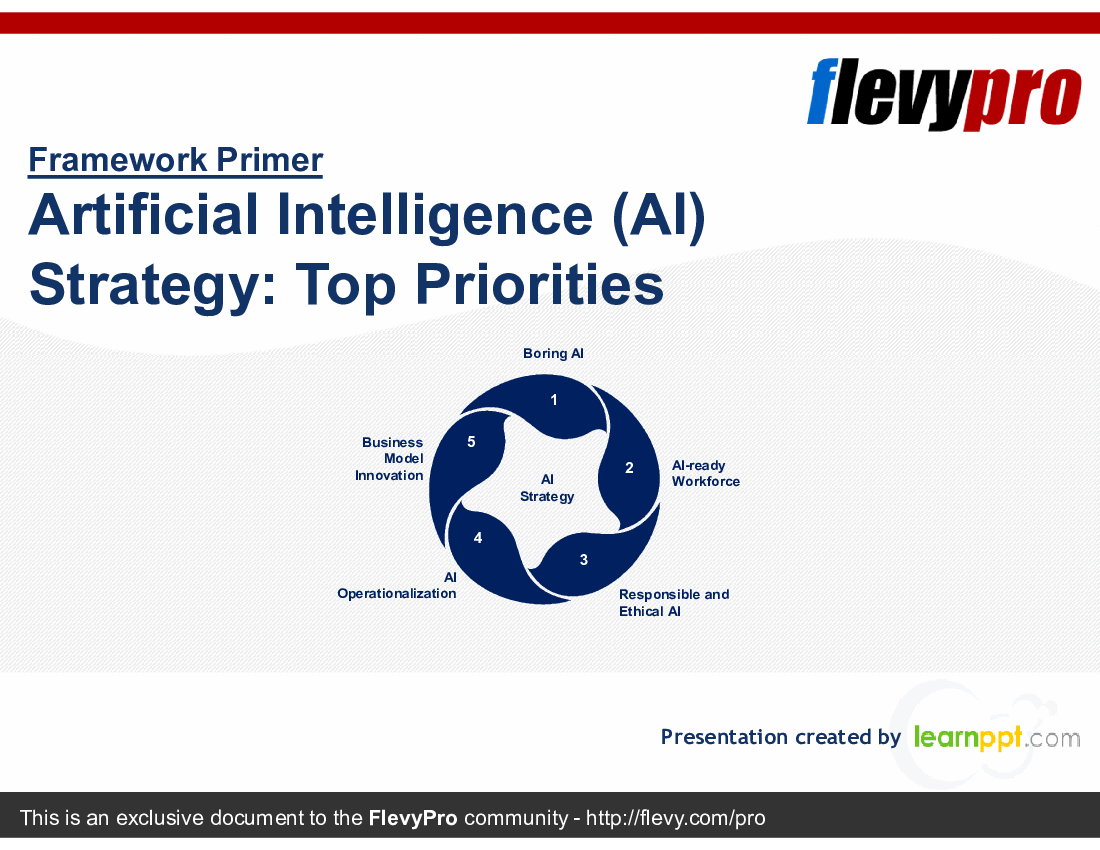
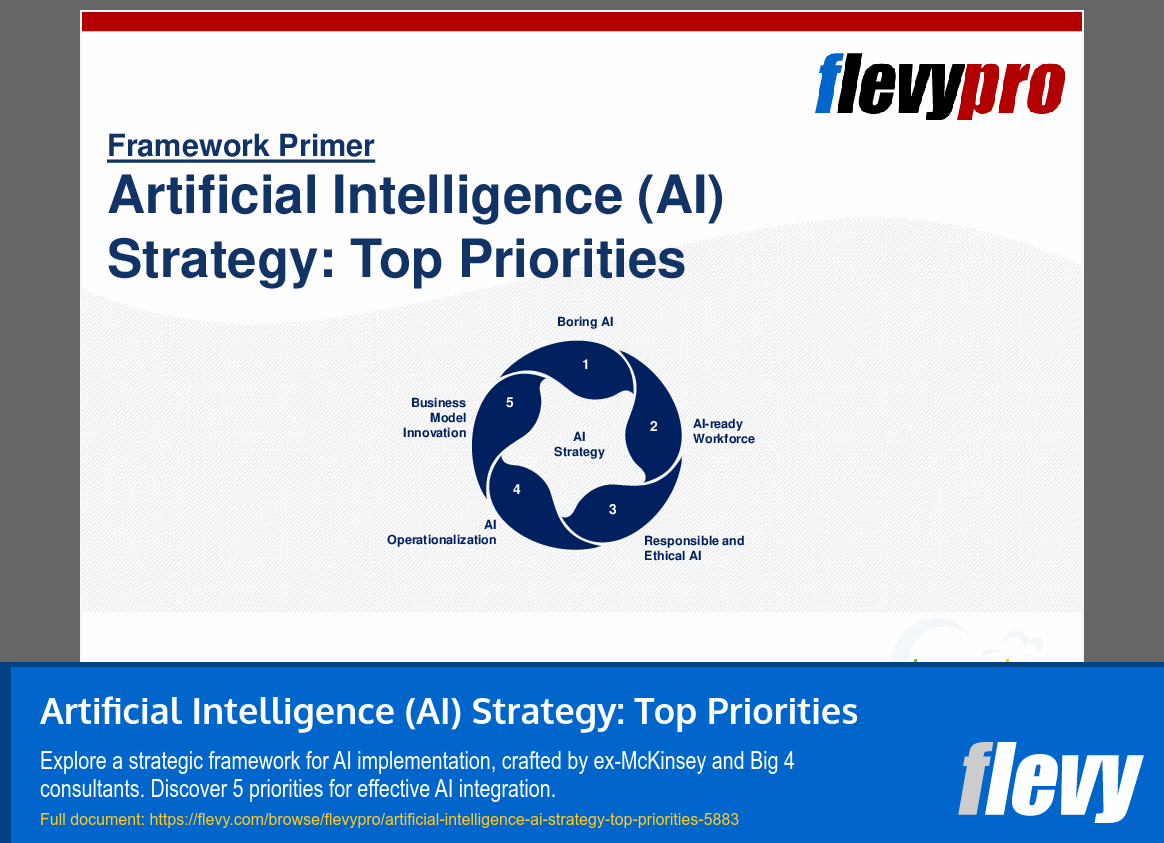
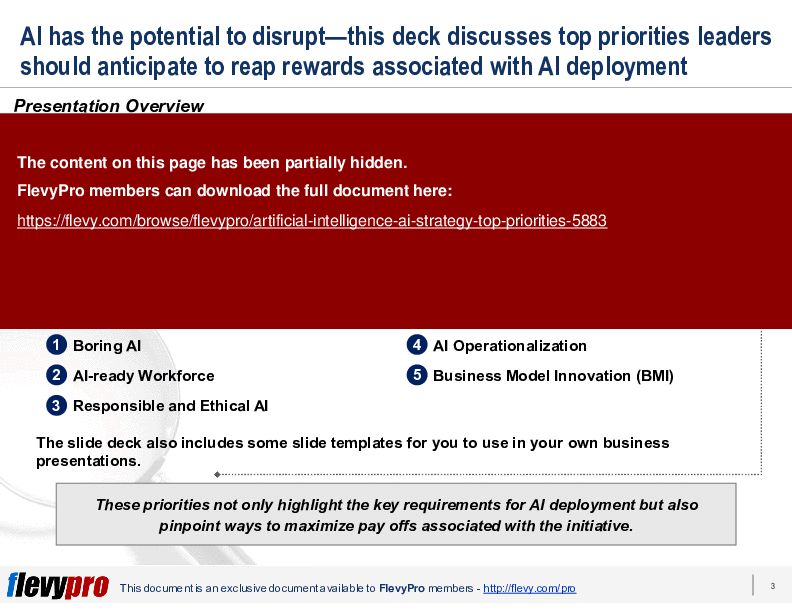
This presentation talks about the 5 key priorities of a robust AI Strategy that businesses should follow to position themselves as AI leaders:
1. Boring AI
2. AI-ready Workforce
3. Responsible and Ethical AI
4. AI Operationalization
5. Business Model Innovation (BMI)
The slide deck also includes some slide templates for you to use in your own business presentations.
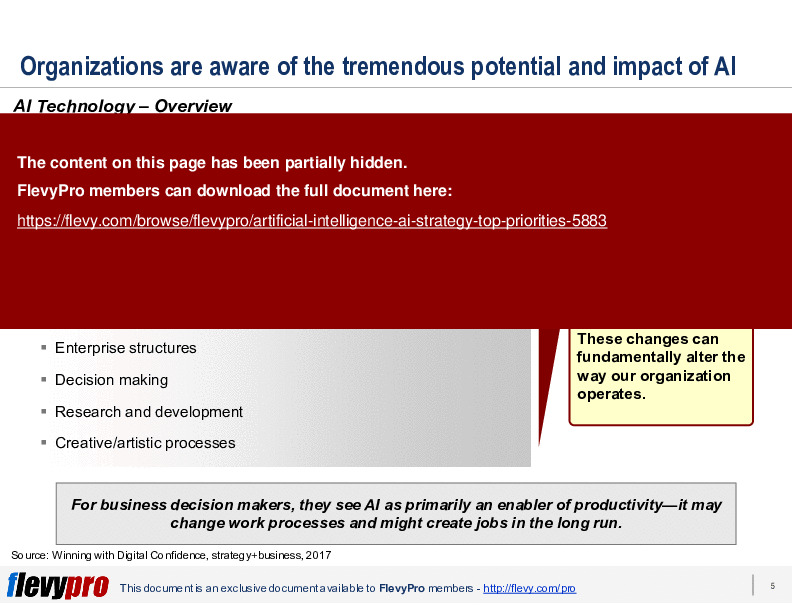
AI technology is reshaping enterprise structures, decision-making processes, and research and development. This presentation underscores how AI can fundamentally alter organizational operations, driving productivity and creating new job roles. It emphasizes that AI should be integrated with other technologies and not deployed in isolation to avoid potential pitfalls.
Executives must recognize the importance of an AI-ready workforce, upskilling employees to handle AI and machine learning technologies. This PPT provides insights into the critical steps for operationalizing AI across multiple departments, ensuring data integration, and addressing AI-related challenges. It also includes templates to help you craft your own AI strategy presentations.
Got a question about this document? Email us at flevypro@flevy.com.
Executive Summary
The "Artificial Intelligence (AI) Strategy: Top Priorities" presentation provides a comprehensive framework for organizations aiming to harness the transformative power of AI. It outlines 5 critical priorities that leaders must address to successfully implement AI initiatives and maximize their benefits. This deck not only highlights the essential components of an AI strategy, but also offers actionable insights and templates that can be utilized in business presentations. By following these priorities, organizations can position themselves as leaders in AI deployment and innovation.
Who This Is For and When to Use
• Corporate executives seeking to integrate AI into their business strategies
• Integration leaders responsible for overseeing AI implementation
• Consultants advising organizations on AI readiness and operationalization
• Teams focused on digital transformation and innovation management
Best-fit moments to use this deck:
• During strategic planning sessions to define AI priorities
• In workshops aimed at building AI capabilities within teams
• For presentations to stakeholders on AI deployment strategies
• When assessing organizational readiness for AI integration
Learning Objectives
• Define the key components of an effective AI strategy
• Identify the top priorities for successful AI implementation
• Develop a framework for operationalizing AI across the organization
• Establish governance mechanisms for responsible and ethical AI use
• Create a roadmap for building an AI-ready workforce
• Analyze the impact of AI on existing business models and processes
Table of Contents
• Overview (page 3)
• AI Technology (page 5)
• Top Priorities of AI Strategy (page 8)
• Templates (page 20)
Primary Topics Covered
• Boring AI - Focuses on the automation of routine tasks to enhance efficiency and productivity within organizations.
• AI-ready Workforce - Emphasizes the importance of building capabilities and skills in the workforce to effectively leverage AI technologies.
• Responsible and Ethical AI - Addresses the need for robust governance and risk management practices to mitigate potential AI-related risks.
• AI Operationalization - Discusses the integration of AI into various business functions to unlock its full value across the organization.
• Business Model Innovation (BMI) - Explores how AI can be utilized to transform and innovate existing business models for greater impact.
Deliverables, Templates, and Tools
• AI strategy framework template for outlining key priorities
• Workforce development plan for building AI capabilities
• Governance model for managing AI risks and ethical considerations
• Operationalization roadmap for integrating AI across departments
• Business model innovation assessment tool for evaluating AI impact
Slide Highlights
• Overview of AI's potential to disrupt traditional business processes
• Key priorities for AI strategy and their implications for organizations
• Insights from PwC's research on AI implementation challenges
• Visual representation of the AI operationalization process
• Framework for assessing workforce readiness for AI technologies
Potential Workshop Agenda
AI Strategy Development Session (90 minutes)
• Discuss the 5 key priorities of AI strategy
• Identify organizational strengths and weaknesses in AI readiness
• Develop an action plan for implementing AI initiatives
Workforce Capability Building Workshop (60 minutes)
• Assess current workforce skills related to AI
• Outline training and development programs for AI readiness
• Establish cross-functional collaboration strategies
Customization Guidance
• Tailor the AI strategy framework to align with specific organizational goals and objectives
• Modify workforce development plans to address unique skill gaps within the organization
• Adjust governance models to reflect industry-specific regulations and ethical standards
• Integrate existing business processes into the AI operationalization roadmap
Secondary Topics Covered
• Integration of AI with existing IT systems and data analytics
• Challenges in scaling AI initiatives across the organization
• The role of leadership in fostering an AI-driven culture
• Strategies for measuring the success of AI implementations
Topic FAQ
Document FAQ
These are questions addressed within this presentation.
What are the main priorities for an AI strategy?
The main priorities include Boring AI, AI-ready Workforce, Responsible and Ethical AI, AI Operationalization, and Business Model Innovation.
How can organizations ensure their workforce is AI-ready?
Organizations should focus on training, cross-skilling, and providing opportunities for employees to apply AI skills in their roles.
What risks are associated with AI deployment?
Risks include biased algorithms, data privacy concerns, and the need for robust governance to manage AI-related decisions.
How does AI impact business models?
AI can transform existing business models by streamlining processes, enhancing decision-making, and creating new revenue opportunities.
What is the significance of operationalizing AI?
Operationalizing AI ensures that it is integrated across various functions, maximizing its value and effectiveness within the organization.
How can organizations measure the success of their AI initiatives?
Success can be measured through established KPIs that track productivity, innovation, and the overall impact of AI on business outcomes.
What are the key components of responsible AI?
Key components include governance frameworks, risk management processes, and ethical guidelines for AI usage.
How can organizations overcome challenges in AI implementation?
Organizations can address challenges by developing a clear strategy, investing in workforce training, and establishing strong governance mechanisms.
Glossary
• AI - Artificial Intelligence, the simulation of human intelligence in machines.
• Operationalization - The process of embedding AI into organizational functions.
• Business Model Innovation (BMI) - The process of transforming existing business models using AI.
• Governance - Frameworks and processes for managing AI-related risks and ethical considerations.
• AI-ready Workforce - A workforce equipped with the necessary skills and knowledge to leverage AI technologies.
• Boring AI - The use of AI for automating routine tasks to improve efficiency.
• Cross-skilling - Training employees in multiple areas to enhance collaboration and problem-solving.
• Risk Management - Processes for identifying and mitigating risks associated with AI usage.
• Data Privacy - The protection of personal data in AI applications.
• KPI - Key Performance Indicator, a measurable value that demonstrates how effectively an organization is achieving its objectives.
• Ethical AI - The responsible use of AI technologies, ensuring fairness and accountability.
• Integration - The process of combining AI with existing systems and processes.
• Transformation - Significant changes in business processes driven by AI technologies.
• Productivity Gains - Increases in efficiency and output as a result of AI implementation.
• Decision Making - The process of making choices based on data and insights provided by AI.
• Automation - The use of technology to perform tasks without human intervention.
• Collaboration - Working together across teams to leverage AI capabilities.
• AI Models - Algorithms and systems that enable AI functionalities.
• Data Governance - Policies and procedures for managing data quality and usage in AI.
• Machine Learning - A subset of AI that enables systems to learn from data and improve over time.
Source: Best Practices in Artificial Intelligence, Business Model Innovation, Business Ethics PowerPoint Slides: Artificial Intelligence (AI) Strategy: Top Priorities PowerPoint (PPTX) Presentation Slide Deck, LearnPPT Consulting
Did you need more documents?
Consider a FlevyPro subscription from $39/month. View plans here.
For $10.00 more, you can download this document plus 2 more FlevyPro documents. That's just $13 each.
|
Download our FREE Digital Transformation Templates
Download our free compilation of 50+ Digital Transformation slides and templates. DX concepts covered include Digital Leadership, Digital Maturity, Digital Value Chain, Customer Experience, Customer Journey, RPA, etc. |