Editor's Note: Take a look at our featured best practice, Documents & Drawings Management Register (DDMR) (Excel workbook). Documents & Drawings Management Register (DDMR) is a Master List of Documents and Drawing Transactions used by all Client, Design Consultant, Project Management Consultant, Main Contractor from Design till As-Built Stages in all Infrastructure, Engineering, Oil & Gas, Construction, [read more]
* * * *
A recent update to official domain information has brought renewed structure to how access points are presented and understood. The change reflects ongoing adjustments in digital library navigation patterns and the way users locate the main entry points. The focus remains on clarity, stability, and consistent orientation across different environments.
In many cases, these updates also reflect how reading habits evolve online. Within this context, many users visit Z library in search of new inspiration and structured access to a wide range of reading materials, which makes domain clarity an important part of the overall experience.
Updated Domain Structure Overview
The updated domain structure is designed to reduce confusion and support smoother transitions between access points. Each change aims to keep references aligned with current naming and routing conventions used across digital platforms.
These adjustments also help maintain a consistent identity across different regions and devices. The emphasis is placed on stability, so the main entry points remain recognizable even when minor technical shifts occur.
Communication of Domain Changes
Information about updates is usually shared through coordinated announcements and platform notices. This helps ensure that changes are reflected in a timely way and remain easy to track within the broader ecosystem.
At the same time, updates are shaped by usage trends and search behavior patterns. This creates a feedback loop where navigation becomes more intuitive over time.
Transition into practical structure notes:
Key Elements in Domain Communication
Official Routing Signals
Official routing signals define how domain updates are structured across different entry points. These signals help maintain consistency in how addresses are interpreted by systems and browsers. They also reduce mismatches between old and updated references. Over time, this structure supports smoother transitions, especially when multiple entry points exist. The goal is to maintain continuity without disrupting the general flow of access.
Update Frequency Patterns
Update frequency patterns reflect how often domain adjustments are reviewed and refined. These patterns are not random and usually follow technical cycles linked to infrastructure or policy alignment. Regular monitoring ensures that outdated links are minimized. As a result, the system remains more stable and predictable for general use, even when background changes occur.
Navigation Consistency Check
Navigation consistency checks ensure that users reach the intended destination without unnecessary detours. These checks validate whether domains still point to active and correct locations. They also help maintain uniform behavior across devices and regions. By reinforcing consistency, the overall navigation experience becomes more reliable and easier to interpret in everyday use.
The structure of these elements creates a framework that supports both stability and gradual improvement across the system.
Observed Access Behavior Patterns
Domain updates often coincide with shifts in how access behavior develops across platforms. These patterns reflect changes in timing, usage frequency, and preferred entry routes, which naturally evolve over time.
Such behavior also highlights the importance of predictable navigation. When structure remains stable, access flows become smoother and easier to follow, even during periods of adjustment.
Stability and Long Term Orientation
Long term orientation in domain management focuses on maintaining recognizable pathways and reducing unnecessary variation. This approach supports continuity across different user environments and technical conditions.
At the same time, gradual refinement allows the system to adapt without disrupting established patterns. This balance between stability and adjustment keeps navigation aligned with modern expectations while preserving familiarity.
One stop shop Document Management using Excel. A template to automatically generate document numbers, create files, update registers, manage approvals and create transmittals. No more manually updating spreadsheets, copy pasting information or dragging files back and forth!
Key [read more]
Do You Want to Implement Business Best Practices?
You can download in-depth presentations on Document Management and 100s of management topics from the FlevyPro Library. FlevyPro is trusted and utilized by 1000s of management consultants and corporate executives.
For even more best practices available on Flevy, have a look at our top 100 lists:
These best practices are of the same as those leveraged by top-tier management consulting firms, like McKinsey, BCG, Bain, and Accenture. Improve the growth and efficiency of your organization by utilizing these best practice frameworks, templates, and tools. Most were developed by seasoned executives and consultants with over 20+ years of experience.
Readers of This Article Are Interested in These Resources
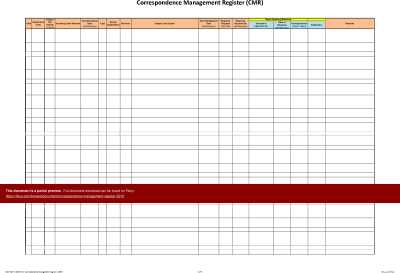
Correspondence Management Register (CMR) is the most important for every organization for tracking,monitoring, controlling,distributing and history of all references of incoming and outgoing correspondences like E-mail,Letter,Fax,Video Conferencing,Minutes of Meeting,Circular,Memo requires to [read more]
Document Numbering for an organization or for a project plays a highly important role in controlling and monitoring correspondences and documents generated across the organization and project as per the requirements.
A unique document numbering system across project/organization will improve the [read more]
This is a fully automated document transmittal system. You can index, compress, record and send many files in minutes. It is great for document control, contract management and project management.
Key Features:
- Tested using Windows 10 and Microsoft Excel 2016
- Programmed in Microsoft [read more]
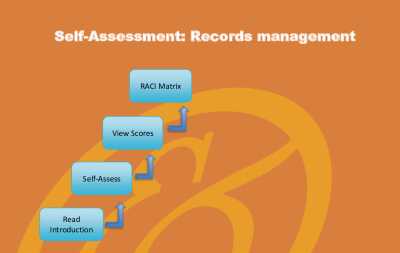
The Records Management Implementation Toolkit includes a set of best-practice templates, step-by-step workplans, and maturity diagnostics for any Records Management related project. Please note the above partial preview is ONLY of the Self Assessment Excel Dashboard, referenced in steps 1 and 2 [read more]
 A recent update to official domain information has brought renewed structure to how access points are presented and understood. The change reflects ongoing adjustments in digital library navigation patterns and the way users locate the main entry points. The focus remains on clarity, stability, and consistent orientation across different environments.