 A seller opens the M&A data room on a Monday, and by Friday a dozen bidder advisers have read through contracts, payroll files and pricing sheets. Whatever sat in those documents on Monday is now in the hands of people who may never close the deal, and some of whom compete with the company for a living.
Redaction is how sellers decide what those readers actually see. Done well, it protects employees, customers and the company’s competitive position without starving buyers of the information they need to bid. This guide sorts documents into three tiers and explains where the line falls for each.
A Three-Tier Way to Sort Every Document
Most sellers treat redaction as a binary choice: show it or hide it. In practice, documents fall into three groups, and each one calls for a different treatment.
| Tier |
Treatment |
Typical Documents |
| Redact |
Remove permanently from the version buyers see |
National ID numbers, named salaries, medical details, personal bank details |
| Restrict |
Share only with a small, approved group |
Customer-level pricing, supplier rates, product roadmaps, cost breakdowns |
| Hold back |
Release later in the process |
Named customer lists, key employee contracts, legal advice |
Sorting before upload is far faster than debating each file when a bidder asks for it. A purpose-built data room for M&A makes the tiers practical, because permanent redaction, folder-level permissions and staged access sit in one place and translate directly into settings rather than workarounds.
Tier One: What to Redact Outright
Buyers need to understand headcount, cost structure and tenure. They do not need an employee’s Social Security, National Insurance or Social Insurance number, home address or health claim history. Replace names with employee IDs, strip government identifiers, and remove benefits claim details entirely.
Payroll files deserve particular care. Share compensation by role, band or anonymized ID, and name individuals only where their contracts directly affect the deal, such as the executives a buyer plans to retain.
Consumer-facing businesses carry a second exposure: customer data. Names, email addresses and purchase histories should usually be converted to aggregates before any bidder sees them.
Test That Redaction Is Actually Permanent
A black box drawn over text in a PDF often leaves the words intact underneath. Before upload, try to copy and paste from the redacted area, and run a search for a redacted term. If either one works, the redaction is cosmetic and the document needs to be flattened and reissued.
Tier Two: What to Restrict to a Clean Team
Some information is fine for a financial buyer to see but dangerous to hand a competitor. The US Federal Trade Commission’s guidance on pre-merger due diligence identifies current and future pricing, strategic plans and costs as competitively sensitive. Where that material must be exchanged, the agency points parties toward clean teams, third-party consultants and blinded, aggregated summaries reviewed by counsel.
In a data room, a clean team is a folder with a short, named access list. Members should come from outside the buyer’s pricing, sales, procurement and hiring functions. They review the raw files and report back conclusions, not the underlying numbers.
Sellers who skip this step when a competitor is bidding take on risk that has nothing to do with price. Antitrust counsel should confirm the structure before anything goes live.
Tier Three: What to Hold until the Process Narrows
Some documents are harmless in the right hands and costly in the wrong ones. Named customer lists are the classic case, since a losing bidder who learns who the biggest accounts are can approach them directly. Staging disclosure keeps that information back until a buyer has earned it.
| Stage |
What Buyers See |
What Stays Hidden |
| First round |
Overview, anonymized financials, organization chart |
Customer names, individual pay, supplier terms |
| Second round |
Redacted contracts, detailed financials, IP summaries |
Named accounts, privileged legal material |
| Exclusivity |
Customer names, key employee contracts, full supplier terms |
Anything counsel advises withholding |
Legal advice sits in its own category. Sharing a privileged memo can waive the privilege that protects it, so release depends on what counsel says, not on what a buyer requests.
How Redaction Works inside a Data Room
Modern VDR software handles much of the mechanical work. Pattern detection can scan thousands of files for ID numbers, card numbers and email addresses, and flag matches for review. Permanent redaction burns the mask into the shared version while the original stays in a restricted admin folder.
Other controls support the same goal. Dynamic watermarking ties every page to the viewer, view-only settings block downloads, and version control confirms the redacted file is the one buyers see. The audit trail then shows who opened what, which matters if a document surfaces somewhere it should not.
Automated detection still misses context. A person should review anything the software flags, and anything it does not.
A Pre-Upload Redaction Checklist
Run through this list before any folder goes live:
- Search the folder for ID numbers, card numbers and personal email addresses
- Check metadata, comments, tracked changes and hidden text in every file
- Look for hidden sheets, columns and linked cells in Excel workbooks
- Confirm each redaction is flattened by trying to copy the underlying text
- Send anything touching a competitor-bidder’s sensitive information to counsel
- Store unredacted originals in an admin-only folder, with version dates logged
Hidden spreadsheet tabs and tracked-change comments cause more accidental disclosure than any dramatic leak, largely because nobody thinks to look.
Who Should Sign Off before Documents Go Live
A short sign-off chain prevents most problems. The deal lead confirms scope, the HR lead checks personal data, and legal counsel reviews anything privileged or contractually restricted. Where a competitor is bidding, antitrust counsel reviews the clean team arrangement.
Build in a day or two for this step. A rushed upload on a Friday afternoon is how an unredacted payroll file ends up in front of twenty advisers.
Redaction as Part of Deal Strategy
Buyers notice how a seller handles disclosure. Clean, clearly labelled redactions signal a company with discipline and nothing to hide, while a stray salary figure or a visible customer name signals the opposite and invites tougher questions on everything else.
Sellers who sort documents into tiers before the first bidder logs in tend to run calmer processes. Decisions about what to show, restrict or hold back get made once, deliberately, rather than repeatedly under pressure.
Do You Want to Implement Business Best Practices?
You can download in-depth presentations on M&A (Mergers & Acquisitions) and 100s of management topics from the FlevyPro Library. FlevyPro is trusted and utilized by 1000s of management consultants and corporate executives.
For even more best practices available on Flevy, have a look at our top 100 lists:
These best practices are of the same as those leveraged by top-tier management consulting firms, like McKinsey, BCG, Bain, and Accenture. Improve the growth and efficiency of your organization by utilizing these best practice frameworks, templates, and tools. Most were developed by seasoned executives and consultants with over 20+ years of experience.
Readers of This Article Are Interested in These Resources
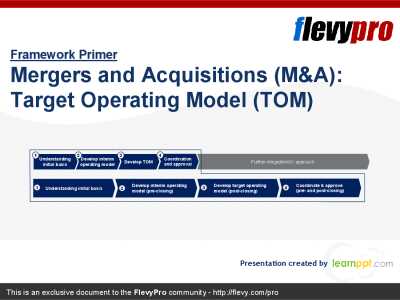
32-slide PowerPoint presentation
In an M&A situation, a fundamental question is what the Target Operating Model (TOM) of the resultant organization will look like. This framework addresses the topic of TOM Development in an M&A.
In formulating the Target Operating Model, there are 6 core areas that must be analyzed in an
[read more]
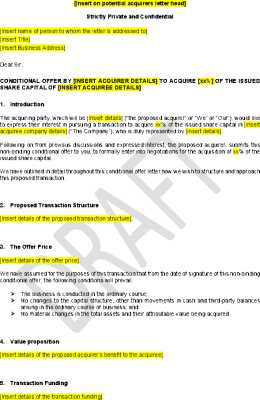
4-page Word document
A non-binding offer letter is used in a sales process to establish the terms of a deal between the seller and the buyer. Through the document, the potential acquirer expresses an interest to acquire the target, but the document is not intended to be legally binding and therefore, it does not
[read more]
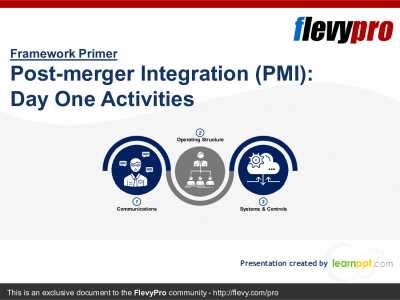
28-slide PowerPoint presentation
The Post-merger Integration (PMI) is a highly complex process. It requires swift action as well as running the core business activities simultaneously. There is no one-size fits all approach to a successful PMI Process. However, careful planning focusing on the strategic objectives of the deal and
[read more]
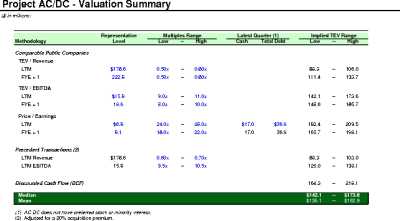
Excel workbook
This excel provides a DCF valuation template which is a valuation method where future cash flows are discounted to present value. The valuation approach is widely used within the investment banking and private equity industry.
This DCF valuation model includes comprehensive financial metrics, such
[read more]