
Explore a comprehensive M&A framework crafted by industry experts. This PPT covers strategies, tools, and integration methodologies for successful mergers and alliances. M&A and Alliances Approach is a 79-slide PPT PowerPoint presentation slide deck (PPT) available for immediate download upon purchase.
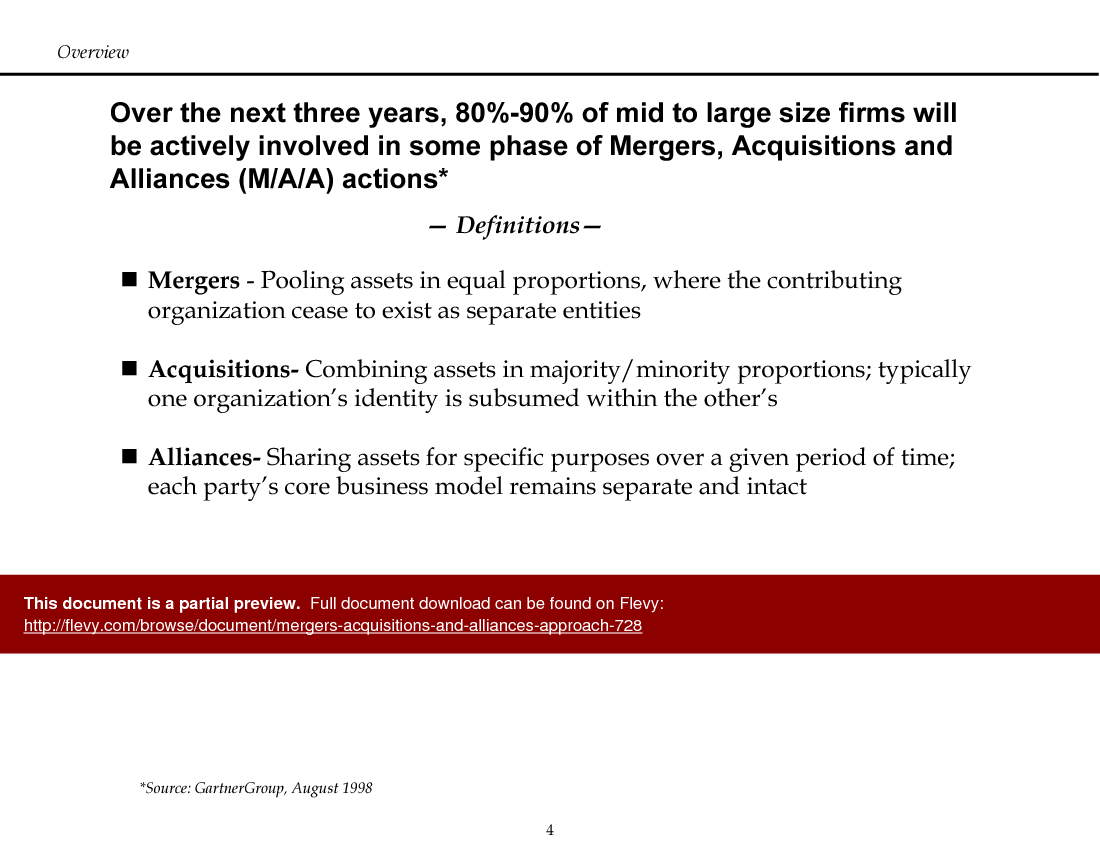
This presentation introduces the approach, frameworks and tools used in managing M&A and alliance projects. Mergers – Pooling assets in equal proportions, where the contributing organization cease to exist as separate entities Acquisitions- Combining assets in majority/minority proportions; typically one organization?s identity is subsumed within the other?s Alliances- Sharing assets for specific purposes over a given period of time; each party?s core business model remains separate and intact
The contents include:
• Overview
• Acquisition, Alliance And Integration Model
• AAIM frameworks & tools
• SITE frameworks & tools
• XYZ capabilities
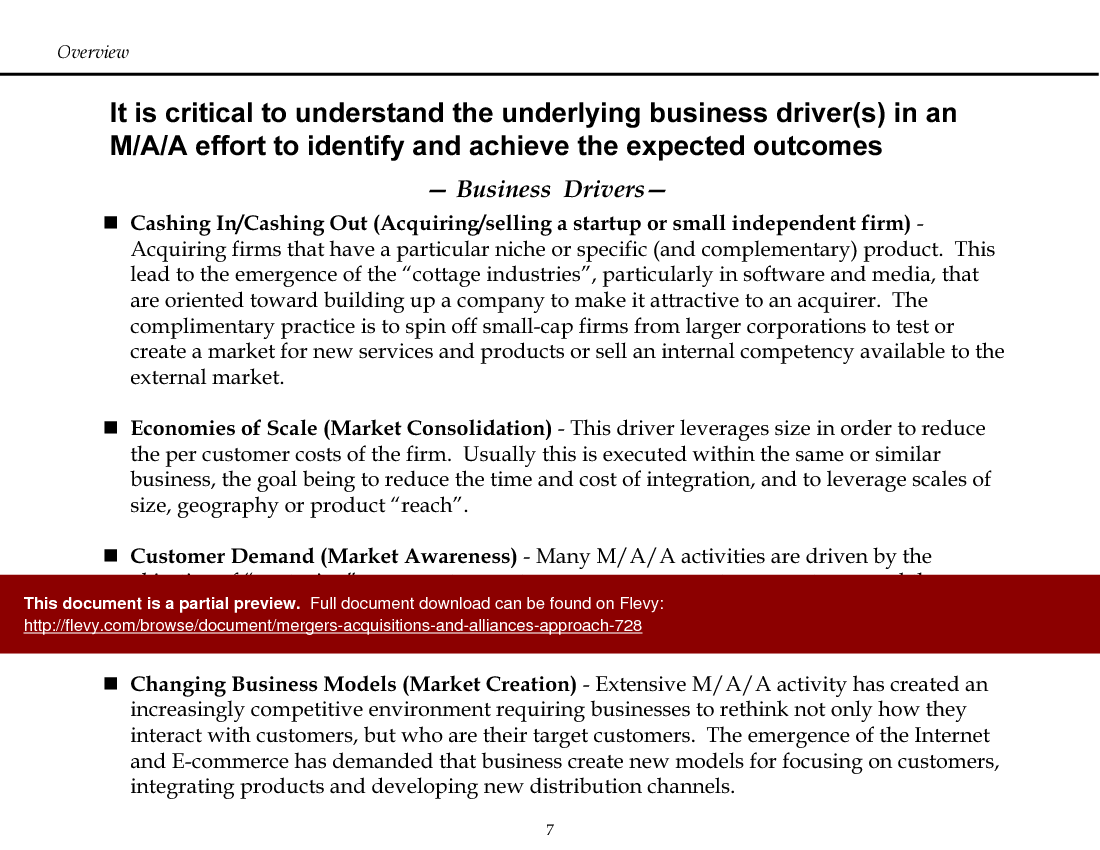
This document provides a comprehensive guide to the critical phases of M&A and alliance projects, from evaluating strategic options to integrating operations post-merger. It emphasizes the importance of understanding business drivers such as market consolidation, customer demand, and changing business models. The document also outlines the AAIM methodology, a proprietary approach designed to ensure successful merger outcomes by addressing both pre-merger and post-merger integration.
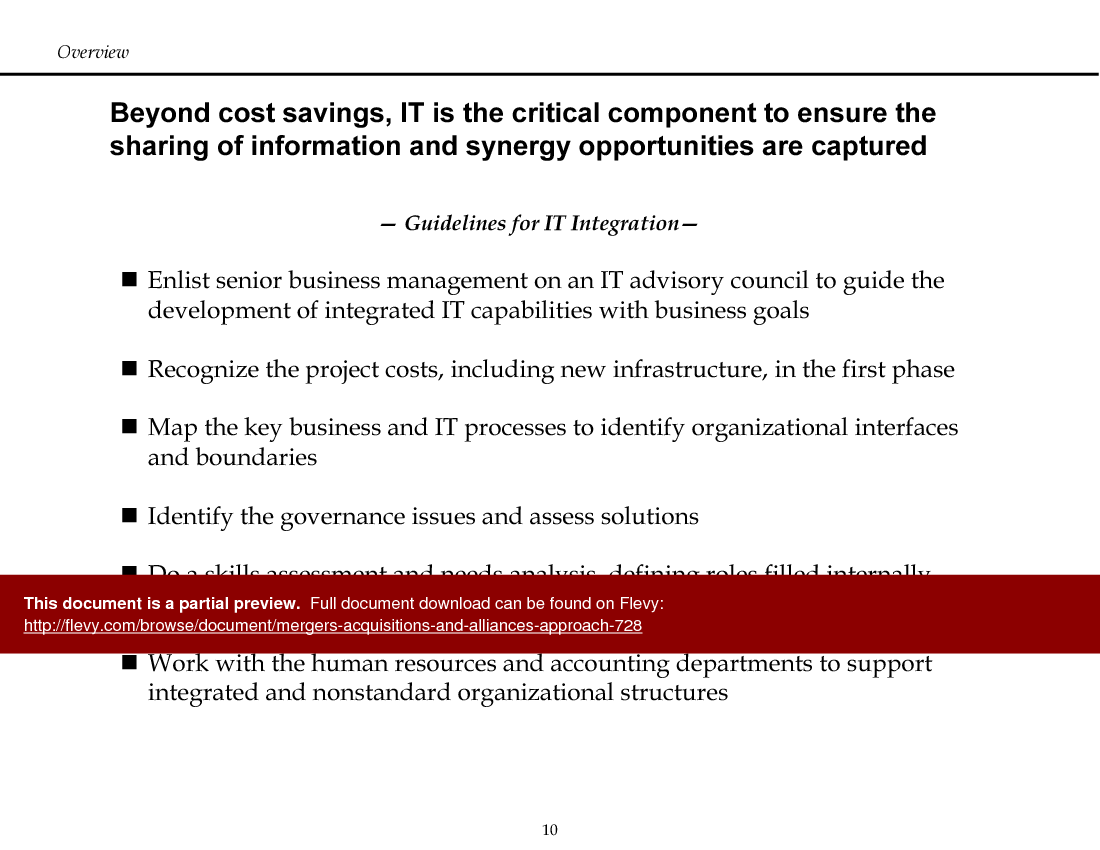
The guide highlights the necessity of IT integration in capturing synergy opportunities and cost savings. It offers detailed guidelines for aligning IT capabilities with business goals, mapping key processes, and addressing governance issues. The emphasis on IT underscores its role in facilitating seamless information sharing and operational efficiency during mergers and acquisitions.
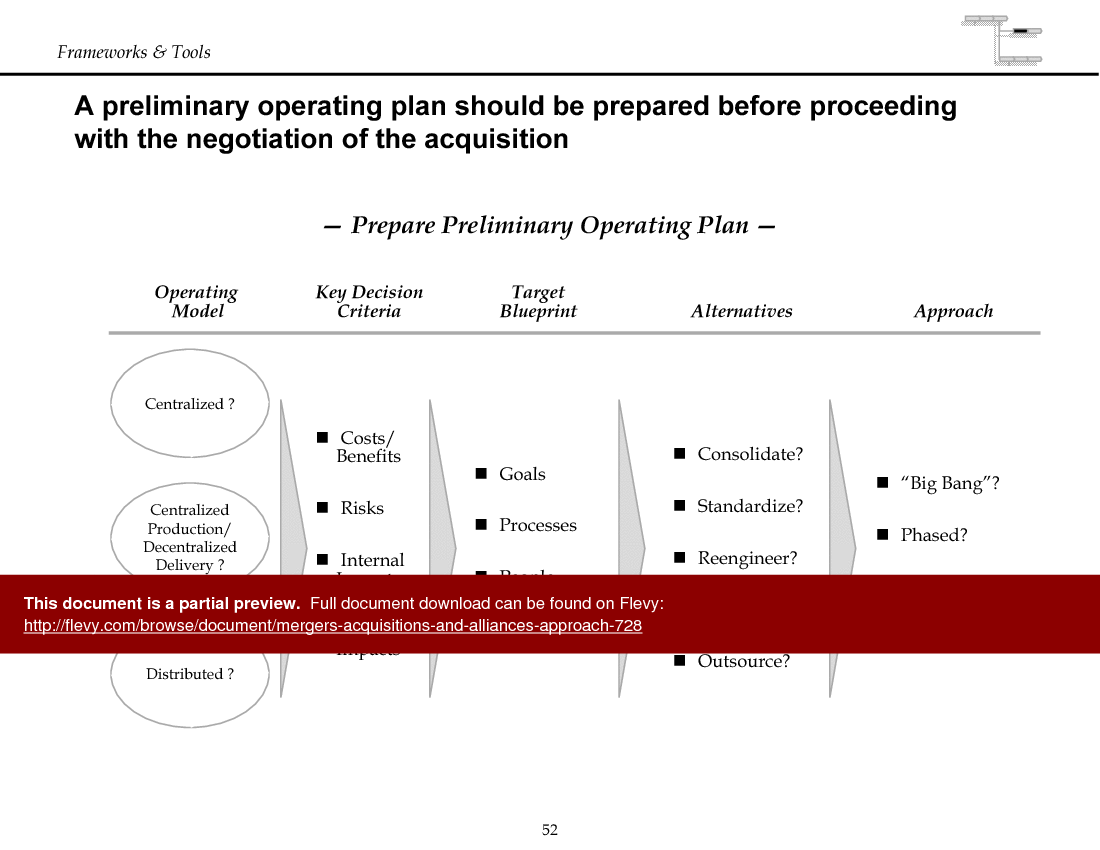
Additionally, the document delves into the intricacies of resource integration, covering aspects like HR management and legacy systems. It provides frameworks and tools for assessing fit, conducting due diligence, and preparing preliminary operating plans. By focusing on these critical areas, the document equips executives with the knowledge to navigate the complexities of M&A and alliances effectively.
Got a question about the product? Email us at support@flevy.com or ask the author directly by using the "Ask the Author a Question" form. If you cannot view the preview above this document description, go here to view the large preview instead.
MARCUS OVERVIEW
This synopsis was written by Marcus [?] based on the analysis of the full 79-slide presentation.
Executive Summary
The "Mergers, Acquisitions & Alliances Approach" presentation is a consulting-grade resource designed to guide corporate executives and integration leaders through the complexities of M&A activities. This deck, reflecting McKinsey, Bain, or BCG-quality rigor (not affiliated), offers a structured framework for assessing, negotiating, and integrating mergers, acquisitions, and alliances. Users will gain insights into strategic intent, candidate screening, and operational integration, enabling them to navigate the M&A landscape effectively and achieve desired synergies.
Who This Is For and When to Use
• Corporate executives overseeing M&A initiatives
• Integration leaders managing post-merger activities
• Strategy consultants advising on M&A transactions
• Financial analysts evaluating acquisition targets
• HR leaders focusing on cultural integration post-merger
Best-fit moments to use this deck:
• During the pre-merger phase to define strategic intent and candidate criteria
• In the negotiation phase to assess fit and structure deals
• Throughout post-merger integration to ensure operational alignment and cultural cohesion
Learning Objectives
• Define strategic intent and articulate the desired outcomes of M&A activities
• Identify and screen potential acquisition candidates based on strategic fit
• Negotiate terms effectively while aligning organizational cultures
• Develop a comprehensive integration plan that addresses operational and resource integration
• Establish governance structures to support ongoing M&A initiatives
• Measure and track integration success to ensure alignment with strategic goals
Table of Contents
• Overview of Mergers, Acquisitions, and Alliances (page 2)
• Definitions and Key Concepts (page 4)
• Business Drivers for M&A (page 7)
• Key Success Factors in M&A (page 11)
• AAIM Framework Overview (page 13)
• Pre-Merger Integration Steps (page 14)
• Contemplating Alternatives (page 16)
• Negotiating the Relationship (page 18)
• Articulating the Model (page 22)
• Integration Framework (page 23)
• Managing the Integration Program (page 28)
• Program Management Infrastructure (page 29)
Primary Topics Covered
• M&A Definitions - Clear definitions of mergers, acquisitions, and alliances, highlighting their unique characteristics and implications.
• Business Drivers - Exploration of key factors driving M&A activities, including economies of scale and customer demand.
• Key Success Factors - Identification of critical elements necessary for successful M&A execution, such as cultural alignment and effective communication.
• AAIM Framework - A proprietary methodology for guiding M&A initiatives from assessment to integration.
• Pre-Merger Integration - Steps to prepare for a merger, including candidate screening and strategic fit assessment.
• Post-Merger Integration - Strategies for integrating operations, resources, and cultures post-merger.
Deliverables, Templates, and Tools
• Candidate screening criteria template for assessing potential acquisition targets
• Integration program office structure outline to manage post-merger activities
• Communication plan template for internal and external stakeholders
• Governance model framework to establish decision-making processes
• Performance tracking metrics to measure integration success
• Risk management checklist to identify and mitigate potential integration challenges
Slide Highlights
• Overview slide detailing the M&A landscape and its implications for mid to large firms
• Business drivers slide that outlines key motivations behind M&A activities
• AAIM framework slide illustrating the stages of the acquisition assessment and integration process
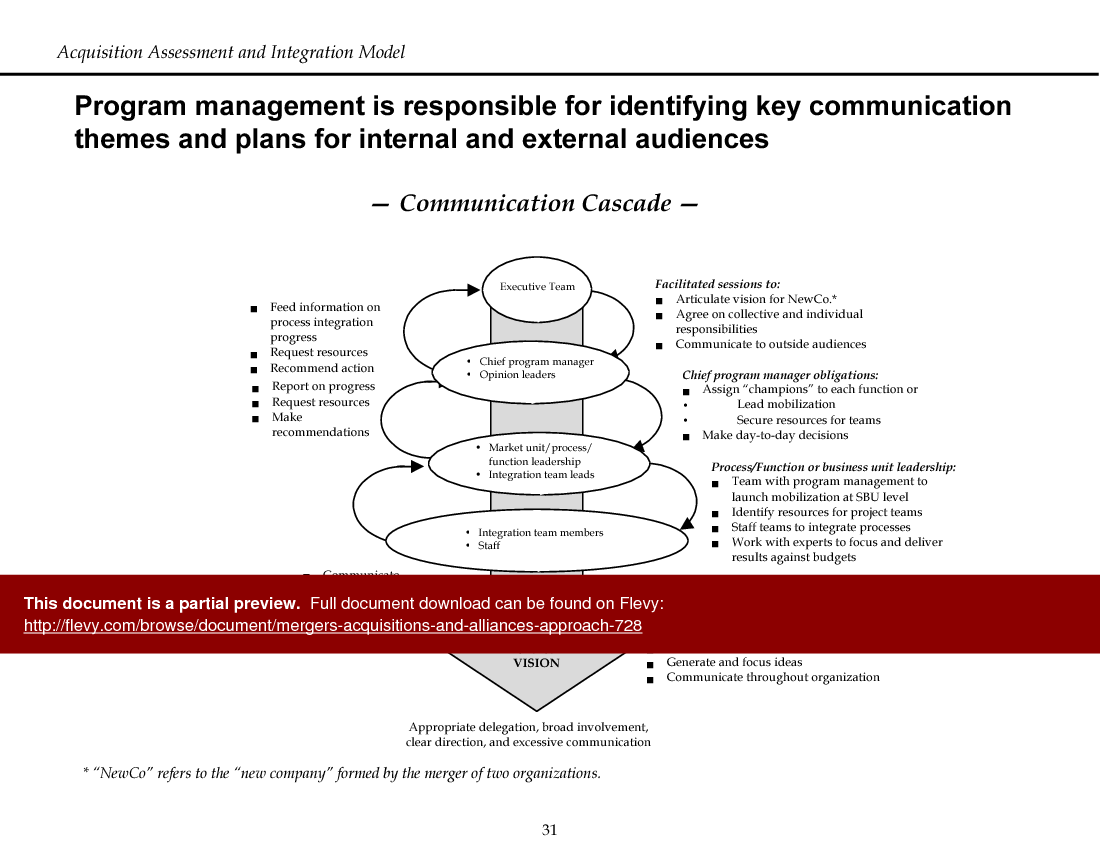
• Integration framework slide showcasing the shared business model and operational integration strategies
• Key success factors slide summarizing critical elements for M&A success
Potential Workshop Agenda
M&A Strategy Session (90 minutes)
• Define strategic intent and desired outcomes for M&A
• Identify potential acquisition candidates and establish screening criteria
• Discuss governance structures and decision-making processes
Integration Planning Workshop (120 minutes)
• Develop a comprehensive integration plan addressing operational and cultural aspects
• Establish performance tracking metrics and communication strategies
• Identify quick wins and long-term objectives for integration success
Customization Guidance
• Tailor the candidate screening criteria to reflect specific strategic goals and market conditions
• Adjust the communication plan to align with organizational culture and stakeholder expectations
• Modify the integration framework to accommodate unique operational requirements and resource capabilities
Secondary Topics Covered
• Cultural integration challenges and strategies
• Financial implications of M&A activities
• Regulatory considerations in mergers and acquisitions
• Technology integration and its role in M&A success
• Change management practices to support employee transitions
FAQ What is the AAIM framework?
The AAIM framework is a proprietary methodology designed to guide organizations through the stages of acquisition assessment and integration, ensuring alignment with strategic goals.
How do I assess the fit of potential acquisition candidates?
Fit assessment involves evaluating candidates based on strategic alignment, operational compatibility, and cultural chemistry to ensure a successful merger.
What are the key success factors for M&A?
Key success factors include clear financial rationale, cultural alignment, effective communication, and a structured integration plan.
How can I measure the success of an integration?
Success can be measured through performance tracking metrics that evaluate operational efficiency, cultural cohesion, and achievement of strategic objectives.
What role does governance play in M&A?
Governance establishes decision-making processes and accountability structures that guide the integration efforts and ensure alignment with organizational goals.
What are common challenges in post-merger integration?
Common challenges include cultural clashes, misalignment of operational processes, and communication breakdowns among stakeholders.
How can I ensure effective communication during the integration process?
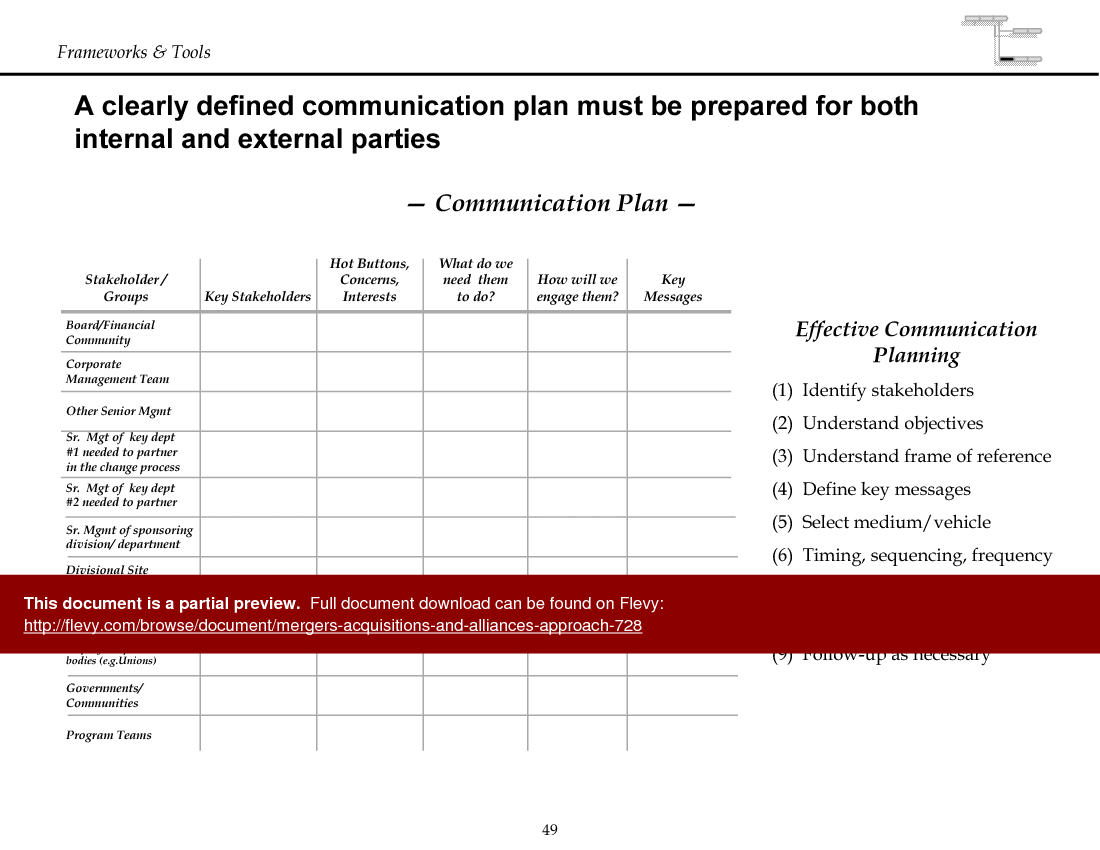
Develop a comprehensive communication plan that addresses the needs of all stakeholders, ensuring transparency and clarity throughout the integration.
What should I prioritize during the first 100 days post-merger?
Focus on establishing governance structures, identifying quick wins, and maintaining employee morale to set a positive tone for the integration process.
Glossary
• Mergers - Pooling assets where contributing organizations cease to exist separately.
• Acquisitions - Combining assets where one organization's identity is subsumed by another.
• Alliances - Sharing assets for specific purposes while maintaining separate business models.
• AAIM - Acquisition Assessment and Integration Model, a structured approach to M&A.
• Integration Program Office - A dedicated team managing post-merger integration activities.
• Cultural Fit - The compatibility of organizational cultures between merging entities.
• Governance Model - Framework for decision-making and accountability during integration.
• Performance Tracking - Metrics used to measure the success of integration efforts.
• Risk Management - Identifying and mitigating potential challenges during integration.
• Communication Plan - Strategy for communicating with stakeholders throughout the M&A process.
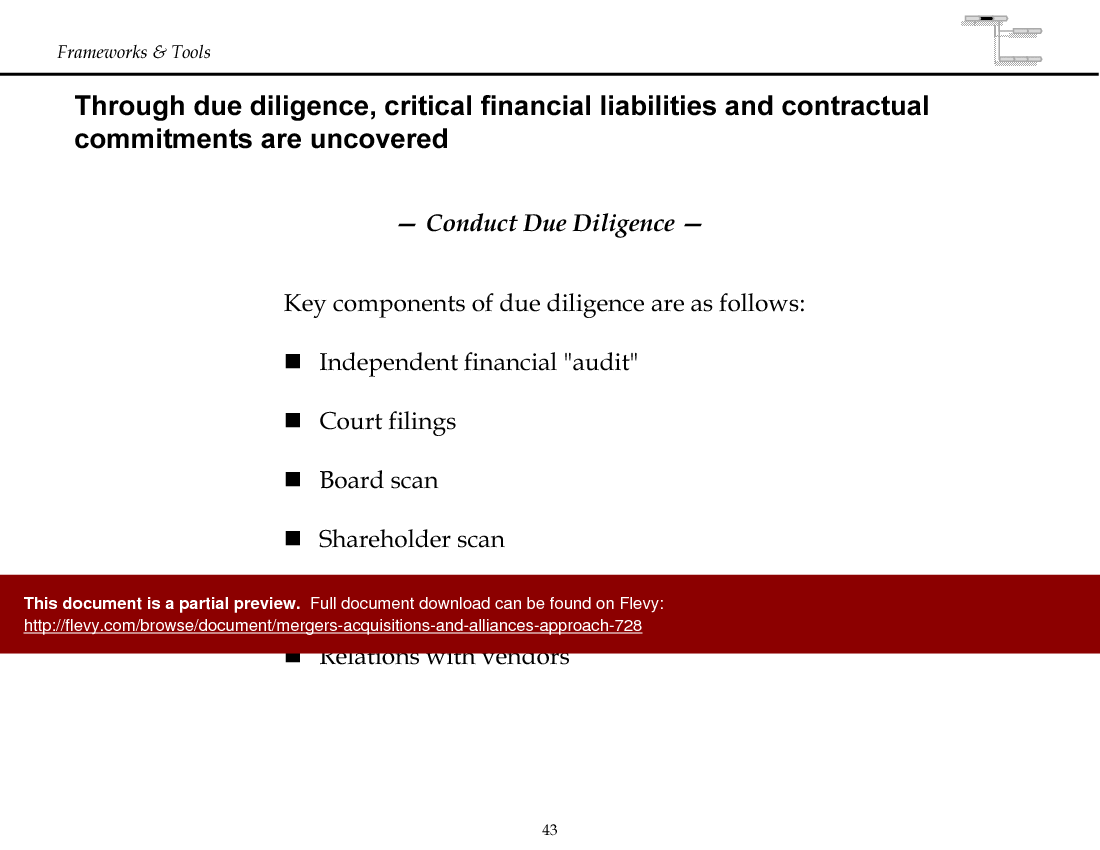
• Due Diligence - Comprehensive assessment of a target company before acquisition.
• Synergies - Benefits achieved through the combination of 2 organizations.
• Change Management - Strategies to manage transitions and employee adaptation during integration.
• Operational Integration - Aligning processes and systems post-merger for efficiency.
• Strategic Intent - The overarching goals guiding M&A activities.
• Candidate Screening - Process of evaluating potential acquisition targets.
• Shared Vision - A unified outlook on the goals and objectives of the merged entity.
• Integration Framework - A structured approach to merging operations and cultures.
• Business Drivers - Factors motivating M&A activities, such as market expansion or cost reduction.
• Cultural Integration - The process of aligning organizational cultures post-merger.
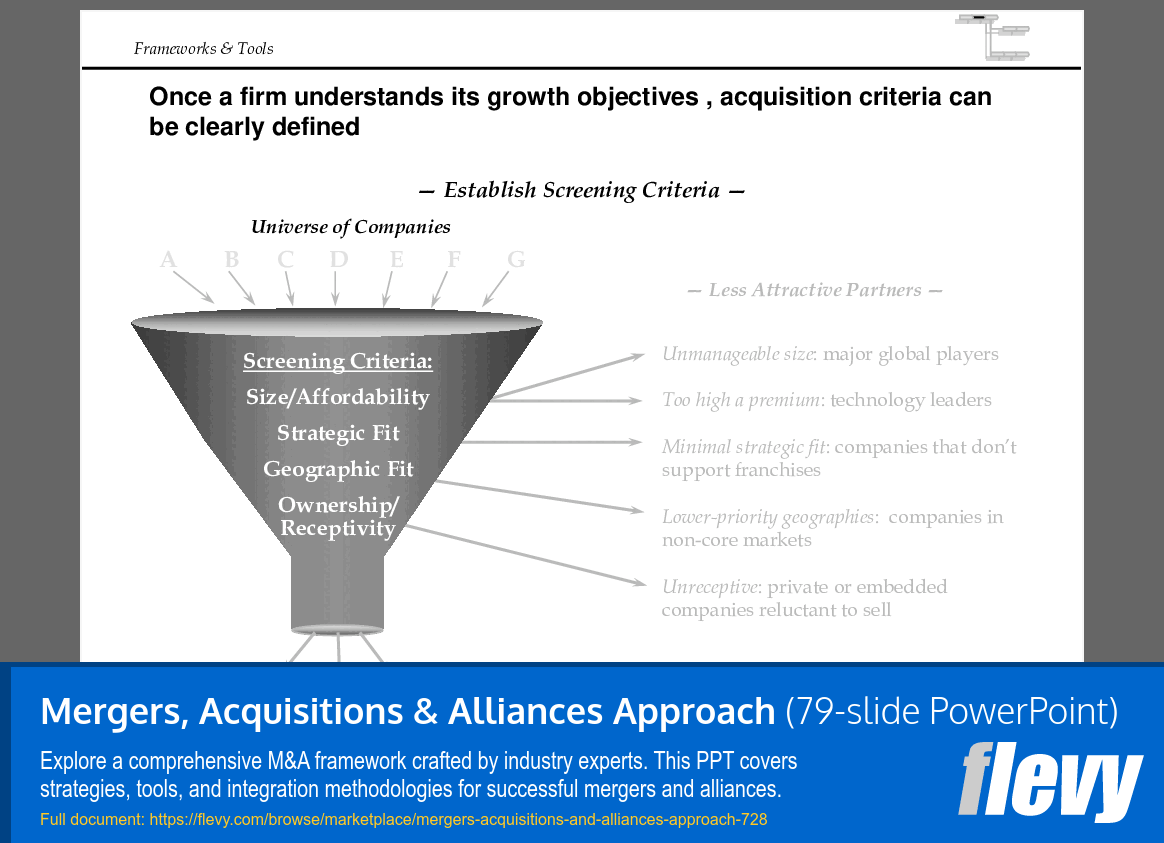
This PPT slide outlines a structured approach to defining acquisition criteria based on growth objectives. Key screening criteria include Size/Affordability, Strategic Fit, Geographic Fit, and Ownership/Receptivity. Size/Affordability ensures financial viability within budget constraints. Strategic Fit assesses alignment with existing operations and long-term goals. Geographic Fit evaluates the target's location relevance to market strategy. Ownership/Receptivity examines the target company's willingness to engage in a sale. Characteristics of less attractive partners include unmanageable size, high premium demands, minimal strategic fit, low-priority geographies, and unresponsiveness to sale inquiries. This framework guides firms in narrowing down potential acquisition targets to focus on promising opportunities.
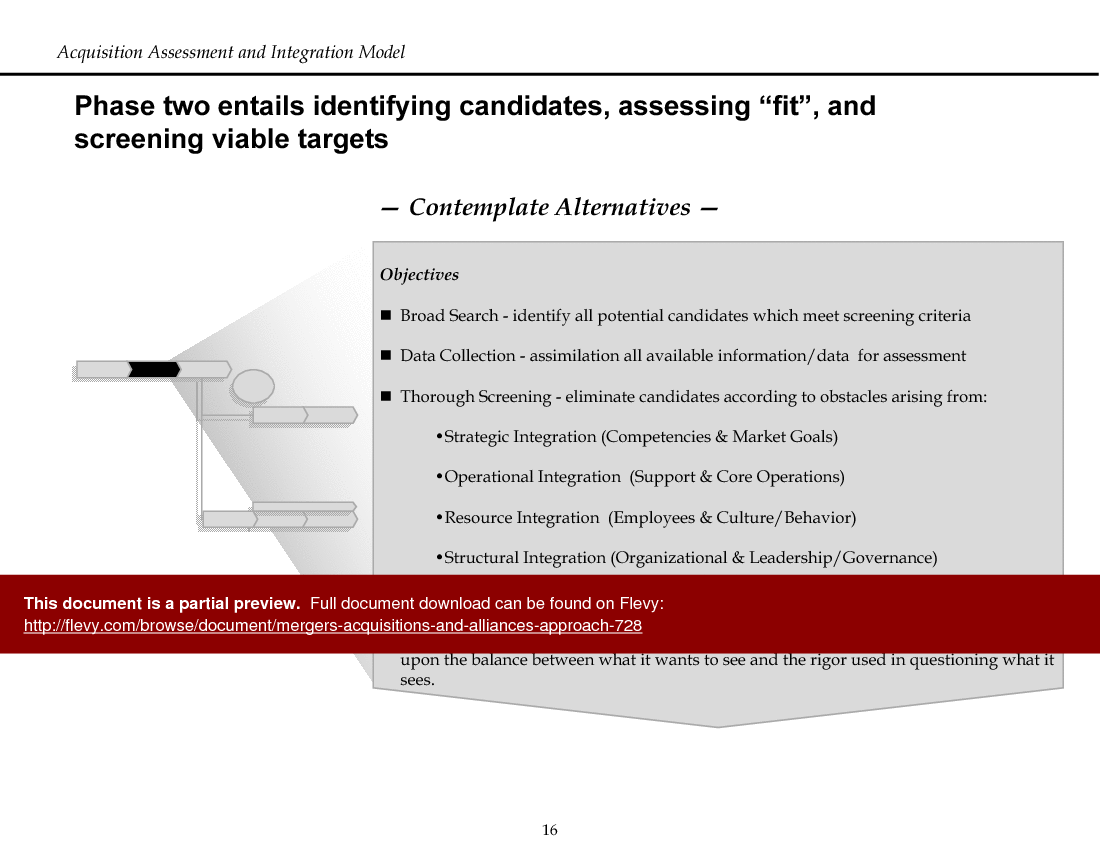
This PPT slide outlines a structured approach to screening acquisition candidates using a five-gate model. Gate 1 establishes minimum candidate criteria as an initial filter. Gate 2 assesses strategic fit, ensuring alignment with growth objectives. Gate 3 evaluates chemistry fit, focusing on compatibility between management teams and organizational cultures, critical for successful integration. Gate 4 examines operational fit, determining the complementarity of business models to realize operational synergies. Gate 5 addresses the economics of the acquisition, quantifying potential synergies and costs to understand financial implications and return on investment. Thorough due diligence activities, including building information packs and analyzing transactions, are essential for a comprehensive candidate assessment, balancing qualitative and quantitative factors in the acquisition process.
This PPT slide presents a framework for organizational integration during mergers and acquisitions, emphasizing the need for acquirers to have a clear vision of the future structure and culture. The framework categorizes integration strategies into a matrix with 2 axes: the degree of change in the acquired company and the extent of cultural assimilation.
The "Absorption" quadrant indicates full conformity to the acquirer's culture, while the "Preservation" quadrant reflects minimal change and cultural autonomy. The "Best of Both" strategy integrates elements from both organizations, fostering cultural integration. The "Transformation" quadrant involves redefining operational methods for a new cultural paradigm. The "Reverse Merger" quadrant allows the acquired company to dictate terms, leading to significant cultural assimilation despite low change. This framework aids executives in aligning integration strategies with organizational goals.
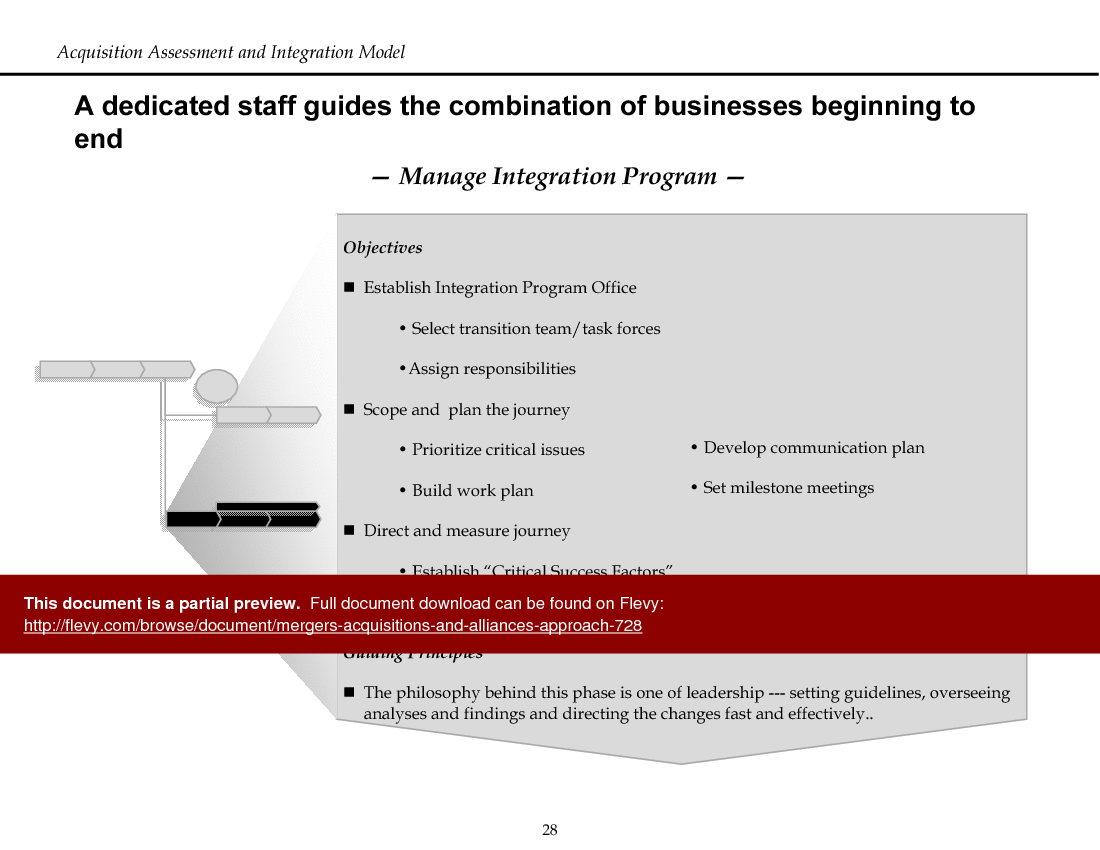
This PPT slide outlines the framework for managing program infrastructure during post-merger integration. The integration program office coordinates teams and stakeholders, with the executive team, including the client executive sponsor and program coordinators, prioritizing initiatives. This leadership structure aligns strategic objectives with operational execution. Key functional areas include resource management, communications planning, and performance tracking, essential for effective integration. The diagram illustrates roles of the personnel transition team and enterprise design team, emphasizing collaboration in addressing integration challenges. Risk management and integration issues management are critical for proactive obstacle mitigation. The transition council oversees the integration process, ensuring alignment of operational areas like human resources and finance with business strategy. Focus on quality assurance and performance analysis maintains high standards throughout the integration journey.


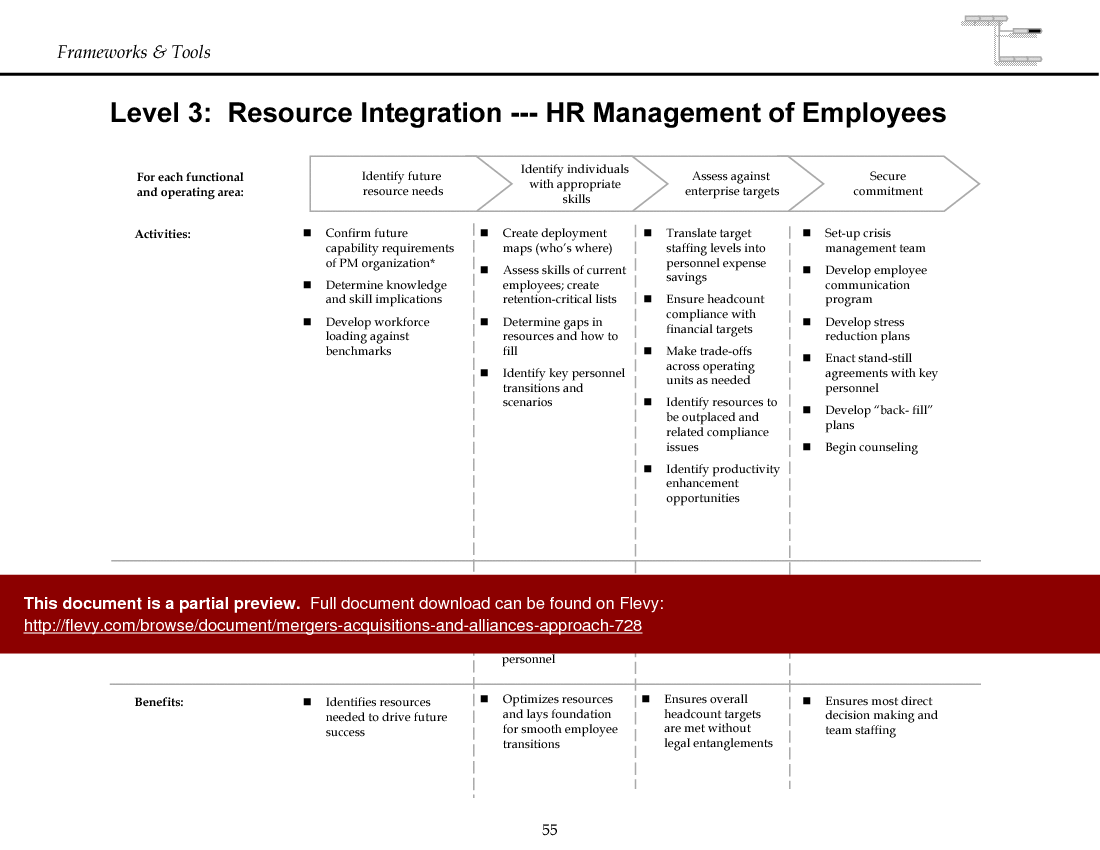
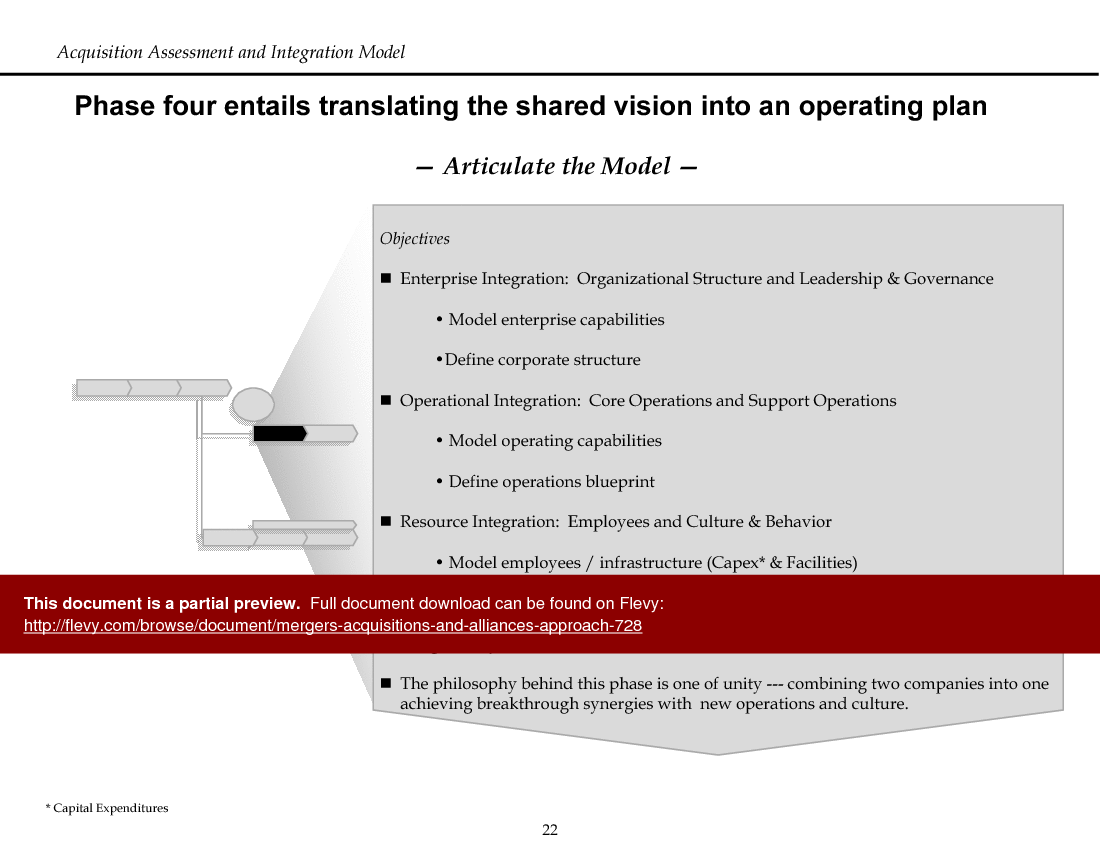
This PPT slide outlines a framework for operational integration during mergers and acquisitions, focusing on core and support operations. The Activities section emphasizes evaluating current processes and identifying structural changes to enhance project management capabilities, including confirming requirements and developing tailored change imperatives. The Deliverables section details expected outputs, such as an integrated post-merger structure and process model, along with actionable business cases for functional integration. The Benefits section highlights the alignment of current processes with organizational commitments, fostering a consistent decision-making framework and emphasizing direct decision-making and team staffing to maintain agility throughout the integration process.
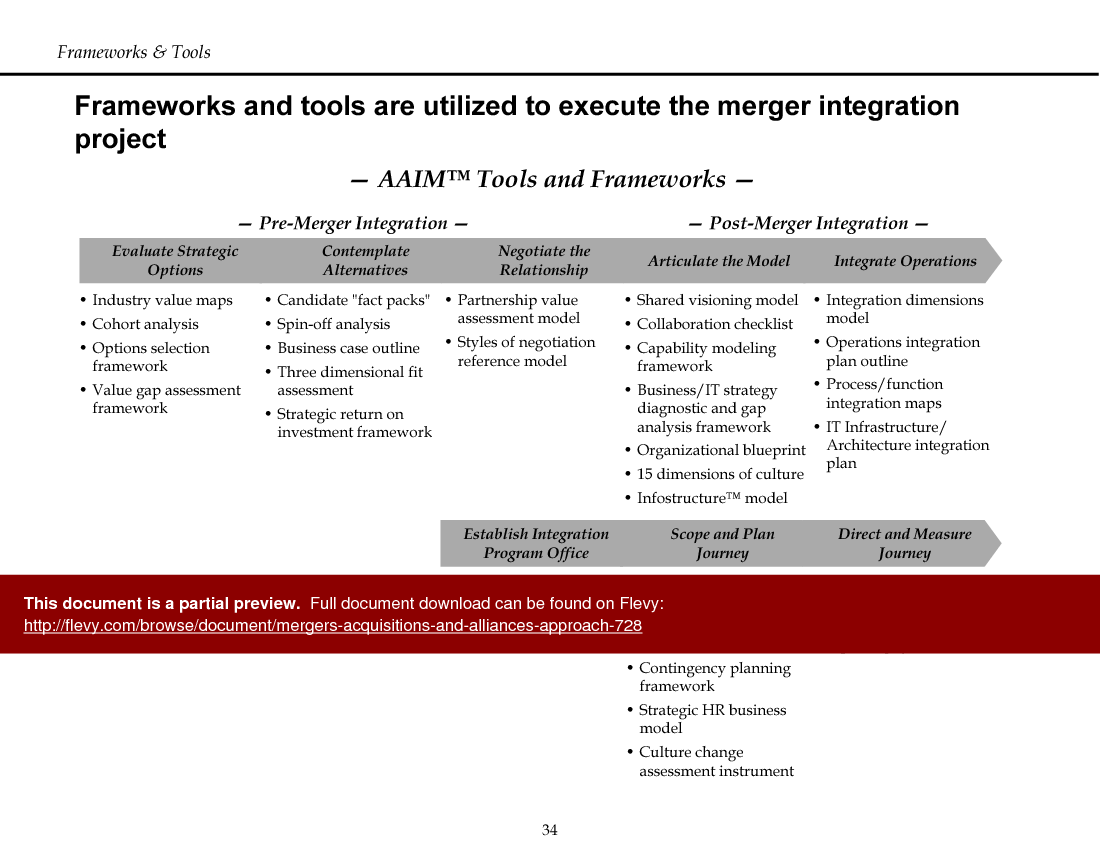
This PPT slide outlines a structured approach to merger integration through pre-merger and post-merger frameworks. In the pre-merger phase, strategic options evaluation utilizes industry value maps and cohort analysis to identify synergies. The options selection framework and value gap assessment framework guide decision-making, while candidate "fact packs" and spin-off analyses clarify strategic implications. The business case outline and three-dimensional fit assessment align objectives.
In the post-merger phase, the integration model and operations integration are articulated using the shared visioning model and collaboration checklist. Capability modeling and business/IT strategy diagnostics assess organizational readiness. Establishing an integration program office is critical, supported by the program management model and milestone plan model for structured oversight. The journey management framework ensures effective communication among teams. Value-driven leadership models and operations integration reporting systems measure progress and outcomes, equipping organizations to navigate merger complexities effectively.
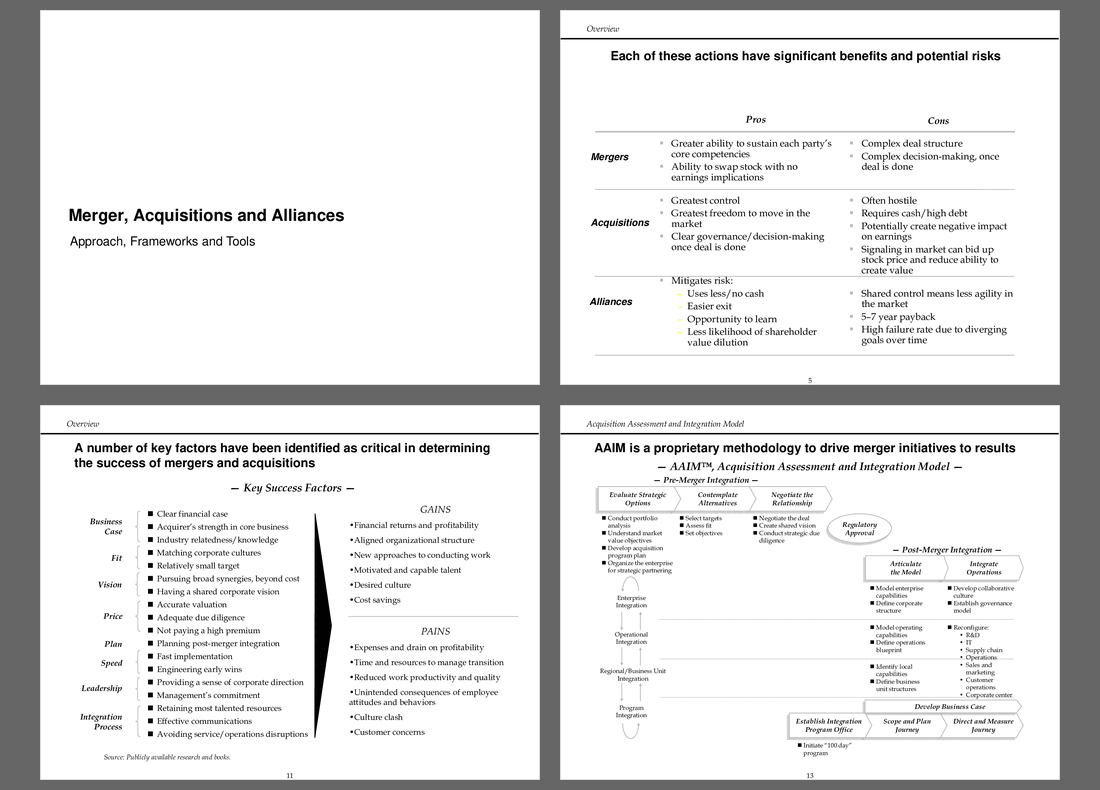
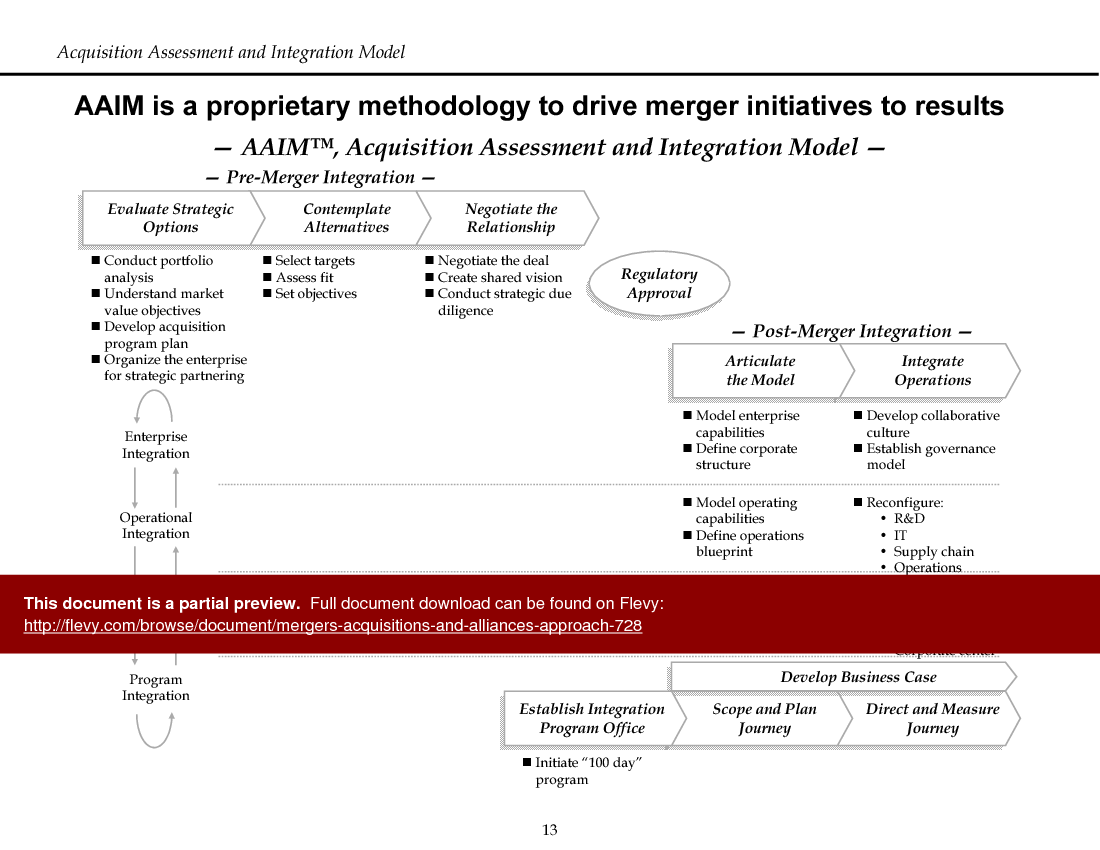
The AAIMâ„¢ (Acquisition Assessment and Integration Model) is a proprietary methodology for effective mergers, structured into Pre-Merger Integration and Post-Merger Integration phases.
In Pre-Merger Integration, critical steps include portfolio analysis, market value objectives, acquisition program planning, and organizing for strategic partnerships. This phase also involves selecting targets, assessing fit, setting objectives, negotiating relationships, creating a shared vision, conducting strategic due diligence, and obtaining regulatory approval.
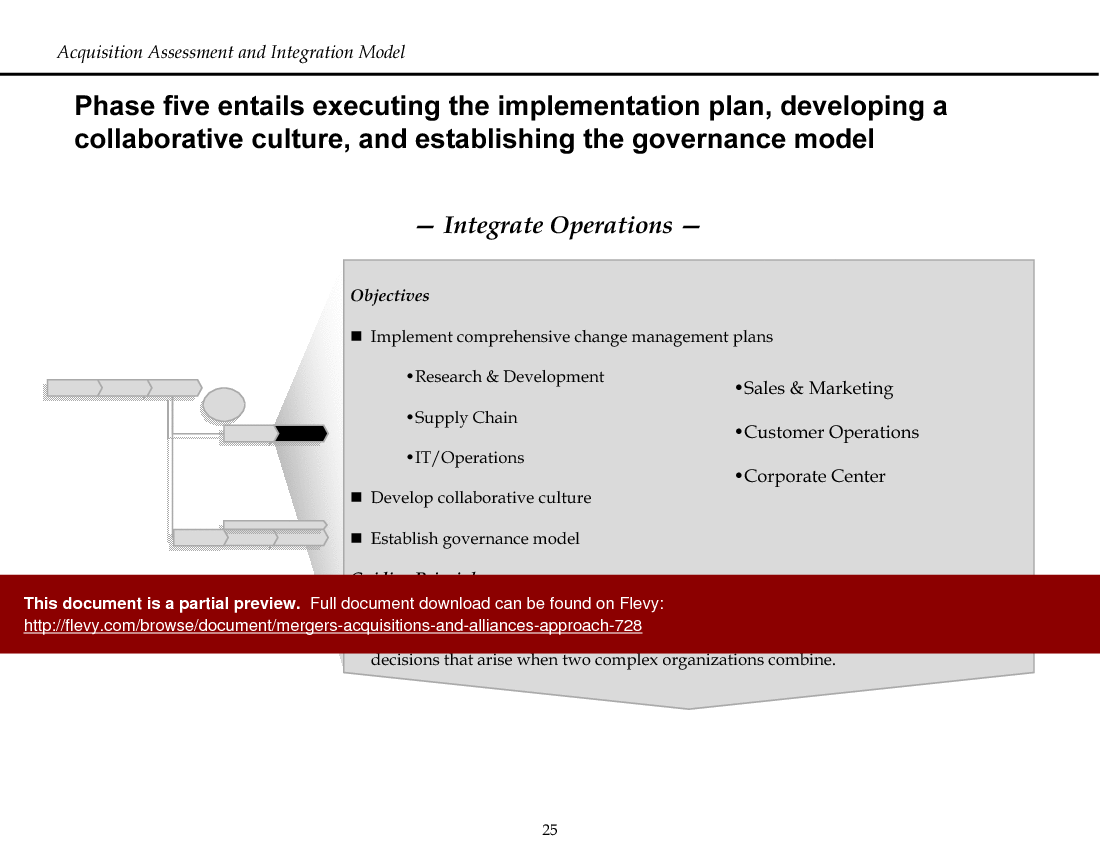
Post-Merger Integration focuses on articulating the model and integrating operations, including modeling enterprise capabilities, defining corporate structure, and identifying local capabilities. It emphasizes developing a collaborative culture, establishing governance models, and reconfiguring R&D, IT, supply chain, and sales operations.
A structured Integration Program Office is essential for overseeing the integration process, ensuring all critical aspects are addressed for smoother transitions and better alignment post-merger.
This PPT slide outlines a structured approach to assessing non-quantifiable risks and uncertainties in mergers, acquisitions, and alliances, categorized into Hurdles, Risks, and Uncertainties. Hurdles include inaccurate financials, management discontent, and board resistance, which are internal challenges that can impede progress. Risks encompass external factors like financial structure, debt assumptions, and inventory conditions, emphasizing the need to understand industry standards and avoid overly optimistic forecasts. Uncertainties involve unpredictable elements such as technological advancements, legal environments, and competitive dynamics, highlighting the influence of strategic partners and key managers. These factors can lead to stopping deals, modifying valuations, or delaying evaluations, underscoring the importance of thorough assessments in decision-making for successful mergers and acquisitions.
This PPT slide outlines critical factors influencing the success of mergers and acquisitions, categorized into Business Case, Fit, Vision, Price, Plan, Speed, Leadership, and Integration Process. The Business Case emphasizes a clear financial rationale, core business strength, and industry knowledge. Fit highlights cultural alignment and target company size as vital for integration success. Vision advocates for pursuing synergies beyond cost savings through a shared corporate vision. Price stresses accurate valuation and due diligence to avoid overpaying. Plan and Speed focus on post-merger integration planning and quick implementation, with early wins boosting morale. Leadership is essential for direction and talent retention. A robust integration process is crucial for achieving financial returns and organizational alignment while recognizing potential challenges like profitability drains and culture clashes.
This PPT slide presents a framework for integrating resources during mergers and acquisitions, centered on a shared vision that aligns the market goals of Company A and Company B. The shared vision supports the alignment of both organizations' distinctive competencies, essential for achieving market objectives. Core operations are critical to this integration, with support operations facilitating these functions. Employee engagement and alignment with the shared vision are vital for success, emphasizing the importance of a competent workforce. Effective leadership and governance guide the integration process, requiring an adaptable organizational structure aligned with strategic objectives. Specific actions include defining integration capabilities, establishing shared values, and ensuring clear communication and defined roles for a smooth transition.
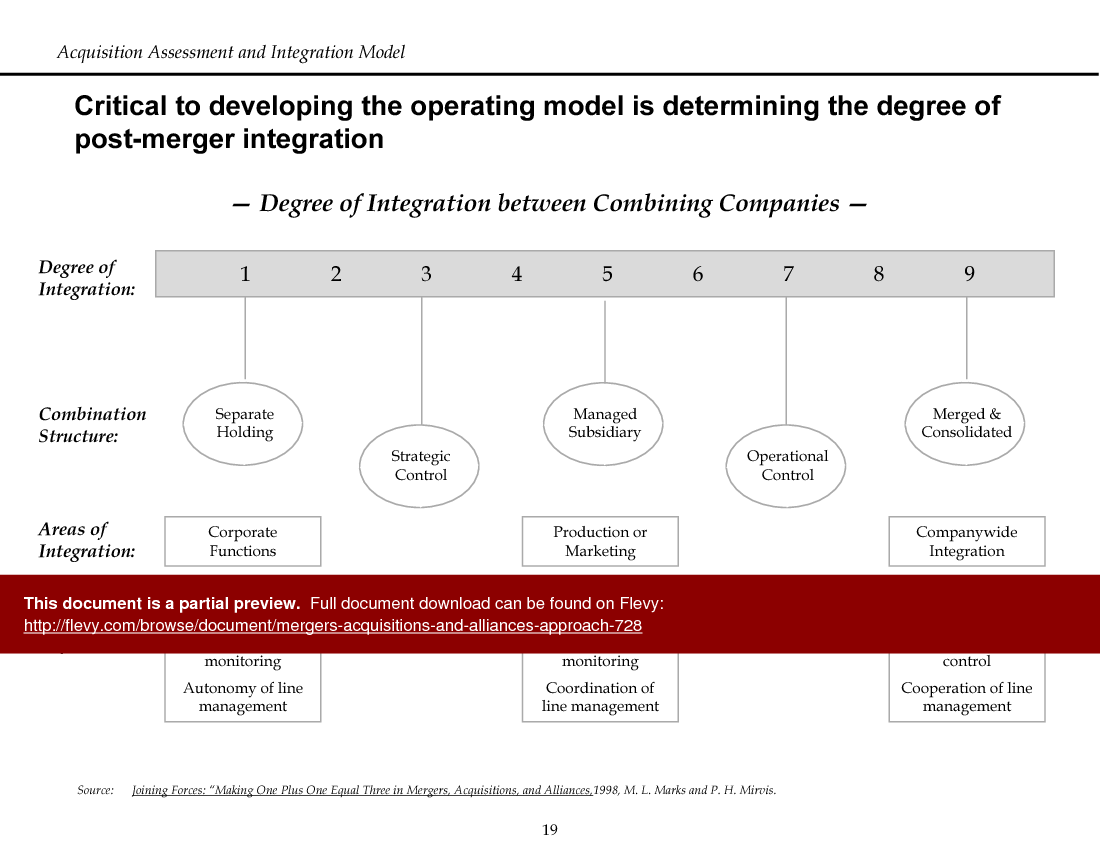
This PPT slide presents a framework for assessing integration levels during post-merger activities, categorizing the "Degree of Integration" into nine levels from "Separate Holding" to "Merged & Consolidated." Each level indicates a distinct approach to operational and governance integration. The "Combination Structure" outlines varying degrees of autonomy, where level one maintains independence and level nine represents full integration. The "Areas of Integration" differentiates between corporate functions and operational aspects, highlighting where synergies can be realized. Management implications suggest necessary adjustments in planning and monitoring based on the chosen integration level, with decentralized approaches for separate holdings and centralized planning for merged entities. This framework aids executives in evaluating integration strategies aligned with merger objectives.
This PPT slide outlines a strategic framework for addressing gaps in resource analysis during mergers, acquisitions, and alliances. It features 2 columns: "Gap" and "Plan," detailing challenges and corresponding strategies.
For "Overlapping operations," plans include rationalizing redundant capacity and redeploying displaced workforce to enhance efficiency and resource optimization. The "Redundant products" section suggests using freed-up cash for innovative licensing arrangements and alliances, promoting new revenue streams.
The "Similar market reputations" gap involves launching an image-building campaign focused on a stronger value proposition, emphasizing brand positioning. Lastly, the "Incompatible technology platforms" gap recommends gradually migrating older technology to a new platform and considering outsourcing, highlighting the complexities of technology integration.
This PPT slide outlines a framework for defining acquisition candidate criteria, emphasizing strategic alignment. It begins with assessing corporate strategy, focusing on core capabilities and resources. Key questions include identifying investment opportunities to enhance shareholder value and determining parent company interactions with business units. This assessment is vital for selecting appropriate acquisition targets.
The slide also defines opportunities to enhance market positioning through acquisitions, suggesting 3 objectives: limiting competitors' market challenges, opening new markets with less competition, and acquiring technologies that reduce costs or improve quality. Each objective promotes a proactive approach to defend and expand market share.
The visual representation illustrates the relationship between the corporate parent and strategic business units (SBUs), highlighting that new acquisitions should complement existing operations. The framework guides executives in ensuring acquisitions align with strategic goals, driving value creation.
This PPT slide presents a framework for negotiation tactics structured around 2 axes: the vertical axis, "Business Need," ranges from tactical short-term goals to strategic long-term objectives, while the horizontal axis illustrates relationships from transactional to relational dynamics. Three primary negotiation tactics are identified: Adversarial, characterized by a win/lose mentality and short-term focus; Cooperative, indicating a win/win scenario within a mutual benefit framework; and Synergistic, positioned as "beyond win/win," where outcomes create value exceeding individual contributions (1+1=3). Understanding motivations in negotiations distinguishes power/control-based relationships from those grounded in mutual interests, crucial for fostering long-term partnerships that yield greater collective benefits. This framework encourages leaders to assess and adapt their negotiation style to achieve optimal outcomes aligned with immediate business needs and long-term strategic goals.
This PPT slide outlines the pros and cons of mergers, acquisitions, and alliances. Mergers enhance core competencies and allow stock swaps without impacting earnings,, but they involve complex deal structures and decision-making challenges. Acquisitions provide greater control and governance post-deal,, but can be hostile, require significant cash or debt, and may inflate stock prices, complicating value creation. Alliances minimize cash usage and offer easier exit strategies, learning opportunities, and reduced shareholder disputes, yet shared control can decrease market agility, and the typical payback period of 5 to 7 years, along with a high failure rate, poses risks.
This PPT slide presents a framework for evaluating IT infrastructure options based on integration level and IT investment. The vertical axis ranges from "Business Unit/Division-Level IT Systems" to "Company-Wide IT Infrastructure," while the horizontal axis reflects investment orientation from low to high.
Four options emerge: "Maintain Current Course" for low integration and minimal investment; "Establish Critical Inter-Business Linkages" to enhance collaboration; "Migrate Major Functions to Common Systems" for improved data consistency; and "Migrate to Enterprise-Wide System" for a comprehensive overhaul supporting high integration and substantial investment.
The slide also highlights the risk of overspending on IT when pursuing high integration without adequate planning.
This PPT slide outlines the initial phase of an acquisition assessment and integration model, focusing on defining strategic intent, candidate criteria, and enterprise requirements. "Strategic Intent" establishes a direction for growth, profitability, or market penetration, aligning acquisition strategy with business goals. "Clear Criteria" emphasizes understanding specific synergies sought from candidates, aiding in target identification. "Enterprise Requirements" stresses the need for effective organization to capitalize on opportunities swiftly. Additionally, the guiding principles advocate for self-scrutiny, encouraging organizations to analyze internal strengths and weaknesses and align acquisition strategies with capabilities and goals. This preparation and clarity in objectives are vital for successful mergers and acquisitions.
Since 2012, we have provided best practices to over 10,000 businesses and organizations of all sizes, from startups and small businesses to the Fortune 100, in over 130 countries.
"As a consulting firm, we had been creating subject matter training materials for our people and found the excellent materials on Flevy, which saved us 100's of hours of re-creating what already exists on the Flevy materials we purchased."
– Michael Evans, Managing Director at Newport LLC
"My FlevyPro subscription provides me with the most popular frameworks and decks in demand in today’s market. They not only augment my existing consulting and coaching offerings and delivery, but also keep me abreast of the latest trends, inspire new products and service offerings for my practice, and educate me
in a fraction of the time and money of other solutions. I strongly recommend FlevyPro to any consultant serious about success.
"
– Bill Branson, Founder at Strategic Business Architects
"I am extremely grateful for the proactiveness and eagerness to help and I would gladly recommend the Flevy team if you are looking for data and toolkits to help you work through business solutions."
– Trevor Booth, Partner, Fast Forward Consulting
"As an Independent Management Consultant, I find Flevy to add great value as a source of best practices, templates and information on new trends. Flevy has matured and the quality and quantity of the library is excellent. Lastly the price charged is reasonable, creating a win-win value for
the customer, Flevy and the various authors. This is truly a service that benefits the consulting industry and associated clients. Thanks for providing this service.
"
– Jim Schoen, Principal at FRC Group
"The wide selection of frameworks is very useful to me as an independent consultant. In fact, it rivals what I had at my disposal at Big 4 Consulting firms in terms of efficacy and organization."
– Julia T., Consulting Firm Owner (Former Manager at Deloitte and Capgemini)
"FlevyPro has been a brilliant resource for me, as an independent growth consultant, to access a vast knowledge bank of presentations to support my work with clients. In terms of RoI, the value I received from the very first presentation I downloaded paid for my subscription many times over! The
quality of the decks available allows me to punch way above my weight – it's like having the resources of a Big 4 consultancy at your fingertips at a microscopic fraction of the overhead.
"
– Roderick Cameron, Founding Partner at SGFE Ltd
"Flevy is now a part of my business routine. I visit Flevy at least 3 times each month.
Flevy has become my preferred learning source, because what it provides is practical, current, and useful in this era where the business world is being rewritten.
many challenges and there is the need to make the right decisions in a short time, with so much scattered information, we are fortunate to have Flevy. Flevy investigates, selects, and puts at our disposal the best of the best to help us be successful in our work.
"
– Omar Hernán Montes Parra, CEO at Quantum SFE
"I like your product. I'm frequently designing PowerPoint presentations for my company and your product has given me so many great ideas on the use of charts, layouts, tools, and frameworks. I really think the templates are a valuable asset to the job."
– Roberto Fuentes Martinez, Senior Executive Director at Technology Transformation Advisory
Save with Bundles
This document is available as part of the following discounted bundle(s):
Download our free compilation of 50+ Strategy & Transformation slides and templates. Frameworks include McKinsey 7-S, Balanced Scorecard, Disruptive Innovation, BCG Curve, and many more.