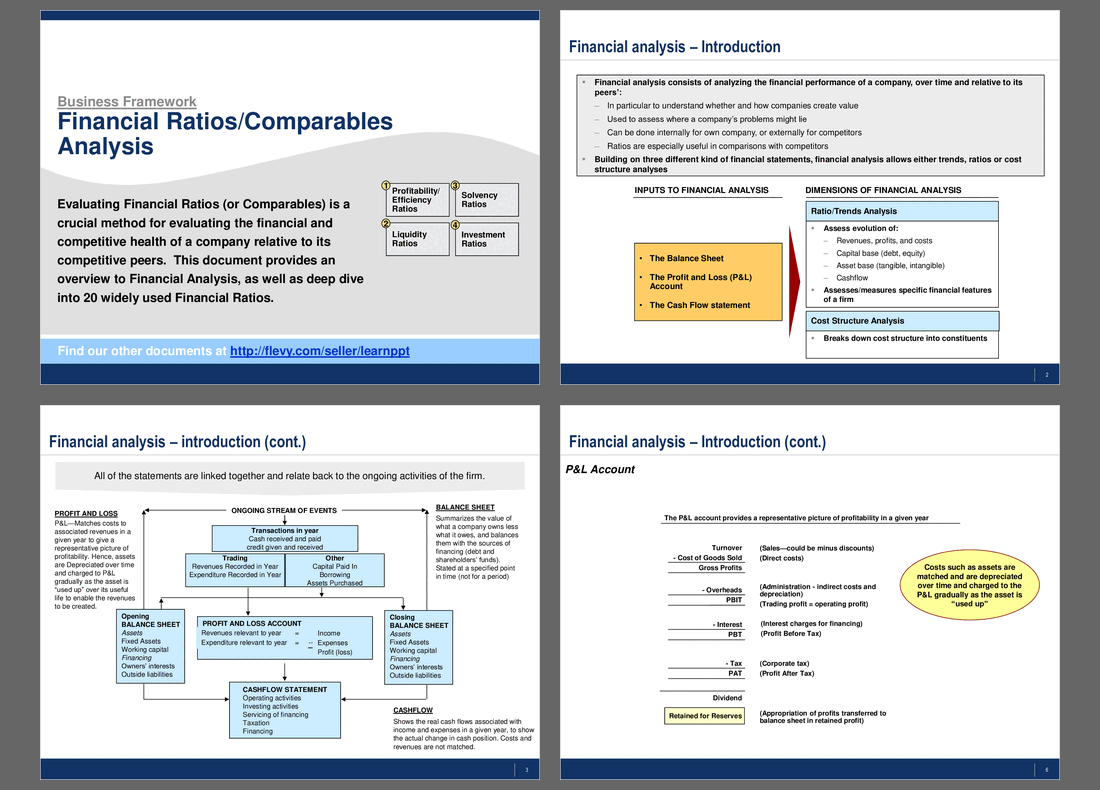

Evaluating Financial Ratios (or Financial Comparables) is a crucial method for evaluating the financial and competitive health of a company relative to its competitive peers. This document provides an overview to Financial Analysis, as well as deep dive into 20 widely used Financial Ratios.

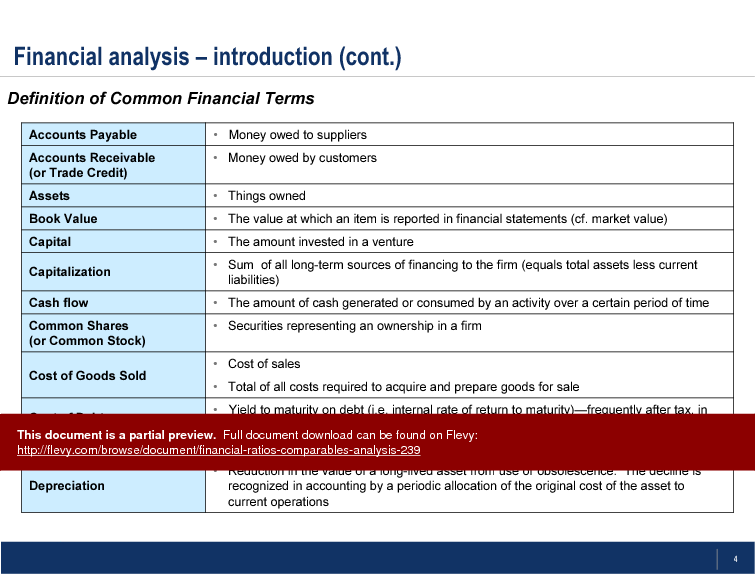
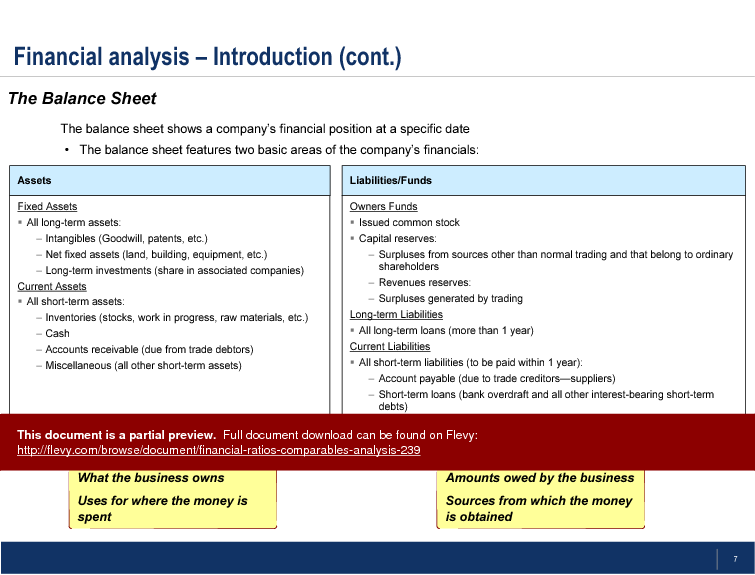
This comprehensive document delves into the intricacies of financial ratio analysis, offering a robust framework for understanding key financial metrics. It starts with a clear definition of common financial terms, ensuring that users have a solid foundation before diving into more complex analyses. The balance sheet section meticulously breaks down assets and liabilities, providing a snapshot of a company's financial health at a specific point in time.
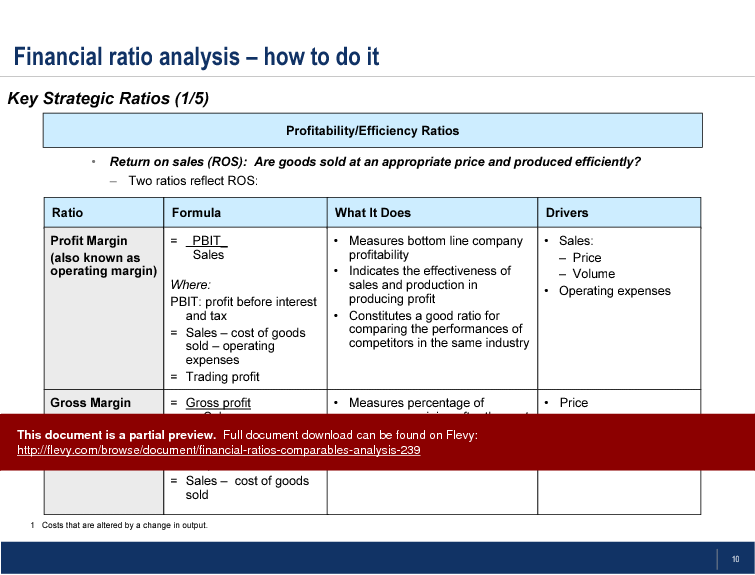
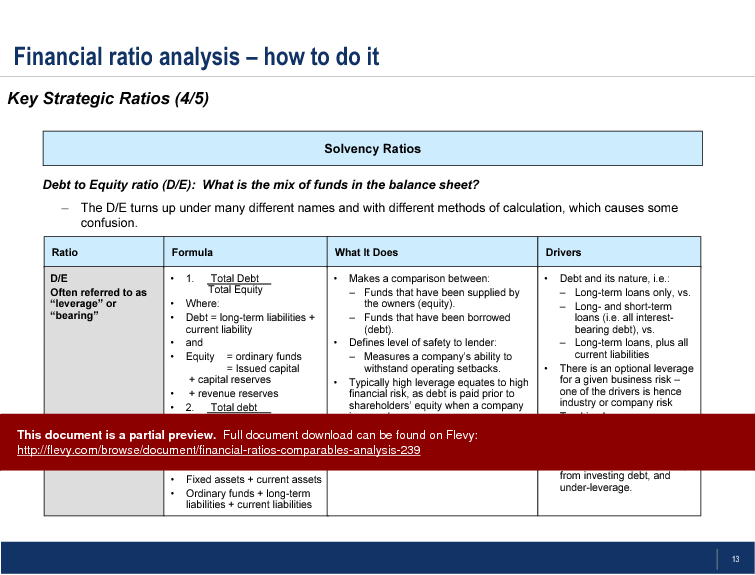
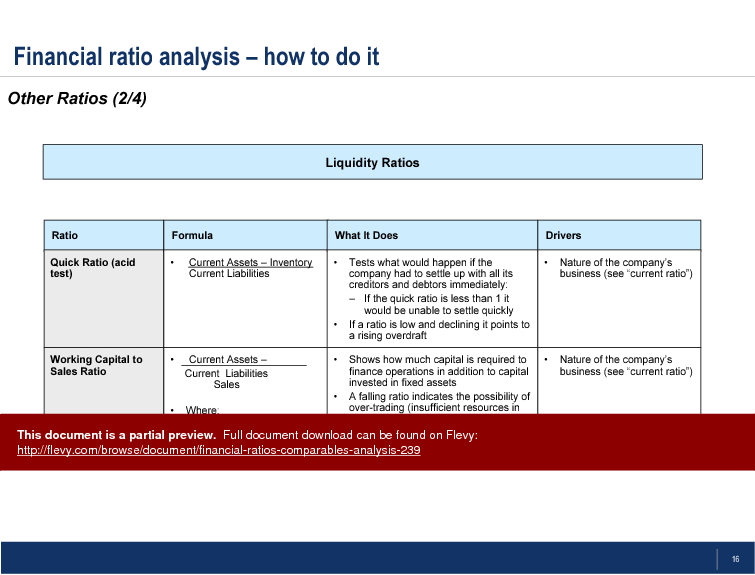
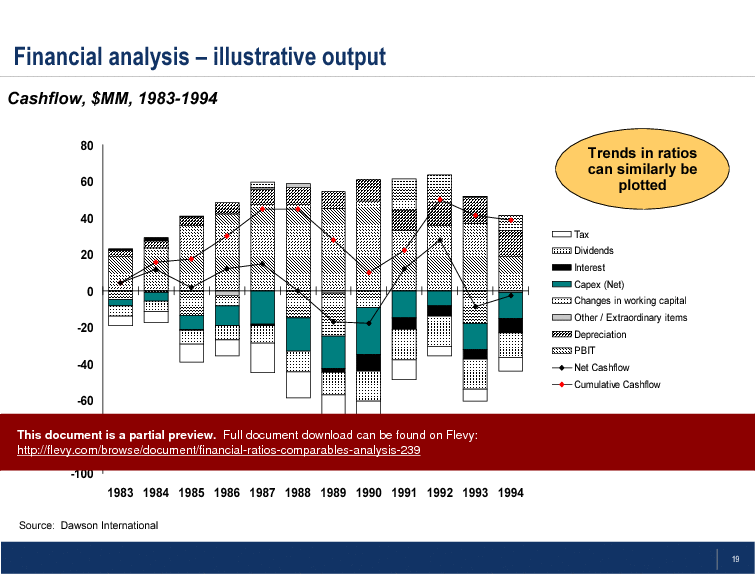
Key strategic ratios are explored in depth, covering profitability, efficiency, solvency, and liquidity ratios. Each ratio is presented with its formula, what it measures, and the primary drivers behind it. This structured approach allows executives to quickly grasp the significance of each ratio and how it impacts overall financial performance. The document also includes illustrative outputs, such as cash flow trends, to visualize how these ratios play out over time.
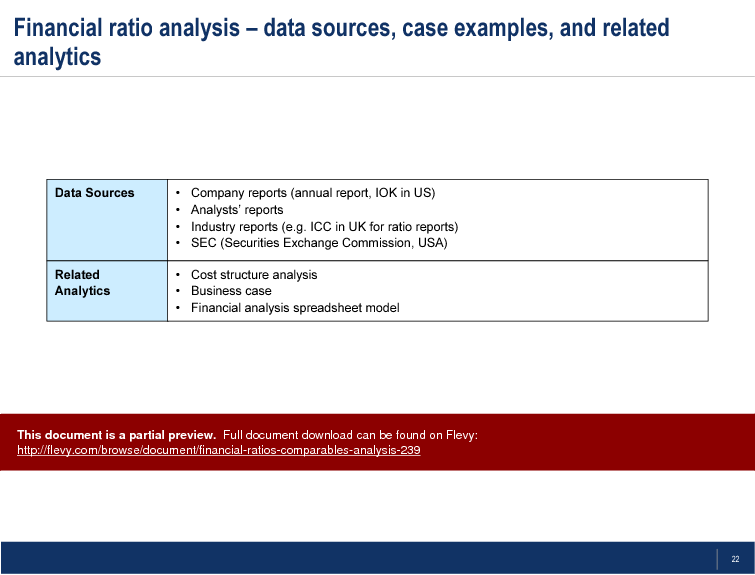
The final sections of the document highlight data sources, case examples, and related analytics. This ensures that users can not only understand and calculate financial ratios, but also apply them in real-world scenarios. The inclusion of industry reports, analyst reports, and SEC filings as data sources underscores the document's practical utility. This is an essential resource for any executive looking to enhance their financial analysis capabilities.
Got a question about the product? Email us at support@flevy.com or ask the author directly by using the "Ask the Author a Question" form. If you cannot view the preview above this document description, go here to view the large preview instead.
Executive Summary
This presentation on Financial Ratios/Comparables Analysis is crafted by former consultants from McKinsey, BCG, Deloitte, EY, and Capgemini, ensuring a McKinsey, Bain, or BCG-quality approach (consulting-grade; not affiliated). It provides a comprehensive overview of financial analysis, emphasizing the evaluation of a company’s financial and competitive health through 20 widely used financial ratios. Buyers will gain insights into profitability, liquidity, solvency, and investment ratios, enabling them to make informed strategic decisions regarding company performance and competitive positioning.
Who This Is For and When to Use
• Corporate executives seeking to assess financial health and competitive positioning
• Financial analysts tasked with evaluating company performance against peers
• Consultants advising clients on financial strategy and performance improvement
• Investment professionals analyzing potential investment opportunities
Best-fit moments to use this deck:
• During financial performance reviews and strategic planning sessions
• When conducting competitive analysis or benchmarking exercises
• In preparation for investor presentations or stakeholder meetings
• For training sessions focused on financial literacy and ratio analysis
Learning Objectives
• Define key financial ratios and their significance in evaluating company performance
• Analyze profitability, liquidity, solvency, and investment ratios to assess financial health
• Compare financial ratios against industry peers to identify strengths and weaknesses
• Interpret financial statements to derive actionable insights for strategic decision-making
• Build a comprehensive financial analysis framework using the provided ratios
• Identify trends in financial performance over time to inform future strategies
Table of Contents
• Introduction to Financial Analysis (page 2)
• Key Strategic Ratios Overview (page 9)
• Profitability/Efficiency Ratios (page 10)
• Liquidity Ratios (page 16)
• Solvency Ratios (page 19)
• Investment Ratios (page 14)
• Illustrative Outputs and Case Examples (page 19)
• Tips for Effective Ratio Analysis (page 21)
• Data Sources and Related Analytics (page 22)
Primary Topics Covered
• Financial Analysis Overview - An introduction to financial analysis, detailing its importance in evaluating a company's performance relative to peers.
• Profitability Ratios - Ratios that measure a company's ability to generate profit relative to sales, assets, and equity.
• Liquidity Ratios - Ratios assessing a company's ability to meet short-term obligations and manage cash flow effectively.
• Solvency Ratios - Ratios that indicate a company's financial strength and its ability to withstand operational setbacks.
• Investment Ratios - Ratios that reflect market perceptions of a company, primarily used by investors to assess value.
• Illustrative Outputs - Examples of cash flow trends and financial models like the Dupont Tree for visualizing financial performance.
Deliverables, Templates, and Tools
• Financial analysis framework template for evaluating company performance
• Ratio analysis spreadsheet model for calculating and comparing key financial ratios
• Case study examples illustrating the application of financial ratios in real-world scenarios
• Guidelines for interpreting financial statements and deriving insights
• Visual aids such as the Dupont Tree model for presenting financial data
Slide Highlights
• Overview slide detailing the importance of financial ratios in assessing company health
• Key strategic ratios slide summarizing profitability, liquidity, solvency, and investment ratios
• Cash flow trend analysis visual showcasing financial performance over time
• Dupont Tree model slide illustrating the relationship between financial metrics and shareholder value
• Tips for effective ratio analysis slide emphasizing best practices and common pitfalls
Potential Workshop Agenda
Introduction to Financial Ratios (30 minutes)
• Overview of financial analysis and its significance
• Discussion of key financial statements and their interconnections
Ratio Analysis Techniques (60 minutes)
• Deep dive into profitability, liquidity, solvency, and investment ratios
• Hands-on exercises calculating and interpreting key ratios
Case Study Review (45 minutes)
• Analyze a real-world company’s financial ratios
• Group discussion on findings and strategic implications
Best Practices in Financial Analysis (30 minutes)
• Tips for effective ratio analysis and common pitfalls to avoid
• Q&A session to address participant queries
Customization Guidance
• Tailor ratio analysis examples to reflect industry-specific benchmarks and standards
• Adjust the financial analysis framework to align with organizational goals and metrics
• Incorporate company-specific financial statements for more relevant analysis
• Modify visual aids to represent internal data and trends for stakeholder presentations
Secondary Topics Covered
• Cost structure analysis and its role in financial evaluation
• Trends in financial performance and their implications for strategy
• The importance of comparing ratios over time and against industry peers
• Common accounting principles and their impact on ratio comparisons
FAQ
What are financial ratios?
Financial ratios are quantitative measures used to assess a company's financial performance and health by comparing different financial metrics.
Why are profitability ratios important?
Profitability ratios indicate how effectively a company generates profit from its sales and assets, providing insights into operational efficiency.
How do liquidity ratios help in financial analysis?
Liquidity ratios assess a company's ability to meet short-term obligations, helping to gauge its financial stability and cash flow management.
What do solvency ratios indicate?
Solvency ratios measure a company's financial strength and its ability to withstand operational challenges, focusing on the balance between debt and equity.
How can investment ratios assist investors?
Investment ratios provide insights into market perceptions of a company, helping investors evaluate potential returns and growth prospects.
What is the significance of the Dupont Tree model?
The Dupont Tree model visually represents the relationship between various financial metrics, helping to analyze factors contributing to shareholder value.
How can I ensure accurate ratio comparisons?
Ensure that you are comparing like with like by considering industry standards, accounting principles, and the context of the financial data.
What are common pitfalls in ratio analysis?
Common pitfalls include drawing conclusions from a single ratio, overlooking industry differences, and failing to consider the context of financial statements.
How often should financial ratios be analyzed?
Regular analysis, ideally on an annual or quarterly basis, helps track performance trends and inform strategic decision-making.
Glossary
• Accounts Payable - Money owed to suppliers.
• Accounts Receivable - Money owed by customers.
• Assets - Things owned by a company.
• Cash Flow - The amount of cash generated or consumed by an activity over a certain period.
• Debt to Equity Ratio - A measure of a company's financial leverage calculated by dividing total liabilities by shareholders' equity.
• Liquidity - The extent to which a company has assets readily available to meet obligations.
• Profit Margin - A profitability ratio calculated as profit before interest and tax divided by sales.
• Return on Equity (ROE) - A measure of financial performance calculated by dividing net income by shareholders' equity.
• Solvency - The ability of a company to meet its long-term debts and financial obligations.
• Working Capital - Current assets minus current liabilities, indicating the liquidity available for day-to-day operations.
Source: Best Practices in Financial Analysis, M&A PowerPoint Slides: Financial Ratios (Comparables) Analysis PowerPoint (PPT) Presentation Slide Deck, LearnPPT Consulting
This document is available as part of the following discounted bundle(s):
Save %!
Competitive and Company Cost Analysis
This bundle contains 5 total documents. See all the documents to the right.
|
Download our FREE Strategy & Transformation Framework Templates
Download our free compilation of 50+ Strategy & Transformation slides and templates. Frameworks include McKinsey 7-S, Balanced Scorecard, Disruptive Innovation, BCG Curve, and many more. |