Editor's Note: Take a look at our featured best practice, Capital Investment Analysis (101-slide PowerPoint presentation). Capital Investment Analysis
Also called Capital Budgeting - a complex topic simplified in an easy to understand presentation which is completely self-explanatory. Explains the framework for financial analysis with examples and provides practical insights. Can be used for reference, training & [read more]
* * * *
 Holding a long-term stream of structured payments provides predictable cash flow, but it locks wealth behind rigid schedules. Liquidating those future receivables into immediate capital opens up options for real estate purchases, debt payoff, or higher-yielding investments. Deciding whether to trade guaranteed future income for a present lump sum requires a structured financial framework that accounts for opportunity cost, interest rate environments, and individual risk profiles.
Evaluating Present Value and Market Discount Rates
Converting future payments into liquid capital centers on present value calculations. Financial institutions calculate the immediate value of future payment streams by applying an implied discount rate to account for the time value of money and inflation risks. In secondary annuity markets, these discount rates typically range from 9% to 18%, depending on transaction parameters.
The underlying math evaluates what a specific sum received years from now is worth today. Higher discount rates reduce the net cash payout you receive, making market conditions a major factor in timing a sale. Evaluating these offers requires comparing the lump sum against expected market returns to ensure the immediate capital provides greater overall utility than holding the original contract.
When evaluating liquidity options for structured contracts, utilizing specialized guidance from Annuity Freedom helps clarify how market rates impact your overall net payout. Navigating these rate structures ensures you make informed choices about your long-term capital allocation.
Understanding the math behind discount rates prevents premature liquidation. A clear evaluation reveals whether accepting a discounted payout aligns with your broader financial trajectory.
Capital Deployment and Opportunity Cost Analysis
Every dollar tied up in a future payment stream carries an opportunity cost. While a structured payment offers stability, it prevents you from deploying capital into appreciating assets or high-priority financial needs.
Before converting a future stream into cash, evaluate the potential return of your intended capital deployment against the yield lost through discounting. If immediate capital can eliminate high-interest liabilities or fund a high-return venture, the strategic advantage often outweighs the discounted value of the payment stream.
To determine if converting payments aligns with your financial plan, consider these three core deployment criteria:
- Return differential between your investment target and the contract discount rate
- Total reduction in personal high-interest debt liabilities achieved through lump sum payoff
- Immediate liquidity requirements for capital-intensive real estate or business opportunities
Comparing these factors ensures that liquidating a payment stream directly serves a measurable wealth-building objective.
Tax Implications and Court Approval Frameworks
The legal and tax structure surrounding payment conversions depends heavily on the nature of the original agreement, and is equally complex as something like an inheritance advance. Structured settlements and court-ordered annuities require judicial oversight before any transfer.
Judges review proposed secondary market sales under state statutory guidelines to verify that the transaction serves the payee’s best interest. This legal process protects individuals from predatory discount terms and ensures proper disclosure of all transaction fees.
Tax treatment varies significantly depending on the payment stream’s origin. While personal injury structured settlements often retain tax-free status upon conversion, standard commercial annuity cash-outs can trigger ordinary income or capital gains tax liabilities.
Working with legal and tax professionals clarifies the net proceeds expected after accounting for mandatory deductions, judicial processing timelines, and applicable tax rates. A thorough review ensures complete compliance while protecting your net capital payout.
Partial Liquidations as a Risk Mitigation Strategy
Full liquidation isn’t the only path to immediate cash from a structured payout. Partial payment conversions allow payees to access immediate capital while preserving a portion of their future guaranteed income stream.
By selling a set number of upcoming payments or a specific portion of each monthly check, you unlock needed funds without sacrificing long-term security. This hybrid strategy reduces overall discount losses and maintains a reliable baseline income stream for future years.
Partial transactions provide flexibility when addressing short-term liquidity needs. They offer a balanced compromise between immediate financial flexibility and long-term income protection.
Inflation Risks and Purchasing Power Erosion
While holding guaranteed periodic payments guarantees nominal income, fixed dollar amounts remain highly vulnerable to long-term inflation. Over extended timelines, modest price increases gradually erode real purchasing power, turning an apparently safe payment stream into a depreciating asset.
Converting future payments into a present lump sum lets investors deploy capital into growth assets, such as equity portfolios or commercial real estate, that have historically outpaced consumer price increases. Liquidating periodic receivables serves as a strategic hedge, transforming fixed income prone to real-value decay into dynamic, inflation-resistant capital.
Strategic Decision-Making for Long-Term Wealth
Deciding to convert future payments into present capital requires a clear understanding of your financial goals, tax obligations, and market conditions. Evaluating present value discount rates alongside real-world opportunity costs helps protect your balance sheet from unnecessary losses.
Reviewing your asset allocation with experienced financial advisors helps determine if liquidating receivables fits your overarching wealth strategy. Take a look at our other posts on money management and capital allocation to make better use of your assets, whatever the context.
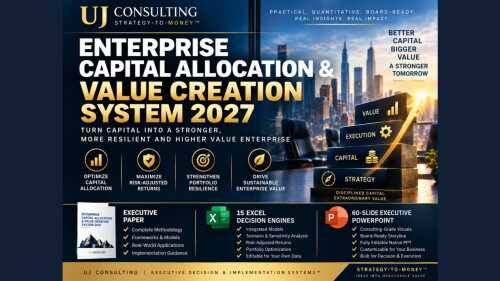
66-slide PowerPoint presentation
Enterprise Capital Allocation & Value Creation System
Capital allocation is one of the most consequential decisions facing CEOs, CFOs, Boards, and Investment Committees. The challenge is not simply deciding where to invest, but determining how to allocate scarce capital across growth,
[read more]
Do You Want to Implement Business Best Practices?
You can download in-depth presentations on Capital Budgeting and 100s of management topics from the FlevyPro Library. FlevyPro is trusted and utilized by 1000s of management consultants and corporate executives.
For even more best practices available on Flevy, have a look at our top 100 lists:
These best practices are of the same as those leveraged by top-tier management consulting firms, like McKinsey, BCG, Bain, and Accenture. Improve the growth and efficiency of your organization by utilizing these best practice frameworks, templates, and tools. Most were developed by seasoned executives and consultants with over 20+ years of experience.
Readers of This Article Are Interested in These Resources

Excel workbook
This financial model is meticulously designed to analyze and forecast the financial performance of a commercial airline operating a mixed fleet of leased and purchased aircraft, providing detailed forecasts for different aircraft types deployed across different routes. It captures the full set of
[read more]

26-slide PowerPoint presentation
These slides contain a "snapshot" guide to Managing Business benefits and include using a Structured Approach, What is a Benefit, What is Benefits Management, Why is Benefits Management important, Who is Responsible/Involved, Role of the Business Change Manager, Linking Benefits with the Business
[read more]
Excel workbook
The main purpose of the template is to enable a business to evaluate potential major projects or investments.
The structure is user friendly and practical and is suitable for any type of business.
The template includes the major methods of capital budgeting (discounted cash flow, NPV,
[read more]
Excel workbook
Capital Budgeting consists of a process that companies use for decision making on investment projects that usually have a long-term horizon (over a year). This Excel model contains three types of methods: capital budgeting for expansion projects, capital budgeting for replacement projects, and
[read more]