
There will forever be some winners and some failures in the process of evaluating Capital Investment projects for funding, but no one desires to be the decision maker who failed to recognize a fantastic investment.
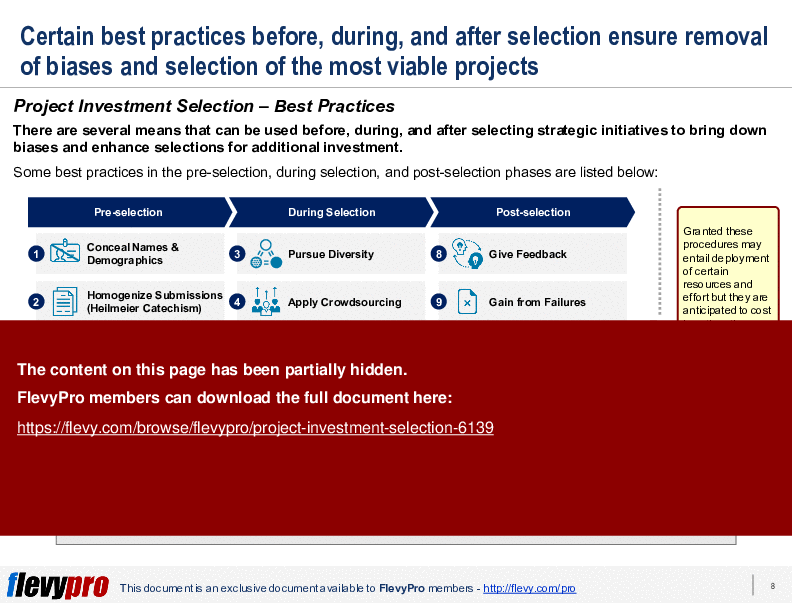
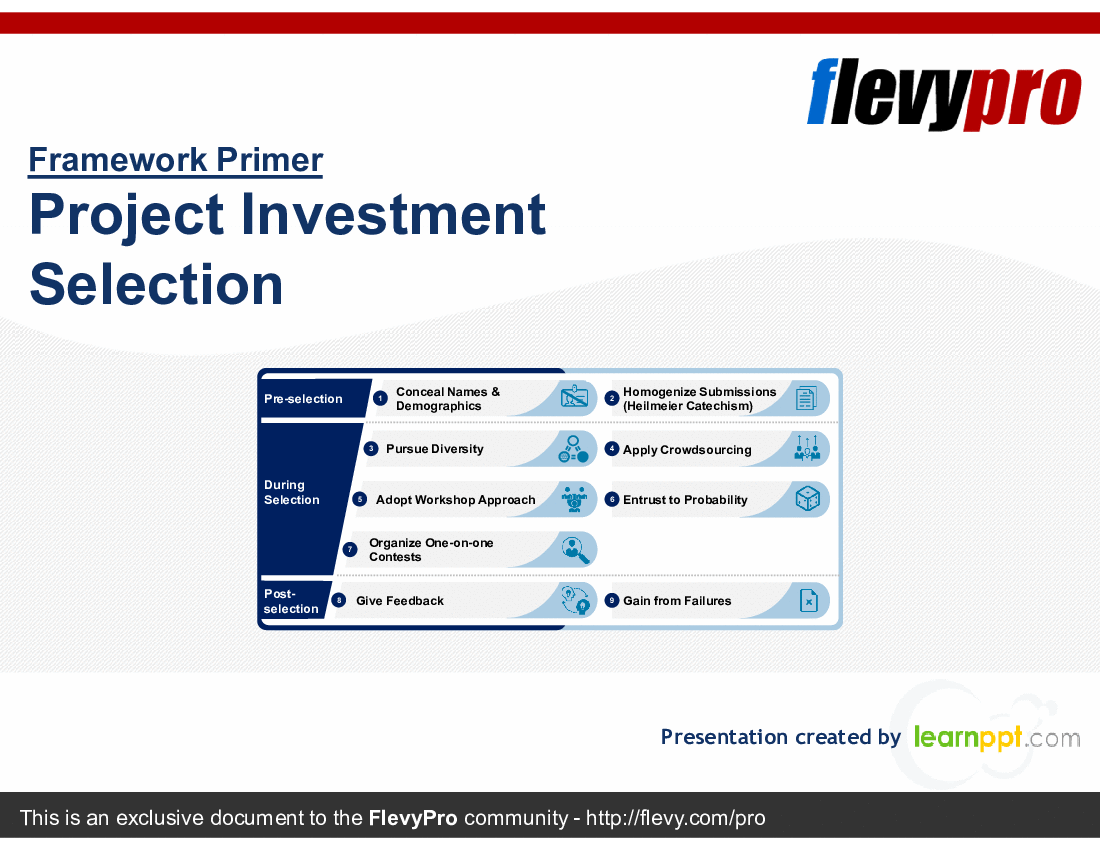
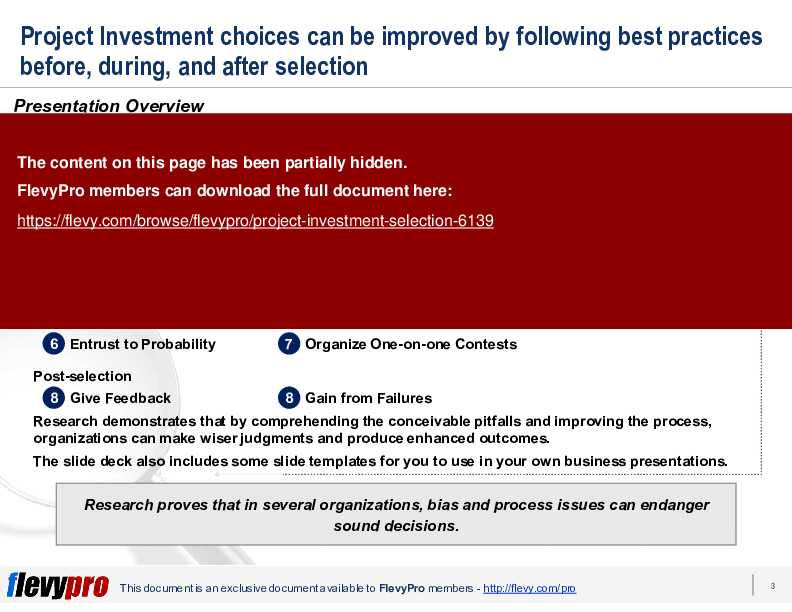
Decision markers can make smarter choices when deciding on which projects to invest in by following a set of 8 best practices, categorized across the full lifecycle of pre-selection, during selection, and post-selection. These 8 best practices are discussed in detail in this presentation.
Research demonstrates that by comprehending the conceivable pitfalls and improving the process, organizations can make wiser judgments and produce enhanced outcomes.
The slide deck also includes some slide templates for you to use in your own business presentations.
This presentation dives deep into the intricacies of project investment selection, highlighting common pitfalls and best practices. It addresses how biases and process issues can lead to poor investment decisions and provides actionable strategies to mitigate these risks. The PPT emphasizes the importance of diversity in selection panels and the benefits of crowdsourcing to enhance decision-making quality.
The slide deck outlines a comprehensive approach to project selection, from pre-selection to post-selection phases. It covers methods like concealing names and demographics to reduce bias, standardizing submissions for easier comparison, and employing crowdsourcing to leverage collective intelligence. The presentation also discusses the significance of organizing one-on-one contests and using probability to make more objective decisions.
Feedback mechanisms and learning from failures are crucial components of the post-selection process. The document provides templates and examples to help organizations implement these best practices effectively. By following the guidelines presented, decision-makers can improve their investment choices, leading to better project outcomes and overall organizational success.
Got a question about this document? Email us at flevypro@flevy.com.
Executive Summary
The "Project Investment Selection" presentation is designed to enhance decision-making processes for capital investment projects by providing a structured approach to selecting viable projects. Created by experienced consultants, this deck outlines best practices for project selection, emphasizing the importance of reducing biases and improving outcomes. It covers strategies for pre-selection, during selection, and post-selection phases, enabling decision-makers to make informed choices and maximize investment potential.
Who This Is For and When to Use
• Corporate executives responsible for strategic investment decisions
• Project managers overseeing capital investment initiatives
• R&D leaders evaluating new project proposals
• Investment committees assessing project viability
Best-fit moments to use this deck:
• During annual budget planning to evaluate new project proposals
• When establishing criteria for project selection processes
• In workshops aimed at improving decision-making frameworks
Learning Objectives
• Define the key stages of project investment selection and their significance
• Identify common biases that impact project selection decisions
• Develop strategies to enhance diversity in selection panels
• Create standardized submission templates for project proposals
• Implement crowdsourcing techniques to gather insights on project viability
• Establish feedback mechanisms to improve future project proposals
Table of Contents
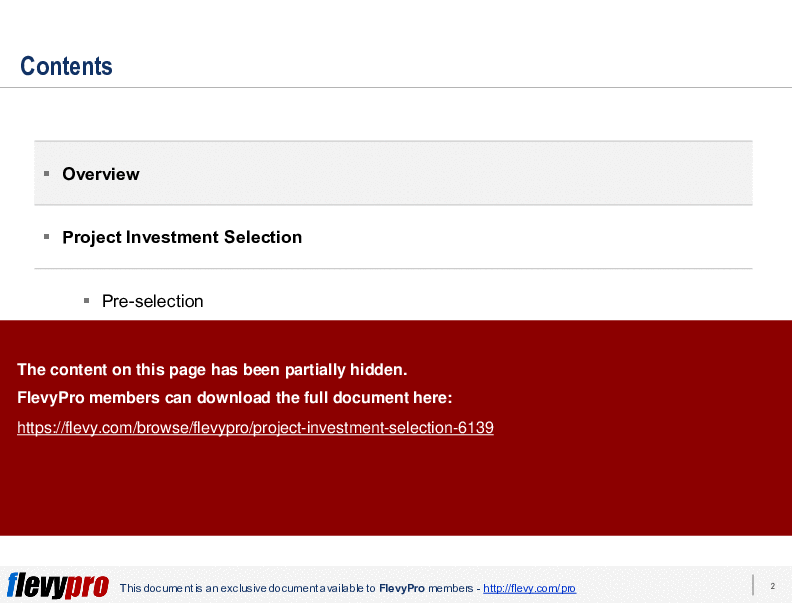
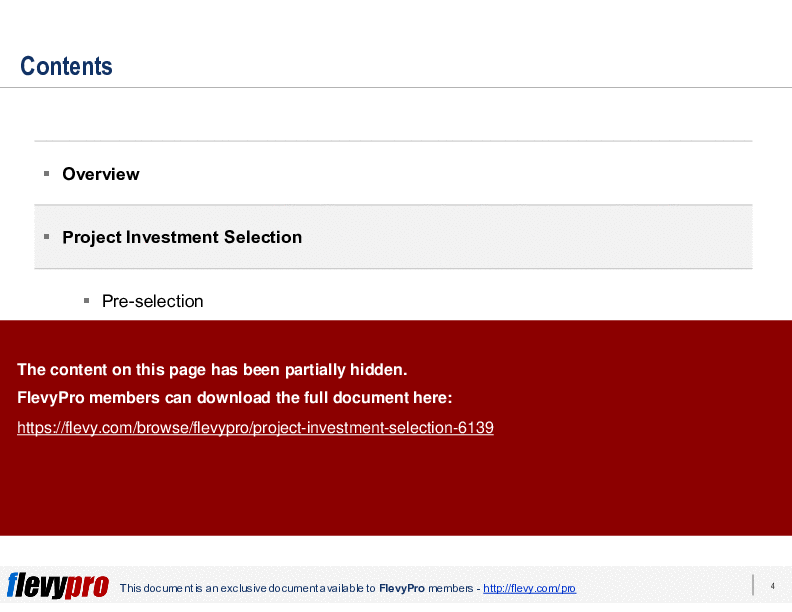
• Overview (page 3)
• Project Investment Selection (page 3)
• Pre-selection (page 10)
• During Selection (page 13)
• Post-selection (page 19)
• Templates (page 21)
Primary Topics Covered
• Overview of Project Investment Selection - An introduction to the importance of structured project selection and the potential pitfalls in decision-making.
• Pre-selection Best Practices - Strategies such as concealing names and demographics to reduce biases and homogenizing submissions for easier comparison.
• During Selection Strategies - Techniques like pursuing diversity, applying crowdsourcing, and adopting a workshop approach to enhance decision quality.
• Post-selection Practices - Emphasizing the importance of feedback and learning from failures to improve future selection processes.
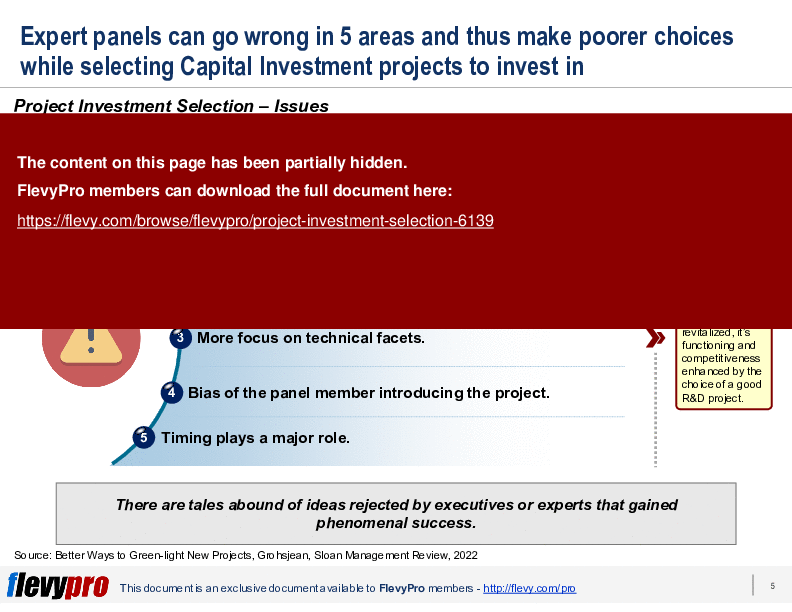
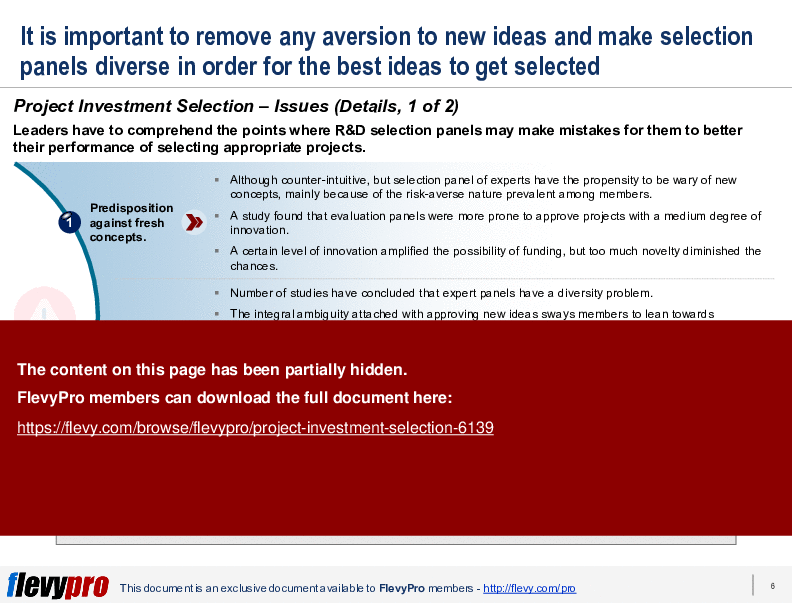
• Common Pitfalls in Project Selection - Identifying issues such as bias against new concepts and the lack of diversity in expert panels.
• Implementation of Best Practices - Guidance on how to effectively integrate these best practices into existing project selection frameworks.
Deliverables, Templates, and Tools
• Standardized project proposal template based on the Heilmeier Catechism
• Feedback mechanism template for project creators
• Diversity assessment checklist for selection panels
• Crowdsourcing framework for internal and external idea evaluation
• Workshop agenda template for collaborative project selection sessions
• Evaluation criteria checklist for assessing project proposals
Slide Highlights
• Overview slide outlining the key phases of project investment selection
• Best practices slide detailing pre-selection, during selection, and post-selection strategies
• Common pitfalls slide illustrating biases and their impact on decision-making
• Feedback mechanisms slide showcasing the importance of constructive feedback
• Templates slide providing examples of standardized submission formats
Potential Workshop Agenda
Project Selection Overview Session (60 minutes)
• Introduce the importance of structured project selection
• Discuss common pitfalls and biases in decision-making
• Present best practices for enhancing selection processes
Diversity in Selection Panels Workshop (90 minutes)
• Explore strategies for increasing diversity in selection panels
• Engage participants in identifying biases in their current processes
• Develop action plans for implementing diversity initiatives
Feedback Mechanisms Session (60 minutes)
• Discuss the importance of feedback in project selection
• Workshop on creating effective feedback templates
• Share experiences and best practices among participants
Customization Guidance
• Tailor the project proposal template to fit specific organizational needs
• Adjust the diversity assessment checklist based on the demographic landscape of the organization
• Modify the feedback mechanism to align with internal communication practices
• Adapt workshop agendas to reflect the unique culture and structure of the organization
Secondary Topics Covered
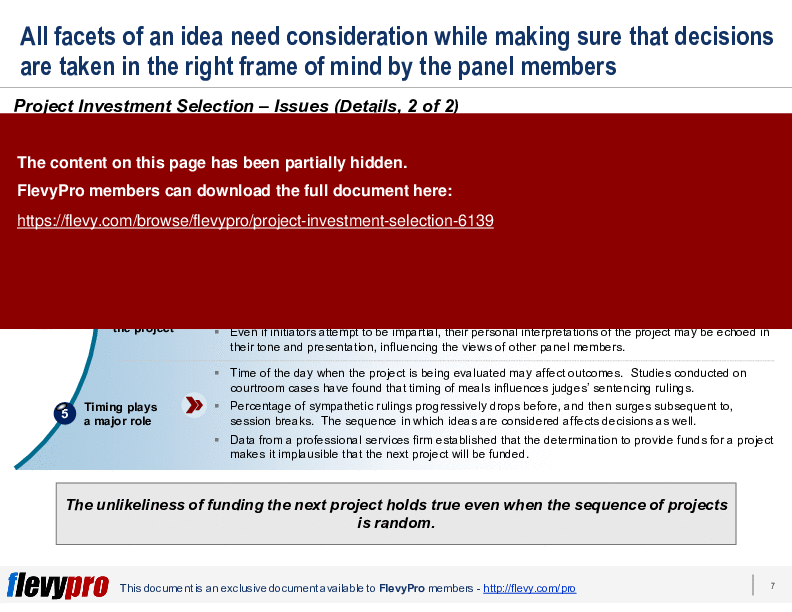
• The role of timing in project selection outcomes
• Strategies for managing biases in decision-making
• The impact of organizational culture on project selection
• Techniques for evaluating the success of selected projects
• Case studies of successful project investments
Topic FAQ
Document FAQ
These are questions addressed within this presentation.
What are the key phases of project investment selection?
The key phases are pre-selection, during selection, and post-selection, each with specific best practices to enhance decision-making.
How can biases be reduced in project selection?
Biases can be reduced by concealing names and demographics, increasing diversity in selection panels, and standardizing submission formats.
What is the Heilmeier Catechism?
The Heilmeier Catechism is a set of questions designed to help project proposers evaluate the viability of their ideas before submission.
Why is diversity important in selection panels?
Diversity in selection panels leads to a broader range of perspectives, reducing biases and improving the quality of project evaluations.
How can crowdsourcing be applied in project selection?
Crowdsourcing can be used to gather insights from employees or external stakeholders on project ideas, helping to identify promising initiatives.
What feedback mechanisms should be implemented?
Feedback mechanisms should provide constructive insights to project creators, helping them improve future proposals and understand decision-making processes.
How can organizations learn from project failures?
Organizations should conduct thorough assessments of rejected projects to identify missed opportunities and improve future selection criteria.
What templates are included in the presentation?
Templates include standardized project proposal formats, feedback forms, and diversity assessment checklists.
Glossary
• Project Investment Selection - The process of evaluating and choosing projects for funding.
• Heilmeier Catechism - A framework for assessing project proposals based on specific criteria.
• Crowdsourcing - The practice of obtaining ideas or services from a large group of people, typically via the internet.
• Diversity - The inclusion of different types of people in a group, particularly regarding race, gender, and background.
• Bias - A tendency to favor one thing over another, often leading to unfair outcomes.
• Feedback Mechanism - A system for providing constructive criticism to improve future performance.
• Pre-selection - The initial phase of project selection where proposals are evaluated for eligibility.
• During Selection - The phase where proposals are actively assessed and compared.
• Post-selection - The phase focused on evaluating outcomes and learning from the selection process.
• Standardization - The process of making something conform to a standard to ensure consistency.
• Workshop Approach - A collaborative method of project evaluation involving multiple stakeholders.
• Investment Committee - A group responsible for making decisions about project funding.
• Submission Template - A standardized format for project proposals to ensure uniformity.
• Evaluation Criteria - The standards used to assess the viability of project proposals.
• Demographics - Statistical data relating to the population and particular groups within it.
• Selection Panel - A group of individuals tasked with evaluating project proposals.
• Risk Assessment - The identification and analysis of potential issues that could negatively impact a project.
• Accountability System - A framework that ensures individuals are held responsible for their actions and decisions.
• Innovation - The process of translating an idea or invention into a good or service that creates value.
• Strategic Fit - The alignment of a project with the overall goals and objectives of the organization.
• Market Potential - The estimated demand for a product or service in a specific market.
Source: Best Practices in Innovation, Decision Making, Capital Budgeting, Project Selection PowerPoint Slides: Project Investment Selection PowerPoint (PPTX) Presentation Slide Deck, LearnPPT Consulting
Did you need more documents?
Consider a FlevyPro subscription from $39/month. View plans here.
For $10.00 more, you can download this document plus 2 more FlevyPro documents. That's just $13 each.
|
Download our FREE Strategy & Transformation Framework Templates
Download our free compilation of 50+ Strategy & Transformation slides and templates. Frameworks include McKinsey 7-S, Balanced Scorecard, Disruptive Innovation, BCG Curve, and many more. |