Editor's Note: Take a look at our featured best practice, Business Transformation Framework for New CEOs (22-slide PowerPoint presentation). Transformation is about making fundamental changes in how business is conducted in order to help cope with a shift in market environment and achieve a sustainable, quantum improvement in performance. Specifically, this fundamental change can be in the company's corporate strategy, business model, [read more]
* * * *
Choosing an apartment for everyday living requires more than attractive rooms or a reasonable price. For corporate executives, daily performance depends on location, layout, safety, building maintenance, and clear rental terms. A careful review helps leaders and their households avoid costly surprises, commute friction, and avoidable disruption after moving in. The strongest choice supports work, rest, travel, errands, and personal routines without creating constant operational stress. Before signing anything, compare practical details, visit the property, and assess whether the space fits current work and family needs.
Executives can begin by comparing listings in the areas they use most. Searching for a dormitory near me (หอพักใกล้ฉัน) can reveal nearby rental options, transport links, shops, and local services. Checking several properties helps our households compare rent, room size, building condition, and access times. That early shortlist saves visits and keeps attention on apartments that match ordinary executive routines.
Location and Daily Travel
Location shapes the time and money spent on ordinary travel. Apartments near workplaces, schools, markets, clinics, and transit stops can simplify weekly schedules. Residents should test the route during busy hours, not quiet periods. Street lighting, parking access, flooding risk, and nearby construction also deserve attention. A pleasant address loses value if daily journeys remain difficult or expensive for residents with limited time and tight budgets today.
Apartment Size and Layout
Room size should support sleep, storage, work, and movement without crowding. A floor plan may look generous online, yet furniture placement can expose narrow walkways or weak storage. Residents should measure large items before viewing. Kitchens need enough counter space, while bathrooms require usable ventilation. A practical layout reduces clutter and makes cleaning easier throughout the week for everyone in a busy household with shared routines and guests.
Building Safety
Safety checks should cover entrances, locks, fire exits, stairways, lifts, and shared corridors. Residents can ask how often alarms, extinguishers, cameras, and access systems receive inspections. Secure doors matter, but visible maintenance matters too. Broken lights, blocked exits, or loose railings signal poor oversight. A well-managed building gives residents greater confidence during ordinary arrivals, departures, and emergencies at all hours, including late returns and early starts for residents.
Monthly Cost
Rent is only one part of the monthly housing cost. Residents should add utilities, internet, parking, deposits, service charges, transport, and expected maintenance fees. Comparing the full amount with stable income creates a clearer budget. Review payment dates and penalty rules, too. Affordable housing should leave room each month for food, savings, healthcare, and unexpected expenses without relying on credit for routine bills or emergency costs later.
Light, Air, and Comfort
Natural light, airflow, temperature, and humidity affect comfort across long days. Residents should inspect windows, curtains, fans, air conditioners, and signs of dampness. Morning and evening visits can reveal changes missed during a single short tour. Strong odors may suggest drainage or mold concerns. Fresh air and balanced lighting support rest, concentration, and a healthier indoor routine for children, older adults, remote workers, and shift staff sharing the home.
Services and Maintenance
Building services can shape convenience after move-in. Residents should confirm water pressure, waste collection, parcel handling, cleaning, repairs, and pest control. A contact person should be available for urgent faults, especially at night. Shared facilities need clear operating hours and fees. Reliable support prevents small problems from interrupting work, sleep, or household plans during weekends, holidays, and periods of heavy use by every resident in the building.
Lease Terms
Lease terms deserve the same care as the apartment itself. Residents should read renewal dates, notice periods, deposit conditions, repair duties, guest rules, subletting limits, and refund procedures. Written promises should appear in the contract, not remain as casual assurances. Clear records protect both sides and reduce disputes after occupancy begins, especially during the first months of a long-term rental arrangement with fewer surprises for everyone involved later.
Inspection before Signing
An in-person inspection should follow the initial online comparison. Residents can test taps, outlets, locks, lights, appliances, drains, windows, and cooling equipment. Photos can record existing marks before belongings arrive. Note noise from nearby units during a quiet pause. This simple checklist gives households useful evidence before they commit to a lease, with a clear record of condition for future discussions if needed.
Conclusion
Choosing an apartment becomes easier when executives judge the full daily experience, rather than a single attractive feature. Location, room function, safety, total cost, comfort, services, contract terms, and physical condition all deserve equal attention. A brief visit, structured comparison, and written questions can reveal whether a property supports work, recovery, and household routines. The right home should remain practical, manageable, and comfortable long after move-in day, with every party to the rental agreement clearly understanding the costs and responsibilities.
Curated by McKinsey-trained Executives
Unlock Elite Executive Performance with the Ultimate CEO SOP Toolkit – 140+ Proven Templates in One Powerful Excel Package
Are you a CEO, founder, or senior executive looking to operate at peak performance? Stop wasting time reinventing the wheel -- [read more]
Do You Want to Implement Business Best Practices?
You can download in-depth presentations on CEO and 100s of management topics from the FlevyPro Library. FlevyPro is trusted and utilized by 1000s of management consultants and corporate executives.
For even more best practices available on Flevy, have a look at our top 100 lists:
These best practices are of the same as those leveraged by top-tier management consulting firms, like McKinsey, BCG, Bain, and Accenture. Improve the growth and efficiency of your organization by utilizing these best practice frameworks, templates, and tools. Most were developed by seasoned executives and consultants with over 20+ years of experience.
Readers of This Article Are Interested in These Resources
In "The Business Transformation Playbook," a former Fortune 50 executive shares his invaluable insights and expertise in orchestrating successful organizational transformations. With a career spanning decades and a track record of turning struggling businesses into industry leaders, this playbook [read more]
Curated by McKinsey-trained Executives
🚀 THE CEO AGENDA - The Ultimate C-Suite Business Toolkit
The Ultimate Strategic Playbook for High-Performance Leaders Who Refuse to Settle
🔥 Dominate your market. Outperform your competitors. Lead with absolute clarity.
If you're a [read more]
Curated by McKinsey-trained Executives
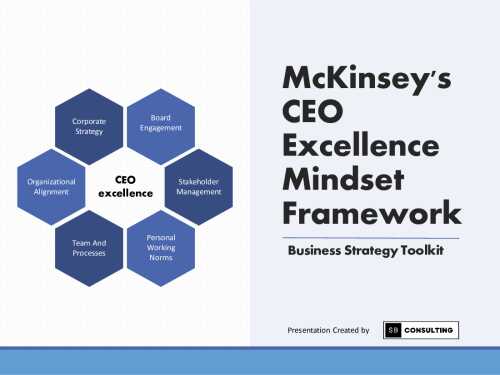
The McKinsey CEO Excellence Framework: Unleashing the Power of Strategy and Leadership
In the ever-evolving landscape of modern business, the role of a CEO is more critical than ever before. CEOs are not just leaders; they are visionaries, strategists, [read more]
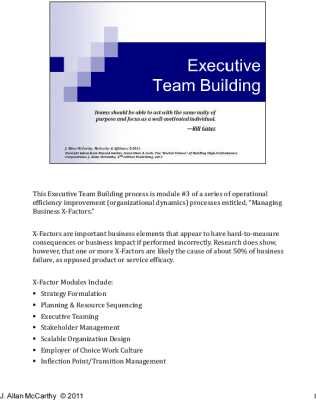
Is your company being led by a group or a team? There is a big difference in top and bottom line performance between the two.
More often than not, the teaming ability at the top of the organization is the determinant of success or failure as opposed to the technology, product, or idea on which [read more]
 Choosing an apartment for everyday living requires more than attractive rooms or a reasonable price. For corporate executives, daily performance depends on location, layout, safety, building maintenance, and clear rental terms. A careful review helps leaders and their households avoid costly surprises, commute friction, and avoidable disruption after moving in. The strongest choice supports work, rest, travel, errands, and personal routines without creating constant operational stress. Before signing anything, compare practical details, visit the property, and assess whether the space fits current work and family needs.