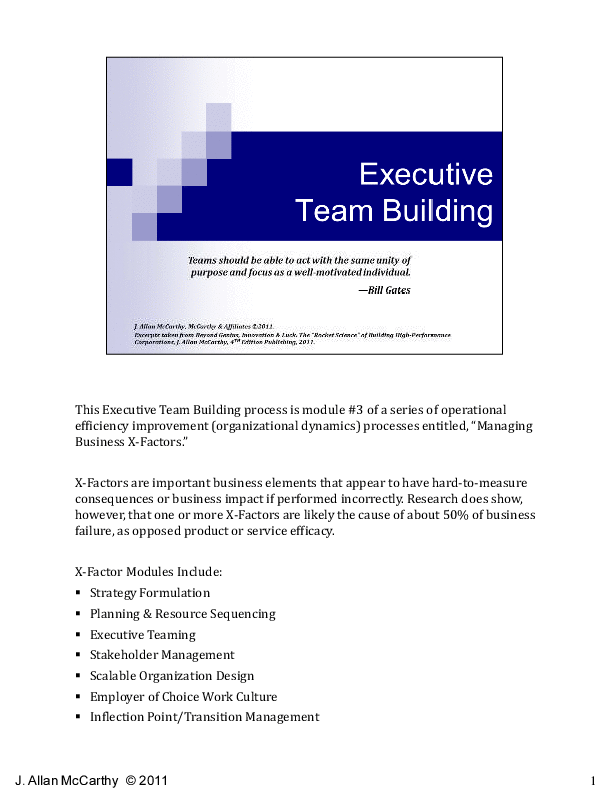

Is your company being led by a group or a team? There is a big difference in top and bottom line performance between the two.
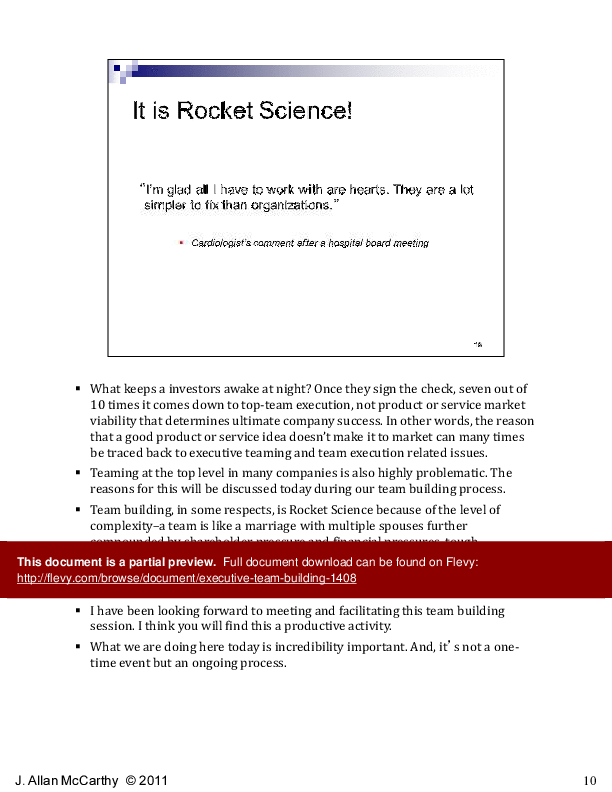
More often than not, the teaming ability at the top of the organization is the determinant of success or failure as opposed to the technology, product, or idea on which the company is based.
Executive Team Building is a direct, simple method of tuning-in and tuning-up attention deficit executives—to one of the most important aspects of company leadership.
This process was developed by a no, nonsense consultant that was searching for ways to improve outcomes related to strategy development and organization design: "Make sure that key company initiatives are driven by a team, not a group, or all bets are off."
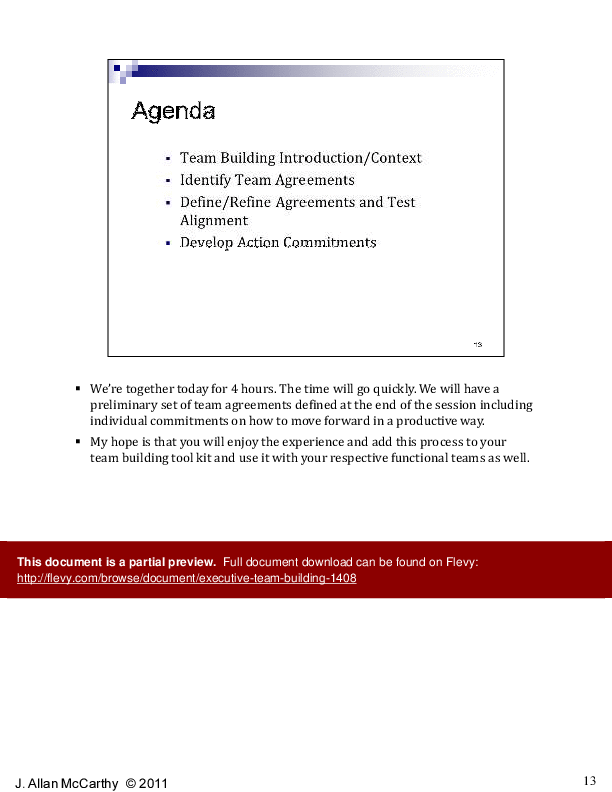
This comprehensive guide includes a detailed agenda designed to maximize the productivity of your executive team building sessions. It outlines a structured approach to defining team agreements, testing alignment, and developing actionable commitments. The guide ensures that every minute of your four-hour session is utilized effectively, driving towards clear, actionable outcomes.
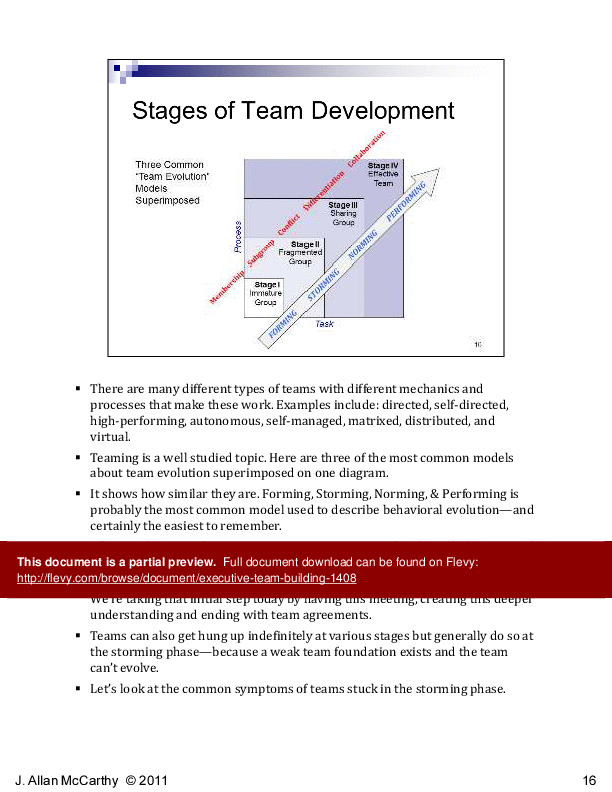
The PPT also delves into the stages of team development, providing insights into common team evolution models. It highlights the importance of understanding team dynamics and the potential pitfalls that can occur during the storming phase. By recognizing these stages, executives can better navigate the complexities of team building and foster a more cohesive and high-performing team environment.
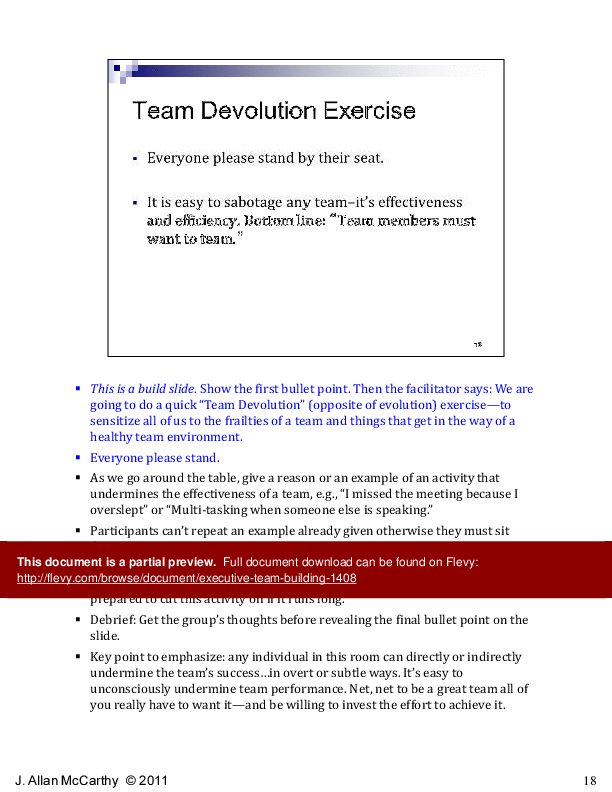
Included are practical exercises like the "Team Devolution Exercise" and the "Where Do You Stand Debrief," which are designed to uncover and address underlying team issues. These activities are crucial for sensitizing team members to the fragilities within the team and promoting a culture of open communication and continuous improvement. This guide is an invaluable tool for any executive looking to enhance team performance and drive organizational success.
Got a question about the product? Email us at support@flevy.com or ask the author directly by using the "Ask the Author a Question" form. If you cannot view the preview above this document description, go here to view the large preview instead.
Executive Summary
This Executive Team Building presentation is designed to enhance the performance of executive teams by fostering collaboration, accountability, and alignment. The content, developed by J. Allan McCarthy, emphasizes the critical role that high-performing teams play in driving organizational success. By utilizing this presentation, executives will learn to establish clear team agreements, refine their working relationships, and ultimately improve the efficiency and effectiveness of their teams.
Who This Is For and When to Use
• C-level executives seeking to improve team dynamics and performance
• Team leaders responsible for driving collaboration among senior management
• HR professionals focused on developing leadership capabilities
• Consultants aiming to facilitate executive team-building sessions
Best-fit moments to use this deck:
• During strategic planning sessions to align executive goals
• At offsite retreats aimed at team development
• When addressing performance issues within the executive team
• For onboarding new executives to integrate them into the team culture
Learning Objectives
• Define team agreements that enhance collaboration and accountability
• Build effective working relationships among team members
• Establish clear roles and responsibilities within the team
• Improve the speed and efficiency of decision-making processes
• Create individual action plans to support team objectives
• Foster a culture of open communication and constructive feedback
Table of Contents
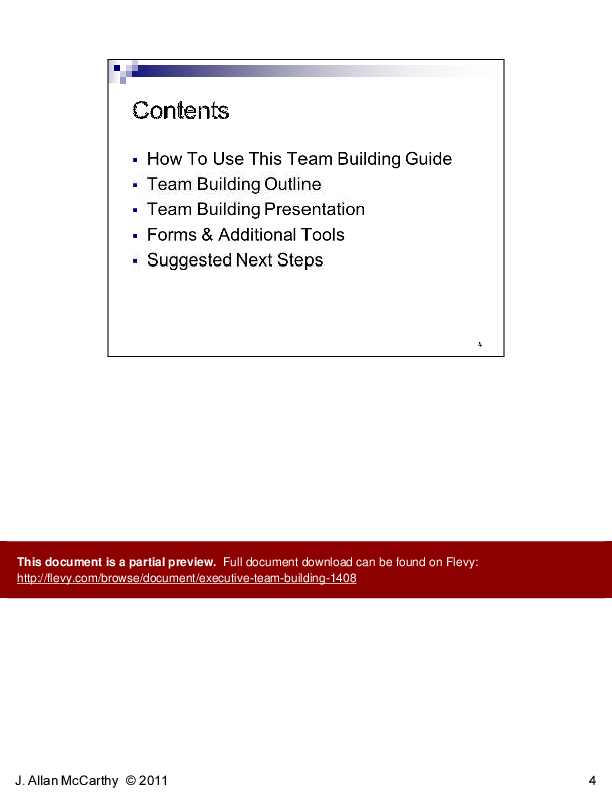
• How To Use This Team Building Guide (page 5)
• Team Building Outline (page 8)
• Team Building Presentation (page 10)
• Forms & Additional Tools (page 30)
• Suggested Next Steps (page 38)
Primary Topics Covered
• Team Building Process - A structured approach to enhancing team dynamics through agreements and accountability.
• Team Agreements - Essential commitments that define how team members will work together effectively.
• Alignment Check - A tool to assess the degree of alignment among team members regarding their agreements.
• Individual Commitments - Personal action plans developed by each team member to enhance overall team performance.
• Facilitator Preconditions - Guidelines for creating a respectful and productive team-building environment.
• Stages of Team Development - A framework for understanding the evolution of team dynamics and effectiveness.
Deliverables, Templates, and Tools
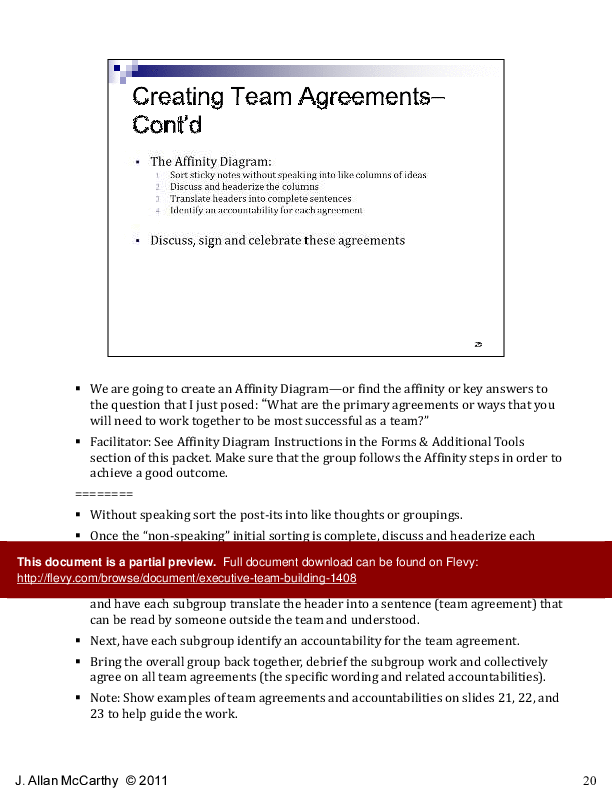
• Team Building Affinity Diagram template for identifying core team agreements
• Alignment Model to assess team agreement alignment
• Individual Commitment forms for tracking personal action plans
• Decision Matrix for clarifying decision-making responsibilities
• Pre-work Assignment to prepare participants for the team-building session
• Affinity Diagram Instructions for facilitating group discussions
Slide Highlights
• Overview of the team building process and its importance
• Example of signed team agreements demonstrating commitment
• Visual representation of the alignment check process
• Decision matrix template for clarifying decision-making roles
• Stages of team development diagram illustrating team evolution
Potential Workshop Agenda
Team Building Introduction (40 minutes)
• Set the tone and expectations for the team-building effort
• Introduce team building theory and process
Identify Team Agreements (60 minutes)
• Facilitate the creation of core team agreements
• Discuss and clarify each agreement with team members
Team Building Action Plan (45 minutes)
• Test alignment of the team to new agreements
• Develop individual contribution action plans
Customization Guidance
• Adjust facilitator notes to fit the organizational context and culture
• Tailor team agreements to reflect specific team dynamics and objectives
• Use the alignment check to periodically reassess team agreements and commitments
Secondary Topics Covered
• Importance of common goals and interdependencies
• Strategies for managing team dynamics and conflicts
• Techniques for fostering open communication and trust
• Methods for evaluating team performance and effectiveness
Topic FAQ
Document FAQ
These are questions addressed within this presentation.
What is the purpose of team agreements?
Team agreements establish clear expectations for behavior and accountability, enhancing collaboration and performance within the team.
How can I assess team alignment?
Utilize the alignment check tool to gauge how well team members understand and commit to the established agreements.
What are the stages of team development?
Teams typically progress through stages of development, including forming, storming, norming, and performing, each requiring different management approaches.
How can individual commitments enhance team performance?
By creating personal action plans, team members take ownership of their contributions, which collectively improves team dynamics and outcomes.
What is the role of the facilitator in this process?
The facilitator guides discussions, ensures respectful communication, and helps the team stay focused on their objectives throughout the session.
How can I encourage open communication among team members?
Establish ground rules for respectful dialogue and create a safe environment where team members feel comfortable sharing their thoughts and feedback.
What tools can help in decision-making?
The decision matrix is an effective tool for clarifying roles and responsibilities in the decision-making process, ensuring accountability.
How often should team agreements be revisited?
It is advisable to review team agreements regularly, especially after significant changes in team composition or objectives, to maintain alignment and effectiveness.
Glossary
• Team Agreements - Commitments made by team members to guide behavior and accountability.
• Alignment Check - A method to assess the degree of agreement among team members.
• Individual Commitment - Personal action plans aimed at enhancing team performance.
• Decision Matrix - A tool for clarifying decision-making roles among stakeholders.
• Affinity Diagram - A visual tool for organizing ideas and identifying common themes.
• Stages of Team Development - Phases that teams go through as they evolve and mature.
• Facilitator Preconditions - Guidelines for creating a productive team-building environment.
• Team Building Process - A structured approach to enhancing team dynamics and performance.
• Common Goals - Shared objectives that unify team members toward a common purpose.
• Interdependency - The reliance of team members on one another to achieve collective goals.
• Constructive Feedback - Positive and actionable input aimed at improving performance.
• Open Communication - A culture of transparency and honesty in team interactions.
Source: Best Practices in Team Management, CEO PowerPoint Slides: Executive Team Building PowerPoint (PPTX) Presentation Slide Deck, McCarthy & Affiliates
|
Download our FREE Organization, Change, & Culture, Templates
Download our free compilation of 50+ slides and templates on Organizational Design, Change Management, and Corporate Culture. Methodologies include ADKAR, Burke-Litwin Change Model, McKinsey 7-S, Competing Values Framework, etc. |










