Editor's Note: Take a look at our featured best practice, Digital Transformation Strategy (145-slide PowerPoint presentation). Digital Transformation is being embraced by organizations across most industries, as the role of technology shifts from being a business enabler to a business driver. This has only been accelerated by the COVID-19 global pandemic. Thus, to remain competitive and outcompete in today's fast paced, [read more]
* * * *
 Digital transformation usually kicks off with bold objectives such as changing customer experience, automation, AI, updating operating models, or developing new digital products. But one of the most important factors is quite often considered a lower priority: the data infrastructure required to fulfill the company’s dreams.
This pattern of events is very dangerous to one’s interests. A strategy implementation plan may take for granted that data can be retrieved from each part and division of the company, that programs can work together effortlessly, and that fresh loads can expand as needed. If the physical or digital system in the background cannot validate those guesses, delivery is delayed, expenses rise, and the justification loses its punch. A case in point is when business transformation is halted not because the plan is impractical, but because of the limitations of the platform underpinning it.
The Strategic Advantage of Getting Infrastructure Right First
Top transformation approaches now view technology and data as essential parts of the transformation backbone, not just an IT workstream. One good example is McKinsey’s view on the matter, which identifies the availability of reliable, well-managed data as one of the essentials of a digital transformation effort.
One straightforward takeaway for business leaders and advisers is that a company’s infrastructure choices have to be tested for their potential to support strategic objectives before the final decision on the set of projects forming a transformation portfolio is made.
A productive way to understand what kind of infrastructure support is needed is to examine it through three different angles:
- Strategic fit – Which data are needed from the available datasets for each transformation initiative and from which sources? Suppose, for instance, a customer-data mining project would need to access several kinds of data like CRM, payments, behavioral, and external data. If the data sources remain separate, the strategic plans for using the data will be severely hampered.
- Access model – Who takes the data, how often do they need to access it, and which business departments or countries? Really, a transformation is a lot of the time accompanied by increased cross-functional activities, so that having scattered data stores and a lack of uniformity in data permission practices becomes a real headache.
- Security and compliance – In whose hands will confidential data be handled and stored? What retention periods, access residency, audit, and deletion rules are you following? These questions have to be raised long before implementing the solution.
Decisions Related to Infrastructure That Lead to Transformation Results
Once strategic requirements are defined, one can then assess infrastructure decisions to see the extent to which they meet those requirements. Four aspects merit special care.
The issue of scalability comes first on the list. In most cases, transformation initiatives do not create a fixed amount of information. AI, linked products, digital channels, analytics, and automated workflows can be such a driver of change both in storing and handling data that the amount of data will increase. Infrastructure should be able to handle growth without requiring architectural redesigns over and over again.
Security is another matter of great business consequence. With transformation comes the proliferation of applications, user integrations, and external partners that interact with an organization’s data. The NIST Cybersecurity Framework 2.0 is a very handy tool for executives, as it frames cybersecurity in terms of enterprise risk management rather than purely technical controls.
Interoperability is yet another major issue. A data block that gets stuck in the system between different applications, teams, and platforms limits the possibility of transformation. Contemporary architecture should provide integration features while preserving appropriate governance and access controls.
Lastly, storage architecture needs direct strategic thinking. Having secure and scalable storage will ensure that all your papers, data sets, pictures, models, backups, and operational information will never be lost during a transformation journey. Companies that take this requirement seriously and translate it into their strategy are looking at business cloud storage as part of their overall infrastructure base, not in lieu of strategy, but simply one of the components.
Day-One Decision, Not a Day-Two Fix
Differentiators of the most successful transformation programs include the simultaneous identification of business capabilities, changes to the operational model, investment priorities, and infrastructure requirements. By doing this, one may make better product/brand decisions: projects that need data capabilities that are not available may be arranged for availability; however, fundamental investments may be made possible through their multiple strategic use-case contributions.
The main point behind this is that, in reality, infrastructure rarely exists just as a separate cost. A poorly managed storage environment, a very weak integration layer, or an inadequate security architecture can be the reasons for recurring costs within each transformation initiative that relies on it. In contrast, a good foundation can become a shared enterprise capability that can be reused.
So the strategy is very clear: data infrastructure is the kind of transformation decision that organizations can make on day one, not just the technical fix of day two. Organizations that explicitly align aspects including storage, access scale, protection, and policy management of data with their transformation goals are more capable of implementing the strategy they have set out and also of modifying it along the way as the needs of the business change.
206-slide PowerPoint presentation
This is again a "new improved" A Comprehensive Guide to Digital Transformation. What was one 173 slides has now increased to 206 because I have added a number of latest slides to the deck about Why People are the Critical Factor. The Value of Change Management. The deck is not intended to provide
[read more]
Do You Want to Implement Business Best Practices?
You can download in-depth presentations on Digital Transformation and 100s of management topics from the FlevyPro Library. FlevyPro is trusted and utilized by 1000s of management consultants and corporate executives.
For even more best practices available on Flevy, have a look at our top 100 lists:
These best practices are of the same as those leveraged by top-tier management consulting firms, like McKinsey, BCG, Bain, and Accenture. Improve the growth and efficiency of your organization by utilizing these best practice frameworks, templates, and tools. Most were developed by seasoned executives and consultants with over 20+ years of experience.
Readers of This Article Are Interested in These Resources
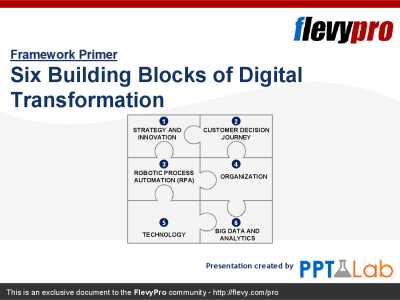
35-slide PowerPoint presentation
Digital Transformation touches practically every function in the entire organization. This thus requires an unprecedented amount of coordination among people, process, and technologies throughout the organization, leading to a difficult Transformation program.
The Six Building Blocks of
[read more]
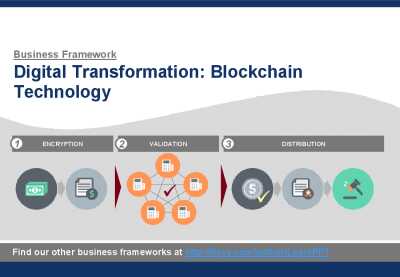
87-slide PowerPoint presentation
Blockchain Technology is an emerging database technology that has gained widespread appeal across many industries, mostly driven by the rise of cryptocurrencies--most notably Bitcoin. It provides numerous process benefits, including efficiency, security, transparency/openness, low cost, data
[read more]
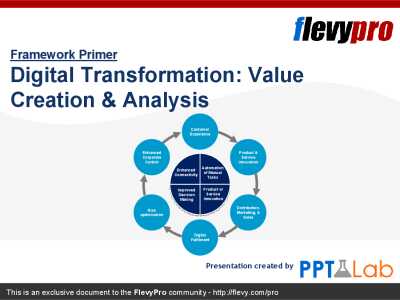
21-slide PowerPoint presentation
Most organizations recognize the significant potential in creating value through Digital Transformation. However, they may struggle with the question of exactly how much value they can create and where within the organization the value will come from. This presentation deals with the various
[read more]
81-slide PowerPoint presentation
We are living in the Digital Age. For organizations to remain competitive, they must develop and execute robust Digital Transformation Strategies.
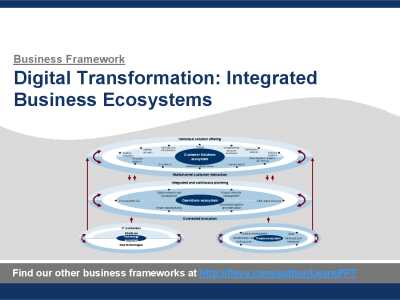
Organizations that have excelled in Digital Transformation distinguish themselves through their mastery of the 4 critical Business Ecosystems.
[read more]