Your AI assistant becomes a Flevy-powered consultant, with direct access to our full library of frameworks, templates, and case studies. Free to connect. No account, sign-in, or API key required.
STEP 1 · CHOOSE YOUR ASSISTANT
STEP 2 · CONNECT
1
Copy the Flevy MCP URL below.
2
Open the Claude connector settings and choose Add Custom Connector. Paste the URL and name it Flevy.
This framework is developed by a team of former McKinsey and Big 4 consultants. The presentation follows the headline-body-bumper slide format used by global consulting firms.
Editor Summary
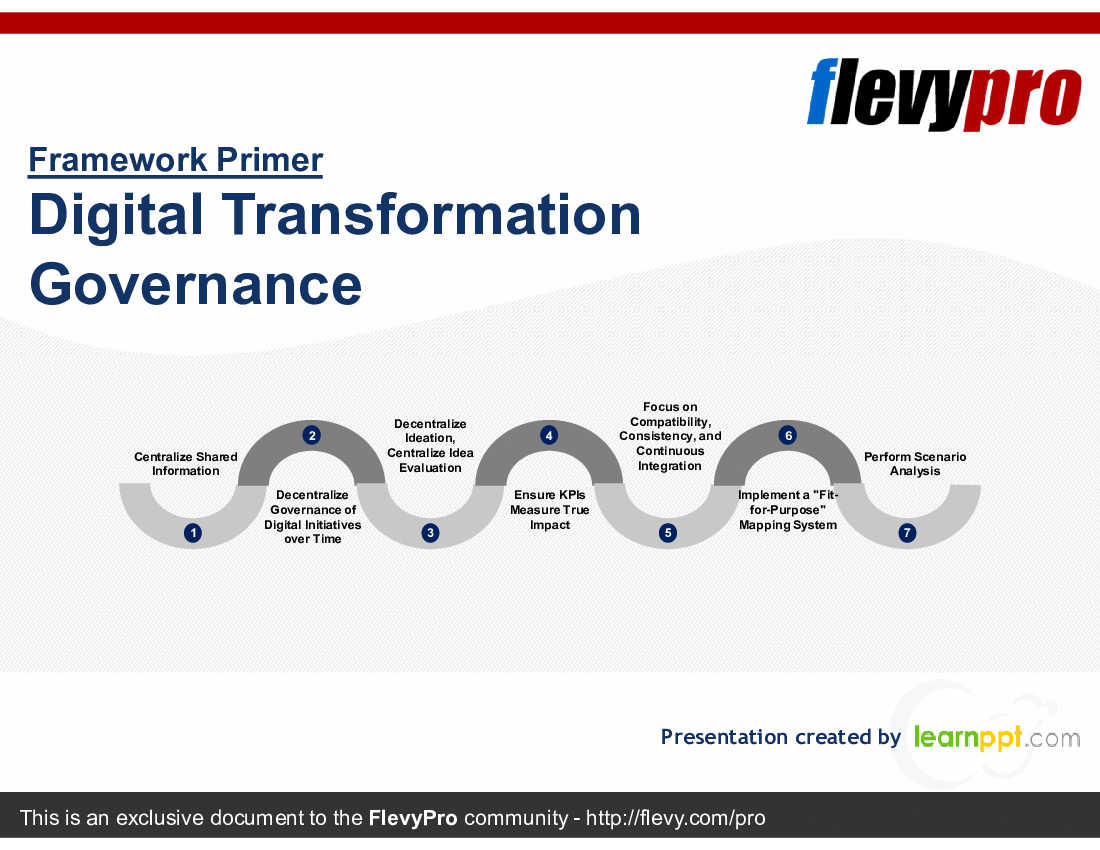
Digital Transformation Governance is a 27-slide PowerPoint (PPTX) presentation by LearnPPT Consulting that presents 7 governing principles for digital initiatives: Centralize Shared Information; Decentralize Governance of Digital Initiatives over Time; Decentralize Ideation/Centralize Idea Evaluation; Ensure KPIs Measure True Impact; Focus on Compatibility, Consistency, and Continuous Integration; Implement a Fit-for-Purpose Mapping System; Perform Scenario Analysis.
Read moreBased on a study of 100+ companies and interviews with 55 digital executives, it includes editable slide templates and is sold as a digital download on Flevy.
Use this deck when an organization must design or revise governance for a portfolio of digital initiatives — for example during scaling, post-merger consolidation, or when outcomes are inconsistent across projects.
CIOs calibrating where to centralize shared information versus decentralize initiative decision rights during portfolio scaling.
PMO leads defining KPI frameworks that measure true impact across initiatives and reporting to the executive team.
Transformation program managers applying fit-for-purpose mapping to group and integrate initiatives for continuous integration.
Strategy executives running scenario analysis to prioritize investment across uncertain digital roadmaps.
The 7-principle approach emphasizes clear decision rights, outcome-focused KPIs, and iterative portfolio analysis consistent with structured governance practice.
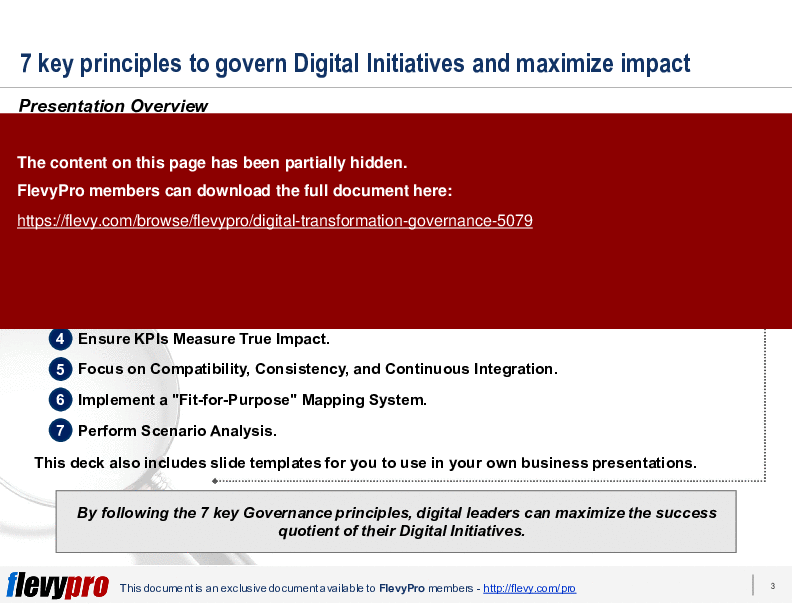
The constantly evolving digital landscape necessitates executives to dynamically design and govern their portfolio of Digital Initiatives.
Based on a study of more than 100 companies on their digital challenges and interviews with 55 digital executives, we have distilled out 7 key governing principles that link Digital Transformation to impactful success.
1. Centralize Shared Information.
2. Decentralize Governance of Digital Initiatives over Time.
3. Decentralize Ideation. Centralize Idea Evaluation.
4. Ensure KPIs Measure True Impact.
5. Focus on Compatibility, Consistency, and Continuous Integration.
6. Implement a "Fit-for-Purpose" Mapping System.
7. Perform Scenario Analysis.
By following the 7 key Governance principles, digital leaders can maximize the success quotient of their Digital Initiatives.
This deck also includes slide templates for you to use in your own business presentations.
This presentation provides a comprehensive overview of the critical challenges organizations face in Digital Transformation. It emphasizes the importance of adapting governance frameworks to meet the unique needs of digital initiatives. The insights are grounded in extensive research and real-world examples, making it a practical guide for executives.
The PPT delves into the necessity of balancing flexibility and rigidity in governance structures. It addresses how to accommodate diverse digital initiatives while maintaining strategic alignment and efficiency. The principles outlined are designed to help organizations navigate the complexities of digital transformation effectively.
Executives will find actionable strategies to enhance their digital governance. The presentation includes templates that can be customized for specific organizational needs. By leveraging these tools, leaders can drive impactful digital initiatives and achieve sustained success in their transformation efforts.
What are the core governance principles organizations should consider for digital transformation?
Research-based guidance highlights 7 core principles: Centralize Shared Information; Decentralize Governance of Digital Initiatives over Time; Decentralize Ideation and Centralize Idea Evaluation; Ensure KPIs Measure True Impact; Focus on Compatibility, Consistency, and Continuous Integration; Implement a Fit-for-Purpose Mapping System; Perform Scenario Analysis — 7 key governing principles.
How should teams balance centralized vs decentralized governance for digital initiatives?
The recommended balance is to centralize shared information and idea evaluation while allowing governance of individual initiatives to decentralize over time, enabling flexibility where appropriate. The deck emphasizes balancing flexibility and rigidity through central information and phased decentralization of governance.
What should KPIs for digital initiatives measure to show true impact?
The emphasis is that KPIs must measure true impact rather than activity alone; the presentation stresses aligning metrics to outcomes and strategic goals so reporting reflects real value creation, captured under the principle "Ensure KPIs Measure True Impact."
How can scenario analysis support digital portfolio decisions?
Scenario analysis is used to stress-test portfolios under different market, technical, or resource conditions, informing prioritization, sequencing, and contingency planning; the presentation lists "Perform Scenario Analysis" as one of the 7 governance principles.
What should I look for when choosing a digital transformation governance template or deck?
Prefer materials grounded in empirical research and executive interviews, that present explicit governance principles and editable templates for executive communication; Flevy's Digital Transformation Governance cites a study of 100+ companies, interviews with 55 digital executives, and is a 27-slide PPTX with templates.
How do slide templates help executives prepare governance presentations?
Slide templates enable executives to adapt governance principles and evidence to organizational context, accelerate alignment with stakeholders, and present consistent messages; this presentation explicitly includes editable slide templates intended for executive use and customization and includes slide templates.
I need to centralize shared information across multiple initiatives — what initial steps align with governance best practices?
Start by establishing centralized information repositories and reporting standards, implement a fit-for-purpose mapping system to categorize initiatives, and ensure compatibility and continuous integration mechanisms are defined; this follows the principle "Centralize Shared Information" and related mapping guidance.
After a merger, how should we prioritize which digital initiatives to continue or stop?
Use scenario analysis and a fit-for-purpose mapping system to evaluate initiatives under different integration and resource scenarios, align decisions to KPIs that measure true impact, and apply centralized idea evaluation while allowing governance to decentralize over time as appropriate; scenario analysis and fit-for-purpose mapping system.
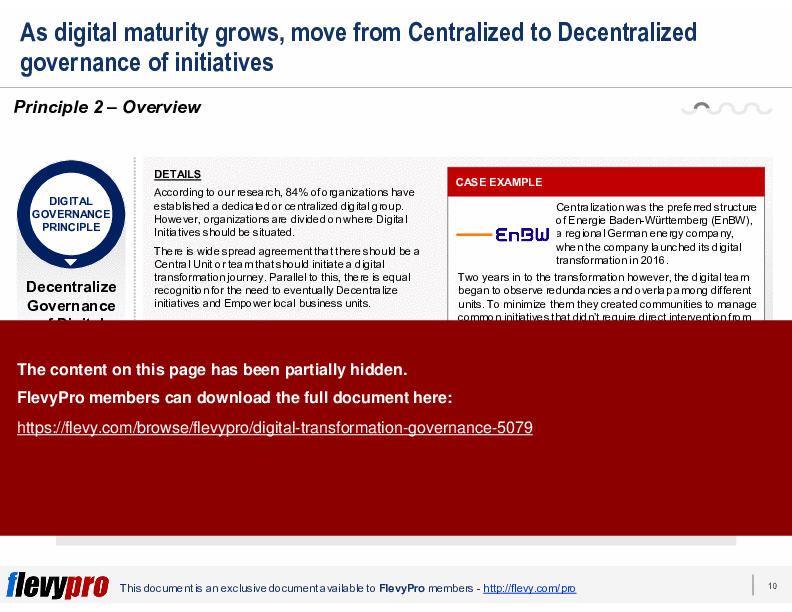
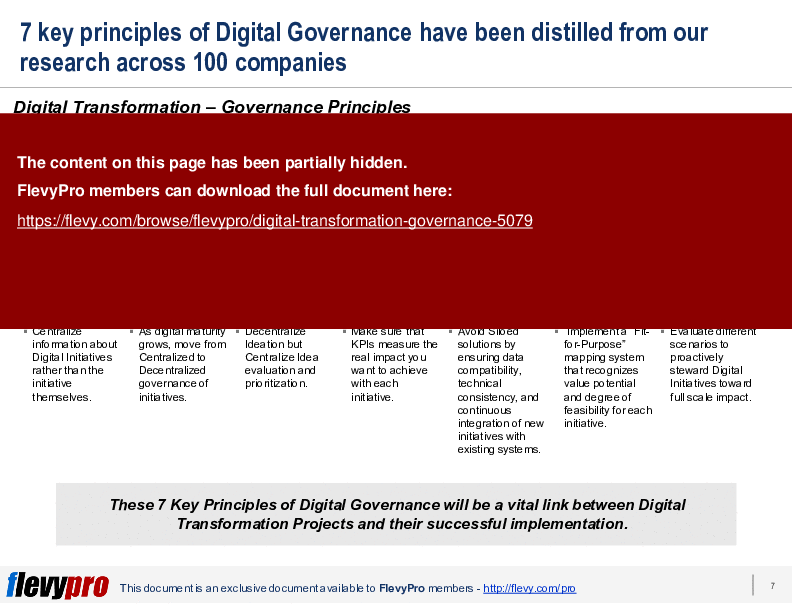
This PPT slide template outlines 7 essential principles of Digital Governance derived from research across 100 companies. The first principle emphasizes centralizing shared information about digital initiatives to foster a comprehensive understanding of the digital landscape. The second principle advocates transitioning from centralized governance to a decentralized model for greater flexibility. The third principle promotes decentralizing ideation while centralizing evaluation and prioritization of ideas, balancing innovation with structured assessment. The fourth principle focuses on ensuring Key Performance Indicators (KPIs) accurately measure the impact of initiatives, aligning them with strategic goals. The fifth principle stresses compatibility and continuous integration to avoid siloed solutions. The sixth principle introduces a "Fit-for-Purpose" mapping system to evaluate the value potential and feasibility of initiatives. Finally, the seventh principle involves scenario analysis to proactively manage digital initiatives, anticipating challenges and opportunities for successful transformation.
This PPT slide template outlines 4 types of digital initiatives under Principle 6: "Quick Wins," "Kill Zone," "Moonshots," and "Enterprise Anchors & Ventures." Quick Wins are easy-to-implement initiatives that yield immediate, but limited benefits, addressing known business challenges without long-term impact. The Kill Zone includes initiatives that are difficult to execute and provide low value, highlighting the need for careful project selection. Moonshots are high-risk initiatives with significant potential rewards, encouraging organizations to explore innovative technologies despite low feasibility. Enterprise Anchors focus on large-scale changes within existing frameworks, requiring cross-department collaboration, while Ventures explore new business models and partnerships externally. This framework aids organizations in assessing and prioritizing their digital strategies effectively.
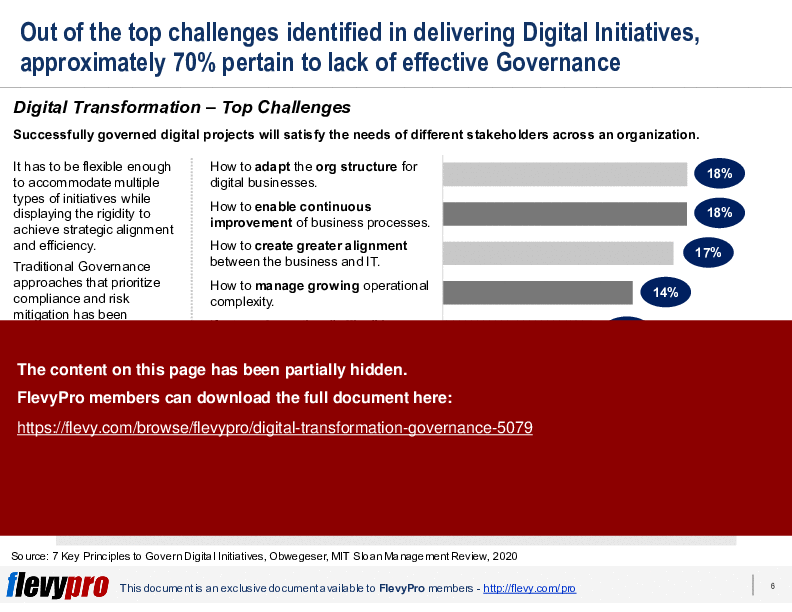
This PPT slide template analyzes challenges in executing digital initiatives, noting that approximately 70% arise from inadequate governance. Key challenges include adapting organizational structure and enabling continuous improvement in business processes, each at 18%. Organizations must prioritize flexibility and responsiveness in governance frameworks. Creating alignment between business and IT is critical, noted at 17%, highlighting the need for cohesive strategies bridging technical and operational aspects. Managing operational complexity, at 14%, reflects the intricacies of digital transformation, necessitating robust governance structures. Governance-related queries emphasize the importance of a transformation office and breaking down functional silos, advocating for roles like Chief Digital Officer (CDO). The shift from "Control" to "Active Enablement" underscores a proactive governance approach that fosters innovation and agility in digital initiatives.
This PPT slide template outlines a "Fit-for-Purpose" mapping system for categorizing digital initiatives based on 2 critical dimensions: value potential and degree of feasibility. Value potential requires evaluating how each project aligns with transformation objectives, focusing on anticipated benefits and contributions to strategic goals. Degree of feasibility emphasizes practical implementation aspects, encouraging executives to assess the organization's context, capabilities, and structure to identify roadblocks. Mapping initiatives along these dimensions provides a comprehensive understanding of their feasibility and overall value, enabling informed decisions that enhance successful digital transformation and effective digital governance.
This PPT slide template outlines a strategic principle of decentralizing ideation while centralizing evaluation and prioritization of ideas. Successful organizations utilize various methods to identify and assess innovative concepts. After meeting a specific threshold, ideas are presented to a Centralized Decision-Making Authority or Digital Innovation Committee, typically led by the Chief Digital Officer and comprising members from various business units. This cross-functional representation enhances the innovation process. A case example from Nestlé's "InGenius" program illustrates this principle, allowing employees to submit ideas via a software platform for peer feedback and voting. This fosters a culture of innovation and aligns the best ideas with strategic goals. Organizations are encouraged to leverage collective creativity through a systematic approach that funnels ideas into a transparent evaluation pipeline, enhancing capacity for transformation.
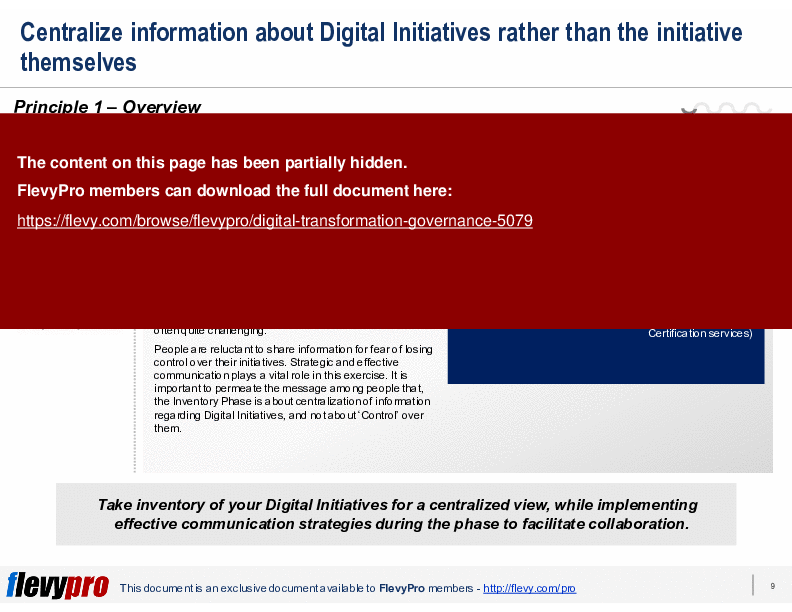
This PPT slide template addresses the challenge of a fragmented digital landscape in organizations, where varying levels of ownership hinder a comprehensive understanding of the digital portfolio. A crucial first step is taking an inventory of existing Digital Initiatives, complicated by reluctance to share information due to fears of losing control. Effective communication strategies are essential to foster collaboration and transparency. Fred Herren, Senior Vice President at SGS, emphasizes engaging employees directly for insights rather than issuing top-down instructions, promoting a culture of openness. Organizations should centralize information about Digital Initiatives to enhance digital governance, focusing on collaboration and shared insights to navigate digital transformation effectively.
This PPT slide template outlines principles for developing effective digital Key Performance Indicators (KPIs). Effective metrics must have a clearly defined causal relationship to business outcomes, linking performance measurement to tangible results that influence strategic decisions. Five guiding questions help formulate impactful digital KPIs: what is being measured (e.g., percentage of digital interactions with customers), desired business outcomes (e.g., enhancing customer outcomes, reducing costs), and the balance point to avoid over-digitization, recognizing the Law of Diminishing Returns. The fourth and fifth questions assess current status and define target goals, ensuring KPIs are relevant and aligned with broader business objectives. This structured approach enhances digital initiatives through actionable metrics.
Source: Best Practices in Digital Transformation, Governance PowerPoint Slides: Digital Transformation Governance PowerPoint (PPTX) Presentation Slide Deck, LearnPPT Consulting
This framework is developed by a team of former McKinsey and Big 4 consultants. The presentation follows the headline-body-bumper slide format used by global consulting firms.
For $10.00 more, you can download this document plus 2 more FlevyPro documents. That's just $13 each.
ABOUT FLEVYPRO
This document is part of the FlevyPro Library, a curated knowledge base of documents for our FlevyPro subscribers.
FlevyPro is a subscription service for on-demand business frameworks and analysis tools. FlevyPro subscribers receive access to an exclusive library of curated business documents—business framework primers, presentation templates, Lean Six Sigma tools, and more—among other exclusive benefits.
Since 2012, we have provided business templates to over 10,000 businesses and organizations of all sizes, from startups and small businesses to the Fortune 100, in over 130 countries.
"FlevyPro has been a brilliant resource for me, as an independent growth consultant, to access a vast knowledge bank of presentations to support my work with clients. In terms of RoI, the value I received from the very first presentation I downloaded paid for my subscription many times over! The
quality of the decks available allows me to punch way above my weight – it's like having the resources of a Big 4 consultancy at your fingertips at a microscopic fraction of the overhead.
"
– Roderick Cameron, Founding Partner at SGFE Ltd
"As a consulting firm, we had been creating subject matter training materials for our people and found the excellent materials on Flevy, which saved us 100's of hours of re-creating what already exists on the Flevy materials we purchased."
– Michael Evans, Managing Director at Newport LLC
"As a niche strategic consulting firm, Flevy and FlevyPro frameworks and documents are an on-going reference to help us structure our findings and recommendations to our clients as well as improve their clarity, strength, and visual power. For us, it is an invaluable resource to increase our impact and value."
– David Coloma, Consulting Area Manager at Cynertia Consulting
"I like your product. I'm frequently designing PowerPoint presentations for my company and your product has given me so many great ideas on the use of charts, layouts, tools, and frameworks. I really think the templates are a valuable asset to the job."
– Roberto Fuentes Martinez, Senior Executive Director at Technology Transformation Advisory
"One of the great discoveries that I have made for my business is the Flevy library of training materials.
As a Lean Transformation Expert, I am always making presentations to clients on a variety of topics: Training, Transformation, Total Productive Maintenance, Culture, Coaching, Tools, Leadership Behavior, etc. Flevy
It is well worth the money to purchase these presentations. Sure, I have the knowledge and information to make my point. It is another thing to create a presentation that captures what I want to say. Flevy has saved me countless hours of preparation time that is much better spent with implementation that will actually save money for my clients.
"
– Ed Kemmerling, Senior Lean Transformation Expert at PMG
"I am extremely grateful for the proactiveness and eagerness to help and I would gladly recommend the Flevy team if you are looking for data and toolkits to help you work through business solutions."
– Trevor Booth, Partner, Fast Forward Consulting
"Flevy is now a part of my business routine. I visit Flevy at least 3 times each month.
Flevy has become my preferred learning source, because what it provides is practical, current, and useful in this era where the business world is being rewritten.
many challenges and there is the need to make the right decisions in a short time, with so much scattered information, we are fortunate to have Flevy. Flevy investigates, selects, and puts at our disposal the best of the best to help us be successful in our work.
"
– Omar Hernán Montes Parra, CEO at Quantum SFE
"As an Independent Management Consultant, I find Flevy to add great value as a source of best practices, templates and information on new trends. Flevy has matured and the quality and quantity of the library is excellent. Lastly the price charged is reasonable, creating a win-win value for
the customer, Flevy and the various authors. This is truly a service that benefits the consulting industry and associated clients. Thanks for providing this service.
"
– Jim Schoen, Principal at FRC Group
Save with Bundles
This document is available as part of the following discounted bundle(s):
Download our FREE Digital Transformation Templates
Download our free compilation of 50+ Digital Transformation slides and templates. DX concepts covered include Digital Leadership, Digital Maturity, Digital Value Chain, Customer Experience, Customer Journey, RPA, etc.
Download our FREE Digital Transformation Templates
Get Our FREE Product.
Download our free compilation of 50+ Digital Transformation slides and templates. DX concepts covered include Digital Leadership, Digital Maturity, Digital Value Chain, Customer Experience, Customer Journey, RPA, etc.

 Click main image to view in full screen. Unlock all 10 preview images: