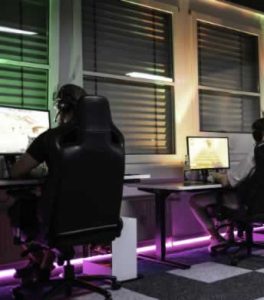
 Video games are no longer perceived just as leisure-time entertainment. Nowadays, they have become a complete digital world where millions of individuals not only play, but also earn money. From esports tournaments to streaming broadcasts, games create new work opportunities that previously seemed fantastic.
A whole class of digital workers has emerged: professional players, streamers, creators of in-game content, and even those who earn money by pumping accounts. For example, in mobile games like Clash Royale, there is a separate department that boosts accounts and raises other players’ ratings.
In this article, we explore how games are shaping the new labor economy, turning virtual achievements into real incomes and opening up unique career paths in the digital world.
The History and Evolution of Gaming Work
People began to earn money from games at the beginning of the 2000s. World of Warcraft MMORPGs allowed players to spend hours gathering resources, advancing characters, and selling in-game items in real life. It was a means to make some money for most, and a digital work for some.
The next step was esports. There are tournaments with prize funds, teams, training sessions, and contracts. Players were no longer just amateurs – now it was a real profession, where skills and discipline directly determined income.
The streaming culture was developing in parallel. Players showed their sessions online, receiving money for subscriptions and donations. In-game economies have become more complex: sales of accounts, items, and services have turned games into a real platform for work and business.
Today, similar practices are actively developing in more dynamic games, including Clash Royale, where the value of an account directly depends on the level of cards and rating.
Modern Gaming Professions
Today, digital labor in games is represented by many roles, and each of them is unique in its own way.
Esports players are the most obvious category. They train, conduct tournaments, enter into contracts with organizations, and win money from prize money and sponsorship. For them, the game is a full-fledged job with discipline, a schedule, and a high level of competition.
Another branch is made up of streamers and content creators. Such platforms as Twitch and YouTube enabled the audience to pay money to attract attention to the player. Income consists of donations, advertising, and subscriptions. At the same time, success here depends not only on gaming skills but also on charisma, the ability to communicate and create content.
There is also a less noticeable, but very important category – in-game workers. These are people who are engaged in pumping accounts, farming resources, creating mods, or selling in-game items. This kind of work is especially in demand in competitive games, such as Clash Royale, where players order trophy boosts, map upgrades, and high-level arenas.
These professions often have no official status, but at the same time form sustainable sources of income for thousands of people around the world.
The Economics of Gaming Labor
The economy within games is no longer just an auxiliary system, but an independent market with its own laws. Supply and demand operate here, prices are formed, intermediaries and services appear.
One of the most interesting segments is the buying and selling of gaming accounts. Not all players have the time or desire to go through a long leveling path, but the desire to get a strong account or a high rank remains. This is especially noticeable in Clash Royale, where progress takes a considerable amount of time, and a high rating directly affects the gaming experience.
Today, it has developed into an entire industry. There are platforms where you can order upgrades or purchase a ready-made account, for example, https://skycoach.gg/clash-royale-boost/accounts. Such services actually act as intermediaries between supply and demand, turning game time and skills into a commodity.
It is important to understand: this is not just “cheating” or bypassing the system, as is often thought. It is a form of labor. One person invests hours and effort so that the other can get results faster. In a classical economy, this would look like outsourcing – and in fact, the same thing is happening here, only in a digital environment.
However, this model has a downside. Incomes are unstable, the rules of the game may change, and accounts may be blocked. Many services operate in a gray area, balancing user demand and developer policy. Nevertheless, the market continues to grow because it covers the real need.
It is also interesting that the gaming economy provides an opportunity for people from different countries to earn money. Where traditional jobs are limited, digital work in games is becoming an alternative, albeit unstable, and affordable.
Social and Cultural Aspects
The emergence of digital workers in games has changed the very perception of work. To most young people, gaming is no longer a waste of time, it may even be an investment that will pay off.
The formation of new neighborhoods in which people experience, create teams, and pursue careers is taking place. The boundaries between nations are becoming indistinct: you have an opportunity to work anywhere in the world and to address a global audience.
Meanwhile, society is also changing in its attitude. If earlier the phrase “I earn money from games” caused skepticism, today it is increasingly perceived as a normal professional trajectory.
Technologies That Support Gaming
This market would not have been possible without the advancement of technology. The opportunities offered by streaming services have enabled content monetization, cloud gaming has opened up access to games, and mobile devices have introduced millions of new users to the business.
On its own, it should be mentioned what the effects of blockchain technologies are. The Play-to-Earn concept has shown that game assets can have real value outside of the game. Although this market is experiencing fluctuations, the very idea of digital ownership has already taken hold.
The Future of Digital Workers through the Lens of Games
Games are becoming a kind of laboratory for future work. New employment models are being tested here, where it’s not diplomas that matter, but skills, speed of adaptation, and the ability to create value in a digital environment.
With the development of metaverses and virtual worlds, we can expect the emergence of even more professions related to games. Designers of virtual spaces, digital merchants, managers of gaming communities – all this is already beginning to take shape.
Games are no longer just entertainment. This is a new economy, in which a new class of workers is being born – flexible, global, and fully digital.