
Key accounts represent a major chunk of revenue and margin for most suppliers. Therefore, losing an important customer can have negative repercussions on organizational growth.
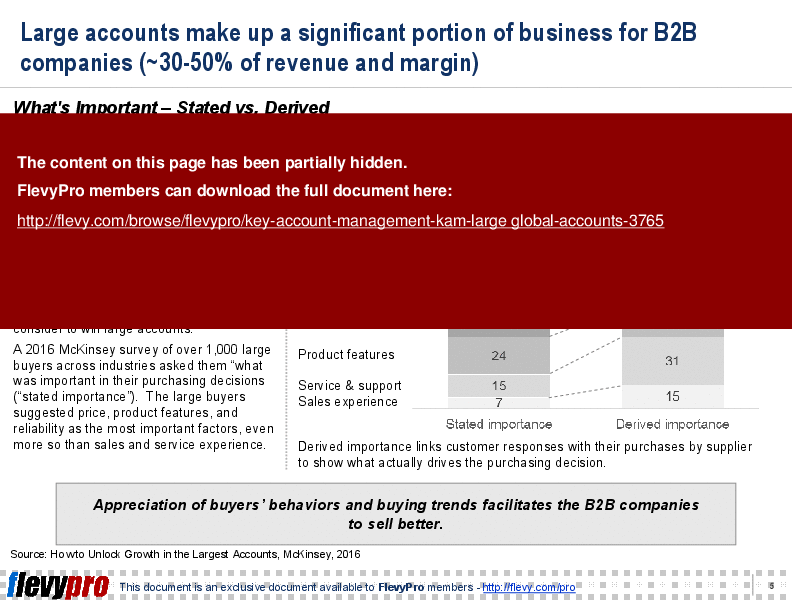
The significance of key accounts is urging top B2B companies to revisit their Key Account Management (KAM) approaches. Additionally, the increasing level of sophistication of the purchase process being adopted—such as, centralized procurement, competitive bidding and auctions, and laborious negotiations—by large buyers is a crucial element for B2B companies to consider to win large accounts.
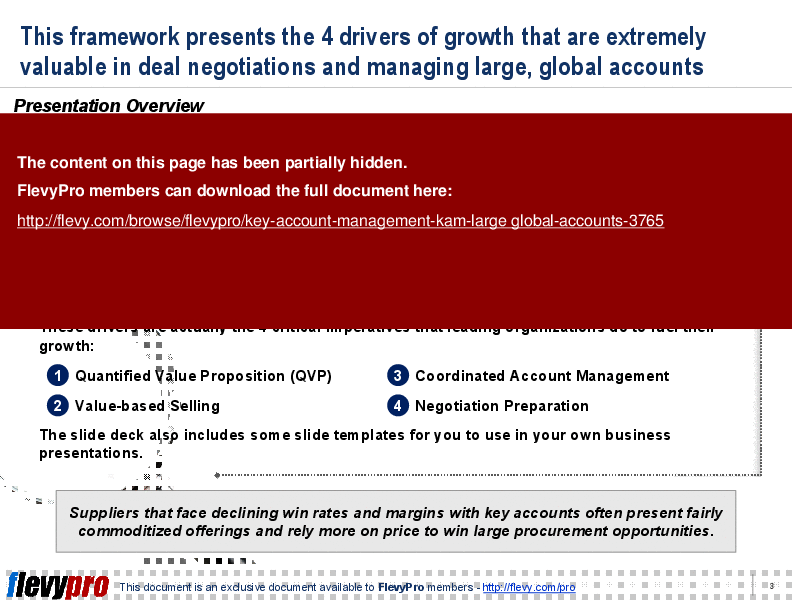
Suppliers that face declining win rates and margins with key accounts often present fairly commoditized offerings and rely more on price to win large procurement opportunities.
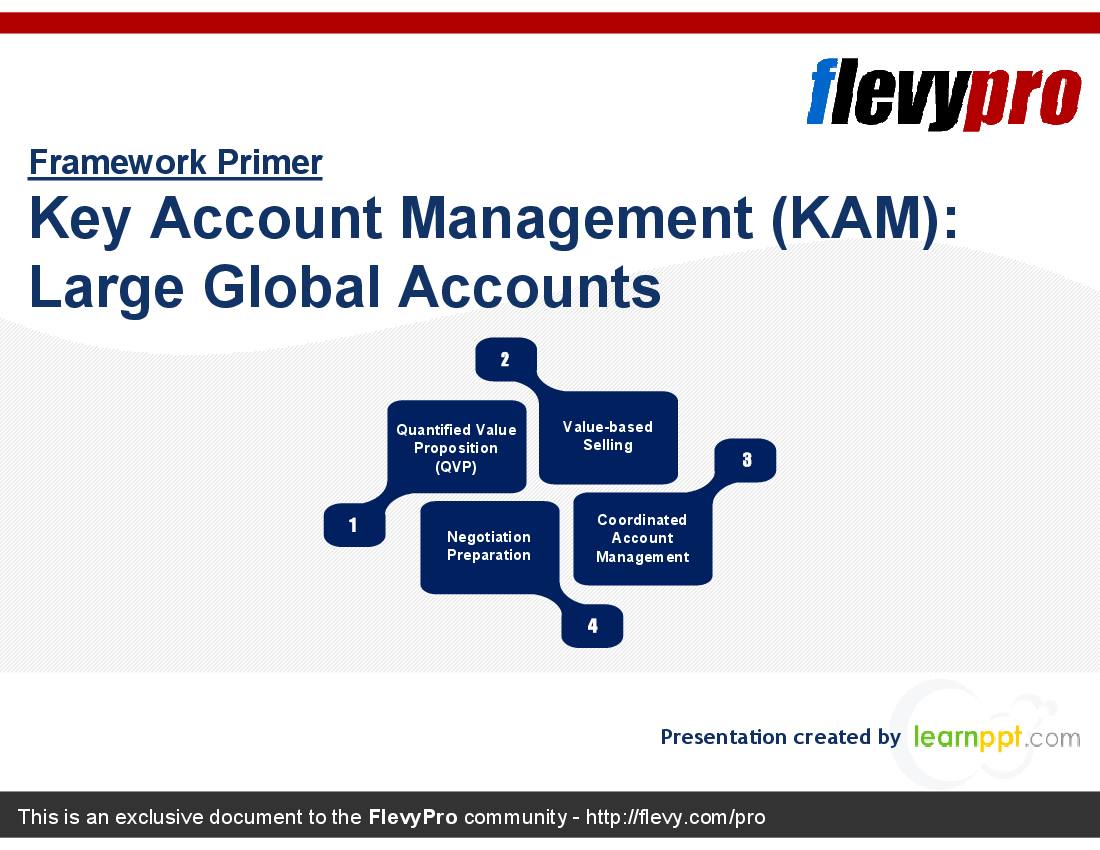
This presentation deliberates on the 4 drivers of growth that the suppliers can utilize to develop best-in-class key Account Management practices and increase their large contract win ratios. These drivers are actually the 4 critical imperatives that leading organizations do to fuel their growth:
1. Quantified Value Proposition (QVP)
2. Value-based Selling
3. Coordinated Account Management
4. Negotiation Preparation
The slide deck also includes some slide templates for you to use in your own business presentations.
This PPT provides a comprehensive framework for managing large global accounts, emphasizing the importance of a Quantified Value Proposition (QVP) and value-based selling. It highlights the critical role of coordinated account management and negotiation preparation in driving growth. The insights are backed by real-world data and industry best practices, making it a valuable resource for suppliers aiming to enhance their key account strategies.
The presentation includes detailed templates and actionable steps to implement these strategies effectively. It addresses common challenges such as disjointed relationships and poor communication, offering practical solutions to overcome these obstacles. By leveraging this framework, organizations can significantly improve their win rates and margins with large accounts.
Got a question about this document? Email us at flevypro@flevy.com.
Executive Summary
This presentation on Key Account Management (KAM) focuses on strategies for managing large global accounts effectively. Drawing insights from ex-McKinsey consultants, it outlines 4 critical drivers of growth: Quantified Value Proposition (QVP), Value-based Selling, Coordinated Account Management, and Negotiation Preparation. By leveraging these strategies, corporate executives and consultants can enhance their KAM practices, improve win rates, and ultimately drive organizational growth. The presentation also includes templates for practical application in business settings.
Who This Is For and When to Use
• Corporate executives overseeing sales and account management teams
• Business development leaders focused on large account strategies
• Consultants advising organizations on KAM practices
• Sales teams engaged in high-stakes negotiations with key accounts
Best-fit moments to use this deck:
• During strategic planning sessions for KAM initiatives
• When training sales teams on effective account management techniques
• Prior to negotiations with large global accounts
• For workshops aimed at improving collaboration across sales and support teams
Learning Objectives
• Define the 4 drivers of growth in KAM and their importance
• Build a Quantified Value Proposition that resonates with key accounts
• Establish a value-based selling approach that aligns with customer needs
• Implement coordinated account management practices across teams
• Develop effective negotiation strategies tailored to large procurement processes
• Analyze and leverage buyer behaviors to enhance sales effectiveness
Table of Contents
• Overview (page 3)
• What’s Important (page 5)
• Key Principles (page 8)
• Drivers of Growth (page 11)
• Templates (page 17)
Primary Topics Covered
• Overview of KAM - This section introduces the significance of key accounts and the need for effective management strategies.
• Importance of Buyer Insights - Discusses how understanding buyer behaviors and preferences can enhance sales strategies.
• Key Principles of KAM - Outlines essential principles for effective account management, including deal selection and standardized processes.
• Drivers of Growth - Details the 4 key growth drivers that organizations can leverage to improve their KAM practices.
• Templates for Implementation - Provides practical templates for applying KAM strategies in business contexts.
Deliverables, Templates, and Tools
• Quantified Value Proposition (QVP) template for articulating value to key accounts
• Value-based selling framework to guide sales conversations
• Coordinated account management plan template for cross-functional teams
• Negotiation preparation checklist to ensure readiness for discussions
• Performance evaluation metrics for assessing account management effectiveness
• Post-deal learning framework to capture insights and improve future strategies
Slide Highlights
• Overview of KAM and its significance in B2B contexts
• Insights from a McKinsey survey on buyer preferences and decision-making factors
• Key principles for effective account management illustrated with real-world examples
• Detailed explanation of the 4 drivers of growth with actionable strategies
• Templates and frameworks for practical application in KAM
Potential Workshop Agenda
KAM Strategy Development Session (90 minutes)
• Review the importance of key accounts and buyer insights
• Discuss the 4 drivers of growth and their application
• Develop a Quantified Value Proposition for a selected account
Negotiation Preparation Workshop (60 minutes)
• Identify key negotiation challenges and strategies
• Role-play negotiation scenarios to practice techniques
• Create a negotiation checklist tailored to specific accounts
Customization Guidance
• Tailor the Quantified Value Proposition to reflect specific customer needs and industry contexts
• Adjust templates to align with internal processes and terminology
• Incorporate organizational metrics and KPIs into performance evaluation frameworks
• Modify negotiation strategies based on the competitive landscape and buyer profiles
Secondary Topics Covered
• The impact of centralized procurement on supplier relationships
• Techniques for enhancing collaboration across sales and support teams
• The role of technology in facilitating coordinated account management
• Best practices for ongoing training and development in KAM
Topic FAQ
Document FAQ
These are questions addressed within this presentation.
What are the key drivers of growth in KAM?
The 4 key drivers are Quantified Value Proposition (QVP), Value-based Selling, Coordinated Account Management, and Negotiation Preparation.
How can I implement a Quantified Value Proposition?
Focus on articulating the specific value your products or services deliver to the customer, linking it to their overall profit and loss concerns.
What is the importance of buyer insights in KAM?
Understanding buyer behaviors and preferences helps tailor sales strategies, improving win rates and customer satisfaction.
How can I enhance coordination across my sales teams?
Appoint a common account leader and establish clear communication plans to ensure alignment across different regions and functions.
What negotiation strategies should I consider for large accounts?
Develop standardized negotiation processes, evaluate industry cost structures, and prepare scenarios to understand buyer alternatives.
How do I measure the success of my KAM strategies?
Use performance metrics that assess account growth, customer satisfaction, and the effectiveness of sales strategies.
What role does training play in effective KAM?
Ongoing training ensures that sales teams are equipped with the necessary skills and knowledge to implement KAM strategies effectively.
How can I leverage digital tools in KAM?
Utilize CRM systems and collaboration tools to enhance communication, track performance, and streamline account management processes.
Glossary
• Key Account Management (KAM) - A strategic approach to managing a company’s most important customers.
• Quantified Value Proposition (QVP) - A clear articulation of the value delivered to customers, often linked to financial metrics.
• Value-based Selling - A sales approach focused on understanding and communicating the value of products or services.
• Coordinated Account Management - A systematic approach to managing customer relationships across different teams and regions.
• Negotiation Preparation - The process of strategizing and planning for negotiations with key accounts.
• Buyer Insights - Understanding customer preferences and behaviors to inform sales strategies.
• Performance Metrics - Measurements used to assess the effectiveness of KAM strategies and account management practices.
• Cross-functional Teams - Teams composed of members from different departments working together on account management.
• Sales Enablement - Tools and resources provided to sales teams to enhance their effectiveness.
• Customer Relationship Management (CRM) - Technology used to manage a company’s interactions with current and potential customers.
• Post-deal Learning - The process of analyzing outcomes after a deal to improve future strategies.
• Strategic Accounts - Accounts that are critical to a company’s revenue and growth.
Source: Best Practices in Account Management, Sales Strategy, Globalization PowerPoint Slides: Key Account Management (KAM): Large Global Accounts PowerPoint (PPT) Presentation Slide Deck, LearnPPT Consulting
Did you need more documents?
Consider a FlevyPro subscription from $39/month. View plans here.
For $10.00 more, you can download this document plus 2 more FlevyPro documents. That's just $13 each.
|
Download our FREE Strategy & Transformation Framework Templates
Download our free compilation of 50+ Strategy & Transformation slides and templates. Frameworks include McKinsey 7-S, Balanced Scorecard, Disruptive Innovation, BCG Curve, and many more. |