
Management processes—everything from how an organization manages risk to how it gets supplies for factories to how it manages and develops people—are some of the primary ways that global companies impose order and consistency on a diverse set of global operations. Companies believe that processes can help share knowledge across divisions and regions. Likewise, seamless delivery and service processes can be central to meeting customer expectations.
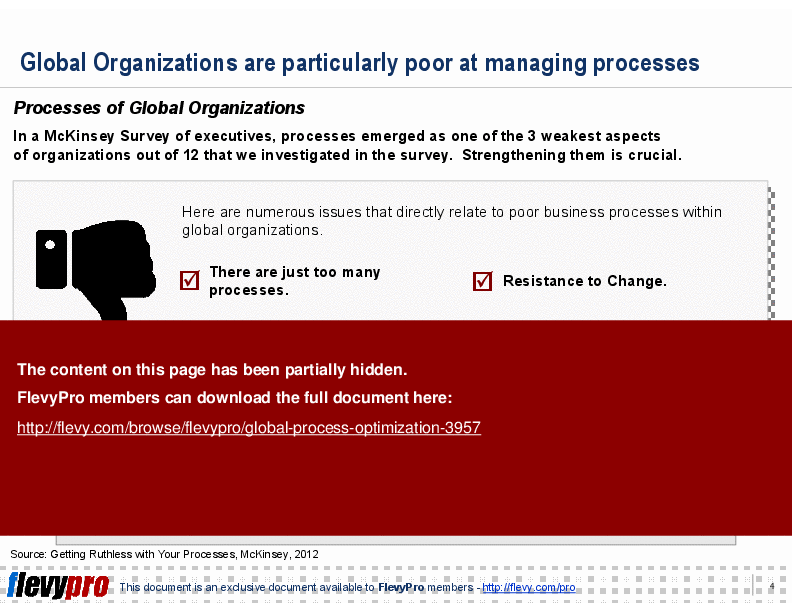
In a world where the pace of competition is increasing faster than ever, best in-class processes can create Competitive Advantages when it comes to Innovation and Risk Management. However, researches have shown that companies are particularly poor at managing processes. Often there are just too many processes. Even worse, executives often do not know where to begin.
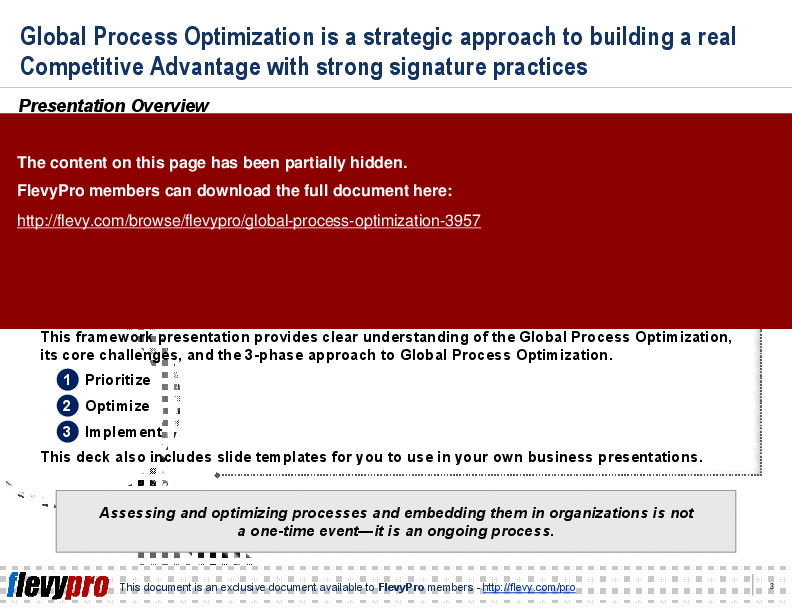
This framework presentation provides clear understanding of the Global Process Optimization, its core challenges, and the 3-phase approach to Global Process Optimization.
1. Prioritize
2. Optimize
3. Implement
Assessing and optimizing processes and embedding them in organizations is not a one-time event. It is an ongoing process.
This deck also includes slide templates for you to use in your own business presentations.
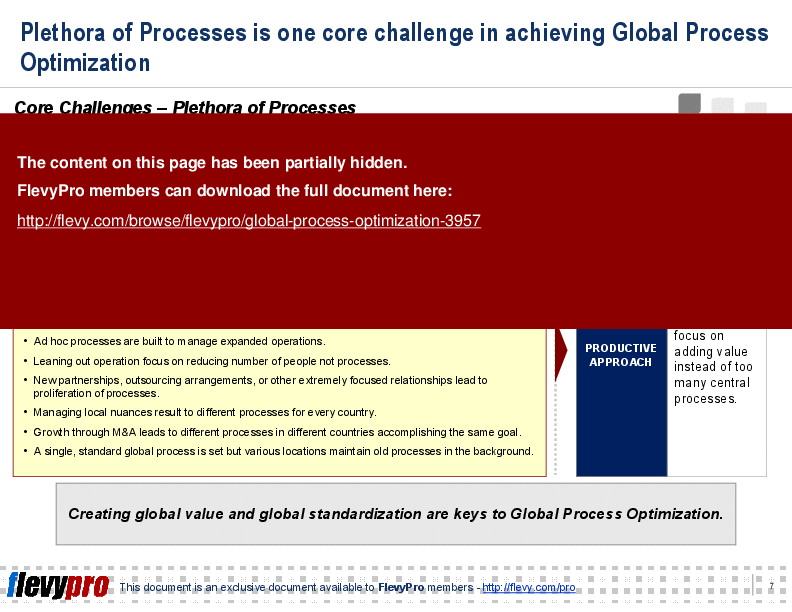
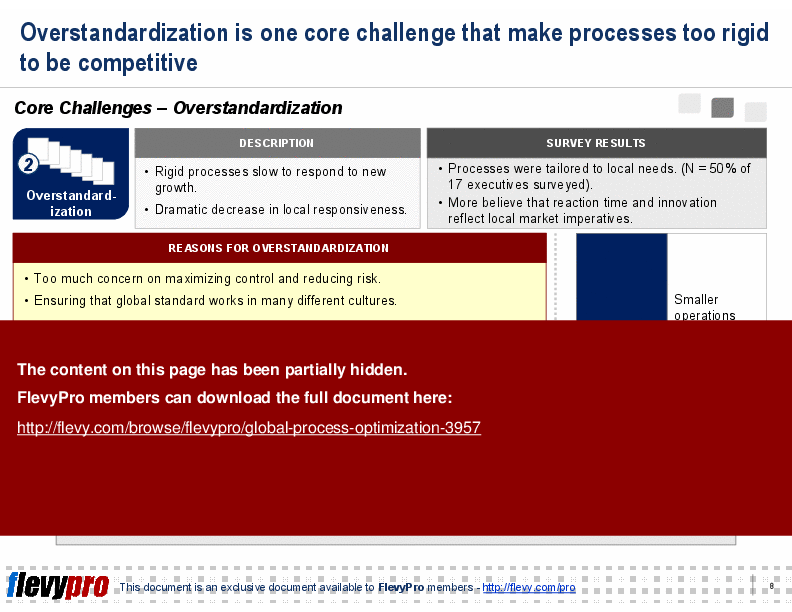
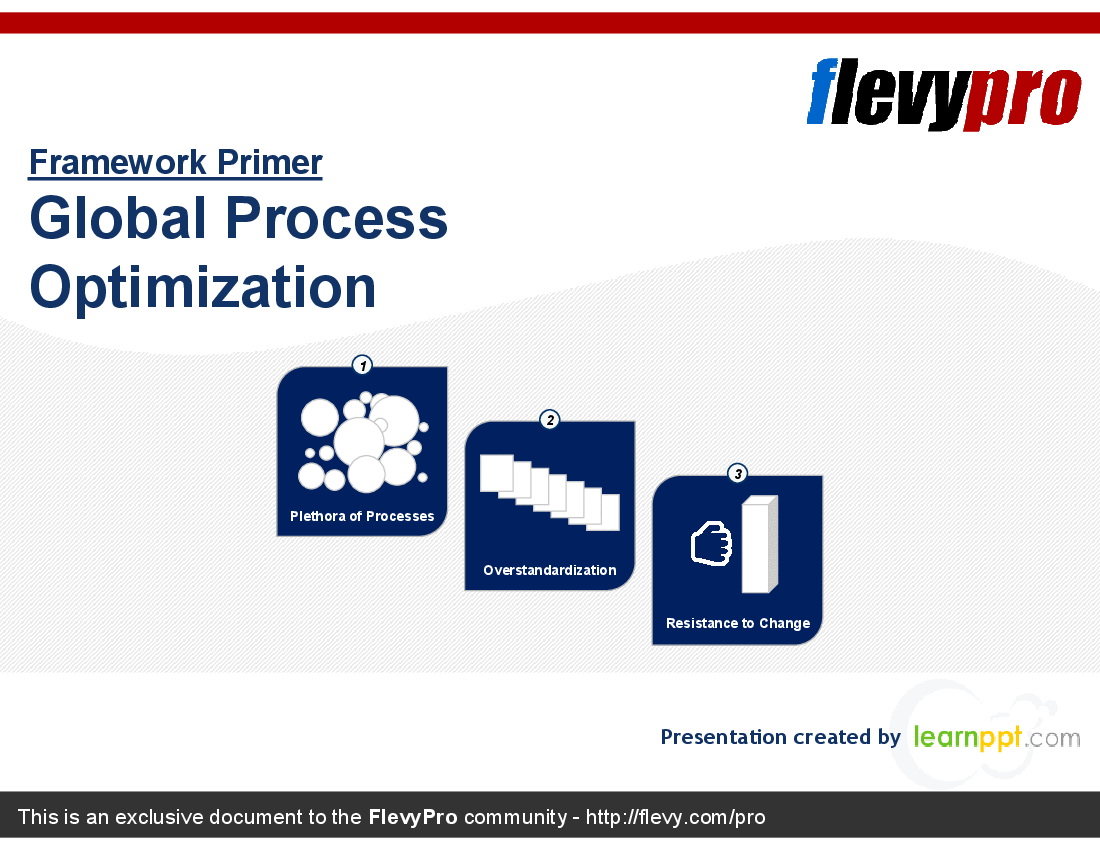
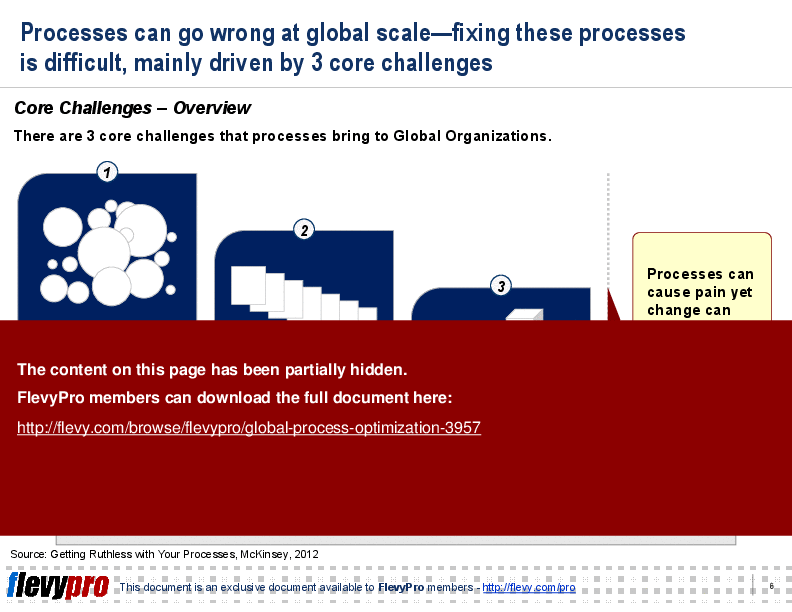
Global Process Optimization is a strategic tool designed to tackle the complexities of managing diverse global operations. The presentation highlights the critical challenges organizations face, such as the plethora of processes, overstandardization, and resistance to change. These challenges are dissected to provide a clear understanding of their impact on operational efficiency and competitiveness.
This PPT offers a structured 3-phase approach—Prioritize, Optimize, and Implement—ensuring that processes are not only streamlined, but also aligned with the company's strategic goals. The included templates are practical tools for executives to apply these principles directly to their business scenarios, facilitating a smoother transition to optimized global processes.
Got a question about this document? Email us at flevypro@flevy.com.
Executive Summary
The Global Process Optimization presentation provides a strategic framework for enhancing organizational processes across global operations. This comprehensive PowerPoint template outlines the critical challenges faced by organizations, including a plethora of processes, overstandardization, and resistance to change. It introduces a structured three-phase approach—Prioritize, Optimize, and Implement—designed to streamline processes and embed them within the organization. By utilizing this framework, executives can effectively assess and optimize their processes, ultimately driving operational efficiency and competitive advantage.
Who This Is For and When to Use
• Corporate executives overseeing global operations and process management
• Integration leaders responsible for process standardization across regions
• Consultants advising organizations on operational efficiency and optimization
• Change management teams focused on implementing new processes
Best-fit moments to use this deck:
• During strategic planning sessions to align on process optimization initiatives
• When addressing operational inefficiencies identified in performance reviews
• In workshops aimed at fostering a culture of continuous improvement
Learning Objectives
• Define the concept of Global Process Optimization and its significance in a competitive landscape
• Identify and categorize key processes within an organization for standardization
• Analyze the gaps between current and desired process performance
• Develop a structured approach to implement process changes effectively
• Foster stakeholder engagement to minimize resistance to change
• Establish metrics to monitor the effectiveness of optimized processes
Table of Contents
• Overview (page 3)
• Core Challenges (page 4)
• Global Process Optimization (page 11)
• Templates (page 16)
Primary Topics Covered
• Overview of Global Process Optimization - A strategic approach to enhancing organizational processes through standardization and optimization.
• Core Challenges - Identification of the main obstacles organizations face in managing processes effectively, including resistance to change and overstandardization.
• Three-Phase Approach - A structured methodology consisting of Prioritize, Optimize, and Implement to achieve process optimization.
• Prioritize Phase - Steps to categorize and standardize key processes that align with organizational strategy.
• Optimize Phase - Techniques to assess current process value and identify opportunities for improvement.
• Implement Phase - Strategies for executing process changes with a focus on leadership and resource allocation.
Deliverables, Templates, and Tools
• Process categorization template for identifying signature and enabling processes
• Gap analysis framework to assess current versus desired process performance
• Change management plan template to guide the implementation of new processes
• Stakeholder engagement strategies to facilitate buy-in and reduce resistance
• Performance metrics dashboard to track the effectiveness of optimized processes
Slide Highlights
• Overview slide detailing the strategic importance of Global Process Optimization
• Core Challenges slide summarizing the results of the McKinsey survey on process management
• Three-Phase Approach slide outlining the steps for effective process optimization
• Prioritize Phase slide detailing the categorization of processes
• Implement Phase slide emphasizing the need for senior leadership involvement
Potential Workshop Agenda
Introduction to Global Process Optimization (30 minutes)
• Overview of the presentation and its objectives
• Discussion on the importance of process optimization
Identifying Core Challenges (60 minutes)
• Group activity to identify specific challenges within participants' organizations
• Sharing insights and experiences
Three-Phase Approach Workshop (90 minutes)
• Breakout sessions to develop action plans for each phase
• Presentation of group findings and strategies
Customization Guidance
• Tailor the process categorization framework to reflect specific organizational needs and priorities
• Adjust the change management plan to incorporate unique cultural considerations
• Modify performance metrics to align with organizational goals and objectives
Secondary Topics Covered
• The impact of technology on process optimization
• Best practices for fostering a culture of continuous improvement
• Case studies of successful Global Process Optimization initiatives
Topic FAQ
Document FAQ
These are questions addressed within this presentation.
What is Global Process Optimization?
Global Process Optimization is a strategic approach aimed at enhancing organizational processes to improve efficiency and effectiveness across global operations.
What are the core challenges organizations face in process management?
Organizations often struggle with a plethora of processes, overstandardization, and resistance to change, which can hinder operational efficiency.
How does the three-phase approach work?
The three-phase approach consists of Prioritize (identifying key processes), Optimize (assessing and improving processes), and Implement (executing changes effectively).
What types of templates are included in the presentation?
The presentation includes templates for process categorization, gap analysis, change management planning, and performance metrics tracking.
How can I customize the framework for my organization?
You can tailor the templates and strategies to reflect your organization's specific processes, culture, and goals.
What metrics should be used to measure process optimization success?
Metrics may include process efficiency, cost savings, customer satisfaction, and employee engagement levels.
How can I ensure stakeholder buy-in for process changes?
Engaging stakeholders early in the process, addressing concerns, and demonstrating the benefits of changes can help secure buy-in.
What role does leadership play in implementing process changes?
Senior leadership is crucial for driving change, providing resources, and overcoming organizational inertia.
Glossary
• Global Process Optimization - A strategic framework for enhancing organizational processes across global operations.
• Signature Processes - Key processes that significantly contribute to organizational value and competitive advantage.
• Enabling Processes - Functional processes that support signature processes, but are not central to the organization's strategy.
• Hygiene Processes - Basic processes that ensure compliance and efficiency, but do not require much management attention.
• Change Management - A structured approach to transitioning individuals, teams, and organizations to a desired future state.
• Stakeholder Engagement - The process of involving individuals or groups who may be affected by or can affect a project or initiative.
• Gap Analysis - A method for assessing the differences between current and desired performance levels.
• Performance Metrics - Quantifiable measures used to evaluate the success of an organization in achieving its objectives.
• Resistance to Change - The reluctance of individuals or groups to adapt to new processes or changes within an organization.
• Overstandardization - The inflexibility of processes that can hinder responsiveness to local market needs.
• Plethora of Processes - The overwhelming number of processes that can dilute organizational effectiveness.
• Optimization - The process of making a system, design, or decision as effective or functional as possible.
Source: Best Practices in Process Improvement, Globalization PowerPoint Slides: Global Process Optimization PowerPoint (PPT) Presentation Slide Deck, LearnPPT Consulting
Did you need more documents?
Consider a FlevyPro subscription from $39/month. View plans here.
For $10.00 more, you can download this document plus 2 more FlevyPro documents. That's just $13 each.
|
Download our FREE Strategy & Transformation Framework Templates
Download our free compilation of 50+ Strategy & Transformation slides and templates. Frameworks include McKinsey 7-S, Balanced Scorecard, Disruptive Innovation, BCG Curve, and many more. |