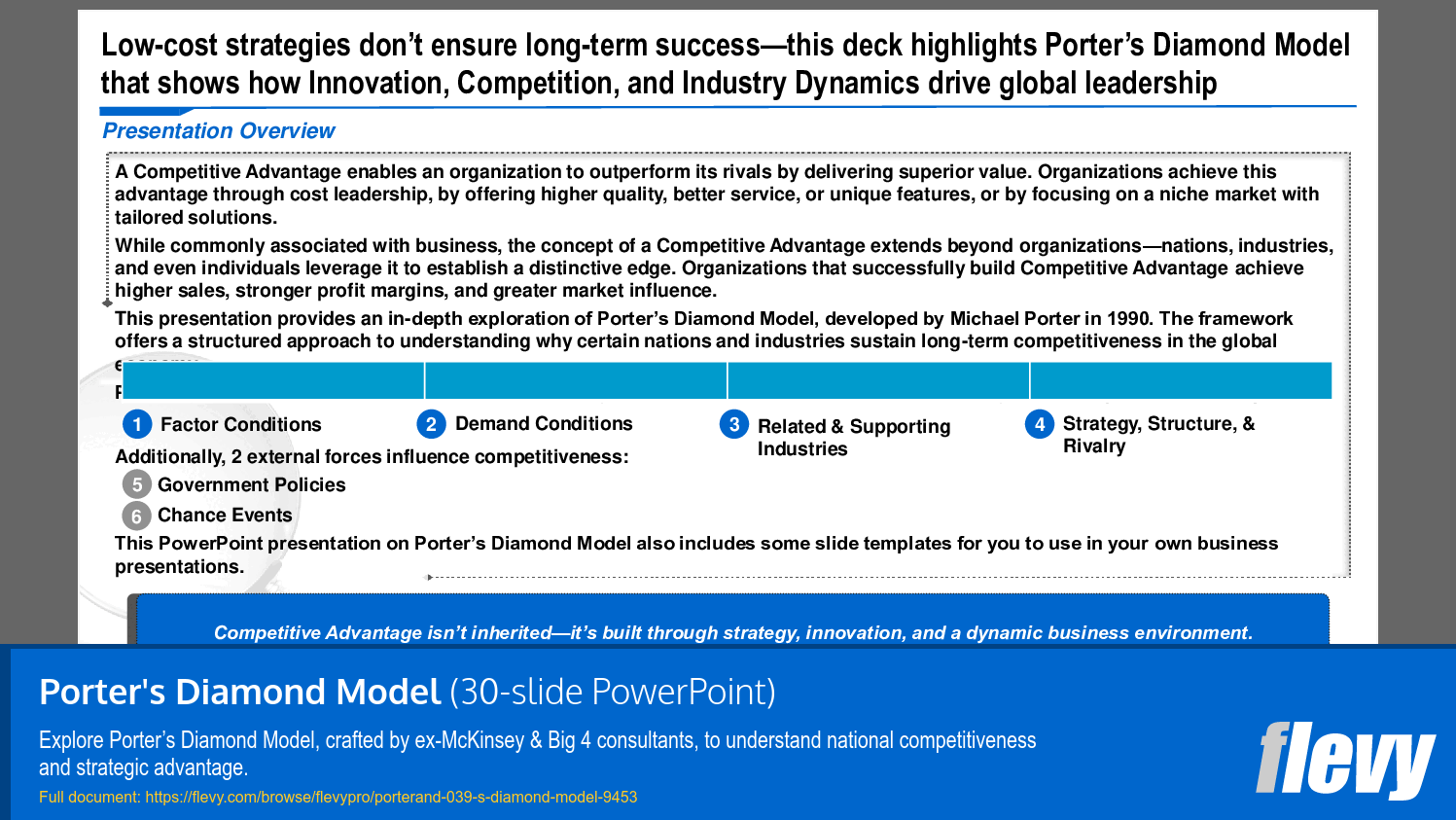

A Competitive Advantage enables an organization to outperform its rivals by delivering superior value. Organizations achieve this advantage through cost leadership, by offering higher quality, better service, or unique features, or by focusing on a niche market with tailored solutions.
While commonly associated with business, the concept of a Competitive Advantage extends beyond organizations—nations, industries, and even individuals leverage it to establish a distinctive edge. Organizations that successfully build Competitive Advantage achieve higher sales, stronger profit margins, and greater market influence.
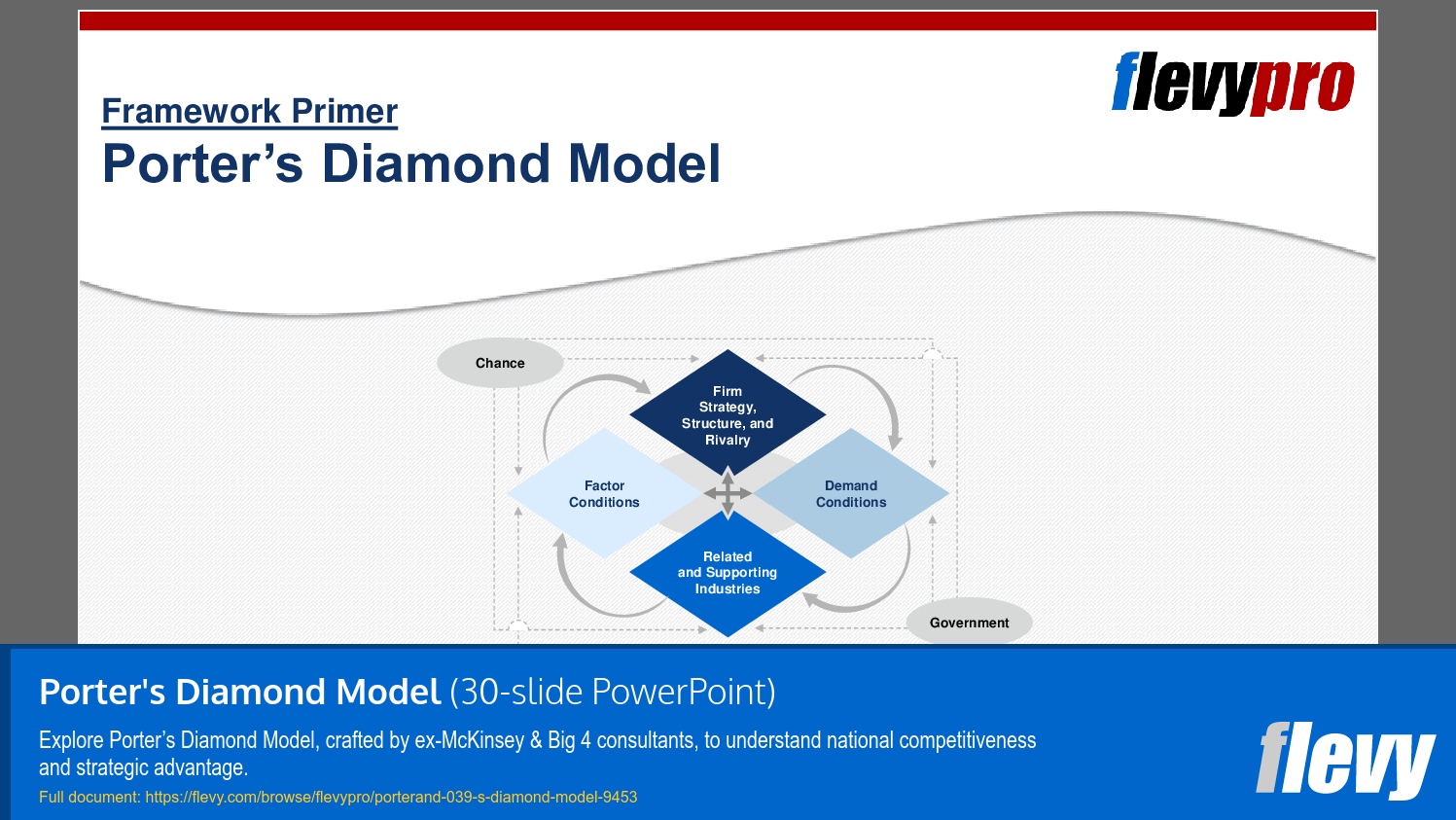
This presentation provides an in-depth exploration of Porter's Diamond Model, developed by Michael Porter in 1990. The framework offers a structured approach to understanding why certain nations and industries sustain long-term competitiveness in the global economy.
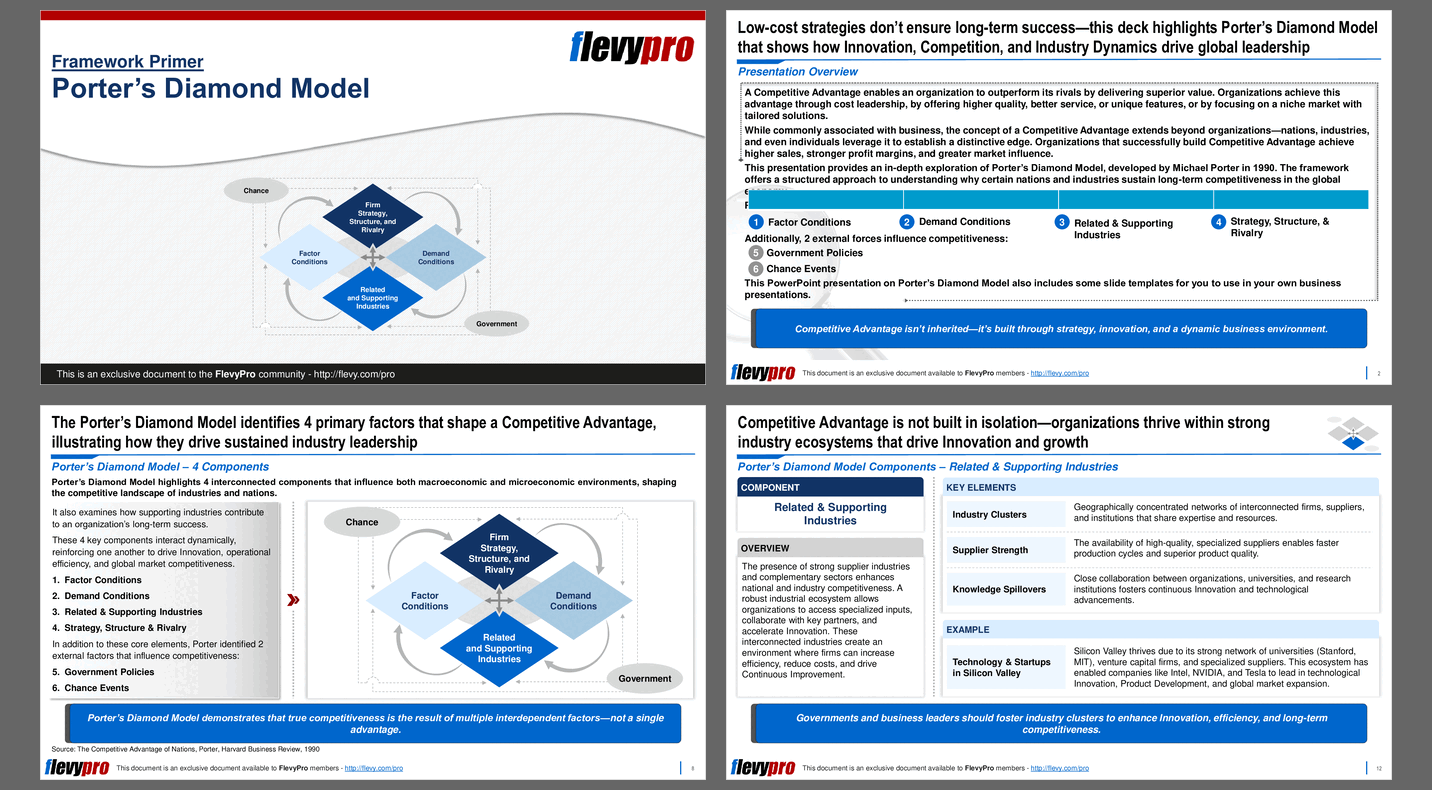
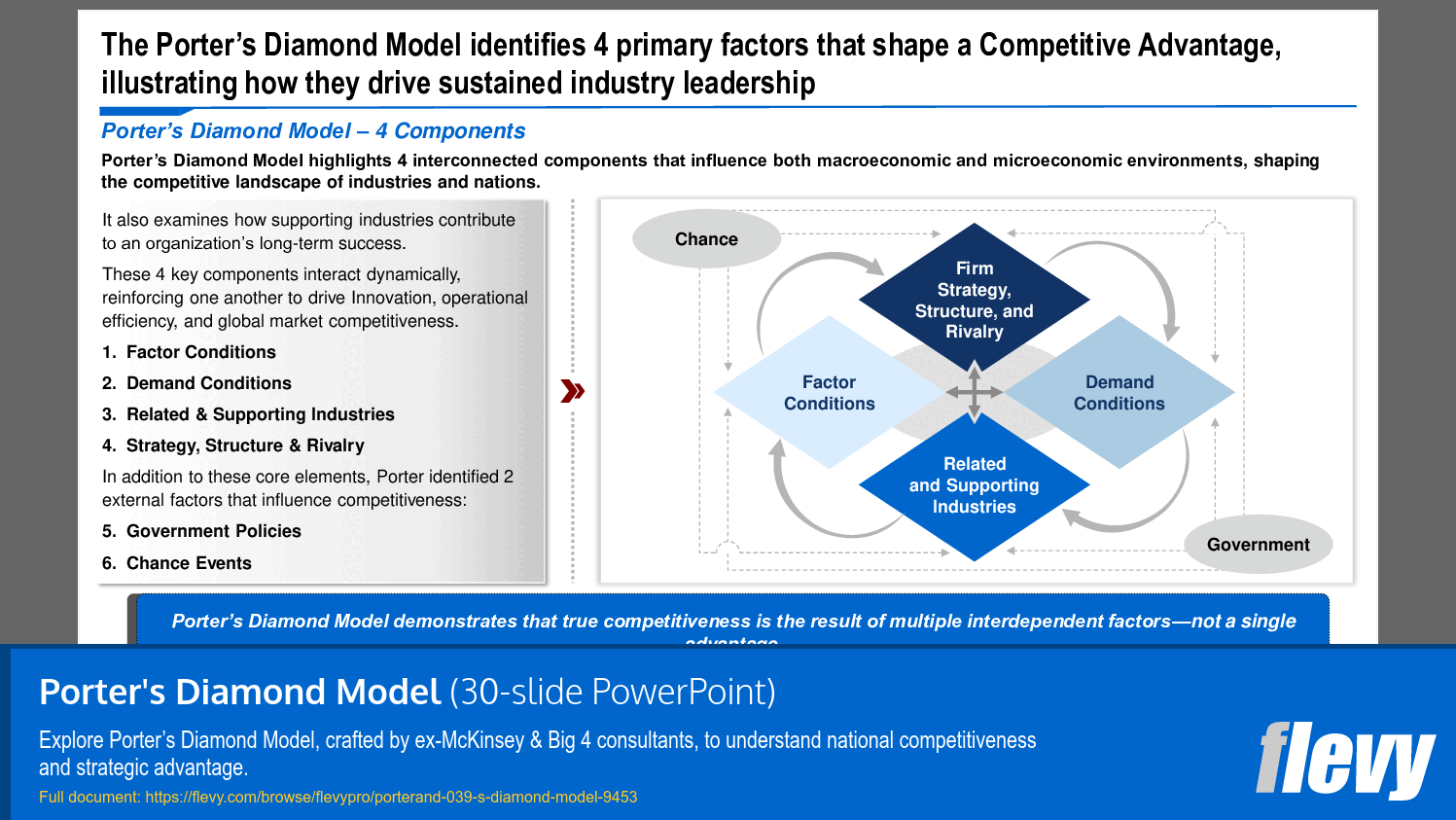
Porter's Diamond Model framework identifies 4 primary factors that determine national and industry-level Competitive Advantage:
1. Factors Conditions – Factor Conditions refer to a nation's resources and capabilities that influence industry competitiveness. Unlike traditional economic theories that focus on basic factor endowments (such as land, labor, and capital), the Diamond Model highlights the importance of advanced factors—which are actively developed and refined over time.
2. Demand Conditions – Demand conditions refer to the sophistication and expectations of domestic consumers, which compel local firms to innovate, enhance product quality, and improve service standards.
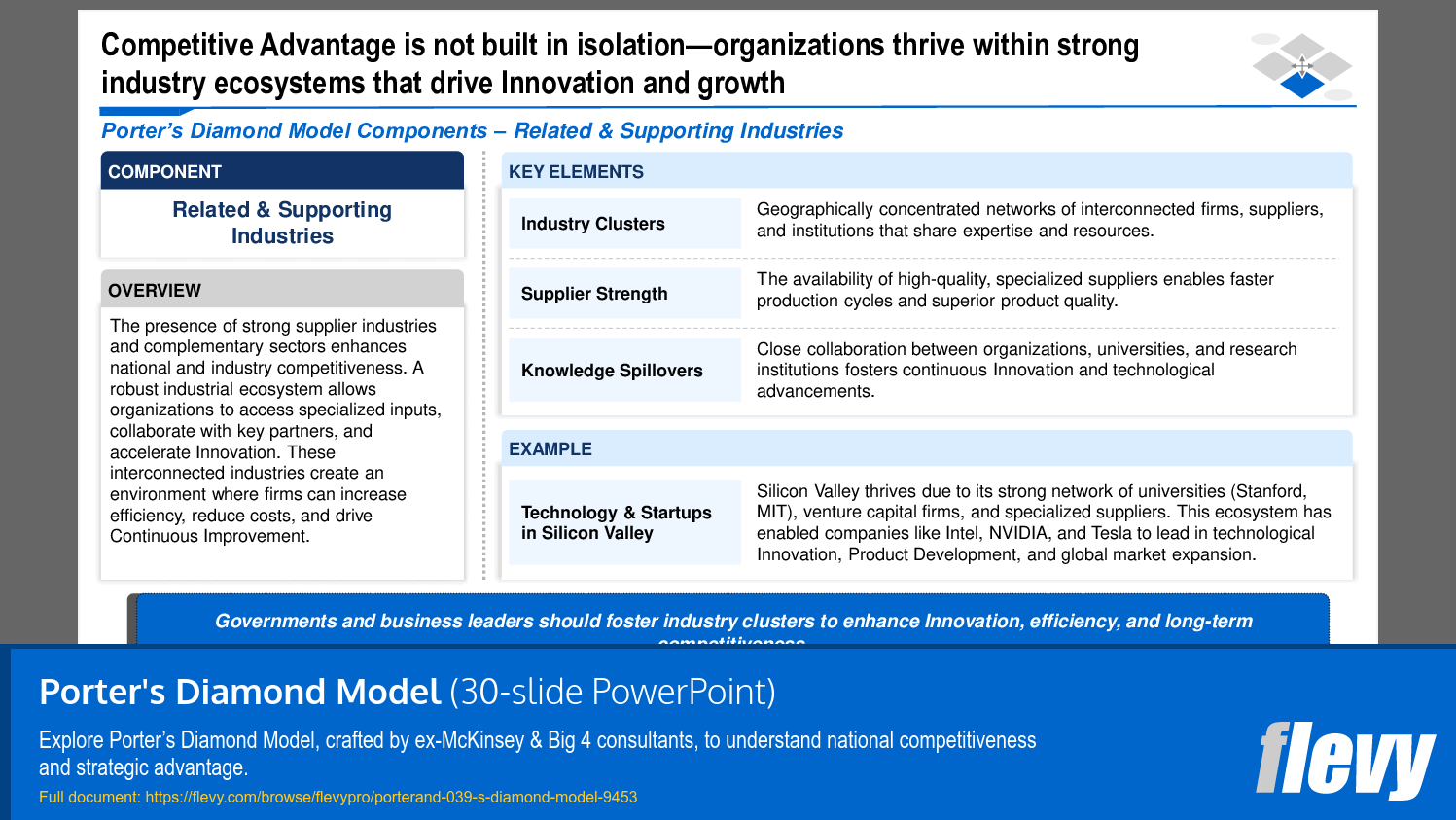
3. Related & Supporting Industries – The presence of strong supplier industries and complementary sectors enhances national and industry competitiveness.
4. Strategy, Structure, & Rivalry – The structure, management, and competitive landscape of organizations within a nation play a critical role in shaping global success.
Additionally, 2 external forces influence competitiveness:
5. Government Policies – Governments play a crucial role in shaping the business environment and influencing the competitiveness of industries and organizations at both national and global levels.
6. Chance Events – Unpredictable external factors, or chance events, can disrupt or accelerate competitive landscapes, reshaping industry dynamics and altering national advantages (e.g. new technologies, geopolitical shifts, natural disasters, etc.).
This PowerPoint presentation on Porter's Diamond Model also includes some slide templates for you to use in your own business presentations.
Got a question about this document? Email us at flevypro@flevy.com.
Executive Summary
The Porter's Diamond Model PPTX provides a comprehensive framework for understanding national competitive advantage as articulated by Michael Porter in 1990. This presentation explores how nations and industries achieve sustained competitive advantages through a structured analysis of interconnected factors. It emphasizes the importance of innovation, competition, and industry dynamics in driving global leadership. By utilizing this model, corporate executives and consultants can assess their strategic positioning and identify areas for improvement in their competitive landscape.
Who This Is For and When to Use
• Corporate executives seeking to enhance their strategic planning capabilities
• Business consultants focused on competitive analysis and market positioning
• Strategy teams evaluating national and industry-level competitiveness
• Policy makers aiming to understand the drivers of economic growth
Best-fit moments to use this deck:
• During strategic planning sessions to evaluate competitive positioning
• When conducting market analysis for expansion into new regions
• In workshops focused on innovation and industry dynamics
• For presentations to stakeholders on national competitiveness
Learning Objectives
• Define the components of Porter’s Diamond Model and their implications for competitive advantage
• Analyze the dynamic interactions between factor conditions, demand conditions, related industries, and firm strategy
• Assess the role of government policies and chance events in shaping industry competitiveness
• Develop actionable strategies based on insights derived from the model
• Identify opportunities for innovation and collaboration within industry clusters
• Evaluate the limitations of the Diamond Model in contemporary economic contexts
Table of Contents
• Overview (page 1)
• Porter’s Diamond Model (page 2)
• Porter’s Diamond Model Components (page 7)
• Additional Considerations (page 16)
• Slide Design Structure & Templates (page 19)
Primary Topics Covered
• Overview of Porter’s Diamond Model - A structured framework for understanding how nations and industries achieve competitive advantages in the global marketplace.
• Factor Conditions - The resources and capabilities that influence industry competitiveness, emphasizing the importance of advanced factors over basic endowments.
• Demand Conditions - The sophistication and expectations of domestic consumers that drive firms to innovate and improve their offerings.
• Related & Supporting Industries - The role of strong supplier industries and complementary sectors in enhancing national competitiveness.
• Strategy, Structure & Rivalry - How the competitive landscape and management practices within a nation shape global success.
• Other Factors - The influence of government policies and chance events on national and industry competitiveness.
Deliverables, Templates, and Tools
• PowerPoint slides outlining the components of Porter’s Diamond Model
• Templates for conducting strategic analysis based on the model
• Frameworks for evaluating industry clusters and their impact on competitiveness
• Guidelines for assessing government policies and their effects on market dynamics
• Tools for identifying and leveraging competitive advantages in various sectors
Slide Highlights
• Overview slide that introduces Porter’s Diamond Model and its significance
• Detailed breakdown of each component of the model with examples
• Visual representation of the interconnections between the model's factors
• Discussion of additional considerations and criticisms of the model
• Slide design structure that follows consulting best practices for clarity and impact
Potential Workshop Agenda
Understanding Porter’s Diamond Model (60 minutes)
• Introduction to the model and its components
• Group discussion on the implications for national competitiveness
Applying the Model to Strategic Planning (90 minutes)
• Hands-on exercises to analyze case studies using the Diamond Model
• Development of strategic recommendations based on group findings
Evaluating Industry Dynamics (60 minutes)
• Exploration of how related industries impact competitiveness
• Discussion on the role of government policies and chance events
Customization Guidance
• Tailor the model’s components to reflect specific industry contexts and regional characteristics
• Adjust case studies and examples to align with the audience's interests and expertise
• Incorporate local market data to enhance relevance and applicability
Secondary Topics Covered
• The impact of globalization on national competitiveness
• The role of technology in shaping industry dynamics
• Strategies for fostering innovation within industry clusters
• The relationship between public policy and competitive advantage
Topic FAQ
Document FAQ
These are questions addressed within this presentation.
What is Porter’s Diamond Model?
Porter’s Diamond Model is a framework that explains how nations and industries achieve competitive advantages based on interconnected factors such as demand conditions, factor conditions, and firm strategy.
How can this model be applied in strategic planning?
The model can be used to assess a company's competitive positioning, identify strengths and weaknesses, and develop strategies for improvement based on market dynamics.
What are the limitations of the Diamond Model?
The model may not fully account for the complexities of modern economies, such as the influence of multinational corporations, rapid technological changes, and sustainability considerations.
How does the model address government policies?
The model emphasizes the role of government in shaping the business environment through policies that can enhance or hinder competitiveness.
Can the model be used for industries outside of manufacturing?
Yes, while originally focused on manufacturing, the model's principles can be applied to various sectors, including services and technology.
What are the key components of the model?
The model consists of 4 primary components: factor conditions, demand conditions, related and supporting industries, and strategy, structure, and rivalry.
How does demand influence competitive advantage?
Demand conditions shape the expectations of domestic consumers, pushing firms to innovate and improve their products and services to meet high standards.
What role do chance events play in competitiveness?
Chance events, such as technological breakthroughs or geopolitical shifts, can disrupt or enhance competitive landscapes, influencing industry dynamics.
Glossary
• Competitive Advantage - The ability of an organization to outperform its rivals by delivering superior value.
• Factor Conditions - The resources and capabilities that influence industry competitiveness.
• Demand Conditions - The sophistication and expectations of domestic consumers.
• Related & Supporting Industries - The presence of strong supplier industries that enhance competitiveness.
• Strategy, Structure & Rivalry - The competitive landscape and management practices that shape success.
• Government Policies - The role of government in influencing industry competitiveness.
• Chance Events - Unpredictable external factors that can disrupt or enhance competitive advantages.
• Innovation - The process of developing new ideas or products that improve competitiveness.
• Industry Clusters - Geographically concentrated networks of interconnected firms and suppliers.
• Market Dynamics - The forces that influence the behavior of buyers and sellers in a market.
• SWOT Analysis - A framework for evaluating an organization's strengths, weaknesses, opportunities, and threats.
• Economic Policy - Government actions that influence economic activity and competitiveness.
• Sustainability - The ability to maintain competitive advantage while considering environmental and social impacts.
• Globalization - The process of increased interconnectedness among countries and markets.
• Public-Private Partnership - Collaborative agreements between government and private sector entities.
• Digital Economy - An economy that is based on digital technologies and the internet.
• Competitive Landscape - The overall environment in which companies compete.
• Market Positioning - The strategy of defining how a company is perceived in the marketplace.
• Strategic Planning - The process of defining an organization's direction and making decisions on allocating resources.
• Business Model - The plan implemented by a company to generate revenue and make a profit.
• Economic Growth - An increase in the production of goods and services in an economy over time.
Source: Best Practices in Market Analysis, Industry Analysis, Michael Porter, Globalization PowerPoint Slides: Porter's Diamond Model PowerPoint (PPTX) Presentation Slide Deck, LearnPPT Consulting
Did you need more documents?
Consider a FlevyPro subscription from $39/month. View plans here.
For $10.00 more, you can download this document plus 2 more FlevyPro documents. That's just $13 each.
|
Download our FREE Strategy & Transformation Framework Templates
Download our free compilation of 50+ Strategy & Transformation slides and templates. Frameworks include McKinsey 7-S, Balanced Scorecard, Disruptive Innovation, BCG Curve, and many more. |










