
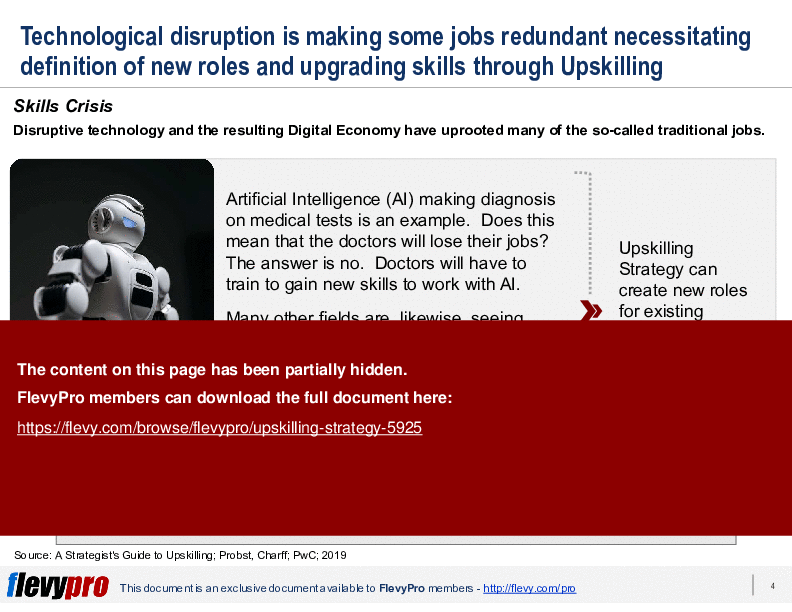


Disruptive technology is changing the contemporary work environment. Job roles that have been around for a long-time are being made redundant by technological advances.
This does not mean complete loss of jobs rather change in the job roles through updating of skills.
Upskilling is the process through which this change in job role is manifested. Upskilling will be of vital importance in the tumultuous Digital Economy.
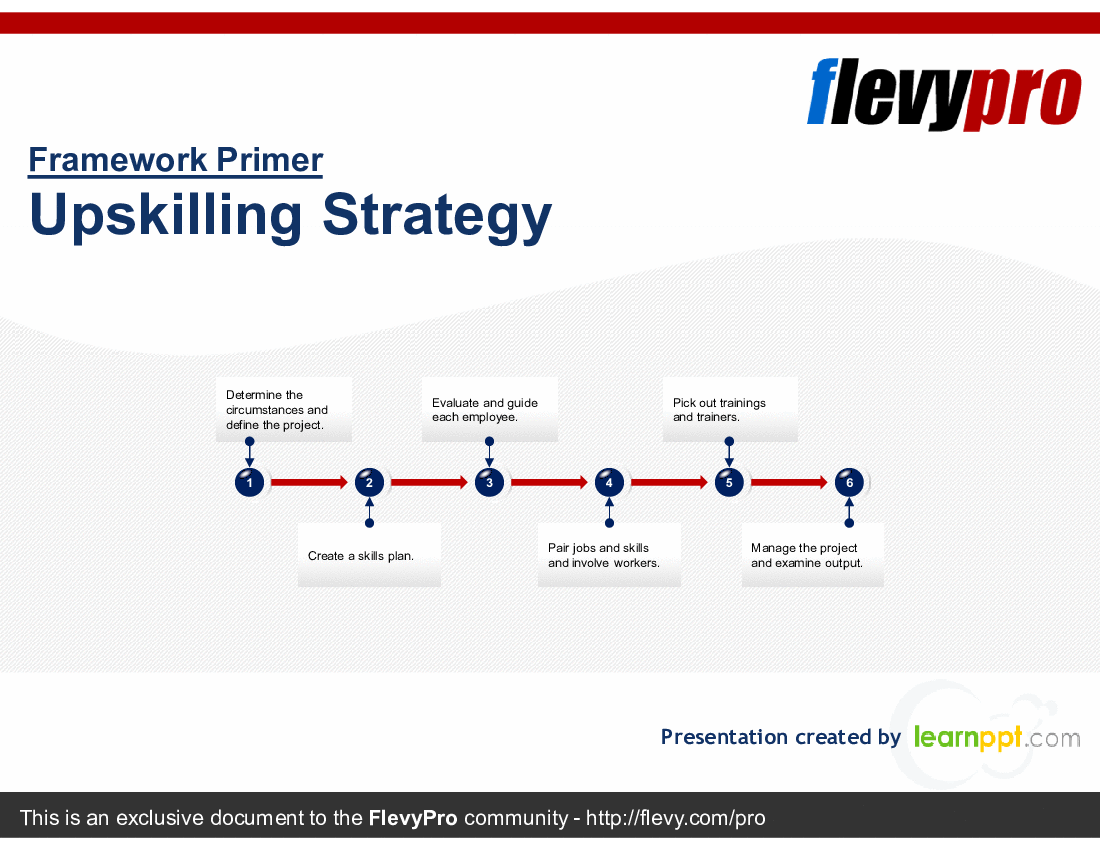
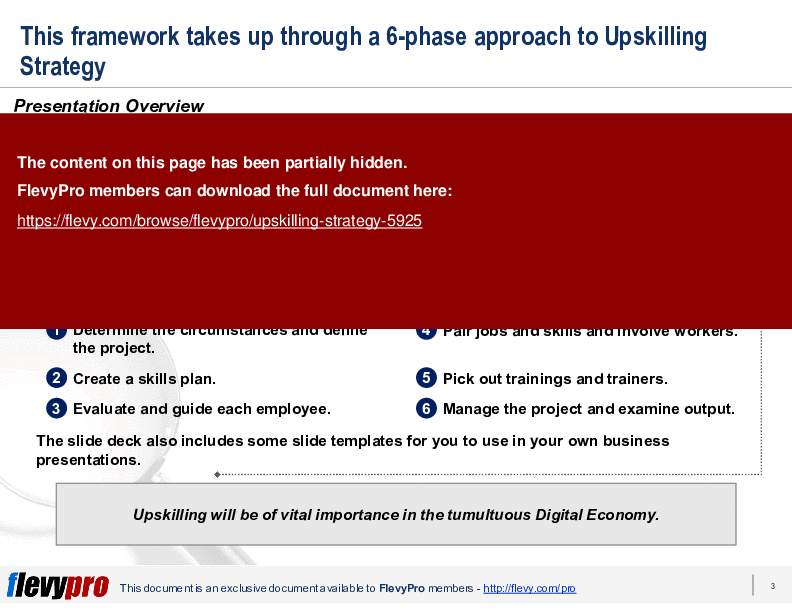
Upskilling initiatives need proper planning and execution for bearing fruit for the society as a whole. The following 6-phase approach to Upskilling Strategy assures successful design and implementation of Upskilling initiatives:
1. Determine the circumstances and define the project.
2. Create a skills plan.
3. Evaluate and guide each employee.
4. Pair jobs and skills and involve workers.
5. Pick out trainings and trainers.
6. Manage the project and examine output.
The slide deck also includes some slide templates for you to use in your own business presentations.
The Upskilling Strategy PPT provides a comprehensive framework to navigate the complexities of workforce transformation in the Digital Economy. It addresses the critical need for organizations to adapt by equipping their employees with the necessary skills to thrive amidst technological disruptions. This presentation is designed to guide you through a structured approach, ensuring that your upskilling initiatives are both strategic and impactful.
This document also delves into the practical aspects of implementing an upskilling strategy, from identifying skill gaps to selecting appropriate training programs. It emphasizes the importance of aligning upskilling efforts with organizational goals to maximize ROI. With detailed phase-by-phase guidance, this resource is invaluable for HR leaders and executives aiming to future-proof their workforce.
Got a question about this document? Email us at flevypro@flevy.com.
Executive Summary
The Upskilling Strategy presentation provides a structured framework designed to help organizations navigate the complexities of workforce transformation in the Digital Economy. This 6-phase approach enables companies to effectively assess and enhance employee skills, ensuring they remain relevant in an evolving job market. By implementing this strategy, organizations can create tailored upskilling initiatives that not only improve employee competencies, but also foster a culture of continuous learning and adaptability.
Who This Is For and When to Use
• Human Resource Leaders focused on employee development and retention
• Organizational Development Teams aiming to enhance workforce capabilities
• Change Management Professionals facilitating transitions in job roles
• Corporate Executives seeking to align skills with business strategy
Best-fit moments to use this deck:
• During strategic planning sessions to define upskilling initiatives
• When assessing workforce capabilities in response to technological changes
• In workshops aimed at developing tailored training programs for employees
Learning Objectives
• Define the 6 phases of the Upskilling Strategy framework
• Create a comprehensive skills plan tailored to organizational needs
• Evaluate and guide employees through personalized development plans
• Pair job roles with appropriate skills to enhance employee engagement
• Select effective training programs and trainers to meet specific skill requirements
• Manage and assess the outcomes of upskilling initiatives
Table of Contents
• Overview (page 3)
• Upskilling (page 6)
• Upskilling Strategy (page 10)
• Templates (page 18)
Primary Topics Covered
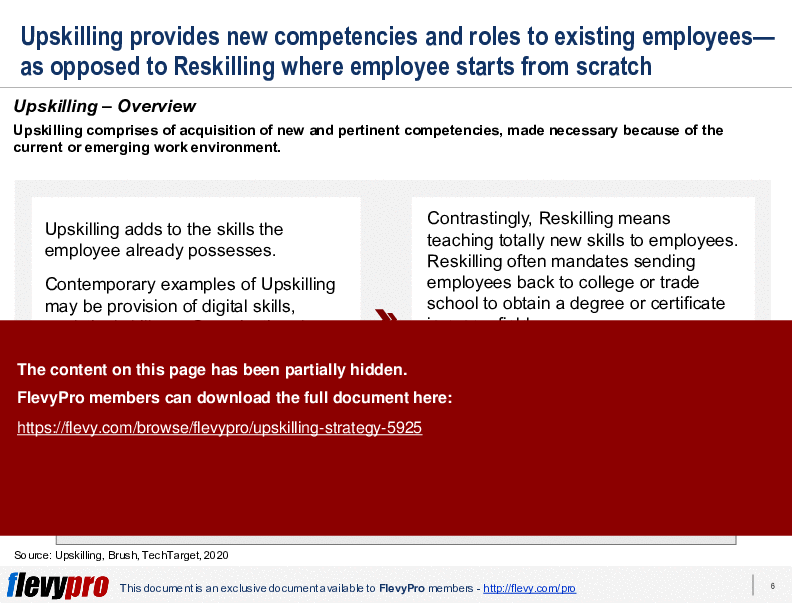
• Upskilling Definition - Upskilling involves enhancing existing employee competencies to adapt to changing job roles, as opposed to reskilling, which requires starting from scratch.
• 6-Phase Approach - The framework outlines a sequential process: defining circumstances, creating a skills plan, evaluating employees, pairing jobs with skills, selecting training, and managing the project.
• Skills Assessment - A critical component involves assessing the skills gap between current employee capabilities and job requirements to inform training needs.
• Employee Engagement - Strategies for fostering employee buy-in and commitment to the upskilling process are essential for successful implementation.
• Training Selection - Choosing the right training curricula and trainers is vital for ensuring the effectiveness of upskilling initiatives.
• Project Management - Ongoing management and evaluation of the upskilling project are necessary to track progress and outcomes.
Deliverables, Templates, and Tools
• Skills assessment template to evaluate current employee competencies
• Training program selection criteria checklist for evaluating potential trainers
• Employee development plan template outlining individual training paths
• Project management framework for tracking upskilling initiatives
• Communication plan template for engaging stakeholders throughout the process
• Success metrics dashboard to measure the impact of upskilling efforts
Slide Highlights
• Overview of the 6-phase Upskilling Strategy framework
• Detailed breakdown of each phase with actionable steps
• Visual representation of skills assessment processes
• Case studies showcasing successful upskilling initiatives
• Templates for training program selection and employee development
Potential Workshop Agenda
Upskilling Strategy Overview Session (90 minutes)
• Introduce the 6-phase framework and its importance
• Discuss organizational goals for upskilling initiatives
• Identify key stakeholders and their roles
Skills Assessment Workshop (60 minutes)
• Conduct a skills gap analysis for current employees
• Develop a prioritized list of training needs
Training Program Selection Session (90 minutes)
• Evaluate potential training programs and trainers
• Create a decision matrix for selecting the best options
Customization Guidance
• Tailor the skills assessment template to reflect specific organizational competencies
• Adjust training program criteria based on industry standards and technological advancements
• Modify communication plans to align with organizational culture and employee preferences
Secondary Topics Covered
• The importance of continuous learning in the workplace
• Strategies for fostering a culture of adaptability
• The role of technology in enhancing upskilling initiatives
• Best practices for measuring the effectiveness of training programs
Topic FAQ
Document FAQ
These are questions addressed within this presentation.
What is the primary goal of the Upskilling Strategy?
The primary goal is to enhance employee skills to meet the demands of the Digital Economy, ensuring workforce relevance and adaptability.
How long does the upskilling process typically take?
The duration can vary,, but initial phases usually span 9 to 18 months, depending on organizational needs and employee engagement.
What types of training programs are recommended?
Training programs should focus on emerging technologies, digital skills, and competencies relevant to the organization’s strategic goals.
How can we measure the success of upskilling initiatives?
Success can be measured through employee performance metrics, retention rates, and feedback from participants on the training experience.
Is upskilling different from reskilling?
Yes, upskilling enhances existing skills, while reskilling involves teaching entirely new skills to employees.
What role does management play in the upskilling process?
Management is crucial in supporting initiatives, providing resources, and fostering a culture of continuous learning.
How can we ensure employee engagement in upskilling?
Engagement can be fostered through clear communication, personalized development plans, and incentives for participation.
What tools can assist in managing the upskilling project?
Digital HR tools can help track progress, manage training schedules, and evaluate outcomes effectively.
Glossary
• Upskilling - Enhancing existing skills to meet new job requirements.
• Reskilling - Teaching entirely new skills to employees.
• Skills Assessment - Evaluating current competencies against job requirements.
• Employee Engagement - Involvement and commitment of employees to the upskilling process.
• Training Program - Structured educational courses designed to enhance skills.
• Project Management - The process of planning, executing, and monitoring projects.
• Continuous Learning - Ongoing development of skills and knowledge.
• Digital Economy - An economy based on digital technologies and information.
• Competency Gap - The difference between current skills and those required for a job.
• Stakeholders - Individuals or groups with an interest in the upskilling initiative.
• Training Curriculum - The content and structure of a training program.
• Success Metrics - Criteria used to evaluate the effectiveness of training initiatives.
Source: Best Practices in Training, Learning Organization, Upskilling PowerPoint Slides: Upskilling Strategy PowerPoint (PPTX) Presentation Slide Deck, LearnPPT Consulting
Did you need more documents?
Consider a FlevyPro subscription from $39/month. View plans here.
For $10.00 more, you can download this document plus 2 more FlevyPro documents. That's just $13 each.
|
Download our FREE Organization, Change, & Culture, Templates
Download our free compilation of 50+ slides and templates on Organizational Design, Change Management, and Corporate Culture. Methodologies include ADKAR, Burke-Litwin Change Model, McKinsey 7-S, Competing Values Framework, etc. |