Editor's Note: Take a look at our featured best practice, Digital Transformation: Artificial Intelligence (AI) Strategy (27-slide PowerPoint presentation). The rise of the machines is becoming an impending reality. The Artificial Intelligence (AI) revolution is here. Most businesses are aware of this and see the tremendous potential of AI.
This presentation defines AI and explains the 3 basic forms of AI:
1. Assisted Intelligence
2. [read more]
* * * *
A few years ago, the idea of handing your entire website over to a machine to translate would’ve made most marketing teams nervous. Now it’s basically the default. Plenty of businesses want to translate their website using AI instead of waiting weeks for an agency quote, and honestly, for most of the content on a typical site, that shift makes sense. The real question is not whether AI can do it. It can. The real challenge is making it quite natural.
That question is more significant than ever, since there are more serious consequences involved. A poor translation isn’t just unappealing; it can quietly tell the customer,
This brand doesn’t seem to care about its customers. CSA’s own research revealed that something like 75% of consumers will prefer to purchase from a website written in their own language.
Where AI Translation Genuinely Delivers
For the bulk of a website, product descriptions, blog posts, nav menus, footers, modern AI translation is fast, consistent, and honestly pretty good.
It works great for repetitive content; you don’t have to re-translate your footer and navigation on each page.
It can also automatically add a glossary, so your product names and brand terms remain consistent throughout your site, rather than changing from page to page.
It automatically incorporates new and updated content without you having to do anything, so that your translation doesn’t mysteriously lag behind every time you post something.
Where Human Review Is Still Needed
AI is powerful at scale, but it’s not perfect, and it’s when brands lie about that, when they lie about this, that awkward, sometimes embarrassing copy lives on their website.
Idiomatic expressions and special phrases may be technically correct but awkward.
Any pages that count on being viewed in a high-stakes manner, pricing information, legal terms, anything regulated, in fact, would be better served by a native speaker previewing the output before it is published.
Tone matters more on a homepage or a landing page than it does on a shipping policy, and AI doesn’t always catch that difference on its own.
The Part Most People Forget: Will It Even Rank?
Translation that’s not easy to search for or that doesn’t look nice is like a page that doesn’t exist. Many AI translation tools involve swapping out text within the visitor’s browser, but there is no actual crawling done, so it appears to be accurate to a human, but not to Google.
Without language tags, search engines may not know which language is meant for each audience.
If your meta titles and descriptions are still in English, your French search result may also show in English.
No real, indexable URL for each language means none of that translated content shows up in search results at all.
What to Actually Look for in a Tool
Before picking anything, get specific about what you’re solving. Speed to launch is one thing, but what happens six months from now when the site’s still changing weekly is a different question entirely.
Choose a Schedule That Fits Your Site
A site that updates sometimes can get away with a one-time translation pass. A site publishing content frequently needs something that catches new or edited pages automatically and only translates what actually changed, not the whole site over and over on every sync.
Match It to Whether SEO Actually Matters to You
If you need only to be readable to a specific audience or to an internal team, then a “lightweight” snippet which translates in the browser is just fine. Where organic traffic is the priority in new markets, it’s important to have translated pages living at real, crawlable URLs, with correct hreflang and translated metadata, rather than simply browser-side changes on the pages.
Where the Tools Actually Differ
Not every option is solving the same problem, and knowing the rough categories saves a lot of back-and-forth during evaluation.
Script-Based Tools
One line of code; translations render live; no rebuild or DNS changes required. Quick to launch, and a solid fit for staging sites or internal tools that just need to be readable.
AI and Human Workflows
The AI draft goes live fast, then real reviewers check it against the real page layout before a market fully launches. But for brands that would like to get it fast without sending out something that reads like it was never proofread.
Rolling It Out without Making a Mess
It’s normal to feel a little bit afraid of touching an active site. No one wants to ruin pages that work.
Start with a Real Preview
Don’t sign anything without checking out your actual pages translated, not a demo. The vast majority of good tools allow you to enter your own URL and get a real-time preview of your website before you sign up for a thing.
Check a handful of high-traffic pages first instead of translating the entire site blind.
Get a native speaker to skim a sample before it goes live to real visitors.
Confirm product names and brand terminology actually stay consistent page to page.
Verify the SEO Mechanics before You Rely on Them
If ranking in new markets is the whole point, don’t just take a vendor’s word for it.
Check that translated pages get their own crawlable URL, not just a browser-side swap.
Confirm hreflang tags actually point both ways between language versions.
Check whether titles and meta descriptions get translated too, not just the body copy.
Conclusion
AI has genuinely changed what’s realistic here. A project that used to take months and a real budget can now go live in days, and for most of a website’s content, the quality holds up fine. But just because AI can do something doesn’t mean it should do everything on its own.
The ones who are seeing the greatest impact allow AI to deal with the volume, repetitive pages, constant updates, and save the human eye for the pages that matter most: pricing, legal, homepage, the first impression page.
It’s truly an investment either way, so it’s better to get it right than to send a piece that appears fast but is soon broken on the first day someone reads it closely in its native language.
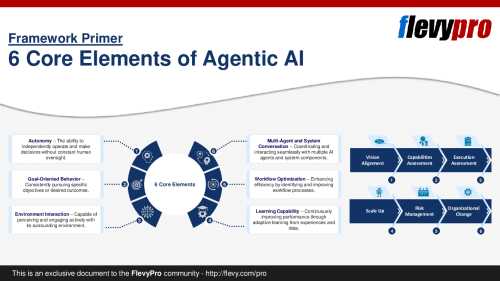
Agentic AI represents a shift toward autonomous, intelligent systems that can make decisions and take actions with minimal human intervention. Evolving from traditional machine learning, this technology enhances operations by automating complex workflows, optimizing decision-making, and enabling [read more]
Do You Want to Implement Business Best Practices?
You can download in-depth presentations on Artificial Intelligence and 100s of management topics from the FlevyPro Library. FlevyPro is trusted and utilized by 1000s of management consultants and corporate executives.
For even more best practices available on Flevy, have a look at our top 100 lists:
These best practices are of the same as those leveraged by top-tier management consulting firms, like McKinsey, BCG, Bain, and Accenture. Improve the growth and efficiency of your organization by utilizing these best practice frameworks, templates, and tools. Most were developed by seasoned executives and consultants with over 20+ years of experience.
Readers of This Article Are Interested in These Resources
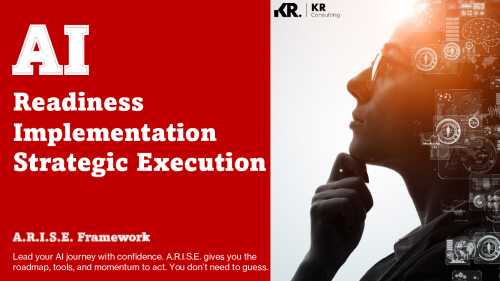
Artificial Intelligence (AI) is no longer a future concept - it's a present-day business imperative. AI is transforming how organizations operate, compete, and create value. Yet, with its rapid evolution, many enterprises struggle to keep pace. The A.R.I.S.E. Framework is a proven, [read more]
Curated by McKinsey-trained Executives
How to Use AI Skills for Consulting - The Complete AI-Powered Consulting Framework Guide
Stop leaving millions in consulting value on the table.
Most consultants destroy competitive advantage not because they lack brilliant analytical minds or [read more]
Shift your perspective on artificial intelligence governance: transition from treating it as a restrictive regulatory hurdle to leveraging it as a dynamic engine for ethical product development and organizational trust. This extensive practitioner toolkit offers a structured, step-by-step roadmap [read more]
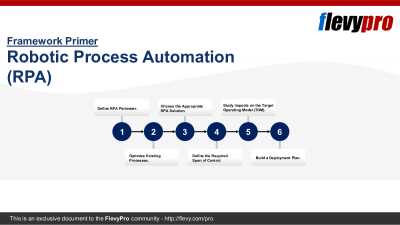
First, what is RPA?
Robotic Process Automation (RPA), also referred to as Robotic Transformation and Robotic Revolution, refers to the emerging form of process automation technology based on software robots and Artificial Intelligence (AI) workers.
In traditional automation, core activities [read more]