Editor's Note: Take a look at our featured best practice, Digital Transformation Strategy (145-slide PowerPoint presentation). Digital Transformation is being embraced by organizations across most industries, as the role of technology shifts from being a business enabler to a business driver. This has only been accelerated by the COVID-19 global pandemic. Thus, to remain competitive and outcompete in today's fast paced, [read more]
* * * *
Executive travel brings legal exposure that often gets overlooked. For permanent residents, a single international trip can affect re-entry rights, residency status, and long-term mobility. The Permanent Resident Return Visa plays a central role in protecting that access, especially for executives with frequent or time-sensitive travel obligations.
This article frames the Permanent Resident Return Visa through an executive lens. You will see how the visa supports uninterrupted travel, what immigration authorities expect, and where errors create delays or re-entry risk. The focus stays practical. You need clarity, predictability, and control over your travel status. Understanding the process and preparing correctly helps you avoid disruption to leadership responsibilities, board commitments, and cross-border work.
What Is a Permanent Resident Return Visa Used For?
The Permanent Resident Return Visa enables permanent residents to re-enter their new, adopted country after travelling abroad. Without this visa, they will lose their resident status. Proof of continued residency rights helps border authorities determine a person’s eligibility to enter the country after travelling abroad. Following the prescribed plan and visa requirements helps ensure that your residency remains valid.
Eligibility Criteria for Applicants
Checking eligibility is the most important step before starting the application process. Most countries require proof of residency, a valid permanent resident card, and/or upholding residency obligations. Applicants may be required to demonstrate that they have spent a certain minimum number of days in the territory over the past five years. Applications are often bolstered with family ties, employment, or other important links in the adopted home country.
Gathering the Required Documents
Keeping your documents organized simplifies the application process. Passports, PR cards, and entry and exit records are essential. Evidence of continuing links, such as employment contracts, tax documents, or family records, helps reinforce the request. Well-written and proper documentation can increase the likelihood of acceptance.
Completing the Application Form
Applicants must take the necessary precaution of filling out the form carefully. Include various details and ensure they align with the supporting documents to avoid confusion. Mistakes or inattention may lead to delays or rejections. Consistency and accuracy are necessary, and verifying all the information before submission is highly advisable.
Paying the Application Fee
A fee, which is usually non-refundable, is required to be paid for the processing of the visa request in all countries. Payment options typically consist of credit cards, bank transfers, and other accepted payment options. Please retain receipts of payments, as they may be demanded during the assessment process.
Submitting the Application
After completing the application, you can typically submit it online or at a visa center. Online submissions can prove more organized and make tracking easier. Under certain circumstances, applicants will have to submit their applications in person. For example, if visa application processing requires biometrics or an interview, visiting in person is unavoidable.
Biometrics and Interviews
Fingerprinting and photos may be part of the biometrics process. In some cases, applicants may be required to appear for an interview with an immigration officer. It is crucial to reach the interview venue on time. Also, it is essential to follow all the instructions as closely as possible to ensure timely processing and approval
Waiting for a Decision
Once submitted, the application is evaluated. Due to high application volumes, the processing times are based on individual cases. Usually, applicants can track their application status online with a reference number. Since this process can take weeks or even months, it is necessary to be patient.
Getting Your Visa and Taking Further Action
Once granted, the permanent resident return visa is either stamped in the passport or issued in a separate document. Check the visa carefully to ensure personal details and the dates of validity are correct. Mistakes should be reported as soon as possible to prevent issues with re-entry later.
Travel Preparation
Once you have the return visa, you can plan your travels. Keep all travel documents (passport, visa, etc.) handy throughout the journey. Keeping both digital and physical copies of important papers on hand serves as an extra precaution.
Maintaining Permanent Residency Status
Permanent residents must track their residency requirements, or they may risk losing their PR status. Track your residency status by periodically updating your contact information and renewing documents in a timely fashion, both of which help keep immigration officials in the loop. It is crucial to stay up to date with any changes in immigration policies, as ignoring this can lead to unintentional failure of your continuous residency status.
Conclusion
Executive travel requires certainty. The Permanent Resident Return Visa is not an administrative detail. It is a control point that determines whether you can leave and re-enter without friction. When handled late or poorly, it creates avoidable risk at the border and unnecessary pressure on schedules.
You protect your mobility by treating this visa as part of your travel planning discipline. Keep documentation current, align applications with verified records, and track residency obligations with the same rigor you apply to other executive responsibilities. When prepared correctly, the Permanent Resident Return Visa supports continuity of leadership, reliable international movement, and confidence in every outbound and return trip.
The Business Case is an instrumental tool in both justifying a project (requiring a capital budgeting decision), as well as measuring the project's success. The Business Case model typically takes the form of an Excel spreadsheet and quantifies the financial components of the project, [read more]
Do You Want to Implement Business Best Practices?
You can download in-depth presentations on 100s of management topics from the FlevyPro Library. FlevyPro is trusted and utilized by 1000s of management consultants and corporate executives.
For even more best practices available on Flevy, have a look at our top 100 lists:
These best practices are of the same as those leveraged by top-tier management consulting firms, like McKinsey, BCG, Bain, and Accenture. Improve the growth and efficiency of your organization by utilizing these best practice frameworks, templates, and tools. Most were developed by seasoned executives and consultants with over 20+ years of experience.
Readers of This Article Are Interested in These Resources
This is a very comprehensive document with over 400+ slides--covering 58 common management consulting frameworks and methodologies (listed below in alphabetical order). A detailed summary is provided for each business framework. The frameworks in this deck span across Corporate Strategy, [read more]
Recent McKinsey research surveyed a large set of global executives and suggests that many companies, these days, are in a nearly permanent state of organizational flux. A rise in efforts in Organizational Design is attributed to the accelerating pace of structural change generated by market [read more]
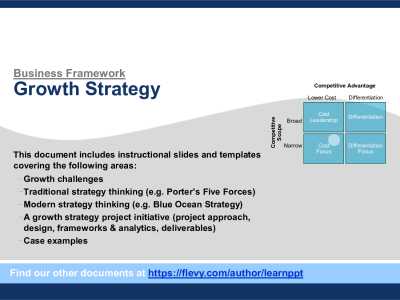
The reality is: all businesses face the challenge of achieving sustainable Growth. They need viable Growth Strategies.
So, what is Growth Strategy?
It is the organization's high-level Corporate Strategy Plan that outlines everything the organization needs to do to achieve its goals for [read more]
This presentation is a comprehensive collection of over 1100 fully editable consulting diagrams, templates, graphics and icons to enhance your PowerPoint presentations, increase productivity and create visual impact. Simply copy and paste, resize or change the color according to your preference. [read more]
 Executive travel brings legal exposure that often gets overlooked. For permanent residents, a single international trip can affect re-entry rights, residency status, and long-term mobility. The Permanent Resident Return Visa plays a central role in protecting that access, especially for executives with frequent or time-sensitive travel obligations.