Editor's Note: Take a look at our featured best practice, Pricing Strategy (38-slide PowerPoint presentation). Pricing Strategy is a core pillar of Marketing and Product Strategy. It is 1 of the 4 Ps of Marketing (also known as the Marketing Mix - Product, Price, Placement, and Promotion). As such, knowing how to properly price your product is extremely important to the commercial success and viability of [read more]
* * * *
Often businesses focus on marketing to Millennials and forget the importance of marketing to the next generation: Generation Z. Now, you might wonder who Gen Z is and what makes them so different from Millennials.
As an introduction, you should know that individuals in Gen Z were born between 1997 and 2014, and they are the first generation who has had access to technology most of their lives. Unfortunately, if you think that will make marketing to Gen Z easier than to Millennials, you are wrong.
If your target demographic includes members of Gen Z, employing the right marketing strategies will help you reach and engage with them effectively. With promotional products being a cornerstone of marketing, here’s how you can bring them into play with Gen Z.
Who Makes Up Gen Z?
Before creating a marketing strategy, what you should think about first is who Gen Z is?
Also known as the iGeneration, Generation Z makes up nearly 32 percent of the global population. They are digitally savvy and grew up with mobiles and iPads, and they don’t have any memories about a time without the internet—unlike Millennials.
Generation Z’s attention span is around eight seconds, four seconds less than their Millennial counterparts. So, when it comes to marketing, first impressions do count. You either grab their attention in that short time frame or risk being lost in the mix.
If your target market is Generation Z, it’s high time you focus on strategies that will help increase brand awareness, leads, and sales.
The Challenge of Marketing to Gen Z
Generation Z is different from older generations, especially from Millennials, in distinct and subtle ways. By understanding these differences better, you will engage with them efficiently and win their attention and business.
Gen Z has a shorter attention span than Millennials, so they bounce quickly between multiple screens, more so than Millennials. With such a short communication window, marketers need to remove unnecessary fluff and get to the point immediately.
Furthermore, Gen Z cares about authenticity more than anything. They want to feel like they know the brand or person behind it. They don’t want to feel marketed or targeted. Marketing campaigns that seem relatable and lifelike will likely win over them. Additionally, Gen Z expects to see more innovation from companies and wants new digital products.
Promotional Products for Gen Z
1. Sunglasses
Sunglasses are a tried and true, popular freebie for Gen Z. Apparently, Gen Z is fond of vintage yet fashionable things, especially tiny frame sunglasses that give out the 90s vibes. Usually, street looks can never be complete without a pair of sunglasses, and vintage sunglasses suit most face shapes.
Additionally, try to match current color trends since Gen Z likes to dress colorfully. You could also go for retro sunglasses or the relaxed wayfarer style. A pair of sunglasses is no doubt a great accessory to enhance Gen Z’s look immediately and leave them engaged with your brand.
2. Backpacks
Most of Gen Z are in school, so a promotional bag would be highly beneficial to them. Nevertheless, Gen Z is particularly environmentally conscious and chooses to go green whenever they can.
Hence, consider ramping up your marketing efforts with eco-friendly promotional backpacks and choosing a backpack print design that shows you support their concerns. You could choose anything from recycled cotton tote bags to backpacks made of durable materials. They will last longer, and so will your branding.
3. Subtle Branding
Personalization is a trend that has gotten quite popular among Gen Z. With the rise of user-generated content and influencers, Gen Z is looking for ways to stand out. They typically inch towards products and apparel that help them stand out and express their values. What’s more, unlike Millennials who like visible labels, designer signaling, etc., Gen Z isn’t a fan of labels as much.
Hence, you should ensure branding is subtle, and the promotional product is well designed. Know that Gen Zers want to stand out, so consider using fully customized promotional products to help them do so.
It’s All about Branding
Marketing to Generation Z is quite different from targeting other demographics. It can definitely be a challenge. Nevertheless, if you are willing to put enough effort into understanding your new customers, you will reap the rewards of a successful marketing campaign.
Ensure that your promotional items are fun, functional, and foster connections to real-life to cater to Gen Z’s interests. Since they live a significant part of their lives digitally, something that’s cool enough to warrant a social media post is a great thing to aim for, and it will only increase your brand’s exposure.
Product Lifecycle Analysis is an invaluable tool for developing a robust product marketing strategy. Marketers and strategists can use this analysis to predict sales growth, associated customer and competitor behaviors, and, in turn, devise the appropriate product marketing strategy.
The Product [read more]
Do You Want to Implement Business Best Practices?
You can download in-depth presentations on Product Strategy and 100s of management topics from the FlevyPro Library. FlevyPro is trusted and utilized by 1000s of management consultants and corporate executives.
For even more best practices available on Flevy, have a look at our top 100 lists:
These best practices are of the same as those leveraged by top-tier management consulting firms, like McKinsey, BCG, Bain, and Accenture. Improve the growth and efficiency of your organization by utilizing these best practice frameworks, templates, and tools. Most were developed by seasoned executives and consultants with over 20+ years of experience.
Readers of This Article Are Interested in These Resources
Some innovations are truly spectacular, but consumers are slow or just refuse to adopt. In fact, over 70% of all new products fail in the marketplace--and innovative, new products fail at an even higher rate.
Why is this the case? And, how do companies overcome this?
This document discusses [read more]
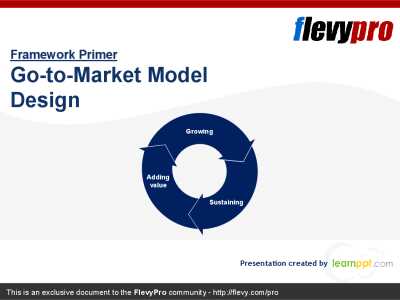
In an intensely competitive consumer goods sector, optimized Go-to-Market (GTM) Models are essential. This entails the design for routes to market that companies use to sell and deliver their products and to service their trade accounts.
GTM Models enable profitable growth, service [read more]
This document discusses Rogers' Five Factors, framework for analyzing and understanding the diffusion and adoption of product innovations.
Businesses are interested in understanding how innovations diffuse, so that they can better predict and manage this consumer adoption. A popular framework [read more]
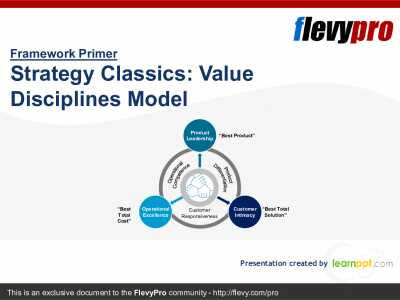
According to Treacy and Wiersema, organizations need to make tough strategic choices in order to become market leaders. Market leaders choose to excel in delivering extraordinarily levels of one particular value to their customers. This way they can remain focused and become the absolute best in a [read more]
 Often businesses focus on marketing to Millennials and forget the importance of marketing to the next generation: Generation Z. Now, you might wonder who Gen Z is and what makes them so different from Millennials.