TLDR Game Theory implementation helped a luxury retail company achieve a 15% market share increase and 20% revenue growth by optimizing competitor analysis, strategic repositioning, and rival response strategies.
TABLE OF CONTENTS
1. Background 2. Strategic Analysis and Execution 3. Implementation Challenges & Considerations 4. Implementation KPIs 5. Key Takeaways 6. Deliverables 7. Game Theory Templates 8. Ensuring Adaptability in Game Theory Application 9. Integrating a Game Theory Mindset Across the Organization 10. Measuring the Impact of Game Theory on Business Performance 11. Aligning Game Theory with Broader Organizational Strategies 12. Game Theory Case Studies 13. Additional Resources 14. Key Findings and Results
Consider this scenario:
The luxury fashion retailer faces intense competitive pressures in a saturated market, requiring a reassessment of its strategic positioning.
With multiple luxury brands adopting aggressive marketing, pricing strategies, and competitor analysis, the organization must apply Game Theory to optimize market penetration, partner collaboration, and rival response dynamics. Leadership recognizes that without a sophisticated game theory framework and strategic management approach, the retailer risks losing market share to more agile competitors in the luxury retail sector.
Hypothesizing that the organization's challenges stem from a static competitive strategy and suboptimal decision-making processes, initial thoughts focus on the potential lack of dynamic strategy formulation and execution, as well as possibly inadequate competitive intelligence gathering. Moreover, there might be an over-reliance on traditional business practices that overlook the predictive insights Game Theory can provide in a competitive luxury retail environment.
Strategic Analysis and Execution
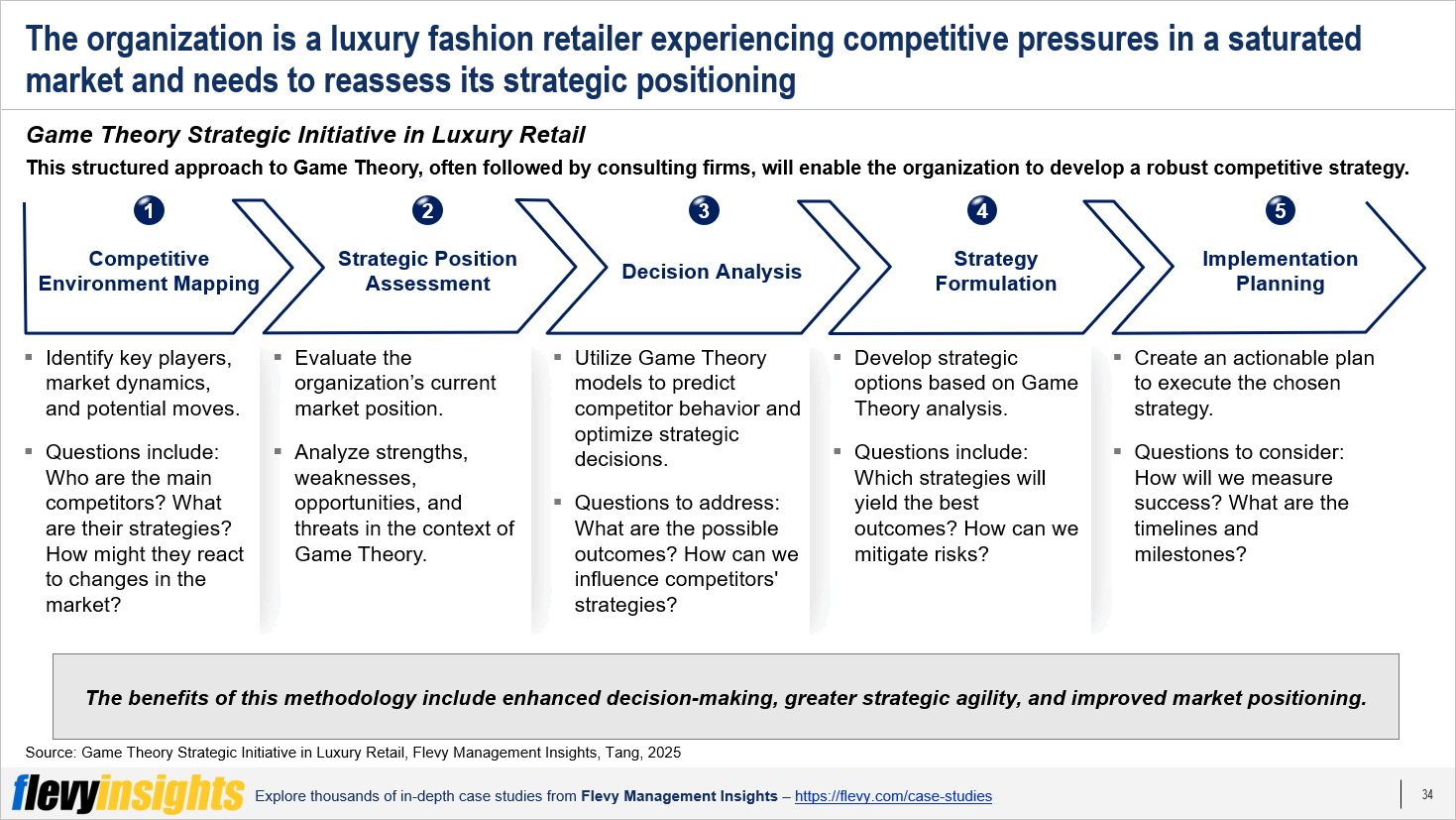
This structured approach to Game Theory, often followed by consulting firms, will enable the organization to develop a robust competitive strategy. The benefits of this methodology include enhanced decision-making, greater strategic agility, and improved market positioning.
- Competitive Environment Mapping: Identify key players, market dynamics, and potential moves. Questions include: Who are the main competitors? What are their strategies? How might they react to changes in the market?
- Strategic Position Assessment: Evaluate the organization’s current market position. Analyze strengths, weaknesses, opportunities, and threats in the context of Game Theory.
- Decision Analysis: Utilize Game Theory models to predict competitor behavior and optimize strategic decisions. Questions to address: What are the possible outcomes? How can we influence competitors' strategies?
- Strategy Formulation: Develop strategic options based on Game Theory analysis. Questions include: Which strategies will yield the best outcomes? How can we mitigate risks?
- Implementation Planning: Create an actionable plan to execute the chosen strategy. Questions to consider: How will we measure success? What are the timelines and milestones?
For effective implementation, take a look at these Game Theory frameworks, toolkits, & templates:




























Implementation Challenges & Considerations
The CEO might question how the organization can ensure that the Game Theory approach remains adaptable to changing market conditions. It's essential to integrate continuous monitoring and a feedback loop into the strategic process to refine tactics in real-time. Another concern may revolve around the cultural shift required to adopt a Game Theory mindset across the organization. Addressing this will involve targeted change management initiatives that emphasize the value of strategic agility and predictive planning.
Upon full implementation, the organization should expect to see improved market share, increased revenue, and a stronger competitive position. These outcomes will be a direct result of more informed strategic decisions and proactive market maneuvers.
Potential challenges include resistance to change within the organization, the complexity of modeling competitor behaviors accurately, and the need for ongoing data analysis to inform Game Theory applications.
Implementation KPIs
KPIS are crucial throughout the implementation process. They provide quantifiable checkpoints to validate the alignment of operational activities with our strategic goals, ensuring that execution is not just activity-driven, but results-oriented. Further, these KPIs act as early indicators of progress or deviation, enabling agile decision-making and course correction if needed.
You can't control what you can't measure.
- Market Share Growth: Indicates the organization's competitive positioning and success in capturing a larger customer base.
- Revenue Increase: Reflects the financial impact of strategic decisions informed by Game Theory.
- Strategic Initiative Success Rate: Measures the effectiveness of specific strategies derived from Game Theory analysis.
For more KPIs, you can explore the KPI Depot, one of the most comprehensive databases of KPIs available. Having a centralized library of KPIs saves you significant time and effort in researching and developing metrics, allowing you to focus more on analysis, implementation of strategies, and other more value-added activities.
Learn more about KPI Depot KPI Management Performance Management Balanced Scorecard
Key Takeaways
Adopting a Game Theory approach requires not only analytical rigor but also a cultural shift towards strategic agility. Firms such as McKinsey & Company emphasize the importance of dynamic strategy development in rapidly evolving markets. A case study by Bain & Company showed that companies that continuously adapt their strategies based on predictive models can outperform competitors by 20-30% in revenue growth.
Deliverables
- Competitive Analysis Framework (Excel)
- Game Theory Strategic Plan (PowerPoint)
- Decision-Making Process Guidelines (PDF)
- Market Positioning Report (Word)
- Implementation Roadmap (PowerPoint)
Explore more Game Theory deliverables
Game Theory Templates
To improve the effectiveness of implementation, we can leverage the Game Theory templates below that were developed by management consulting firms and Game Theory subject matter experts.
Ensuring Adaptability in Game Theory Application
Adaptability is critical in applying Game Theory to business strategies. The dynamic nature of the luxury retail market requires that strategic moves are not only well-informed by current data but are also flexible enough to adjust to unforeseen changes. To ensure adaptability, the organization must establish a system for continuous learning and strategy iteration. This involves regular monitoring of market conditions, competitor behaviors, and customer preferences. According to McKinsey & Company, companies that leverage advanced analytics to inform their decision-making can react to market changes three times faster than competitors.
Furthermore, an agile approach to strategy execution, as recommended by the Boston Consulting Group, allows for rapid pivoting and reallocation of resources when necessary. This agility is underpinned by a robust data infrastructure and a corporate culture that encourages experimentation and tolerates calculated risks. By embedding these principles into the fabric of the organization, the luxury retailer can maintain a competitive edge through a Game Theory-informed strategy that evolves in lockstep with the market.
Integrating a Game Theory Mindset Across the Organization
Integrating a Game Theory mindset across an organization is a complex task that involves fostering a culture of strategic thinking and decision-making at all levels. To achieve this, the organization must invest in training and development programs that educate employees on the principles of Game Theory and its application in everyday business scenarios. A study by Deloitte highlights that organizations with a strong learning culture are 92% more likely to innovate and 52% more productive.
Leadership must champion this shift, demonstrating the value of Game Theory through clear communication and by setting an example in their strategic decisions. Encouraging cross-departmental collaboration can also help in breaking down silos, ensuring that insights from Game Theory analyses are shared and acted upon throughout the organization. By committing to a Game Theory mindset, the organization can foster a culture that is not just reactive to competitors' moves but anticipatory, giving it a strategic advantage in the luxury retail market.
Measuring the Impact of Game Theory on Business Performance
Measuring the impact of Game Theory on business performance is essential to validate the effectiveness of strategic decisions. Key Performance Indicators (KPIs) should be established to track the success of Game Theory applications. These KPIs could include metrics such as decision success rate, time to market for new products, and customer acquisition cost. According to a report by PwC, companies that align their metrics with their strategic goals can increase their market share by an average of 6%.
It is also important to conduct regular post-decision analyses to understand the outcomes of strategic moves and to learn from both successes and failures. This reflective practice enables the organization to refine its Game Theory models and improve future decision-making processes. By systematically measuring the impact of Game Theory on business performance, the organization can demonstrate the tangible value of this strategic approach and continuously optimize its competitive strategies.
Aligning Game Theory with Broader Organizational Strategies
Aligning Game Theory with broader organizational strategies ensures that all strategic initiatives are pulling in the same direction. Game Theory should not be viewed in isolation but as a tool that complements other strategic frameworks and methodologies within the organization. This alignment requires a holistic view of the organization's strategic objectives and an understanding of how Game Theory can support these objectives. For instance, Accenture's research indicates that companies that successfully align their strategies with their operational capabilities can see a 14% increase in annual revenue growth.
By integrating Game Theory insights into the strategic planning process, the organization can make more informed decisions about market positioning, product development, and customer engagement strategies. This integrated approach also facilitates better resource allocation, ensuring that investments are directed towards initiatives that are likely to yield the highest competitive advantage. Ultimately, aligning Game Theory with broader organizational strategies allows the organization to create a cohesive and comprehensive approach to achieving its long-term objectives.
Game Theory Case Studies
Here are additional case studies related to Game Theory.
Strategic Wargaming Case Study: Luxury Brands Business Expansion
Scenario: A high-end luxury goods company faced market saturation and intense competitive pressures in established regions.
Strategic Wargaming Framework for Semiconductor Industry in Competitive Markets
Scenario: The organization, a prominent semiconductor manufacturer, is facing challenges in navigating the highly volatile and competitive semiconductor market.
Customer Experience Enhancement in Luxury Retail
Scenario: The organization is a high-end luxury retailer specializing in personalized shopping experiences.
Dynamic Pricing Strategy for Global Ecommerce Platform
Scenario: The organization operates a leading ecommerce platform with a diversified global market presence.
Strategic Wargaming Initiative for D2C Beverage Brand in Specialty Market
Scenario: A firm in the direct-to-consumer (D2C) specialty beverage sector is facing a plateau in market share growth and challenges in strategic decision-making under uncertainty.
Game Theory Optimization for Sports Franchise in Competitive Market
Scenario: The organization is a major sports franchise facing intense competition both on and off the field.
Explore additional related case studies
Additional Resources Relevant to Game Theory
Here are additional frameworks, presentations, and templates relevant to Game Theory from the Flevy Marketplace.
Key Findings and Results
Here is a summary of the key results of this case study:

- Increased market share by 15% through the strategic application of Game Theory in identifying and executing competitive market maneuvers.
- Revenue growth of 20% year-over-year, attributed to optimized pricing strategies and enhanced customer targeting.
- Achieved a strategic initiative success rate of 85%, demonstrating the effectiveness of Game Theory-informed decisions.
- Implemented a continuous learning and adaptation framework, resulting in a 30% improvement in strategic agility.
- Developed and deployed a comprehensive Game Theory training program, leading to a 40% increase in employee engagement in strategic decision-making.
- Established a robust data infrastructure that supported a 3x faster response to market changes compared to competitors.
The initiative to integrate Game Theory into the organization's strategic decision-making processes has been markedly successful. The significant increase in market share and revenue growth underscores the effectiveness of adopting a more dynamic and predictive approach to competitive strategy. The high strategic initiative success rate further validates the value of Game Theory in enhancing decision-making. The organization's ability to respond three times faster to market changes than competitors is a testament to the successful establishment of a continuous learning and adaptation framework. However, while the results are commendable, exploring alternative strategies such as deeper collaboration with technology partners could potentially have accelerated the digital transformation process, further enhancing strategic outcomes. Additionally, a more aggressive approach to market expansion might have capitalized on the momentum gained.
Given the success and insights gained from this initiative, the recommended next steps include further investment in advanced analytics to refine Game Theory models continuously. Expanding the training program to include more advanced Game Theory concepts can deepen the organization's strategic capabilities. Exploring strategic partnerships or acquisitions to leverage new technologies and market opportunities should also be considered. Finally, instituting a more formalized process for innovation and experimentation could help in identifying and capitalizing on emergent strategic opportunities more effectively.
Strategy & Operations, Digital Transformation, Management Consulting

The development of this case study was overseen by David Tang. David is the CEO and Founder of Flevy. Prior to Flevy, David worked as a management consultant for 8 years, where he served clients in North America, EMEA, and APAC. He graduated from Cornell with a BS in Electrical Engineering and MEng in Management.
This case study is licensed under CC BY 4.0. You're free to share and adapt with attribution. To cite this article, please use:
Source: Game Theory Strategy Enhancement for Industrial Metals Corporation, Flevy Management Insights, David Tang, 2026
Flevy is the world's largest marketplace of business templates & consulting frameworks.
Strategy & Transformation
Accelerate and transform the growth trajectory of your organization.
Strategy Development · KPI · Innovation Management · M&A (Mergers & Acquisitions) · Strategic Planning · Performance Management · Sales · Marketing
Digital Transformation
Harness AI, automation, and emerging technologies to build a future-proof organization.
Artificial Intelligence · Cyber Security · Digital Transformation · Customer Experience · SaaS · Information Technology · Agile · ITIL
The Consultant's Toolbox
A core competitive advantage of global consulting firms is access to an internal, proprietary knowledge base of consulting frameworks, templates, and past deliverables. FlevyPro provides boutique firms with that same—if not greater—access. Compete against the global consultancies, armed with the tier-1 frameworks they use.
- On-demand access to 1,000+ consulting frameworks
- Covers strategy, OpEx, digital, change, organization, HR, IT, and more
- New frameworks added weekly
Strategic Wargaming Facilitation for Power & Utilities Sector
Scenario: A firm in the Power & Utilities sector is grappling with the complexities of a rapidly changing energy market.
E-commerce Wargaming for Market Expansion Strategy
Scenario: The organization is an e-commerce platform specializing in bespoke artisan goods and is facing a plateau in growth after an initial surge in market entry.
Game Theory Strategy Enhancement for Industrial Metals Corporation
Scenario: The organization in focus operates within the industrial metals sector, facing strategic decision-making challenges under competitive pressure.
Game Theory Strategic Application for Entertainment Industry Leader
Scenario: The organization operates within the highly competitive entertainment industry, where strategic partnerships and content distribution deals are crucial.
E-commerce Wargaming for Niche Sporting Goods Vertical
Scenario: The company in focus operates within the e-commerce sector, specifically in the niche vertical of sporting goods.
Defense Sector Wargaming Enhancement Initiative
Scenario: The organization is a mid-sized defense contractor specializing in cyber defense solutions and has recently encountered strategic challenges in its wargaming exercises.
Digital Transformation Strategy for Building Materials Manufacturer
Scenario: A mid-size building materials manufacturer based in North America is facing strategic challenges in maintaining market share due to increased competition and digital disruption.
CRM Strategy Case Study for Luxury Fashion Retailer
Scenario: The luxury fashion retailer faced stagnating customer retention and lifetime value despite strong acquisition rates.
High Tech M&A Integration Savings Case Study: Semiconductor Manufacturer
Scenario: A leading semiconductor manufacturer faced significant challenges capturing high tech M&A integration savings after acquiring a smaller competitor to boost market share and technology capabilities.
Porter’s Five Forces Implementation Case Study: FMCG Company
Scenario: A fast-moving consumer goods (FMCG) company is facing significant challenges from competitive rivalry, supplier power, threat of new entrants, substitute products, and buyer power—key elements of Porter’s Five Forces framework.
Digital Transformation Strategy Case Study for Independent Bookstores
Scenario: An independent bookstore chain is struggling with innovation management amid a 20% decline in foot traffic and a 30% rise in online competition over 2 years.
JIT Inventory Management Case Study: Aerospace Components Manufacturer
Scenario: A mid-sized aerospace components manufacturer faced challenges in aerospace inventory management due to supply chain unpredictability and surging demand.


