Your AI assistant becomes a Flevy-powered consultant, with direct access to our full library of frameworks, templates, and case studies. Free to connect. No account, sign-in, or API key required.
STEP 1 · CHOOSE YOUR ASSISTANT
STEP 2 · CONNECT
1
Copy the Flevy MCP URL below.
2
Open the Claude connector settings and choose Add Custom Connector. Paste the URL and name it Flevy.
This framework is developed by a team of former McKinsey and Big 4 consultants. The presentation follows the headline-body-bumper slide format used by global consulting firms.
Editor Summary
31-slide PowerPoint presentation on the 4 Disciplines of Execution (4DX) by LearnPPT Consulting, based on FranklinCovey’s model from Chris McChesney, Sean Covey, and Jim Huling.
Read moreCovers the 4 disciplines—Focus on the Wildly Important Goal, Act on the Lead Measures, Keep a Compelling Scoreboard, and Create a Cadence of Accountability—and outlines 6 implementation steps plus 2 4DX case studies and reusable slide templates. Available on Flevy as an immediate digital download.
Use this presentation when an organization struggles to convert strategy into day-to-day execution—particularly where urgent operational demands displace strategic priorities.
Strategy executives defining and socializing Wildly Important Goals (WIGs) for cross-functional initiatives, including WIG articulation and prioritization.
Team leaders establishing routines to act on lead measures and maintain a visible scoreboard for team performance.
Program managers setting up recurring accountability processes and adapting plans using the 6 implementation steps.
The approach follows FranklinCovey’s execution-focused 4DX methodology centering on WIGs, lead measures, scoreboards, and accountability.
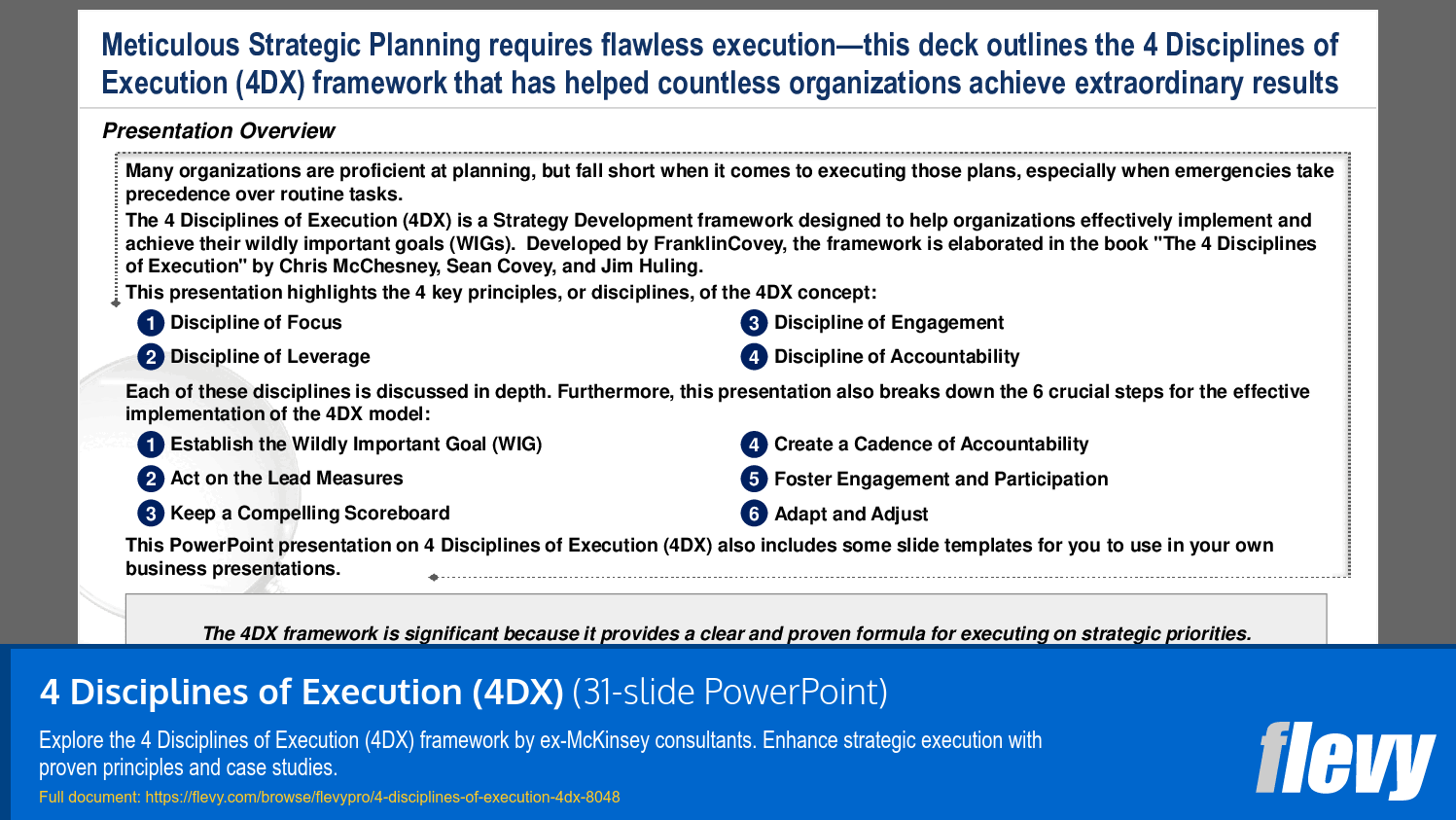
Many organizations are proficient at planning, but fall short when it comes to executing those plans, especially when emergencies take precedence over routine tasks.
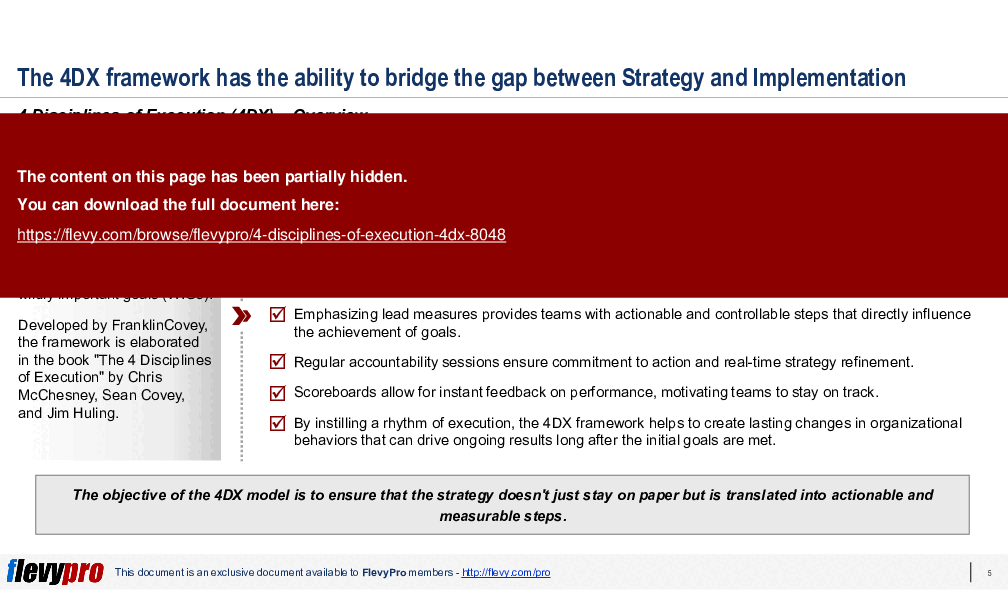
The 4 Disciplines of Execution (4DX) is a Strategy Development framework designed to help organizations effectively implement and achieve their wildly important goals (WIGs). Developed by FranklinCovey, the framework is elaborated in the book "The 4 Disciplines of Execution" by Chris McChesney, Sean Covey, and Jim Huling. The 4DX framework is significant because it provides a clear and proven formula for executing on strategic priorities.
This presentation highlights the 4 key principles, or disciplines, of the 4DX concept:
1. Discipline of Focus Focus on the wildly important goal
2. Discipline of Leverage Act on the lead measures
3. Discipline of Engagement Keep a compelling scoreboard
4. Discipline of Accountability Create a cadence of accountability
Each of these disciplines is discussed in depth. Furthermore, this presentation also breaks down the 6 crucial steps for the effective implementation of the 4DX model:
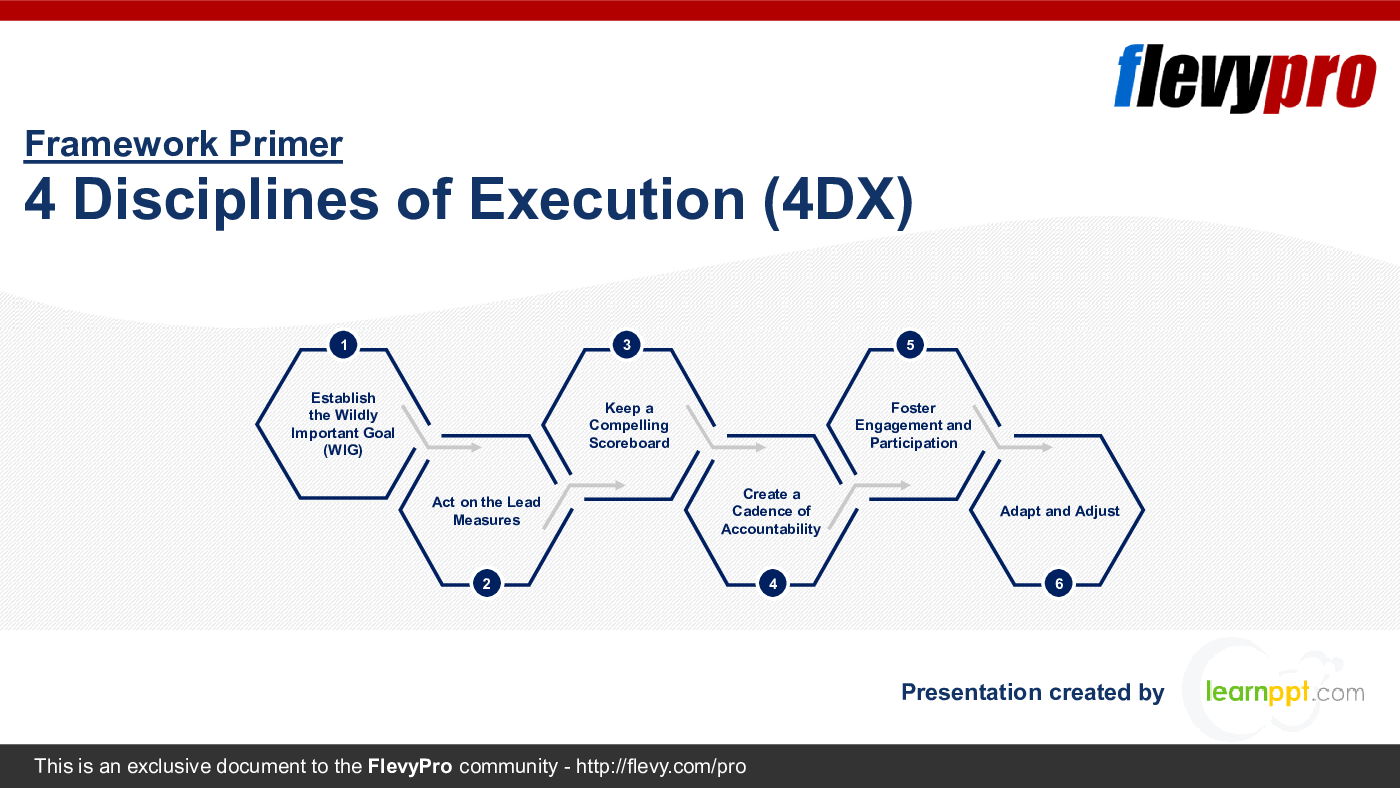
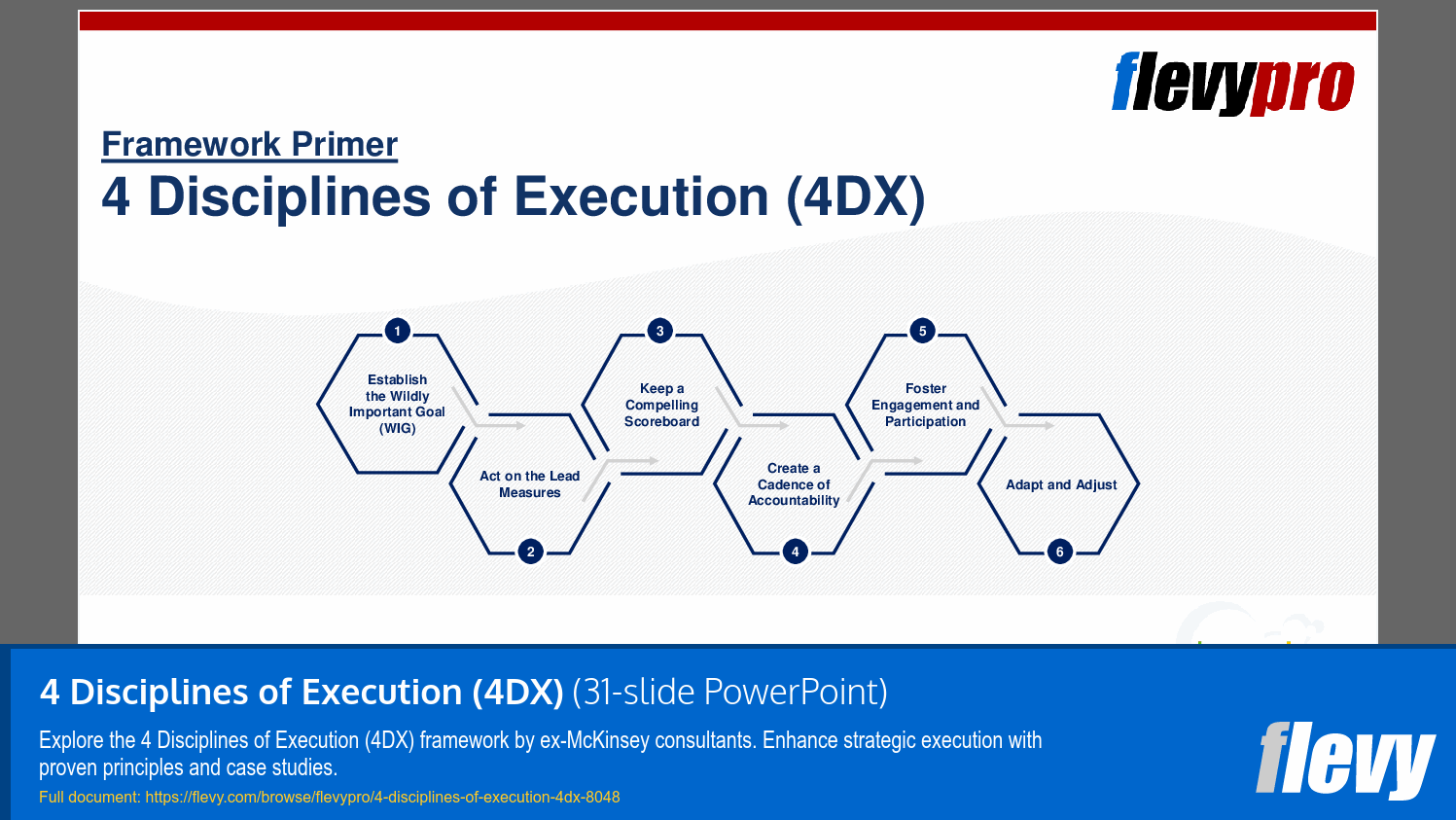
1. Establish the Wildly Important Goal (WIG)
2. Act on the Lead Measures
3. Keep a Compelling Scoreboard
4. Create a Cadence of Accountability
5. Foster Engagement and Participation
6. Adapt and Adjust
This presentation also includes a breakdown of 2 4DX Framework Implementation case studies.
This PowerPoint presentation on 4 Disciplines of Execution (4DX) also includes some slide templates for you to use in your own business presentations.
The 4DX framework is not just a theoretical model; it’s a practical toolkit that empowers teams to drive results through disciplined execution. This presentation provides actionable insights and real-world case studies, illustrating how organizations have successfully implemented the 4DX principles to overcome common execution challenges. With a focus on measurable outcomes, the framework equips leaders with the tools to foster accountability and engagement within their teams. By leveraging the structured approach of 4DX, executives can ensure that their strategic objectives translate into tangible results, making this presentation an essential resource for any organization committed to excellence in execution.
What are the core principles of the 4 Disciplines of Execution?
The 4DX framework centers on 4 disciplines: focusing on the Wildly Important Goal (WIG), acting on lead measures, keeping a compelling scoreboard, and creating a cadence of accountability. These 4 disciplines form the core execution model described in the 4DX approach.
How does 4DX treat lead measures within an execution plan?
4DX emphasizes “Act on the Lead Measures” as one of its 4 disciplines, directing teams to identify and act on predictive, influenceable measures that drive the Wildly Important Goal. The framework positions lead measures as a primary execution lever within the 4 disciplines.
What does creating a cadence of accountability involve in 4DX implementation?
Creating a cadence of accountability in 4DX means establishing a recurring process for teams to review progress against WIGs, discuss commitments, and adjust actions as needed. That practice is captured as step 4 within the 6 implementation steps of the 4DX model.
What role does a compelling scoreboard play in sustaining execution?
A compelling scoreboard provides a visible, measurable way for teams to track progress on WIGs and lead measures, supporting engagement and focus on outcomes. Maintaining such a scoreboard is one of the 4 4DX disciplines and supports measurable outcomes.
What should I look for when choosing a 4DX toolkit or presentation?
Look for resources that reference FranklinCovey’s 4DX principles, map the 4 disciplines to practical activities, provide implementation guidance across the 6 steps, and include examples or templates—such as slide templates and case studies—to support rollout, including at least 2 real-world cases.
How much organizational planning is required to adopt 4DX?
Adoption planning varies by context,, but 4DX structures rollout around 6 implementation steps: establish the WIG, act on lead measures, keep a scoreboard, create a cadence of accountability, foster engagement, and adapt and adjust. Resource planning should cover those 6 steps.
Can 4DX help when emergencies keep derailing planned strategic work?
4DX is designed to address execution shortfalls that occur when urgent work displaces strategic priorities by focusing teams on the Wildly Important Goal and the 4 disciplines that sustain disciplined execution of those goals.
How can I present 4DX concepts to senior leaders to gain buy-in?
Present the problem (execution gap), the 4 disciplines, the 6 implementation steps, and real examples to illustrate impact; using prepared slide templates and case studies helps structure the executive conversation—such as a 31-slide PowerPoint with 2 case studies.
This PPT slide template outlines the 4 Disciplines of Execution (4DX) framework, essential for effective implementation in organizations. The first step, "Establish the Wildly Important Goal (WIG)," focuses on defining a clear, compelling objective that aligns resources. "Act on the Lead Measures" prioritizes specific metrics that influence WIG achievement. The third step, "Keep a Compelling Scoreboard," emphasizes visual progress tracking to foster team motivation and accountability. "Create a Cadence of Accountability" involves regular check-ins to maintain focus and engagement. The fifth step, "Foster Engagement and Participation," highlights the importance of team involvement in execution. Lastly, "Adapt and Adjust" stresses the need for flexibility based on feedback and changing circumstances to stay aligned with goals.
This case study examines the implementation of the 4DX framework at DeKalb Medical Center, addressing challenges in patient satisfaction and care quality. The organization aimed to enhance operational efficiency and staff engagement, focusing on improving HCAHPS scores. The 4DX framework consists of 4 disciplines: Focus, Leverage, Engagement, and Accountability. The Discipline of Focus establishes a Wildly Important Goal (WIG) to increase patient satisfaction linked to HCAHPS scores. The Discipline of Leverage emphasizes management's focus on critical behaviors and processes affecting patient care, such as response times. The Discipline of Engagement involves creating a visual scoreboard for tracking patient satisfaction metrics, while the Discipline of Accountability includes regular meetings to review progress and adapt strategies. Results show significant improvements in HCAHPS scores, patient satisfaction, staff engagement, and internal communication, demonstrating the effectiveness of structured frameworks in healthcare operational improvements.
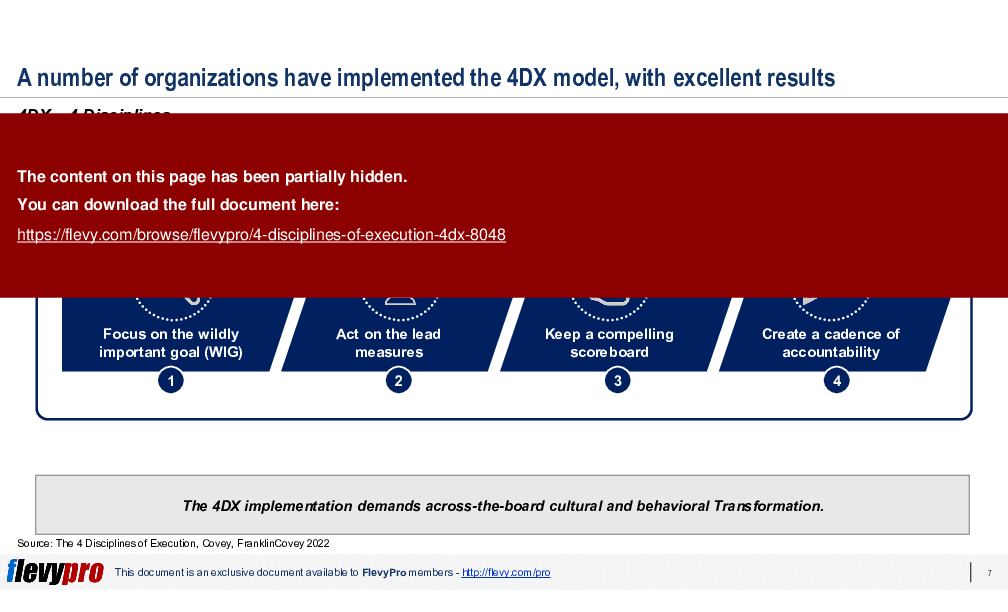
The 4DX model outlines 4 key disciplines for effective execution:
1. Discipline of Focus emphasizes prioritizing the wildly important goal (WIG) to align efforts and allocate resources effectively, driving performance.
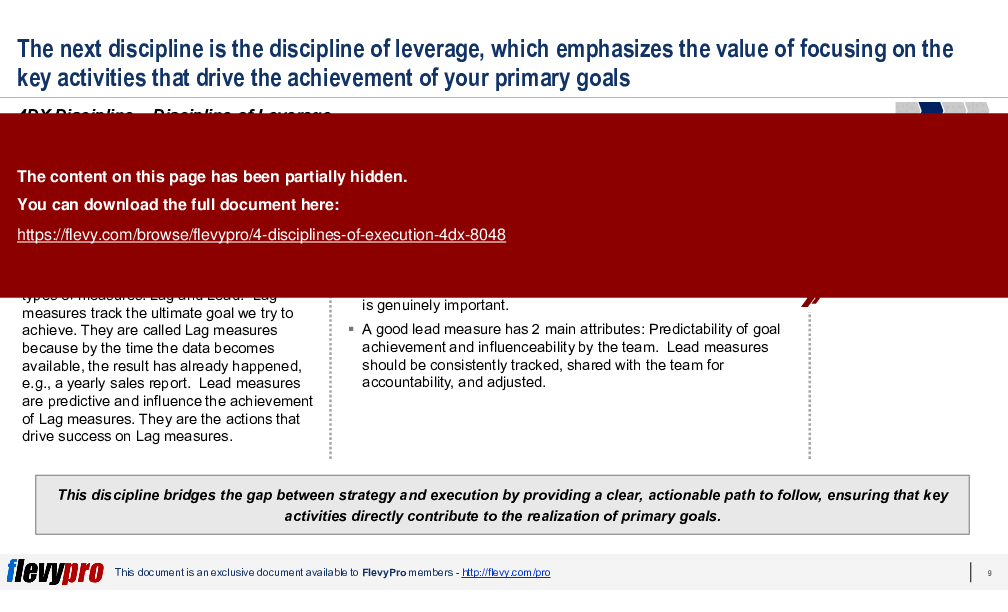
2. Discipline of Leverage advocates for acting on lead measures—predictive metrics that influence outcomes—rather than solely relying on lagging indicators, enabling proactive performance management.
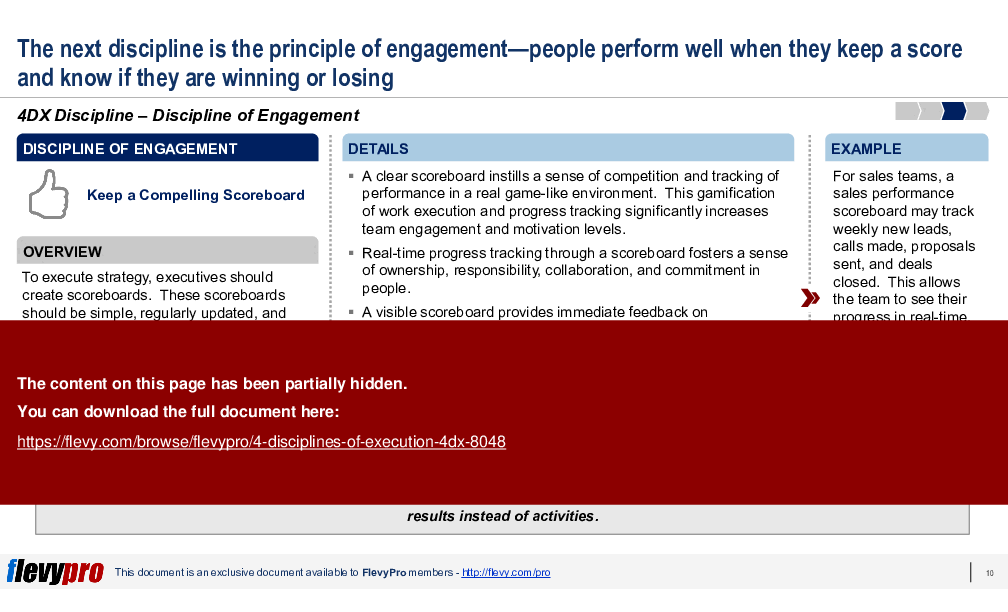
3. Discipline of Engagement stresses the importance of maintaining a compelling scoreboard to enhance visibility, transparency, and motivation among team members.
4. Discipline of Accountability establishes a cadence of accountability, ensuring teams regularly review progress and reinforce commitment to goals.
Implementing these disciplines fosters cultural transformation and improves organizational performance.
This PPT slide template outlines key components of the 4DX (Four Disciplines of Execution) implementation process for achieving Wildly Important Goals (WIGs). Regular WIG meetings—weekly, bi-weekly, or daily—are essential for maintaining focus and alignment with objectives. Teams assess performance against established metrics, facilitating discussions on progress and areas for improvement. Planning and committing to specific actions enhance individual accountability, clarifying each member's role in the strategy. Encouraging team input fosters collaboration and engagement in decision-making. Recognizing milestones motivates the team and reinforces positive behaviors. Maintaining momentum is crucial for focus on WIGs, while regular monitoring and evaluation of lead measures allow for timely adjustments. Fostering a culture of continuous learning is vital for long-term success in executing the 4DX process.
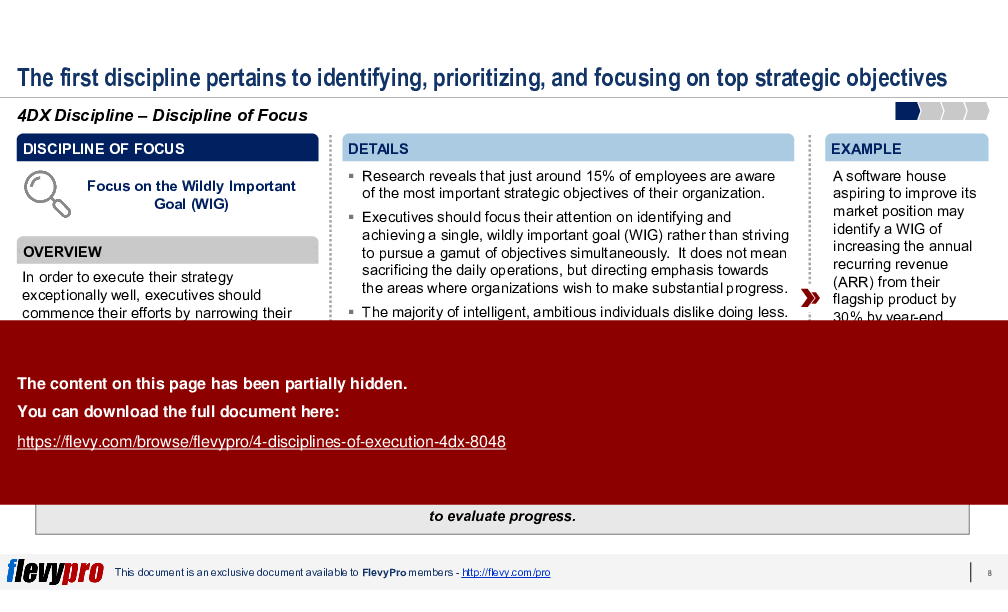
This PPT slide template outlines the first discipline of the 4DX (Four Disciplines of Execution) framework, focusing on the importance of a single, wildly important goal (WIG) for organizational success. Only 15% of employees typically understand key strategic objectives, highlighting the need for executives to streamline focus. Executives should prioritize one significant goal without neglecting daily operations, as attempting to juggle multiple objectives can dilute efforts. Achieving the WIG requires dedicated resources and integrating this goal into everyday operations. For example, a software company aiming to increase its annual recurring revenue (ARR) by 30% within a year illustrates the necessity of resource allocation and team alignment around the WIG.
This PPT slide template outlines the fourth discipline of the 4DX framework: establishing a cadence of accountability through regular team meetings. These meetings, held daily or weekly for about 20 minutes, assess performance, identify obstacles, and allow for necessary adjustments. Emphasizing lead and lag measures, the discipline focuses on immediate tasks and long-term goals. Early identification of obstacles is crucial for maintaining momentum and engagement. Regular meetings foster transparency and learning, enabling teams to adapt strategies based on effectiveness. An example illustrates a retail sales team reviewing actions toward sales targets to align with broader business objectives, enhancing accountability and driving performance.
Source: Best Practices in Strategy Development, Strategy Deployment & Execution, Strategy Execution PowerPoint Slides: 4 Disciplines of Execution (4DX) PowerPoint (PPTX) Presentation Slide Deck, LearnPPT Consulting
This framework is developed by a team of former McKinsey and Big 4 consultants. The presentation follows the headline-body-bumper slide format used by global consulting firms.
For $10.00 more, you can download this document plus 2 more FlevyPro documents. That's just $13 each.
ABOUT FLEVYPRO
This document is part of the FlevyPro Library, a curated knowledge base of documents for our FlevyPro subscribers.
FlevyPro is a subscription service for on-demand business frameworks and analysis tools. FlevyPro subscribers receive access to an exclusive library of curated business documents—business framework primers, presentation templates, Lean Six Sigma tools, and more—among other exclusive benefits.
The average daily rate of a McKinsey consultant is $6,625 (not including expenses). The average price of a Flevy document is $65.
Trusted by over 10,000+ Client Organizations
Since 2012, we have provided business templates to over 10,000 businesses and organizations of all sizes, from startups and small businesses to the Fortune 100, in over 130 countries.
"Last Sunday morning, I was diligently working on an important presentation for a client and found myself in need of additional content and suitable templates for various types of graphics. Flevy.com proved to be a treasure trove for both content and design at a reasonable price, considering the time I
saved. I encountered a download issue during the ordering process. However, a quick email to Flevy's support team, even on a Sunday (!!!), resulted in assistance within less than an hour, allowing me to download the content I needed. Fantastic job, Flevy! I give 5 stars for both content/price and customer service. Thank you!
"
– M. E., Chief Commercial Officer, International Logistics Service Provider
"[Flevy] produces some great work that has been/continues to be of immense help not only to myself, but as I seek to provide professional services to my clients, it gives me a large "tool box" of resources that are critical to provide them with the quality of service and outcomes they are expecting."
– Royston Knowles, Executive with 50+ Years of Board Level Experience
"As a young consulting firm, requests for input from clients vary and it's sometimes impossible to provide expert solutions across a broad spectrum of requirements. That was before I discovered Flevy.com.
Through subscription to this invaluable site of a plethora of topics that are key and crucial to consulting, I
have been able to exceed expectations and deliver quality advice and solutions to my clients. The quality and expertise of the authors are exemplary and gives me great confidence to use as part of my service offerings.
I highly recommend this company for any consultant wanting to apply international best practice standards in their service offerings.
"
– Nishi Singh, Strategist and MD at NSP Consultants
"As a small business owner, the resource material available from FlevyPro has proven to be invaluable. The ability to search for material on demand based our project events and client requirements was great for me and proved very beneficial to my clients. Importantly, being able to easily edit and tailor
the material for specific purposes helped us to make presentations, knowledge sharing, and toolkit development, which formed part of the overall program collateral. While FlevyPro contains resource material that any consultancy, project or delivery firm must have, it is an essential part of a small firm or independent consultant's toolbox.
"
– Michael Duff, Managing Director at Change Strategy (UK)
"I have used Flevy services for a number of years and have never, ever been disappointed. As a matter of fact, David and his team continue, time after time, to impress me with their willingness to assist and in the real sense of the word. I have concluded in fact
that it is not at all just a repository of documents/resources but, in the way that David and his team manage the firm, it is like dealing with consultants always ready to assist, advise and direct you to what you really need, and they always get it right.
I am an international hospitality accomplished senior executive who has worked and lived during the past 35 years in 23 countries in 5 continents and I can humbly say that I know what customer service is, trust me.
Aside from the great and professional service that Flevy's team provide, their wide variety of material is of utmost great quality, professionally put together and most current.
Well done Flevy, keep up the great work and I look forward to continue working with you in the future and to recommend you to a variety of colleagues around the world.
"
– Roberto Pelliccia, Senior Executive in International Hospitality
"If you are looking for great resources to save time with your business presentations, Flevy is truly a value-added resource. Flevy has done all the work for you and we will continue to utilize Flevy as a source to extract up-to-date information and data for our virtual and onsite presentations!"
– Debbi Saffo, President at The NiKhar Group
"Flevy.com has proven to be an invaluable resource library to our Independent Management Consultancy, supporting and enabling us to better serve our enterprise clients.
The value derived from our [FlevyPro] subscription in terms of the business it has helped to gain far exceeds the investment made, making a subscription a no-brainer for any growing consultancy – or in-house strategy team."
– Dean Carlton, Chief Transformation Officer, Global Village Transformations Pty Ltd.
"As a consulting firm, we had been creating subject matter training materials for our people and found the excellent materials on Flevy, which saved us 100's of hours of re-creating what already exists on the Flevy materials we purchased."
Download our free compilation of 50+ Strategy & Transformation slides and templates. Frameworks include McKinsey 7-S, Balanced Scorecard, Disruptive Innovation, BCG Curve, and many more.

 Click main image to view in full screen. Unlock all 11 preview images: