
This presentation is created by former McKinsey, BCG, Deloitte, EY, and Capgemini consultants. Strategy Chessboard is a powerful A.T. Kearney Strategic Planning framework used for selecting the optimal strategic approach.
Editor Summary
Strategy Chessboard is a 62-slide PowerPoint presentation that presents A.T.
Read moreKearney’s Strategy Chessboard framework and a 3-phase, 9-step implementation process. Developed by A.T. Kearney and crafted by former consultants from McKinsey, BCG, Deloitte, EY, and Capgemini, the deck includes a Strategy Chessboard template, point-scale model for company DNA and industry predictability, a scenario analysis framework, and editable strategic-approach and governance templates. Targeted at corporate strategists, business unit leaders, consultants, and executives, it is sold as a digital download on Flevy.
Use this deck when an organization must choose among strategic approaches in the face of uncertain industry dynamics—for example during strategic planning, post-merger alignment, or capability-driven repositioning.
Corporate strategists conducting an industry predictability assessment using the point-scale model to score competition, demand, and technology.
Business unit leaders selecting among the 4 Umbrella Strategies to align unit strategy with corporate objectives.
Consultants facilitating workshops that generate strategic options and scenario-based recommendations using the provided templates.
The 3-phase, 9-step methodology and use of scenario analysis reflect structured strategic planning practices associated with A.T. Kearney.
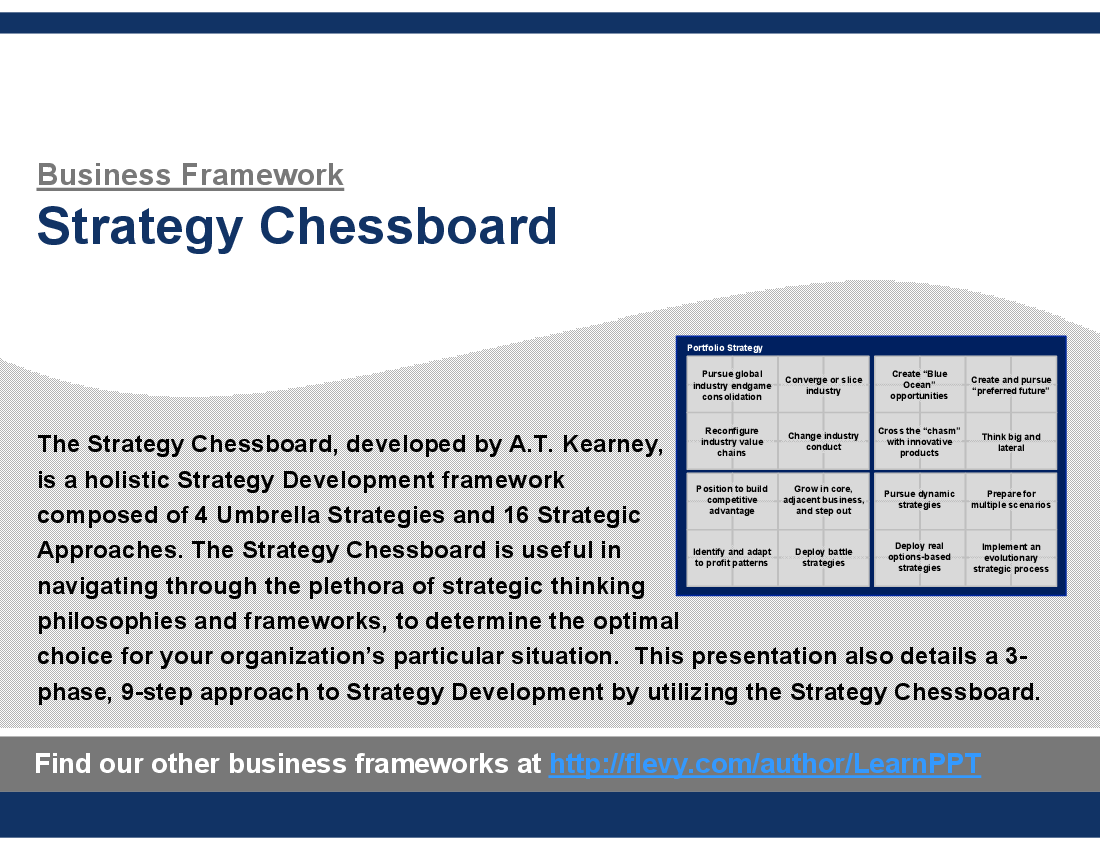
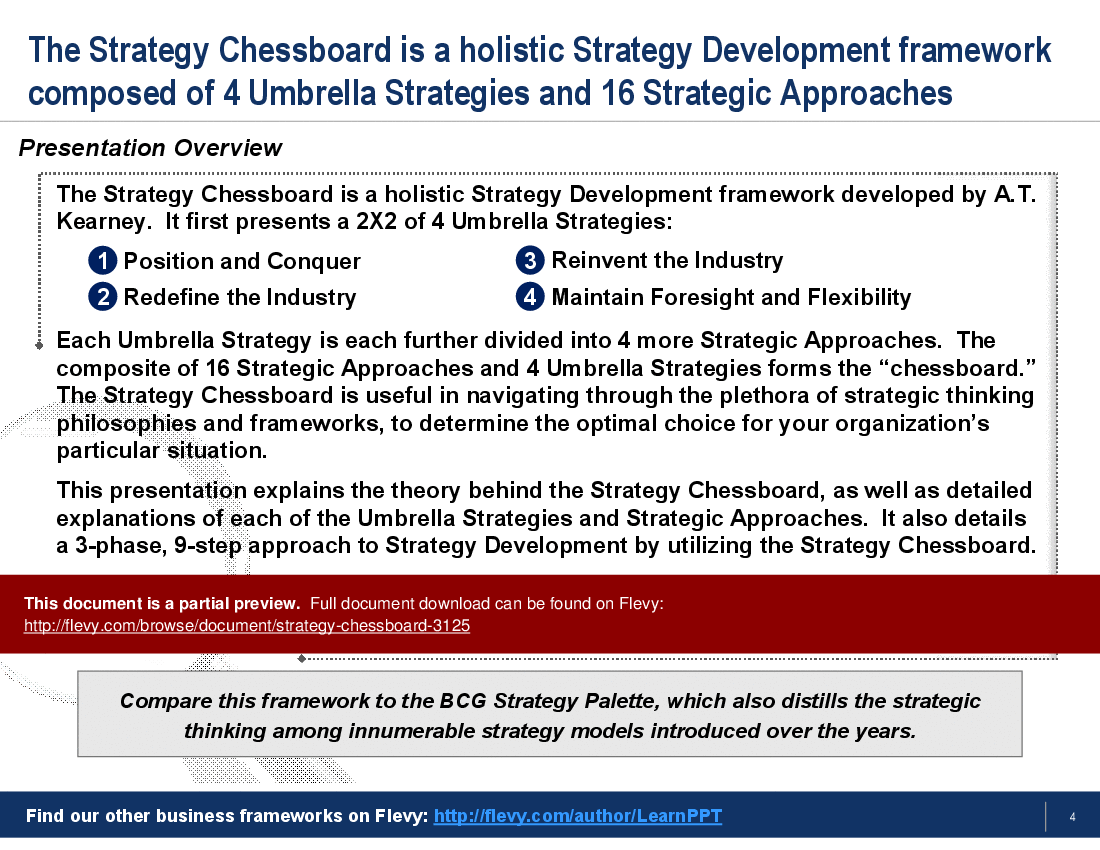
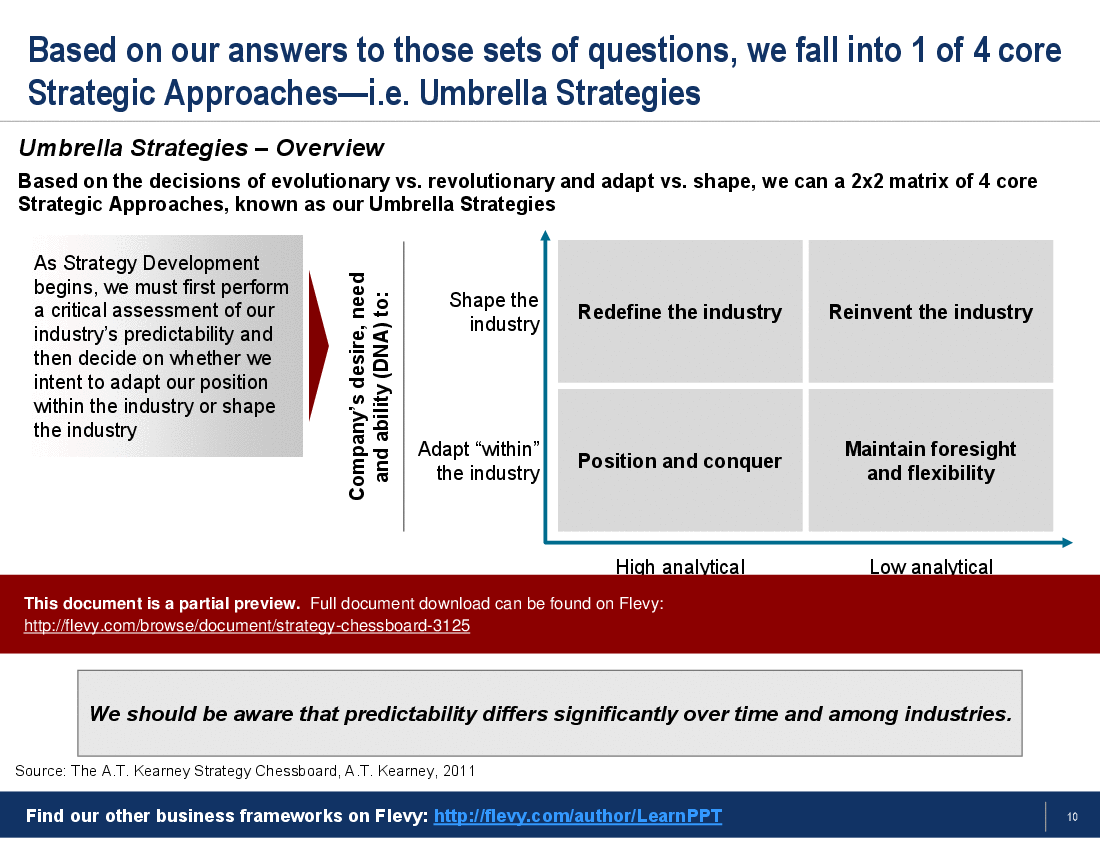
The Strategy Chessboard is a holistic Strategy Development framework developed by A.T. Kearney. It first presents a 2X2 of 4 Umbrella Strategies:
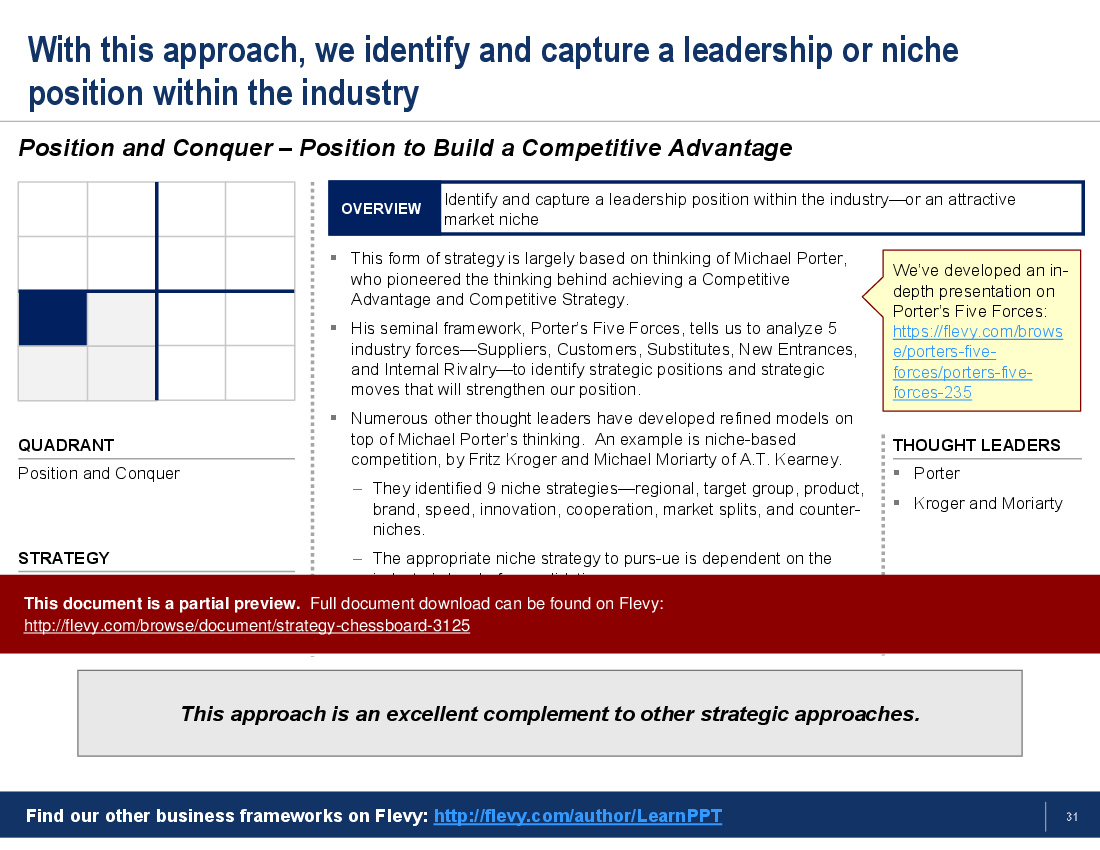
1. Position and Conquer (e.g. Porter's Five Forces, Profit Patterns, Art of War)
2. Redefine the Industry (e.g. Consolidation Curve, Value Chain Analysis, Game Theory)
3. Reinvent the Industry (e.g. Blue Ocean Strategy, Competing for the Future, Product Lifecycle Analysis)
4. Maintain Foresight and Flexibility (e.g. Scenario Analysis, Dynamic Strategies, Real Options Theory)
Each Umbrella Strategy is each further divided into 4 more Strategic Approaches. The composite of 16 Strategic Approaches and 4 Umbrella Strategies forms the "chessboard." The Strategy Chessboard is useful in navigating through the plethora of strategic thinking philosophies and frameworks, to determine the optimal choice for your organization's particular situation. You can compare this framework to the Strategy Framework Canvas (we also have a presentation on this available on Flevy), which is also a holistic framework that distills the strategic thinking among innumerable strategy models introduced over the years.
This presentation explains the theory behind the Strategy Chessboard, as well as detailed explanations of each of the Umbrella Strategies and Strategic Approaches. It also details a 3-phase, 9-step approach to Strategy Development by utilizing the Strategy Chessboard.
Additional topics covered include Strategic Playing Field, Industry Predictability, Evolutionary vs. Revolutionary Environments, Strategy Obstacles, Case Examples, among others.
This deck also includes a set of slide templates for you to use in your own business presentations.
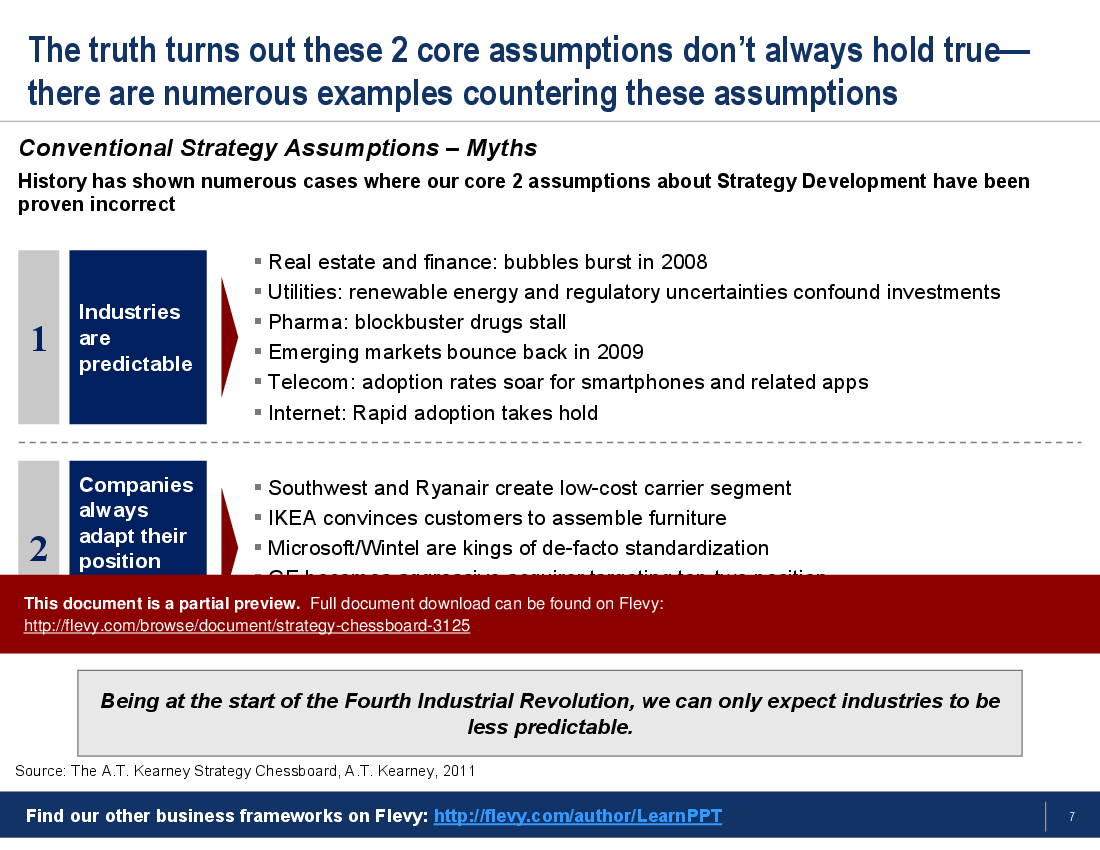
The Strategy Chessboard challenges conventional strategy assumptions, emphasizing the unpredictability of industries and the necessity for companies to adapt dynamically. By leveraging strategic analysis and scenario planning, this framework aids in redefining industry boundaries and enhancing competitive positioning. The deck includes comprehensive case studies of industry leaders, showcasing diverse strategic applications. This resource is essential for executives aiming to navigate complex market landscapes and drive sustainable growth.
Got a question about the product? Email us at support@flevy.com or ask the author directly by using the "Ask the Author a Question" form. If you cannot view the preview above this document description, go here to view the large preview instead.
MARCUS OVERVIEW
This synopsis was written by Marcus [?] based on the analysis of the full 62-slide presentation.
Executive Summary
The Strategy Chessboard is a holistic Strategy Development framework developed by A.T. Kearney, designed to guide organizations in navigating complex strategic decisions. This presentation, crafted by former consultants from top firms like McKinsey, BCG, and Deloitte, offers a consulting-grade quality that empowers executives to define their strategic approach effectively. The framework comprises 4 Umbrella Strategies and sixteen Strategic Approaches, facilitating a structured decision-making process tailored to an organization’s unique context. Buyers will learn to assess industry predictability, adapt strategies, and implement a comprehensive 3-phase, 9-step approach to Strategy Development.
Who This Is For and When to Use
• Corporate strategists focused on long-term planning and market positioning
• Business unit leaders seeking to align their strategies with corporate objectives
• Consultants advising organizations on strategic frameworks and implementations
• Executives aiming to enhance competitive advantage through innovative strategies
Best-fit moments to use this deck:
• During strategic planning sessions to evaluate and select appropriate strategic approaches
• When assessing industry dynamics and organizational capabilities for strategic alignment
• In workshops aimed at fostering innovative thinking and collaborative strategy development
Learning Objectives
• Define the Strategy Chessboard framework and its components
• Assess industry predictability and determine the appropriate strategic approach
• Develop a comprehensive strategy using the 3-phase, 9-step implementation process
• Identify and apply the 4 Umbrella Strategies and sixteen Strategic Approaches
• Evaluate organizational capabilities and align them with strategic options
• Foster innovative thinking to create “Blue Ocean” opportunities
Primary Topics Covered
• Strategy Assumptions - Challenges conventional beliefs about industry predictability and adaptation.
• Umbrella Strategies - Four core strategies that guide organizations in shaping or adapting to their industry.
• Strategy Chessboard - A visual representation of strategic options based on industry predictability and organizational capabilities.
• Implementation Process - A structured 3-phase, 9-step approach for developing and executing strategies.
• Strategic Approaches - Detailed exploration of sixteen strategic options categorized under the 4 Umbrella Strategies.
• Templates - Practical tools for applying the Strategy Chessboard framework in real-world scenarios.
Deliverables, Templates, and Tools
• Strategy Chessboard framework template for visualizing strategic options
• Point-scale model for assessing company DNA and industry predictability
• 3-phase implementation process template for structured strategy development
• Scenario analysis framework for preparing multiple strategic options
• Templates for documenting strategic recommendations and governance models
• Strategic approach templates for each of the 4 Umbrella Strategies
Slide Highlights
• Overview of the Strategy Chessboard and its significance in strategic planning
• Detailed breakdown of the 4 Umbrella Strategies and their strategic options
• Visual representation of the 3-phase, 9-step implementation process
• Case examples illustrating the application of the Strategy Chessboard in various industries
• Point-scale model for assessing industry predictability and company DNA
Potential Workshop Agenda
Introduction to Strategy Chessboard (30 minutes)
• Overview of the framework and its components
• Discussion on the importance of strategic alignment
Assessing Industry Predictability (60 minutes)
• Interactive session on evaluating industry dynamics
• Group activity to score company DNA and predictability
Developing Strategic Options (90 minutes)
• Breakout sessions to explore Umbrella Strategies
• Collaborative development of strategic recommendations
Customization Guidance
• Tailor the Strategy Chessboard framework to reflect specific industry dynamics and organizational contexts
• Adjust the point-scale model to incorporate unique company capabilities and market conditions
• Modify templates to align with organizational terminology and strategic objectives
Secondary Topics Covered
• Industry Predictability - Understanding the variability of industry dynamics over time
• Evolutionary vs. Revolutionary Environments - Differentiating between predictable and unpredictable market conditions
• Strategy Obstacles - Identifying common pitfalls in strategy development and how to overcome them
• Case Examples - Real-world applications of the Strategy Chessboard framework
Topic FAQ
What are the phases of the Strategy Chessboard implementation process?
The Strategy Chessboard describes a structured implementation built around a 3-phase, 9-step approach that guides organizations from assessment through strategic choice to recommendations and governance. The presentation explains the sequence and tools to use across the full 3-phase, 9-step approach.
How can I assess my industry’s predictability using common tools?
Use a point-scale model to score factors such as competition, demand, technology, and company DNA to quantify predictability and guide strategy selection. Flevy's Strategy Chessboard includes a ready-to-use point-scale model and scoring guidance for assessing industry predictability.
What are the 4 Umbrella Strategies and how do they differ?
The 4 Umbrella Strategies are Position and Conquer, Redefine the Industry, Reinvent the Industry, and Maintain Foresight and Flexibility; each groups 4 strategic approaches and maps choices based on predictability and organizational capabilities, forming the 4 Umbrella Strategies in the chessboard.
When should an organization pursue "Blue Ocean" style opportunities?
"Blue Ocean" opportunities are associated with the Reinvent the Industry umbrella, where firms seek uncontested market space and new demand rather than competing in existing markets; the deck discusses pursuing such opportunities as part of the Reinvent the Industry strategic approaches.
What should I look for when buying an off-the-shelf strategy framework deck?
Prioritize decks that include a clear decision framework, an implementation process, diagnostic tools (e.g., predictability scoring), scenario analysis, editable templates, and case examples to adapt to your context; Flevy's Strategy Chessboard provides these elements including templates and case examples.
How can a small strategy team evaluate the cost versus value of a strategy template purchase?
Compare slide count, included diagnostic and implementation templates, customization guidance, and case examples against your timeframe and resources; a template that includes structured tools and editable slides—such as a 62-slide deck with templates—can reduce build time for the team.
I need to align a business unit’s strategy to corporate objectives after a merger — which chessboard elements help most?
Use the Strategy Playing Field assessment, the point-scale model to score company DNA and industry predictability, map candidate approaches under the 4 Umbrella Strategies, and document recommendations with templates and a governance model to ensure alignment using the point-scale model and governance model.
How should I structure a workshop to select strategic options with the Strategy Chessboard?
A recommended agenda includes an introduction to the framework (≈30 minutes), an assessing predictability session with scoring (≈60 minutes), and breakout sessions to develop strategic options (≈90 minutes), supported by the deck’s templates and workshop slides for the 30/60/90 minute agenda.
Document FAQ
These are questions addressed within this presentation.
What is the Strategy Chessboard?
The Strategy Chessboard is a strategic framework that helps organizations navigate complex strategic decisions by categorizing approaches based on industry predictability and organizational capabilities.
How can I assess my industry’s predictability?
Utilize the point-scale model provided in the presentation to evaluate key factors such as competition, demand, and technology that influence predictability.
What are the 4 Umbrella Strategies?
The 4 Umbrella Strategies are Position and Conquer, Redefine the Industry, Reinvent the Industry, and Maintain Foresight and Flexibility, each offering distinct strategic options.
How does the implementation process work?
The implementation process follows a structured 3-phase, 9-step approach that guides organizations from assessing their situation to finalizing strategy recommendations.
Can the Strategy Chessboard be customized?
Yes, the framework can be tailored to fit specific industry contexts and organizational needs, allowing for flexibility in application.
What are “Blue Ocean” opportunities?
“Blue Ocean” opportunities refer to uncontested market spaces where organizations can innovate and create new demand, rather than competing in saturated markets.
How do I use the templates provided?
The templates are designed to facilitate the application of the Strategy Chessboard framework, allowing users to document their analyses, strategic options, and recommendations effectively.
What are common strategy obstacles addressed in the presentation?
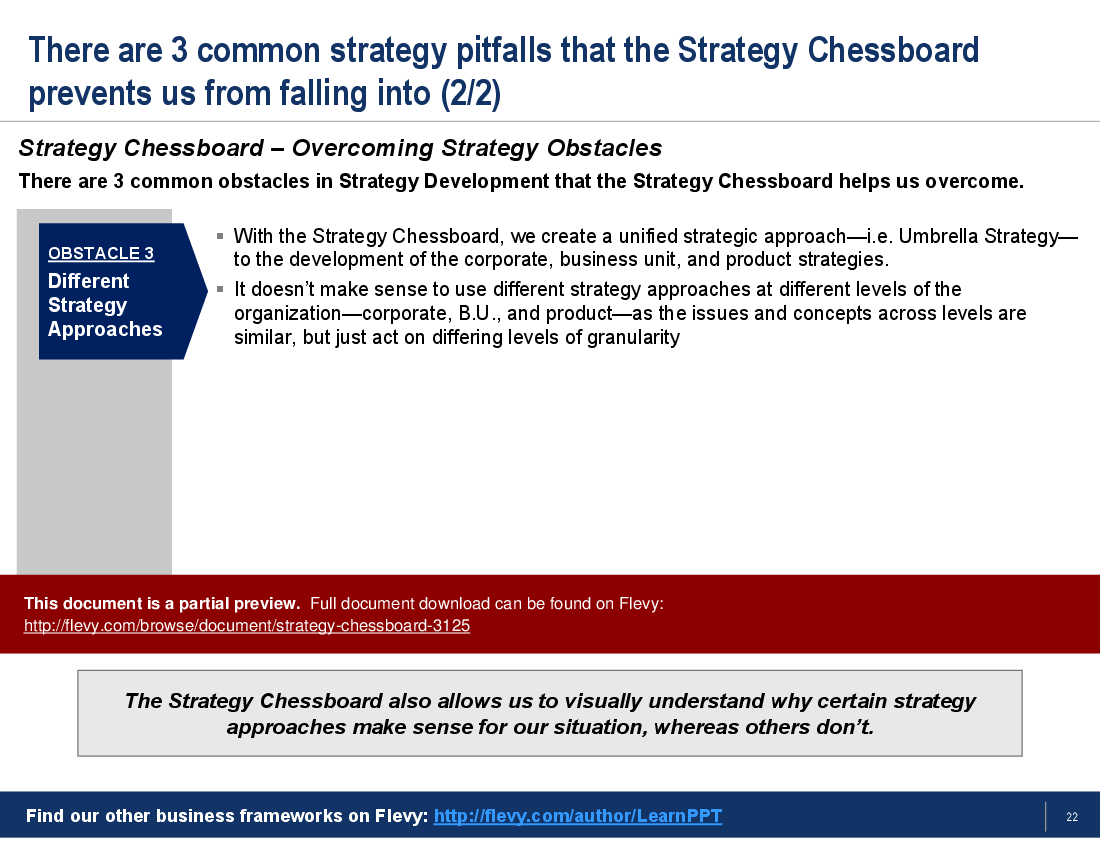
The presentation identifies obstacles such as Strategic Lens Myopia, Sequencing Bias, and Different Strategy Approaches, providing insights on how to overcome them.
Glossary
• Strategy Chessboard - A framework for navigating strategic decisions based on industry predictability and organizational capabilities.
• Umbrella Strategies - Four overarching strategies guiding organizations in shaping or adapting to their industry.
• Company DNA - The inherent characteristics of an organization that influence its strategic choices.
• Predictability - The degree to which industry dynamics can be anticipated.
• Blue Ocean Strategy - A growth strategy focused on creating uncontested market space.
• Scenario Analysis - A method for preparing multiple strategic options based on varying future conditions.
• Dynamic Strategy - A flexible approach to strategy that emphasizes responsiveness to market changes.
• Evolutionary Strategic Process - A method that focuses on fast learning and adaptation through experimentation.
• Point-scale Model - A tool for assessing company DNA and industry predictability.
• Governance Model - A framework for overseeing strategy implementation and ensuring alignment with organizational goals.
• Strategic Options - Specific actions or approaches that can be pursued within the framework.
• Templates - Pre-designed documents that facilitate the application of the Strategy Chessboard framework.
The A.T. Kearney Strategy Chessboard is a strategic framework that categorizes approaches into 4 umbrella strategies and sixteen specific options. The vertical axis represents a company's desire and ability to shape the industry, while the horizontal axis reflects the analytical predictability of industry trends. The 4 umbrella strategies include Portfolio Strategy, focusing on global industry endgame consolidation and reconfiguring value chains. Specific options include creating "Blue Ocean" opportunities and employing real options-based strategies for growth and innovation. Companies must adapt to profit patterns and prepare for multiple scenarios, as traditional strategies may be insufficient in a fast-paced environment. The framework allows for flexible strategy formulation, aligning strategic options with overarching goals.
This PPT slide presents a structured approach to evaluating a company's foundational characteristics and industry predictability using a point-scale model. The model assesses 2 primary dimensions: Company DNA and Industry Predictability. Company DNA includes Desire, which focuses on long-term motives and risk tolerance, with a maximum score of 35 points, and Ability, scoring up to 45 points, encompassing market influence and financial strength. The total score for Company DNA can reach 100 points. Industry Predictability evaluates Environment, Competition, Demand, Suppliers, and Technology, with Competition weighted at 25 points. This framework visually plots scores on a grid, indicating a company's ability to shape versus adapt within the industry, aiding strategic planning and decision-making. Insights from this model guide executives in identifying growth opportunities and addressing potential threats.
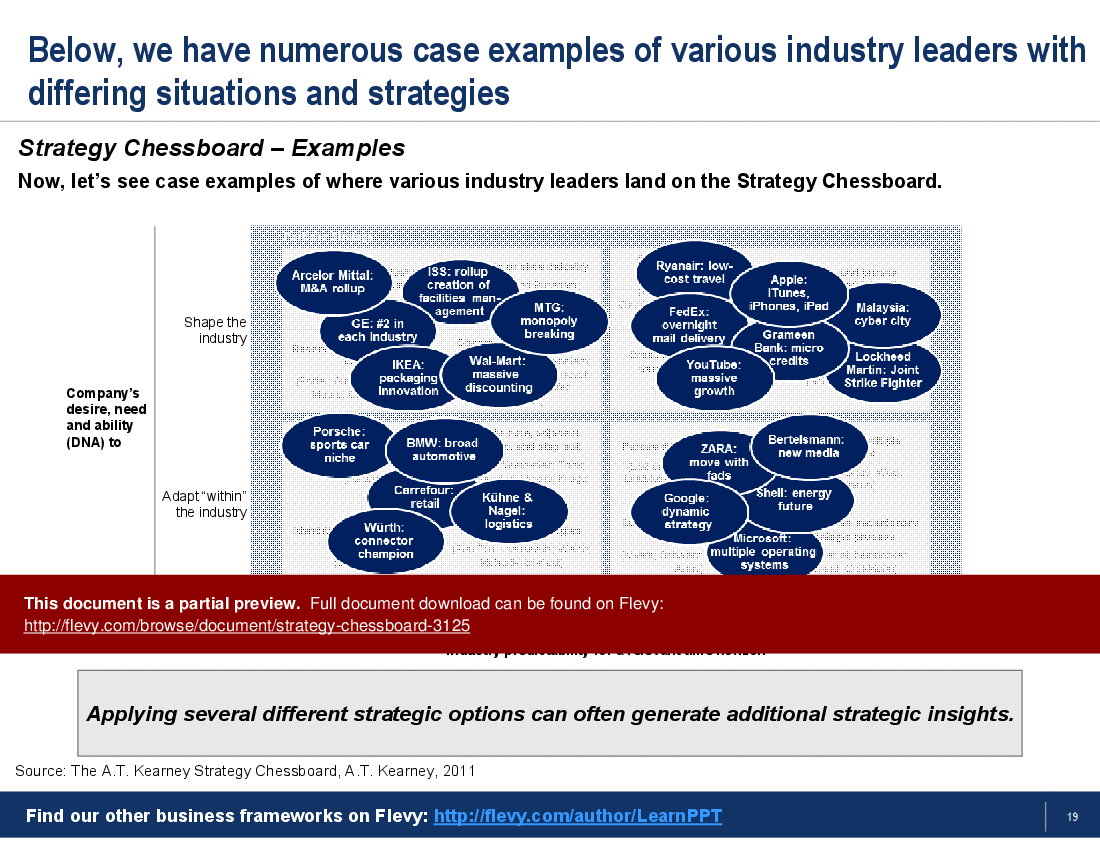
The Strategy Chessboard categorizes industry leaders based on 2 dimensions: analytical predictability and strategic adaptability. The vertical axis distinguishes between companies that shape the industry and those that adapt within it. For example, Arcelor Mittal is in the "M&A rollup" category, indicating a proactive approach through mergers and acquisitions, while IKEA and Wal-Mart exemplify adaptive strategies focused on innovation and discounting. The horizontal axis measures industry predictability, with Ryanair and Apple demonstrating strong analytical capabilities in predictable environments, while ZARA and Google showcase dynamic strategies in less predictable contexts. This framework illustrates how aligning a company's DNA with its strategic choices can lead to varied outcomes.
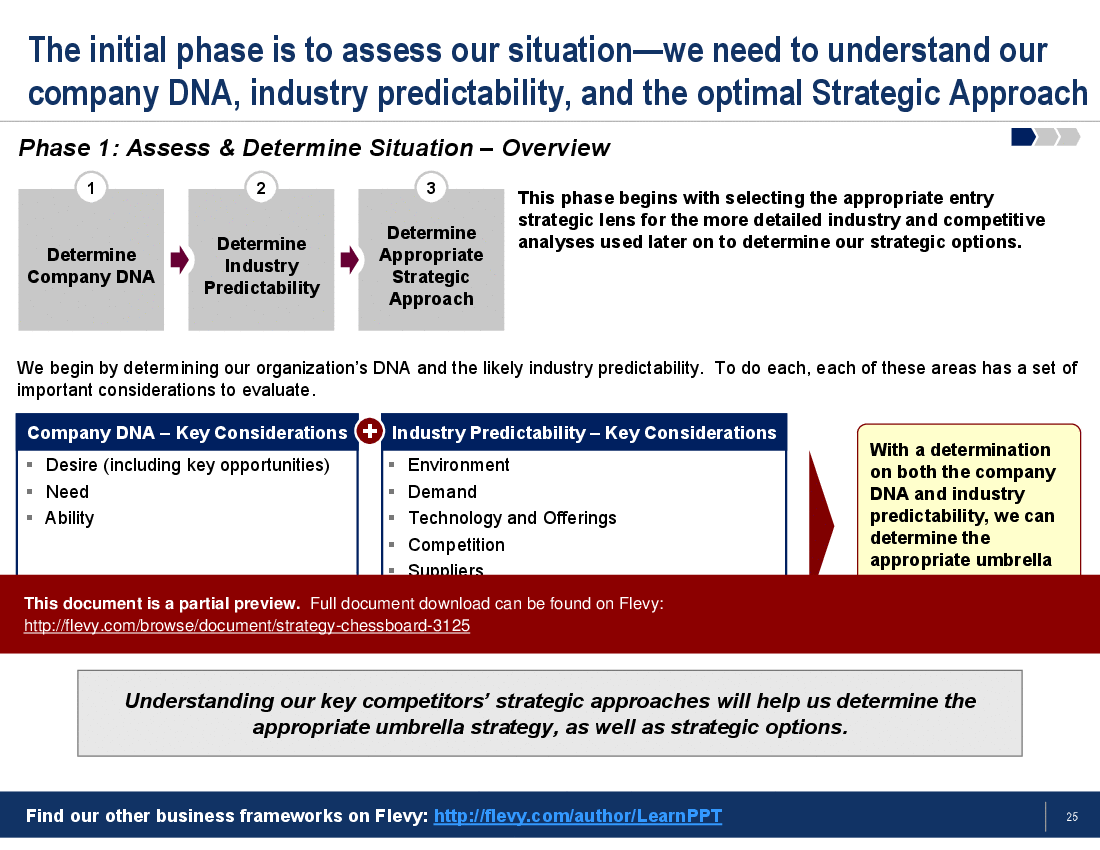
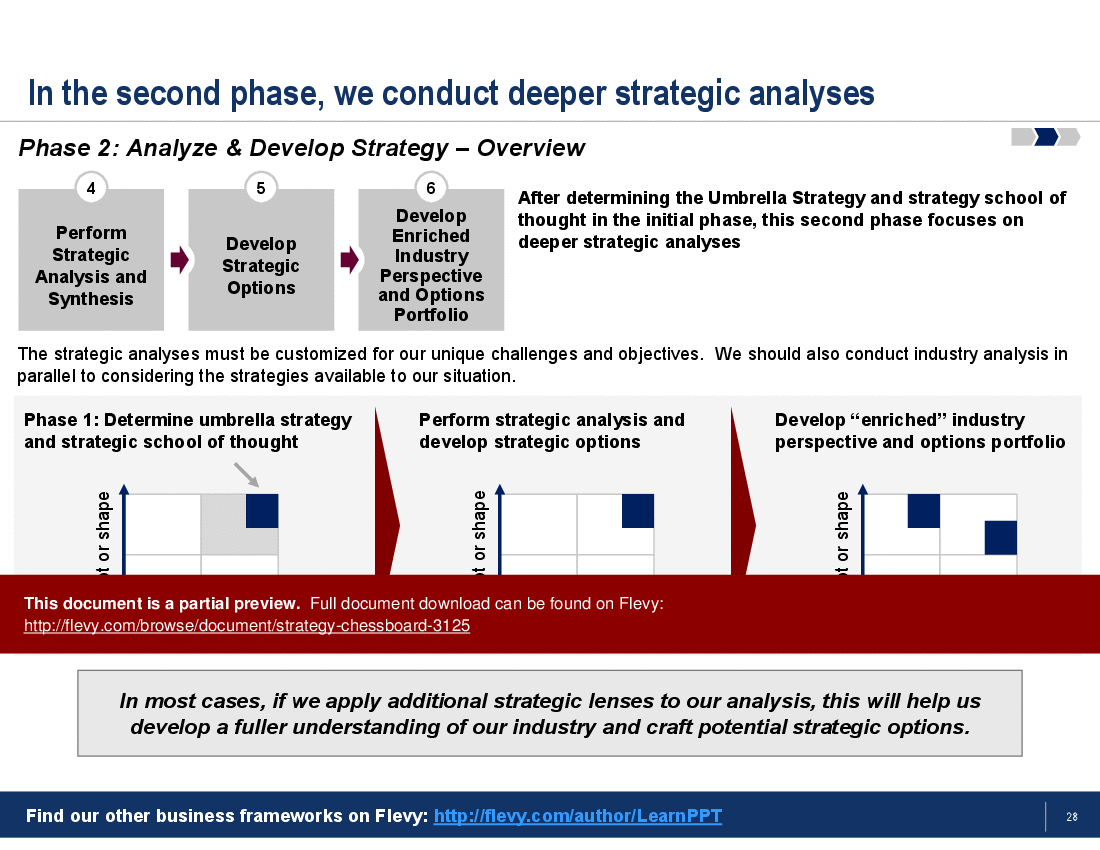
The Strategy Chessboard Implementation process consists of 3 phases: Assess & Determine Situation, Analyze & Develop Strategy, and Recommend & Implement Strategy.
Phase 1 focuses on understanding the organization's foundational elements, including determining the company's DNA, assessing industry predictability, and selecting an appropriate strategic approach.
Phase 2 involves strategic analysis and synthesis, developing strategic options, and creating an enriched industry perspective and options portfolio.
Phase 3 centers on making actionable recommendations, evaluating strategic options against the company's DNA, finalizing strategy recommendations, and establishing a governance model for implementation.
This structured approach ensures clarity and thoroughness in strategy development, addressing all critical aspects systematically.
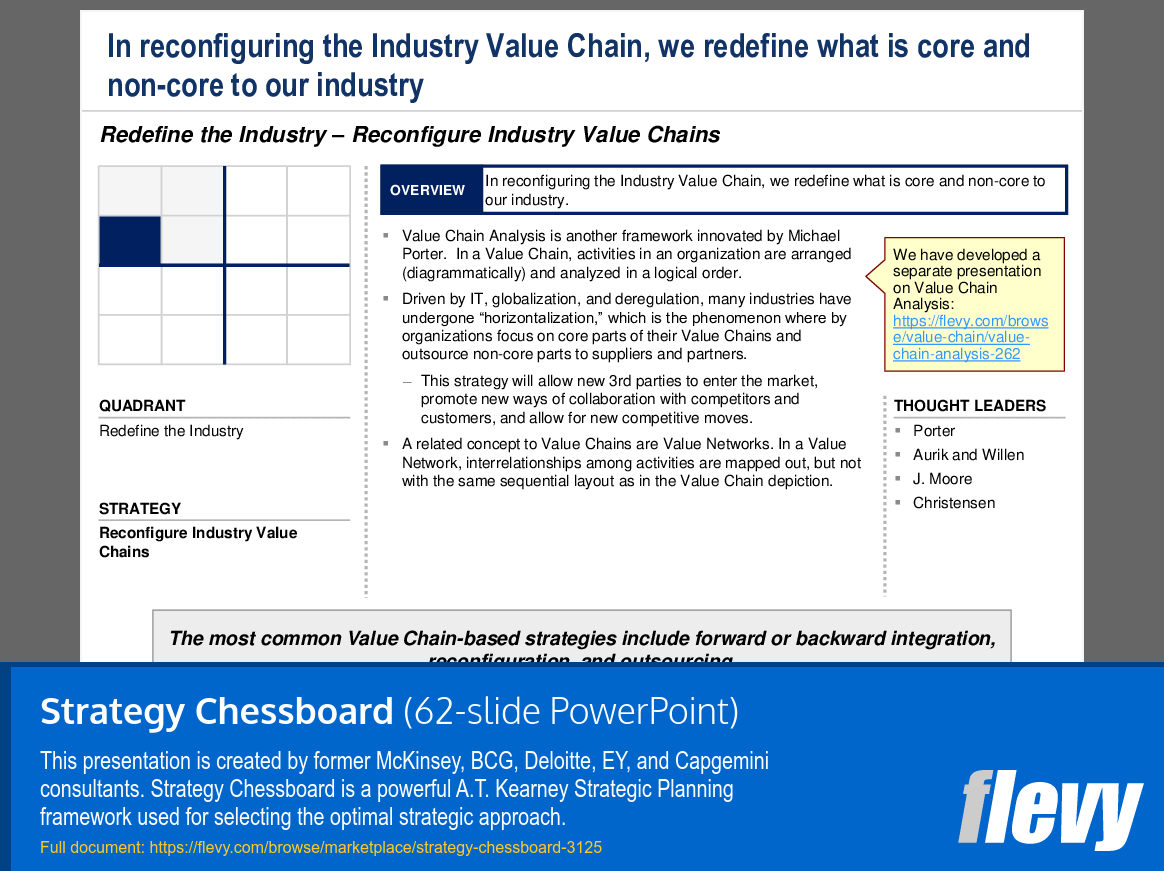
This PPT slide presents a framework for reconfiguring the industry value chain, focusing on core versus non-core activities. It references Value Chain Analysis, developed by Michael Porter, which evaluates activities contributing to value creation. Many industries are experiencing "horizontalization," driven by IT advancements, globalization, and deregulation. Organizations prioritize core competencies while outsourcing non-core functions, enabling market entry for third parties and fostering collaboration with competitors and customers. The slide introduces Value Networks, which map interrelationships among activities without a strict sequence, offering insights into business interactions and performance. Common strategies from Value Chain analysis include forward and backward integration and outsourcing, pivotal for enhancing efficiency and adaptability in a changing market.
This PPT slide categorizes a hypothetical utility company's business units using the Strategy Chessboard framework, highlighting distinct strategic needs in complex industries. The left section focuses on "Shape the industry" strategies, including "Wholesale and trading" and "Change industry conduct," emphasizing proactive market influence. The right section addresses "Adapt 'within' the industry," featuring "Domestic transportation" and "Pursue dynamic strategies," which underscores the necessity for flexibility based on analytical predictability. The categorization of business units from high to low analytical predictability visually represents the tailored strategies required for varying market environments, reinforcing that a one-size-fits-all approach is inadequate for diverse organizations.
This PPT slide presents a modified Strategy Chessboard, emphasizing the need to adapt strategic frameworks to reflect industry dynamics. It features 2 main axes: the company’s desire, need, and ability (DNA) to shape the industry, and the level of analytical predictability. The left side focuses on shaping the industry, suggesting strategies like global industry consolidation and reconfiguring value chains to influence market conditions. The right side discusses adapting strategies, including growing in core areas and deploying battle strategies. This dual focus reflects a comprehensive approach to strategic planning, urging organizations to redesign frameworks to fit their unique situations, as a one-size-fits-all approach is insufficient in today’s complex business landscape.
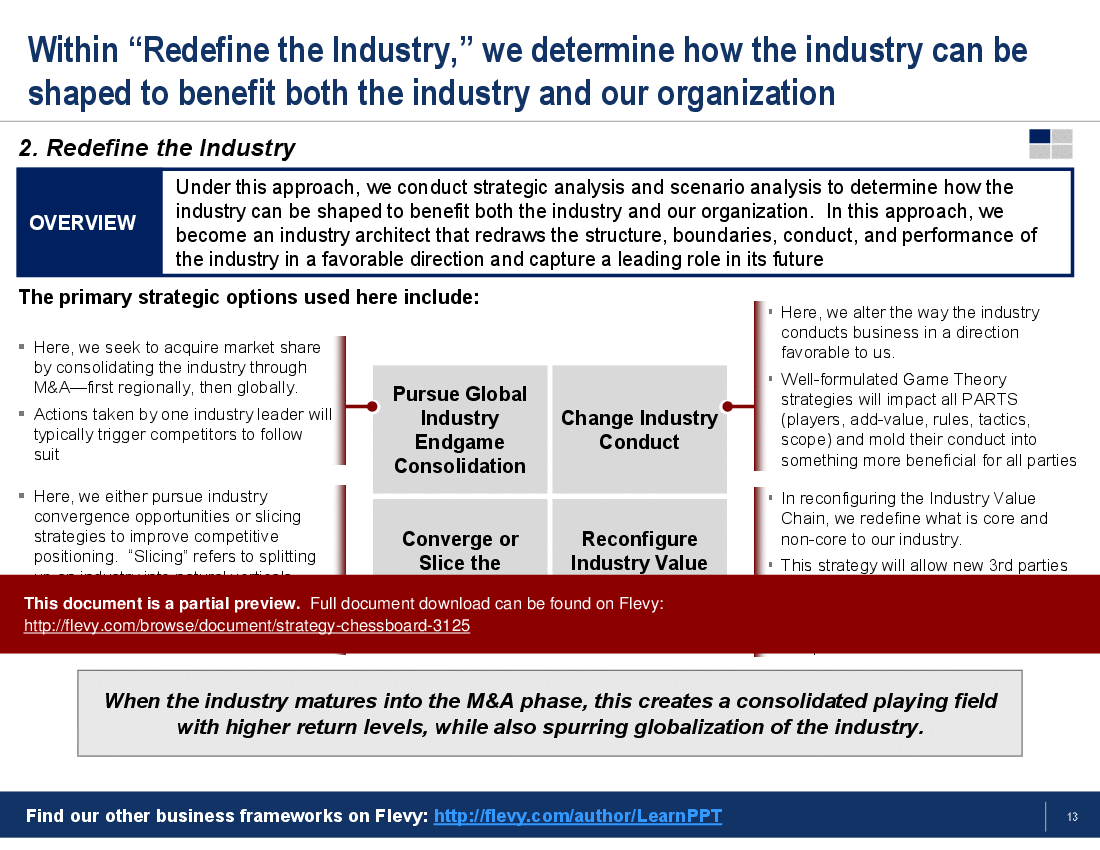
The "Redefine the Industry" framework focuses on reshaping industry structures for mutual benefits through strategic and scenario analysis. Key strategies include:
1. Global Industry Endgame Consolidation: Gaining market share via mergers and acquisitions, starting regionally and expanding globally, prompting competitors to consolidate.
2. Converge or Slice the Industry: Exploring convergence opportunities or segmenting into distinct verticals to enhance competitive positioning, potentially triggering similar actions from competitors.
3. Change Industry Conduct: Altering business practices using Game Theory to influence stakeholders—players, value, rules, and tactics—for a more beneficial industry environment.
4. Reconfigure Industry Value Chains: Redefining core and non-core aspects of the organization, encouraging collaboration among competitors and fostering innovative strategies.
These strategic actions can significantly reshape the industry landscape, driving future growth and positioning.
This PPT slide presents a framework for "Umbrella Strategies," outlining 4 strategic options: "Redefine the Industry," "Reinvent the Industry," "Position and Conquer," and "Maintain Foresight and Flexibility." The vertical axis represents a company's inclination to influence the industry, while the horizontal axis measures industry predictability. "Redefine" and "Reinvent" are positioned in the upper quadrants, indicating active industry shaping through detailed analyses for innovation. Conversely, "Position and Conquer" and "Maintain Foresight and Flexibility" focus on adapting to existing conditions, emphasizing market understanding and agility. Organizations must possess the right capabilities to implement these strategies, as not all have the desire or resources to influence industry trajectories. This framework aids executives in evaluating strategic options based on analytical capabilities and industry dynamics.
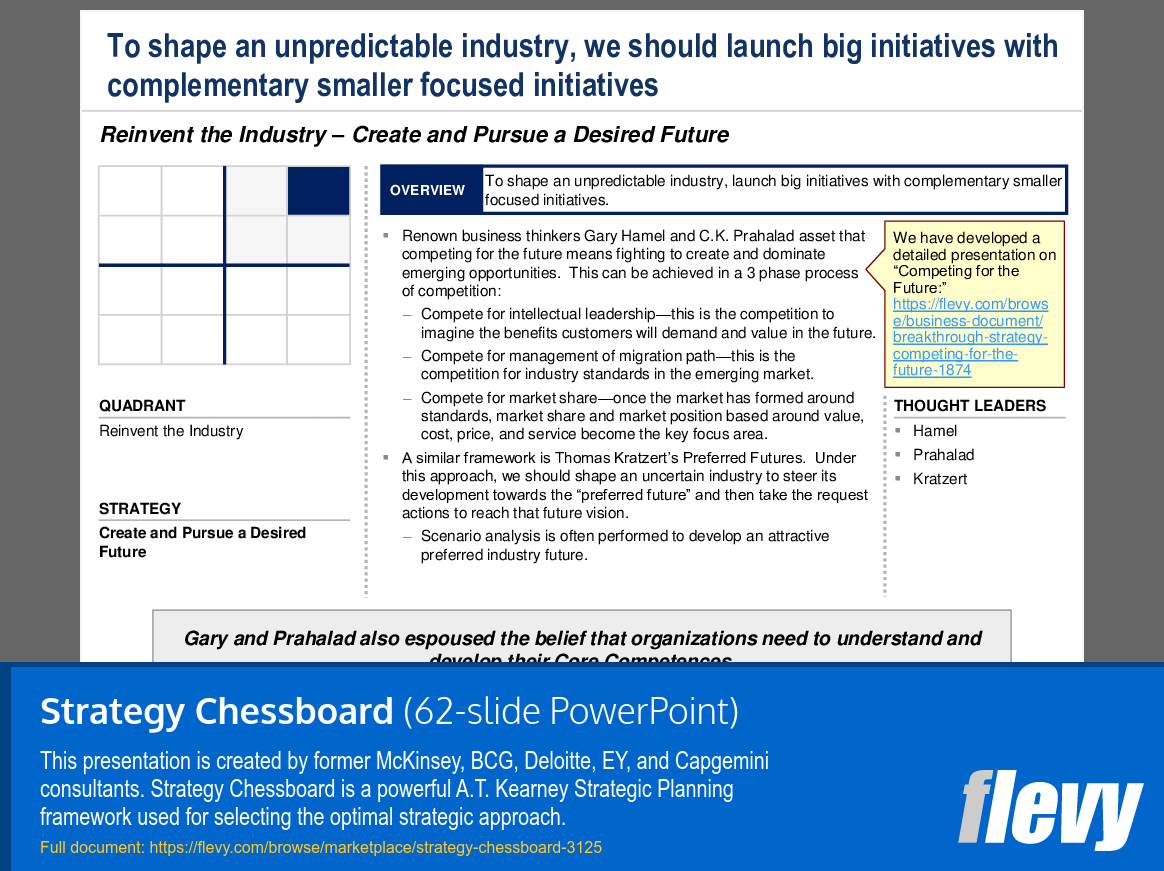
This PPT slide presents a strategic framework for navigating unpredictable industries through significant initiatives and focused efforts. It draws on insights from Gary Hamel and C.K. Prahalad, emphasizing 3 key areas: competition for intellectual leadership, which requires firms to innovate and anticipate future market needs; management of migration paths, focusing on establishing industry standards to guide market evolution; and competition for market share, positioning based on value, cost, and service. The slide references Thomas Kratzer's concept of Preferred Futures, advocating for proactive shaping of uncertain markets through scenario analyses to pursue desired future states. This framework guides leaders in refining their strategic approach in complex market landscapes.
This presentation is created by former McKinsey, BCG, Deloitte, EY, and Capgemini consultants. Strategy Chessboard is a powerful A.T. Kearney Strategic Planning framework used for selecting the optimal strategic approach.
We are a team of management consultants trained by top tier global consulting firms (including McKinsey, BCG, Deloitte, EY, Capgemini) with a collective experience of several decades. We specialize in business frameworks based on real-life consulting engagements.
We have served 100s of clients that range from Fortune 500 companies to tech startups to
... [read more] $1B+ private companies.
Utilize our consulting frameworks to apply structured thinking & analysis to address your business challenges, uncover strategic insights, and implement workable solutions. Our PowerPoint presentations follow traditional consulting slide design formats, starting with a clear slide headline. Easily customize and repurpose our slides for your own business presentations.
Beyond business frameworks & methodologies, we also offer PowerPoint templates and other business templates. Our templates are professionally designed and have been used in thousands of deliverables & work products across hundreds of clients.
Since 2012, we have provided business templates to over 10,000 businesses and organizations of all sizes, from startups and small businesses to the Fortune 100, in over 130 countries.
Read Customer Testimonials
"As a consultant requiring up to date and professional material that will be of value and use to my clients, I find Flevy a very reliable resource.
The variety and quality of material available through Flevy offers a very useful and commanding source for information. Using Flevy saves me time, enhances my expertise and ends up being a good decision."
– Dennis Gershowitz, Principal at DG Associates
"Flevy is our 'go to' resource for management material, at an affordable cost. The Flevy library is comprehensive and the content deep, and typically provides a great foundation for us to further develop and tailor our own service offer."
– Chris McCann, Founder at Resilient.World
"FlevyPro provides business frameworks from many of the global giants in management consulting that allow you to provide best in class solutions for your clients."
– David Harris, Managing Director at Futures Strategy
"I have used Flevy services for a number of years and have never, ever been disappointed. As a matter of fact, David and his team continue, time after time, to impress me with their willingness to assist and in the real sense of the word. I have concluded in fact
that it is not at all just a repository of documents/resources but, in the way that David and his team manage the firm, it is like dealing with consultants always ready to assist, advise and direct you to what you really need, and they always get it right.
I am an international hospitality accomplished senior executive who has worked and lived during the past 35 years in 23 countries in 5 continents and I can humbly say that I know what customer service is, trust me.
Aside from the great and professional service that Flevy's team provide, their wide variety of material is of utmost great quality, professionally put together and most current.
Well done Flevy, keep up the great work and I look forward to continue working with you in the future and to recommend you to a variety of colleagues around the world.
"
– Roberto Pelliccia, Senior Executive in International Hospitality
"As a niche strategic consulting firm, Flevy and FlevyPro frameworks and documents are an on-going reference to help us structure our findings and recommendations to our clients as well as improve their clarity, strength, and visual power. For us, it is an invaluable resource to increase our impact and value."
– David Coloma, Consulting Area Manager at Cynertia Consulting
"As a consulting firm, we had been creating subject matter training materials for our people and found the excellent materials on Flevy, which saved us 100's of hours of re-creating what already exists on the Flevy materials we purchased."
– Michael Evans, Managing Director at Newport LLC
"As a small business owner, the resource material available from FlevyPro has proven to be invaluable. The ability to search for material on demand based our project events and client requirements was great for me and proved very beneficial to my clients. Importantly, being able to easily edit and tailor

the material for specific purposes helped us to make presentations, knowledge sharing, and toolkit development, which formed part of the overall program collateral. While FlevyPro contains resource material that any consultancy, project or delivery firm must have, it is an essential part of a small firm or independent consultant's toolbox.
"
– Michael Duff, Managing Director at Change Strategy (UK)
"I am extremely grateful for the proactiveness and eagerness to help and I would gladly recommend the Flevy team if you are looking for data and toolkits to help you work through business solutions."
– Trevor Booth, Partner, Fast Forward Consulting
Save with Bundles
This document is available as part of the following discounted bundle(s):
Download our free compilation of 50+ Strategy & Transformation slides and templates. Frameworks include McKinsey 7-S, Balanced Scorecard, Disruptive Innovation, BCG Curve, and many more.