Editor's Note: Take a look at our featured best practice, Digital Transformation Strategy (145-slide PowerPoint presentation). Digital Transformation is being embraced by organizations across most industries, as the role of technology shifts from being a business enabler to a business driver. This has only been accelerated by the COVID-19 global pandemic. Thus, to remain competitive and outcompete in today's fast paced, [read more]
* * * *
For many years, technology support was treated as an operational utility. A computer stopped working, a printer disconnected, an email account locked out, and someone called “the IT person.” The goal was simple: fix the issue and move on.
That model no longer fits the way modern businesses operate.
Today, technology is not just a support function. It is woven into revenue generation, customer experience, employee productivity, regulatory compliance, financial reporting, logistics, and business continuity. When systems fail, the issue is rarely isolated to one device or one user. A network outage can delay client work. A phishing incident can expose sensitive data. A failed backup can turn a small disruption into a major recovery event.
For business leaders in Miami, this reality is especially important. The region’s economy is diverse, fast-moving, and increasingly digital. Professional services firms, healthcare organizations, financial companies, logistics providers, manufacturers, real estate firms, and growing small businesses all rely on secure, always-available technology. In that environment, local IT support and cybersecurity services in Miami should not be viewed as separate technical services. They should be managed as part of enterprise resilience.
That shift requires a more mature approach: one that connects local responsiveness, cybersecurity governance, operational continuity, and strategic planning.
Technology Risk Is Now a Business Risk
Executives do not need to understand every technical detail of endpoint protection, firewall configuration, email filtering, or cloud backups. But they do need to understand the business consequences of poor technology management.
A cyber incident can create direct costs, such as recovery work, legal review, lost productivity, and customer notification. It can also create indirect costs, including reputational damage, delayed sales, employee frustration, and loss of trust. IBM’s 2025 Cost of a Data Breach Report placed the global average breach cost at $4.44 million, underscoring why cybersecurity is no longer just an IT department concern.
The point is not that every business will face a multimillion-dollar incident. The point is that technology risk has become material enough to deserve management-level attention.
This aligns with how the National Institute of Standards and Technology frames cybersecurity. The NIST Cybersecurity Framework 2.0 organizes cybersecurity risk around six core functions: Govern, Identify, Protect, Detect, Respond, and Recover. That first function, “Govern,” is especially important because it places cybersecurity within broader enterprise risk management rather than treating it as a purely technical checklist.
For executives and management consultants, this framing is useful. It shows that strong cybersecurity is not just a stack of tools. It is a management system.
Why Local Context Still Matters
Cloud platforms, remote work, and national service providers have made IT support more flexible than ever. Yet local context still matters, particularly in a market like Miami.
A Miami business may need on-site assistance in Brickell, Coral Gables, Doral, Miami Beach, Kendall, or nearby South Florida communities. It may operate in a regulated sector, support multilingual teams, serve clients across time zones, or maintain hybrid environments that combine office infrastructure, cloud applications, mobile devices, and remote employees.
This is where local IT support becomes more than convenience. It becomes a resilience advantage.
A provider familiar with the local business environment can respond faster, understand regional operating conditions, and support organizations that need both remote troubleshooting and hands-on assistance. For companies comparing local IT support and cybersecurity services in Miami, the decision should not be based only on price or response time. It should be based on how well the provider supports business continuity, cybersecurity maturity, and long-term growth.
The New Standard: Support, Security, and Strategy Together
A common mistake is to evaluate IT support and cybersecurity as separate categories.
In practice, they are deeply connected.
A help desk that resets passwords without identity controls can create security risk. A cybersecurity tool that generates alerts without a response process can create noise rather than protection. A backup system that is never tested may provide false confidence. A firewall that is properly configured today may become outdated as the business adds users, locations, vendors, or cloud applications.
The strongest managed IT models integrate three layers.
First, there is day-to-day support. Employees need fast help with access issues, devices, applications, email, collaboration tools, and connectivity. When support is slow, productivity suffers and employees often create workarounds.
Second, there is proactive infrastructure management. This includes monitoring endpoints, servers, cloud environments, networks, firewalls, backups, and system performance. The goal is to identify and resolve problems before they interrupt operations.
Third, there is cybersecurity and governance. This includes email security, endpoint protection, threat monitoring, vulnerability management, compliance support, user training, incident response planning, and executive-level reporting.
When these layers are managed together, IT becomes more predictable. Leaders gain visibility. Employees get better support. Security controls become part of the operating rhythm rather than an afterthought. This is the real value of local IT support and cybersecurity services in Miami: not just fixing technical issues, but helping leadership create a more stable operating environment.
A Management Framework for Evaluating IT Partners
Executives should avoid choosing an IT partner based solely on a list of services. Most providers will mention monitoring, cybersecurity, support, backups, and cloud services. The more useful question is how those services are governed, measured, and improved over time.
A practical evaluation framework should include five dimensions.
1. Responsiveness
How quickly can employees get help? What channels are available—phone, email, chat, ticketing, remote support, or on-site visits? Are there clear service-level expectations? Fast response matters because minor issues often become expensive when they delay client work or internal operations.
2. Proactive Monitoring
Does the provider monitor endpoints, servers, cloud environments, backups, and network performance continuously? More importantly, does monitoring lead to action? Alerts are only valuable if someone reviews, prioritizes, and resolves them.
3. Cybersecurity Depth
Basic antivirus is no longer enough. Businesses should look for layered protection that includes email security, phishing protection, endpoint detection, firewall management, multi-factor authentication, vulnerability identification, and security awareness training. For regulated organizations, compliance alignment should also be part of the conversation.
4. Business Continuity
Backups are important, but recovery is the real test. Leaders should ask how often backups are validated, what recovery time objectives are realistic, and how the organization would operate during a disruption. This connects directly to broader business continuity planning.
5. Strategic Guidance
A good IT partner should help leadership make better decisions. That includes planning technology investments, reducing unnecessary complexity, supporting growth, improving security posture, and aligning systems with business priorities. This is where IT support begins to overlap with digital transformation and operating model design.
The Cost of Reactive IT
Reactive IT often looks inexpensive until something breaks.
A company may delay replacing aging hardware, skip security awareness training, ignore backup testing, or postpone software updates. None of these decisions may feel urgent in isolation. But together, they create fragility.
Consider a professional services firm with 40 employees. If email goes down for half a day, client communication slows. If file access fails, project delivery is delayed. If a phishing email compromises one mailbox, the firm may need to investigate whether client data was exposed. If backups are incomplete, recovery becomes uncertain.
The cost is not only technical labor. It is lost billable time, executive distraction, reputational risk, and operational stress.
Reactive IT also creates a hidden cultural problem. Employees lose confidence in systems. Managers build manual workarounds. Leaders stop trusting reports. Over time, the organization becomes slower and less scalable.
Proactive managed IT is not simply about preventing outages. It is about creating a stable operating environment where people can do their work without constantly fighting technology.
Cybersecurity as an Operating Discipline
Cybersecurity is often discussed in dramatic terms: ransomware, hackers, breaches, and dark web exposure. Those threats are real, but mature cybersecurity is usually built through disciplined routines.
Access is reviewed. Patches are applied. Backups are tested. Employees are trained. Alerts are triaged. Vendors are evaluated. Policies are documented. Risk is reported in business language. Improvements are prioritized based on likelihood and impact.
This is why cybersecurity belongs in the same conversation as risk management, governance, and performance management. It requires ownership, metrics, accountability, and continuous improvement.
For Miami companies, especially those in finance, healthcare, legal, logistics, and other data-sensitive industries, this discipline can also support compliance readiness. Frameworks and regulations may vary, but the management principle is consistent: security controls should be visible, repeatable, and aligned with business risk.
What Executives Should Ask before Choosing a Provider
A strong selection process does not need to be overly technical. In fact, the best questions are often management questions:
What risks in our current environment would you address first?
How do you prioritize alerts and support requests?
How do you document our systems, assets, and recurring issues?
How often will leadership receive performance or security reporting?
How do you validate backups and recovery readiness?
What is your process for onboarding new employees and offboarding departing employees?
How do you support compliance-sensitive organizations?
What work is handled remotely, and when can you provide on-site support?
How do you help us plan technology investments over the next 12 to 24 months?
These questions reveal whether a provider is simply selling technical labor or offering a structured operating model for technology resilience. They also help executives separate basic vendors from providers that can deliver local IT support and cybersecurity services in Miami with the governance, responsiveness, and strategic oversight the business actually needs.
The Bottom Line: Building IT Resilience as a Long-Term Business Advantage
The companies that handle IT best do not wait for a crisis to start managing technology seriously. They treat IT as part of the business architecture.
They know which systems are mission-critical. They understand where sensitive data lives. They define who has access to what. They maintain tested recovery plans. They train employees to recognize risks. They review technology performance with the same seriousness they bring to finance, operations, and customer service.
For Miami businesses, this leadership mindset is becoming increasingly important. The region continues to attract growth, investment, relocation, and industry diversification. That creates opportunity, but it also increases dependency on secure and scalable systems.
The right IT partner should help the organization move from reactive troubleshooting to proactive resilience. That does not mean eliminating every risk. No business can do that. It means building the capabilities to prevent what can be prevented, detect issues quickly, respond effectively, and recover with confidence.
In the end, managed IT and cybersecurity are not just technology decisions. They are management decisions. And for executives who want durable growth, stronger operations, and greater trust, that distinction matters.
About the Author
Vince Louie Daniot is a business and technology content strategist with experience writing about ERP systems, managed IT services, cybersecurity, digital transformation, and operational growth. He specializes in creating clear, practical, and executive-friendly content that helps business leaders understand complex technology decisions and connect them to measurable business outcomes.
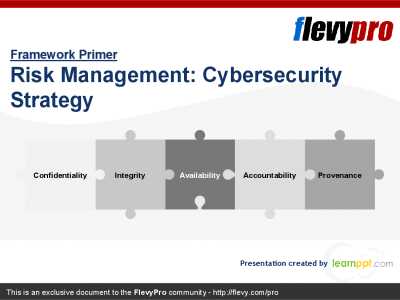
Cybersecurity is a growing threat and should be at the forefront in any IT Risk Management Strategy. As role of
The PPT outlines the critical elements of a robust cybersecurity strategy, emphasizing the importance of integrity, availability, accountability, and provenance of information. It [read more]
Do You Want to Implement Business Best Practices?
You can download in-depth presentations on Cyber Security and 100s of management topics from the FlevyPro Library. FlevyPro is trusted and utilized by 1000s of management consultants and corporate executives.
For even more best practices available on Flevy, have a look at our top 100 lists:
These best practices are of the same as those leveraged by top-tier management consulting firms, like McKinsey, BCG, Bain, and Accenture. Improve the growth and efficiency of your organization by utilizing these best practice frameworks, templates, and tools. Most were developed by seasoned executives and consultants with over 20+ years of experience.
Readers of This Article Are Interested in These Resources
This Word Document provides a template for an IT Security & Governance Policy and is easily customisable. Areas cover are: Security, Data Back-Up, Virus Protection, Internet & Email usage, Remote & 3rd Party Network Access, User-Account Management, Procurement, Asset Management and IS Service [read more]
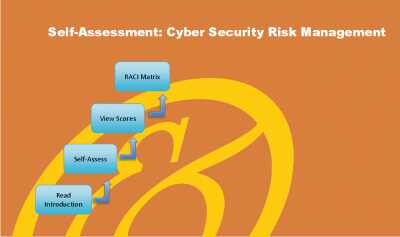
National Institute of Standards and Technology (NIST) U.S. Department of Commerce Cyber Security Framework Aligned.
Governments, sectors, and organizations around the world are increasingly recognizing the NIST Cyber Security Framework (CSF) as a recommended cyber security baseline to [read more]
Cybersecurity awareness is the understanding and knowledge of potential threats to information systems and the measures individuals and organizations can take to protect themselves from these threats. It involves being conscious of the risks associated with using technology and being proactive in [read more]
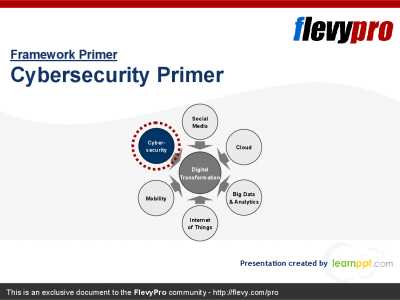
Cybersecurity is the protection of information systems from theft or damage to the hardware, the software, and to the information on them. The more we depend on the Internet and related technologies, the more we depend on their security.
As such, there can be no Digital Transformation without [read more]
 For many years, technology support was treated as an operational utility. A computer stopped working, a printer disconnected, an email account locked out, and someone called “the IT person.” The goal was simple: fix the issue and move on.