Editor's Note: Take a look at our featured best practice, Data Center Financial Model (10+ Year DCF & Valuation) (Excel workbook). The Data Center Financial Model with a 10-Year DCF (Discounted Cash Flow) and Valuation provides an in-depth financial analysis of a data center business. It includes detailed projections for revenue streams, operational expenses, and capital investment. This model helps assess long-term [read more]
* * * *
The technology infrastructure has become an issue of high importance for the management of trading firms. A trading approach may prove itself efficient in tests but the actual success of this strategy in real conditions depends on systems that will allow processing data and making orders efficiently, not to mention the availability in busy periods of time. Downtimes in the network or overloaded processors as well as poor server settings may disrupt trading processes crucially. So choosing an appropriate hosting option is part of a firm’s operation risk strategy, which includes capital management and cybersecurity.
Evaluating infrastructure needs, the majority of trading firms begin with the vps vs dedicated server for trading choice dilemma. Both the mentioned solutions will suit for running automated trading approaches, market data processing and terminal remote trading. The actual choice will depend upon the demands of your workload, the allocation of the resources and the level of the necessary management of the environment. Trading several approaches within a single firm one can consider choosing dedicated servers for trading firms as the infrastructure option.
Effect of the Hosting Infrastructure on Trading Processes
Trading infrastructure receives information permanently. Information comes in with broker connections, algorithms analyze situations and make conclusions about actions, which are executed via execution systems depending on some pre-set rules. Monitoring systems also track the activity of the system, control its functioning and trigger alerts for any necessary action.
Let us imagine a prop trading company with fifteen automated trading strategies using different currency pairs. All these strategies receive updates from the market, calculate indicators and interact with trading platforms. During economic events, the amount of received updates can be very high. If the hosting infrastructure is not able to process all the updates, the delays can appear.
Such delays negatively affect the functioning of the strategy. If the strategy is created to act in some situation in the market, it needs stable access to computing power.
The other thing to consider when planning infrastructure is the usual operations involved in a business. Updates, download of historical data, and reports consume certain resources. Without scheduling, performing such tasks may put additional load on live trading infrastructure. Thus, planning of infrastructure must be based on actual workloads rather than personal desire for a certain server.
VPS Infrastructure for Trading
A virtual private server creates an isolated environment within the host server. Virtualization software distributes computing resources between different virtual servers allowing multiple isolated environments to run on the same hardware.
For traders, a VPS allows running of automated trading strategies without handling the physical server. One is able to install trading platforms, set up remote access and manage applications which run during all trading days.
Three terminal users operating on the Metatrader platform can use a VPS service with sufficient RAM and processor power in addition to enough storage.
The advantages offered by VPS infrastructure services can come in handy in situations where a company needs to create a new virtual environment quickly. There is a possibility to run a different instance to test the strategy, update the software, etc.
Virtualization brings up an array of technical questions. The usage of resources is determined by the configuration used by the hosting company and may depend on how hardware will be distributed among the virtual machines.
There are several key technical issues that management teams need to consider when choosing VPS hosting:
Allocated CPU: dedicated, reserved, or shared
RAM: the size of memory to run the trading terminal, historical data, and background applications
Networking: reliable connection to brokers and market data feed.
Storage: access to files, logs, databases, etc
Backup and recovery process
All the above become especially critical when trading systems have to function after the office hours.
Dedicated Servers for Matching Trading Needs
Dedicated servers allow use of the whole physical server machine that is assigned to one customer. The company can control its own operating system, resource allocation, and application rules. It is appropriate for trading firms with heavy loads or special needs.
Consider, for example, a quantitative trading firm with multiple execution engines and a market data collection system. This company will save incoming price data, calculate something, send signals to different internal applications.
This requires a lot of management. Management can allocate certain CPU cores to execution service, memory for data processing, and separate storage operations from time-critical applications.
Technical teams can have full control over such choices by using dedicated hardware. In another scenario, there is a corporation that operates its own risk management system. The software constantly checks positions, exposure, and the activity of traders against the limit set up by the firm. Having these functions run on controlled hardware enables administrators to develop system settings and maintenance strategies according to existing needs.
Dedicated hardware still needs to be managed. There are possibilities for failure of hardware, operating system security updates, and backup testing. The dedicated server does not necessarily ensure the continuity of work. It all depends on the quality of the data center, network, monitoring and recovery plans.
Developing an Infrastructure Strategy Based on Business Requirements
To decide whether to use VPS hosting or dedicated hardware, the participation of trading, technology, and risk management is essential. Each team recognizes a different aspect of the business environment.
The traders will recognize execution time-dependent strategies, developers will be aware of processing needs and software dependencies, and risk managers will determine acceptable downtimes and recovery needs.
These areas need to be covered in a structured assessment.
Workload demands. Specify the number of trading platforms, algorithms, databases, and associated applications.
Performance monitoring. Monitor the CPU load, memory usage, network latencies, and disk activity during live trading.
Operational risk management. Identify those systems whose malfunction may disrupt trading or monitoring of positions.
Access controls. Set up user privileges, authorization, update, and backup procedures.
Planning for growth. Determine the required infrastructure for more accounts, strategies, and data streams.
Cost analysis. Take into account the cost of hosting, administration, monitoring, recovery, and technical support.
A helpful exercise is to analyze how the infrastructure performs throughout an intensive trading period. An example would be taking measurements for server usage throughout the period of a central bank release while also testing the application speeds of ingesting data.
This results in data that could be used for capacity planning. It will also help determine whether issues stem from local computing hardware, the broker connections, the application itself, or the network routes.
Specifically, latency is something to look out for. Depending on the distance between the server and the infrastructure of the broker, communication times can vary. It is advised to test the actual latency to the trading points of relevance and not just consider the infrastructure specifications of the hosting service. In the case of firms with various autonomous trading strategies, infrastructure partitioning may be required to avoid interference of one with the other.
Including Infrastructure in Operational Risk Management
The hosting process should not be limited to deploying a server. Trading systems grow, software needs vary, and loads increase when new strategies are introduced.
Conducting regular infrastructure audits will assist in pinpointing issues that might disrupt operations. A server constantly nearing its memory capacity may require some extra resources. Network connection issues can be discovered through recurring disconnections. Applications restarting unexpectedly require an official technical audit.
Ownership is necessary. There should be someone who would be in charge of alert management, approval of changes, backup handling, and incident coordination. Otherwise, infrastructure issues can be left unresolved even if monitoring tools spot them.
Realistic recovery plans are another requirement of trading firms. The backups must be secure, and testing of restoration must be done. Configurations, trading applications, and operational logs must be recoverable in case of failure.
The choice between vps vs dedicated server for trading is just part of the infrastructure strategy. VPS can run trading loads with clearly defined parameters, while dedicated servers offer precise control over system resources. Infrastructure planning begins with knowledge of business practices. Those firms that know their workloads, risks, and technical procedures have a good base for successful operation.
Curated by McKinsey-trained Executives
100+ Data Center Management SOPs Excel Template – Complete End-to-End Data Center Operations Framework
Unlock the ultimate Data Center Management SOP Package – a professionally structured Excel-based SOP template bundle featuring over 150+ [read more]
Do You Want to Implement Business Best Practices?
You can download in-depth presentations on Data Center and 100s of management topics from the FlevyPro Library. FlevyPro is trusted and utilized by 1000s of management consultants and corporate executives.
For even more best practices available on Flevy, have a look at our top 100 lists:
These best practices are of the same as those leveraged by top-tier management consulting firms, like McKinsey, BCG, Bain, and Accenture. Improve the growth and efficiency of your organization by utilizing these best practice frameworks, templates, and tools. Most were developed by seasoned executives and consultants with over 20+ years of experience.
Readers of This Article Are Interested in These Resources
A data center is a facility designed to house and operate servers hosting data and web applications. Precisely controlled HVAC systems regulate the air temperature, among other factors, to maintain optimal conditions, minimize latency and prevent downtime.
This Financial Model presents a [read more]
This detailed and user-friendly Excel spreadsheet template provides a comprehensive and dynamic real estate financial model for the development of data centers whose primary revenue streams revolve around the lease of racks. The model is designed to evaluate the investment viability of data center [read more]
This detailed and user-friendly Excel spreadsheet template provides a comprehensive and dynamic real estate financial model for the development of data centers whose primary revenue streams revolve around the lease of racks. The model is designed to evaluate the investment viability of data center [read more]
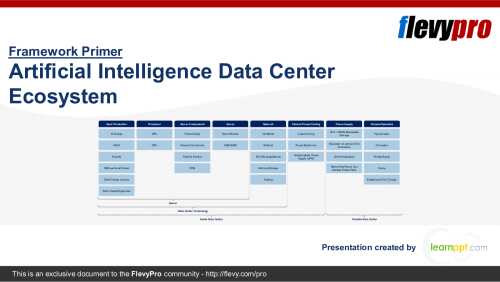
This surge in AI usage stems from its ability to process vast amounts of data and derive insights that can significantly improve efficiency, innovation, and competitiveness.
Critical data center infrastructure plays a foundational role in the deployment and scaling of AI applications. The [read more]
 The technology infrastructure has become an issue of high importance for the management of trading firms. A trading approach may prove itself efficient in tests but the actual success of this strategy in real conditions depends on systems that will allow processing data and making orders efficiently, not to mention the availability in busy periods of time. Downtimes in the network or overloaded processors as well as poor server settings may disrupt trading processes crucially. So choosing an appropriate hosting option is part of a firm’s operation risk strategy, which includes capital management and cybersecurity.
 Dedicated servers allow use of the whole physical server machine that is assigned to one customer. The company can control its own operating system, resource allocation, and application rules. It is appropriate for trading firms with heavy loads or special needs.