


This surge in AI usage stems from its ability to process vast amounts of data and derive insights that can significantly improve efficiency, innovation, and competitiveness.
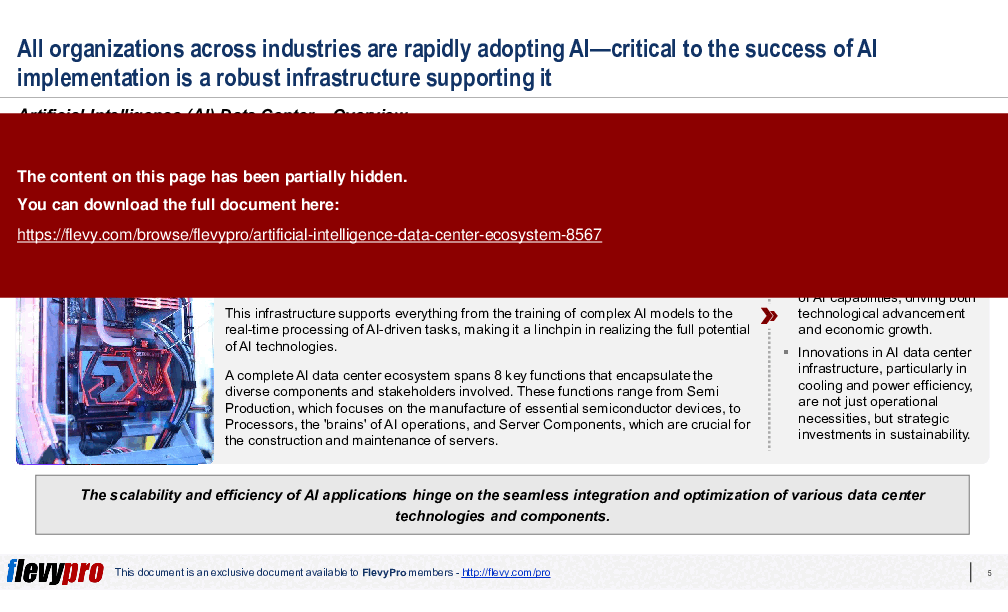
Critical data center infrastructure plays a foundational role in the deployment and scaling of AI applications. The immense computational power and data storage requirements of AI demand robust, efficient, and scalable infrastructure to ensure that AI systems can operate effectively and without interruption. This infrastructure supports everything from the training of complex AI models to the real-time processing of AI-driven tasks, making it a linchpin in realizing the full potential of AI technologies.
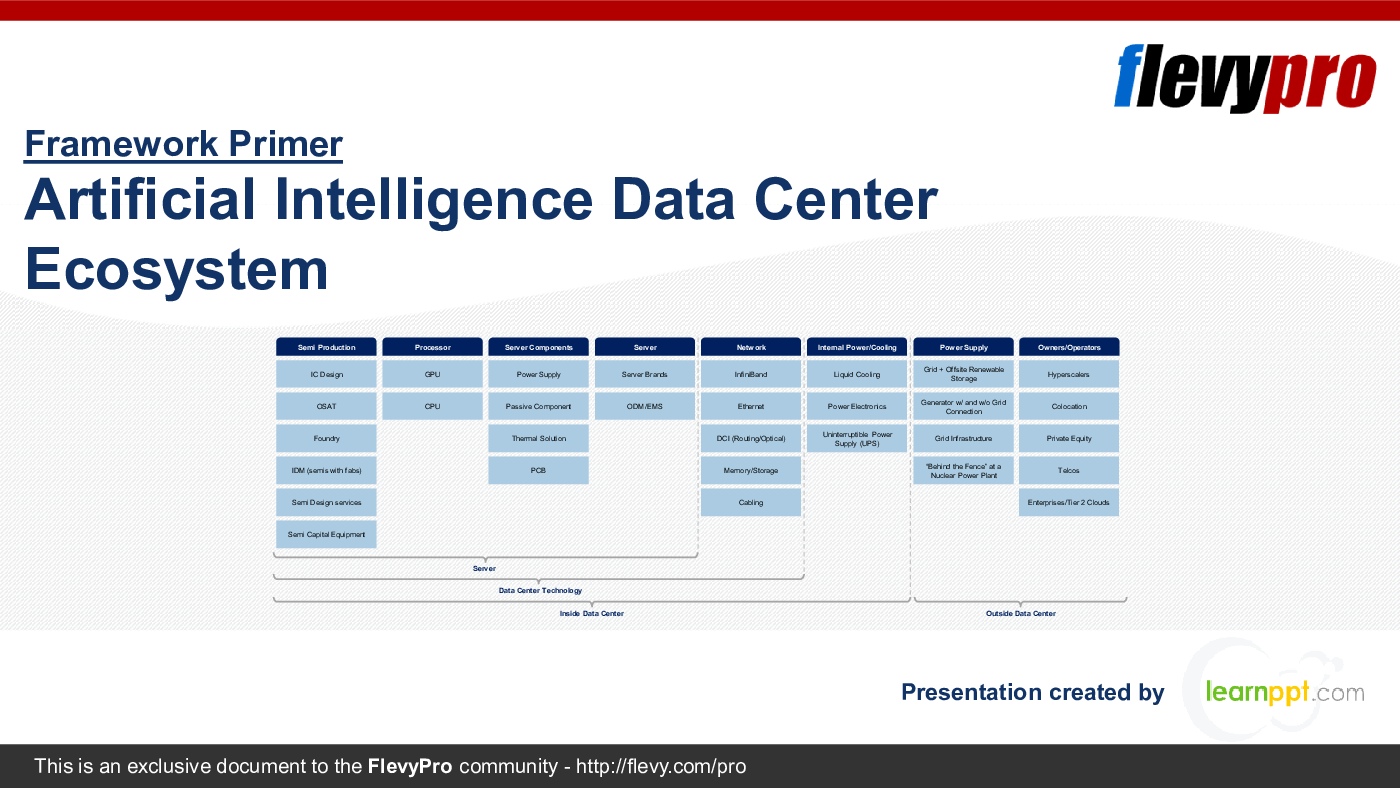
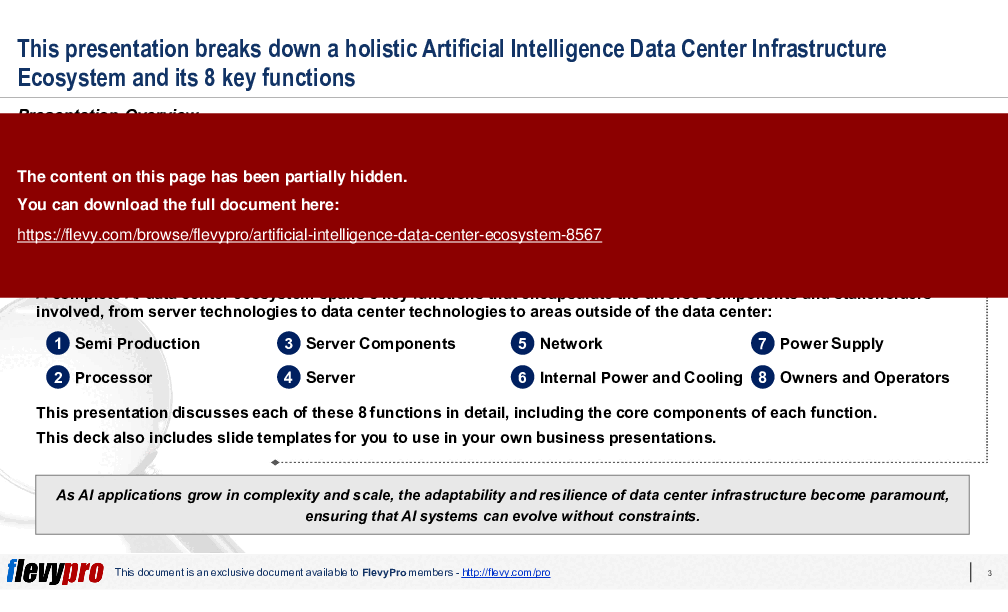
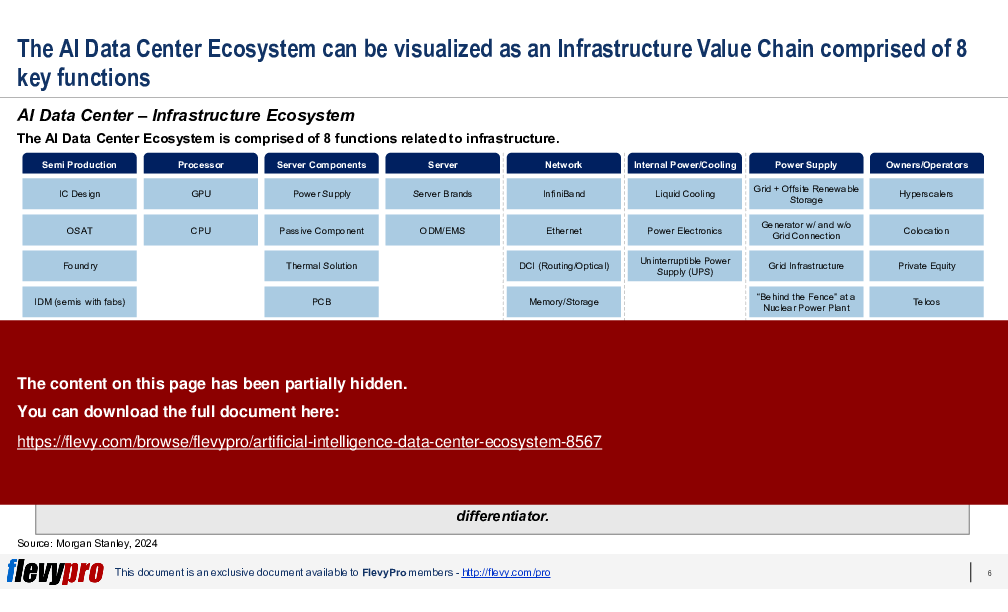
A complete AI data center ecosystem spans 8 key functions that encapsulate the diverse components and stakeholders involved, from server technologies to data center technologies to areas outside of the data center:
1. Semiconductor Production
2. Processor
3. Server Components
4. Server
5. Network
6. Internal Power and Cooling
7. Power Supply
8. Owners and Operators
This PowerPoint presentation discusses each of these 8 functions in detail, including the core components of each function. For instance, we further break down the Semi Production function into:
• IC (Integrated Circuit) Design
• OSAT
• Foundry
• IDM (Integrated Device Manufacturers)
• Semi Design Services
• Semi Capital Equipment
As AI applications grow in complexity and scale, the adaptability and resilience of data center infrastructure become paramount, ensuring that AI systems can evolve without constraints.
This deck also includes slide templates for you to use in your own business presentations.
This presentation provides a comprehensive look at the intricate web of components that form the AI Data Center Ecosystem. Each function is meticulously detailed, illustrating how they interconnect to support the demanding requirements of AI technologies. The visual representations and structured breakdowns not only enhance understanding, but also serve as a strategic tool for executives looking to optimize their data center operations. By leveraging this framework, decision-makers can better navigate the complexities of AI infrastructure, ensuring their organizations are well-equipped to harness the full potential of artificial intelligence.
Got a question about this document? Email us at flevypro@flevy.com.
Executive Summary
The Artificial Intelligence Data Center Ecosystem presentation provides a comprehensive overview of the critical infrastructure necessary for deploying and scaling AI applications. This deck outlines the eight key functions that comprise the AI data center ecosystem, emphasizing the importance of robust, efficient, and scalable infrastructure. It serves as a foundational guide for organizations aiming to leverage AI technologies effectively, ensuring that systems operate without interruption. The presentation includes detailed insights into semiconductor production, processing capabilities, server components, and the roles of various stakeholders in the ecosystem.
Who This Is For and When to Use
• IT Infrastructure Managers responsible for data center operations and optimization
• Data Center Architects focused on designing AI-ready environments
• AI Technology Leaders implementing AI solutions across business functions
• Business Executives seeking to understand the infrastructure implications of AI adoption
Best-fit moments to use this deck:
• During strategic planning sessions for AI implementation
• In discussions about upgrading or designing new data center facilities
• When assessing the impact of AI on existing IT infrastructure
Learning Objectives
• Define the key functions of an AI data center ecosystem and their interdependencies
• Analyze the role of semiconductor production in supporting AI applications
• Evaluate the importance of server components and processing capabilities for AI workloads
• Assess the impact of network infrastructure on AI data processing and transfer
• Identify best practices for internal power and cooling systems in AI data centers
• Understand the significance of reliable power supply systems for uninterrupted AI operations
Table of Contents
• Overview (page 3)
• Artificial Intelligence Data Center (page 5)
• AI Data Center Ecosystem Functions (page 6)
• Slide Design Structure & Templates (page 19)
Primary Topics Covered
• Overview of AI Data Center - An introduction to the transformative role of AI in data processing and the critical infrastructure required for its deployment.
• AI Data Center Ecosystem Functions - A breakdown of the eight essential functions that support the AI data center infrastructure, including semi production and processing capabilities.
• Importance of Network Infrastructure - Insights into how network technologies facilitate efficient data transfer and communication within AI applications.
• Internal Power and Cooling Systems - Discussion on the critical role of effective cooling and power management in maintaining operational integrity.
• Power Supply Systems - Overview of the various power supply options necessary for sustaining AI data center operations.
• Roles of Owners and Operators - Examination of the stakeholders responsible for managing data centers and ensuring they meet performance and reliability standards.
Deliverables, Templates, and Tools
• Semi Production framework for semiconductor manufacturing processes
• Processor capabilities overview for AI applications
• Server components checklist for optimal AI performance
• Network infrastructure guide for data transfer efficiency
• Internal power and cooling system design templates
• Power supply system assessment tools
Slide Highlights
• Comprehensive overview of the AI data center ecosystem and its eight key functions
• Visual representation of the infrastructure value chain supporting AI applications
• Detailed breakdown of semiconductor production processes and their relevance to AI
• Insights into the critical role of network technologies in data transfer
• Overview of power supply systems and their importance for operational continuity
Potential Workshop Agenda
AI Data Center Ecosystem Overview (60 minutes)
• Introduction to AI data center functions and their significance
• Discussion on the integration of AI technologies into existing infrastructures
Infrastructure Design Best Practices (90 minutes)
• Review of key components necessary for AI data centers
• Collaborative session on optimizing power and cooling systems
Stakeholder Roles and Responsibilities (60 minutes)
• Identification of key stakeholders in the AI data center ecosystem
• Discussion on governance and operational management
Customization Guidance
• Tailor the framework to reflect specific organizational needs and existing infrastructure
• Update terminology to align with internal language and standards
• Adjust metrics and KPIs to fit organizational goals and performance tracking
Secondary Topics Covered
• Innovations in cooling and power efficiency for AI data centers
• The role of hyperscalers in the AI data center landscape
• Trends in colocation services and their impact on AI deployment
• The influence of private equity on data center investments
Topic FAQ
Document FAQ
These are questions addressed within this presentation.
What are the eight key functions of the AI data center ecosystem?
The eight functions include Semi Production, Processor, Server Components, Server, Network, Internal Power and Cooling, Power Supply, and Owners and Operators.
Why is semiconductor production critical for AI applications?
Semiconductor production provides the essential components necessary for processing complex AI algorithms efficiently, influencing performance and power consumption.
How does network infrastructure impact AI data processing?
Network infrastructure ensures efficient data transfer between servers and external networks, which is vital for the operation of AI applications that require vast amounts of data.
What role do internal power and cooling systems play in AI data centers?
Internal power and cooling systems maintain operational integrity and efficiency, preventing overheating and ensuring stable power supply for AI workloads.
What types of power supply systems are essential for AI data centers?
Essential power supply systems include grid connections, backup generators, and renewable energy sources to ensure continuous operation during outages.
How do owners and operators influence AI data center performance?
Owners and operators make strategic decisions regarding infrastructure investments and operational management, directly affecting efficiency and scalability.
What are the best practices for designing AI-ready data centers?
Best practices include optimizing power and cooling systems, ensuring robust network infrastructure, and selecting appropriate server components tailored for AI workloads.
How can organizations assess their current data center capabilities for AI?
Organizations can conduct a comprehensive review of existing infrastructure, focusing on performance metrics, scalability, and alignment with AI application requirements.
Glossary
• AI Data Center - A facility designed to support AI applications through advanced infrastructure.
• Semi Production - The process of manufacturing semiconductor devices essential for AI operations.
• Processor - The component that executes instructions and algorithms for AI tasks.
• Server Components - Hardware elements that support server functionality in data centers.
• Network Infrastructure - The systems and technologies that facilitate data transfer within and between data centers.
• Internal Power and Cooling - Systems that manage temperature and energy supply within data centers.
• Power Supply - The source of electrical power necessary for data center operations.
• Owners and Operators - Entities responsible for managing data centers and ensuring operational efficiency.
• Hyperscalers - Large-scale cloud service providers that operate extensive data center networks.
• Colocation - Services that provide shared data center space and infrastructure for multiple clients.
• Private Equity - Investment firms that finance data center operations and infrastructure development.
• Telcos - Telecommunications companies that operate data centers to support network services.
• Enterprises/Tier 2 Clouds - Organizations that manage their own data centers or provide cloud services tailored to specific business needs.
Source: Best Practices in Artificial Intelligence, Enterprise Architecture PowerPoint Slides: Artificial Intelligence Data Center Ecosystem PowerPoint (PPTX) Presentation Slide Deck, LearnPPT Consulting
Did you need more documents?
Consider a FlevyPro subscription from $39/month. View plans here.
For $10.00 more, you can download this document plus 2 more FlevyPro documents. That's just $13 each.
|
Download our FREE Digital Transformation Templates
Download our free compilation of 50+ Digital Transformation slides and templates. DX concepts covered include Digital Leadership, Digital Maturity, Digital Value Chain, Customer Experience, Customer Journey, RPA, etc. |










