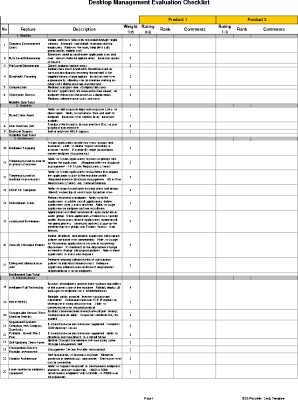
Editor's Note: Take a look at our featured best practice, IT Service Desk Software RFP Template (Excel workbook). This Excel document is a template intended to provide a comprehensive group of options to consider when preparing an RFP for IT Service Desk software. It is highly customisable. Questions can be added, removed, or modified, as can entire workbooks.
The template can of course be used as an RFP [read more]
* * * *
Choosing a web framework shapes how a project gets built, maintained, and scaled for years to come. Two names that frequently come up in this comparison are CodeIgniter and ASP.NET Core. One is a lightweight PHP framework known for its simplicity, while the other is a full-featured, cross-platform framework backed by Microsoft. Both have loyal developer bases and proven track records, but they serve different types of projects and teams.
This article breaks down how CodeIgniter and ASP.NET Core compare across performance, security, cost, and developer experience. By the end, you should have a clearer picture of which framework aligns with your technical requirements, budget, and long-term goals.
What Is CodeIgniter?
CodeIgniter is an open-source PHP framework built around the Model-View-Controller (MVC) architecture. It was designed with a clear goal: keep things simple and fast. Unlike some PHP frameworks that come loaded with configuration steps and dependencies, CodeIgniter ships with a small footprint and minimal setup requirements. Its popularity within the PHP ecosystem reflects this approach – CodeIgniter was the most popular technology skill in the PHP tech stack, chosen by over 29 percent of respondents, according to Statista.
Developers often choose CodeIgniter for projects that need to launch quickly without sacrificing structure. Its documentation is straightforward, and the learning curve is gentle even for those new to PHP frameworks. CodeIgniter works well for content management systems, small to mid-sized business applications, and APIs that don’t require heavy enterprise-grade tooling. Its simplicity doesn’t mean it lacks capability. It supports database abstraction, form validation, session management, and security helpers right out of the box.
What Is ASP.NET Core?
ASP.NET Core is Microsoft’s open-source, cross-platform framework for building web applications, APIs, and cloud-based services. It replaced the older ASP.NET framework with a rebuilt architecture that runs on Windows, Linux, and macOS. Written primarily in C#, it integrates tightly with the .NET ecosystem, including tools like Entity Framework Core and Visual Studio.
ASP.NET Core is built for applications that need to scale, whether that means handling heavy traffic, integrating with complex enterprise systems, or supporting microservices architecture. It includes built-in dependency injection, a modular middleware pipeline, and strong support for cloud deployment through platforms like Azure. Companies that already operate within the Microsoft technology stack often gravitate toward ASP.NET Core because of how well it fits alongside existing infrastructure.
CodeIgniter vs ASP.NET Core: Key Differences at a Glance
Before comparing specific categories in detail, it helps to see how these two frameworks stack up side by side. The table below highlights the core distinctions that typically influence a framework decision.
Performance and Scalability Comparison
Performance requirements vary widely depending on the size and complexity of a project, and each framework handles growth differently.
CodeIgniter Performance for Lightweight Applications
CodeIgniter is known for speed in smaller-scale environments. Its minimal core keeps overhead low, which means applications load quickly and respond well under moderate traffic. For projects like brochure websites, internal tools, or small e-commerce platforms, CodeIgniter performs efficiently without requiring extensive server resources. However, as an application grows in complexity, with more integrations, background processes, and concurrent users, CodeIgniter can require additional custom optimization to maintain the same responsiveness.
ASP.NET Core Performance for Enterprise-Level Applications
ASP.NET Core was engineered with scalability in mind. It supports asynchronous programming natively, which allows applications to handle many simultaneous requests without a proportional increase in resource use. This makes it a strong candidate for several types of demanding projects, including:
Enterprise systems with multiple integrations and heavy internal traffic
High-traffic APIs that need to stay responsive under load
Applications that require horizontal scaling across cloud infrastructure
Its performance benchmarks consistently rank among the fastest in web frameworks, particularly for applications with heavy data processing or real-time features.
Learning Curve and Developer Experience
PHP is often one of the first languages developers learn, and CodeIgniter reflects that accessibility. Its structure is easy to understand, configuration is minimal, and documentation avoids unnecessary complexity. Teams can build functional applications within days rather than weeks.
ASP.NET Core, by contrast, requires familiarity with C# and the broader .NET ecosystem. This includes understanding concepts like dependency injection, middleware configuration, and often Entity Framework for data access. The learning curve is steeper, but the payoff is a more structured, maintainable codebase for larger teams. Businesses building complex systems typically choose to hire ASP.NET developer talent with prior enterprise experience, since the framework’s depth benefits from specialized knowledge rather than general web development skills.
Security Features Compared
Both frameworks include built-in protections against common vulnerabilities, but they approach security differently. CodeIgniter provides CSRF protection, XSS filtering, and input validation as core features, though developers need to actively configure and enable some of these settings depending on the project.
ASP.NET Core takes a more opinionated approach, with security features like anti-forgery tokens, data protection APIs, and built-in identity management enabled or easily configurable by default. It also receives frequent security updates directly from Microsoft, which can matter for organizations with strict compliance requirements. Neither framework is inherently more secure; outcomes depend heavily on how well the development team implements available protections.
Community Support and Documentation
CodeIgniter has a smaller but active community, with forums, third-party tutorials, and consistent documentation maintained by the British Columbia Institute of Technology, which now oversees the project. Finding solutions to common issues is generally straightforward given how long the framework has existed.
ASP.NET Core benefits from Microsoft’s backing, which translates into extensive official documentation, regular updates, and a large base of contributors on GitHub. Stack Overflow activity, official forums, and enterprise-level support channels make it easier to resolve complex technical issues, particularly for teams working on large-scale deployments.
Cost and Hosting Considerations
Hosting costs often factor heavily into framework decisions, especially for smaller businesses or startups. CodeIgniter runs on standard PHP hosting, which is widely available and typically inexpensive. Shared hosting plans, VPS options, and open-source server stacks like LAMP keep costs low.
ASP.NET Core can run on Linux now, reducing dependency on Windows Server licensing, but many enterprise deployments still use Azure or Windows-based hosting, which tends to cost more than typical PHP hosting environments.
Teams working with tighter budgets often hire CodeIgniter developer resources for projects where hosting simplicity and lower operating costs matter as much as development speed.
Which One Should You Choose? (Use Case Recommendations)
The right choice depends less on which framework is objectively better and more on what the project actually needs.
Final Verdict: CodeIgniter or ASP.NET Core?|
There isn’t a universal answer to which framework is better, only which one fits a specific set of project requirements. CodeIgniter remains a solid choice for smaller applications, tight budgets, and teams that want to move quickly without a steep learning curve. ASP.NET Core suits organizations building large, complex systems that need strong scalability, tight security controls, and long-term support from a major technology provider.
Before deciding, consider your project’s expected growth, your team’s existing skill set, and your hosting budget. Both frameworks have proven themselves across thousands of production applications. The right one for your next project comes down to matching its strengths with what your business actually needs to build and maintain over time.
MODEL OVERVIEW
A Software Development business specialises in designing, building, and maintaining custom software solutions tailored to meet the unique needs of clients across various industries. It offers services such as web and mobile app development, enterprise software systems, software [read more]
Do You Want to Implement Business Best Practices?
You can download in-depth presentations on Software and 100s of management topics from the FlevyPro Library. FlevyPro is trusted and utilized by 1000s of management consultants and corporate executives.
For even more best practices available on Flevy, have a look at our top 100 lists:
These best practices are of the same as those leveraged by top-tier management consulting firms, like McKinsey, BCG, Bain, and Accenture. Improve the growth and efficiency of your organization by utilizing these best practice frameworks, templates, and tools. Most were developed by seasoned executives and consultants with over 20+ years of experience.
Readers of This Article Are Interested in These Resources
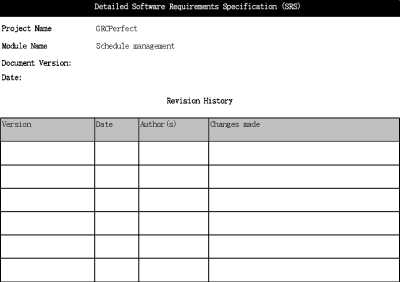
An exhaustive excel with 13 individual excel templates for your BA team.
Contains all the essential aspects needed for a BA to work on the project.
Software Requirements Template to capture following data:
Implicit requirements
Flowchart / Activity diagram
Clarifications
Use [read more]
This PPT deck and Word document consider Agile methodologies, such as Scrum, Kanban, and Extreme Programming, that have transformed software development by emphasizing iterative progress, collaboration, and adaptability. However, scaling Agile for large projects and enterprise-level development [read more]
This is a template to conduct a paper-based feasibility study to identify an Electronic Software Distribution tool or service.
This template provides a structured framework for evaluating various Electronic Software Distribution options. It allows users to compare key features and functionalities [read more]
 Choosing a web framework shapes how a project gets built, maintained, and scaled for years to come. Two names that frequently come up in this comparison are CodeIgniter and ASP.NET Core. One is a lightweight PHP framework known for its simplicity, while the other is a full-featured, cross-platform framework backed by Microsoft. Both have loyal developer bases and proven track records, but they serve different types of projects and teams.