Browse our library of 6 BPO templates, frameworks, and toolkits—available in PowerPoint, Excel, and Word formats.
These documents are of the same caliber as those produced by top-tier management consulting firms, like McKinsey, BCG, Bain, Booz, AT Kearney, Deloitte, and Accenture. Most were developed by seasoned executives and consultants with 20+ years of experience and have been used by Fortune 100 companies.
Scroll down for BPO case studies, FAQs, and additional resources.
BPO, or Business Process Outsourcing, involves delegating specific business functions to third-party service providers. Effective BPO can streamline operations and reduce costs, but misalignment can lead to operational disruptions. Strategic selection of partners is crucial for maintaining quality and performance.
DRILL DOWN BY FILE TYPE
Open all 6 documents in separate browser tabs.
Add all 6 documents to your shopping cart.
BPO Overview Key Trends Reshaping BPO Landscape Transformative Potential of BPO Strategic Risks and Opportunity Management in BPO Effective Management Principles for Successful BPO The Future of BPO and Business Transformation BPO FAQs Recommended Business TemplatesFlevy Management Insights Case Studies
All Recommended Topics
As Peter Drucker, known as the founder of modern management, once stated, "Efficiency is doing things right; effectiveness is doing the right things." And there could be no better illustration of this in today's evolving business world than the burgeoning realm of Business Process Outsourcing (BPO).
Business Process Outsourcing—the practice of subcontracting significant business functions or processes to a specialized third party—has emerged as a strategic management tool. Initially, BPO was a tactical cost-saving measure, where non-core functions such as customer service, data entry, or IT support were outsourced to lower-cost regions or vendors. However, its role has since evolved, and BPO has been adapted and employed to achieve Strategic Planning, Digital Transformation, and Operational Excellence significantly.
For effective implementation, take a look at these BPO templates:
A McKinsey report indicates that the global BPO market, currently valued at nearly $92.5 billion, is projected to reach $405.6 billion by 2027. This staggering growth will largely be driven by the transformation of BPO services that now include AI-driven analytics, automation, and cloud-based solutions.
BPO, in the current context, extends far beyond simple cost-efficiency. It's about enhancing overall corporate performance through strategic partnerships that offer innovations, speed, flexibility, and improved service levels. For instance, in industries where technologies are rapidly evolving, such as in the ICT and biopharma sectors, outsourcing some processes to specialized vendors means gaining competitive advantages. Not only does this approach reduce costs, but it also drives Innovation and accelerates Change Management.
However, it's important to stress that BPO is not without challenges. It involves transferring control of key processes to a third party, thereby potentially exposing your company to a range of operational and strategic risks. A critical concern is the loss of proprietary knowledge. Hence, Risk Management and Performance Management measures are essential.

In today's context, leveraging BPO for strategic advantage essentially stretches to three key management principles:
Lastly, the successful application of BPO requires Leadership vision and a supportive Culture. As quoted by the CEO of General Electric, Jack Welch, "Culture drives great results," and indeed, a collaborative culture that fosters innovation, resilience, and embraces change will be key to exploiting the full potential of BPO.
Looking ahead, BPO will continue its evolution and will be an integral part of Business Transformation strategies. The advent of AI, robotic process automation (RPA), and cloud computing will redefine the BPO landscape, providing exciting opportunities for companies to innovate, optimize, and grow.
To close this discussion, while opportunities abound in BPO, the decision to outsource and how to manage it hinges on strategic considerations. It's not just about saving costs anymore; it's about realising strategic goals, managing operational risks, and leveraging the potential for innovation within your organisation.
Here are our top-ranked questions that relate to BPO.
Life Sciences BPO Case Study: Operational Excellence for Mid-Sized Biotech
Scenario:
The mid-sized life sciences company specializing in biotech research and development faced growing operational challenges due to increasing regulatory demands and inefficiencies in its business process outsourcing (BPO) strategies.
Operational Efficiency for Boutique Hotels: Hospitality Sector Case Study
Scenario:
A boutique hotel chain in the hospitality sector is facing a strategic challenge of maintaining profitability while competing with larger hotel groups and alternative lodging options such as Airbnb.
Omni-Channel Strategy for Boutique Apparel Retailer in Urban Markets
Scenario: A boutique apparel retailer, specializing in high-end urban fashion, faces strategic challenges related to business process outsourcing.
Strategic Growth Plan for Boutique Hotel Chain in Urban Centers
Scenario: A boutique hotel chain, specializing in unique urban lodging experiences, faces a strategic challenge with business process outsourcing to streamline operations and enhance guest satisfaction.
Back Office Process Optimization Case Study: Legal Services Firm
Scenario:
A legal services firm faced growing inefficiencies in its back-office processes due to increased case volume and complexity.
Operational Excellence in D2C Maritime Services
Scenario: A firm specializing in direct-to-consumer (D2C) maritime services is grappling with operational inefficiencies and escalating costs due to outdated Business Process Outsourcing practices.
Explore all Flevy Management Case Studies
Accelerate and transform the growth trajectory of your organization.
Strategy Development · KPI · Innovation Management · M&A (Mergers & Acquisitions) · Strategic Planning · Performance Management · Sales · Marketing
Harness AI, automation, and emerging technologies to build a future-proof organization.
Artificial Intelligence · Cyber Security · Digital Transformation · Customer Experience · SaaS · Information Technology · Agile · ITIL
A core competitive advantage of global consulting firms is access to an internal, proprietary knowledge base of consulting frameworks, templates, and past deliverables. FlevyPro provides boutique firms with that same—if not greater—access. Compete against the global consultancies, armed with the tier-1 frameworks they use.
|
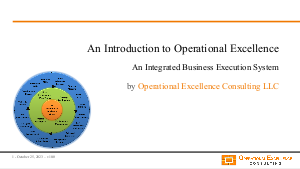
Receive our FREE presentation on Operational Excellence
This 50-slide presentation provides a high-level introduction to the 4 Building Blocks of Operational Excellence. Achieving OpEx requires the implementation of a Business Execution System that integrates these 4 building blocks. |