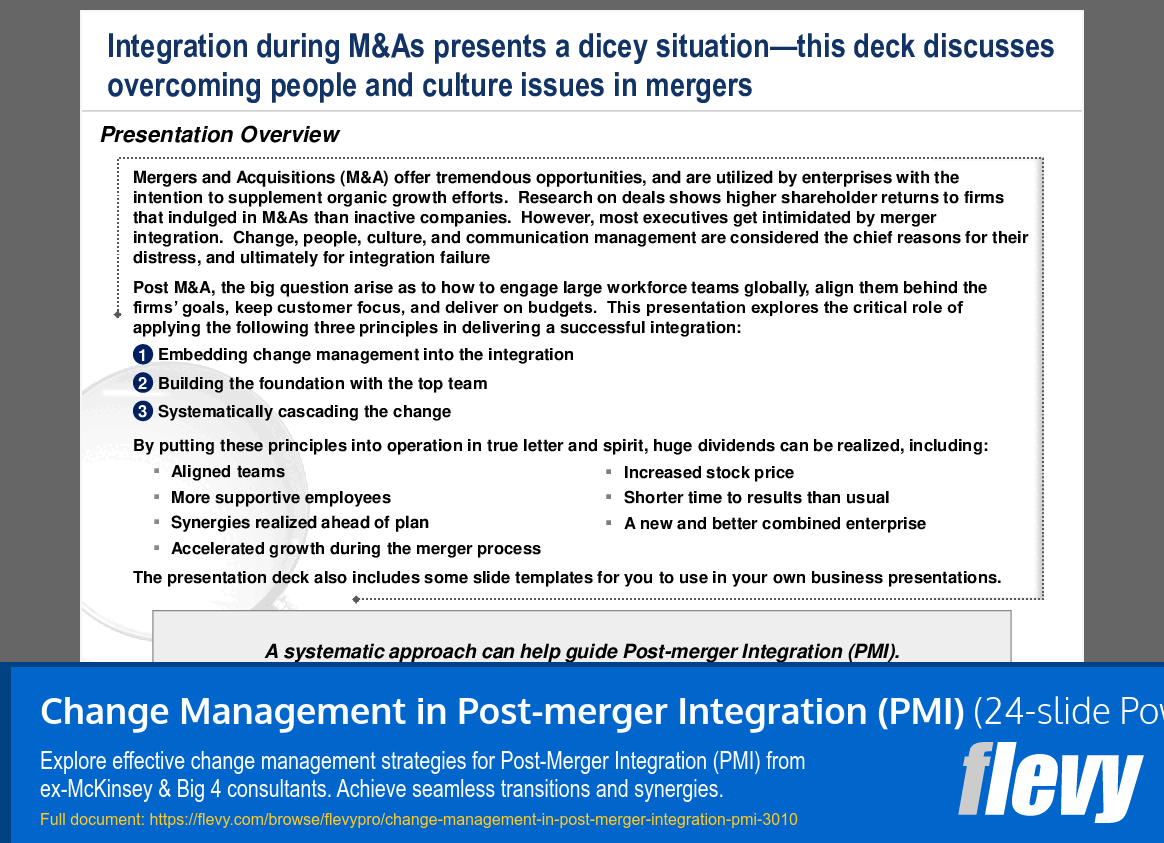
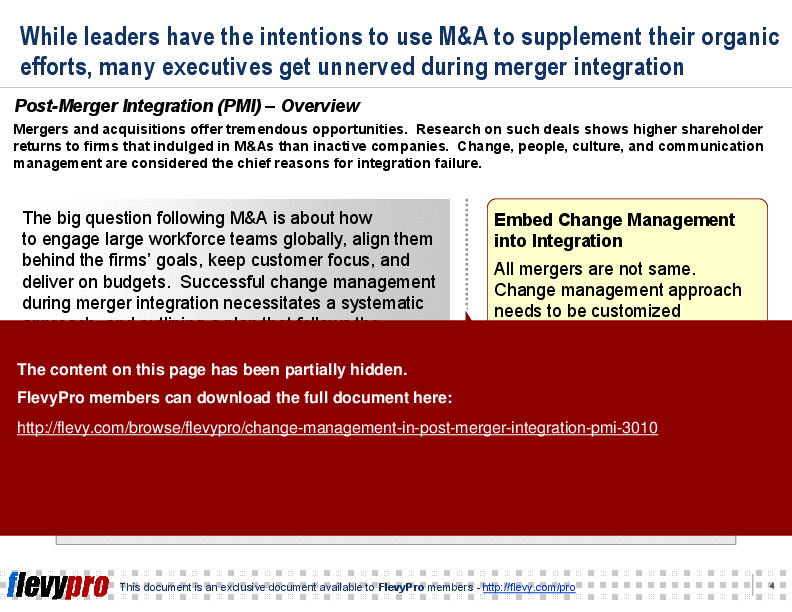

Mergers and Acquisitions (M&A) offer tremendous opportunities, and are utilized by enterprises with the intention to supplement organic growth efforts. Research on deals shows higher shareholder returns to firms that indulged in M&As than inactive companies. However, most executives get intimidated by merger integration. Change, people, culture, and communication management are considered the chief reasons for their distress, and ultimately for integration failure
Post M&A, the big question arise as to how to engage large workforce teams globally, align them behind the firms’ goals, keep customer focus, and deliver on budgets. This presentation explores the critical role of applying the following three principles in delivering a successful integration:
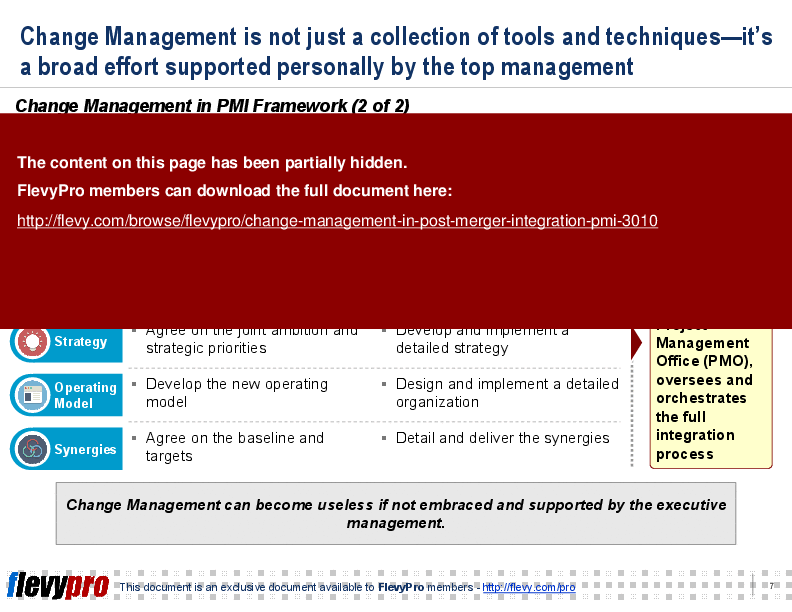
1. Embedding change management into the integration
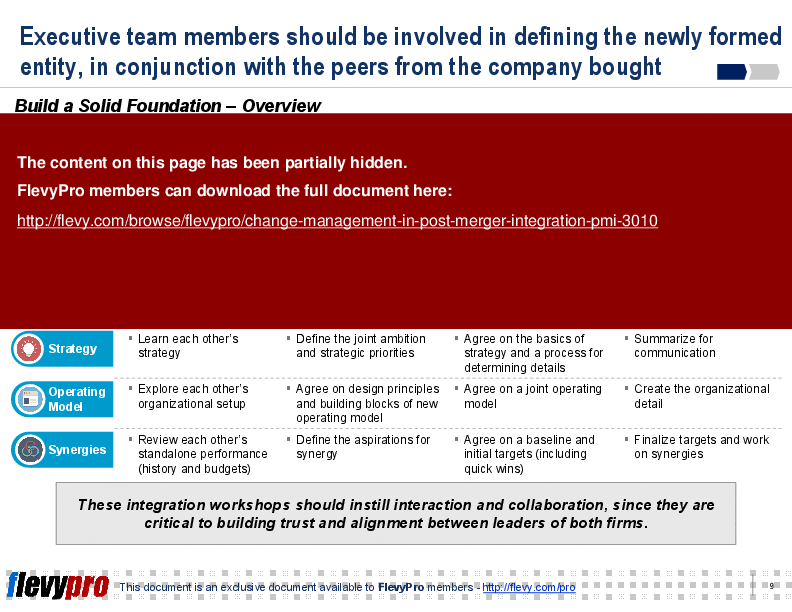
2. Building the foundation with the top team
3. Systematically cascading the change
By putting these principles into operation in true letter and spirit, huge dividends can be realized, including:
• Aligned teams
• More supportive employees
• Synergies realized ahead of plan
• Accelerated growth during the merger process
• Increased stock price
• Shorter time to results than usual
• A new and better combined enterprise
A systematic approach can help guide Post-merger Integration (PMI).
The presentation deck also includes some slide templates for you to use in your own business presentations.
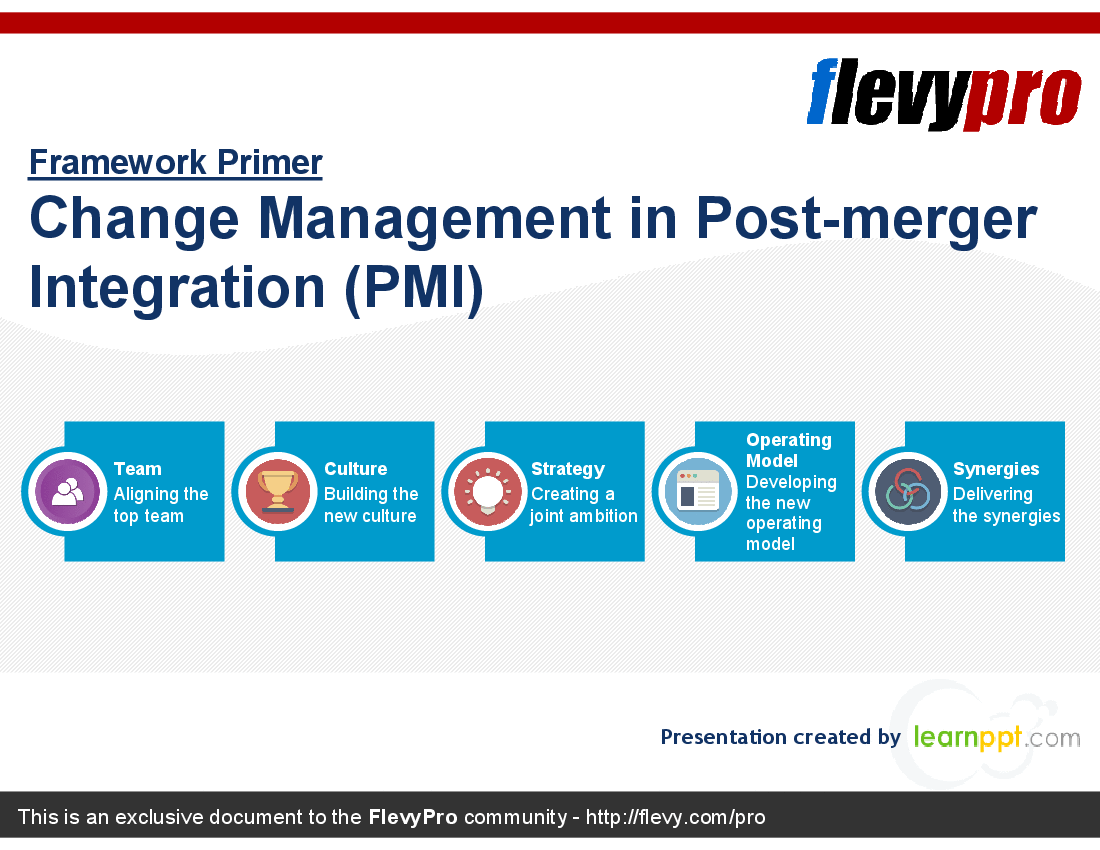
This PPT delves into the nitty-gritty of change management during post-merger integration, emphasizing the importance of building a solid foundation and cascading change throughout the organization. It outlines a structured approach with workshops designed to foster understanding, alignment, mobilization, and launching of the new entity. The presentation highlights the critical role of executive involvement and the necessity of engaging all employees in the change process. It also provides practical templates and actionable insights to ensure a seamless transition and realization of synergies. This resource is indispensable for executives aiming to navigate the complexities of mergers and achieve successful integration.
Got a question about this document? Email us at flevypro@flevy.com.
Executive Summary
This presentation on Change Management in Post-Merger Integration (PMI) provides a structured framework for navigating the complexities of merger integrations. It emphasizes the critical importance of embedding change management into the integration process to ensure alignment among teams, foster a supportive culture, and achieve synergies. The deck outlines systematic approaches for building a solid foundation and cascading change throughout the organization, ultimately leading to accelerated growth and enhanced organizational performance.
Who This Is For and When to Use
• Corporate executives overseeing merger integrations
• Integration leaders managing cross-functional teams
• Change management professionals involved in M&A processes
• HR leaders focused on culture and employee engagement during transitions
Best-fit moments to use this deck:
• During pre-merger planning to establish change management strategies
• At the onset of post-merger integration to align teams and set objectives
• In workshops aimed at cascading change across the organization
Learning Objectives
• Define the role of change management in successful post-merger integration.
• Build a solid foundation for integration by aligning leadership teams.
• Cascade change throughout the organization effectively.
• Identify and engage key stakeholders in the change process.
• Develop and implement a detailed integration strategy.
• Measure and track progress against integration goals.
Table of Contents
• Overview (page 1)
• Change Management in PMI (page 2)
• Phase 1. Build a Solid Foundation (page 3)
• Phase 2. Cascade Change throughout the Organization (page 14)
• Templates (page 19)
Primary Topics Covered
• Embedding Change Management - Integrating change management into the overall merger strategy to address cultural and operational challenges.
• Building a Solid Foundation - Establishing trust and alignment among leadership through structured workshops and collaborative planning.
• Cascading Change - Engaging the entire organization in the change process to ensure widespread acceptance and commitment.
• Integration Management Office (IMO) - The role of the IMO in overseeing the integration process and ensuring effective communication and decision-making.
• Workshops for Engagement - Utilizing workshops to foster understanding, alignment, and mobilization among teams.
• Measuring Success - Tracking integration progress and addressing risks through regular assessments and feedback mechanisms.
Deliverables, Templates, and Tools
• Workshop agendas for building a solid foundation and cascading change.
• Change management templates for tracking integration progress.
• Communication plans to engage employees and stakeholders.
• Risk assessment frameworks to identify and mitigate potential challenges.
• Baseline metrics for measuring synergy realization and performance.
Slide Highlights
• Overview of the Change Management Framework outlining key principles and phases.
• Workshop agendas detailing objectives and activities for each phase of integration.
• Visual representations of the cascading change process and the role of the IMO.
• Case studies illustrating successful change management in past mergers.
Potential Workshop Agenda
Understanding Workshop (90 minutes)
• Introductions and team-building exercises
• Analysis of organizational cultures
• Discussion of strategic priorities and synergies
Aligning Workshop (90 minutes)
• Agreement on joint ambitions and operational models
• Establishing communication plans for the broader organization
• Defining roles and responsibilities
Mobilizing Workshop (90 minutes)
• Developing a detailed integration strategy
• Engaging employees at all levels
• Setting initial targets and quick wins
Launching Workshop (90 minutes)
• Finalizing communication strategies
• Confirming synergy targets and governance structures
• Preparing for the official launch of the integration
Customization Guidance
• Tailor workshop content to reflect the specific cultures and operational contexts of the merging entities.
• Adjust timelines and milestones based on the integration schedule and organizational readiness.
• Incorporate specific metrics and KPIs relevant to the merger objectives.
Secondary Topics Covered
• The importance of cultural alignment in mergers
• Strategies for effective communication during integration
• Techniques for managing resistance to change
• Best practices for stakeholder engagement
Topic FAQ
Document FAQ
These are questions addressed within this presentation.
What is the role of change management in PMI?
Change management is essential for aligning teams, fostering a supportive culture, and ensuring successful integration outcomes.
How can we build a solid foundation for integration?
By conducting structured workshops that promote understanding and collaboration among leadership teams.
What are the key phases in the change management process?
The key phases include embedding change management, building a solid foundation, and cascading change throughout the organization.
How do we measure the success of the integration?
Success can be measured through tracking progress against established metrics and conducting regular risk assessments.
What is the Integration Management Office (IMO)?
The IMO is responsible for overseeing the integration process, ensuring effective communication, and facilitating decision-making.
How can we engage employees during the change process?
Engagement can be achieved through regular communication, workshops, and opportunities for feedback and input.
What techniques can help manage resistance to change?
Fostering open communication, addressing concerns promptly, and involving employees in the decision-making process can mitigate resistance.
What are the benefits of conducting workshops during integration?
Workshops facilitate alignment, build trust, and encourage collaboration among teams, leading to more effective integration outcomes.
Glossary
• Day 1 - The operational start point for a combined company post-merger.
• Integration Management Office (IMO) - The team overseeing the integration process.
• Change Management - The process of managing the transition during mergers.
• Synergies - The expected benefits and efficiencies gained from the merger.
• Stakeholder Engagement - Involving all parties affected by the merger in the change process.
• Risk Assessment - A method for identifying potential challenges during integration.
• Workshop - A structured session aimed at fostering collaboration and alignment.
• Baseline Metrics - Initial measurements used to track integration success.
• Communication Plan - A strategy for disseminating information during the merger.
• Cultural Alignment - The process of ensuring that merging organizations share compatible values and practices.
• Quick Wins - Immediate, achievable goals that can demonstrate progress during integration.
• Feedback Mechanism - A system for collecting input from employees throughout the integration process.
Source: Best Practices in Change Management, PMI, Integration Management Office PowerPoint Slides: Change Management in Post-merger Integration (PMI) PowerPoint (PPT) Presentation Slide Deck, LearnPPT Consulting
Did you need more documents?
Consider a FlevyPro subscription from $39/month. View plans here.
For $10.00 more, you can download this document plus 2 more FlevyPro documents. That's just $13 each.
|
Receive our FREE presentation on Operational Excellence
This 50-slide presentation provides a high-level introduction to the 4 Building Blocks of Operational Excellence. Achieving OpEx requires the implementation of a Business Execution System that integrates these 4 building blocks. |