
Sorry, this document is currently only available to FlevyPro subscribers.
You can join FlevyPro for only $39/month.
Or, you can subscribe to the Organizational Leadership (OL) Stream, our curated collection of Organizational Leadership (OL) frameworks.
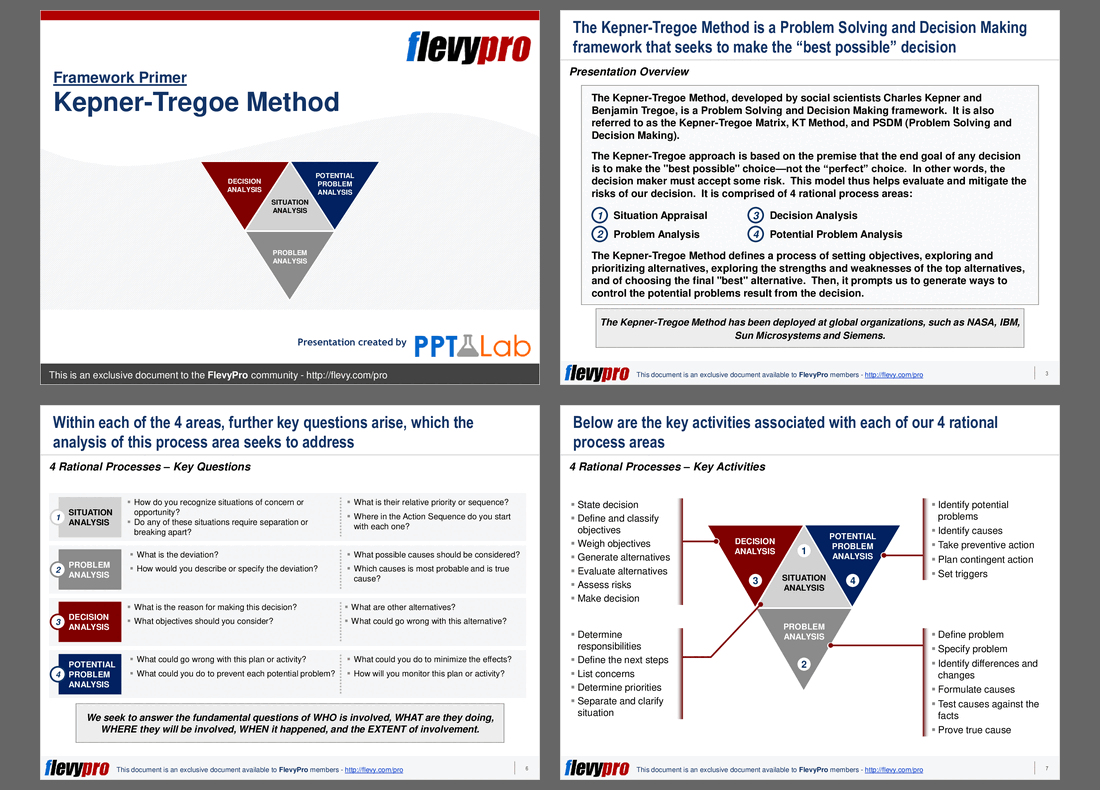
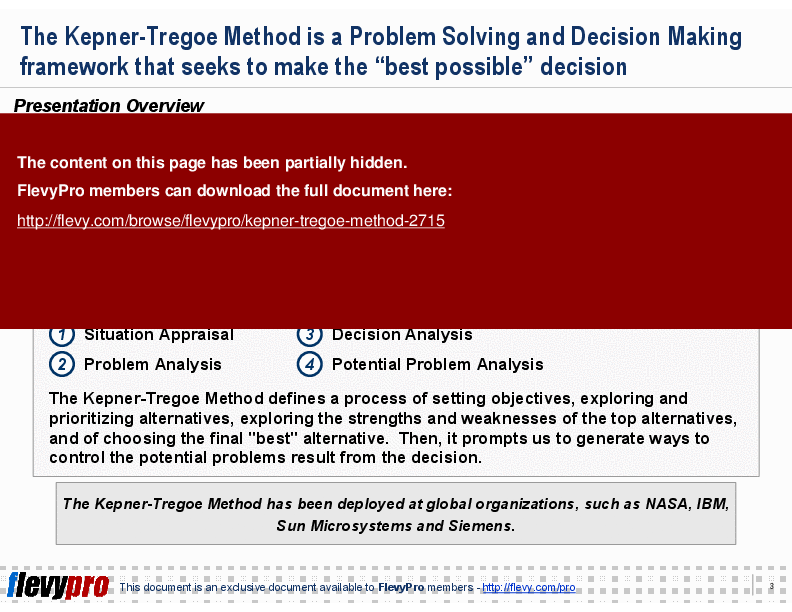
The Kepner-Tregoe Method, developed by social scientists Charles Kepner and Benjamin Tregoe, is a Problem Solving and Decision Making framework. It is also referred to as the Kepner-Tregoe Matrix, KT Method, and PSDM (Problem Solving and Decision Making).
The Kepner-Tregoe approach is based on the premise that the end goal of any decision is to make the "best possible" choice—not the "perfect" choice. In other words, the decision maker must accept some risk. This model thus helps evaluate and mitigate the risks of our decision. It is comprised of 4 rational process areas:
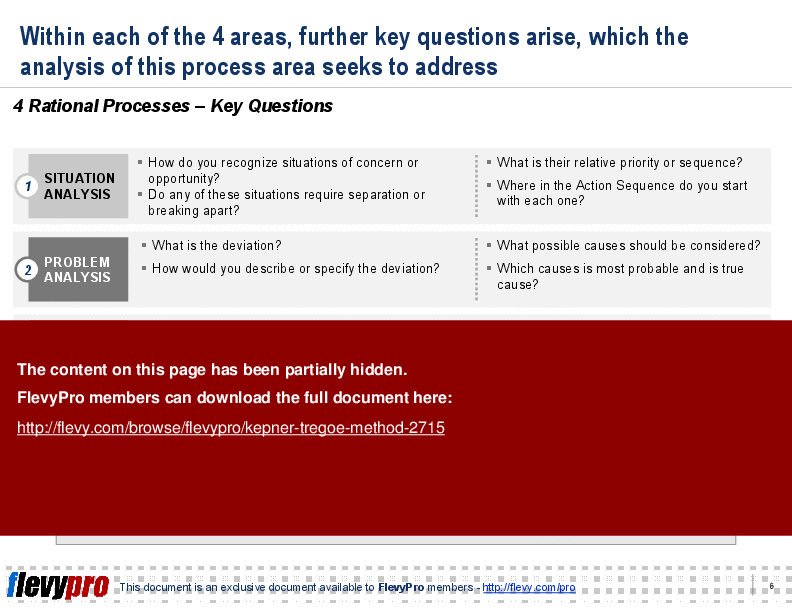
1. Situation Appraisal
2. Problem Analysis
3. Decision Analysis
4. Potential Problem Analysis
The Kepner-Tregoe Method defines a process of setting objectives, exploring and prioritizing alternatives, exploring the strengths and weaknesses of the top alternatives, and of choosing the final "best" alternative. Then, it prompts us to generate ways to control the potential problems result from the decision.
The Kepner-Tregoe Method has been deployed at global organizations, such as NASA, IBM, Sun Microsystems and Siemens.
The Kepner-Tregoe Method PPT provides a comprehensive breakdown of the four rational processes: Situation Appraisal, Problem Analysis, Decision Analysis, and Potential Problem Analysis. Each process is meticulously detailed, highlighting key questions and activities that guide decision-makers through a structured approach to problem-solving. The document includes templates and visual aids, such as the Kepner-Tregoe Matrix, to facilitate understanding and application of the method.
This presentation is designed for executives who need a reliable framework to navigate complex decisions and mitigate risks effectively. It offers actionable insights and practical tools to enhance decision quality and anticipate potential problems. The Kepner-Tregoe Method's proven track record with leading organizations underscores its value and effectiveness in high-stakes environments.
Got a question about this document? Email us at flevypro@flevy.com.
Executive Summary
The Kepner-Tregoe Method presentation offers a structured framework for effective problem solving and decision making. Developed by Charles Kepner and Benjamin Tregoe, this method emphasizes making the "best possible" decision while acknowledging inherent risks. The presentation outlines 4 rational processes: Situation Analysis, Problem Analysis, Decision Analysis, and Potential Problem Analysis. By utilizing this framework, organizations can systematically evaluate options, identify potential issues, and implement preventive measures, thereby enhancing decision quality and operational efficiency.
Who This Is For and When to Use
• Corporate executives seeking to improve decision-making processes.
• Integration leaders managing complex problem-solving scenarios.
• Consultants advising clients on structured decision-making frameworks.
• Project managers aiming to streamline project execution and risk management.
Best-fit moments to use this deck:
• During strategic planning sessions to evaluate options and make informed decisions.
• In problem-solving workshops to analyze root causes and develop solutions.
• When preparing for significant organizational changes or transitions.
Learning Objectives
• Define the Kepner-Tregoe Method and its application in decision-making contexts.
• Build a structured approach to analyze situations and identify key issues.
• Establish criteria for evaluating alternatives and making informed decisions.
• Identify potential problems and develop contingency plans to mitigate risks.
• Implement a systematic process for continuous improvement in decision-making.
Table of Contents
• Overview (page 3)
• 4 Rational Processes (page 5)
• Kepner-Tregoe Matrix (page 12)
• Templates (page 14)
Primary Topics Covered
• Situation Analysis - This process clarifies the current situation, outlines concerns, and defines a clear direction for action.
• Problem Analysis - This focuses on identifying the actual causes of issues and understanding the relationship between causes and effects.
• Decision Analysis - This involves evaluating alternatives based on defined criteria, assessing risks, and making informed decisions.
• Potential Problem Analysis - This anticipates future problems and develops preventive actions to minimize risks associated with decisions.
Deliverables, Templates, and Tools
• Situation Analysis template for defining and clarifying current issues.
• Problem Analysis framework for identifying and evaluating root causes.
• Decision Analysis model for generating and assessing alternatives.
• Potential Problem Analysis checklist for planning contingencies and preventive actions.
• Kepner-Tregoe Matrix diagram for visualizing the decision-making process.
Slide Highlights
• Overview of the Kepner-Tregoe Method and its significance in decision-making.
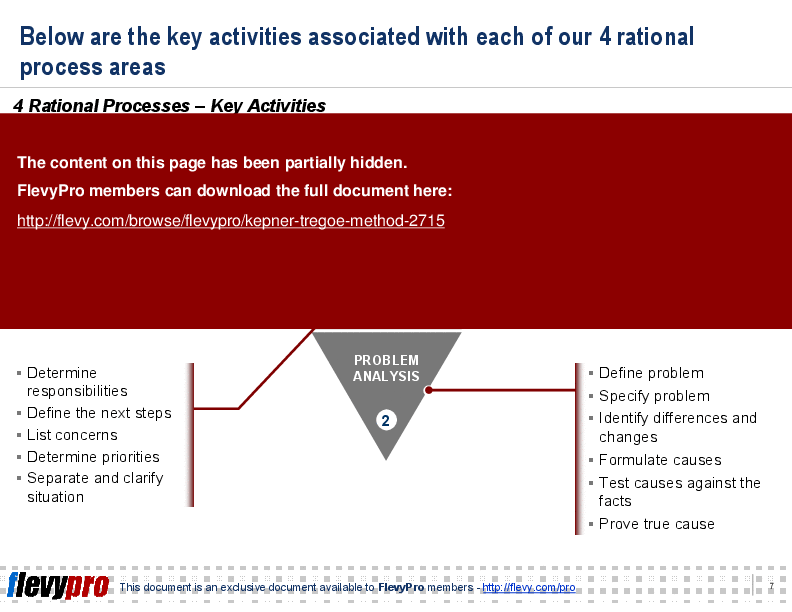
• Detailed breakdown of the 4 rational processes and their key activities.
• Visual representation of the Kepner-Tregoe Matrix illustrating the interconnected processes.
• Templates for practical application of the method in real-world scenarios.
Potential Workshop Agenda
Kepner-Tregoe Method Overview (60 minutes)
• Introduce the Kepner-Tregoe Method and its importance.
• Discuss the 4 rational processes and their applications.
• Engage participants in a discussion on real-world applications.
Practical Application Session (90 minutes)
• Break into groups to work on Situation Analysis and Problem Analysis.
• Present findings and discuss potential solutions.
• Develop a Decision Analysis framework for selected scenarios.
Customization Guidance
• Tailor the templates to reflect specific organizational terminology and metrics.
• Adjust the scenarios used in workshops to align with current organizational challenges.
• Incorporate case studies relevant to the audience's industry for practical application.
Secondary Topics Covered
• Risk assessment strategies in decision-making.
• Techniques for effective stakeholder engagement during problem analysis.
• Methods for tracking and monitoring decisions and their outcomes.
Topic FAQ
Document FAQ
These are questions addressed within this presentation.
What is the Kepner-Tregoe Method?
The Kepner-Tregoe Method is a structured approach to problem solving and decision making that emphasizes evaluating options and mitigating risks.
How can this method improve decision-making?
By providing a systematic framework, the method helps decision-makers clarify objectives, analyze alternatives, and anticipate potential problems.
What are the 4 rational processes?
The 4 processes are Situation Analysis, Problem Analysis, Decision Analysis, and Potential Problem Analysis, each addressing different aspects of decision-making.
Who can benefit from using this method?
Corporate executives, integration leaders, consultants, and project managers can all benefit from applying the Kepner-Tregoe Method to enhance their decision-making capabilities.
How does the Potential Problem Analysis work?
This process identifies potential future problems and develops preventive actions to minimize risks associated with decisions.
Can the templates be customized?
Yes, the templates can be tailored to fit specific organizational needs and terminology.
What types of organizations have used the Kepner-Tregoe Method?
Global organizations such as NASA, IBM, and Siemens have successfully implemented the Kepner-Tregoe Method.
How can I implement this method in my organization?
Start by training key stakeholders in the Kepner-Tregoe Method and utilizing the provided templates to facilitate structured decision-making processes.
Glossary
• Kepner-Tregoe Method - A structured approach for problem solving and decision making.
• Situation Analysis - The process of clarifying the current situation and defining concerns.
• Problem Analysis - Identifying and evaluating the causes of issues.
• Decision Analysis - Evaluating alternatives and making informed decisions.
• Potential Problem Analysis - Anticipating future problems and planning preventive actions.
• Kepner-Tregoe Matrix - A visual representation of the decision-making process.
• Contingency Planning - Developing plans to address potential future problems.
• Risk Assessment - Evaluating the potential risks associated with decisions.
• Stakeholder Engagement - Involving relevant parties in the decision-making process.
• Continuous Improvement - Ongoing efforts to enhance processes and decision-making.
• Templates - Pre-designed frameworks for applying the Kepner-Tregoe Method.
• Framework - A structured approach to problem solving and decision making.
• Decision Criteria - Standards used to evaluate alternatives in decision analysis.
• Root Cause Analysis - A method for identifying the underlying causes of problems.
• Evaluation - The process of assessing alternatives and their potential impacts.
• Objectives - Goals that guide the decision-making process.
• Alternatives - Different options considered during decision analysis.
• Preventive Actions - Steps taken to mitigate potential risks.
• Monitoring - Tracking the outcomes of decisions and their effectiveness.
• Implementation - The process of executing decisions and plans.
• Feedback Loop - A mechanism for assessing the results of decisions and making adjustments.
Source: Best Practices in Problem Solving, Decision Making, Kepner-Tregoe PowerPoint Slides: Kepner-Tregoe Method PowerPoint (PPT) Presentation Slide Deck, PPT Lab
Sorry, this document is currently only available to FlevyPro subscribers.
You can join FlevyPro for only $39/month.
Or, you can subscribe to the Organizational Leadership (OL) Stream, our curated collection of Organizational Leadership (OL) frameworks.
Did you need more documents?
Consider a FlevyPro subscription from $39/month. View plans here.
|
Receive our FREE whitepaper on the Top 101 Consulting Frameworks
Download our 200+ page guide summarizing the Top 101 Management Consulting Frameworks. Each framework provides a structured approach to analyzing and solving a common business problem. |