
Eight Wastes of Lean (by Industry or Function)   79-slide PPT PowerPoint presentation slide deck (PPTX)
$49.00

Eight Wastes of Lean (by Industry or Function) (79-slide PPT PowerPoint presentation slide deck (PPTX)) Preview Image
Log in to unlock full preview.
Eight Wastes of Lean (by Industry or Function) (79-slide PPT PowerPoint presentation slide deck (PPTX)) Preview Image
Arrow   Click main image to view in full screen.

Eight Wastes of Lean (by Industry or Function) (PowerPoint PPTX Slide Deck)

PowerPoint (PPTX) 79 Slides

$49.00

Add to Cart


Immediate download
Fully editable PowerPoint
Free lifetime updates

WASTE IDENTIFICATION PPT DESCRIPTION

Editor Summary A 79-slide PowerPoint presentation, Eight Wastes of Lean (by Industry or Function) by Operational Excellence Consulting, documents the eight Lean wastes with industry-specific examples across Manufacturing, Product Development, Healthcare, Financial Services, IT Services, Government, and Office functions. Read more

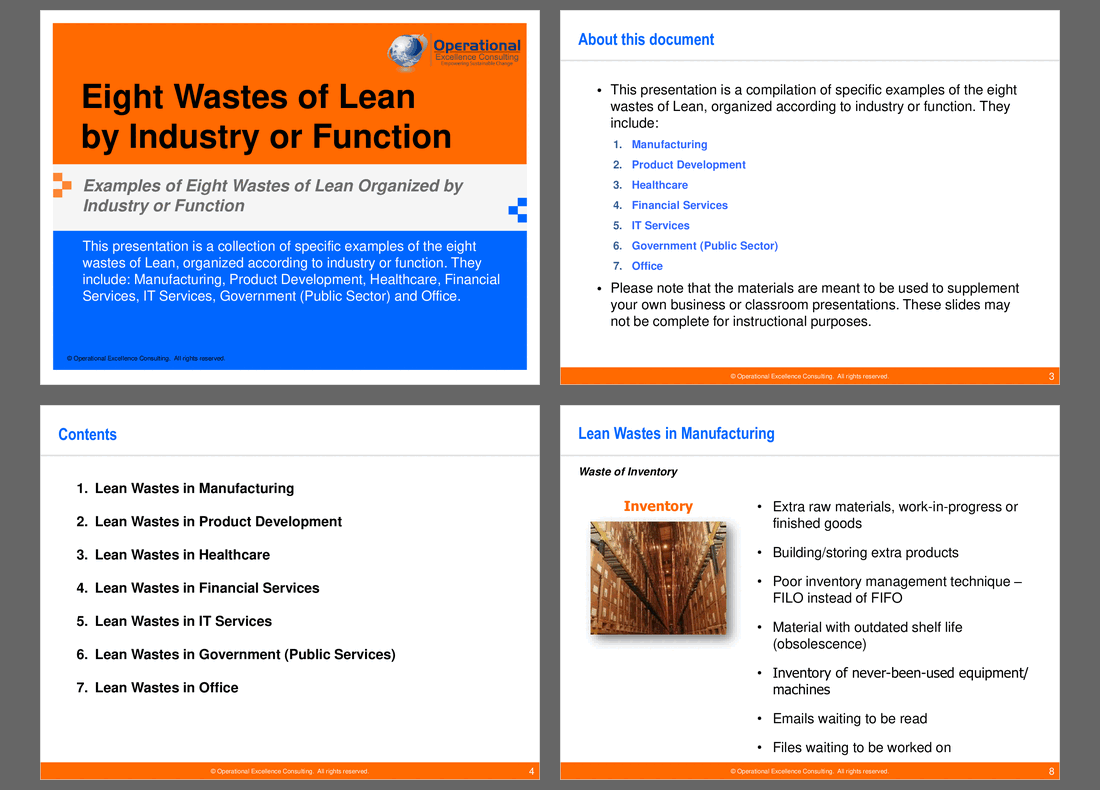
This presentation is a collection of specific examples of the eight wastes of Lean, organized according to industry or function. They include: Manufacturing, Product Development, Healthcare, Financial Services, IT Services, Government (Public Sector) and Office (Administrative Functions).

These slides are useful for trainers and consultants who are looking to supplement their own presentations using examples that are specific to their client's industry. No more wasting time searching for these information on the internet! (Please note that the materials are meant to be used to supplement your own business or classroom presentations. These slides may not be complete for instructional purposes.)

CONTENTS:

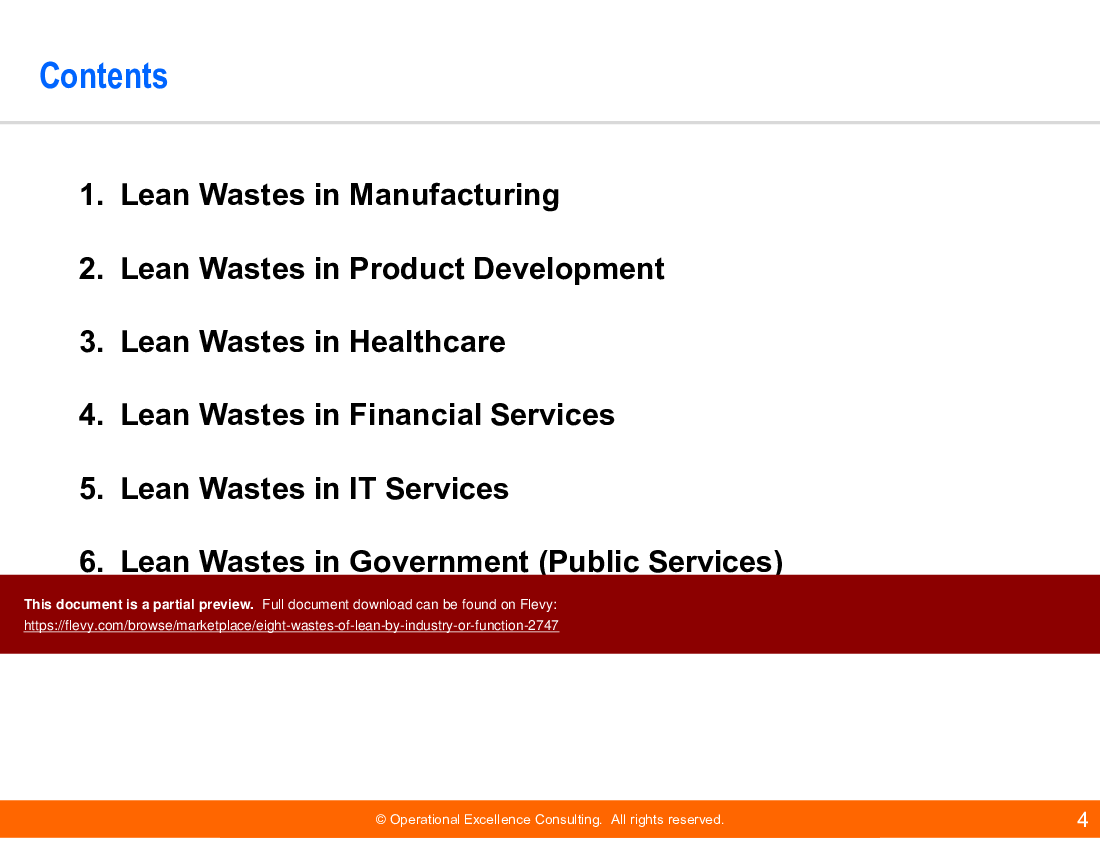
1. Lean Wastes in Manufacturing
2. Lean Wastes in Product Development
3. Lean Wastes in Healthcare
4. Lean Wastes in Financial Services
5. Lean Wastes in IT Services
6. Lean Wastes in Government (Public Services)
7. Lean Wastes in Office

This comprehensive PowerPoint presentation delves into the specific examples of Lean wastes across various industries, providing a clear and practical guide for identifying inefficiencies. It covers over-production, transportation, defects, and other wastes, offering industry-specific insights that are crucial for targeted improvements. The slides on manufacturing highlight common pitfalls like inventory stockpiling and unnecessary transportation, while the healthcare section addresses issues such as expired drugs and unnecessary motion by staff.

The PPT also explores Lean wastes in product development, emphasizing the importance of avoiding over-processing and waiting times that can derail project timelines. The financial services section identifies typical wastes like excessive reporting and unnecessary data movement, which can bog down operations. For IT services, the presentation points out inefficiencies such as redundant software features and excessive bug fixes, providing actionable steps to streamline processes.

Government and office functions are not left out, with detailed examples of how Lean principles can be applied to reduce waste in public services and administrative tasks. From managing excess inventory to optimizing workflow, this presentation is a valuable resource for any organization looking to enhance efficiency and eliminate waste. It is an essential tool for consultants and trainers aiming to deliver impactful Lean training tailored to specific industry needs.

Got a question about the product? Email us at support@flevy.com or ask the author directly by using the "Ask the Author a Question" form. If you cannot view the preview above this document description, go here to view the large preview instead.

MARCUS OVERVIEW

This synopsis was written by Marcus [?] based on the analysis of the full 79-slide presentation.


Executive Summary
The "Eight Wastes of Lean by Industry or Function" presentation provides a comprehensive overview of Lean principles, specifically focusing on the eight types of waste that can occur in various sectors, including Manufacturing, Healthcare, IT Services, and more. This resource is designed to help organizations identify and eliminate inefficiencies, thereby enhancing operational effectiveness. By utilizing industry-specific examples, this presentation equips consultants and executives with actionable insights to drive Lean initiatives and foster a culture of continuous improvement.

Who This Is For and When to Use
•  Lean consultants and trainers seeking practical examples for workshops
•  Operations managers looking to implement Lean methodologies
•  Healthcare administrators aiming to improve patient care processes
•  IT project managers focused on optimizing software development
•  Financial services leaders interested in enhancing transaction efficiency
•  Public sector officials aiming to streamline government operations

Best-fit moments to use this deck:
•  During Lean training sessions to illustrate waste concepts
•  In strategy meetings to identify areas for improvement
•  When conducting process audits to pinpoint inefficiencies
•  As a reference for developing Lean implementation plans

Learning Objectives
•  Define the eight types of Lean waste and their impact on operational efficiency
•  Identify specific examples of Lean waste across various industries
•  Analyze processes to uncover hidden inefficiencies
•  Develop strategies to eliminate waste and enhance value delivery
•  Foster a culture of continuous improvement within teams
•  Create tailored action plans for Lean implementation in specific sectors

Table of Contents
•  Lean Wastes in Manufacturing (page 6)
•  Lean Wastes in Product Development (page 16)
•  Lean Wastes in Healthcare (page 26)
•  Lean Wastes in Financial Services (page 36)
•  Lean Wastes in IT Services (page 46)
•  Lean Wastes in Government (Public Services) (page 56)
•  Lean Wastes in Office (page 66)

Primary Topics Covered
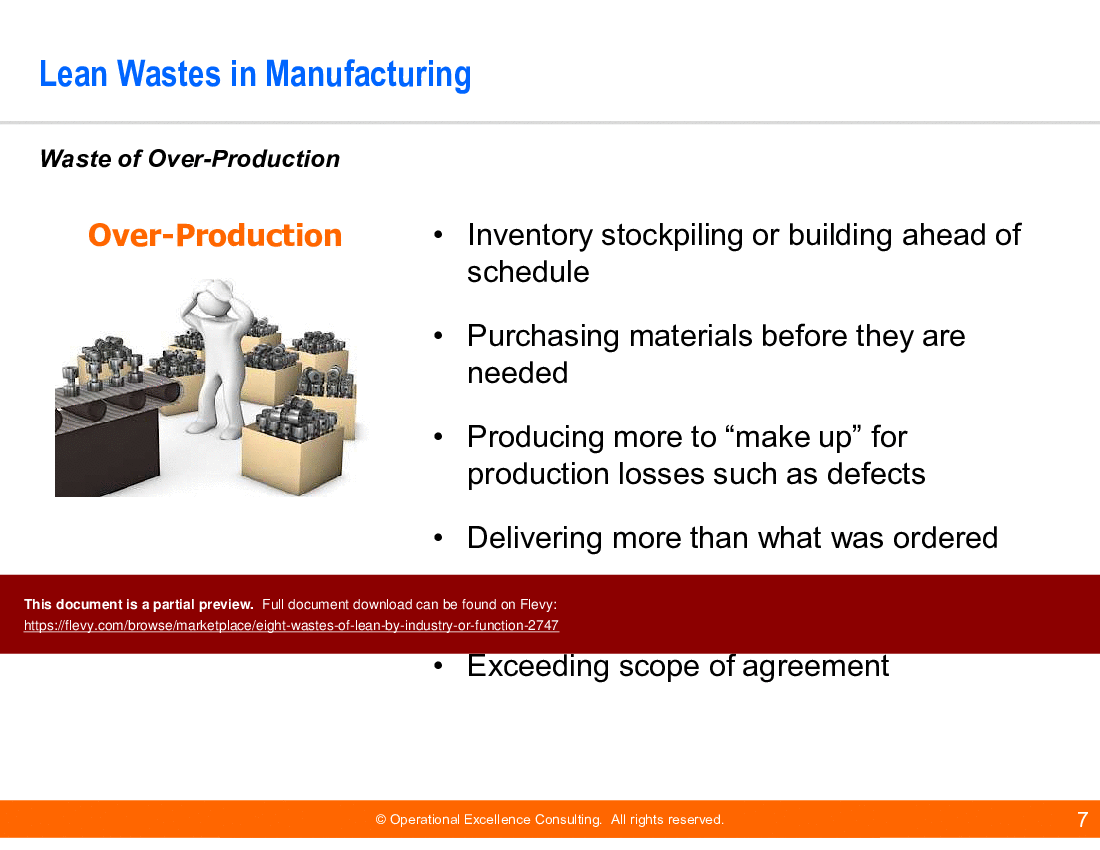
•  Over-Production - Producing more than necessary, leading to excess inventory and wasted resources.
•  Inventory - Holding unneeded stock, causing increased costs and inefficiencies.
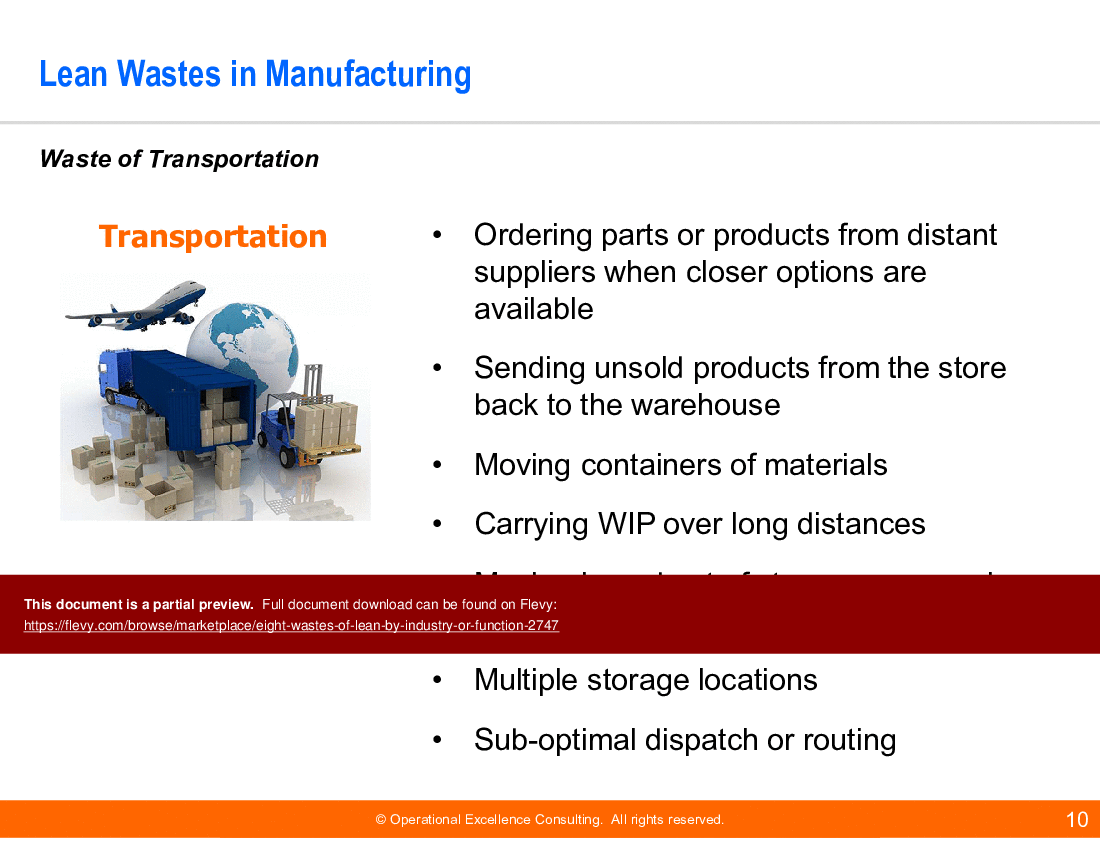
•  Transportation - Unnecessary movement of materials or information, resulting in delays and added costs.
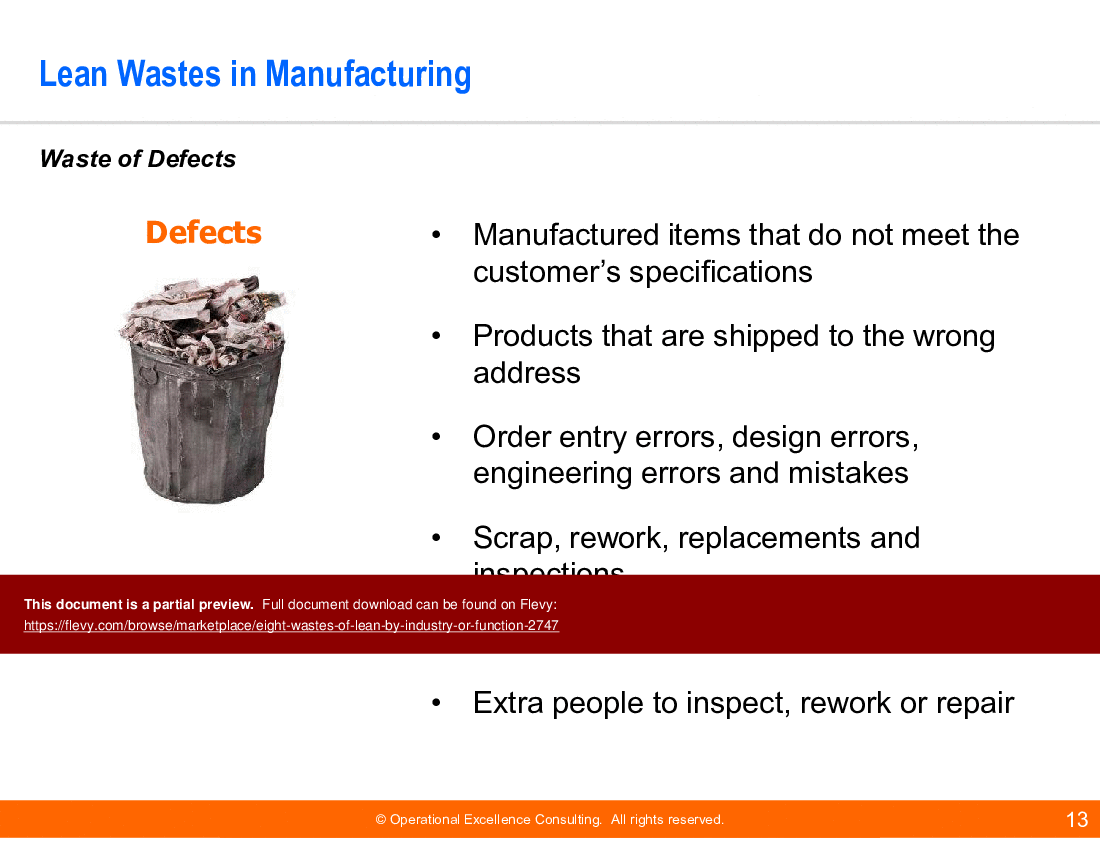
•  Defects - Errors that require rework or correction, impacting quality and customer satisfaction.
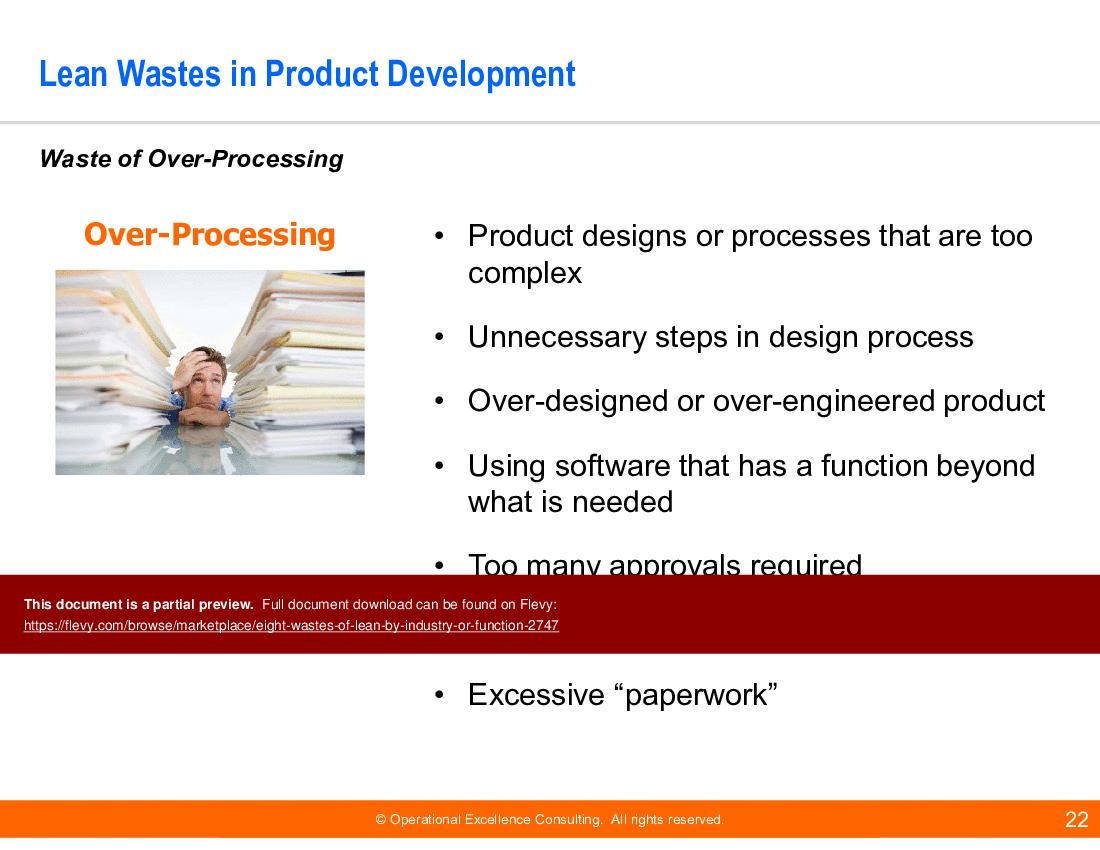
•  Over-Processing - Performing unnecessary steps that do not add value to the customer.
•  Motion - Unproductive movement by employees or equipment that does not contribute to value creation.
•  Intellect - Underutilizing employee skills and knowledge, leading to missed opportunities for improvement.
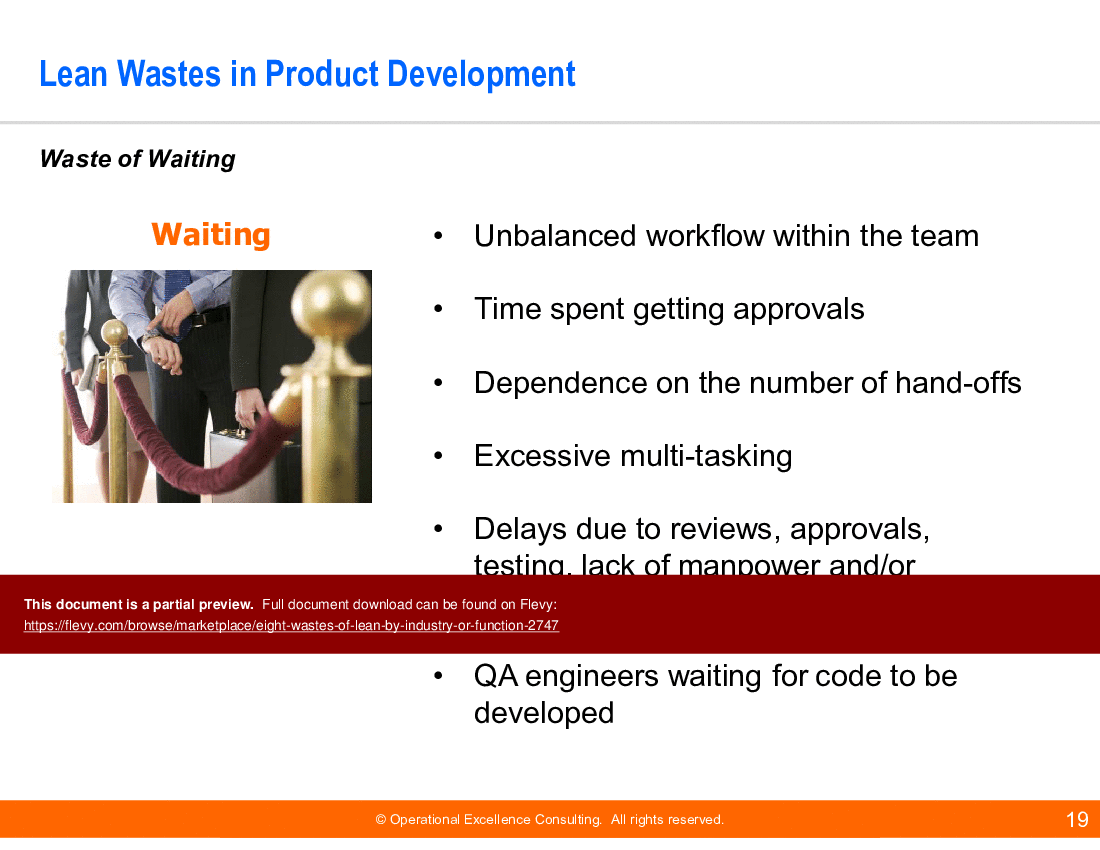
•  Waiting - Delays in processes that result in lost time and reduced productivity.

Deliverables, Templates, and Tools
•  Lean waste identification checklist for various industries
•  Process mapping templates to visualize workflows and identify waste
•  Action plan templates for implementing Lean strategies
•  Case studies illustrating successful Lean transformations
•  Training materials for Lean workshops and seminars
•  Metrics dashboard for tracking waste reduction progress

Slide Highlights
•  Visual representation of the eight wastes of Lean, categorized by industry
•  Specific examples of waste in Manufacturing, Healthcare, IT, and more
•  Flowcharts illustrating the impact of waste on operational efficiency
•  Comparative analysis of waste reduction strategies across different sectors
•  Best practices for engaging employees in Lean initiatives

Potential Workshop Agenda
Introduction to Lean Principles (30 minutes)
•  Overview of Lean concepts and the importance of waste elimination
•  Discussion on the eight types of waste

Industry-Specific Waste Analysis (60 minutes)
•  Breakout sessions by industry to identify relevant wastes
•  Group presentations on findings and potential solutions

Action Planning for Waste Reduction (45 minutes)
•  Develop tailored action plans for implementing Lean strategies
•  Assign responsibilities and set timelines for execution

Customization Guidance
•  Tailor examples to reflect specific industry challenges and contexts
•  Adjust terminology to align with organizational language and culture
•  Incorporate company-specific metrics for tracking waste reduction efforts
•  Modify templates to fit unique process workflows and structures

Secondary Topics Covered
•  Lean principles in supply chain management
•  Best practices for Lean implementation in service industries
•  The role of leadership in fostering a Lean culture
•  Techniques for engaging employees in continuous improvement efforts
•  Case studies of successful Lean transformations in various sectors

Topic FAQ

What are the eight types of Lean waste and how do they affect operational performance?

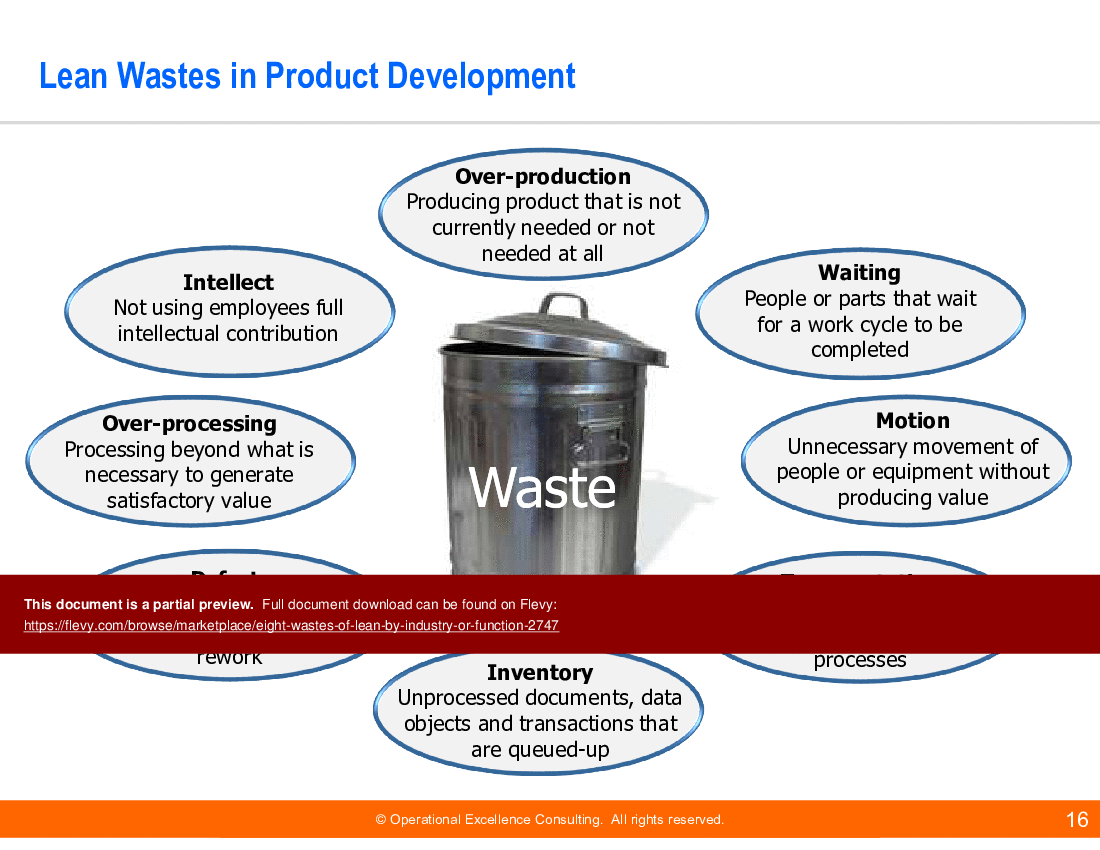
The eight types of Lean waste are Over-Production, Inventory, Transportation, Defects, Over-Processing, Motion, Intellect, and Waiting. Each type consumes resources without adding customer value, causing higher costs, delays, rework, or missed improvement opportunities; together they comprise the eight wastes.

How can process mapping be used to uncover Lean waste in different industries?

Process mapping visualizes workflows and handoffs to reveal delays, unnecessary movement, rework, and excess inventory. The presentation includes process mapping templates to help teams document flows, identify waste points, and prioritize interventions using visual flowcharts and industry-specific examples, supported by process mapping templates.

Which Lean wastes commonly appear in healthcare settings and what examples illustrate them?

In healthcare, common wastes include expired drugs (inventory), unnecessary motion by staff, waiting between steps, and defects that require rework. The deck provides specific healthcare examples and flowcharts illustrating these issues, citing expired drugs and unnecessary staff motion as concrete instances.

What should buyers look for when selecting a Lean-waste training deck for workshops?

Buyers should seek industry-specific examples, editable process mapping and action-plan templates, customization guidance, and metrics for tracking progress. The Eight Wastes of Lean (by Industry or Function) presentation lists a Lean waste checklist, process mapping templates, action plan templates, and a metrics dashboard as included items.

How much time should I budget to run a workshop using an industry-focused Lean wastes deck?

A suggested workshop agenda in the presentation allocates 30 minutes for an introduction to Lean principles, 60 minutes for industry-specific waste analysis breakout sessions, and 45 minutes for action planning—totaling 135 minutes for the sample workshop agenda.

Do Lean-waste toolkits typically include templates and metrics to measure improvement?

Effective toolkits include editable templates and tracking tools; this presentation specifically includes process mapping templates, action plan templates, training materials, and a metrics dashboard to monitor waste reduction and process-cycle improvements, with the metrics dashboard named as a deliverable.

If I’m auditing financial-services processes, which wastes should I examine first?

Financial-services audits should focus on wastes tied to reporting and data movement, such as excessive reporting, unnecessary data transfers, and related waiting or rework. The presentation highlights typical financial-services wastes including excessive reporting and unnecessary data movement.

How can I adapt industry examples in a Lean slide deck to my organization’s language and KPIs?

The author guidance recommends tailoring examples to sector challenges, adjusting terminology to organizational language, and incorporating company-specific metrics. Users are advised to modify templates and examples to align with internal KPIs and processes, including adjusting terminology and company-specific metrics.

Document FAQ
These are questions addressed within this presentation.

What are the eight types of Lean waste?
The eight types of Lean waste include Over-Production, Inventory, Transportation, Defects, Over-Processing, Motion, Intellect, and Waiting.

How can this presentation be used in training?
This presentation serves as a practical tool to illustrate Lean concepts, providing specific examples that can facilitate discussions and workshops.

Can the materials be customized for different industries?
Yes, the presentation is designed to be customized, allowing organizations to adapt examples and terminology to fit their specific needs.

What outcomes can be expected from implementing Lean strategies?
Implementing Lean strategies can lead to reduced waste, improved efficiency, enhanced customer satisfaction, and a culture of continuous improvement.

Is this presentation suitable for all levels of staff?
Yes, the content is designed to be accessible for all staff levels, from executives to frontline employees, promoting a shared understanding of Lean principles.

How do I measure the impact of Lean initiatives?
Organizations can measure the impact of Lean initiatives through metrics such as waste reduction, process cycle times, and customer satisfaction scores.

What industries benefit most from Lean methodologies?
Lean methodologies can benefit a wide range of industries, including Manufacturing, Healthcare, IT Services, Financial Services, and Government.

How can I engage my team in Lean initiatives?
Engaging your team can involve training sessions, workshops, and encouraging participation in identifying and solving waste-related issues.

Glossary
•  Lean - A systematic approach to identifying and eliminating waste through continuous improvement.
•  Waste - Any activity that consumes resources without adding value to the customer.
•  Over-Production - Producing more than what is needed, leading to excess inventory.
•  Inventory - Stock that is not currently needed or adds no value.
•  Transportation - Unnecessary movement of materials or information.
•  Defects - Errors that require rework or correction.
•  Over-Processing - Performing unnecessary steps beyond what is required.
•  Motion - Unproductive movement that does not add value.
•  Intellect - Underutilization of employee skills and knowledge.
•  Waiting - Delays in processes that result in lost time.

Source: Best Practices in Waste Identification PowerPoint Slides: Eight Wastes of Lean (by Industry or Function) PowerPoint (PPTX) Presentation Slide Deck, Operational Excellence Consulting


$49.00

Add to Cart
  

ABOUT THE AUTHOR

Author image
Additional documents from author: 257
Terms of usage (for all documents from this author)

Operational Excellence Consulting, founded in 2009 by Allan Ung, draws from extensive experience at Microsoft, IBM, and Underwriters Laboratories (UL). We specialize in strategy deployment, customer experience design, and operational excellence, applying Design Thinking, Lean, and Systems Thinking to maximize customer value and minimize waste.

Our ... [read more]

Ask the Author a Question

You must be logged in to contact the author.

Click here to log in Click here register

Did you know?
The average daily rate of a McKinsey consultant is $6,625 (not including expenses). The average price of a Flevy document is $65.



Trusted by over 10,000+ Client Organizations
Since 2012, we have provided business templates to over 10,000 businesses and organizations of all sizes, from startups and small businesses to the Fortune 100, in over 130 countries.
AT&T GE Cisco Intel IBM Coke Dell Toyota HP Nike Samsung Microsoft Astrazeneca JP Morgan KPMG Walgreens Walmart 3M Kaiser Oracle SAP Google E&Y Volvo Bosch Merck Fedex Shell Amgen Eli Lilly Roche AIG Abbott Amazon PwC T-Mobile Broadcom Bayer Pearson Titleist ConEd Pfizer NTT Data Schwab


Read Customer Testimonials

 
"One of the great discoveries that I have made for my business is the Flevy library of training materials.

As a Lean Transformation Expert, I am always making presentations to clients on a variety of topics: Training, Transformation, Total Productive Maintenance, Culture, Coaching, Tools, Leadership Behavior, etc. Flevy "

– Ed Kemmerling, Senior Lean Transformation Expert at PMG
 
"As a consultant requiring up to date and professional material that will be of value and use to my clients, I find Flevy a very reliable resource.

The variety and quality of material available through Flevy offers a very useful and commanding source for information. Using Flevy saves me time, enhances my expertise and ends up being a good decision."

– Dennis Gershowitz, Principal at DG Associates
 
"I have used FlevyPro for several business applications. It is a great complement to working with expensive consultants. The quality and effectiveness of the tools are of the highest standards."

– Moritz Bernhoerster, Global Sourcing Director at Fortune 500
 
"Last Sunday morning, I was diligently working on an important presentation for a client and found myself in need of additional content and suitable templates for various types of graphics. Flevy.com proved to be a treasure trove for both content and design at a reasonable price, considering the time I "

– M. E., Chief Commercial Officer, International Logistics Service Provider
 
"[Flevy] produces some great work that has been/continues to be of immense help not only to myself, but as I seek to provide professional services to my clients, it gives me a large "tool box" of resources that are critical to provide them with the quality of service and outcomes they are expecting."

– Royston Knowles, Executive with 50+ Years of Board Level Experience
 
"The wide selection of frameworks is very useful to me as an independent consultant. In fact, it rivals what I had at my disposal at Big 4 Consulting firms in terms of efficacy and organization."

– Julia T., Consulting Firm Owner (Former Manager at Deloitte and Capgemini)
 
"FlevyPro provides business frameworks from many of the global giants in management consulting that allow you to provide best in class solutions for your clients."

– David Harris, Managing Director at Futures Strategy
 
"As a small business owner, the resource material available from FlevyPro has proven to be invaluable. The ability to search for material on demand based our project events and client requirements was great for me and proved very beneficial to my clients. Importantly, being able to easily edit and tailor "

– Michael Duff, Managing Director at Change Strategy (UK)


Customers Also Bought These Documents


Customers Also Like These Documents

Explore Templates on Related Management Topics


Your Recently Viewed Documents
Receive our FREE presentation on Operational Excellence

This 50-slide presentation provides a high-level introduction to the 4 Building Blocks of Operational Excellence. Achieving OpEx requires the implementation of a Business Execution System that integrates these 4 building blocks.