
Editor Summary
Structured Problem Solving & Hypothesis Generation is a 34-slide PowerPoint presentation by Process Consulting that teaches a hypothesis-led approach to diagnose and resolve business problems, comparable in style to McKinsey, Bain, and BCG materials (not affiliated).
Read moreIncludes problem definition templates, hypothesis generation frameworks, Fishbone diagrams, data collection checklists, and logical pyramid templates. Target users are corporate executives, consultants, project managers, and team leaders. Sold as a digital download on Flevy with immediate digital download.
Use this deck when teams must move from ambiguous issues to validated root causes—for example during strategic planning, operational diagnostics, or structured workshops. Typical users include:
Corporate executives testing strategic options and prioritizing initiatives using hypothesis-led analysis and logical pyramids.
Consultants developing client problem-solving workstreams and documenting root-cause hypotheses with Fishbone diagrams.
Project managers diagnosing project issues and running data-driven hypothesis tests.
Team leaders facilitating focused brainstorming and hypothesis validation sessions using the provided templates.
The approach emphasizes MECE structuring, hypothesis testing, and pyramid-style communication consistent with practices used at McKinsey, Bain, and BCG.
This training PPT presentation provides a comprehensive approach to structured problem solving, starting with the identification of whether a problem or opportunity exists.
It guides you through pinpointing the exact location of the issue, understanding its root causes, and exploring potential solutions. The methodology ensures that all aspects of the problem are thoroughly examined, leading to more effective and sustainable outcomes.
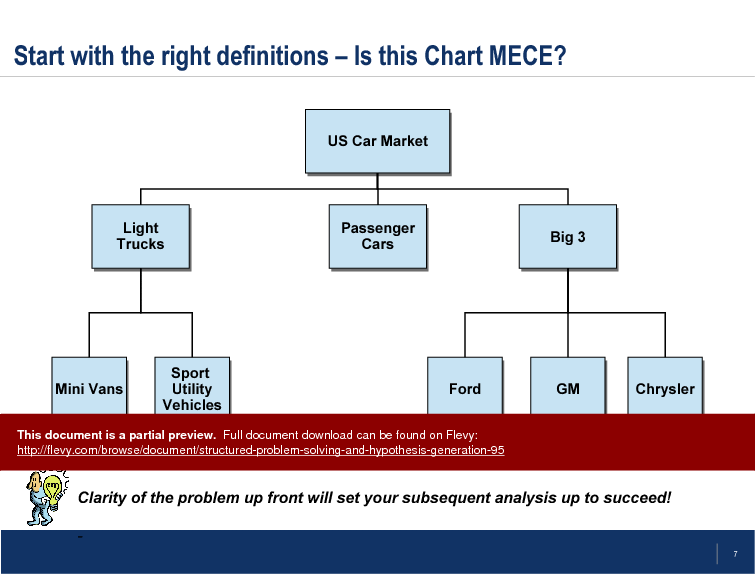
The presentation emphasizes the importance of MECE (Mutually Exclusive, Collectively Exhaustive) frameworks to ensure clarity and precision in problem definition. By categorizing elements such as the US car market into distinct, non-overlapping segments, it ensures that no critical factors are overlooked. This clarity is crucial for setting up a robust analysis and avoiding common pitfalls in problem-solving processes.
Hypothesis generation is a key focus, with detailed steps on forming, testing, and validating hypotheses. The document outlines how to gather and analyze data to either prove or disprove initial assumptions. This iterative process is designed to uncover deep insights and drive informed decision-making. The inclusion of real-world examples, such as Caterpillar’s market challenges, illustrates the practical application of these techniques.
The Fishbone Technique is highlighted as a valuable tool for root cause identification. By visually mapping out causes and sub-causes, teams can systematically explore all potential factors contributing to a problem. This structured approach facilitates thorough brainstorming and prioritization of the most likely root causes, ensuring that solutions are targeted and effective.
Got a question about the product? Email us at support@flevy.com or ask the author directly by using the "Ask the Author a Question" form. If you cannot view the preview above this document description, go here to view the large preview instead.
MARCUS OVERVIEW
This synopsis was written by Marcus [?] based on the analysis of the full 34-slide presentation.
Executive Summary
This presentation on Structured Problem Solving & Hypothesis Generation is crafted in a consulting-grade format, comparable to McKinsey, Bain, or BCG-quality materials (not affiliated). It provides a systematic approach to identifying and addressing business problems through structured thinking and hypothesis generation. Users will learn to define problems clearly, generate hypotheses about root causes, and utilize the Fishbone Technique for structured analysis. This deck equips corporate executives and consultants with the tools needed to enhance decision-making and problem-solving capabilities.
Who This Is For and When to Use
• Corporate executives seeking to improve decision-making processes
• Consultants aiming to enhance client problem-solving frameworks
• Project managers responsible for diagnosing and resolving project issues
• Team leaders facilitating brainstorming and analysis sessions
Best-fit moments to use this deck:
• During strategic planning sessions to define and analyze key business challenges
• In workshops aimed at developing actionable solutions to complex problems
• When conducting root cause analysis for operational inefficiencies
Learning Objectives
• Define the problem clearly to facilitate effective analysis
• Develop hypotheses to explore potential root causes
• Structure analysis using logical frameworks and the Fishbone Technique
• Gather and analyze data to validate or invalidate hypotheses
• Generate actionable recommendations based on insights derived from analysis
• Communicate findings effectively using logical pyramids
Table of Contents
• What Is Structured Problem Solving? (page 2)
• How Do We Define the Problem? (page 3)
• How Do We Generate Hypotheses About the Root Cause of a Problem? (page 4)
• How Do We Structure Our Hypotheses Using the Fishbone Approach? (page 20)
• Key Points About Structured Problem Solving and Hypothesis Generation (page 34)
• Helpful Hints for Effective Problem Solving (page 35)
Primary Topics Covered
• Structured Problem Solving - A formal approach to organizing thought processes to identify and solve business problems effectively.
• Defining the Problem - Techniques to clarify the problem statement, ensuring a focused analysis.
• Hypothesis Generation - The process of forming educated guesses to explore potential root causes of identified issues.
• Fishbone Technique - A structured method for identifying and categorizing root causes, breaking down complex problems into manageable components.
• Data Gathering and Analysis - Strategies for collecting and analyzing data to validate hypotheses and inform decision-making.
• Logical Pyramids - A communication tool that structures information for clarity and impact, aiding in the presentation of findings.
Deliverables, Templates, and Tools
• Problem definition templates to guide clarity in identifying issues
• Hypothesis generation frameworks to facilitate structured thinking
• Fishbone diagrams for visualizing root cause analysis
• Data collection checklists for effective information gathering
• Logical pyramid templates for presenting findings succinctly
Slide Highlights
• Overview of structured problem-solving principles and their importance
• Step-by-step breakdown of the Fishbone Technique for root cause analysis
• Examples illustrating the application of hypothesis generation in real-world scenarios
• Visual aids demonstrating the logical pyramid structure for effective communication
Potential Workshop Agenda
Introduction to Structured Problem Solving (30 minutes)
• Overview of structured problem-solving principles
• Discussion on the importance of defining problems clearly
Hypothesis Generation Session (60 minutes)
• Brainstorming potential hypotheses
• Group activity on formulating and testing hypotheses
Root Cause Analysis Workshop (90 minutes)
• Introduction to the Fishbone Technique
• Team exercise to identify root causes of a sample problem
Customization Guidance
• Adapt the problem definition templates to align with specific organizational contexts
• Tailor the Fishbone diagrams to reflect industry-specific challenges
• Modify data gathering strategies based on available resources and tools
Secondary Topics Covered
• Importance of clarity in problem statements
• Techniques for effective brainstorming and idea generation
• Strategies for validating hypotheses through data analysis
• Best practices for collaborative problem-solving
Topic FAQ
What are the core steps in a structured problem-solving process?
A structured problem-solving process begins with a clear problem definition, followed by hypothesis generation, structuring hypotheses (for example with a Fishbone), gathering and analyzing data to validate or invalidate hypotheses, and producing recommendations communicated via logical pyramids. These steps culminate in communication using logical pyramids.
How does hypothesis generation typically work in a consulting-style approach?
Hypothesis generation starts with forming educated guesses about root causes through targeted questioning and brainstorming, then prioritizing hypotheses for testing and validating them with data. The described method emphasizes iterative testing and validation using hypothesis generation frameworks and data analysis tools.
When is the Fishbone Technique most useful for root cause analysis?
The Fishbone Technique is useful when teams need to categorize and break down complex problems into causes and sub-causes for systematic exploration. It helps surface multiple contributing factors during brainstorming and is provided as Fishbone diagrams in the presentation on page 20.
How should I define a problem clearly so analysis is effective?
Define a problem by articulating scope, outcome metrics, and boundaries using MECE principles to avoid overlap or omission. Use focused problem definition templates to ensure clarity on where the issue lies and what success looks like, leveraging the included problem definition templates.
What should I look for when choosing a structured problem-solving template or toolkit?
Choose a toolkit that offers clear problem-definition templates, hypothesis-generation frameworks, visual root-cause tools (Fishbone), data-collection checklists, and communication templates (logical pyramids), plus example workflows or workshop agendas to operationalize the approach; look specifically for data collection checklists.
How quickly can a team adopt a purchased PPT toolkit for a workshop?
A team can adopt the toolkit to run an initial workshop within a few hours using the provided agenda and templates. The product includes a sample agenda with timed sessions such as a 30-minute introduction, a 60-minute hypothesis session, and a 90-minute root cause workshop.
How should I weigh cost versus value when buying problem-solving templates?
Assess value by estimating internal hours saved in structuring problems, running workshops, and producing executive-ready outputs. Compare that to the purchase cost and check the presence of practical artifacts like problem definition templates, Fishbone diagrams, and data collection checklists to quantify potential time savings.
I need to diagnose operational inefficiencies—what framework should I use first?
Begin with a precise problem definition framed with MECE principles, then generate hypotheses about likely root causes and use a Fishbone to organize potential contributors. Follow with targeted data gathering to validate hypotheses, using the Fishbone Technique as the primary diagnostic tool.
How can I structure a hypothesis generation workshop for my team?
Structure the workshop with a brief framing session, timed brainstorming using targeted questions, hypothesis prioritization, and rapid testing plans. Use the presentation’s suggested Hypothesis Generation Session format and templates to guide activities, including a recommended 60-minute hypothesis session.
Can structured problem-solving techniques improve executive communication of findings?
Yes. Communicating via logical pyramids organizes conclusions and supporting arguments in a top-down, succinct way that executives can follow. Use logical pyramid templates to turn validated hypotheses and data into a clear executive narrative, employing the included logical pyramid templates.
Document FAQ
These are questions addressed within this presentation.
What is structured problem solving?
Structured problem solving is a formal approach that organizes thinking to identify and address business challenges effectively.
How do I define a problem clearly?
Defining a problem involves articulating the issue in a way that facilitates understanding and analysis, often using frameworks like MECE.
What is the Fishbone Technique?
The Fishbone Technique is a visual tool used to identify and categorize potential root causes of a problem, breaking down complex issues into manageable parts.
How can I generate effective hypotheses?
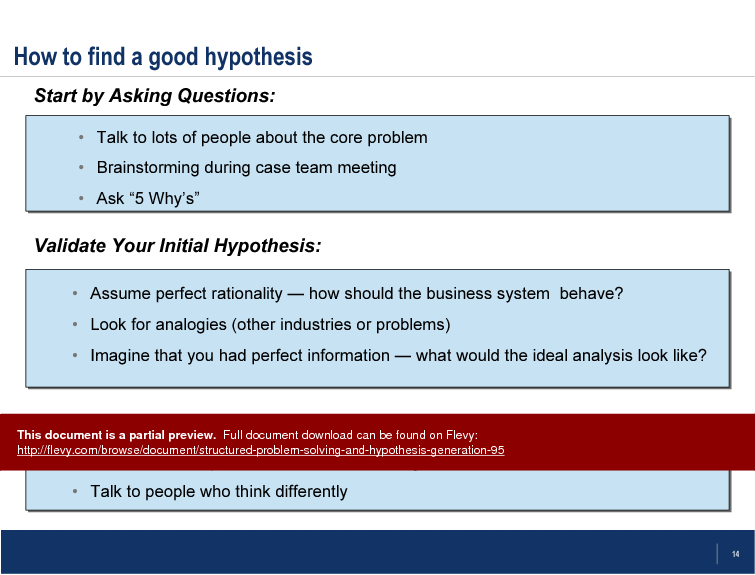
Effective hypotheses can be generated by asking targeted questions, brainstorming with team members, and validating assumptions through data.
What role does data analysis play in this process?
Data analysis is crucial for validating or disproving hypotheses, providing evidence to support conclusions and recommendations.
How can I communicate findings effectively?
Using logical pyramids helps structure information clearly, making it more memorable and impactful for stakeholders.
What are the key steps in root cause analysis?
Key steps include identifying the problem, brainstorming causes, gathering data, and selecting the most likely root cause for resolution.
Why is collaboration important in problem-solving?
Collaboration brings diverse perspectives and expertise, enhancing the quality of analysis and the effectiveness of solutions developed.
Glossary
• Structured Problem Solving - A formal method for organizing thought processes to tackle business issues.
• Hypothesis - A tentative assumption made to explore potential causes of a problem.
• Fishbone Technique - A visual tool for identifying and categorizing root causes of issues.
• Data Analysis - The process of examining data to draw conclusions and inform decision-making.
• Logical Pyramid - A communication structure that organizes information for clarity and impact.
• Root Cause - The fundamental reason for a problem, which must be addressed to resolve the issue effectively.
• MECE - Mutually Exclusive and Comprehensively Exhaustive; a principle for structuring information clearly.
• Brainstorming - A collaborative technique for generating ideas and solutions without initial criticism.
• Diagnostic - A method or tool used to analyze and identify the causes of a problem.
• Stakeholder - An individual or group with an interest in the outcome of a project or issue.
• Sub-Cause - A secondary factor contributing to a primary cause of a problem.
• KPI - Key Performance Indicator; a measurable value that demonstrates how effectively a company is achieving key business objectives.
• Trendline - A line indicating the general course or tendency of a set of data points.
• Gap Analysis - A method for assessing the differences between current performance and desired outcomes.
• Pilot Test - A trial run of a solution to evaluate its effectiveness before full implementation.
• Stakeholder Engagement - The process of involving individuals or groups who may be affected by or have an interest in a project.
• Control Chart - A statistical tool used to monitor the performance of a process over time.
• Process Map - A visual representation of the steps involved in a process.
• Customer Interviews - Conversations with customers to gather insights and feedback on products or services.
• Analysis of Outputs - The examination of results produced by a process to evaluate effectiveness.
This PPT slide illustrates 3 reasoning frameworks: abduction, deduction, and induction for hypothesis development. Deduction establishes that high prices lead to declining sales, confirmed by a scenario where elevated prices result in reduced sales. Induction shows that increased prices correlate with decreased sales, drawing general conclusions from specific instances. Abduction combines elements of both, suggesting that decreased sales may indicate excessively high prices, offering plausible explanations based on available evidence. These reasoning methods provide structured methodologies for analyzing situations and drawing conclusions, valuable in strategic planning and problem-solving.
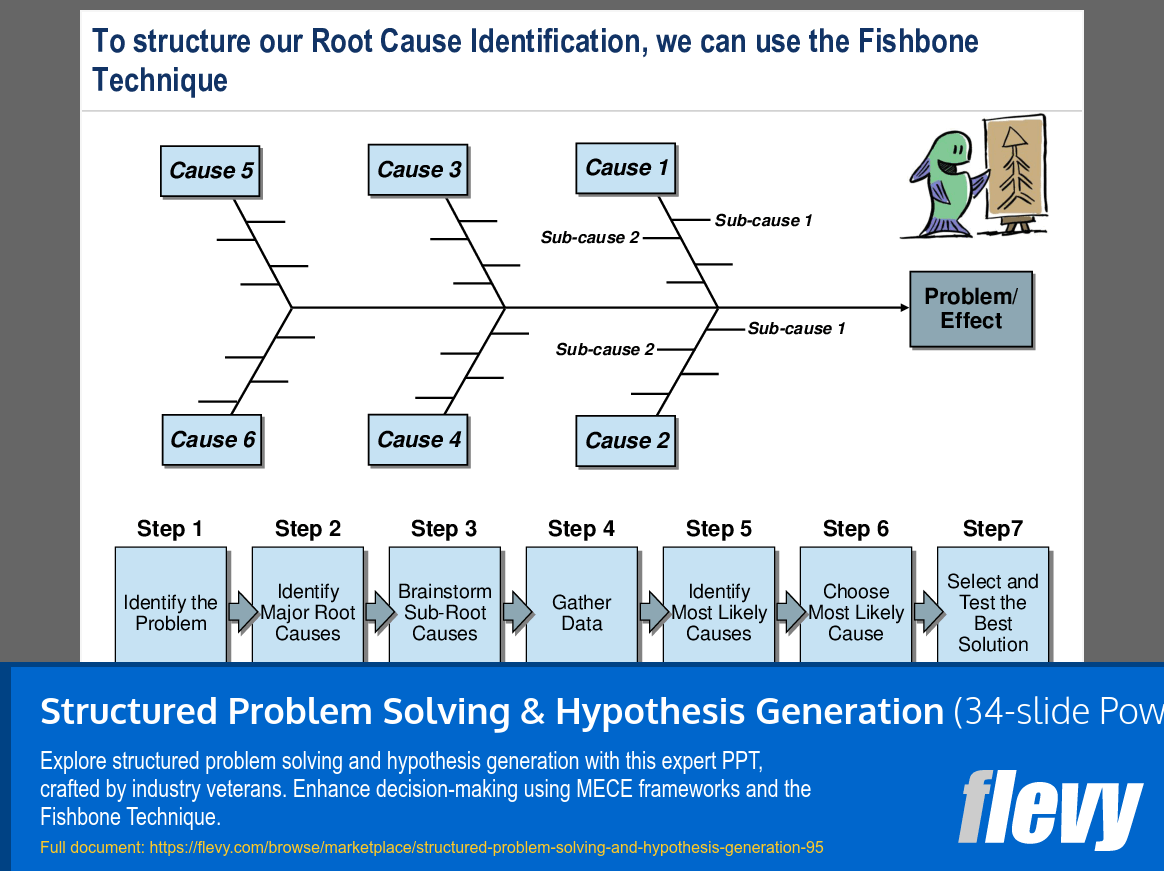
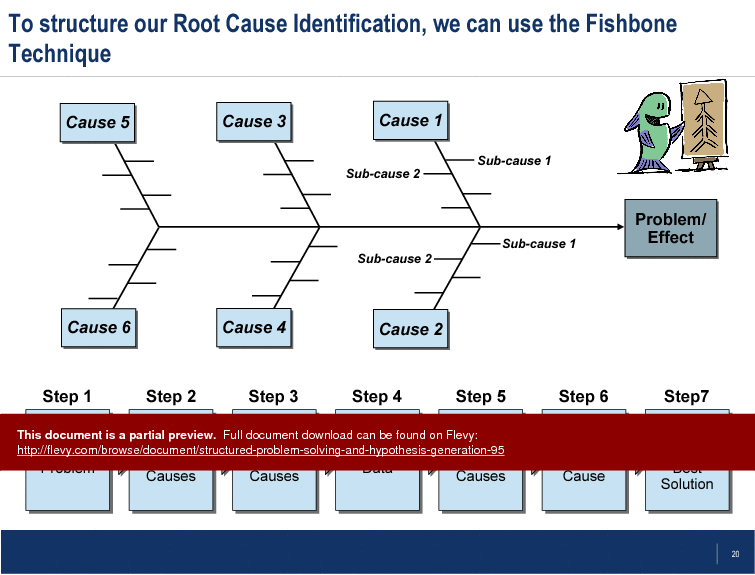
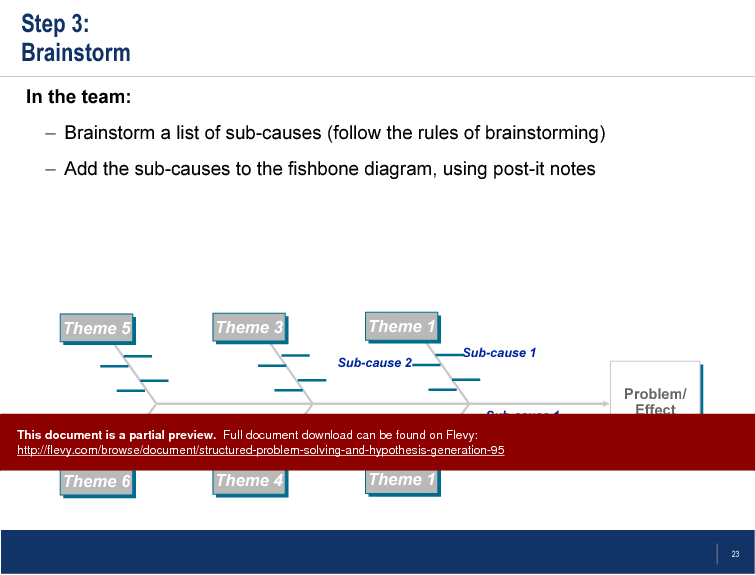
This PPT slide outlines a structured approach to root cause identification using the Fishbone Technique. It organizes causes into a flowchart, highlighting primary causes (Cause 1 to Cause 6) and their sub-causes, illustrating the complexity of factors contributing to a specific problem. The methodology includes a seven-step process: Step 1 focuses on clearly defining the problem; Steps 2 and 3 guide users in identifying major root causes and brainstorming sub-root causes; Step 4 emphasizes gathering relevant data for informed decision-making; Steps 5 and 6 involve identifying and selecting the most likely causes; Step 7 is about testing the best solution. The Fishbone Technique enhances problem-solving capabilities and fosters collaboration among team members.
This PPT slide outlines key components of structured problem solving, essential for effective decision-making. It begins with defining structured problem solving, emphasizing its role in systematically identifying and addressing issues. A well-defined problem is crucial for accurate analysis and solution development, as clarity at this stage prevents misaligned solutions. The slide also highlights generating hypotheses about the root cause, encouraging brainstorming and collaboration among team members. Finally, it introduces the Fish Bone approach for structuring hypotheses, a visual tool that helps teams systematically organize thoughts and identify various causes of a problem. This structured methodology enhances problem-solving capabilities and fosters a collaborative environment for effective decision-making.
This PPT slide outlines a structured approach to hypothesis development in 3 key steps. The first step, "Define the question," focuses on identifying core strategic issues and their organizational impact, aligning analysis with objectives. The second step, "Review and Describe Multiple Assertions," involves gathering insights from initial data searches and expert opinions, evaluating diverse perspectives to uncover opportunities and market dynamics, such as the growth of direct channels and retailer strength. The third step, "Form the hypothesis," encourages teams to synthesize insights into actionable hypotheses, exemplified by Chubb Insurance's use of brand strength to create new business opportunities. This methodology enhances decision-making processes through systematic hypothesis generation.
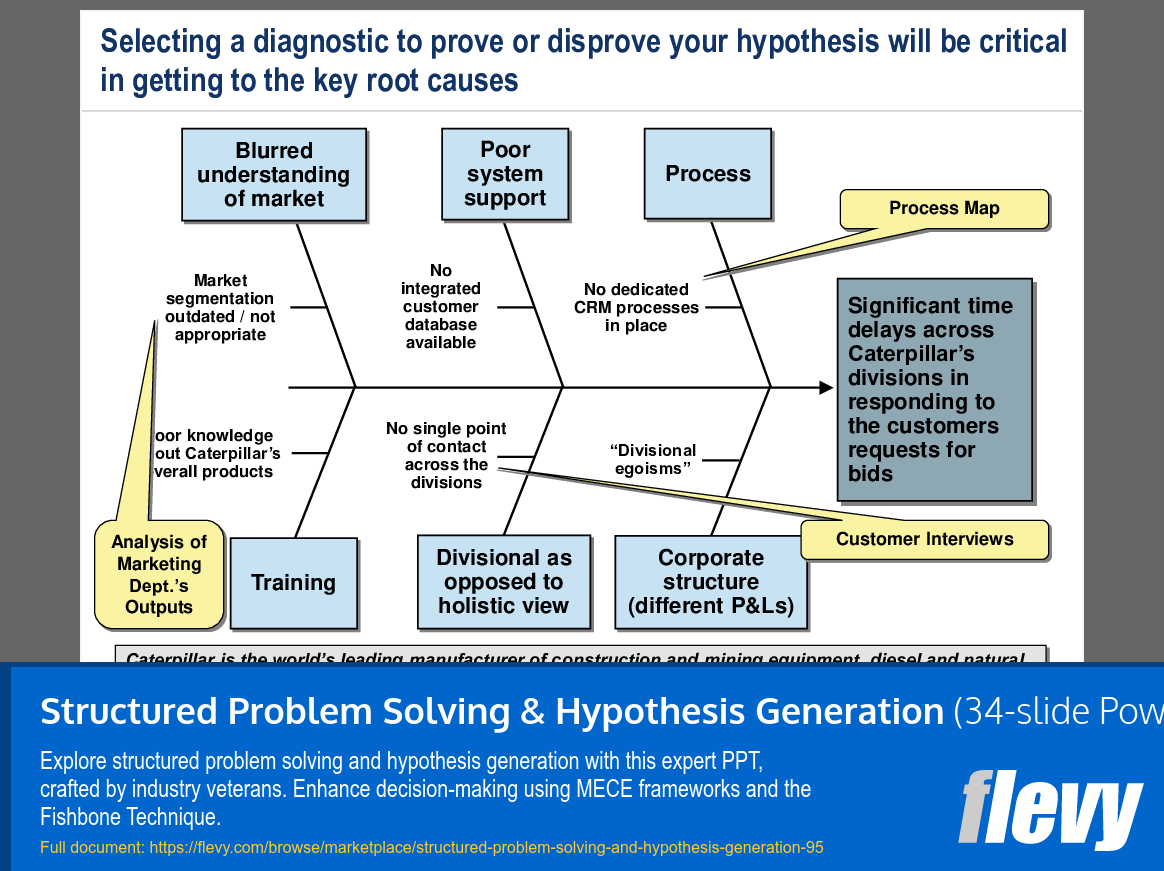
This PPT slide outlines a diagnostic framework for identifying root causes of operational issues within Caterpillar. Key areas of concern include outdated market segmentation, leading to misaligned strategies and poor understanding of customer needs. The "Poor system support" quadrant highlights the absence of an integrated customer database and CRM processes, resulting in inefficiencies and confusion due to a lack of a single point of contact across divisions. The "Process" section notes significant delays in responding to customer bids, exacerbated by internal competition among divisions. A holistic view and training are necessary to foster collaboration and improve performance, while analyzing marketing outputs ensures alignment with customer expectations.
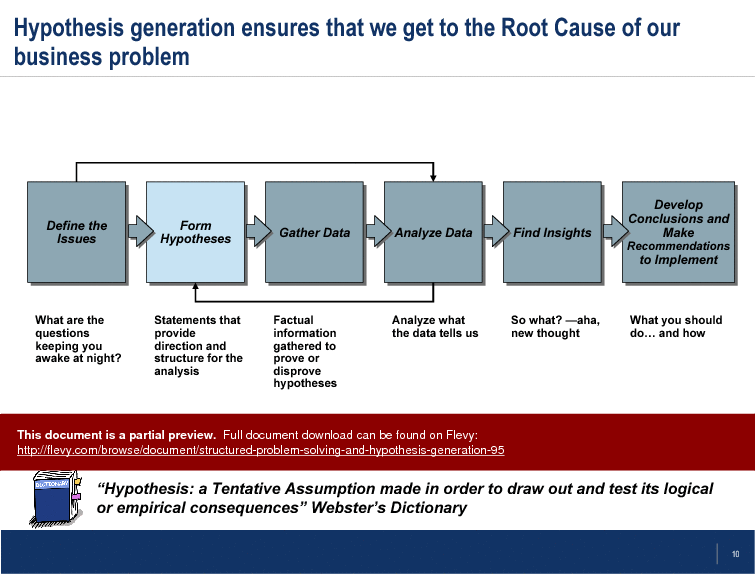
This PPT slide outlines a structured problem-solving approach, beginning with "Define the Issues" to identify core problems. The next step, "Form Hypotheses," involves creating statements that guide analysis, providing a framework for validation. "Gather Data" emphasizes the importance of collecting relevant factual information to ground the analysis. The "Analyze Data" phase focuses on deriving insights from the collected information, enhancing understanding of the issues. Following this, "Find Insights" encourages identifying new revelations from data analysis. Finally, "Develop Conclusions and Make Recommendations to Implement" translates insights into actionable strategies, detailing steps for decision-makers to address complex situations effectively.
This PPT slide outlines a systematic approach to structured problem solving, highlighting 3 key steps: defining the problem, developing a hypothesis, and structuring the analysis. Defining the problem involves a thorough understanding of the problem statement, which is crucial for clarity and sets the foundation for subsequent steps. Developing a hypothesis serves to validate or invalidate the logic behind proposed solutions, guiding critical thinking and analytical rigor. Structuring the analysis suggests utilizing a logical framework, including Root Cause Analysis, to categorize ideas and identify fundamental causes. Breaking down the problem into manageable components allows for detailed examination and informed decision-making, enhancing problem-solving capabilities for executives.


This PPT slide outlines the use of logical pyramids for defining, structuring, and resolving business problems. It emphasizes organizing assertions coherently to grasp issues effectively. Key methods for arranging ideas include deductive and inductive reasoning, chronological order, structural categories like Sales or Marketing, and prioritizing by importance. The visual hierarchy features a main assertion supported by subordinate ideas, enhancing clarity and understanding of interrelated components. A structured approach to problem-solving improves decision-making processes for executives addressing complex business challenges.
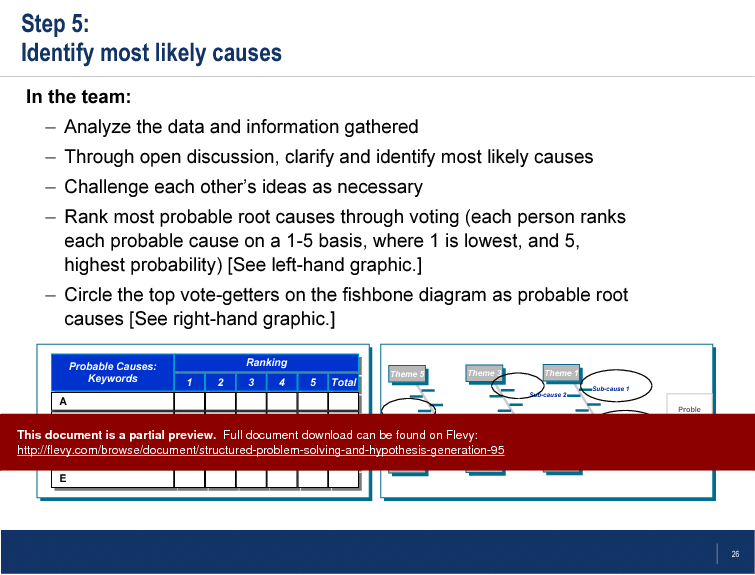
This PPT slide outlines a structured approach to identifying root causes within a team setting. The process begins with data analysis and open discussions to clarify probable causes, fostering a collaborative environment that encourages challenging ideas. A systematic ranking method evaluates each cause on a scale from 1 to 5, quantifying their likelihood. A table documents these rankings for clear visual representation. Teams then use a fishbone diagram to organize identified causes, highlighting significant contributors to the problem. This visual tool structures themes and sub-causes around the central issue, enhancing problem-solving capabilities and promoting teamwork and open communication.
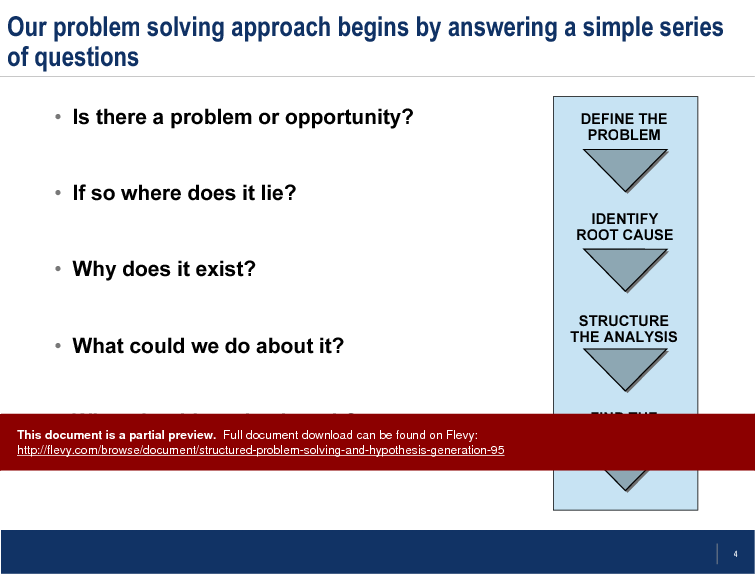
This PPT slide outlines a systematic approach to problem-solving through structured inquiry. It begins with the question: "Is there a problem or opportunity?" to determine the focus on resolving issues or capitalizing on opportunities. The next question, "If so, where does it lie?" identifies the specific organizational area needing examination. "Why does it exist?" prompts analysis of underlying causes, ensuring solutions address root issues rather than symptoms. The question "What could we do about it?" encourages brainstorming potential solutions, fostering creativity. Finally, "What should we do about it?" guides evaluation of options to select the most viable action. The process is visually represented in 4 stages: defining the problem, identifying the root cause, structuring the analysis, and finding the solution, enhancing clarity and thoroughness in decision-making.
Source: Best Practices in Problem Solving, Hypothesis Generation, MECE, Bain PowerPoint PowerPoint Slides: Structured Problem Solving & Hypothesis Generation PowerPoint (PPT) Presentation Slide Deck, Process Consulting
Process Consulting specializes in consulting training presentations focused on core consulting skills, from structured problem solving to presentation development to process mapping. Our materials are based on the frameworks utilized by global consulting firms.
The firm is managed by a seasoned professional with over 15 years of experience at Capgemini and Deloitte, followed by a decade
... [read more] of industry experience.
The firm's commitment to excellence is rooted in its manager's rich experience, where they honed skills in process improvement, stakeholder collaboration, and high-impact communication. This expertise enables Process Consulting to create resources that are not only theoretically robust, but also practically applicable, making them a trusted resource for consultants worldwide.
The average daily rate of a McKinsey consultant is $6,625 (not including expenses). The average price of a Flevy document is $65.
Trusted by over 10,000+ Client Organizations
Since 2012, we have provided business templates to over 10,000 businesses and organizations of all sizes, from startups and small businesses to the Fortune 100, in over 130 countries.
Read Customer Testimonials
"One of the great discoveries that I have made for my business is the Flevy library of training materials.
As a Lean Transformation Expert, I am always making presentations to clients on a variety of topics: Training, Transformation, Total Productive Maintenance, Culture, Coaching, Tools, Leadership Behavior, etc. Flevy
It is well worth the money to purchase these presentations. Sure, I have the knowledge and information to make my point. It is another thing to create a presentation that captures what I want to say. Flevy has saved me countless hours of preparation time that is much better spent with implementation that will actually save money for my clients.
"
– Ed Kemmerling, Senior Lean Transformation Expert at PMG
"I am extremely grateful for the proactiveness and eagerness to help and I would gladly recommend the Flevy team if you are looking for data and toolkits to help you work through business solutions."
– Trevor Booth, Partner, Fast Forward Consulting
"I have used FlevyPro for several business applications. It is a great complement to working with expensive consultants. The quality and effectiveness of the tools are of the highest standards."
– Moritz Bernhoerster, Global Sourcing Director at Fortune 500
"Last Sunday morning, I was diligently working on an important presentation for a client and found myself in need of additional content and suitable templates for various types of graphics. Flevy.com proved to be a treasure trove for both content and design at a reasonable price, considering the time I
saved. I encountered a download issue during the ordering process. However, a quick email to Flevy's support team, even on a Sunday (!!!), resulted in assistance within less than an hour, allowing me to download the content I needed. Fantastic job, Flevy! I give 5 stars for both content/price and customer service. Thank you!
"
– M. E., Chief Commercial Officer, International Logistics Service Provider
"Flevy.com has proven to be an invaluable resource library to our Independent Management Consultancy, supporting and enabling us to better serve our enterprise clients.
The value derived from our [FlevyPro] subscription in terms of the business it has helped to gain far exceeds the investment made, making a subscription a no-brainer for any growing consultancy – or in-house strategy team."
– Dean Carlton, Chief Transformation Officer, Global Village Transformations Pty Ltd.
"As a consultant requiring up to date and professional material that will be of value and use to my clients, I find Flevy a very reliable resource.
The variety and quality of material available through Flevy offers a very useful and commanding source for information. Using Flevy saves me time, enhances my expertise and ends up being a good decision."
– Dennis Gershowitz, Principal at DG Associates
"I have used Flevy services for a number of years and have never, ever been disappointed. As a matter of fact, David and his team continue, time after time, to impress me with their willingness to assist and in the real sense of the word. I have concluded in fact
that it is not at all just a repository of documents/resources but, in the way that David and his team manage the firm, it is like dealing with consultants always ready to assist, advise and direct you to what you really need, and they always get it right.
I am an international hospitality accomplished senior executive who has worked and lived during the past 35 years in 23 countries in 5 continents and I can humbly say that I know what customer service is, trust me.
Aside from the great and professional service that Flevy's team provide, their wide variety of material is of utmost great quality, professionally put together and most current.
Well done Flevy, keep up the great work and I look forward to continue working with you in the future and to recommend you to a variety of colleagues around the world.
"
– Roberto Pelliccia, Senior Executive in International Hospitality
"As a small business owner, the resource material available from FlevyPro has proven to be invaluable. The ability to search for material on demand based our project events and client requirements was great for me and proved very beneficial to my clients. Importantly, being able to easily edit and tailor
the material for specific purposes helped us to make presentations, knowledge sharing, and toolkit development, which formed part of the overall program collateral. While FlevyPro contains resource material that any consultancy, project or delivery firm must have, it is an essential part of a small firm or independent consultant's toolbox.
"
– Michael Duff, Managing Director at Change Strategy (UK)
Receive our FREE whitepaper on the Top 101 Consulting Frameworks
Download our 200+ page guide summarizing the Top 101 Management Consulting Frameworks. Each framework provides a structured approach to analyzing and solving a common business problem.