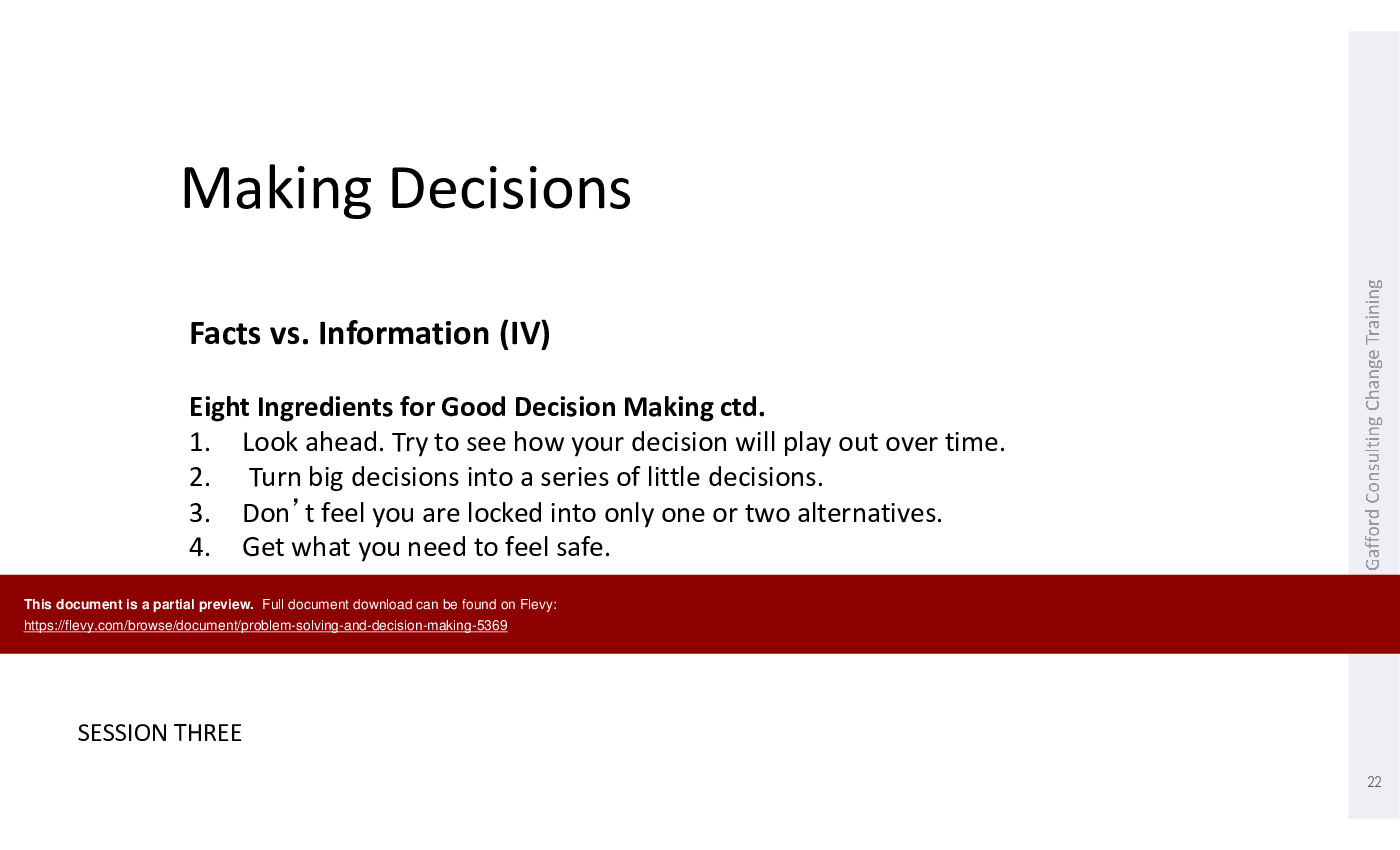

 Click main image to view in full screen. Unlock all 19 preview images:
Problem Solving and Decision Making – PowerPoint PPTX Template
PowerPoint (PPTX) 101 Slides


BENEFITS OF THIS DOWNLOADABLE POWERPOINT DOCUMENT
- Learn how to analyze information to clearly describe problems
- Provides tactics to think creatively and to becoming a contributing member of a problem solving team
- Develops ability to create a plan for implementing, evaluating, and following up on decisions
PROBLEM SOLVING PPT TEMPLATE DESCRIPTION
We make decisions and solve problems continually. We start making decisions before we even get out of bed (shall I get up now or not?). Sometimes, we will have made as many as 50 decisions by the time we leave for work. Despite all the natural decision making that goes on and the problem solving we do, some people are very uncomfortable with having to make decisions. You may know someone who has a hard time making decisions about what to eat, never mind the internal wrestling they go through in order to take on major decisions at work.
Likewise, we've probably all looked at a solution to something and said, "I could have thought of that." The key to finding creative solutions is not just creativity, although that will certainly help. The answer rests in our ability to identify options, research them, and then put things together in a way that works. Having a process to work through can take the anxiety out of problem solving and make decisions easier. That's what this two-day workshop is all about.
This two-day workshop will help you teach participants how to:
• Apply problem solving steps and tools
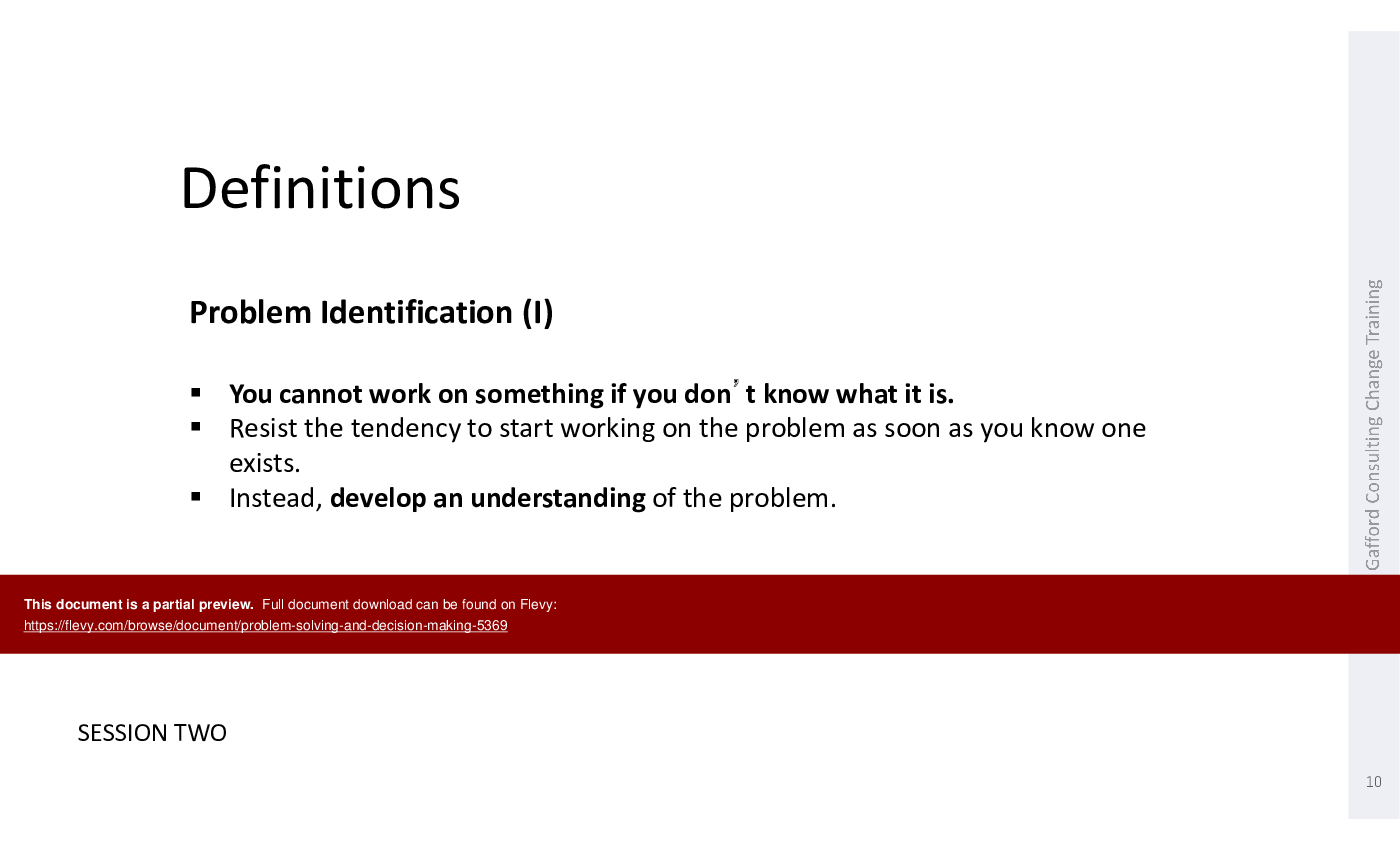
• Analyze information to clearly describe problems
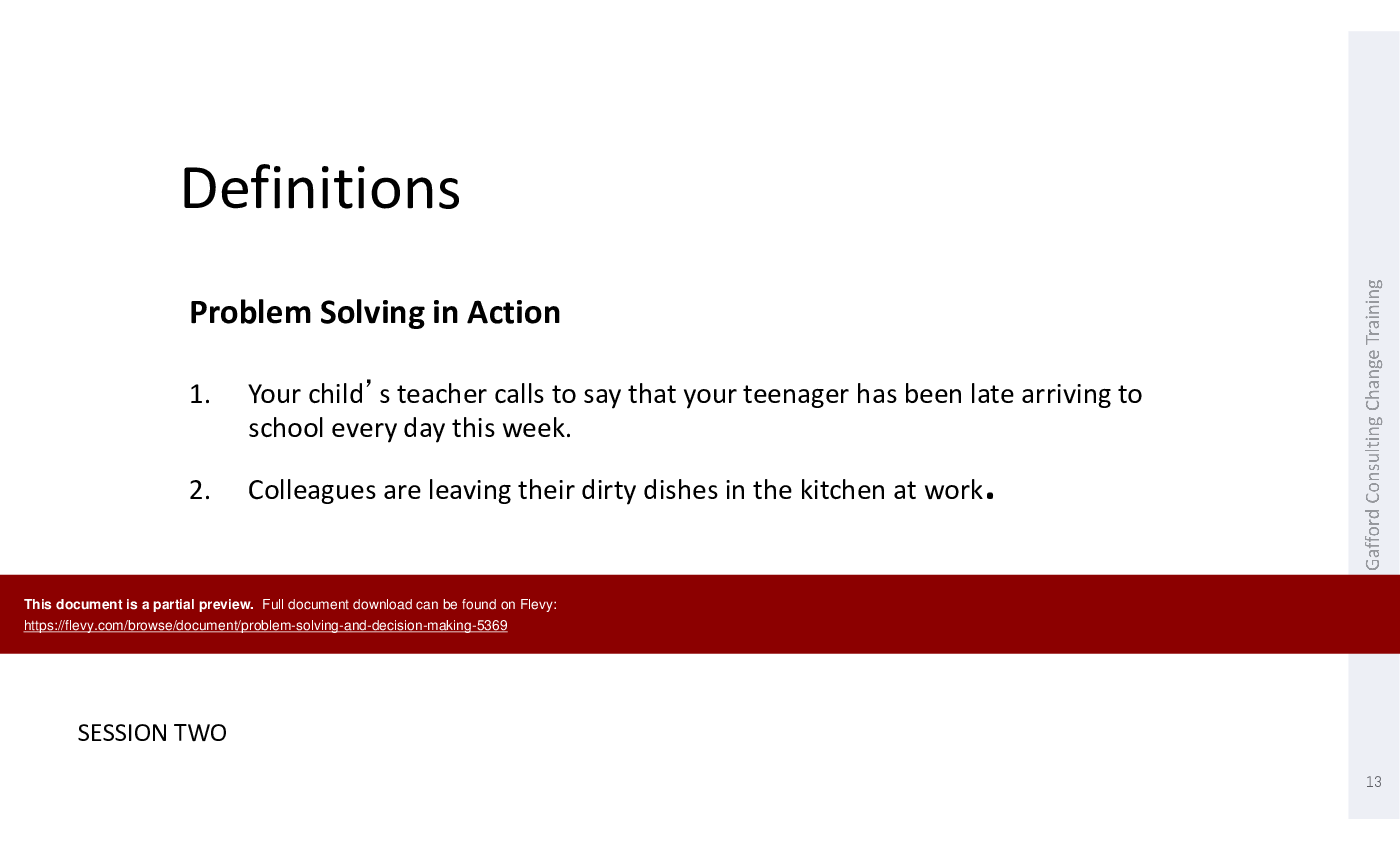
• Identify appropriate solutions
• Think creatively and be a contributing member of a problem-solving team
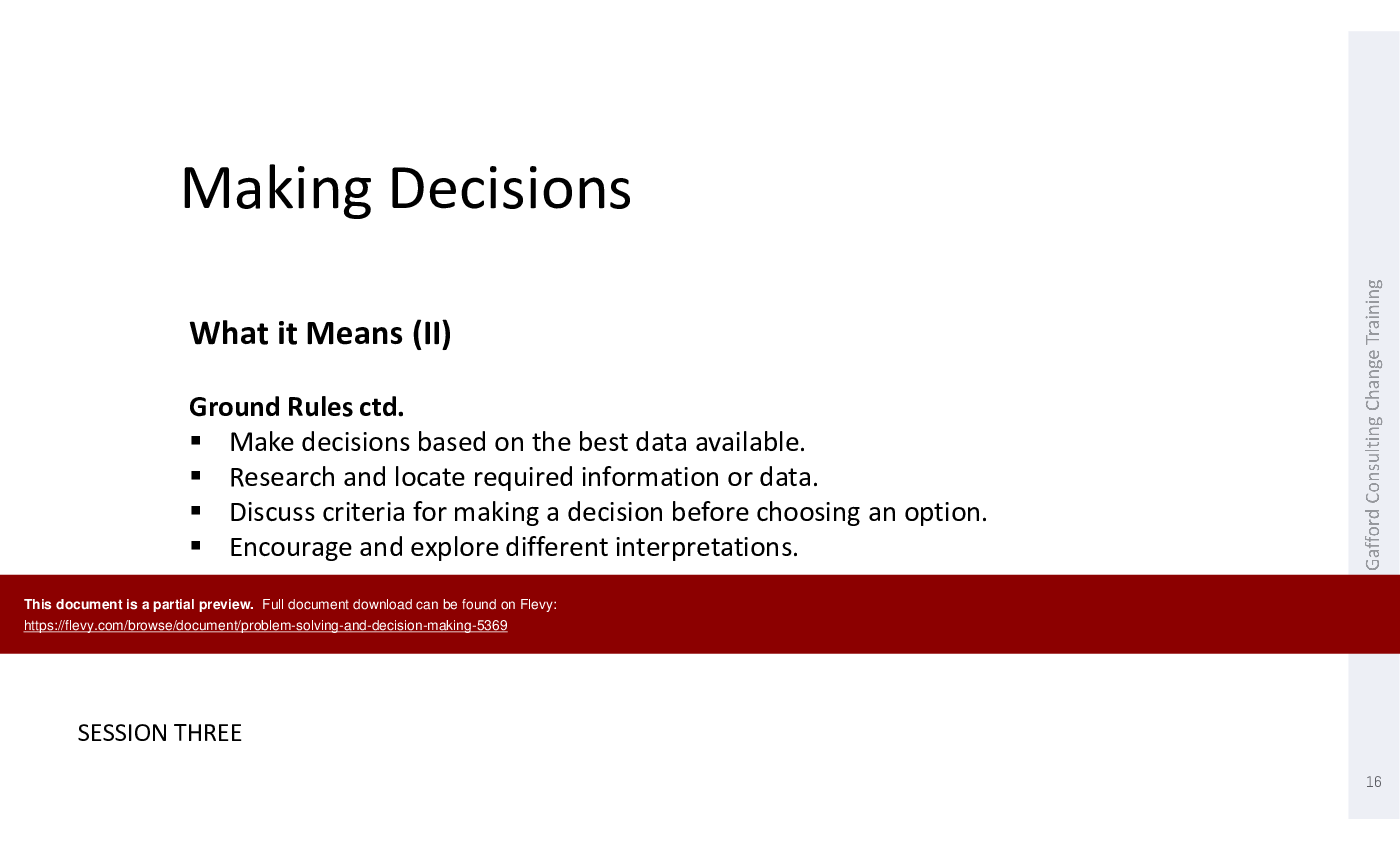
• Select the best approach for making decisions
• Create a plan for implementing, evaluating, and following up on decisions
• Avoid common decision-making mistakes
Drawing from our deep professional network and years of experience, Gafford Consulting delivers the leadership and subject matter expertise you need to effectively navigate your organizational change. We partner with you to create a customized solution that helps mitigate risk, promote acceptance and accelerate performance.
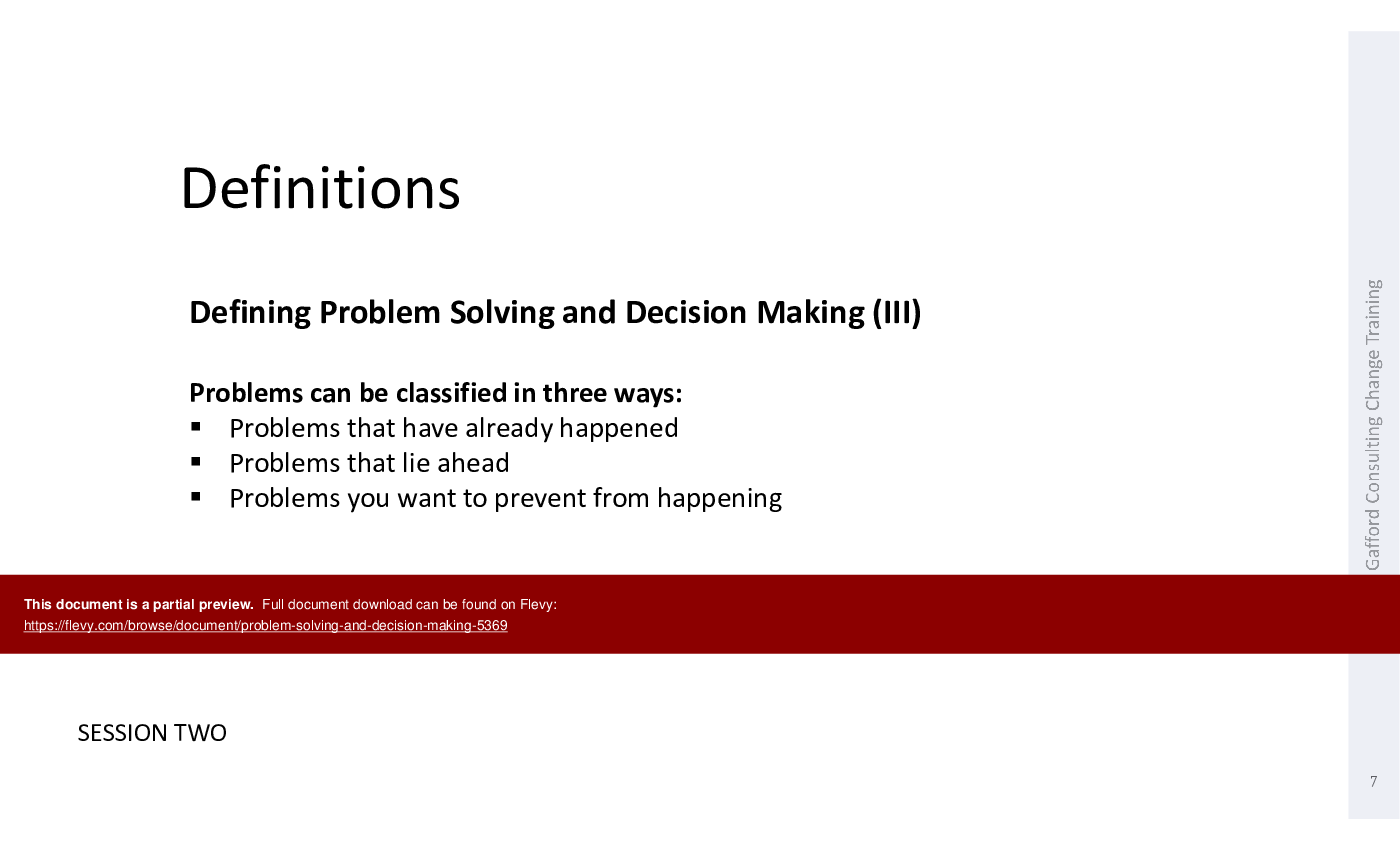
The workshop also delves into the nuances of problem classification and identification, ensuring a comprehensive understanding of the issues at hand. Participants will engage in practical exercises like force field analysis and mind-mapping to reinforce learning.
Got a question about the product? Email us at support@flevy.com or ask the author directly by using the "Ask the Author a Question" form. If you cannot view the preview above this document description, go here to view the large preview instead.
TOPIC FAQ
What are the typical steps taught in a structured problem-solving workshop?
Structured workshops guide participants to analyze information to describe problems, classify the problem type, generate and research solution options, select the best decision approach, and create implementation, evaluation, and follow-up plans. Practical exercises reinforce each step, ending with implementation and evaluation planning.How does force field analysis support group decision making?
Force field analysis helps teams list and weigh forces for and against a proposed change, clarifies where to strengthen drivers or reduce restraints, and informs implementation choices. The technique is presented as a practical exercise within the workshop alongside mind-mapping.When should teams use mind-mapping during problem solving?
Teams use mind-mapping during early option generation and problem clarification to visually organize ideas, reveal connections, and stimulate creative thinking. The workshop includes mind-mapping as a hands-on exercise to support identifying appropriate solutions and expanding option sets.What duration and format do these training materials assume?
The materials are designed to run as a two-day workshop, with facilitator slides and exercises intended for instructor-led delivery. Flevy’s Problem Solving and Decision Making product is organized around that two-day format.What should I look for when buying a problem-solving workshop deck?
Look for decks that teach structured steps from problem definition through implementation, include practical exercises (e.g., force field analysis, mind-mapping), offer guidance on avoiding common decision-making mistakes, and can be customized to your organization’s context—such as the two-day structure in Problem Solving and Decision Making.How can I measure the value of running a decision-making workshop?
Measure changes in decision outcomes and execution: implementation success rates, frequency of recurring issues, stakeholder acceptance, and reductions in poorly informed decisions. The workshop explicitly links decision selection to implementation, evaluation, and follow-up planning as measurable touchpoints.Which techniques are most useful for restructuring or post-merger team decisions?
For restructuring, prioritize problem classification to scope issues, use force field analysis to map stakeholder forces, employ mind-mapping for option generation, and build a clear implementation and evaluation plan to manage transition risks and acceptance.How do workshops address common decision-making mistakes and bias?
Workshops teach a stepwise process—structured problem description, systematic option identification, evidence-based selection, and planned follow-up—to reduce bias and impulsive choices. Practical tools and exercises are used to surface assumptions and guide more deliberate decision selection.Source: Best Practices in Problem Solving, Decision Making PowerPoint Slides: Problem Solving and Decision Making PowerPoint (PPTX) Presentation Slide Deck, Gafford Consulting
ABOUT THE AUTHOR

Drawing from our deep professional network and years of experience, Gafford Consulting delivers the leadership and subject matter expertise you need to effectively navigate your organizational change. We partner with you to create a customized solution that helps mitigate risk, promote acceptance and accelerate performance.
Ask the Author a Question
You must be logged in to contact the author.