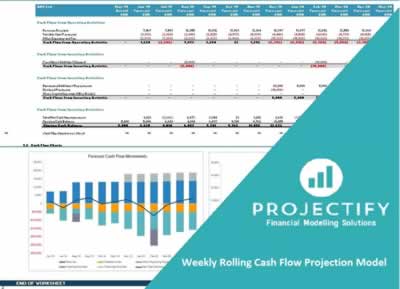
Editor's Note: Take a look at our featured best practice, 13-Week Cash Flow Forecast Template (Excel workbook). This comprehensive and user-friendly template is designed to help businesses efficiently manage their cash flow with accuracy and flexibility. Ideal for SMEs, the template provides tools to forecast, track, and analyze cash flow over a 13-week horizon.
Key Features:
Customizable Settings: [read more]
* * * *
Most independent media agencies hit a ceiling for a remarkably mundane reason: cash flow.
A brand asks for Connected TV or high-impact native formats. You know how to build the strategy. Your team knows how to execute it. But to get seat-level access to premier supply through traditional enterprise software vendors, you are asked to sign an annual contract with a $50,000 monthly minimum. Before you buy your first impression, you are already underwater because of fixed costs. So you either turn down the business, pass it to a larger competitor, or try to duct-tape five different point solutions together using credit cards and prayer.
The Unit Economics of a Modern Media Desk
The unit economics of the traditional agency model are increasingly difficult to justify. For years, everyone assumed running a real media desk meant hiring a team of yield engineers, building custom integrations from scratch, and writing massive upfront checks.
That assumption is increasingly outdated.
Squeezing margin out of performance campaigns no longer requires building a massive internal ad tech operation. The hidden friction in media buying has always been the “ad tech tax” – a fragmented supply chain where DSPs, SSPs, data providers, verification vendors, and other intermediaries can each add cost before an impression reaches the consumer. For independent agencies, reducing unnecessary layers can materially improve media efficiency and make smaller budgets go further.
When you strip out that unnecessary tax, client budgets suddenly stretch further. A $20,000 monthly budget can go materially further when fewer unnecessary fees and intermediaries sit between the agency and the inventory.
The Pillars of a Lean Media Infrastructure
Managing separate tools for display, CTV, and audio is a logistical nightmare filled with conflicting minimums and mismatched reporting. Agencies are finally ditching that friction and moving everything under one roof. Running campaigns through a flexible programmatic advertising platform gives lean teams real publisher access, sharp targeting, and genuine cross-channel reach – all without signing away their souls to two-year contracts or insane spend thresholds.
Look at where most ad impressions actually come from. The open auction is full of junk right now: MFA content farms, fake traffic, and the same impression being resold five times over. Instead of fixing the source, agencies usually pay extra for third-party tools to catch ad fraud and bad placements after the money has already left their pocket.
Smarter, leaner media teams bypass the open exchange circus altogether by relying on curated vertical networks instead. When publisher inventory is vetted upfront and accessed through curated supply relationships, brand safety and contextual alignment are not expensive add-ons – they are built in from day one. Instead of relying exclusively on post-bid verification, agencies can build quality controls into the supply strategy from the outset.
Campaign management works the same way. The old-school approach demanded a dedicated media trader locked to a dashboard all day, manually adjusting bid prices and tweaking frequency caps line item by line item. That manual setup was an absolute time-sink and guaranteed human mistake after human mistake. Now, predictive targeting and automated bidding run right under the hood. Machine learning can automate bid optimization and budget allocation within campaigns, reducing the amount of manual intervention required from media buyers, so a small team can manage significantly larger campaign volumes without working 80-hour weeks.
When algorithms handle the mechanical bidding work, senior staff can spend less time on mechanical campaign management and more time on strategy, creative testing, customer economics, and client relationships. They spend their hours refining creative angles, digging into customer unit economics, and talking to clients – the actual work that prevents churn.
Execution: How to Scale Media Buying Step-by-Step
The goal is not to look like a massive agency. The point isn’t to look massive. It’s to punch at the same weight class as a major agency without maintaining a huge payroll or burning cash on bloated tech contracts.
Building a lean media desk comes down to four tactical shifts:
Ditch legacy vendor locks: Avoid contracts that penalize you for seasonal spend fluctuations or force high entry thresholds.
Centralize cross-channel execution: Run display, native, CTV, and audio through a single seat. It keeps your frequency capping from breaking so you don’t end up spamming the same person across every screen they own.
Prioritize curated supply: Trade open auction volume for vertical inventory density where publisher quality is verified at the source.
Productize your agency offer: Stop selling hours or basic campaign setup. Sell transparent, cross-channel reach linked directly to performance outcomes like CPA and ROAS.
Rethinking Agency Growth
The agencies capturing market share right now are not the ones with the flashiest offices or the most bloated software stacks. They are the ones that travel light. By removing supply chain bloat and replacing heavy legacy software with flexible, consolidated buying platforms, independent teams can operate with the scale of a holding company and the speed of a startup.
This is not just about saving money on software fees; it changes your pitch to the market. When your overhead is low and your supply path is direct, you can offer clients lower entry barriers and complete line-item transparency. That pitch lands every single time against legacy holding group proposals wrapped in hidden markups and vague reporting.
Clients do not care how many software subscriptions sit on your balance sheet. They care whether you can reach their audience efficiently and drive a real return on their spend. The tech to build a fast, high-margin media desk already exists. Modern agencies are already using it – the rest are just choosing to keep buying media like it is 2015.
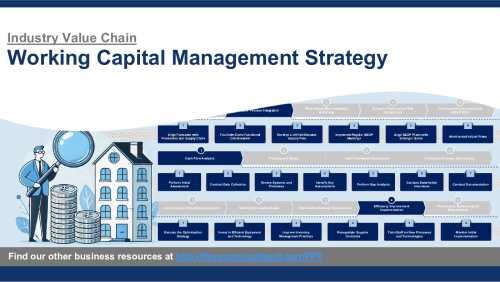
Working Capital Management (WCM) refers to the administration of an organization's short-term assets and liabilities to ensure its ongoing operational efficiency and financial stability. Effective WCM is crucial for maintaining liquidity, optimizing cash flow, and ensuring the organization can [read more]
Do You Want to Implement Business Best Practices?
You can download in-depth presentations on Cash Flow Management and 100s of management topics from the FlevyPro Library. FlevyPro is trusted and utilized by 1000s of management consultants and corporate executives.
For even more best practices available on Flevy, have a look at our top 100 lists:
These best practices are of the same as those leveraged by top-tier management consulting firms, like McKinsey, BCG, Bain, and Accenture. Improve the growth and efficiency of your organization by utilizing these best practice frameworks, templates, and tools. Most were developed by seasoned executives and consultants with over 20+ years of experience.
Readers of This Article Are Interested in These Resources
Cash flow management is a critical aspect of running a successful business, as it directly impacts a company's ability to pay bills, invest in growth opportunities, and weather financial challenges. Both internal and external factors can affect a business's cash flow, making it essential to [read more]
Monthly Rolling Cash Flow Projection is crucial for businesses as it offers a real-time view of their financial health. By forecasting incoming and outgoing cash, it enables proactive management of liquidity, preventing potential crises. This tool helps in identifying trends, anticipating [read more]
According to McKinsey, when the COVID-19 crisis began to affect companies worldwide, the preliminary response of CEOs and CFOs was all about survival: freeing up cash and resources to keep the lights on and the doors open. The liquidity crisis triggered by the sharp disruption in economic [read more]
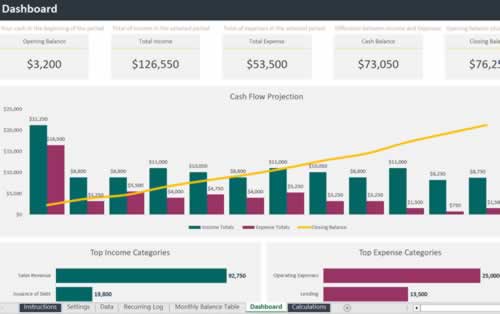
Take control of your finances with our Cash Flow Planner Template--a user-friendly tool designed to help you track, plan, and visualize your cash flow with ease. Perfect for individuals, small businesses, or anyone looking to manage their income and expenses over time, this template offers a [read more]
 Most independent media agencies hit a ceiling for a remarkably mundane reason: cash flow.