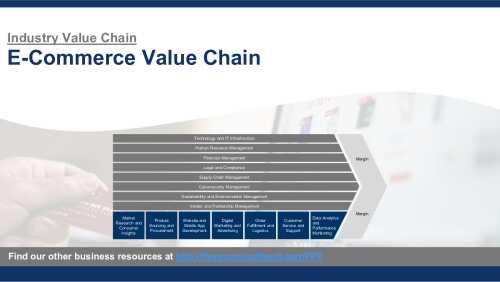
Editor's Note: Take a look at our featured best practice, Ecommerce Financial Model (Excel workbook). Model Options:
This template is a detailed and user-friendly financial model that considers an e-commerce business's specifics.
By Taking into account key assumptions such as traffic from different sources, conversion rates, the average purchase value for different product categories, and the [read more]
* * * *
 Key Takeaways
- Digital transformation for a small store is not a big IT project. It is a series of small, practical steps.
- The point-of-sale (POS) system is the natural starting point, because every sale already passes through it.
- Data only creates value when it changes a decision: what to stock, how to price, who to schedule.
- Customer and online tools come after the basics, not before.
- Success depends on habits and a few simple metrics, not on the number of tools a store uses.
Why Digital Transformation Looks Different for Small Retailers
When large retailers talk about digital transformation, they usually mean multi-year programs, new ERP systems and teams of consultants. Independent retailers, such as convenience stores, grocers, liquor stores and hardware shops, work in a very different reality.
The owner is often also the buyer, the manager and the cashier. There is no IT department and no data team. Budgets are tight, and any new system has to pay for itself quickly.
Because of this, many independent stores still run on paper notes, gut feeling and an old cash register. This is not because owners resist change. It is because most transformation advice is written for companies 100 times their size.
Yet small stores often benefit the most from going digital. A single store can change prices, layouts or products in a day. When the right information is available, decisions can be made and tested very quickly.
The roadmap below breaks digital transformation into five practical phases. Each phase builds on the one before it, and each one should show results before the store moves on.
The 5-Phase Roadmap
Phase 1: Digitize the Checkout
Goal: Capture accurate data on every sale.
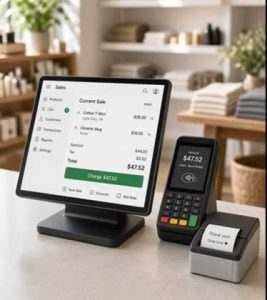
Everything starts at the counter. A modern POS system turns each transaction into usable data: what was sold, when, at what price and by which employee. A basic cash register records the money, but not the story behind it.
Key actions:
- Replace the cash register with a modern POS software for retail that tracks sales and inventory in one place.
- Scan products by barcode instead of entering prices by hand.
- Set up user profiles so each employee logs in with their own account.
- Accept all common payment types, including tap and mobile wallets.
How to know it works: Most items are sold by scan, not by manual price entry, and the daily sales total matches the cash and card totals.
Phase 2: Turn Data into Decisions
Goal: Use sales and inventory data to make better daily decisions.
Many stores install a POS and then never open the reports. The data is there, but nothing changes. Phase 2 is about building the habit of looking at the numbers and acting on them.
Start with a small set of questions that matter to every store owner:
- What sells best, and what doesn’t sell at all? Slow items take up shelf space and tie up cash.
- When is the store busiest? Staff schedules should follow real traffic, not habit.
- Which products bring the best margin? High sales do not always mean high profit.
- Where is stock going missing? Gaps between sales and inventory point to theft, waste or errors.
Key actions:
- Set a fixed time each week to review the main reports.
- Remove or reduce the bottom 5–10% of slow-selling items.
- Adjust staff hours to match the busiest times of day.
- Use remote access on a phone or laptop, so the owner can check the store from anywhere.
How to know it works: At least one decision each week is based on a report, such as a reorder, a price change or a schedule change.
Phase 3: Build Direct Customer Relationships
Goal: Turn regular shoppers into loyal, repeat customers.
Independent stores already have an advantage here: they know many of their customers by face. Digital tools help turn that personal touch into something the store can measure and grow.
A simple loyalty program for small retailers lets customers collect points or rewards, and gives the store data on who visits, how often and what they buy. With this data, the store can reward its best customers and bring back those who have stopped visiting.
Key actions:
- Launch a loyalty program that is easy to join at the counter.
- Keep rewards simple and easy to understand.
- Use customer data to run targeted offers, not discounts for everyone.
- Collect customer contact details only with clear consent.
How to know it works: The share of sales from loyalty members grows, and members visit more often than non-members.
Phase 4: Extend the Store Beyond Its Walls
Goal: Reach customers who do not walk into the store.
Shoppers now expect to order online and get delivery or pickup, even from their local store. For independent retailers, this is a chance to compete with larger players on convenience, not just on location.
This phase should come only after the first three are working. Online sales depend on accurate inventory and prices. If the in-store data is wrong, the online store will be wrong too.
Key actions:
- Set up an online store connected to the POS, so stock and prices stay in sync.
- Start with a limited range of best-selling products.
- Offer local delivery or in-store pickup.
- Consider delivery apps to reach new customers in the area.
How to know it works: Online orders grow month over month, and very few orders are cancelled because an item is out of stock.
Phase 5: Build Habits and Measure Progress
Goal: Make digital working methods part of everyday operations.
Technology alone does not transform a business. People and habits do. The last phase is about making sure the new tools are used every day, by everyone.
Key actions:
- Train staff on each new tool, and repeat the training when people change.
- Choose 4–5 core metrics and track them every month.
- Review the roadmap every quarter and decide on the next step.
Suggested core metrics for an independent store:
- Average sale value
- Gross margin by category
- Inventory shrink (loss) rate
- Share of sales from repeat or loyalty customers
- Online sales as a share of total sales
Common Pitfalls to Avoid
- Buying tools before defining the problem. Every new system should answer a clear question or fix a clear issue.
- Skipping the basics. Loyalty programs and online stores fail when product and price data in the POS is messy.
- Collecting data but not using it. Reports that nobody reads do not create value.
- Doing everything at once. Small teams can only absorb one change at a time. A phased plan works better than a big launch.
- Ignoring staff. If employees do not understand or trust a new tool, they will work around it.
Conclusion
Digital transformation is not only for large retailers with big budgets. For independent stores, it can be a step-by-step process that starts at the checkout and grows from there.
The order matters. First, capture accurate data. Second, use it to make better decisions. Third, build direct relationships with customers. Fourth, reach them online. And throughout, build the habits that keep the system working.
Independent retailers who follow this path do not need to become technology companies. They simply become better-informed versions of themselves: still local, still personal, but with the data and tools to compete in a fast-changing market.
Do You Want to Implement Business Best Practices?
You can download in-depth presentations on Ecommerce and 100s of management topics from the FlevyPro Library. FlevyPro is trusted and utilized by 1000s of management consultants and corporate executives.
For even more best practices available on Flevy, have a look at our top 100 lists:
These best practices are of the same as those leveraged by top-tier management consulting firms, like McKinsey, BCG, Bain, and Accenture. Improve the growth and efficiency of your organization by utilizing these best practice frameworks, templates, and tools. Most were developed by seasoned executives and consultants with over 20+ years of experience.
Readers of This Article Are Interested in These Resources
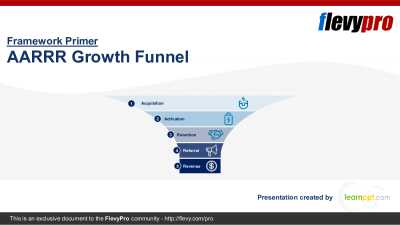
27-slide PowerPoint presentation
Growth Hacking is neither "scoring some quick wins to kick-start growth" nor "breaking into something one should not." Growth Hacking actually involves a consistent, scientific process to work towards business growth.
Growth Hacking is valuable for large enterprises, but more so for small
[read more]
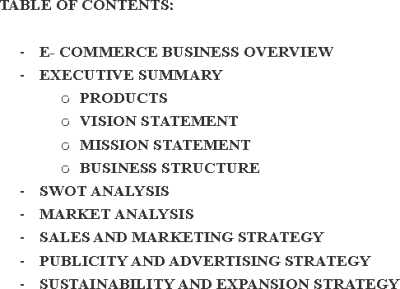
13-page Word document
This e-commerce business plan is a detailed roadmap that will guide you in starting a successful e-commerce business. It has pre-written content, including important sections like market research, product offerings, marketing strategies, and financial projections.
You can use this sample plan as
[read more]
Excel workbook
Financial technology (better known as fintech) is used to describe new technology that seeks to improve and automate the delivery and use of financial services. At its core, fintech is utilized to help companies, business owners, and consumers better manage their financial
[read more]
Excel workbook
An e-commerce platform for physical products is a digital solution that enables businesses to sell tangible goods online. It provides tools for listing products, managing inventory, processing payments, handling shipping, and tracking orders. Customers can browse, purchase, and review items through
[read more]