Editor's Note: Take a look at our featured best practice, Digital Transformation Strategy (145-slide PowerPoint presentation). Digital Transformation is being embraced by organizations across most industries, as the role of technology shifts from being a business enabler to a business driver. This has only been accelerated by the COVID-19 global pandemic. Thus, to remain competitive and outcompete in today's fast paced, [read more]
* * * *
Not all UI/UX design agencies work the same way. Some do everything. Others focus on one type of product or industry.
At first glance, they may look similar. Nice portfolios. Clean websites. Confident case studies. But choosing the wrong type of agency can slow things down or create problems later. So it helps to understand what really separates one agency from another before making a decision.
Start with Your Actual Project Needs
Before comparing agencies, look at your own situation. Not what you might build someday. What you need now.
Are you building a mobile app from scratch? Redesigning an existing SaaS product? Improving conversion on an e-commerce site?
A UI/UX design agency that works mostly with mobile apps may not be the best fit for a complex enterprise dashboard. And a team focused on branding-heavy websites may struggle with product logic and flows. Clarity here saves time later.
Understand the Main Types of Agencies
UI/UX agencies usually fall into a few broad categories. Some are full-service digital agencies. They handle UX, UI, development, branding, and marketing.
Others are specialists. They focus on areas like e-commerce UX, mobile apps, enterprise tools, or early-stage startups.
Each type has strengths and limits. The Interaction Design Foundation notes that each type of agency has its own strengths and specialties, and the best choice depends on your specific project scope, industry, budget, and long-term needs.
That’s the key point. There is no “best” agency in general. Only the best fit for your case.
Look at Relevant Experience, Not Just Visuals
A polished portfolio doesn’t always mean relevant experience. Look deeper. Have they worked on products similar to yours? Similar users? Similar complexity?
If your product relies heavily on workflows, data, or repeated daily use, you want an agency that understands those patterns. Flashy visuals won’t help if the logic underneath is weak.
Ask how they approached past problems, not just how things ended up looking.
Think about Long-term Collaboration
Design rarely ends with one delivery. Products evolve. Ask yourself if this is a short project or the start of an ongoing relationship.
Specialized agencies are often better long-term partners if they deeply understand your space. Full-service agencies can help when you need many disciplines under one roof.
There’s no right answer. Just tradeoffs.
Budget and Scope Matter More Than People Admit
Some agencies are built for large budgets and long timelines. Others work well with lean teams and tight scopes. Be realistic about what you can support.
An agency that is too big may overcomplicate things. An agency that is too small may struggle to scale. The right fit feels balanced, not stretched.
Ask How They Adapt, Not Just What They Do
Specialties matter, but flexibility matters too. Ask how they handle change. New requirements. New users. New constraints.
An agency that understands structure, systems, and growth will usually handle change better than one that only focuses on surface design.
Making the Final Choice
Choosing between UI/UX design agencies is less about labels and more about alignment. Do they understand your product? Your users? Your limits?
A good agency doesn’t just sell services. It helps you make better decisions. And when that happens, the specialty becomes a strength instead of a restriction.
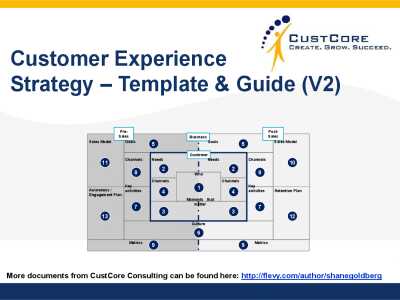
Customer Experience is fast becoming the key business battleground in many markets.
In order to be successful it is critical that all business create a Customer Experience Strategy, an all encompassing view of how they will deliver superb experiences to their customers. Having such a strategy [read more]
Do You Want to Implement Business Best Practices?
You can download in-depth presentations on Customer Experience and 100s of management topics from the FlevyPro Library. FlevyPro is trusted and utilized by 1000s of management consultants and corporate executives.
For even more best practices available on Flevy, have a look at our top 100 lists:
These best practices are of the same as those leveraged by top-tier management consulting firms, like McKinsey, BCG, Bain, and Accenture. Improve the growth and efficiency of your organization by utilizing these best practice frameworks, templates, and tools. Most were developed by seasoned executives and consultants with over 20+ years of experience.
Readers of This Article Are Interested in These Resources
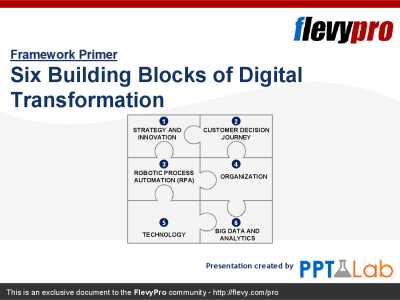
Digital Transformation touches practically every function in the entire organization. This thus requires an unprecedented amount of coordination among people, process, and technologies throughout the organization, leading to a difficult Transformation program.
The Six Building Blocks of [read more]
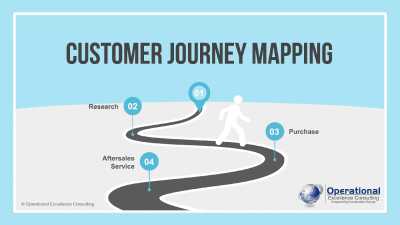
Customer Journey Mapping is the process of creating a graphical representation of the steps and stages a customer goes through to experience a product, service, an online experience, or any combination. It may focus on a particular part of the process or the end-to-end experience.
The journey [read more]
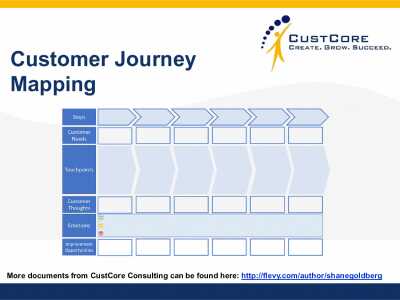
This Guide will take you through step-by-step detailed instructions to help you create a Customer Journey Map - a visual representation of the experience that customers have with your organisation, product or service.
The step-by-step guide includes a comprehensive outline and templates for use [read more]
Understanding customers, their desires and requirements, is absolutely essential for organizations to deliver excellent Customer Experiences (CX) today. Organizations are realizing the importance of great Customer Experience--for many, it's a source of Competitive Advantage. In fact, more and [read more]
 Not all UI/UX design agencies work the same way. Some do everything. Others focus on one type of product or industry.