
Provides an easy to use tool and set of questions to determine customer experience maturity
Guides any organisation to determine best next steps to improve customer experience
Gives a framework for discussing customer experience maturity throughout an organisation
CUSTOMER EXPERIENCE PPT DESCRIPTION
Editor Summary
Customer Experience Maturity Assessment is a 30-slide PowerPoint framework with a supplemental XLSX developed by CustCore Consulting and an ex-McKinsey consultant to evaluate organizational CX maturity across 7 competencies.
Read moreIt includes a Customer Experience Maturity Assessment Tool, a 1–5 rating framework (Missing to Embedded), templates for customer surveys and persona development, guidance for integrating scores, and a program development framework. Sold as a digital download on Flevy with immediate digital download and aimed at CCOs, CX leaders, business analysts, and senior executives.
Use this assessment when an organization needs to determine current CX capabilities, prioritize improvements, or run workshops to embed customer-centric practices — for example during initial capability reviews, strategy refreshes, or post-program retrospectives.
Chief Customer Officers conducting an initial CX capability assessment to align CX priorities with business strategy.
CX leaders and managers running workshops to review maturity results and prioritize improvement activities.
Business analysts integrating assessment scores and producing graphical results using the provided spreadsheet.
Senior executives using results to define governance and program development for CX initiatives.
The tool’s structured 7-competency maturity framework and 1–5 scoring approach reflect consulting-grade assessment practices associated with ex-McKinsey methodology.
Delivering great customer experiences is one of the true differentiators of many of the great organisations of our time.
However, delivering these great experiences doesnt happen overnight. Organisations need to become mature at all aspects of creating, delivering and improving customer experience (CX), and for customer experience to become part of their 'DNA' for them to be able to truly be sustainably successful in the market.
The Customer Experience Maturity Assessment is an invaluable tool for anyone beginning a CX program, or for organisations who aren't sure where to go next in improving the experiences they deliver to customers.
The Customer Experience Maturity Assessment allows any organisation to determine their level of CX maturity, and what the best next steps are to move up the maturity ladder and deliver even better experiences to customers.
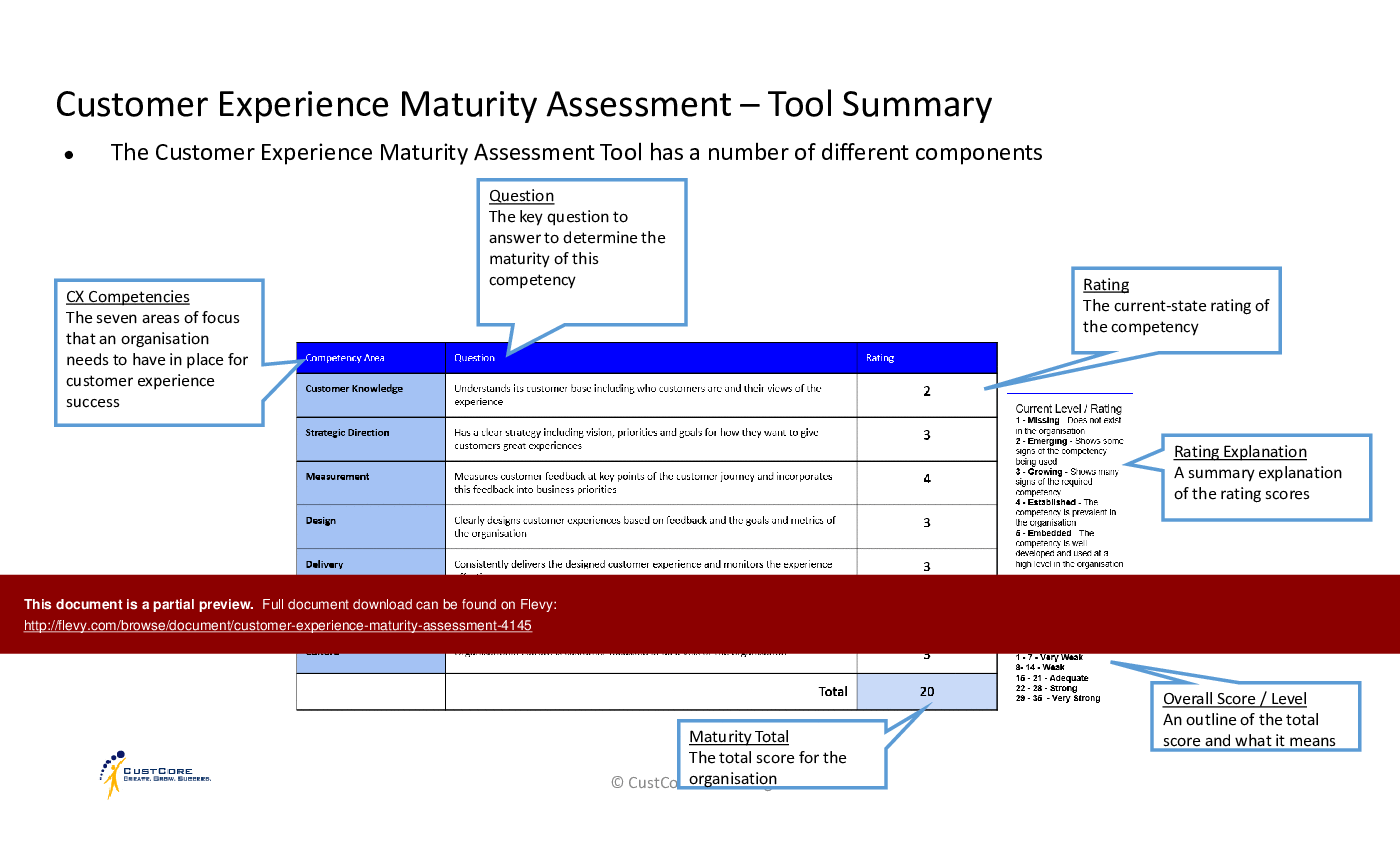
In this document and its associated spreadsheet you will be introduced to a set of 7 CX competencies and the questions you need to answer to determine the maturity of your organisation.
You will also be shown how to
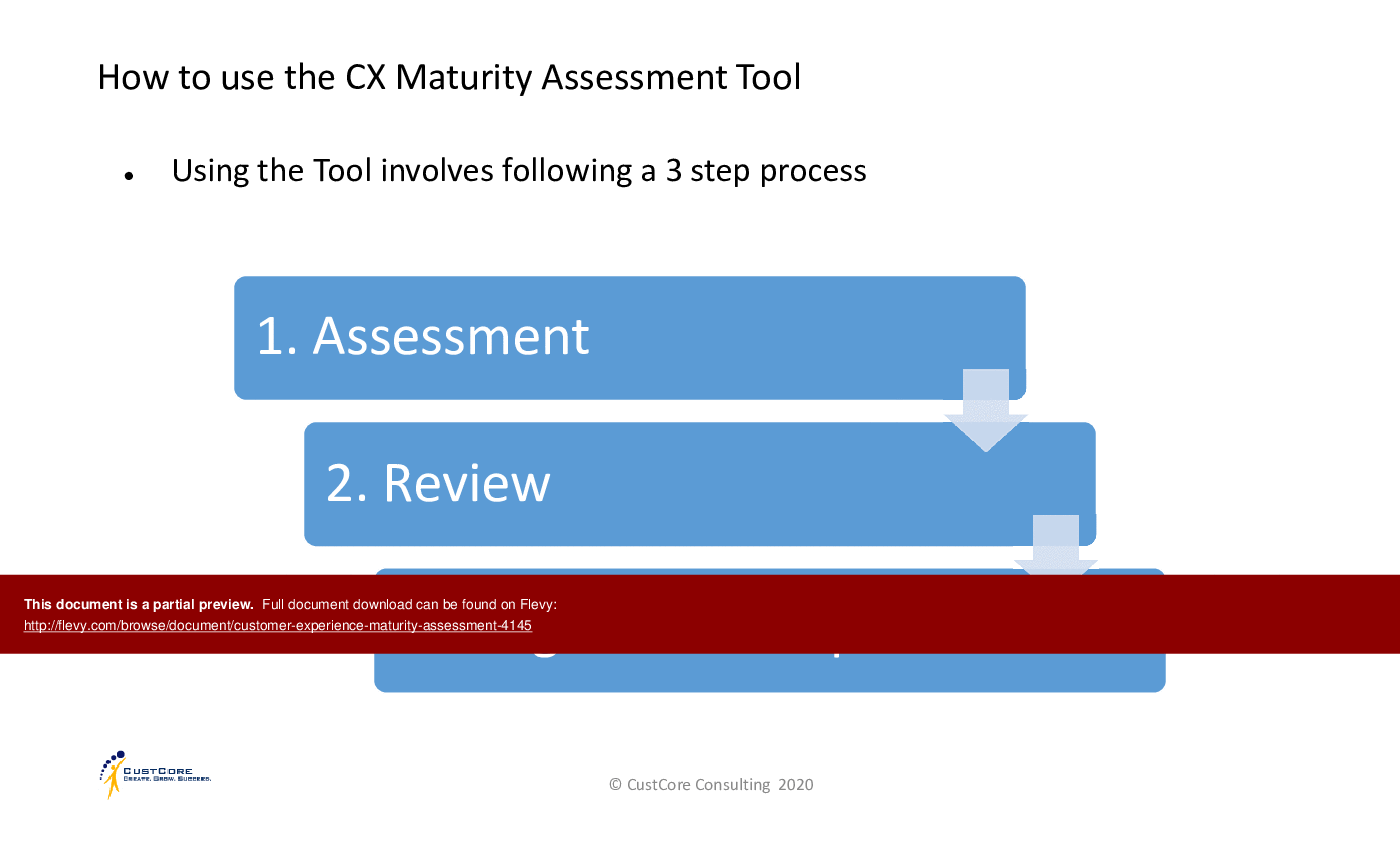
• Use the tool to assess maturity
• Review the results and represent them in an easy graphical manner (using the sheet provided)
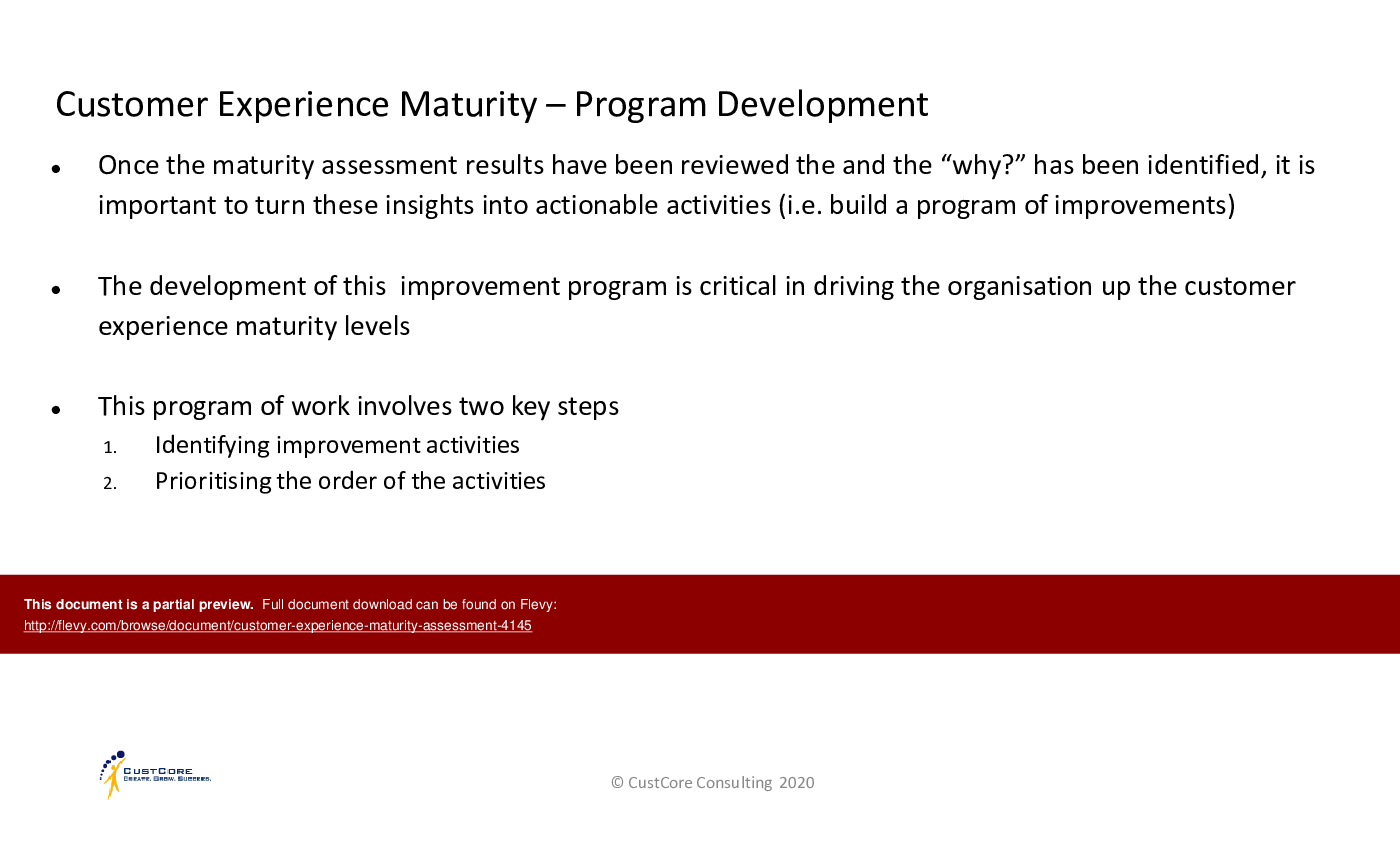
• Develop a program of work to radically improve customer experience based on the current maturity level of the organisation
The Customer Experience Maturity Assessment PPT provides a comprehensive framework for evaluating and enhancing your organization's CX capabilities. It offers a detailed breakdown of seven key competencies, complete with specific questions and a rating system to gauge your current maturity level. The tool also includes guidance on integrating scores from various methods and developing a prioritized program of work. This ensures that your improvement efforts are both strategic and effective, driving your organization towards embedded CX excellence.
Got a question about the product? Email us at support@flevy.com or ask the author directly by using the "Ask the Author a Question" form. If you cannot view the preview above this document description, go here to view the large preview instead.
MARCUS OVERVIEW
This synopsis was written by Marcus [?] based on the analysis of the full 30-slide presentation.
Executive Summary
The Customer Experience Maturity Assessment (PPTX) is a structured tool designed to evaluate an organization's customer experience (CX) maturity level. Created by an ex-McKinsey consultant, this consulting-grade assessment provides a clear framework for organizations to identify their current CX capabilities across 7 competencies. By utilizing this tool, executives can pinpoint areas for improvement and develop actionable strategies to enhance customer experience, ultimately transforming it into a competitive differentiator.
Who This Is For and When to Use
• Chief Customer Officers (CCOs) focused on enhancing customer-centric strategies
• CX leaders and managers responsible for implementing customer experience initiatives
• Business analysts assessing organizational maturity in customer experience
• Senior executives aiming to align customer experience with overall business strategy
Best-fit moments to use this deck:
• During initial assessments of current customer experience capabilities
• When developing or refining customer experience strategies
• In workshops aimed at fostering a customer-centric culture across the organization
Learning Objectives
• Define customer experience maturity and its significance in organizational success
• Assess current CX capabilities using a structured maturity assessment tool
• Identify key areas for improvement across 7 CX competencies
• Develop actionable strategies to enhance customer experience maturity
• Foster a customer-centric culture within the organization
• Establish metrics for measuring progress in customer experience initiatives
Table of Contents
• Introduction to Customer Experience Maturity (page 3)
• Overview of the Maturity Assessment Tool (page 5)
• Competency Areas and Ratings (page 7)
• Detailed Competency Descriptions (page 10)
• Assessment Methodologies (page 15)
• Integrating Assessment Scores (page 18)
• Reviewing Assessment Results (page 20)
• Program Development Steps (page 23)
• Prioritizing Improvement Activities (page 28)
• Conclusion and Next Steps (page 30)
Primary Topics Covered
• Customer Knowledge - Understanding the customer base, including demographics and feedback on experiences.
• Strategic Direction - Establishing a clear strategy with vision, priorities, and goals for delivering exceptional customer experiences.
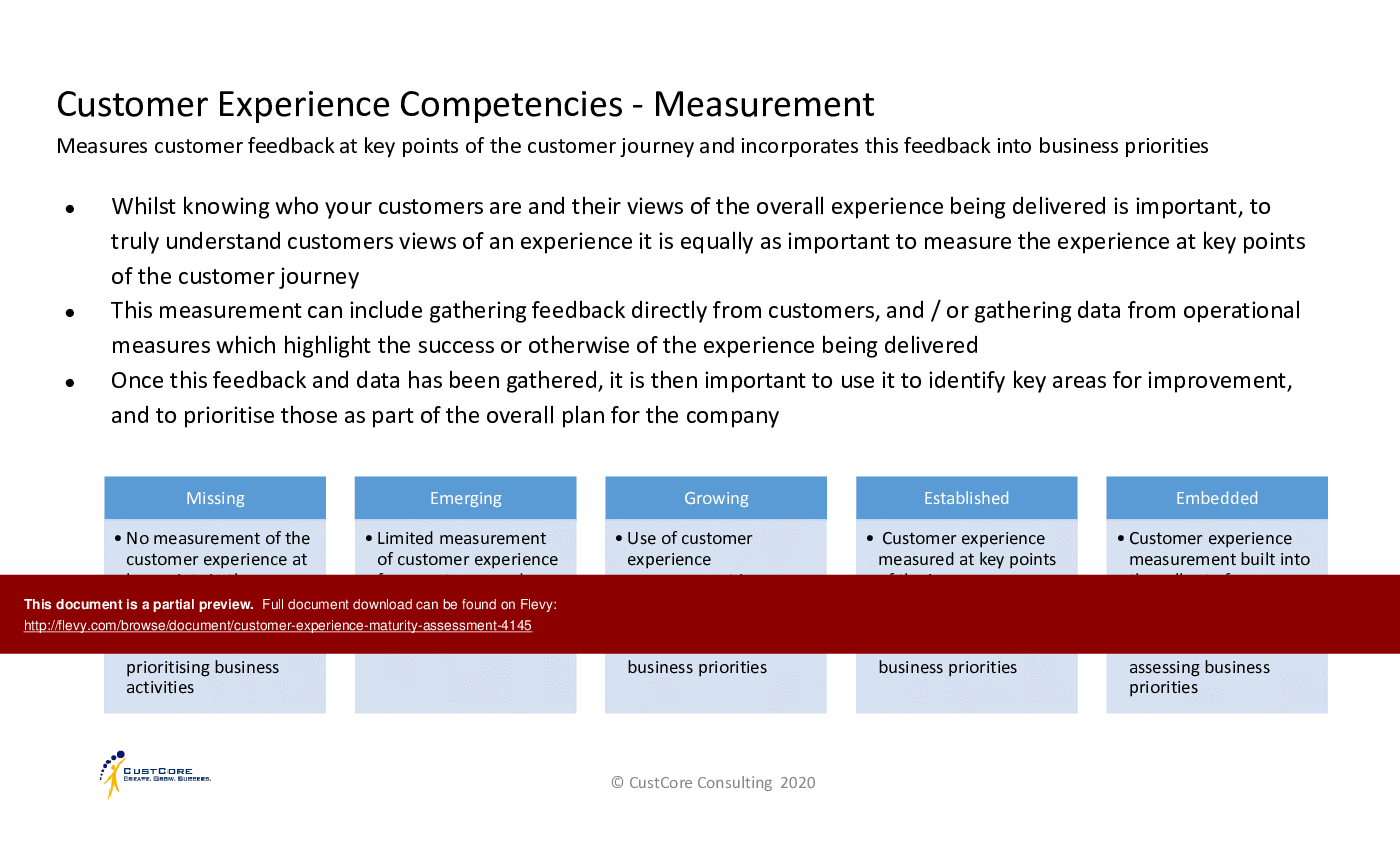
• Measurement - Implementing systems to gather customer feedback at critical journey points and using this data to inform business priorities.
• Design - Creating customer experiences based on insights and organizational goals, ensuring they meet customer needs.
• Delivery - Ensuring that designed experiences are consistently delivered and monitored for effectiveness.
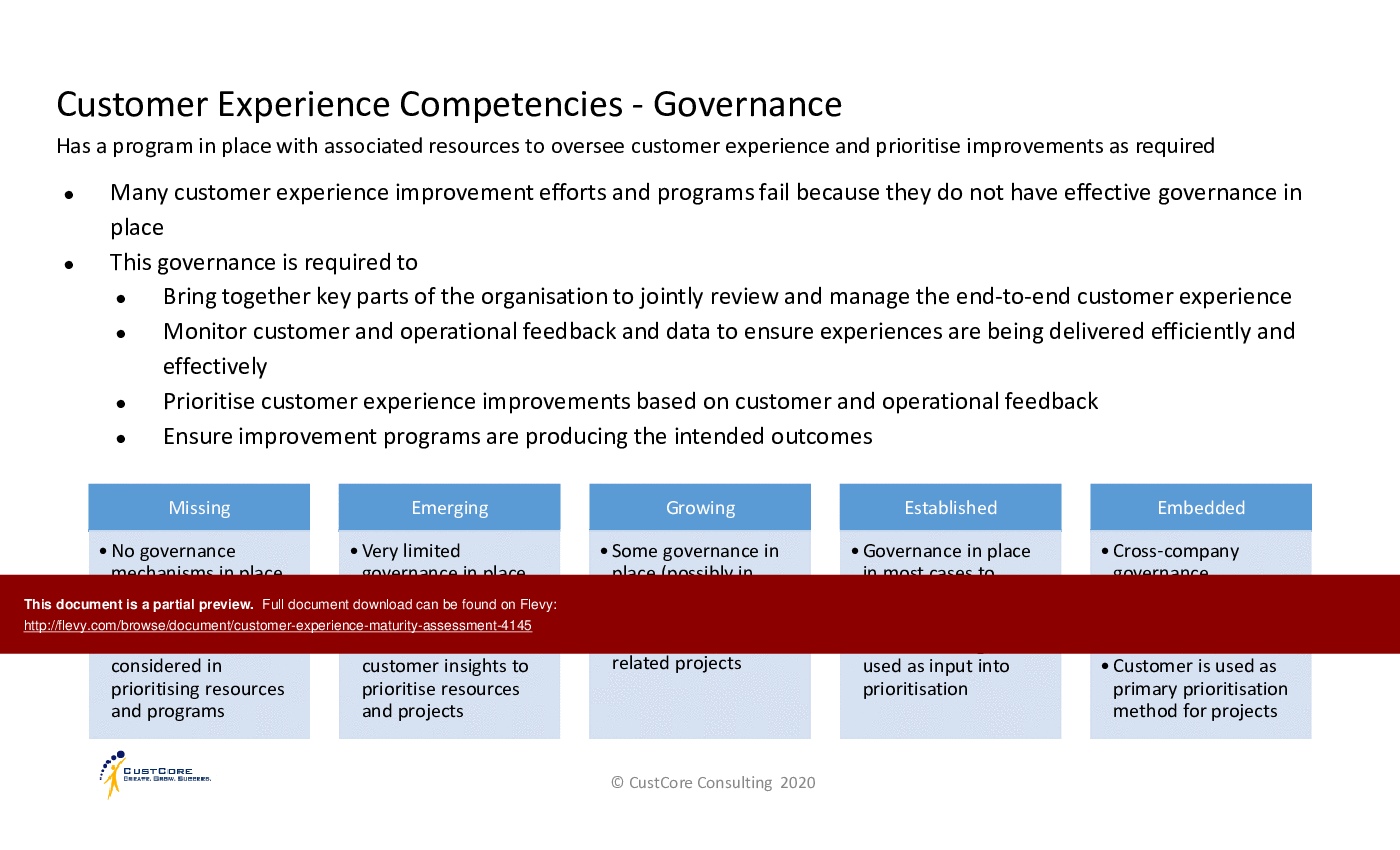
• Governance - Establishing a framework to oversee customer experience initiatives and prioritize improvements.
• Culture - Cultivating a customer-focused culture throughout the organization, ensuring alignment at all levels.
Deliverables, Templates, and Tools
• Customer Experience Maturity Assessment Tool for evaluating organizational capabilities
• Rating framework for assessing each of the 7 CX competencies
• Guidelines for integrating assessment scores and understanding results
• Program development framework for identifying and prioritizing improvement activities
• Templates for customer surveys and persona development to enhance customer knowledge
Slide Highlights
• Overview slide detailing the 7 competencies essential for CX maturity
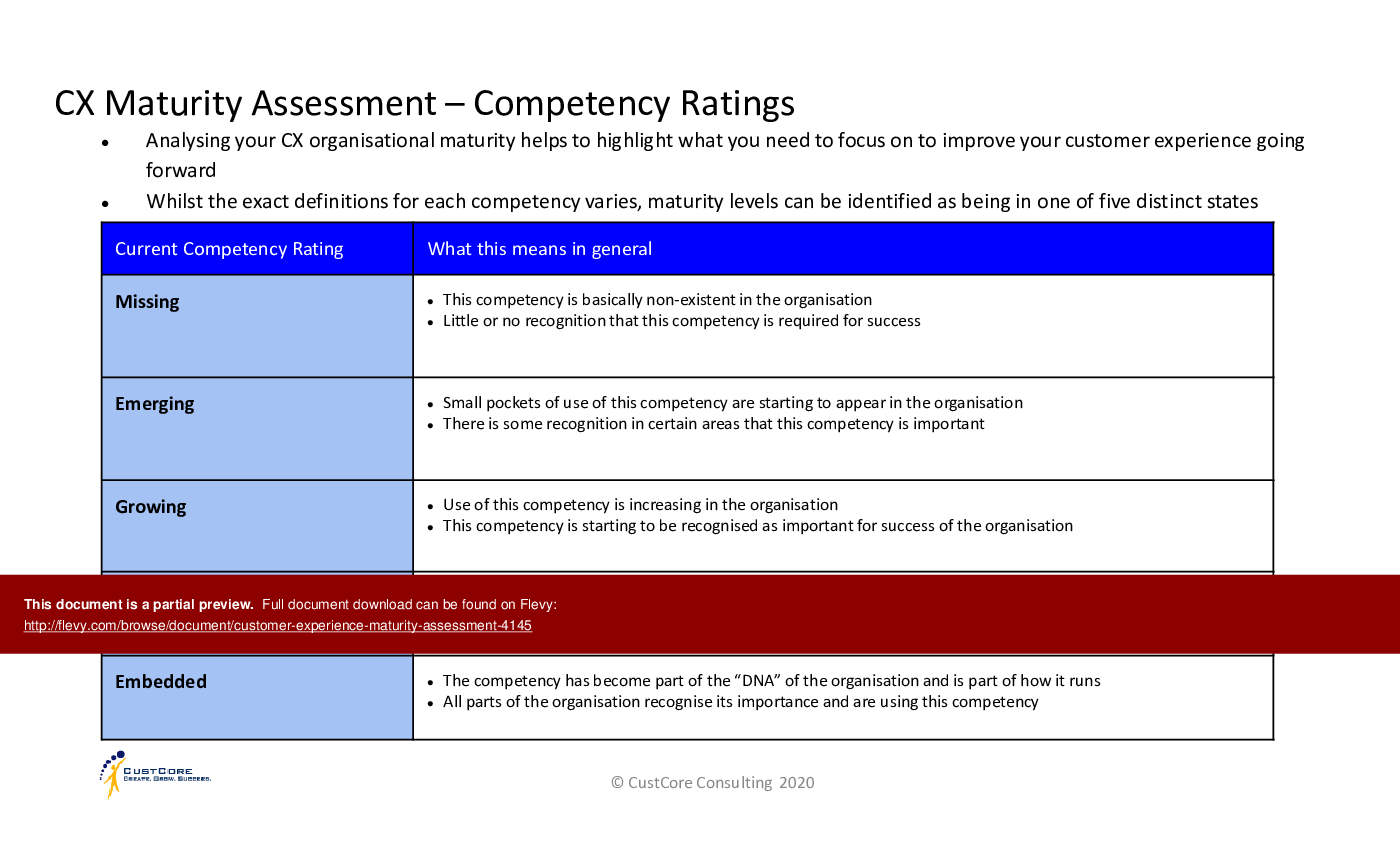
• Rating scale slide explaining the scoring system from "Missing" to "Embedded"
• Example assessment results showcasing a hypothetical organization's maturity ratings
• Integration slide illustrating how to combine scores from various assessment methods
• Program development slide outlining steps for creating actionable improvement plans
Potential Workshop Agenda
CX Maturity Assessment Overview (60 minutes)
• Introduce the concept of customer experience maturity and its importance
• Discuss the 7 competencies and their interrelations
• Review the assessment tool and scoring methodology
Assessment Results Review (90 minutes)
• Analyze the results of the maturity assessment
• Identify strengths and weaknesses in current CX capabilities
• Discuss implications of the findings for organizational strategy
Action Planning Session (120 minutes)
• Brainstorm potential improvement activities based on assessment results
• Prioritize initiatives using a simple rating system
• Develop a roadmap for implementing improvement activities
Customization Guidance
• Tailor the assessment tool to reflect specific organizational contexts and customer segments
• Adjust the scoring criteria based on industry benchmarks and best practices
• Incorporate organizational terminology and metrics into the assessment framework
Secondary Topics Covered
• The role of leadership in fostering a customer-centric culture
• Techniques for gathering customer feedback effectively
• Strategies for communicating the importance of customer experience across the organization
• Best practices for integrating customer insights into business decision-making
Topic FAQ
What competencies are typically evaluated in a customer experience maturity model?
A common CX maturity model assesses areas that determine an organization’s ability to design, deliver, and improve experiences. Core competencies listed in the overview include Customer Knowledge, Strategic Direction, Measurement, Design, Delivery, Governance, and Culture, totaling 7 competencies.
How is maturity level commonly scored in CX assessments?
Maturity is often scored using a discrete rating scale per competency and an aggregated total to indicate overall maturity. The referenced framework rates each competency on a 1-to-5 scale mapped from “Missing” to “Embedded,” with aggregate scores showing levels from “Very Weak” to “Very Strong.”
How should organizations combine different assessment methods into a single maturity score?
Combining methods involves normalizing inputs and applying a weighting approach so qualitative and quantitative measures contribute to a unified score. The product’s materials include guidance and an integration slide that illustrates how to combine scores from various assessment methods, shown on the integration slide.
What should I look for when choosing a CX maturity assessment template?
Seek templates that cover multiple competencies, provide a clear rating framework, include tools for customer knowledge (surveys, personas), offer integration guidance for scores, and supply steps for program development. The Customer Experience Maturity Assessment specifically provides these elements across 7 competencies.
How much time should I plan for a CX maturity workshop and results review?
The sample agenda suggests a sequence of sessions: a 60-minute overview of CX maturity, a 90-minute assessment results review, and a 120-minute action planning session. Those suggested sessions total 270 minutes for the full workshop program.
I need to align CX initiatives with corporate strategy — which toolkit elements help most?
Elements that link CX to strategy include the Strategic Direction competency, Measurement to track outcomes, Governance to assign accountability, and the Program Development framework to prioritize initiatives. Use those components to map CX activities to strategic goals, relying on the Program Development framework.
How can a small team assess CX maturity without extensive benchmarking data?
Small teams can use structured questions across the 7 competencies, gather primary feedback via customer surveys, build personas to represent customer segments, and adjust scoring criteria to internal context. The materials supply templates for customer surveys and persona development to support that approach.
Are paid CX maturity templates worth buying versus building one in-house?
Paid templates can provide a ready-made competency structure, a scoring system, integration guidance, and actionable program development steps, which reduces development time. The Customer Experience Maturity Assessment ships as a 30-slide PPTX with a supplemental XLSX and includes those elements.
Document FAQ
These are questions addressed within this presentation.
What is the purpose of the Customer Experience Maturity Assessment?
The assessment helps organizations evaluate their current customer experience capabilities and identify areas for improvement across 7 competencies.
How is the maturity level determined?
Each competency is rated on a scale from 1 to 5, with the total score indicating the overall maturity level, ranging from "Very Weak" to "Very Strong."
Who should participate in the assessment process?
Involvement from senior management, frontline staff, and customer feedback is crucial for a comprehensive evaluation of maturity.
Can the tool be customized for different industries?
Yes, the assessment tool can be tailored to reflect specific organizational contexts and customer segments.
What are the next steps after completing the assessment?
Organizations should review results, identify improvement activities, and prioritize initiatives to enhance customer experience maturity.
How often should the assessment be conducted?
Regular assessments are recommended to track progress and adapt strategies as customer expectations evolve.
What resources are available for further development?
CustCore Consulting offers additional templates and guides for enhancing customer experience competencies.
How can organizations ensure effective implementation of improvement activities?
Establishing a governance framework and assigning accountability for initiatives can help ensure successful implementation.
What is the significance of a customer-centric culture?
A customer-centric culture is essential for embedding customer experience principles throughout the organization, leading to sustained success.
Glossary
• Customer Experience (CX) - The overall perception customers have of their interactions with an organization.
• Maturity Assessment - A tool used to evaluate the current state of an organization's capabilities in a specific area.
• Competency - A specific area of focus that contributes to overall performance in customer experience.
• Governance - The framework for overseeing and managing customer experience initiatives.
• Persona Development - The process of creating detailed profiles of target customers to inform strategies.
• Customer Journey Mapping - A visual representation of the customer experience across various touchpoints.
• Feedback Loop - A system for gathering and analyzing customer feedback to inform business decisions.
• Cultural Intervention - Initiatives aimed at shifting organizational culture towards a customer-centric focus.
• Operational Measurement - Metrics used to assess the effectiveness of customer experience delivery.
• Strategic Direction - The overarching strategy guiding an organization's approach to customer experience.
• Embedding - The process of integrating customer experience principles into the organization's core operations.
• Delivery Capabilities - The resources and processes in place to ensure customer experiences are delivered effectively.
• Customer Insights - Understanding derived from analyzing customer feedback and behavior.
• Continuous Improvement - Ongoing efforts to enhance customer experience based on feedback and performance metrics.
• Cross-Functional Collaboration - Working together across different departments to improve customer experience.
• Quick Wins - Initiatives that can be implemented rapidly to demonstrate progress and build momentum.
• Long-Term Strategy - A comprehensive plan for achieving sustained improvements in customer experience.
• Stakeholder Engagement - Involving relevant parties in the assessment and improvement process.
• Actionable Activities - Specific tasks or initiatives that can be implemented to drive improvement.
• Prioritization Framework - A system for ranking initiatives based on their potential impact and resource requirements.
• Customer-Centric Culture - An organizational culture that prioritizes customer needs and experiences in all aspects of operations.
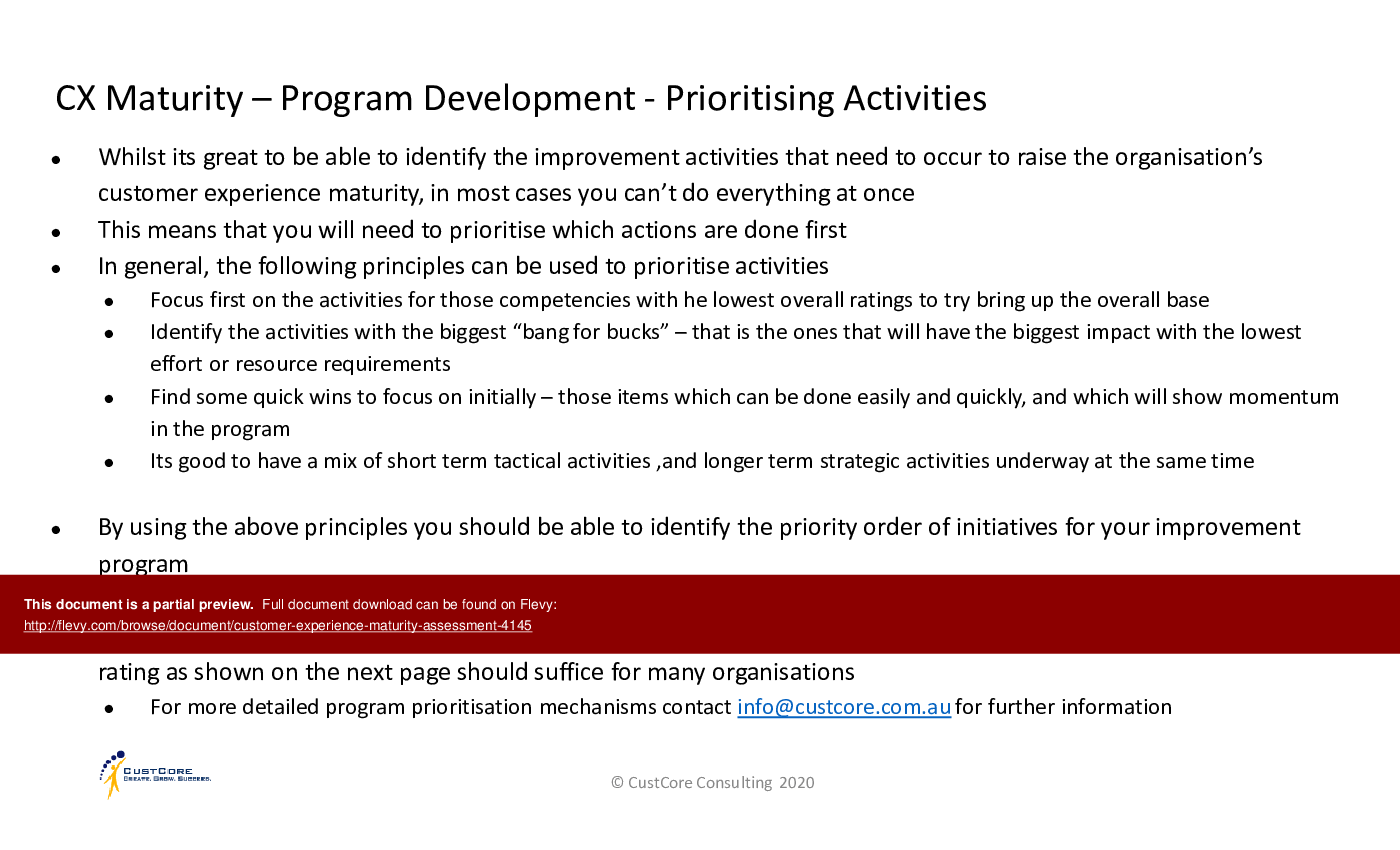
This PPT slide outlines a structured approach to enhancing customer experience (CX) maturity through prioritized activities across key competencies. Each competency includes specific improvement activities ranked by priority levels from 1 to 3.
Customer Knowledge focuses on expanding persona development and standardizing customer surveys to gain deeper insights into customer expectations. Strategic Direction emphasizes developing CX strategy components and cascading this strategy organization-wide for alignment with CX goals.
Measurement highlights embedding customer listening activities at critical touchpoints to gather actionable data for decision-making. Design involves redesigning experiences based on customer feedback to improve customer satisfaction.
Delivery centers on training frontline staff and updating the CRM system to enhance service delivery. Governance calls for a framework to manage CX initiatives, ensuring oversight and accountability. Culture stresses the need for a cross-company intervention program to foster a customer-centric culture.
This PPT slide reviews a Customer Experience (CX) Maturity Assessment, highlighting the need for stakeholder alignment on findings. A collaborative review enhances understanding and drives strategic initiatives. The spider diagram visualizes XYZ Company's ratings in key areas: Customer Knowledge (4.0), Measurement (1.0), Delivery (1.7), Strategic Direction, Design, Governance, and Culture. The low scores in Measurement and Delivery indicate critical areas for improvement. Organizations should prioritize these weaknesses to enhance overall customer experience. Detailed data in a spreadsheet supports deeper analysis and targeted action plans. Engaging discussions based on these insights can align strategies to effectively address identified gaps, fostering better customer engagement and satisfaction.
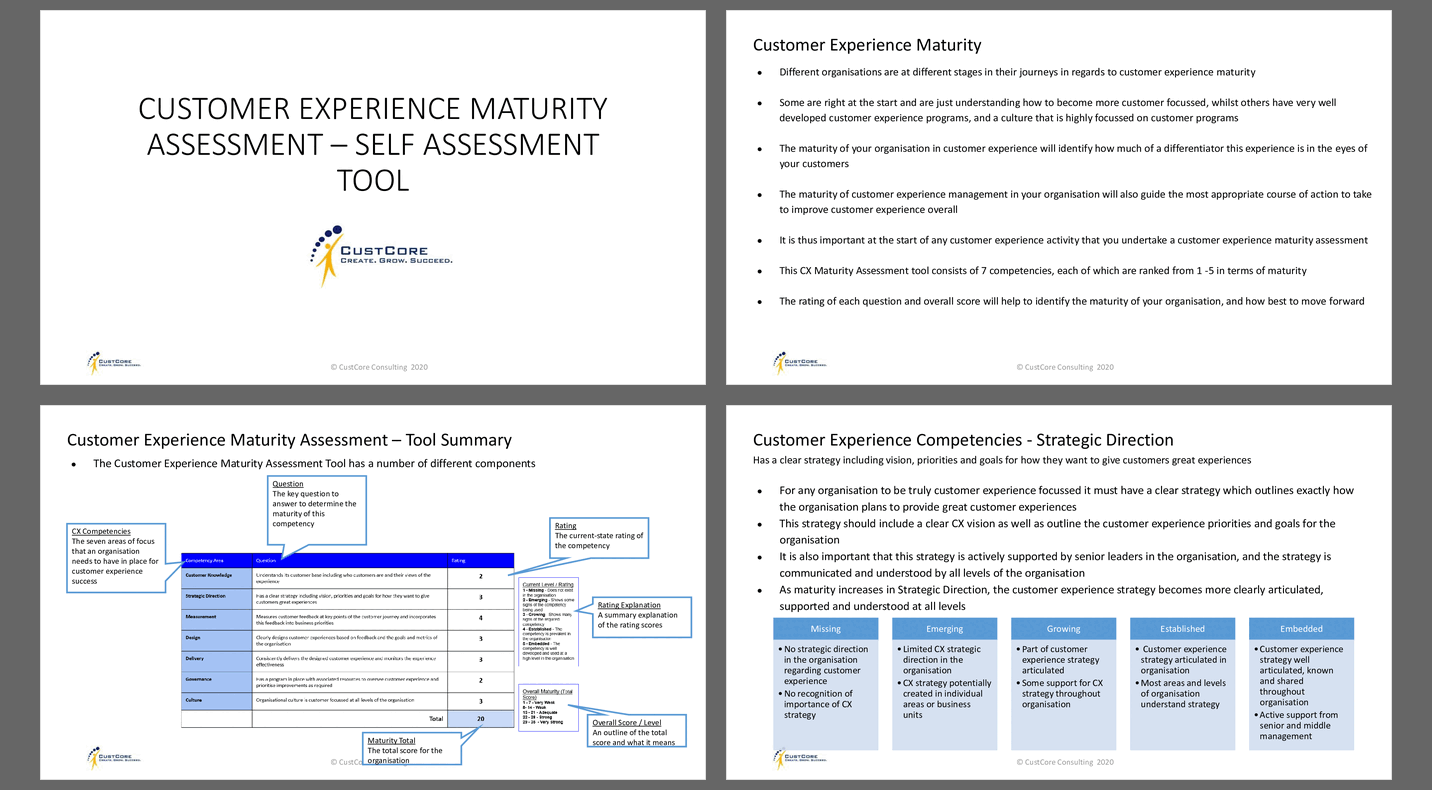
This PPT slide outlines essential components of a customer experience (CX) strategy, emphasizing the importance of a clear CX vision that sets priorities for enhancing customer interactions. It categorizes CX strategy maturity into 5 stages: Missing, Emerging, Growing, Established, and Embedded. In the Missing stage, organizations lack strategic direction for CX. The Emerging stage shows limited CX strategy acknowledgment. The Growing stage indicates articulated parts of the strategy, but lacks full integration. The Established stage reflects a well-understood CX strategy across most areas. Finally, the Embedded stage demonstrates an actively supported CX strategy by management, indicating a comprehensive commitment to enhancing customer experiences. This framework serves as a roadmap for assessing and improving CX maturity.
This PPT slide presents a framework for assessing customer experience maturity through 4 methods: Management Self-assessment, Independent Assessment, Employee Feedback, and Customer Feedback. Management Self-assessment allows senior managers to evaluate organizational maturity quickly, but is subjective and may lack objective data. Independent Assessment, conducted by external consultants, provides an unbiased perspective, but can incur higher costs. Employee Feedback gathers insights from frontline staff and middle management, enhancing buy-in, but may lack broader organizational context. Customer Feedback offers direct insights into customer expectations and needs, though customers may not fully understand how internal processes affect their experiences. A multi-faceted approach is essential for a comprehensive evaluation of customer experience maturity.
Source: Best Practices in Customer Experience PowerPoint Slides: Customer Experience Maturity Assessment PowerPoint (PPTX) Presentation Slide Deck, CustCore Consulting
CustCore Consulting is a boutique consultancy firm which helps businesses unlock hidden growth through a focus on significantly improving end-to-end customer and employee experience.
Whilst each project is different, our clients can typically expect results which show
• Vastly Increased customer satisfaction and advocacy
• Growth in new sales and customer
... [read more] retention
• Significant improvements to the bottom line
• Increased productivity and streamlined operations
Since 2012, we have provided business templates to over 10,000 businesses and organizations of all sizes, from startups and small businesses to the Fortune 100, in over 130 countries.
"One of the great discoveries that I have made for my business is the Flevy library of training materials.
As a Lean Transformation Expert, I am always making presentations to clients on a variety of topics: Training, Transformation, Total Productive Maintenance, Culture, Coaching, Tools, Leadership Behavior, etc. Flevy
It is well worth the money to purchase these presentations. Sure, I have the knowledge and information to make my point. It is another thing to create a presentation that captures what I want to say. Flevy has saved me countless hours of preparation time that is much better spent with implementation that will actually save money for my clients.
"
– Ed Kemmerling, Senior Lean Transformation Expert at PMG
"[Flevy] produces some great work that has been/continues to be of immense help not only to myself, but as I seek to provide professional services to my clients, it gives me a large "tool box" of resources that are critical to provide them with the quality of service and outcomes they are expecting."
– Royston Knowles, Executive with 50+ Years of Board Level Experience
"I like your product. I'm frequently designing PowerPoint presentations for my company and your product has given me so many great ideas on the use of charts, layouts, tools, and frameworks. I really think the templates are a valuable asset to the job."
– Roberto Fuentes Martinez, Senior Executive Director at Technology Transformation Advisory
"Flevy.com has proven to be an invaluable resource library to our Independent Management Consultancy, supporting and enabling us to better serve our enterprise clients.
The value derived from our [FlevyPro] subscription in terms of the business it has helped to gain far exceeds the investment made, making a subscription a no-brainer for any growing consultancy – or in-house strategy team."
– Dean Carlton, Chief Transformation Officer, Global Village Transformations Pty Ltd.
"As a consulting firm, we had been creating subject matter training materials for our people and found the excellent materials on Flevy, which saved us 100's of hours of re-creating what already exists on the Flevy materials we purchased."
– Michael Evans, Managing Director at Newport LLC
"Flevy is our 'go to' resource for management material, at an affordable cost. The Flevy library is comprehensive and the content deep, and typically provides a great foundation for us to further develop and tailor our own service offer."
– Chris McCann, Founder at Resilient.World
"The wide selection of frameworks is very useful to me as an independent consultant. In fact, it rivals what I had at my disposal at Big 4 Consulting firms in terms of efficacy and organization."
– Julia T., Consulting Firm Owner (Former Manager at Deloitte and Capgemini)
"Last Sunday morning, I was diligently working on an important presentation for a client and found myself in need of additional content and suitable templates for various types of graphics. Flevy.com proved to be a treasure trove for both content and design at a reasonable price, considering the time I

saved. I encountered a download issue during the ordering process. However, a quick email to Flevy's support team, even on a Sunday (!!!), resulted in assistance within less than an hour, allowing me to download the content I needed. Fantastic job, Flevy! I give 5 stars for both content/price and customer service. Thank you!

"
– M. E., Chief Commercial Officer, International Logistics Service Provider
Save with Bundles
This document is available as part of the following discounted bundle(s):
Download our FREE Digital Transformation Templates
Download our free compilation of 50+ Digital Transformation slides and templates. DX concepts covered include Digital Leadership, Digital Maturity, Digital Value Chain, Customer Experience, Customer Journey, RPA, etc.