Editor's Note: Take a look at our featured best practice, Employee Engagement Culture (17-slide PowerPoint presentation). Improving Employee Engagement is a priority in most Talent and HR Strategies. This presentation provides a 5-step approach to building a culture of Employee Engagement. This processed was developed by Aon Hewitt based on the Aon Hewitt Top Companies for Leaders study.
Best practices from the [read more]
* * * *
 Good talent is hard to find in today’s increasingly competitive job market, so it’s in your best interests to nurture the talent within your company and keep them inspired. While it’s undoubtedly crucial to recognize high-performing employees, what’s more important is to continually challenge them and allow them to grow within the organization.
Our post on ‘The 3 Effective Tests of Assessing Human Dynamics of the Board’ underscores taking care of your team as one of the most sustainable ways to help your organization succeed. However, in this post we will outline three considerations every manager needs to keep in mind in order to motivate high-performing employees.
Ask them to lead other team members
Delegating is an old management tactic, but it’s still around because it’s so effective. In fact, Comeet suggests that lack of mobility and growth are significant variables when it comes to high employee turnover rates. Not only does delegating effectively lessen your workload, but it also helps empower your employees. You don’t even have to start big; asking your employees to help oversee one or two of their team members can go a long way in creating leadership opportunities. From there, having discussions with your employees about how they lead shows that you’re invested in their personal development. Having your employees take on leadership roles naturally opens up avenues for mentorship, which can then give your employees a clearer idea of their potential career trajectory within the company.
Allow them to take on other tasks
Try asking high-performing employees to try their hand at other tasks. This gives your employees a greater appreciation of how they fit into the company’s overall operations, and it also provides them with the necessary learning opportunities for them to feel like they’re growing. Asking them to conduct interviews is a great example of another responsibility they can try. Chron‘s guide to effective interviews notes that interviewing is in itself a skill that needs to be mastered, and learning how to listen and ask the right questions are skills that will guide your employees throughout their careers. Great leaders should also be great followers, and asking high-performing employees to work with HR for some interview tips can help their development as followers, too.
Keep constructive criticism at the forefront
Recognition is important for high-performing employees, but you also don’t want to enforce the idea that your high-performing employees are infallible. This 2016 article from Entrepreneur on the dangers of a big ego still rings true, as a big ego can prevent your employees from accepting criticism, learning from their mistakes, and thus moving forward. You can curb this potential problem by always giving your employees concrete ways that they can improve – those who take criticism well and look for continued opportunities to grow are those you want to help develop. You should also encourage the other team members around them, and remind high-performing employees in leadership positions to do the same. This will create a strong sense of teamwork and cohesion.
If you’re lucky enough to have high-performing employees in your team, the next step is to nurture their talent and prime them to keep progressing. Remembering these tips can help create a supportive environment for all employees, stellar ones included.
26-slide PowerPoint presentation
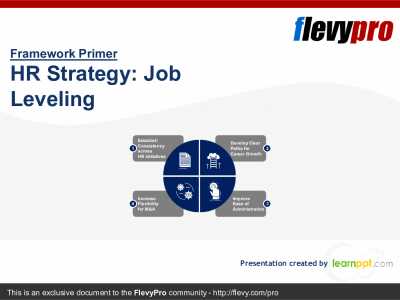
Job Leveling is a disciplined approach to gauge the value of work for individual positions across the organization. It entails ascertaining the nature of work done by each position, authority levels, and the effect of each job on business results.
Jobs that are configured inadequately bread
[read more]
Do You Want to Implement Business Best Practices?
You can download in-depth presentations on Employee Management and 100s of management topics from the FlevyPro Library. FlevyPro is trusted and utilized by 1000s of management consultants and corporate executives.
For even more best practices available on Flevy, have a look at our top 100 lists:
These best practices are of the same as those leveraged by top-tier management consulting firms, like McKinsey, BCG, Bain, and Accenture. Improve the growth and efficiency of your organization by utilizing these best practice frameworks, templates, and tools. Most were developed by seasoned executives and consultants with over 20+ years of experience.
Readers of This Article Are Interested in These Resources
32-slide PowerPoint presentation
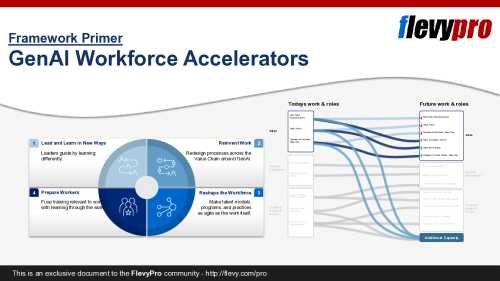
Generative AI (GenAI) is the most significant shift to work since the industrial revolution--and the Trifecta of Opportunities it unlocks (the economic, business, and people upsides) is the strategic objective. This presentation moves from the opportunity to the path: how leaders capture
[read more]
24-slide PowerPoint presentation
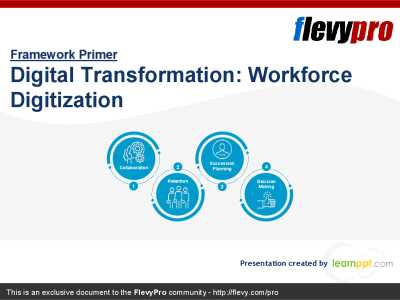
The approaching Age of Automation, together with the impending penetration of digital technology into the labor force, threatens to destabilize crucial aspects of how employees work by. It undermines the stability companies depend on to be agile.
Executives can re-solidify their companies even
[read more]
32-slide PowerPoint presentation
This guide is a basic introduction to performance management, the process, setting objectives, providing feedback, the performance discussion between manager and employee. It is geared to small and mid-sized companies who want to provide a process that is clear and easy to use for managers.
This
[read more]
37-slide PowerPoint presentation
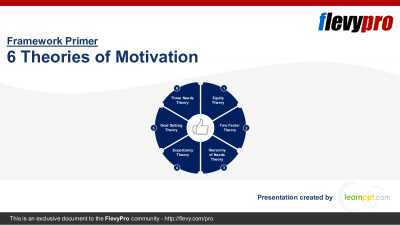
Interpreting the human psyche is a difficult undertaking. Determining what encourages and drives people to achieve their objectives isn't easy to figure out for Leaders and Human Capital experts. This is where research and insights gathered from the various Theories of Motivation comes to play.
[read more]