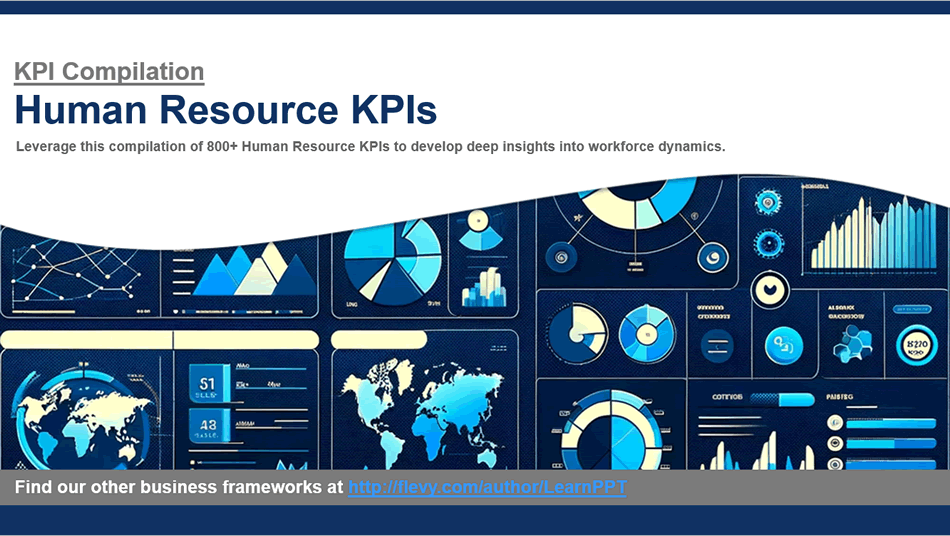

This collection of HR KPIs is compiled by former McKinsey, BCG, Deloitte, EY, and Capgemini consultants based on best practices in Human Resource Management & Talent Management.
This presentation provides a comprehensive set of 800+ KPIs, ensuring that Human Resource Strategies are evidence-based, increasing the effectiveness of programs, such as DEI, Training, and Talent Management.
It offers a ready-to-use, extensive collection of KPIs, saving significant time and effort in research and compilation.
The wide range of KPIs allows for tailored selection and customization to fit specific industry needs and organizational goals, enhancing the relevance and impact of HR and Workforce and Talent Management initiatives.
HUMAN RESOURCES PPT DESCRIPTION
Editor Summary
KPI Compilation: 800+ Human Resource & Talent Management KPIs is a 168-slide PowerPoint presentation containing over 800 HR and talent-management metrics organized into 16 categories (e.g., Compensation & Benefits, DEI, Employee Engagement, L&D, Talent Acquisition, Workforce Planning).
Read moreIncludes an introduction on KPI concepts and KPI selection guidelines. Compiled by former McKinsey, BCG, Deloitte, EY, and Capgemini consultants. Target users include HR business partners, talent leaders, CHROs, and management consultants. Sold as a digital download on Flevy in PPTX format.
Use this compilation when an organization needs to define, standardize, or expand HR measurement across strategic planning, talent management, workforce planning, or performance programs. It supports selecting appropriate metrics and structuring KPI libraries.
HR Business Partners assessing engagement and retention trends to inform local workforce actions using Employee Engagement and Organizational Health KPIs.
Talent Acquisition Leads evaluating recruiting effectiveness and throughput using Talent Acquisition KPIs.
L&D Managers measuring training investment outcomes and alignment to business goals with Learning & Development KPIs.
CHROs benchmarking DEI and culture initiatives using DEI and Corporate Culture KPIs.
The 16-category, metrics-first approach mirrors practices used by firms such as McKinsey, BCG, and Deloitte for KPI selection and alignment.
This presentation is a comprehensive collection of Key Performance Indicators (KPI) related to Human Resources and Talent Management. A KPI is a quantifiable measure used to evaluate the success of an organization, employee, or process in meeting objectives for performance.
KPIs are typically implemented at various levels within an organization, from the highest strategic level down to individual departments and teams. KPIs in Human Resources can provide deep insights into workforce dynamics, informing Strategic Planning, Talent Management, and Decision Making.
In total, we have compiled over 800+ HR KPIs in this PowerPoint presentation, categorized into the following 16 groups:
1. Compensation and Benefits – KPIs in this category help ensure competitive pay structures and benefits offerings, which are crucial for attracting and retaining top talent.
2. Corporate Culture – These KPIs measure the alignment of employee values with company values, providing insight into how culture influences Employee Productivity and Employee Retention.
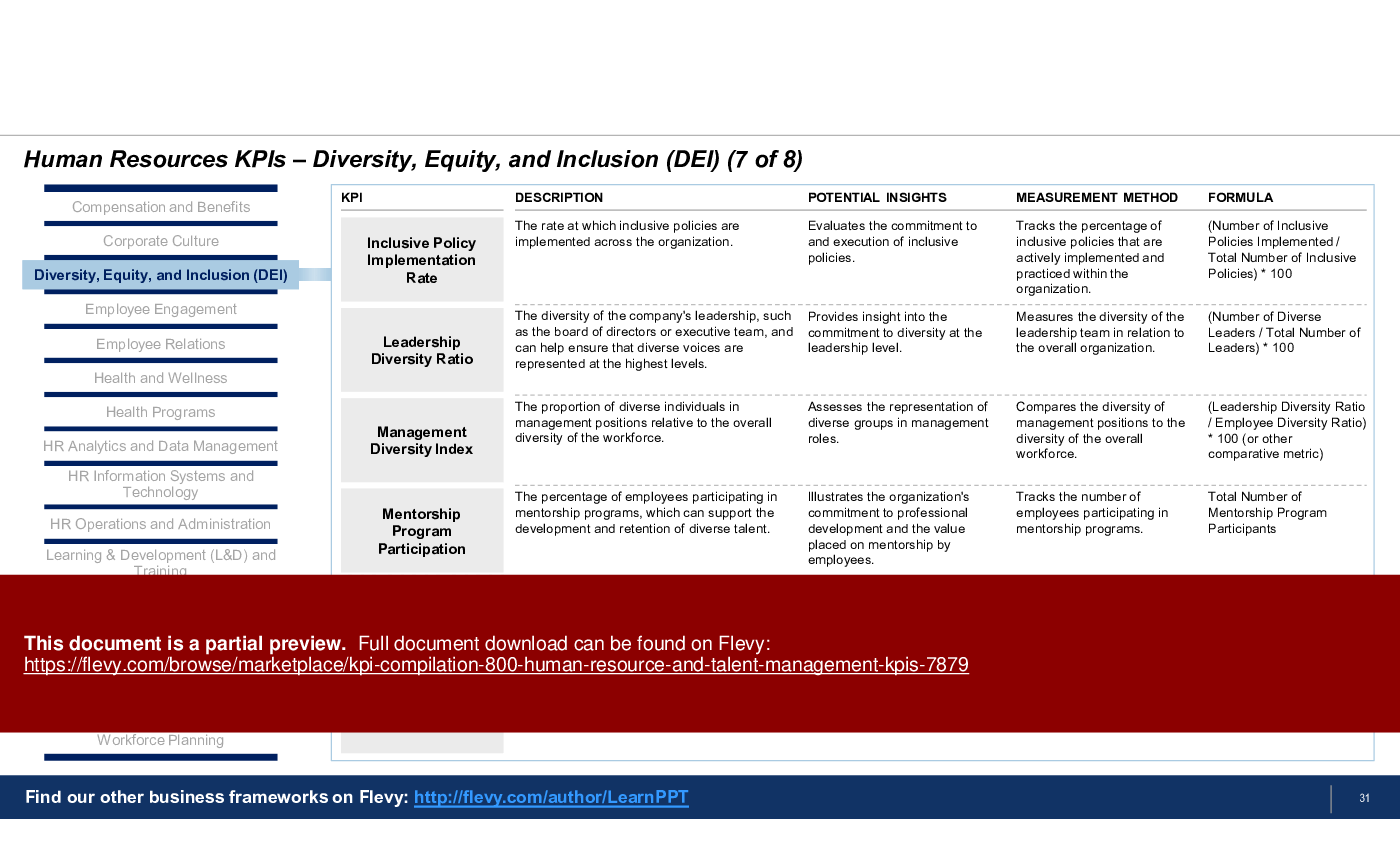
3. Diversity, Equity, and Inclusion (DEI) – DEI KPIs track the effectiveness of initiatives aimed at creating a diverse, fair, and inclusive workplace environment.
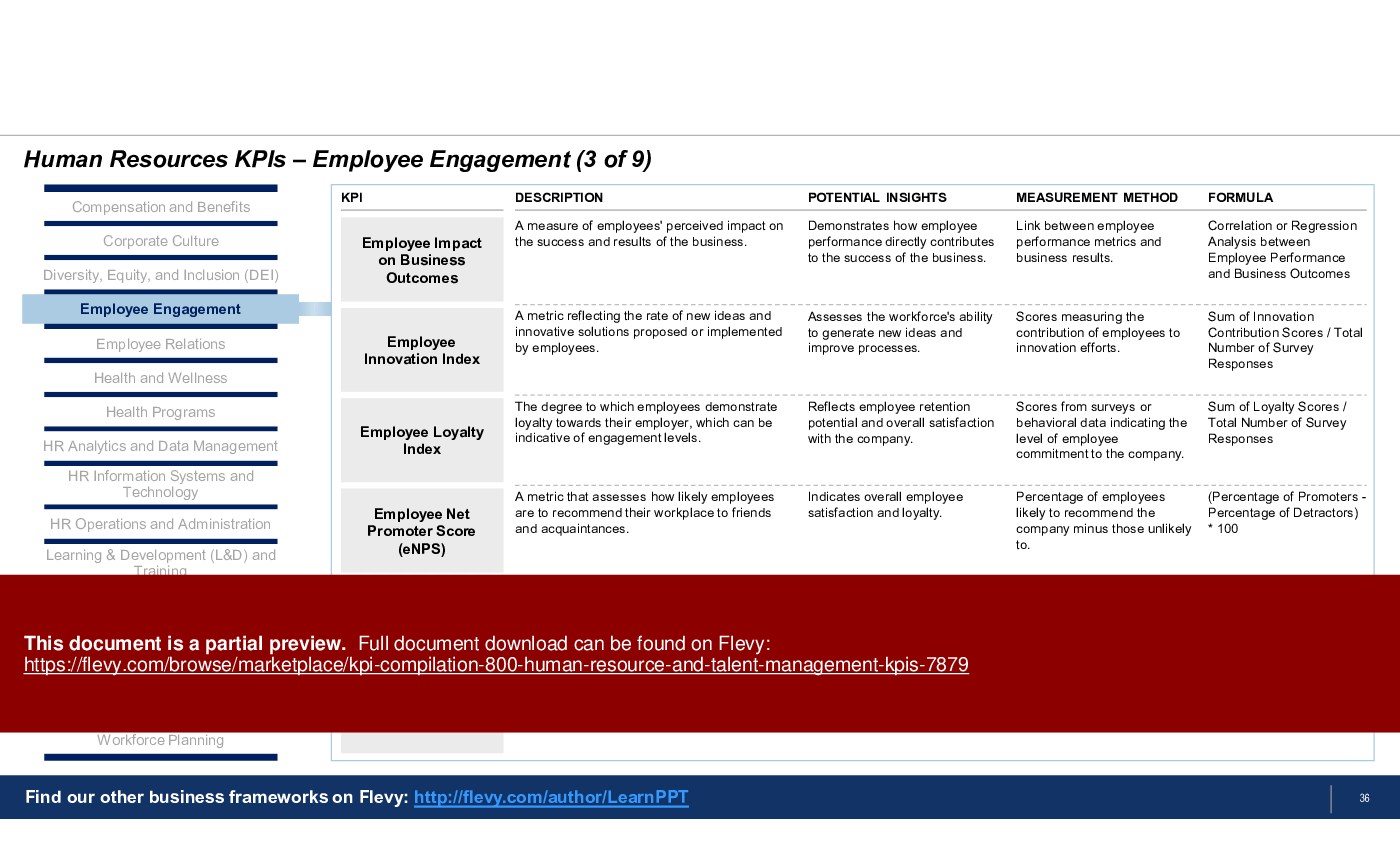
4. Employee Engagement – KPIs focused on Employee Engagement provide data on how invested employees are in their work and the company, which correlates with Productivity and Employee Satisfaction.
5. Employee Relations – This set of KPIs helps identify the quality of interactions between staff and management, aiming to foster a positive work environment and reduce conflict.
6. Health and Wellness – These KPIs assess the impact of company programs on employee health outcomes, contributing to a healthier, more productive workforce.
7. Health Programs – KPIs measure the usage and effectiveness of health-related programs, ensuring employees have the support they need to maintain their well-being.
8. HR Analytics and Data Management – These KPIs evaluate the effectiveness of HR data systems in providing actionable insights into Workforce Management and Strategy Development.
9. HR Information Systems and HR Technology – KPIs for HR technology track the efficiency and impact of HR systems on overall HR Service Delivery and Operational Effectiveness.
10. HR Operations and Administration – KPIs in this area assess the efficiency and quality of HR processes and services, driving administrative improvements and better resource allocation.
11. Learning & Development (L&D) and Training – L&D KPIs measure the return on investment in training programs, aligning employee growth with organizational goals.
12. Organizational Health – KPIs related to organizational health monitor the overall vitality and capability of the organization to endure and thrive in the marketplace.
13. Performance Management – Performance Management KPIs offer insights into how effectively Employee Performance is being measured and managed in alignment with business objectives.
14. Talent Acquisition and Recruiting – KPIs in Talent Acquisition help gauge the effectiveness of recruiting processes and the quality of new hires, impacting the company's long-term success.
15. Talent Management – These KPIs track the success of HR Strategies employed to develop, retain, and utilize employees to meet current and future business objectives.
16. Workforce Planning – Workforce Planning KPIs help anticipate and manage staffing needs, ensuring the right talent is in place to meet strategic business initiatives.
Many Fortune 500 companies engage top management consulting firms, like McKinsey, BCG, and Deloitte, to identify and implement KPIs, acknowledging their critical role in driving performance and strategic alignment, despite the significant investment this process entails.
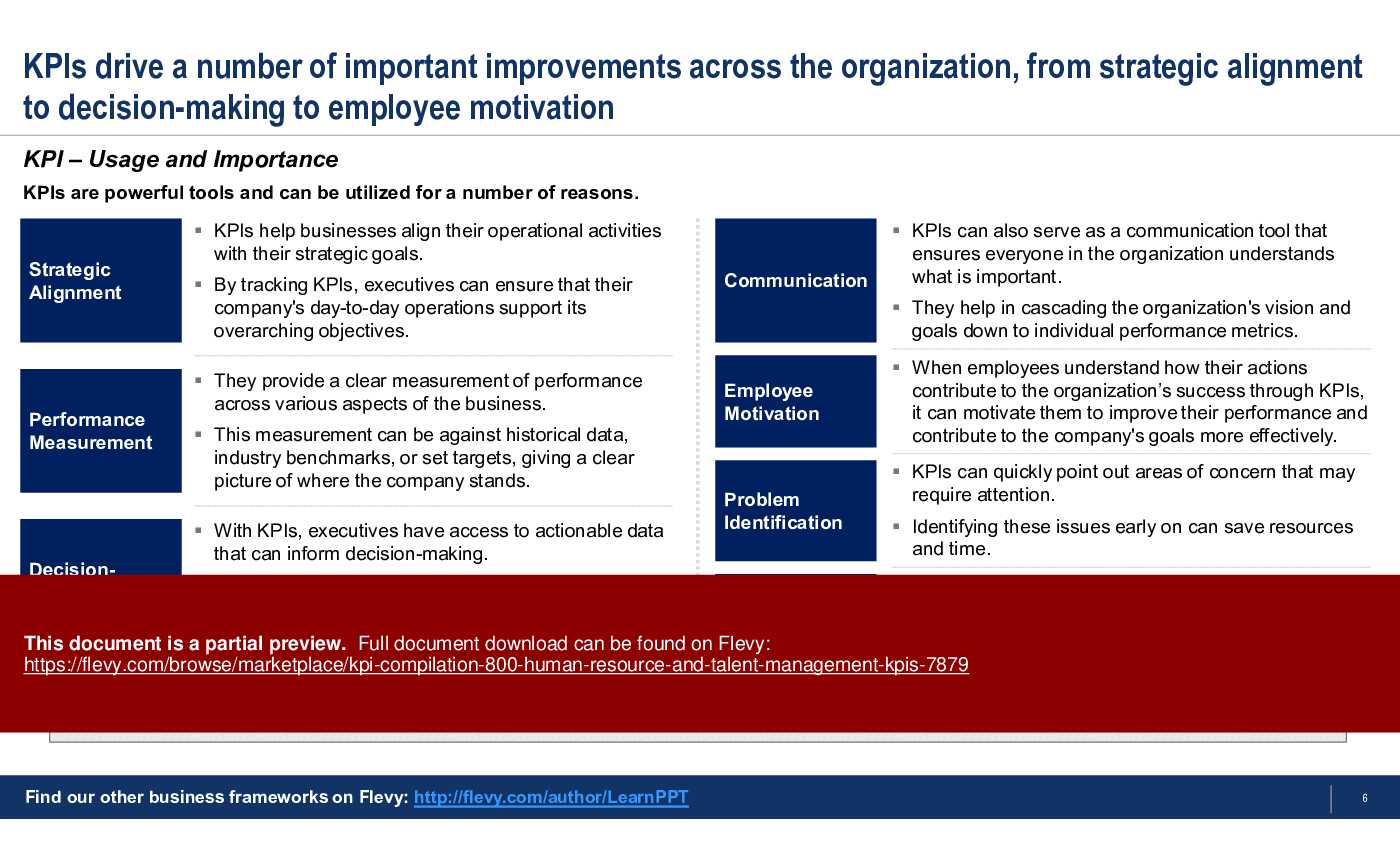
This PowerPoint presentation also includes an introduction on KPIs, covering topics like KPI selection guidelines and common usages.
This extensive compilation of KPIs serves as a vital resource for organizations aiming to enhance their HR strategies and drive measurable outcomes. By leveraging these insights, executives can make informed decisions that align talent management efforts with overarching business goals, ensuring a robust and engaged workforce.
Got a question about the product? Email us at support@flevy.com or ask the author directly by using the "Ask the Author a Question" form. If you cannot view the preview above this document description, go here to view the large preview instead.
TOPIC FAQ
What are the main categories of HR KPIs I should consider when building a measurement framework?
Core HR KPI categories commonly include Compensation & Benefits, Corporate Culture, DEI, Employee Engagement, Employee Relations, Health & Wellness, HR Analytics, HR Technology, HR Operations, L&D & Training, Organizational Health, Performance Management, Talent Acquisition, Talent Management, and Workforce Planning — a total of 16 groups.
How should an organization choose which HR KPIs to track for strategic goals?
KPI selection should align metrics to organizational objectives and the level of application (strategic, departmental, individual). The product includes an introduction covering KPI concepts and KPI selection guidelines to help match measures to strategy and decision-making needs, including KPI selection guidelines.
How do HR KPIs support workforce planning activities?
Workforce Planning KPIs are used to anticipate and manage staffing needs, ensuring the right talent is available for strategic initiatives. Such KPIs inform capacity and gap analysis, linking hiring and development actions to future demand and are captured under the Workforce Planning category.
Which KPIs help monitor diversity, equity, and inclusion progress?
DEI KPIs track the effectiveness of initiatives aimed at creating a diverse, fair, and inclusive workplace, and Corporate Culture KPIs measure alignment of employee values with company values; both categories provide measurable inputs for DEI programs and culture alignment.
What should I look for when buying an HR KPI compilation to ensure it fits my needs?
Evaluate breadth of coverage across HR domains, total number of KPIs, inclusion of guidance on KPI selection, and delivery format. This product provides over 800 KPIs across 16 categories in a 168-slide PowerPoint and includes KPI selection guidance.
How do cost and consultancy alternatives compare when implementing HR KPIs?
Many Fortune 500 firms engage consulting firms such as McKinsey, BCG, and Deloitte to develop KPIs, which can be resource intensive; a precompiled KPI library can reduce initial scoping time, but requires internal tailoring. This compilation lists over 800 KPIs to streamline that effort.
I need to benchmark recruiting performance after an acquisition—what KPI areas should I focus on?
Focus on Talent Acquisition and Recruiting KPIs to assess recruiting process effectiveness and Talent Management and Workforce Planning KPIs to evaluate integration, capacity, and future staffing needs; these categories are included among the 16 KPI groups.
How can L&D leaders measure the impact of training programs using KPIs?
L&D KPIs measure return on investment and alignment of training to organizational goals, helping quantify outcomes such as skill development and contribution to performance objectives; see the Learning & Development & Training KPI category for relevant measures.
This PPT slide outlines key performance indicators (KPIs) for HR analytics and data management. The "360-Degree Feedback Completion Rate" measures the percentage of completed feedback assessments, reflecting commitment to performance evaluations and identifying completion obstacles. The "Absenteeism Rate" indicates the percentage of working days lost due to employee absence, impacting productivity and workplace reliability. The "Attrition Rate" tracks employee departures, providing insights into organizational stability and workforce satisfaction. The "Career Path Ratio" assesses defined career paths against employee roles, revealing career development program effectiveness. The "Compensation Competitiveness Ratio" compares compensation packages to market averages, indicating talent attraction and retention strategies. Lastly, the "Cost per Hire" evaluates total recruitment costs divided by hires, offering insights into hiring efficiency and cost-effectiveness. These KPIs are essential for enhancing HR strategies and workforce management practices.
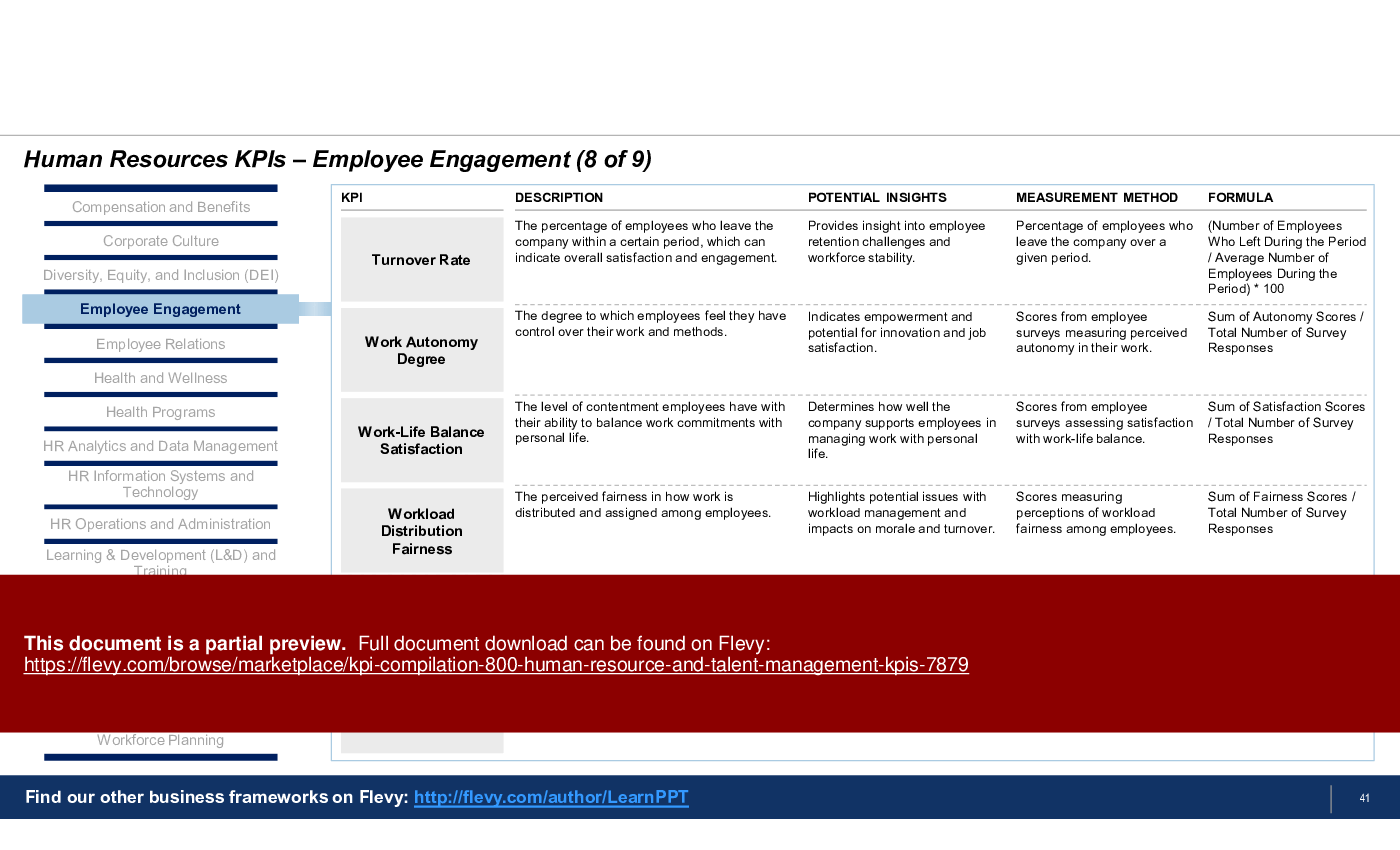
This PPT slide presents key performance indicators (KPIs) for employee engagement, crucial for assessing commitment levels. Metrics include Absenteeism Rate, Career Path Ratio, Company Mission & Values Alignment, Cross-Departmental Collaboration, Diversity & Inclusion Progress, and Employee Advocacy. The Absenteeism Rate reflects employee morale, while the Career Path Ratio indicates advancement effectiveness within the organization. Company Mission & Values Alignment measures employee resonance with core values, impacting overall commitment. Cross-Departmental Collaboration evaluates interdepartmental interactions, highlighting innovation opportunities. Measurement methods and formulas for each KPI ensure clarity in quantification, enabling organizations to systematically track employee engagement and make data-driven decisions to enhance workplace culture and performance.
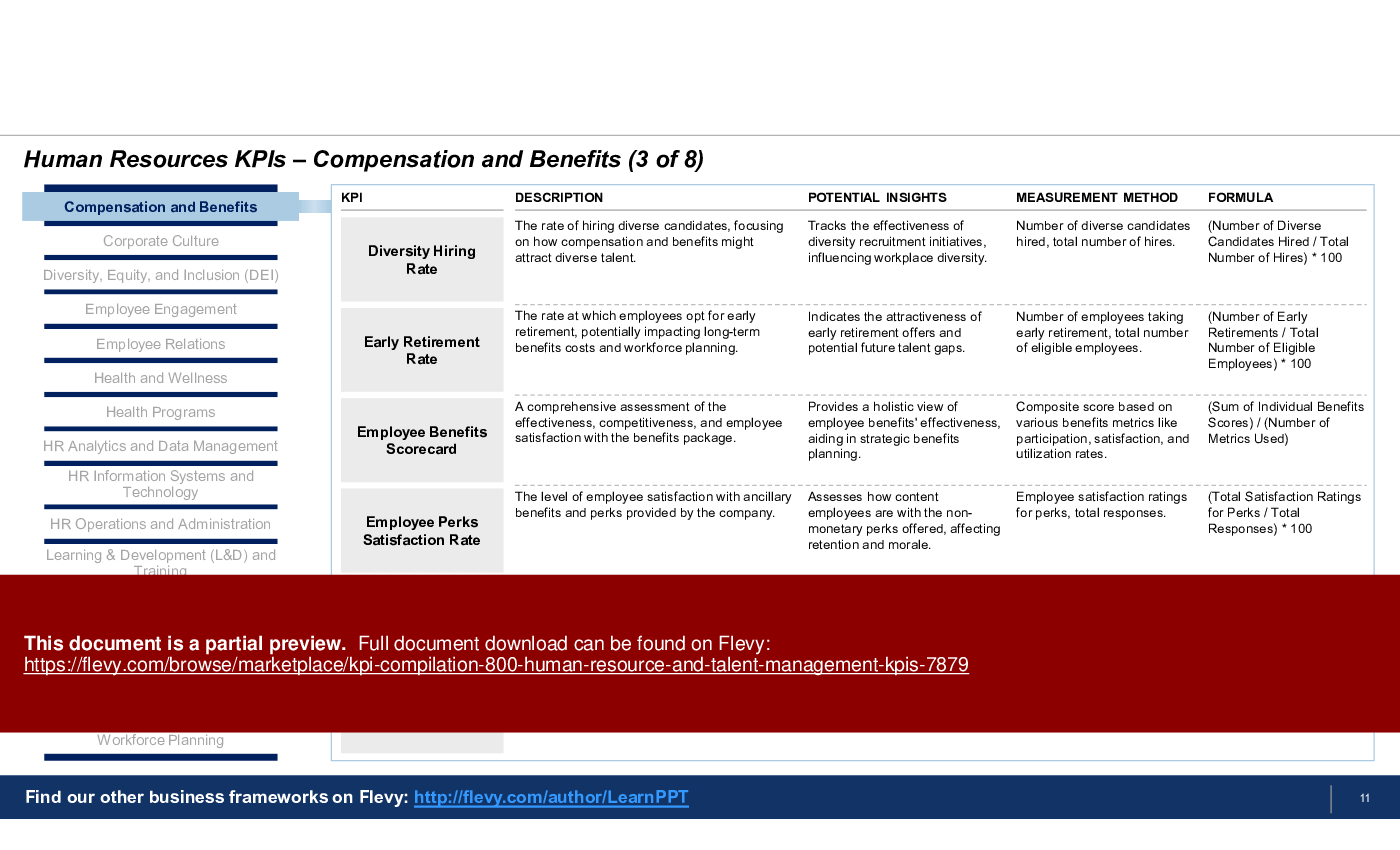
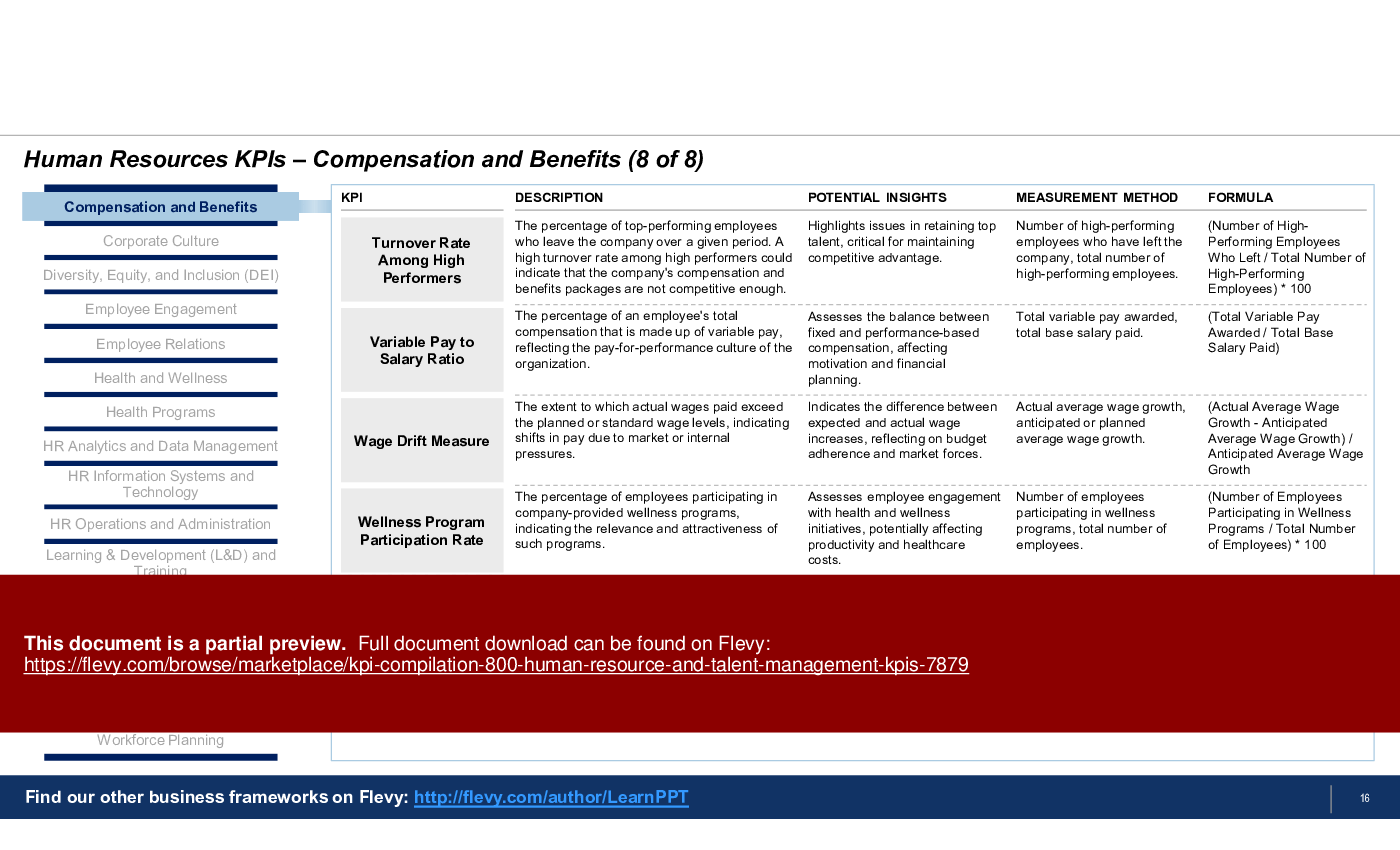
This PPT slide provides an overview of key performance indicators (KPIs) for compensation and benefits in human resources. The Absenteeism Rate measures employee absence, impacting productivity and operational efficiency. The Average Salary Increase Rate reflects an organization's management of salary adjustments, informing retention strategies. Benefits Cost as a Percentage of Payroll indicates the financial allocation to employee benefits, assessing sustainability and cost-effectiveness. The Benefits Participation Rate and Benefits Utilization Rate gauge employee engagement with benefits, linking high rates to job satisfaction and loyalty. The Bonus Payout Ratio evaluates incentive program effectiveness, aligning compensation with employee performance. These KPIs help HR leaders optimize compensation and benefits strategies to meet organizational goals and employee needs.
This PPT slide provides an overview of key performance indicators (KPIs) for HR information systems. "Average HRIS Training Time" measures employee training duration on the HR system, identifying training efficiency. "Average Time to Complete HRIS Tasks" assesses usability by tracking task completion times, indicating user-friendliness. "Benefits Administration Accuracy" evaluates the effectiveness of managing employee benefits, while "Cost Savings through Automation" highlights financial benefits and efficiency gains from automating HR processes. Data accuracy is critical for assessing the quality of information in the HR system, essential for informed decision-making. Lastly, "Employee Career Development" tracks the HR system's support for employee growth initiatives, facilitating career progression.
This PPT slide provides an overview of key performance indicators (KPIs) for health and wellness in organizations. The Absenteeism Rate measures the percentage of employees absent due to illness or injury, identifying trends related to workplace issues. The Alcohol and Substance Abuse Recovery Rate evaluates the success of recovery programs, offering insights into employee recovery and morale. Average Sick Days Per Employee indicates overall employee health and potential wellness needs. The Back Injury Rate measures the incidence of back injuries, assessing safety practices and ergonomic interventions. Behavioral Health Claim Rate and Biometric Screening participation reveal mental health prevalence and employee engagement in preventive health. These metrics guide organizations in enhancing health and wellness initiatives and inform strategic decision-making.
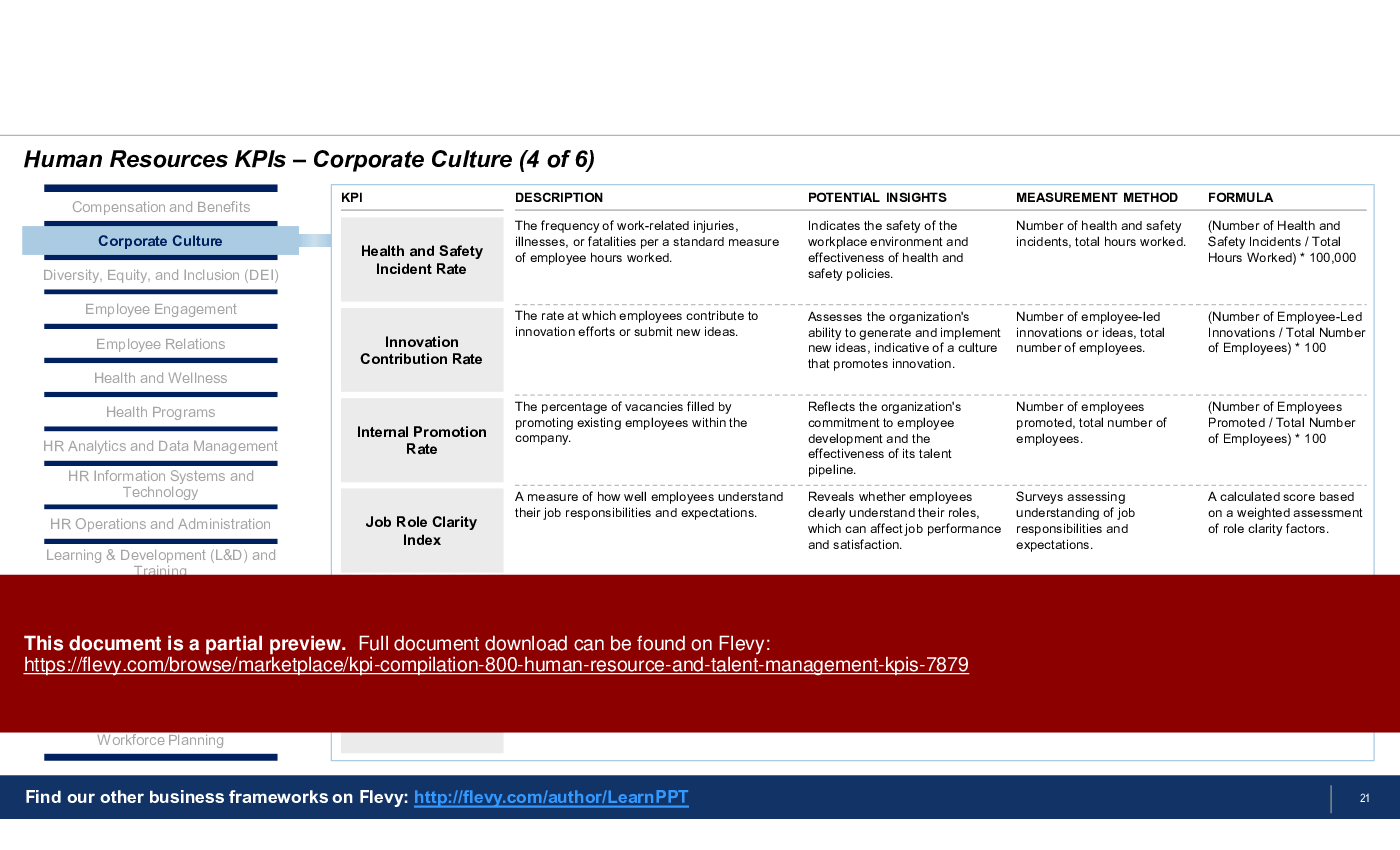
This PPT slide outlines Key Performance Indicators (KPIs) that evaluate corporate culture alignment with employee values, impacting productivity and retention. The "360-Degree Feedback Completion Rate" measures employee engagement in feedback processes, indicating organizational openness. The "Absenteeism Rate" tracks unexcused workdays missed, revealing potential morale issues. The "Career Path Ratio" compares advancement opportunities to employees seeking growth, reflecting commitment to development. The "Change Readiness Index" assesses adaptability to change, crucial for implementing new strategies. "Conflict Resolution Effectiveness" evaluates how well workplace conflicts are managed, indicating a collaborative environment. Lastly, "Cross-Departmental Collaboration" measures interdepartmental cooperation, essential for enhancing organizational performance. These KPIs provide insights into how corporate culture influences employee engagement and retention.
Source: Best Practices in Human Resources, Performance Management, Key Performance Indicators, Employee Engagement PowerPoint Slides: KPI Compilation: 800+ Human Resource & Talent Management KPIs PowerPoint (PPTX) Presentation Slide Deck, LearnPPT Consulting
This collection of HR KPIs is compiled by former McKinsey, BCG, Deloitte, EY, and Capgemini consultants based on best practices in Human Resource Management & Talent Management.
We are a team of management consultants trained by top tier global consulting firms (including McKinsey, BCG, Deloitte, EY, Capgemini) with a collective experience of several decades. We specialize in business frameworks based on real-life consulting engagements.
We have served 100s of clients that range from Fortune 500 companies to tech startups to
... [read more] $1B+ private companies.
Utilize our consulting frameworks to apply structured thinking & analysis to address your business challenges, uncover strategic insights, and implement workable solutions. Our PowerPoint presentations follow traditional consulting slide design formats, starting with a clear slide headline. Easily customize and repurpose our slides for your own business presentations.
Beyond business frameworks & methodologies, we also offer PowerPoint templates and other business templates. Our templates are professionally designed and have been used in thousands of deliverables & work products across hundreds of clients.
Need KPIs or benchmarks?Explore KPI Depot to access the most comprehensive database of KPI data, organized by function and industry.
Trusted by over 10,000+ Client Organizations
Since 2012, we have provided business templates to over 10,000 businesses and organizations of all sizes, from startups and small businesses to the Fortune 100, in over 130 countries.
"If you are looking for great resources to save time with your business presentations, Flevy is truly a value-added resource. Flevy has done all the work for you and we will continue to utilize Flevy as a source to extract up-to-date information and data for our virtual and onsite presentations!"
– Debbi Saffo, President at The NiKhar Group
"As a small business owner, the resource material available from FlevyPro has proven to be invaluable. The ability to search for material on demand based our project events and client requirements was great for me and proved very beneficial to my clients. Importantly, being able to easily edit and tailor
the material for specific purposes helped us to make presentations, knowledge sharing, and toolkit development, which formed part of the overall program collateral. While FlevyPro contains resource material that any consultancy, project or delivery firm must have, it is an essential part of a small firm or independent consultant's toolbox.
"
– Michael Duff, Managing Director at Change Strategy (UK)
"As a niche strategic consulting firm, Flevy and FlevyPro frameworks and documents are an on-going reference to help us structure our findings and recommendations to our clients as well as improve their clarity, strength, and visual power. For us, it is an invaluable resource to increase our impact and value."
– David Coloma, Consulting Area Manager at Cynertia Consulting
"I have used FlevyPro for several business applications. It is a great complement to working with expensive consultants. The quality and effectiveness of the tools are of the highest standards."

– Moritz Bernhoerster, Global Sourcing Director at Fortune 500
"As a young consulting firm, requests for input from clients vary and it's sometimes impossible to provide expert solutions across a broad spectrum of requirements. That was before I discovered Flevy.com.
Through subscription to this invaluable site of a plethora of topics that are key and crucial to consulting, I
have been able to exceed expectations and deliver quality advice and solutions to my clients. The quality and expertise of the authors are exemplary and gives me great confidence to use as part of my service offerings.
I highly recommend this company for any consultant wanting to apply international best practice standards in their service offerings.
"
– Nishi Singh, Strategist and MD at NSP Consultants
"Last Sunday morning, I was diligently working on an important presentation for a client and found myself in need of additional content and suitable templates for various types of graphics. Flevy.com proved to be a treasure trove for both content and design at a reasonable price, considering the time I
saved. I encountered a download issue during the ordering process. However, a quick email to Flevy's support team, even on a Sunday (!!!), resulted in assistance within less than an hour, allowing me to download the content I needed. Fantastic job, Flevy! I give 5 stars for both content/price and customer service. Thank you!
"
– M. E., Chief Commercial Officer, International Logistics Service Provider
"I have found Flevy to be an amazing resource and library of useful presentations for lean sigma, change management and so many other topics. This has reduced the time I need to spend on preparing for my performance consultation. The library is easily accessible and updates are regularly provided. A wealth of great information."
– Cynthia Howard RN, PhD, Executive Coach at Ei Leadership
"As a consulting firm, we had been creating subject matter training materials for our people and found the excellent materials on Flevy, which saved us 100's of hours of re-creating what already exists on the Flevy materials we purchased."
– Michael Evans, Managing Director at Newport LLC
Save with Bundles
This document is available as part of the following discounted bundle(s):
Download our free compilation of 50+ slides and templates on Organizational Design, Change Management, and Corporate Culture. Methodologies include ADKAR, Burke-Litwin Change Model, McKinsey 7-S, Competing Values Framework, etc.