
High Employee Engagement ties directly to financial benefits for a company and companies with high Employee Engagement typically have distinctive and compelling Employee Value Propositions (EVP). We can define an EVP as what we offer our employees in exchange for their effort and commitment.
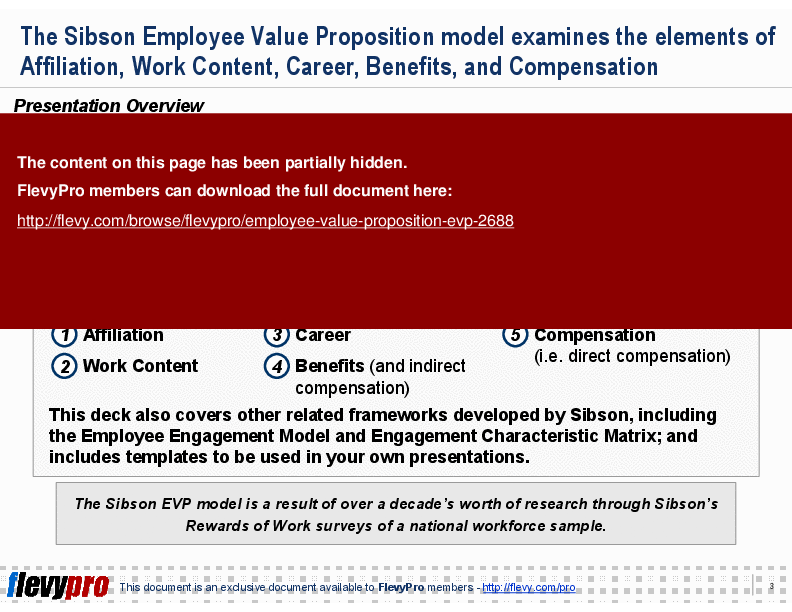
This presentation provides an overview to an EVP model, as developed by Sibson Consulting. The Sibson EVP model can be used to diagnose the effectiveness, develop, and improve our own EVP. The Sibson EVP model is a result of over a decade's worth of research through Sibson's Rewards of Work surveys of a national workforce sample.
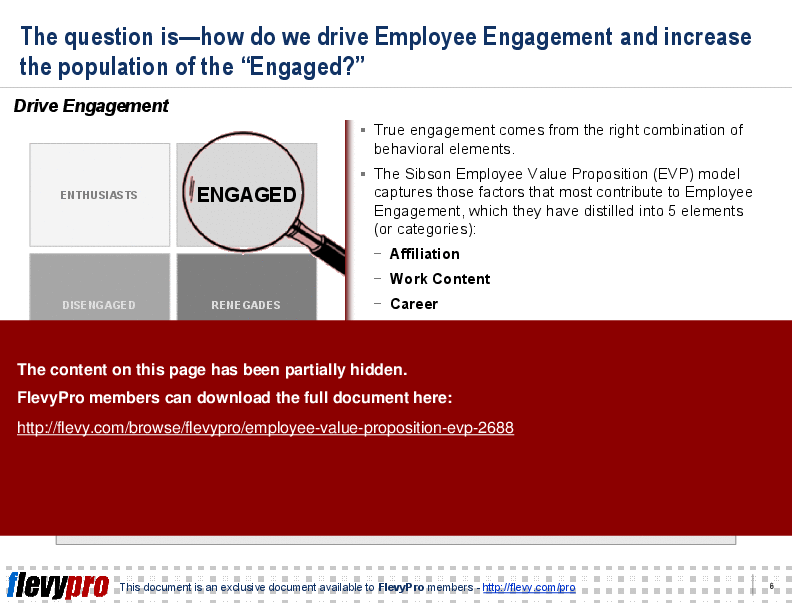
This framework captures those factors that most contribute to Employee Engagement, categorized into 5 elements:
1. Affiliation
2. Work Content
3. Career
4. Benefits (i.e. indirection compensation)
5. (Direct) Compensation
This deck also covers other related frameworks developed by Sibson, including the Employee Engagement Model and Engagement Characteristic Matrix; and includes templates to be used in your own presentations.
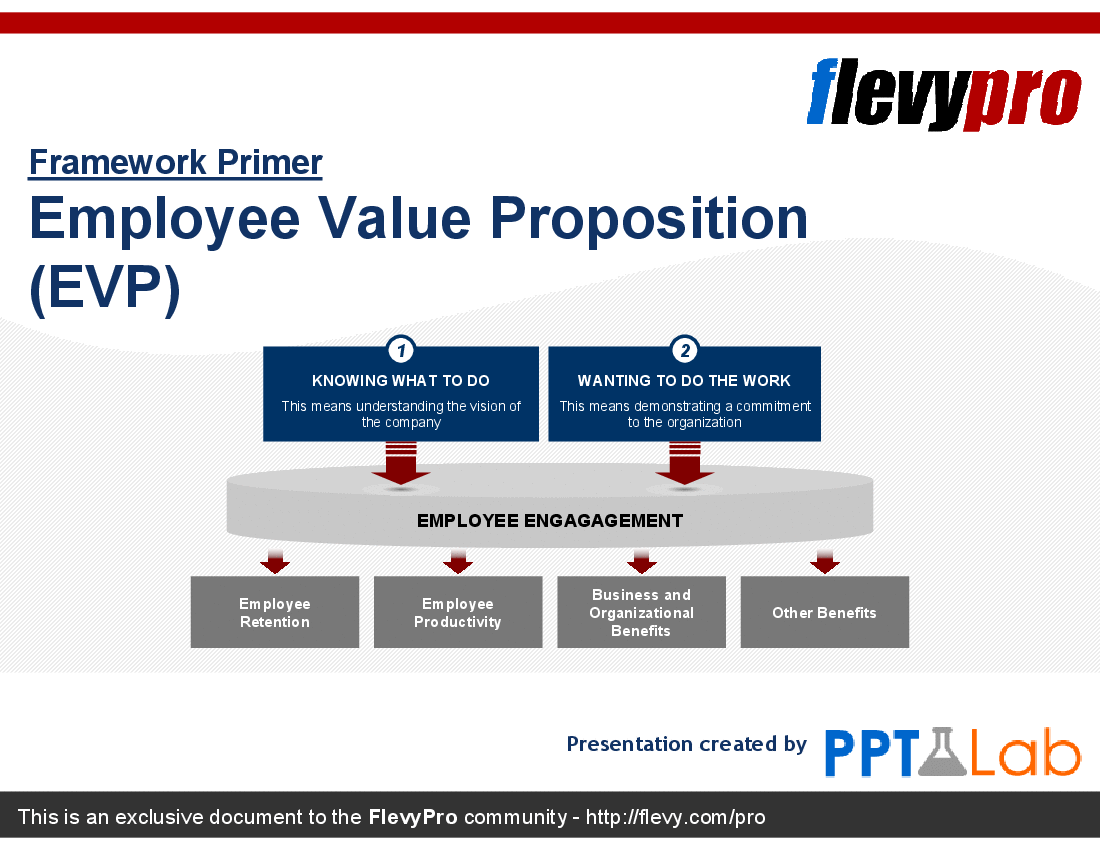
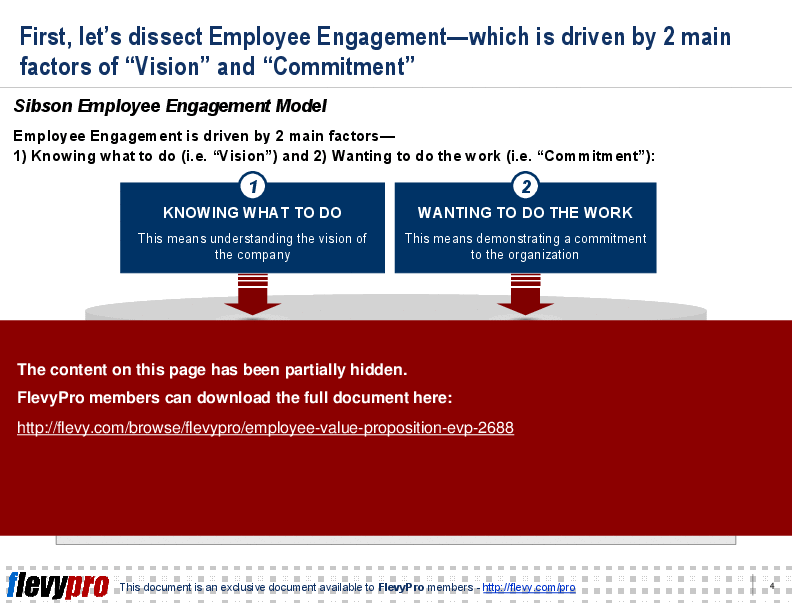
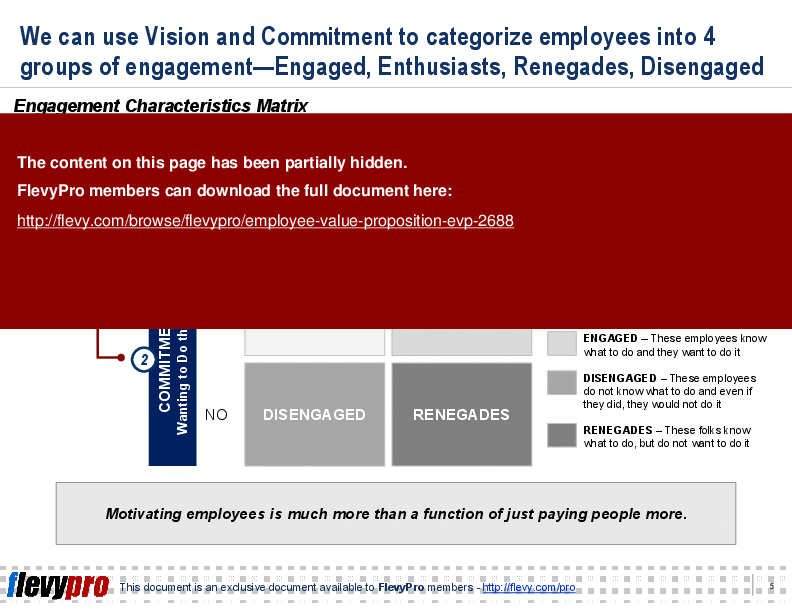
The Sibson Employee Engagement Model dissects engagement into two critical factors: Vision and Commitment. Understanding what to do and demonstrating a commitment to the organization are essential for driving employee engagement. This model categorizes employees into four groups—Engaged, Enthusiasts, Renegades, and Disengaged—based on their levels of vision and commitment. This segmentation helps in tailoring strategies to boost engagement across different employee types.
The presentation also includes practical templates for implementing the Sibson EVP model within your organization. These templates are designed to align talent and HR strategies with the broader EVP, ensuring that compensation, benefits, and career development are in sync with organizational goals. This alignment is crucial for enhancing employee engagement, retention, and overall organizational performance.
Got a question about this document? Email us at flevypro@flevy.com.
Executive Summary
The Employee Value Proposition (EVP) presentation provides a structured framework developed by Sibson Consulting to enhance employee engagement and align HR strategies with organizational goals. This model emphasizes the critical elements that contribute to employee satisfaction and retention, including Affiliation, Work Content, Career, Benefits, and Compensation. By understanding and implementing the Sibson EVP model, organizations can effectively diagnose and improve their EVP, leading to increased employee productivity and overall business benefits.
Who This Is For and When to Use
• HR leaders focused on employee engagement and retention strategies
• Organizational development professionals seeking frameworks for enhancing workplace culture
• Executives aiming to align HR initiatives with business objectives
• Consultants providing advisory services on employee engagement and organizational effectiveness
Best-fit moments to use this deck:
• During strategic planning sessions to align HR initiatives with business goals
• In workshops focused on improving employee engagement and retention
• When assessing and redesigning the Employee Value Proposition
Learning Objectives
• Define the components of the Employee Value Proposition and their impact on employee engagement
• Analyze the correlation between EVP elements and employee retention
• Develop strategies to enhance each element of the EVP within the organization
• Identify measures to assess the effectiveness of the EVP in driving employee engagement
• Create a tailored EVP framework that aligns with organizational values and mission
• Utilize templates and tools for presenting and implementing the EVP model
Table of Contents
• Overview (page 3)
• Employee Value Proposition Elements (page 8)
• Employee Value Proposition Measures (page 12)
• Templates (page 15)
Primary Topics Covered
• Overview of EVP - The presentation introduces the concept of Employee Value Proposition and its significance in enhancing employee engagement and organizational performance.
• EVP Elements - The model delineates 5 key elements: Affiliation, Work Content, Career, Benefits, and Compensation, each contributing uniquely to employee satisfaction.
• Engagement Characteristics Matrix - This framework categorizes employees based on their understanding of company vision and commitment to their work, identifying 4 groups: Engaged, Enthusiasts, Renegades, and Disengaged.
• Measures of Engagement - The presentation outlines specific measures that correlate with employee engagement, emphasizing the importance of organizational support and trust in management.
• Turnover Intentions - Insights into factors that lead to high employee turnover, highlighting the significance of organizational commitment and job responsibility.
• Templates for Implementation - Practical templates are provided for organizations to customize and implement their EVP strategies effectively.
Deliverables, Templates, and Tools
• Employee Value Proposition framework template for organizational use
• Engagement Characteristics Matrix for categorizing employee engagement levels
• Measures of Engagement assessment tools to evaluate EVP effectiveness
• Turnover Intentions analysis template to identify at-risk employee segments
• Customizable presentation slides for communicating the EVP to stakeholders
• Action plan templates for implementing EVP strategies
Slide Highlights
• Overview slide detailing the importance of Employee Value Proposition in driving engagement
• Engagement Characteristics Matrix slide illustrating employee categorization
• Measures of Engagement slide showcasing key metrics correlated with employee satisfaction
• Turnover Intentions slide highlighting factors influencing employee retention
• Template slides for organizations to adapt and utilize in their own EVP presentations
Potential Workshop Agenda
Introduction to Employee Value Proposition (30 minutes)
• Overview of EVP and its significance
• Discussion on the 5 key elements of EVP
Engagement Characteristics Matrix Session (60 minutes)
• Categorizing employees based on engagement levels
• Identifying strategies to move employees towards the "Engaged" category
Measures of Engagement Workshop (90 minutes)
• Analyzing specific measures that correlate with employee engagement
• Developing action plans to enhance identified measures
Customization Guidance
• Tailor the EVP framework to align with your organization's specific values and mission
• Adjust the Engagement Characteristics Matrix to reflect your workforce demographics
• Incorporate organizational-specific metrics into the Measures of Engagement assessment
• Customize presentation templates to fit your branding and communication style
Secondary Topics Covered
• The relationship between employee engagement and organizational performance
• Strategies for enhancing employee retention through effective EVP
• The role of HR in implementing and sustaining the EVP framework
• Best practices for communicating EVP to employees and stakeholders
Topic FAQ
Document FAQ
These are questions addressed within this presentation.
What is the Employee Value Proposition?
The Employee Value Proposition (EVP) is the unique set of offerings, both tangible and intangible, that an organization provides to its employees in exchange for their contributions and commitment.
How can the EVP improve employee engagement?
A well-defined EVP aligns employee expectations with organizational values, fostering a sense of belonging and commitment, which in turn enhances engagement and productivity.
What are the key elements of the EVP model?
The key elements include Affiliation, Work Content, Career, Benefits, and Compensation, each contributing to overall employee satisfaction.
How do I measure the effectiveness of our EVP?
Utilize specific measures such as organizational support, trust in management, and job satisfaction to assess the impact of your EVP on employee engagement.
What strategies can be implemented to enhance the EVP?
Focus on improving communication, providing career development opportunities, and ensuring competitive compensation and benefits to strengthen your EVP.
Can the EVP be customized for different departments?
Yes, the EVP can be tailored to meet the specific needs and values of different departments within the organization.
What role does HR play in developing the EVP?
HR is responsible for aligning the EVP with organizational goals, communicating it effectively to employees, and implementing strategies to enhance employee engagement.
How often should the EVP be reviewed and updated?
Regular reviews are recommended, ideally annually, to ensure the EVP remains relevant and aligned with changing employee expectations and organizational goals.
Glossary
• Employee Value Proposition (EVP) - The unique offerings provided to employees in exchange for their contributions.
• Engagement Characteristics Matrix - A framework categorizing employees based on their engagement levels.
• Measures of Engagement - Specific metrics used to assess employee satisfaction and engagement.
• Turnover Intentions - Factors influencing an employee's likelihood to leave the organization.
• Affiliation - The sense of belonging employees feel towards the organization.
• Work Content - Job satisfaction derived from the nature of the work performed.
• Career - Long-term opportunities for development and advancement within the organization.
• Benefits - Indirect compensation including health, retirement, and time off.
• Compensation - Direct monetary rewards for employee work and performance.
• Organizational Support - The extent to which employees feel supported by their organization.
• Trust in Management - Employees' confidence in their leaders and organizational decisions.
• Job Responsibility - The degree of accountability and ownership employees have in their roles.
• Organizational Justice - The perceived fairness of organizational policies and practices.
Source: Best Practices in Employee Engagement, Employee Value Proposition, Sibson, Turnover PowerPoint Slides: Employee Value Proposition (EVP) PowerPoint (PPTX) Presentation Slide Deck, PPT Lab
Did you need more documents?
Consider a FlevyPro subscription from $39/month. View plans here.
For $10.00 more, you can download this document plus 2 more FlevyPro documents. That's just $13 each.
|
Download our FREE Organization, Change, & Culture, Templates
Download our free compilation of 50+ slides and templates on Organizational Design, Change Management, and Corporate Culture. Methodologies include ADKAR, Burke-Litwin Change Model, McKinsey 7-S, Competing Values Framework, etc. |