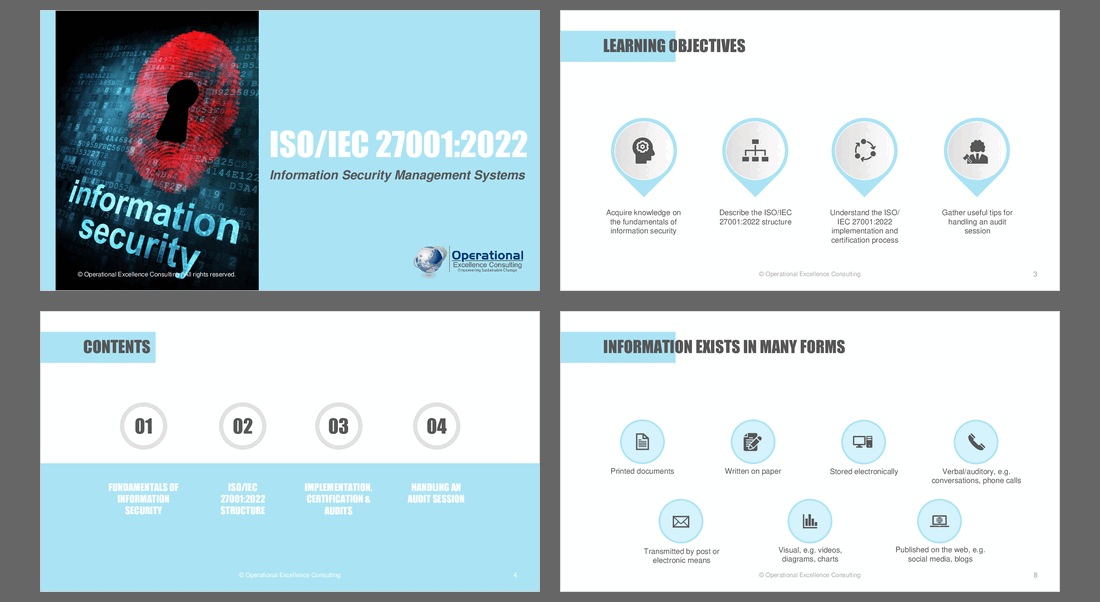
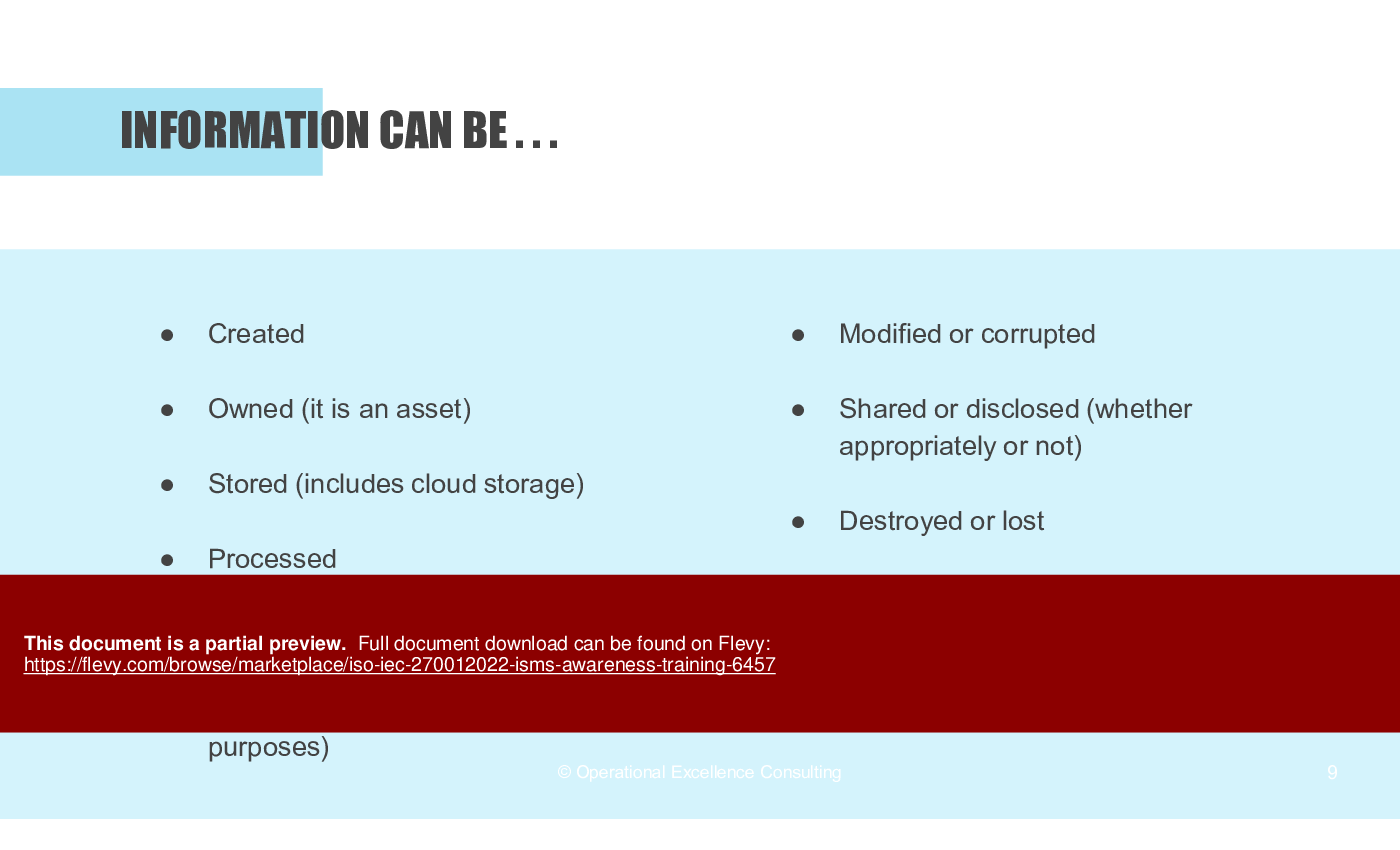
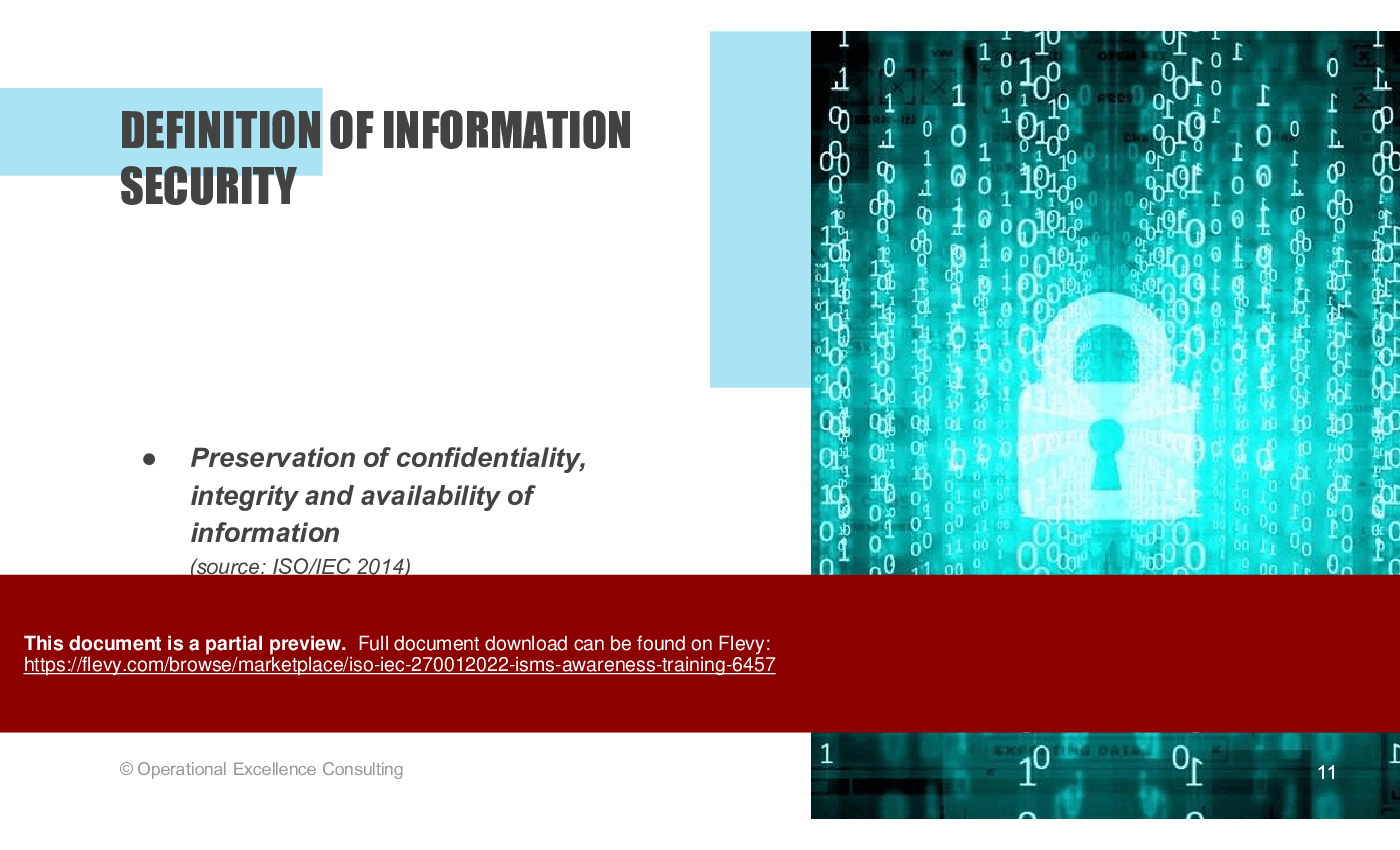
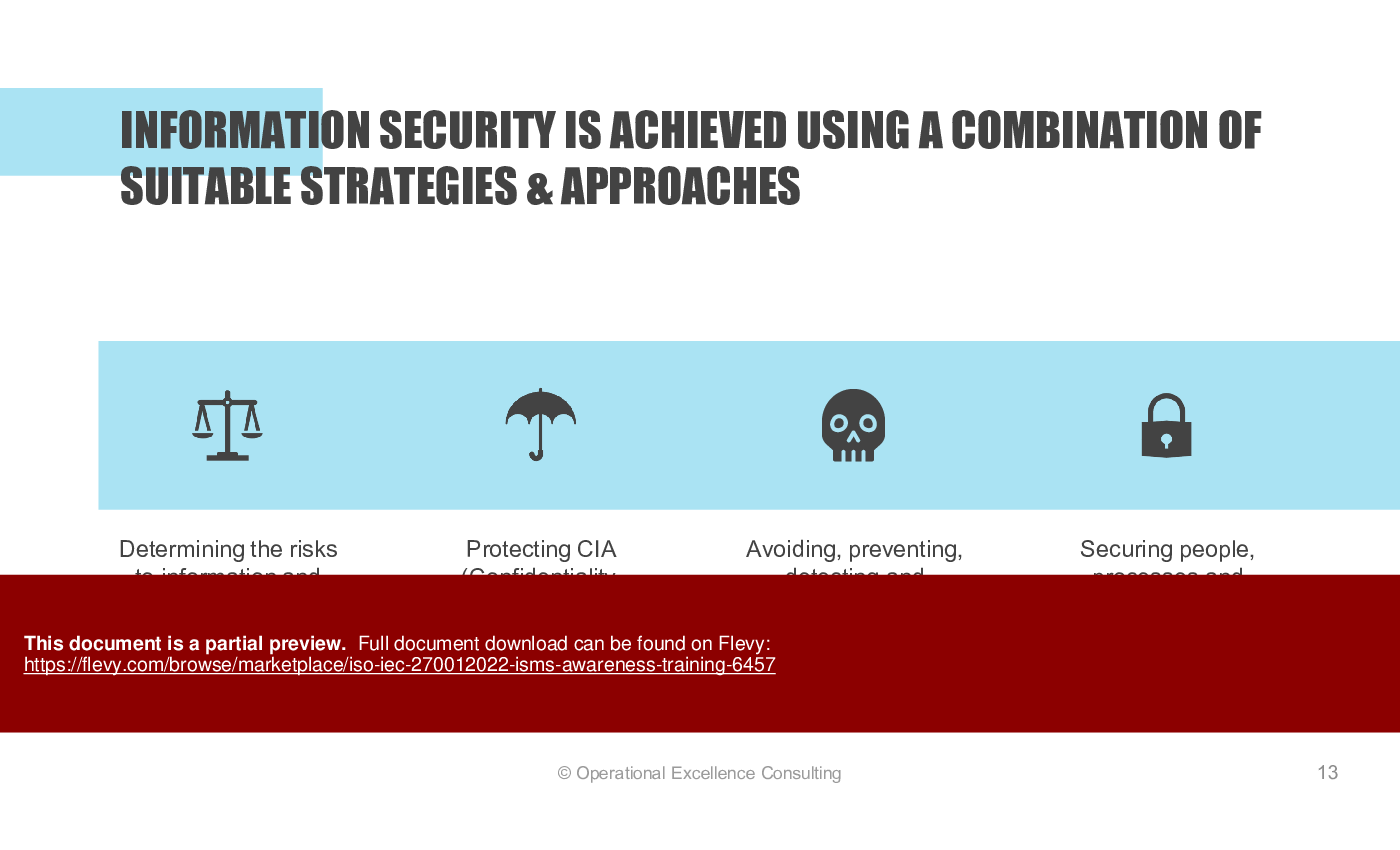
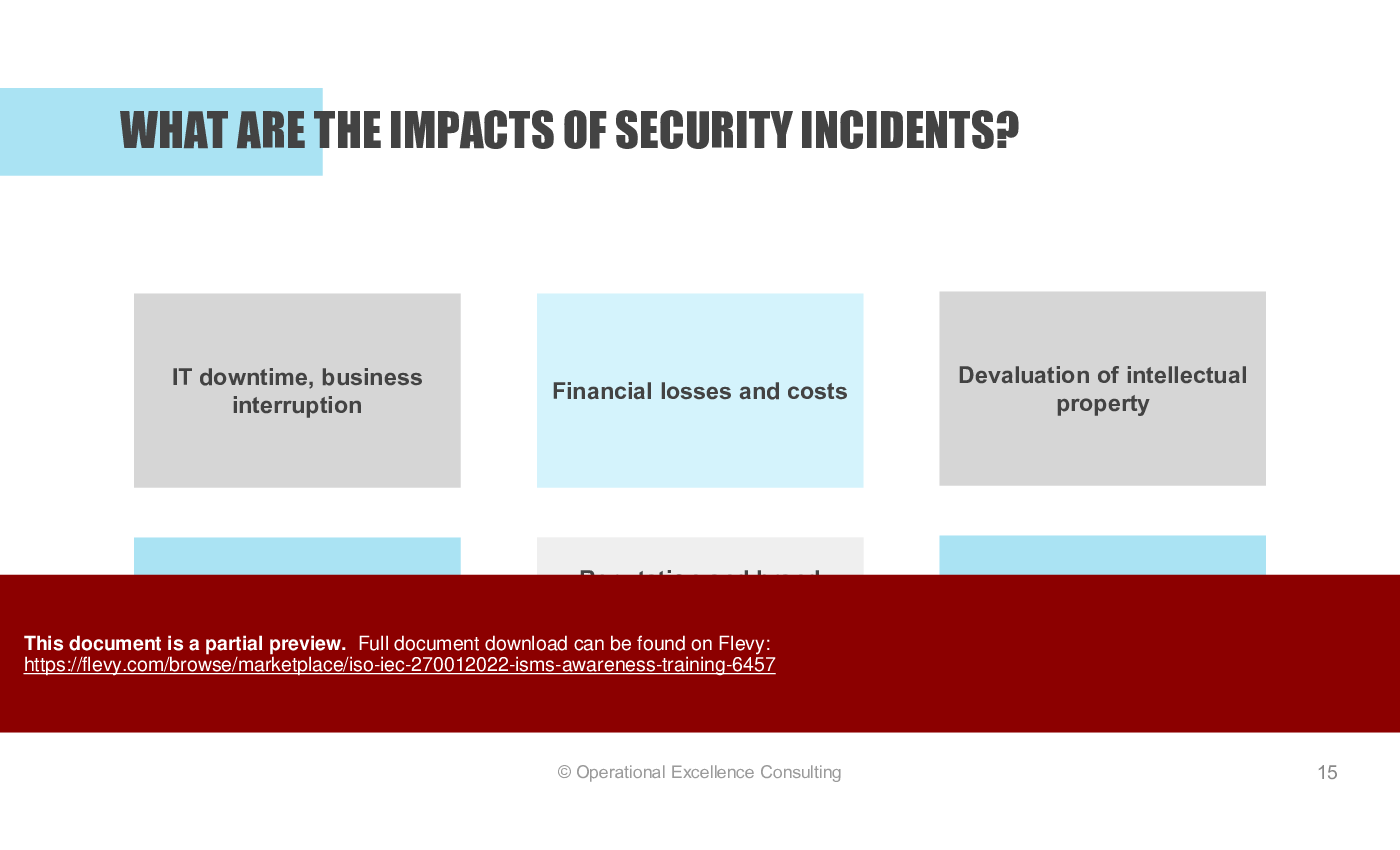

 Click main image to view in full screen. Unlock all 32 preview images:
ISO/IEC 27001:2022 (ISMS) Awareness Training – PowerPoint PPTX Template
PowerPoint (PPTX) + Excel (XLSX) 107 Slides


BENEFITS OF THIS DOWNLOADABLE POWERPOINT DOCUMENT
- Fulfill Audit Mandates -- Instantly satisfy the mandatory security awareness training requirements of ISO/IEC 27001 Clause 7.3.
- Turnkey Risk Engine -- Execute robust, criteria-based risk assessments (Clause 6.1.2 & 8.2) immediately with the included automated Excel template.
- 100% Fully Editable -- Customize both the PPTX slides and the XLSX spreadsheet to map perfectly to your corporate branding and specific site policies.
ISO 27001 PPT TEMPLATE DESCRIPTION
ISO/IEC 27001:2022 ISMS TRAINING PRESENTATION & RISK ASSESSMENT TOOL
Reframe corporate information security from a costly IT administrative burden into a high-value commercial asset that drives market trust and client confidence. This audit-grade practitioner toolkit provides a structured, step-by-step framework to establish, deploy, and refine an Information Security Management System (ISMS) in full alignment with the updated ISO/IEC 27001:2022 standard. The package includes an enterprise-ready, automated Excel tool for information security risk management.
EXECUTIVE SUMMARY
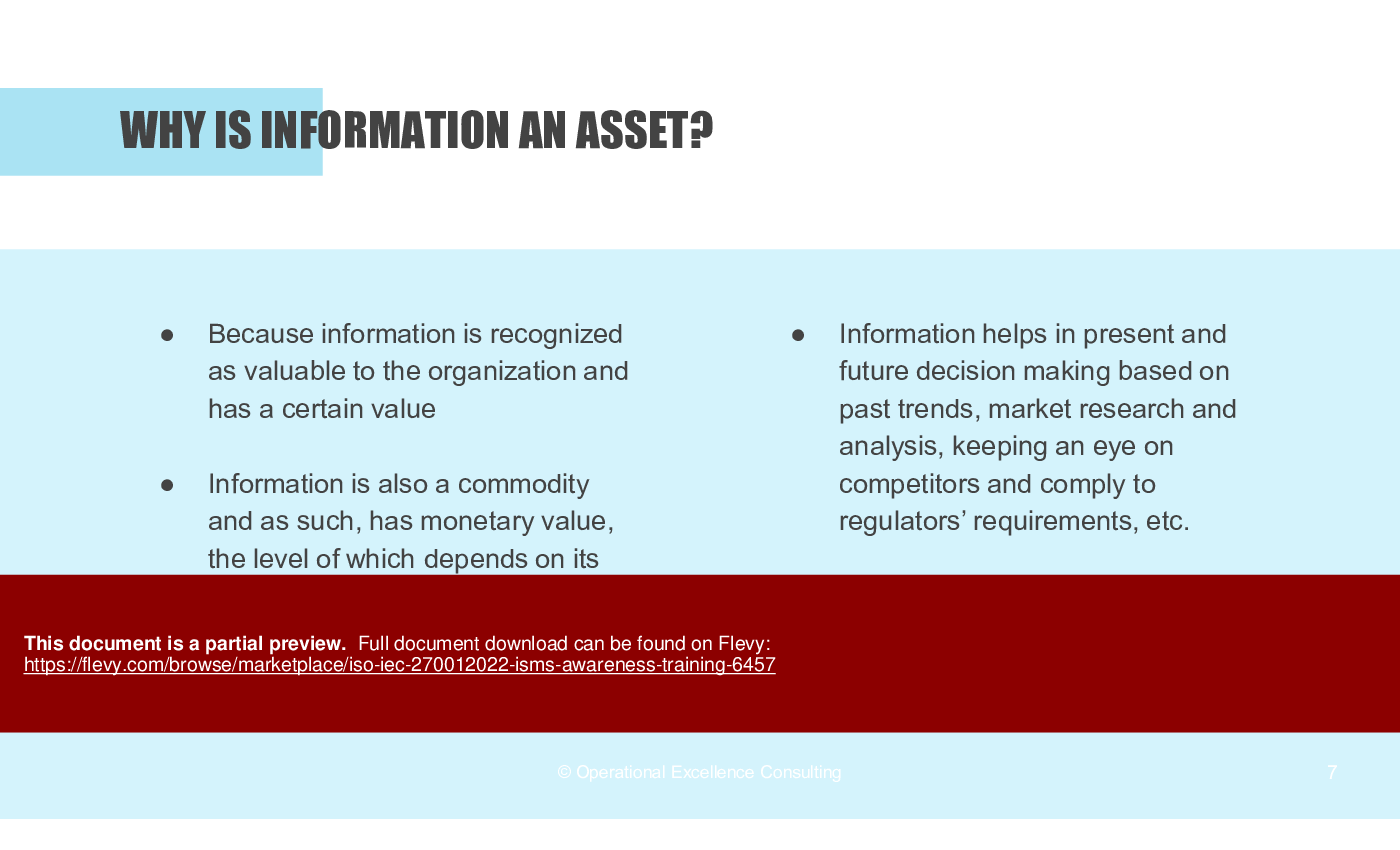
In a digital enterprise environment, information serves as a core commercial asset. Uncontrolled security incidents, data corruption, and system downtime directly jeopardize intellectual property, client retention, and enterprise value. The ISO/IEC 27001:2022 standard offers an internationally validated methodology to design, implement, maintain, and continuously improve an ISMS.
This practitioner-led resource translates the Harmonised Structure into actionable steps across Clauses 4 through 10. It includes a structured visual breakdown of all 93 consolidated Annex A controls categorized across four operational domains: Organizational, People, Physical, and Technological. The bundle incorporates the automated OEC Risk Assessment XLSX Tool. Grounded in Risk-Based Thinking and the Plan-Do-Check-Act (PDCA) improvement cycle, this resource transforms abstract compliance requirements into measurable operational controls.
KEY BENEFITS FOR YOUR ORGANIZATION
• Mitigate Enterprise Security Risks & Vulnerabilities: Systematically inventory information assets, analyze threat vectors, harden user endpoints, block data exfiltration, and deploy robust defenses against malicious code.
• Maintain Regulatory & Legal Compliance: Establish an auditable record repository that satisfies international privacy legislation (including PII protection laws) and complex contractual obligations.
• Drive Commercial Growth & Competitive Advantage: Strengthen corporate brand equity and improve win rates for enterprise procurement RFPs by demonstrating verified third-party audit readiness.
TARGET AUDIENCE
• Information Security Officers, CISOs, & ISMS Managers: Designed for managing daily ISMS operations, defining performance metrics, executing core clauses, and leading risk scoring efforts.
• Asset & Risk Owners: Formulated to assist business unit leaders in maintaining asset inventories, running risk assessment spreadsheets, and executing mitigation strategies.
• Executive Leadership & Board Members: Tailored to assist top management in demonstrating governance commitment, authorizing security policies, and conducting management reviews.
• Internal Auditors & Compliance Specialists: Built to guide independent internal audits, categorize nonconformities, and produce a defensible Statement of Applicability (SoA).
• Enterprise Staff: Formatted to instill a security-first culture, reinforce CIA triad principles, and standardize security incident reporting across the workforce.
WHAT'S INCLUDED IN THE BOX?
• The Masterclass PPTX Presentation: A 100+ slideS, fully customizable presentation deck featuring clean visual layouts engineered for enterprise-wide training sessions.
• The ISO/IEC 27001 Risk Assessment Register (XLSX Tool): A pre-formulated Excel workbook designed to satisfy Clause 6.1.2 and 8.2 requirements. Features dedicated input cells (for asset values, CIA impact, threat likelihood, and control selection) alongside automated calculation engine cells that evaluate threat levels, risk scores, and residual risk outcomes.
• Clauses 4–10 Structural Walkthrough: A complete clause-by-clause visual breakdown covering organizational context, interested parties, scope definition, executive leadership, risk management, resource allocation, operations, and evaluation.
• Annex A Comprehensive Reference: Detailed visual maps covering all 93 consolidated controls across four domains—Organizational, People, Physical, and Technological—including updated controls such as Threat Intelligence and Information Deletion.
• The Certification & Audit Roadmap: Practical guidance to prepare internal teams for Stage 1 (documentation review) and Stage 2 (operational effectiveness) external registration audits.
LEARNING OBJECTIVES
By completing this ISO/IEC 27001:2022 ISMS Awareness program, participants will be equipped to:
1. Explain core ISMS concepts and articulate the strategic business rationale for protecting enterprise data assets.
2. Distinguish and apply the three elements of the CIA triad (Confidentiality, Integrity, and Availability) to operational workflows.
3. Interpret Clauses 4–10 and Annex A to select, deploy, and document security controls within an auditable Statement of Applicability (SoA).
4. Execute a standardized, six-step risk evaluation and treatment workflow aligned with corporate risk tolerance using the provided Excel model.
5. Support external certification audits by executing internal audits, tracking corrective actions, and adhering to auditee best practices.
DETAILED TRAINING CONTENTS
This practitioner toolkit is structured across nine functional modules:
• Module 1: Foundations of Information Security: Information asset valuation, lifecycle management, the CIA Triad, historical standards evolution, and core ISO/IEC 27001:2022 requirements.
• Module 2: Fundamentals of an ISMS: Management system architecture, the Process Approach, operational risk-based thinking, and business benefits of ISO certification.
• Module 3: Context & Roles: Analyzing internal/external issues under Clause 4, mapping stakeholder requirements, establishing boundaries, executive accountability, and defining security roles.
• Module 4: Leadership, Planning & Risk: Information security policy formulation, executing the six-step risk management process, calculating risk scores, selecting risk treatments, and compiling the SoA.
• Module 5: Support & Operation: Resource provisioning, competency verification, security awareness training, internal communications, documented information controls, and managing outsourced operations.
• Module 6: Annex A Deep Dive – Part 1 (Governance & People): In-depth review of the 37 Organizational controls (A.5)—including asset governance, identity access, cloud security, and threat intelligence—and the 8 People controls (A.6) across the employee lifecycle.
• Module 7: Annex A Deep Dive – Part 2 (Physical & Tech): Detailed breakdown of the 14 Physical controls (A.7) securing physical perimeters and the 34 Technological controls (A.8) covering endpoint security, network logging, data backup, cryptography, data leakage prevention, and secure coding.
• Module 8: Performance Evaluation & Improvement: Monitoring ISMS performance, conducting objective internal audits, managing leadership reviews, performing root cause analyses, and tracking corrective actions.
• Module 9: Certification, Audits & Your Role: Project timelines for Stage 1 and Stage 2 certification audits, distinguishing major vs. minor nonconformities, auditee rights, and interview preparation practices.
PROPOSED 2-HOUR AWARENESS BRIEFING AGENDA
This presentation layout supports a condensed, high-impact awareness session for executive leadership and core staff:
• 00:00 – 00:20: Introduction to Information Security, Data Lifecycle, and CIA Triad Fundamentals.
• 00:20 – 00:45: The ISMS Process Approach, Risk-Based Thinking, and Scope Boundaries.
• 00:45 – 01:15: Clauses 5 & 6 Walkthrough: Security Policies, Objectives, and the Six-Step Risk Assessment Process (featuring a demonstration of the XLSX Risk Tool).
• 00:15 – 01:40: Operational Controls: Resourcing, Documented Information, and Annex A Themes (Organizational, People, Physical, Tech).
• 01:40 – 02:00: Performance Evaluation, Root Cause Corrective Actions, Stage 1 & Stage 2 Audit Preparation, and Q&A.
GLOSSARY OF KEY TERMS
• Information Security Management System (ISMS): A structured framework comprising policies, workflows, and technical controls designed to protect an organization's information assets through formal risk management.
• Confidentiality: The operational property ensuring information is restricted from unauthorized individuals, entities, or automated processes.
• Integrity: The operational property ensuring data accuracy and completeness by preventing unauthorized modification or deletion.
• Availability: The operational property ensuring authorized users have timely, uninterrupted access to critical information assets when required.
• Statement of Applicability (SoA): A mandatory audit document detailing which ISO/IEC 27001 Annex A controls are implemented, along with explicit justifications for any excluded controls based on risk treatment outcomes.
• Risk Assessment Register: A centralized system of record used to inventory data assets, record threat scenarios, calculate risk scores, and document mitigation strategies.
• Management Review: A formal evaluation conducted by executive leadership to verify the ongoing suitability, adequacy, and operational effectiveness of the ISMS.
• Corrective Action: Process steps designed to investigate, address, and eliminate the root cause of an identified nonconformity to prevent recurring failures.
FREQUENTLY ASKED QUESTIONS (FAQs)
How does this training deck support ISO/IEC 27001:2022 compliance requirements? It serves as verifiable training material to fulfill the explicit mandatory requirements for "Competence" and "Awareness" outlined in Clauses 7.2 and 7.3.
What major structural updates are incorporated in the 2022 revision versus the 2013 version? The materials detail the consolidation of Annex A into 93 controls organized under 4 simplified themes, specific additions to main clauses (such as planning for changes), and modern control additions including Threat Intelligence and Information Deletion.
Can our organization customize the presentation design and apply internal branding? Yes. The source file is delivered in standard Microsoft PowerPoint (.PPTX) format and is fully editable for internal organizational adaptation.
Is the included Risk Assessment XLSX workbook synchronized with the presentation methodology? Yes. The Excel model's threat scoring, vulnerability scaling, and risk acceptance matrix directly mirror the six-step risk methodology taught in Module 4 and required under Clauses 6.1.2 and 8.2.
Is this course content accessible for staff without a technical background? Yes. The presentation utilizes clear analogies, practical operational examples, and structured auditee guidance to bridge technical concepts for non-technical employees, functional business leads, and executives.
Does this product include detailed coverage of all Annex A control categories? Yes. Modules 6 and 7 provide dedicated reference slides covering every control across the Organizational, People, Physical, and Technological domains.
Which software programs are required to open and run the presentation and workbook files? The files are compatible with standard versions of Microsoft PowerPoint and Microsoft Excel, including Office 365, Office 2019, and Office 2021.
What permissions are granted under the single-site commercial license for this toolkit? Each purchased license authorizes use at a single corporate entity location, permitting customized internal staff training, placement on internal intranets or LMS platforms, and deployment of the risk register workbook for internal compliance operations.
Got a question about the product? Email us at support@flevy.com or ask the author directly by using the "Ask the Author a Question" form. If you cannot view the preview above this document description, go here to view the large preview instead.
PRESENTATION DEEP DIVE ANALYSIS
This deep-dive analysis was generated from the full 107-slide PowerPoint presentation.
Source: Best Practices in ISO 27001 PowerPoint Slides: ISO/IEC 27001:2022 (ISMS) Awareness Training PowerPoint (PPTX) Presentation Slide Deck, Operational Excellence Consulting
ABOUT THE AUTHOR

Operational Excellence Consulting, founded in 2009 by Allan Ung, draws from extensive experience at Microsoft, IBM, and Underwriters Laboratories (UL). We specialize in strategy deployment, customer experience design, and operational excellence, applying Design Thinking, Lean, and Systems Thinking to maximize customer value and minimize waste.
Our
... [read more]
Ask the Author a Question
You must be logged in to contact the author.




























