Editor's Note: Take a look at our featured best practice, 8D Problem Solving Process & Tools (206-slide PowerPoint presentation). The 8D Problem Solving Process has become a standard in many industries as problem solving or improvement process, as internal Corrective Action Request (CAR) Process or as Supplier Corrective Action Request (SCAR) Process.
The 8D Problem Solving Process Training Module includes:
1. [read more]
* * * *
Here is a comprehensive list of warehouse cost savings ideas, categorized by 6 core areas: Labor, Operations, Equipment Usage Optimization, Technology, and Facilities Management.
Labor
Invest in training/re-certification
Cross-train all employees
Focus on retention/implement retention plans
Use temporary/contract labor help where applicable
Use flextime
Revise your labor scheduling strategy
Observe starting and quitting times
Move your time clocks
Monitor individual productivity
Implement a pay-for-performance program
Reward employees who arrive early/stay later
Provide Safety/OSHA Training, at least quarterly
Implement Vendor Management System (VMI)
Start a suggestion box: listen to your employees ideas.
Operations
Identify your best, trustworthy and productive employees
Use cross-functional teams to solve problems
Have teams compete with each other to meet overall warehouse goals and objectives/KPIs: The old saying of, “You can’t improve what you don’t measure” is certainly true. An effective measurement and reporting process can improve performance and lower costs.
Implement a reward system for major victories
Reduce inventory with cross-docking or use Kanban pull systems
Get rid of excess inventory: create a Material Review Board (MRB) to review: obsolete, excess, slow moving inventory monthly
Process returns more efficiently. Returns cost more than orders to process. Untimely processing of customer credits, refunds and exchanges can damage customer service. Our assessments look at use of staff, people, space and systems to improve productivity.
Optimize space: Land cost is one of the largest contributors to costs in warehousing. Cost per pallet stored should be questioned to ensure space is optimised. The type of racking within your warehouse should utilise the height of your warehouse. Aisle space is also a consumer of space and having the right equipment to optimise this space can contribute to cost savings for the future.
Slot and Re-slot regularly based on demand/sales trends
Reconfigure rack configuration
Optimize staging areas to improve through put to the customer
Replace checking with auditing
Minimize packaging
Keep supervisors on the warehouse floor
Focus on error reduction: goal: no errors
Make housekeeping a high priority
Control theft through improved security
Improve receiving process operations
Damage reduction: damage to goods/SKUs is expensive. Take good care of handling packages.
Improve SKU tracking: RFID, bar coding
Equipment Usage Optimization
Standardize your batteries
Make equipment do double-duty
Manage equipment service vendors
Consider short-term rental
Evaluate leasing rather than buying
Use preventive maintenance (PM) to avoid equipment failure during a process
Technology
Consider a new, advanced Warehouse Management System (WMS)
Use Electronic Data Interface (EDI) to communicate with your customers/suppliers
Implement voice-directed picking and/or light picking systems
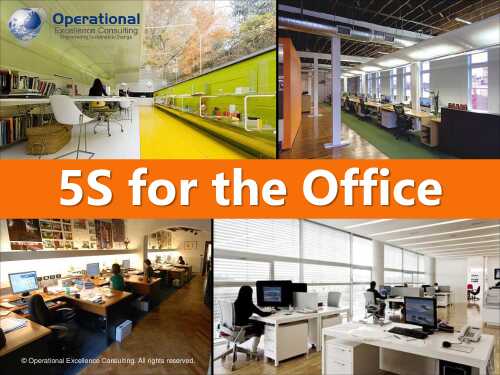
The office, by any name, is a paperwork factory. To become a Lean enterprise, office activities must fully support shop-floor manufacturing operations to eliminate waste. The adoption of 5S throughout all office functions is the first step to increase efficiency. 5S principles are dedicated to [read more]
Do You Want to Implement Business Best Practices?
You can download in-depth presentations on Lean Management and 100s of management topics from the FlevyPro Library. FlevyPro is trusted and utilized by 1000s of management consultants and corporate executives.
For even more best practices available on Flevy, have a look at our top 100 lists:
These best practices are of the same as those leveraged by top-tier management consulting firms, like McKinsey, BCG, Bain, and Accenture. Improve the growth and efficiency of your organization by utilizing these best practice frameworks, templates, and tools. Most were developed by seasoned executives and consultants with over 20+ years of experience.
Readers of This Article Are Interested in These Resources
Value Stream Mapping (VSM) is a lean management technique used to analyze the flow of materials and information currently required to bring a product or service to a Customer. The goal of value stream mapping is to reduce the end-to-end lead time of a process by highlighting and eliminating [read more]
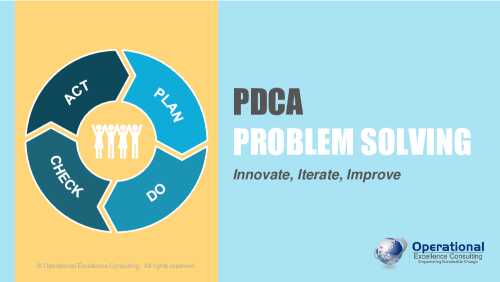
The PDCA cycle, also known as the Deming Cycle or the Shewhart cycle, is a four-step continuous improvement process that is widely used in quality management, business improvement, and project management.
The PDCA cycle is an iterative process, meaning that it is repeated continuously in order [read more]
The Gemba Walk Slide Deck is a comprehensive and professionally designed resource that equips leaders and teams with the tools and knowledge to drive meaningful improvements through effective Gemba Walks. Built around proven Lean principles, this slide deck guides you step-by-step from [read more]
Visual management is a powerful tool for conveying important information in a simple and easy-to-understand format. This practice involves displaying information in a visual format through various tools such as charts, graphs, diagrams, or photographs. By doing so, visual management reduces [read more]
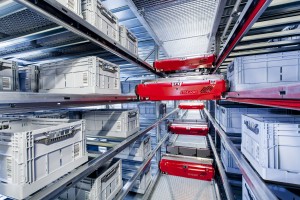 Here is a comprehensive list of warehouse cost savings ideas, categorized by 6 core areas: Labor, Operations, Equipment Usage Optimization, Technology, and Facilities Management.
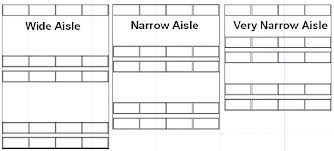 Optimize space: Land cost is one of the largest contributors to costs in warehousing. Cost per pallet stored should be questioned to ensure space is optimised. The type of racking within your warehouse should utilise the height of your warehouse. Aisle space is also a consumer of space and having the right equipment to optimise this space can contribute to cost savings for the future.