
This framework is developed by a team of former McKinsey and Big 4 consultants. The presentation follows the headline-body-bumper slide format used by global consulting firms.
Editor Summary
Lean Digital Transformation is a 36-slide PowerPoint presentation by LearnPPT Consulting that outlines a methodology combining Lean management principles with digital technologies to improve operational efficiency, innovation, and customer-centric outcomes.
Read moreThe slide deck describes 5 implementation phases (Assess Current State; Define Goals and KPIs; Select Digital Tools; Train Teams and Change Culture; Monitor and Optimize) and 5 supporting tools (Value Stream Mapping, Kanban, Digital Twin, RPA, AI/ML). Available on Flevy with immediate digital download.
Use this presentation when an organization is aligning Lean practices with digital transformation efforts to improve process flow, quality, and customer experience. Typical users include:
Operations managers mapping current process flows and conducting Assess Current State analyses to locate waste.
Digital transformation leads evaluating and selecting technologies such as RPA, Digital Twin, and AI during the Select Digital Tools phase.
Continuous improvement or Lean practitioners designing Kanban systems and training teams to change culture.
The five-phase structure follows Lean operational excellence practices originating from the Toyota Production System and Taiichi Ohno.
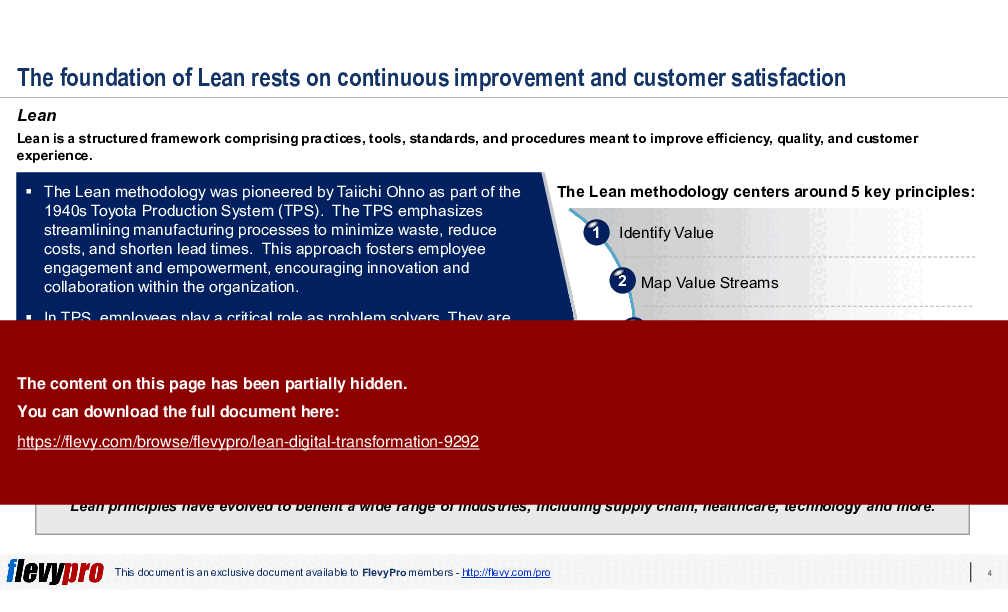
Lean is a structured approach encompassing practices, tools, standards, and procedures designed to enhance efficiency, quality, and customer experience. Originally pioneered by Taiichi Ohno as part of the 1940s Toyota Production System (TPS), Lean principles have since become a cornerstone of operational excellence.
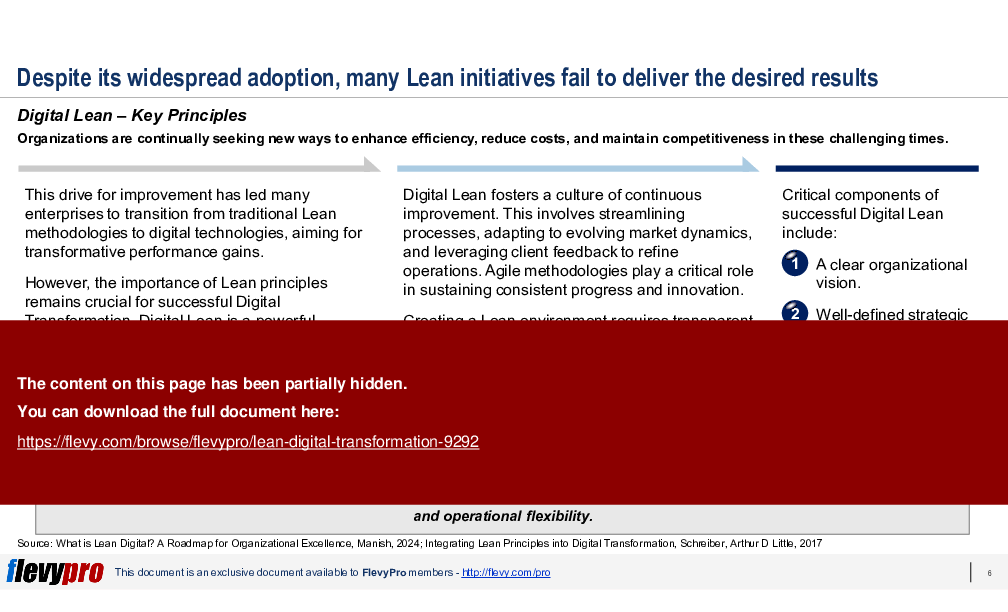
Digital Lean is an advanced methodology that integrates Lean principles with cutting-edge digital tools. By aligning these principles with Digital Transformation initiatives, organizations can achieve exceptional performance and measurable outcomes.
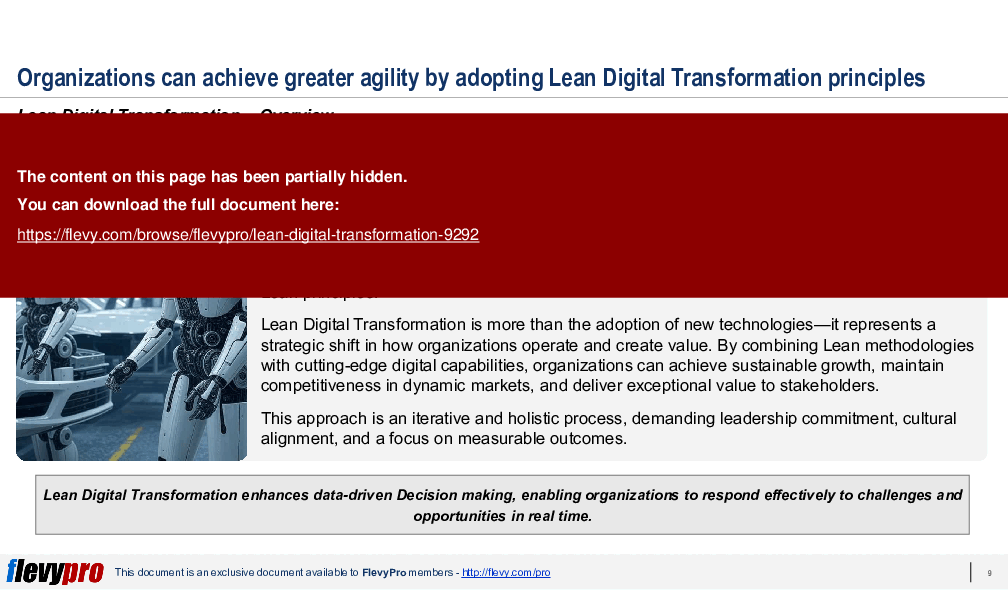
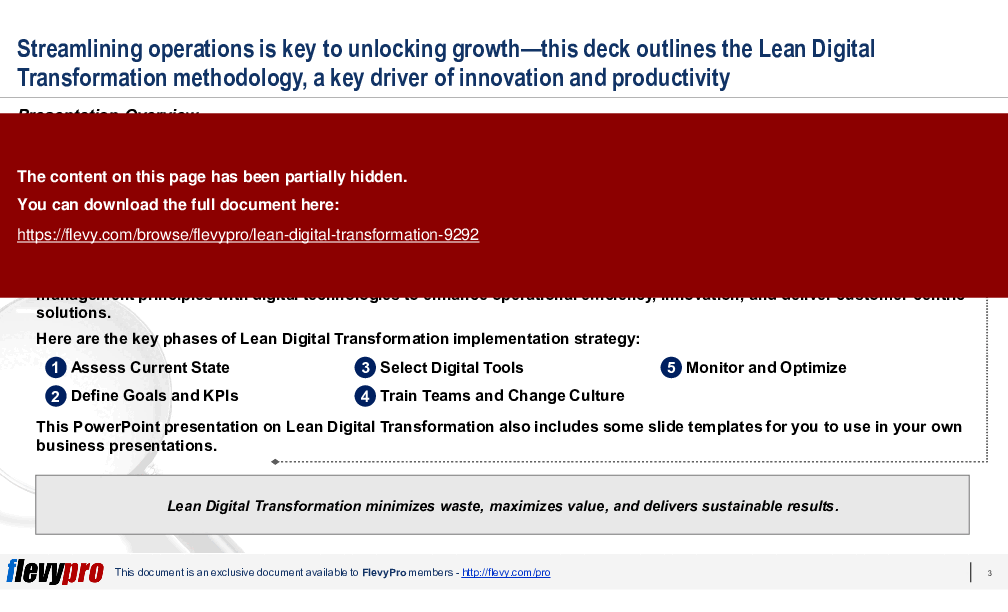
This PPT presentation provides a comprehensive overview of Lean Digital Transformation, a methodology that combines Lean management principles with digital technologies to enhance operational efficiency, innovation, and deliver customer-centric solutions.
Here are the key phases of Lean Digital Transformation implementation strategy:
1. Assess Current State
2. Define Goals and KPIs
3. Select Digital Tools
4. Train Teams and Change Culture
5. Monitor and Optimize
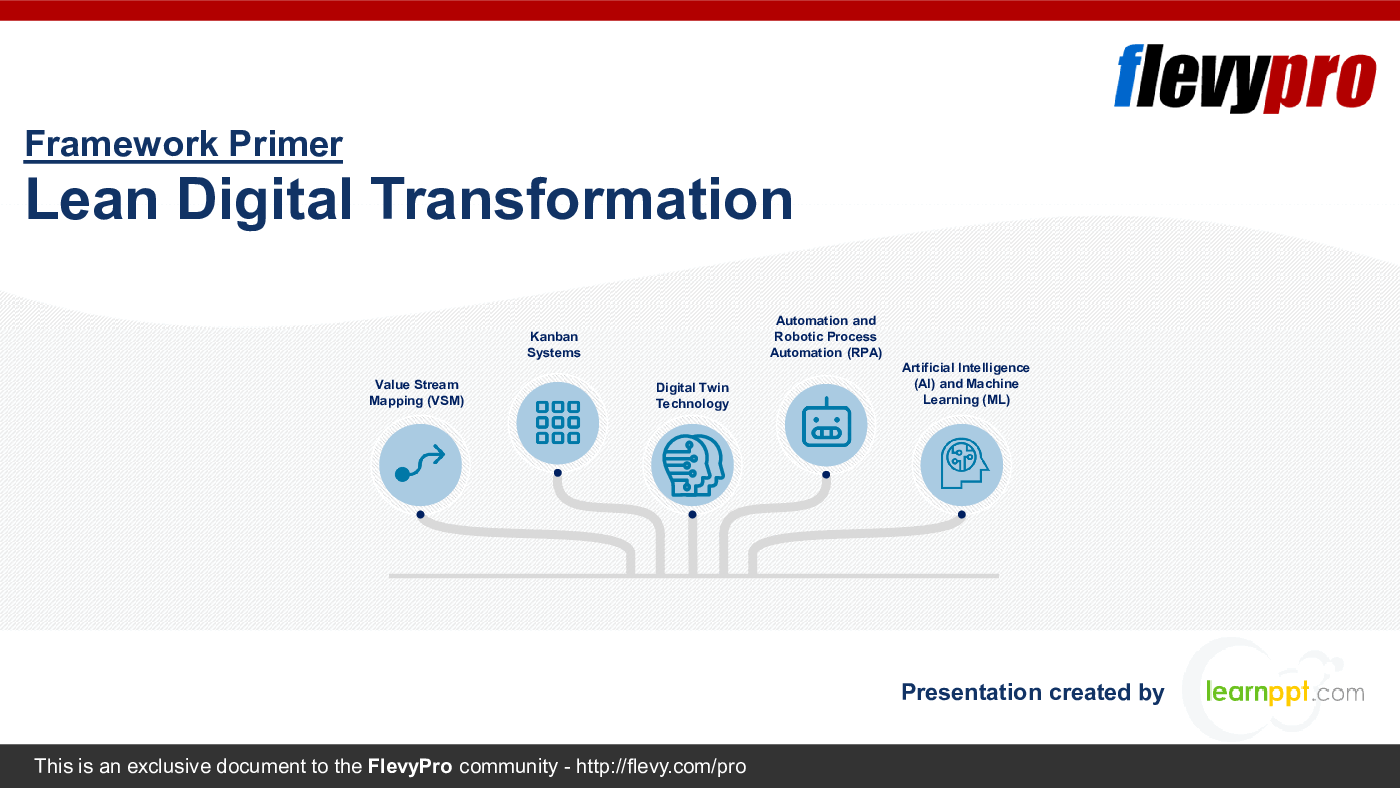
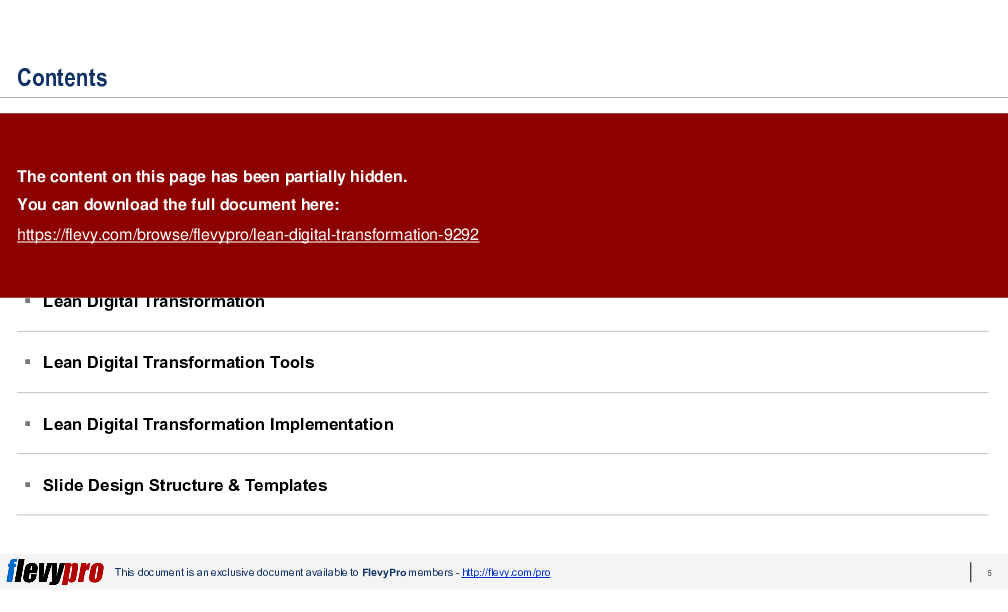
Each phase is described in detail. This presentation also discusses the 5 key tools supporting Lean Digital Transformation:
1. Value Stream Mapping (VSM)
2. Kanban Systems
3. Digital Twin Technology
4. Automation and Robotic Process Automation (RPA)
5. Artificial Intelligence (AI) and Machine Learning (ML)
This PowerPoint presentation on Lean Digital Transformation also includes some slide templates for you to use in your own business presentations.
What is Lean Digital Transformation and how does it relate to traditional Lean?
Lean Digital Transformation integrates traditional Lean principles—originating from Taiichi Ohno’s Toyota Production System—with digital technologies to enhance efficiency, quality, and customer experience. It aligns Lean practices with Digital Transformation initiatives to deliver measurable performance improvements across a structured five-phase implementation approach, including Assess Current State and Define Goals and KPIs.
What are the typical implementation phases for Lean Digital Transformation?
A common implementation sequence begins with Assess Current State, then Define Goals and KPIs, followed by Select Digital Tools, Train Teams and Change Culture, and concludes with Monitor and Optimize. This five-phase sequence is described as the core implementation strategy for Lean Digital Transformation.
Which tools are commonly included in Lean Digital Transformation efforts?
Lean Digital Transformation commonly leverages a mix of Lean and digital tools to support operational goals, specifically: Value Stream Mapping (VSM), Kanban systems, Digital Twin technology, Automation/RPA, and Artificial Intelligence and Machine Learning, all listed as key supporting tools.
How does Artificial Intelligence and Machine Learning support Lean initiatives?
AI and ML are presented as one of the 5 key digital tools that can be combined with Lean principles to enhance operational efficiency, drive innovation, and support customer-centric solutions. Their role is described generically as part of the toolkit alongside VSM, Kanban, Digital Twin, and RPA.
What should I look for when choosing a Lean Digital Transformation slide deck or toolkit?
Look for clear coverage of methodology phases, explicit guidance on defining goals and KPIs, practical tools for process analysis, and reusable slide templates for stakeholder communication. A useful deck will document the 5 implementation phases and include supporting tools such as VSM and Kanban.
How can I assess the value of using prebuilt Lean Digital Transformation templates versus building my own materials?
Evaluate value by how well materials accelerate alignment on goals, support KPI definition, and guide tool selection and training—critical to achieving measurable outcomes. Prebuilt decks that cover the Define Goals and KPIs phase and Select Digital Tools phase can shorten preparation time and standardize messaging.
Where does Robotic Process Automation (RPA) fit within a Lean Digital Transformation program?
RPA is identified as one of the 5 key supporting tools for Lean Digital Transformation and is typically evaluated during the Select Digital Tools phase to determine how automation can improve operational efficiency and reduce manual work.
How should an organization begin assessing readiness for Lean Digital Transformation?
Start with an Assess Current State to document processes, performance gaps, and customer-impacting issues, then define measurable goals and KPIs before selecting digital tools and planning training. The Assess Current State phase is the recommended starting point in the five-phase approach.
This PPT slide outlines the integration of Lean principles with digital technologies to enhance operational efficiency. It identifies 3 key enablers for a Digital Lean approach:
1. Internet of Things (IoT) platforms utilize performance monitoring systems, including sensors and augmented reality, to collect real-time data on equipment usage and maintenance, enabling predictive analysis that minimizes downtime and improves operational performance.
2. Digital Factory Tools and Devices, such as robotics, drones, and additive manufacturing, transform industrial operations by enhancing productivity and redefining workflows. Advanced industrial robots can outperform human workers, driving efficiency and standardization.
3. Advanced Technologies like smart production planning and machine learning reshape operational strategies, addressing limitations of traditional Lean methods by integrating data across the value chain for better inventory management and streamlined scheduling.
Adopting a Digital Lean framework can lead to significant performance improvements.
This PPT slide outlines 2 key tools in Lean Digital Transformation: Value Stream Mapping (VSM) and Kanban Systems. Value Stream Mapping is a visual tool that maps the flow of materials and information to enhance efficiency and eliminate waste. It identifies inefficiencies in workflows, such as bottlenecks, and highlights areas for digital optimization. Kanban Systems serve as a workflow management system that visualizes tasks, facilitates task prioritization, and improves efficiency by promoting continuous flow and transparency. Key use cases include VSM in manufacturing and supply chains for process improvement, and Kanban in agile project management and software development to enhance collaboration and workflow efficiency. Implementing VSM and Kanban can significantly improve operational performance during digital transformation.
The final phase of Lean Digital Transformation focuses on monitoring and optimizing processes to achieve strategic objectives. Key steps include developing a robust monitoring framework with baseline metrics, KPIs, and dashboards for data collection and trend analysis. Regular progress reviews help identify improvement areas and align teams with strategic goals. Lean tools are employed to address inefficiencies and refine processes, while periodic tech audits ensure scalability and adherence to legal and industry standards. Addressing risks and cybersecurity threats is essential in the digital landscape. Investing in employee training empowers staff to effectively utilize new tools. A manufacturing firm example illustrates significant operational improvements, including reduced downtime and increased production, reinforcing the value of continuous monitoring and optimization.
Source: Best Practices in Digital Transformation, Artificial Intelligence, Robotic Process Automation, Value Stream Mapping, Machine Learning, Kanban, Lean Management, Digital Twin PowerPoint Slides: Lean Digital Transformation PowerPoint (PPTX) Presentation Slide Deck, LearnPPT Consulting
This framework is developed by a team of former McKinsey and Big 4 consultants. The presentation follows the headline-body-bumper slide format used by global consulting firms.
For $10.00 more, you can download this document plus 2 more FlevyPro documents. That's just $13 each.
ABOUT FLEVYPRO
This document is part of the FlevyPro Library, a curated knowledge base of documents for our FlevyPro subscribers.

FlevyPro is a subscription service for on-demand business frameworks and analysis tools. FlevyPro subscribers receive access to an exclusive library of curated business documents—business framework primers, presentation templates, Lean Six Sigma tools, and more—among other exclusive benefits.
The average daily rate of a McKinsey consultant is $6,625 (not including expenses). The average price of a Flevy document is $65.
Trusted by over 10,000+ Client Organizations
Since 2012, we have provided business templates to over 10,000 businesses and organizations of all sizes, from startups and small businesses to the Fortune 100, in over 130 countries.
"As a young consulting firm, requests for input from clients vary and it's sometimes impossible to provide expert solutions across a broad spectrum of requirements. That was before I discovered Flevy.com.
Through subscription to this invaluable site of a plethora of topics that are key and crucial to consulting, I
have been able to exceed expectations and deliver quality advice and solutions to my clients. The quality and expertise of the authors are exemplary and gives me great confidence to use as part of my service offerings.
I highly recommend this company for any consultant wanting to apply international best practice standards in their service offerings.
"
– Nishi Singh, Strategist and MD at NSP Consultants
"I like your product. I'm frequently designing PowerPoint presentations for my company and your product has given me so many great ideas on the use of charts, layouts, tools, and frameworks. I really think the templates are a valuable asset to the job."
– Roberto Fuentes Martinez, Senior Executive Director at Technology Transformation Advisory
"As a niche strategic consulting firm, Flevy and FlevyPro frameworks and documents are an on-going reference to help us structure our findings and recommendations to our clients as well as improve their clarity, strength, and visual power. For us, it is an invaluable resource to increase our impact and value."
– David Coloma, Consulting Area Manager at Cynertia Consulting
"As an Independent Management Consultant, I find Flevy to add great value as a source of best practices, templates and information on new trends. Flevy has matured and the quality and quantity of the library is excellent. Lastly the price charged is reasonable, creating a win-win value for
the customer, Flevy and the various authors. This is truly a service that benefits the consulting industry and associated clients. Thanks for providing this service.
"
– Jim Schoen, Principal at FRC Group
"Last Sunday morning, I was diligently working on an important presentation for a client and found myself in need of additional content and suitable templates for various types of graphics. Flevy.com proved to be a treasure trove for both content and design at a reasonable price, considering the time I
saved. I encountered a download issue during the ordering process. However, a quick email to Flevy's support team, even on a Sunday (!!!), resulted in assistance within less than an hour, allowing me to download the content I needed. Fantastic job, Flevy! I give 5 stars for both content/price and customer service. Thank you!
"
– M. E., Chief Commercial Officer, International Logistics Service Provider
"Flevy is our 'go to' resource for management material, at an affordable cost. The Flevy library is comprehensive and the content deep, and typically provides a great foundation for us to further develop and tailor our own service offer."
– Chris McCann, Founder at Resilient.World
"[Flevy] produces some great work that has been/continues to be of immense help not only to myself, but as I seek to provide professional services to my clients, it gives me a large "tool box" of resources that are critical to provide them with the quality of service and outcomes they are expecting."
– Royston Knowles, Executive with 50+ Years of Board Level Experience
"The wide selection of frameworks is very useful to me as an independent consultant. In fact, it rivals what I had at my disposal at Big 4 Consulting firms in terms of efficacy and organization."
– Julia T., Consulting Firm Owner (Former Manager at Deloitte and Capgemini)
Download our FREE Digital Transformation Templates
Download our free compilation of 50+ Digital Transformation slides and templates. DX concepts covered include Digital Leadership, Digital Maturity, Digital Value Chain, Customer Experience, Customer Journey, RPA, etc.