Editor's Note: Take a look at our featured best practice, Ecommerce Financial Model (Excel workbook). Model Options:
This template is a detailed and user-friendly financial model that considers an e-commerce business's specifics.
By Taking into account key assumptions such as traffic from different sources, conversion rates, the average purchase value for different product categories, and the [read more]
* * * *
There’s a specific moment a lot of store owners hit. The subscriber count keeps going up, the invoice keeps going up right along with it, and somewhere in there you start wondering if you’re actually getting more value or just paying more for the same thing. If you’ve heard this before, you’re not alone in considering switching from Klaviyo lately. It is more of an issue that the platform is not fitting anymore, rather than that it is bad.
Fair enough, Klaviyo has made its place. The email and SMS portion is generally fine, and the segmentation is very good, provided you know how to use it. However, one thing that worked great for 2,000 subscribers may not necessarily work for more channels, personalizing your site, or a loyalty program that you haven’t implemented yet.
Why Brands Start Looking Elsewhere
It’s not always a single event. Typically, it’s a few little irritations that accumulate until one day someone takes a seat and does the calculations.
Rising Costs That Don’t Match Results
Klaviyo bills you based on profile count, not on whether those profiles actually do anything. That’s the part that stings.
People who never open a single email are still counted, and still billed.
Flows sometimes send to the same person twice without anyone catching it, and the cost goes up regardless.
A busy season can spike your list size and your bill together, even when sales don’t move much.
Support That Feels Out of Reach
Automations get complicated fast, and when something breaks, you generally need an answer that day, not next week. A support ticket that sits for days while a flow is broken isn’t just annoying; it’s money walking out the door.
Missing Features That Force You to Stack Tools
Email and SMS, Klaviyo handles fine. Loyalty programs, on-site personalization, web push, not so much. So what usually happens is:
You add a separate app just for loyalty.
You add another one for personalizing the site.
You end up managing three or four tools instead of one, each with its own bugs and its own bill.
Every tool you stack on top adds a little more cost and one more thing that can break at the worst possible moment.
What to Actually Look for in an Alternative
Before you go shopping, figure out what you’re in fact solving for. Cost and support are the obvious complaints, sure, but a lot of the time the real issue is automation depth or missing channels.
Match the Platform to Your List Size and Budget
Smaller brands usually save the most just by moving to something priced for where they are now, not for some future version of the business. Larger lists benefit from platforms that charge by send volume rather than raw contact count, since that setup actually rewards a clean list instead of punishing it. And if your team is running anything close to real CRM-style automation, you’ll probably notice pretty quickly that Klaviyo wasn’t really built for that.
Match the Platform to Your Channel Needs
Some provide access to email, SMS, and push in the same interface, reducing the number of tabs you’ll be opening at once. If you’re operating larger, you can bring all of your customer data, loyalty, and on-site personalization under a single roof, rather than the two or three extra tools you might eventually be forced to add on to Klaviyo.
Where the Alternatives Actually Differ
Not everyone is trying to be Klaviyo-but-cheaper. Knowing the rough categories saves you a lot of time.
E-Commerce Specialists
Built around the stuff online stores actually deal with: cart recovery, personalization, multi-channel outreach including things like WhatsApp, and priced without the enterprise markup.
Enterprise-Scale Systems
Made for teams with real engineering resources who need cross-channel messaging in real time. Impressive tools, honestly, but often way more than a typical store needs day-to-day.
Multi-Channel Generalists
These lean less transactional and more content-driven, mixing email, SMS, and social scheduling. Fine option if that’s closer to how your brand actually operates.
The point isn’t picking whichever name is loudest. It’s matching the category to what your store genuinely needs.
Making the Switch Without It Becoming a Headache
Feeling a bit nervous about migrating is normal. You’ve spent real time building your flows, your segments, your sender reputation, and nobody wants to blow that up for no reason.
Audit Your Current Setup First
Take an honest look at what you’re actually using in Klaviyo right now.
A lot of accounts are paying for predictive analytics or advanced segments nobody’s touched in months.
At the same time, things you actually require, such as loyalty or on-site personalization, may not be present.
The inability to pay for something that you don’t use and not have what you need is often the easiest tip to know that it’s time to start looking.
Test before You Fully Commit
Decent alternatives will usually help with migration, list cleanup, and sometimes even free onboarding.
Pull your last few months of Klaviyo bills and stack them against your actual engagement.
If the platform is the real problem, cleaning your list won’t fix that on its own.
Run a small test segment through the new tool before you move your whole audience over.
Conclusion
There’s no single “best” alternative here, and honestly, anyone who tells you otherwise is skipping past your actual situation. A smaller, budget-tight store might do perfectly well with something simpler and cheaper. A brand leaning hard into CRM-style automation probably needs something built for that specifically. And a fast-growing store trying to bring email, SMS, loyalty, and on-site personalization under one roof will likely get more out of a full-funnel platform built to cover exactly what Klaviyo never really tried to.
It’s not a trivial decision to make a switch, and it’s important that you actually consider this decision rather than make a hasty switch. If you’re not using what your business needs, then it’s likely it’s time to look at what does.
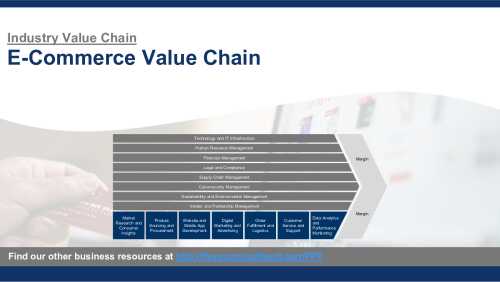
An Industry Value Chain is a visual representation of the series of steps an organization in a specific industry takes to deliver a product or service to the market. It captures the main business functions and processes that are involved in delivering the end product or service, illustrating how [read more]
Do You Want to Implement Business Best Practices?
You can download in-depth presentations on Ecommerce and 100s of management topics from the FlevyPro Library. FlevyPro is trusted and utilized by 1000s of management consultants and corporate executives.
For even more best practices available on Flevy, have a look at our top 100 lists:
These best practices are of the same as those leveraged by top-tier management consulting firms, like McKinsey, BCG, Bain, and Accenture. Improve the growth and efficiency of your organization by utilizing these best practice frameworks, templates, and tools. Most were developed by seasoned executives and consultants with over 20+ years of experience.
Readers of This Article Are Interested in These Resources
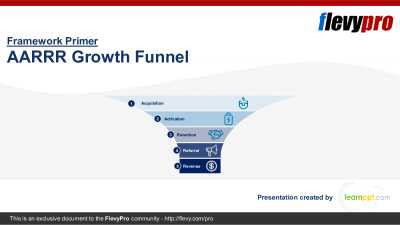
Growth Hacking is neither "scoring some quick wins to kick-start growth" nor "breaking into something one should not." Growth Hacking actually involves a consistent, scientific process to work towards business growth.
Growth Hacking is valuable for large enterprises, but more so for small [read more]
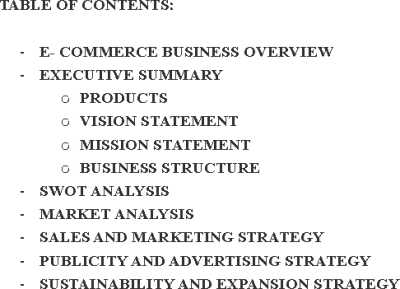
This e-commerce business plan is a detailed roadmap that will guide you in starting a successful e-commerce business. It has pre-written content, including important sections like market research, product offerings, marketing strategies, and financial projections.
You can use this sample plan as [read more]
Financial technology (better known as fintech) is used to describe new technology that seeks to improve and automate the delivery and use of financial services. At its core, fintech is utilized to help companies, business owners, and consumers better manage their financial [read more]
An e-commerce platform for physical products is a digital solution that enables businesses to sell tangible goods online. It provides tools for listing products, managing inventory, processing payments, handling shipping, and tracking orders. Customers can browse, purchase, and review items through [read more]
 There’s a specific moment a lot of store owners hit. The subscriber count keeps going up, the invoice keeps going up right along with it, and somewhere in there you start wondering if you’re actually getting more value or just paying more for the same thing. If you’ve heard this before, you’re not alone in