Editor's Note: Take a look at our featured best practice, GenAI Roadmap Design (30-slide PowerPoint presentation). Organizations worldwide are embracing GenAI for its ability to generate actionable insights, predict outcomes, personalize at scale, and process natural language with human-like fluency.
Leading organizations already deploy GenAI in AI-assisted software development, workflow automation, [read more]
* * * *
 Artificial intelligence has fundamentally changed the way organizations create business content. From internal documentation and marketing campaigns to executive presentations and customer communications, AI-powered tools help professionals complete tasks faster while reducing repetitive work.
However, speed alone does not create business value. Organizations must ensure that AI-generated content remains accurate, trustworthy, and aligned with their brand standards. Businesses that combine automation with proper governance are better positioned to improve productivity without sacrificing quality.
AI Is Becoming a Core Business Productivity Tool
Modern organizations generate enormous amounts of content every day. Sales proposals, operating procedures, reports, white papers, customer emails, and marketing materials all require significant time and coordination.
AI writing assistants can draft first versions in minutes, allowing employees to focus on strategy, editing, and decision-making rather than repetitive writing tasks. Modern organizations generate enormous amounts of content every day. Sales proposals, operating procedures, reports, white papers, customer emails, marketing materials, and hiring documents all require significant time and coordination. AI writing assistants can draft first versions in minutes, while an AI Resume Tool can help HR teams and job seekers create professional resumes more efficiently during the recruitment process. This shift enables teams to produce more content while maintaining operational efficiency.
Instead of replacing employees, AI often acts as a productivity multiplier, helping professionals spend more time on higher-value activities.
Quality Control Is More Important Than Ever
Although AI significantly accelerates content production, organizations should never publish machine-generated material without review.
Business documents frequently contain sensitive information, compliance requirements, or industry-specific terminology that requires human oversight. Establishing an editorial review process ensures consistency, accuracy, and alignment with company standards.
Many organizations also incorporate an AI checker into their content workflow to evaluate AI-generated text before publication. In addition, teams often humanize AI text to improve readability, create a more natural tone, and ensure the content aligns with their brand voice before publication. This additional review helps support transparency, maintain editorial quality, and reduce the risk of publishing inaccurate or low-quality material.
Brand Consistency Extends beyond Written Content
Successful brands communicate through both words and visuals.
Whether preparing presentations, proposal documents, social media graphics, or executive reports, companies benefit from maintaining a consistent visual identity across every customer touchpoint.
Today, AI-powered creative platforms make it easier to design logos, create branded graphics, and develop marketing assets without requiring advanced design expertise. Businesses can also create video QR code campaigns that connect printed materials, presentations, and other physical brand assets with digital video content, giving customers an easy way to access additional information. This enables businesses of all sizes to produce professional visual materials while maintaining brand consistency.
Establish Clear AI Governance
Organizations adopting AI should establish clear guidelines for responsible usage.
Best practices include:
- Defining which business processes may use AI.
- Reviewing all AI-generated content before publication.
- Protecting confidential company information.
- Maintaining human oversight for strategic decisions.
- Monitoring content quality over time.
These governance practices help organizations gain the efficiency benefits of AI while minimizing operational risks.
AI Supports Better Decision-Making
Beyond content creation, AI is becoming an essential business intelligence tool.
Organizations use AI to summarize large datasets, identify trends, automate reporting, and generate recommendations that support strategic planning. When combined with experienced human judgment, these capabilities improve decision-making while reducing manual effort.
Rather than replacing expertise, AI provides business leaders with better information and more time to focus on solving complex challenges.
Conclusion
AI is rapidly becoming a standard component of modern business operations. Organizations that implement thoughtful governance, maintain editorial oversight, and invest in consistent branding can unlock significant productivity gains while preserving trust and professionalism.
Businesses that successfully balance automation with human expertise will be better equipped to adapt to changing markets, communicate more effectively, and build stronger relationships with customers and stakeholders alike.
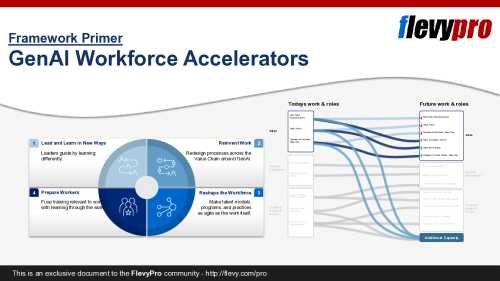
32-slide PowerPoint presentation
Generative AI (GenAI) is the most significant shift to work since the industrial revolution--and the Trifecta of Opportunities it unlocks (the economic, business, and people upsides) is the strategic objective. This presentation moves from the opportunity to the path: how leaders capture
[read more]
Do You Want to Implement Business Best Practices?
You can download in-depth presentations on GenAI and 100s of management topics from the FlevyPro Library. FlevyPro is trusted and utilized by 1000s of management consultants and corporate executives.
For even more best practices available on Flevy, have a look at our top 100 lists:
These best practices are of the same as those leveraged by top-tier management consulting firms, like McKinsey, BCG, Bain, and Accenture. Improve the growth and efficiency of your organization by utilizing these best practice frameworks, templates, and tools. Most were developed by seasoned executives and consultants with over 20+ years of experience.
Readers of This Article Are Interested in These Resources
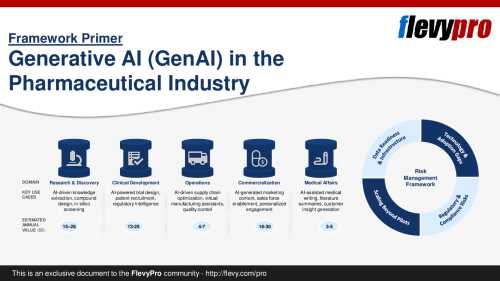
33-slide PowerPoint presentation
Pharmaceutical companies recognize the immense potential of Generative AI (GenAI) to accelerate drug discovery, improve clinical trials, and optimize commercial operations. Yet, capturing real value requires moving beyond hype to structured implementation strategies.
The McKinsey Global
[read more]
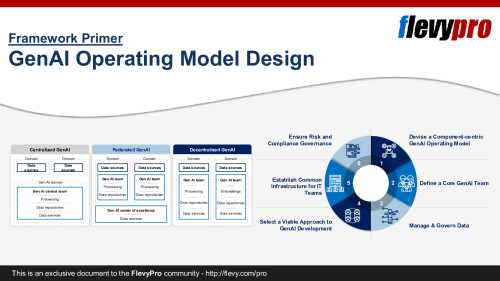
29-slide PowerPoint presentation
GenAI use is rising globally. Many organizations set GenAI strategies and launch pilots across functions. Yet most stall at the proof-of-concept stage and never show measurable financial or operational results.
This PPT presentation outlines the missing piece: an effective GenAI Operating
[read more]
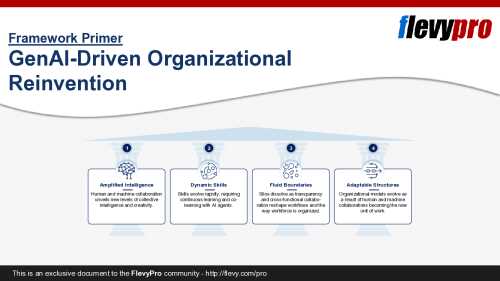
31-slide PowerPoint presentation
Generative AI (GenAI) marks a turning point in how organizations function and compete today. Similar to how the industrial revolution reshaped production, this wave of GenAI forces leaders to reimagine operating models, workforce design, and decision‑making at unprecedented speed.
This
[read more]
31-slide PowerPoint presentation
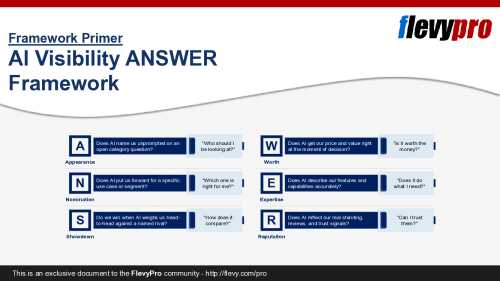
A fast-growing share of buyers now open an AI answer engine--ChatGPT, Perplexity, Google's AI answers, Claude, or Copilot--instead of a search engine, asking for an answer rather than a page of links. The engine names a few options, recommends one, and passes judgment on price and trust.
[read more]