Editor's Note: Take a look at our featured best practice, Psychology of Product Adoption (46-slide PowerPoint presentation). Some innovations are truly spectacular, but consumers are slow or just refuse to adopt. In fact, over 70% of all new products fail in the marketplace--and innovative, new products fail at an even higher rate.
Why is this the case? And, how do companies overcome this?
This document discusses [read more]
* * * *
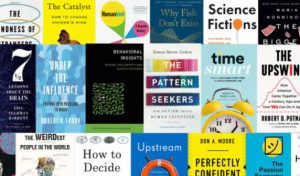 Behavioral economics started as a revolt against the neat math of classical economics. It showed that people are messy, biased, emotional, and predictable — all at once. Below I list the landmark books that reshaped how researchers, policymakers, and businesses model choice. Short sentences. Long ones. Questions. Fragments. Read on.
Top Behavioral Economics Books
Books on behavioral economics are extremely useful, but that doesn’t mean that simply reading novels, for example, isn’t beneficial. Simply reading free novels online can help you understand people much better. Online novels are arguably the best tool for developing empathy. These could be billionaire novels online free reading or stories about mafia blood feuds. Reading high-quality, free novels online will be beneficial in any case and will fill your free time perfectly. And during dedicated focus time, it’s wise to read books on behavioral economics. Here are some of the best.
Thinking, Fast and Slow — Daniel Kahneman
This is the single volume that made cognitive psychology required reading for economists and managers. It describes two systems of thought: the fast, intuitive system and the slow, reflective system. The contrast is simple, but the implications are vast. Kahneman’s work crystallized decades of experiments into frameworks that economists could actually use. Kahneman’s contributions to decision theory were recognized with the Nobel Prize in Economic Sciences in 2002.
Fact: the book reached mass audiences — selling millions of copies and shifting public conversations about judgment and bias.
Nudge — Richard H. Thaler & Cass Sunstein
Simple choice architecture. Default rules. Gentle pushes toward better decisions without eliminating freedom. That is the Nudge idea in a sentence. Thaler and Sunstein argued that policy and product design can use behavioral insights to improve outcomes: higher savings, better health choices, safer roads. The approach sparked a global movement: “nudge units” and behavioural teams inside governments and firms. Thaler later received the Nobel Prize in 2017 for contributions that included work on nudges and human biases.
Nudge also crossed into mainstream success, selling over a million copies and inspiring practical policy shifts.
Predictably Irrational — Dan Ariely
Dan Ariely brought experiments to life with stories. He showed, with clever studies, that irrational decisions follow patterns. Anchoring, the decoy effect, the illusion of free — these are examples. The book helped non-specialists see how experiments reveal systematic quirks in markets and everyday choices. It also made the idea that irrationality is “predictable” easy to remember and hard to ignore.
Misbehaving — Richard H. Thaler
A mix of memoir and manifesto. Thaler recounts how behavioral economics formed: the fights, the failures, the experiments that didn’t fit neat models. Misbehaving tells practitioners why incorporating human quirks into models is not an insult to economics but a correction. The book helped scholars and students see the field as a research program — not a passing fad.
Influence — Robert Cialdini
This is social psychology with enormous practical reach. Cialdini codified principles such as reciprocity, commitment, social proof, authority, liking, and scarcity. Marketers, policy designers, negotiators — they all borrowed these rules. Influence predates the behavioral economics label, yet it feeds directly into modern models of choice and persuasion. Amazon and other outlets report millions of copies sold, showing its wide cultural impact.
Scarcity — Sendhil Mullainathan & Eldar Shafir
Scarcity reframes decision-making by focusing on constraints. Not having enough money, time, or bandwidth changes priorities and narrows attention. The book shows how scarcity itself creates patterns of choice that traditional models miss. It’s especially powerful for understanding poverty, consumer debt, and time management. The authors combine lab results, field experiments, and policy suggestions into a model that treats scarcity as an engine of behavior.
The Undoing Project — Michael Lewis
Story matters. Lewis told the human story behind prospect theory: the friendship, the experiments, the clashes. The Undoing Project made the technical ideas feel real and human. Readers who might never open academic papers learned about heuristics, biases, and the personal cost—but also the collaborative brilliance—that created modern behavioral economics.
Why These Books Changed Models — Short Answers
Books are a source of knowledge. What’s surprising is that they change people and business concepts. While using the FictionMe app helps shape one’s personality, specialized books develop professional skills. There are many reasons for this, but here are a few:
- They moved evidence into models. Experiments produced repeatable facts. Models had to adapt.
- They offered tools for designers. Defaults, framing, and architecture became variables you could tweak.
- They spread beyond academia. Managers, policymakers, and product teams adopted these ideas. In short: theory traveled. Fast.
A Few Convincing Numbers
- Millions of readers. Big-selling titles like Thinking, Fast and Slow and Influence reached multi-million audiences, pushing ideas into everyday conversation.
- Institutional uptake. An OECD mapping found more than 300 institutions applying behavioral science across 63 countries, including over 200 units inside governments — evidence that these books have influenced public policy design at scale.
- Nobel recognition. The discipline’s intellectual core received formal confirmation when Daniel Kahneman won the Nobel Prize in Economic Sciences in 2002 and Richard Thaler won in 2017. These awards signaled mainstream acceptance.
How Decision-Making Models Changed (Concrete Points)
- Loss aversion and prospect theory replaced simple utility curves in many models. People weigh losses more than gains. Short sentence. An important one.
- Choice architecture became a variable: defaults, simplification, and feedback can be modeled and tested.
- Time inconsistency entered models as self-control problems; hyperbolic discounting improved predictions about saving, dieting, and addiction.
- Social preferences and fairness moved into market models; games and auctions now often include psychological motives.
- Attention and scarcity became constraints in themselves — not just background noise.
Practical Takeaways for Modelers and Designers
- Test with experiments. Real behavior beats neat math when you want accurate predictions.
- Make small changes. A default switch can outperform big incentives
- Measure unintended effects. Nudges work — but they can backfire or create dependence.
- Use simplicity. Models that keep psychological realism often generalize better in practice.
Final Thought
Books translate science into tools and narratives. The titles above did that — they turned lab results into policies, products, and new equations. Did they replace old models altogether? No. They enriched them. They added human texture to mathematical skeletons. And in doing so, they changed how we think about choice — forever.
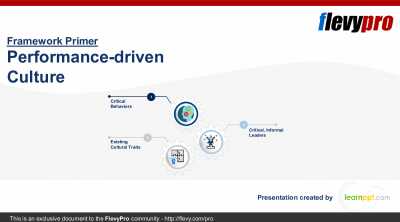
26-slide PowerPoint presentation
The Corporate Culture defines the very essence of the organization. A strong, positive Corporate Culture in the workplace fosters a good feeling in employees about their work and the work environment.
This presentation provides a lot context around the important of behavior, as the most
[read more]
Do You Want to Implement Business Best Practices?
You can download in-depth presentations on Behavioral Economics and 100s of management topics from the FlevyPro Library. FlevyPro is trusted and utilized by 1000s of management consultants and corporate executives.
For even more best practices available on Flevy, have a look at our top 100 lists:
These best practices are of the same as those leveraged by top-tier management consulting firms, like McKinsey, BCG, Bain, and Accenture. Improve the growth and efficiency of your organization by utilizing these best practice frameworks, templates, and tools. Most were developed by seasoned executives and consultants with over 20+ years of experience.
Readers of This Article Are Interested in These Resources
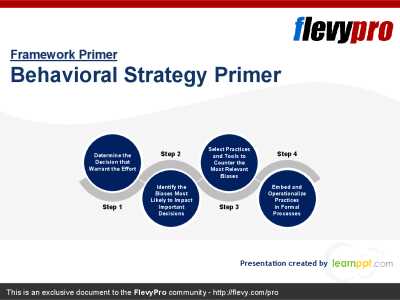
22-slide PowerPoint presentation
What is Behavioral Strategy?
First, to understand Behavioral Strategy, we must first examine the concept of Cognitive Biases. There are 2 different types of biases in people that cause them to stray from rational decision making: cognitive and emotional. Cognitive biases arise due to
[read more]
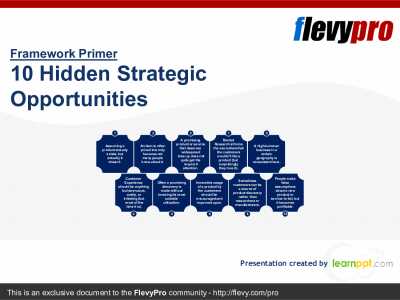
22-slide PowerPoint presentation
Potential opportunities always surround leaders. It is up to them to pounce on them or regret overlooking them when someone else takes advantage of them.
Psychologists call this trait "confirmation bias" where individuals pick the data that supports their existing opinions and approaches and
[read more]

29-slide PowerPoint presentation
Behavioral Economics has exposed that not many strategists making crucial decisions consciously consider cognitive biases. These biases are systematic human tendencies to deviate from rational calculations. In strategic decision making, leaders need to recognize their own biases, as these biases
[read more]
37-slide PowerPoint presentation
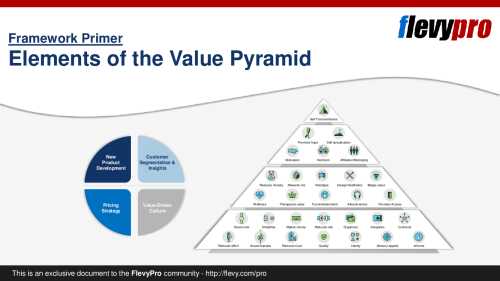
Consumers weigh perceived value against cost when making purchasing decisions. Thus, companies that prioritize Consumer Value gain a Competitive Advantage. However, many organizations struggle to define and implement a structured Consumer Value Creation Strategy.
The Elements of the Value
[read more]