Theory of Planned Behavior   11-slide PPT PowerPoint presentation slide deck (PPT)
$29.00

Theory of Planned Behavior (11-slide PPT PowerPoint presentation slide deck (PPT)) Preview Image
Flevy is the marketplace for business best practices.
Theory of Planned Behavior (11-slide PPT PowerPoint presentation slide deck (PPT)) Preview Image
Arrow   Click main image to view in full screen.

Theory of Planned Behavior (PowerPoint PPT Slide Deck)

PowerPoint (PPT) 11 Slides FlevyPro Document

$29.00
FlevyPro price: FREE (included in subscription)
This framework is developed by a team of former McKinsey and Big 4 consultants. The presentation follows the headline-body-bumper slide format used by global consulting firms.
Add to Cart


Immediate download
Free lifetime updates

BEHAVIORAL ECONOMICS PPT DESCRIPTION

Editor Summary An 11-slide PowerPoint presentation titled Theory of Planned Behavior by PPT Lab explaining Icek Ajzen’s 1985 TPB model for predicting deliberate behavior. Read more

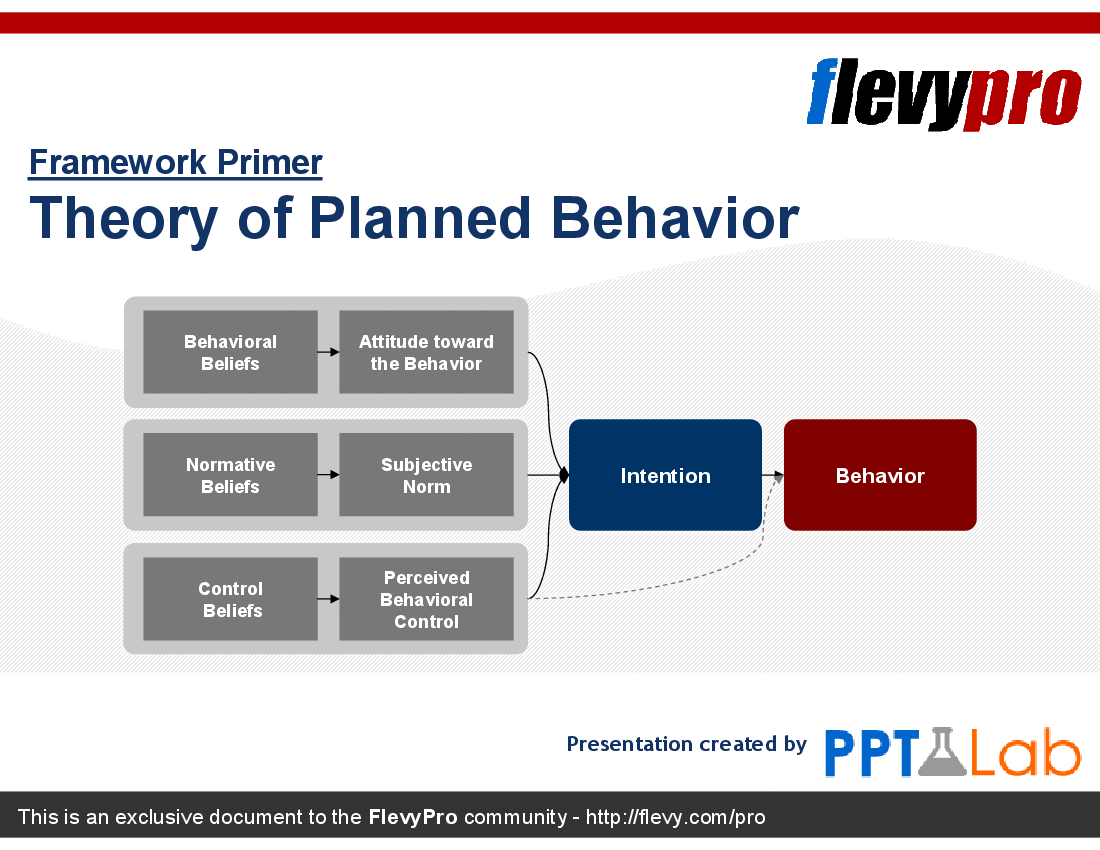
The Theory of Planned Behavior (TPB), developed by Icek Ajzen (1985), provides a model for understanding how we can change the behavior of people. TPB is a theory which predicts deliberate behavior, because behavior can be planned.

TPB is the successor of the similar Theory of Reasoned Action (TRA), developed by Ajzen and Fishbein (1975). The succession was the result of the discovery that behavior appeared to be not completely voluntary and under control. TRA was thus modified to add a component for perceived behavioral control, resulting in the TPB model.

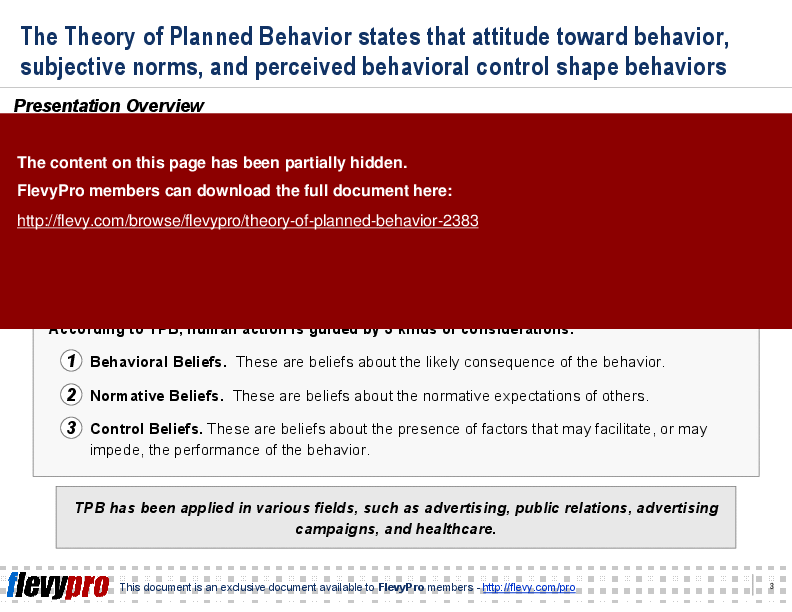
According to TPB, human action is guided by 3 kinds of considerations:
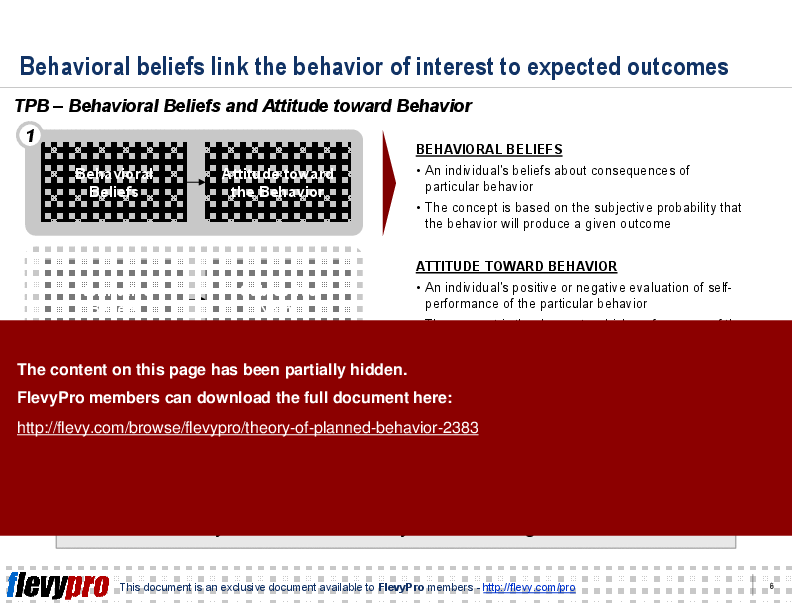
1. Behavioral Beliefs. These are beliefs about the likely consequence of the behavior.
2. Normative Beliefs. These are beliefs about the normative expectations of others.
3. Control Beliefs. These are beliefs about the presence of factors that may facilitate, or may impede, the performance of the behavior.

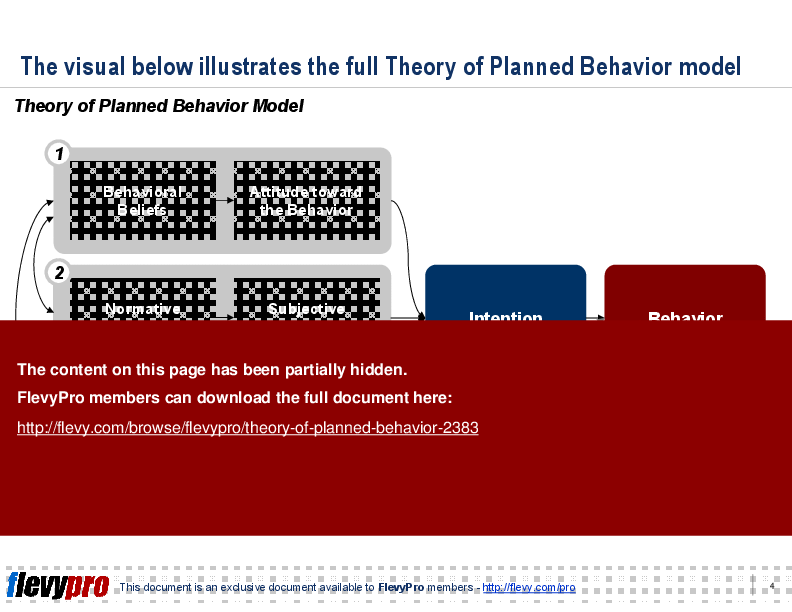
The PPT delves into the intricate relationships between behavioral beliefs, attitudes, subjective norms, and perceived behavioral control. It offers a comprehensive visual model to illustrate these connections, making it easier for executives to grasp the underlying principles quickly. The model is particularly useful for those looking to apply TPB in practical scenarios, providing clear pathways from intention to behavior.

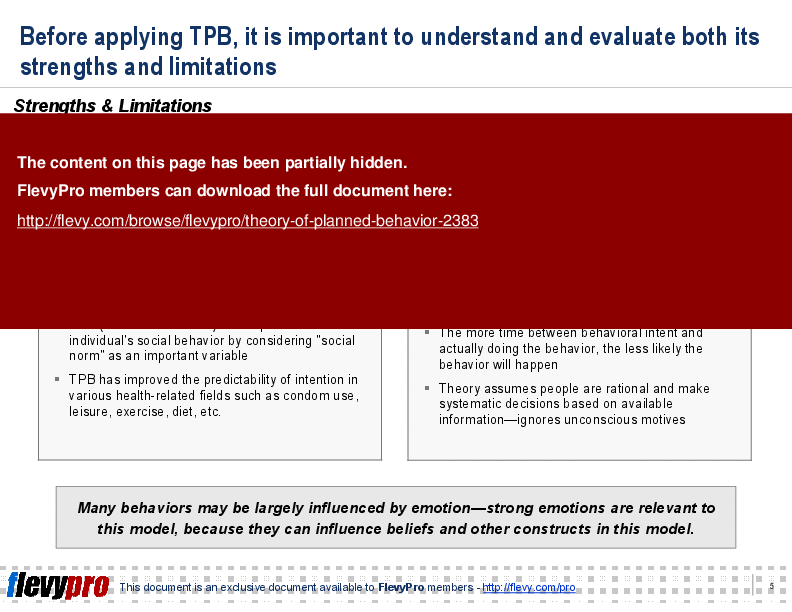
Understanding the strengths and limitations of TPB is crucial for its effective application. The document highlights the importance of evaluating these aspects before implementation. It emphasizes that while TPB can predict behavior with a degree of accuracy, it also has constraints, such as the assumption of rational decision-making. This nuanced approach ensures that users can make informed decisions when leveraging TPB in various fields, from marketing to public health.

Got a question about this document? Email us at flevypro@flevy.com.

MARCUS OVERVIEW

This synopsis was written by Marcus [?] based on the analysis of the full 11-slide presentation.


Executive Summary
The Theory of Planned Behavior (TPB) presentation provides a structured framework for understanding and influencing human behavior. Developed by Icek Ajzen in 1985, TPB enhances behavioral change strategies by integrating 3 core components: behavioral beliefs, normative beliefs, and control beliefs. This model is particularly useful in fields such as advertising, healthcare, and public relations, enabling professionals to predict and shape deliberate behaviors effectively. By utilizing this framework, users can develop targeted interventions that account for attitudes, social norms, and perceived control, ultimately leading to more successful behavior modification initiatives.

Who This Is For and When to Use
•  Behavioral scientists and researchers studying human behavior
•  Marketing and advertising professionals aiming to influence consumer behavior
•  Public health officials designing health campaigns
•  Organizational leaders implementing change management strategies

Best-fit moments to use this deck:
•  Developing marketing strategies that require understanding consumer behavior
•  Designing public health campaigns aimed at changing health-related behaviors
•  Conducting training sessions on behavior modification techniques
•  Evaluating the effectiveness of existing behavior change initiatives

Learning Objectives
•  Define the Theory of Planned Behavior and its components
•  Analyze the relationship between behavioral beliefs and attitudes
•  Examine the influence of normative beliefs on subjective norms
•  Assess control beliefs and their impact on perceived behavioral control
•  Develop strategies to enhance behavioral intention and actual behavior
•  Apply TPB in various fields such as marketing and healthcare

Table of Contents
•  Overview (page 2)
•  Behavioral Beliefs and Attitude toward Behavior (page 6)
•  Normative Beliefs and Subjective Norm (page 7)
•  Control Beliefs and Perceived Behavioral Control (page 8)
•  Intention and Behavior (page 9)

Primary Topics Covered
•  Overview of TPB - The Theory of Planned Behavior provides a comprehensive model for predicting deliberate behavior through behavioral, normative, and control beliefs.
•  Behavioral Beliefs - These beliefs relate to the expected outcomes of a behavior, influencing an individual's attitude toward that behavior.
•  Normative Beliefs - These beliefs encompass the perceived social pressures from significant others regarding whether to perform a behavior.
•  Control Beliefs - These beliefs address the perceived presence of factors that may facilitate or hinder the performance of a behavior.
•  Intention - Intention reflects an individual's readiness to perform a behavior, influenced by attitudes, subjective norms, and perceived control.
•  Behavior - Behavior is the observable response in a given situation, shaped by intentions and perceptions of control.

Deliverables, Templates, and Tools
•  Framework for analyzing behavioral beliefs and their impact on attitudes
•  Template for assessing normative beliefs and subjective norms
•  Model for evaluating control beliefs and perceived behavioral control
•  Guidelines for developing interventions based on TPB
•  Checklist for measuring intention and behavior outcomes

Slide Highlights
•  Visual representation of the Theory of Planned Behavior model, illustrating the relationships between beliefs, intention, and behavior
•  Summary of strengths and limitations of TPB, providing a balanced view for application
•  Detailed breakdown of behavioral, normative, and control beliefs with real-world examples

Potential Workshop Agenda
Introduction to TPB (30 minutes)
•  Overview of the Theory of Planned Behavior
•  Discussion on its relevance in various fields

Application of TPB (60 minutes)
•  Case studies demonstrating TPB in action
•  Group activity to identify behavioral beliefs in a specific context

Evaluation and Measurement (45 minutes)
•  Techniques for measuring intention and behavior
•  Tools for assessing the effectiveness of interventions

Customization Guidance
•  Tailor the examples and case studies to align with specific industry contexts
•  Adjust the terminology used in the presentation to match organizational language
•  Incorporate relevant metrics for measuring success based on organizational goals

Secondary Topics Covered
•  Emotional influences on behavior
•  The role of demographics and personality in TPB
•  Applications of TPB in different sectors, including education and corporate training

Topic FAQ

What are the core components of the Theory of Planned Behavior and how do they interact?

The Theory of Planned Behavior identifies 3 core components: behavioral beliefs (expected outcomes shaping attitudes), normative beliefs (perceived social pressures forming subjective norms), and control beliefs (factors shaping perceived behavioral control). Together they influence behavioral intention, which in turn predicts observable behavior; the model centers on these 3 components.

How does perceived behavioral control influence intentions and behavior?

Perceived behavioral control reflects an individual's sense of ease or difficulty performing an action; stronger perceived control increases the likelihood that intentions translate into behavior. Control beliefs about facilitators or barriers affect perceived behavioral control and thereby both intention strength and actual behavior, per the TPB model.

What are common limitations when applying TPB in behavior-change projects?

TPB assumes largely rational decision-making and may underweight demographic or personality influences. Practitioners also face challenges in reliably measuring perceived behavioral control and capturing emotional drivers, making evaluation and prediction imperfect—limitations explicitly noted in the model’s strengths and weaknesses.

What should I look for in a PPT or toolkit to apply TPB in a marketing campaign?

Look for a clear visual model of TPB, templates to map behavioral, normative, and control beliefs, guidelines for designing interventions, and tools to measure intention and behavior. A useful resource will include deliverables such as a template for assessing normative beliefs and a measurement checklist.

How much time and team resource is typically needed to run a TPB-based workshop?

A practical workshop format in the deck schedules a 30-minute introduction, 60-minute application session with case work, and 45-minute evaluation and measurement session, totaling 135 minutes; resourcing will depend on group size and preparation for activities and case studies.

I need to design a public health campaign to change a health behavior—what TPB steps should I follow?

Map behavioral beliefs to understand outcome expectations and attitudes, assess normative beliefs to identify influential referents and subjective norms, evaluate control beliefs to find barriers and facilitators, design interventions targeting these elements, and use measurement tools to track intention and behavior with a checklist.

How can marketers use TPB to improve consumer response to an ad?

Marketers can use TPB to identify and emphasize positive outcome beliefs that improve attitudes, highlight social proof to leverage normative beliefs, reduce perceived barriers through facilitation messages to address control beliefs, and measure shifts in intention as a predictor of behavior using the TPB framework.

Are TPB templates worth buying for a small team on a tight budget?

Ready templates can save diagnostic and design time if they include belief-analysis frameworks, normative-belief assessment tools, control-belief models, intervention guidelines, and measurement checklists; Flevy's Theory of Planned Behavior supplies these deliverables in an 11-slide PPT.

Document FAQ
These are questions addressed within this presentation.

What is the Theory of Planned Behavior?
The Theory of Planned Behavior is a psychological framework that predicts deliberate behavior based on behavioral, normative, and control beliefs.

How can TPB be applied in marketing?
TPB can guide marketers in understanding consumer attitudes and social pressures, allowing for more effective campaign strategies.

What are the limitations of TPB?
Limitations include the lack of consideration for demographics and personality factors, as well as challenges in measuring perceived behavioral control.

How does perceived behavioral control influence behavior?
Perceived behavioral control affects the extent to which an individual believes they can perform a behavior, impacting their intentions and actual behavior.

Can TPB be used in public health initiatives?
Yes, TPB is widely used in public health to design interventions that aim to change health-related behaviors based on attitudes and social norms.

What role do emotions play in TPB?
Emotions can significantly influence beliefs and behaviors, impacting the effectiveness of interventions based on the TPB model.

How do normative beliefs shape behavior?
Normative beliefs reflect perceived social pressures, influencing an individual's decision to engage in or avoid certain behaviors.

What is the importance of intention in TPB?
Intention serves as a strong predictor of actual behavior, indicating an individual's readiness to perform a specific action.

Glossary
•  Behavioral Beliefs - Beliefs about the consequences of a behavior.
•  Normative Beliefs - Perceptions of social pressures regarding a behavior.
•  Control Beliefs - Beliefs about factors that may facilitate or hinder behavior.
•  Perceived Behavioral Control - An individual's perception of ease or difficulty in performing a behavior.
•  Intention - Readiness to perform a specific behavior.
•  Subjective Norm - Perception of social expectations regarding a behavior.
•  Behavior - Observable response in a specific context.
•  Theory of Planned Behavior (TPB) - A model predicting deliberate behavior based on beliefs and intentions.
•  Strengths and Limitations - Evaluation of the effectiveness and constraints of TPB.
•  Intervention - A strategy designed to change behavior based on TPB principles.
•  Social Norm - The accepted behavior within a group or society.
•  Attitude - An individual's evaluation of a behavior as positive or negative.

Source: Best Practices in Icek Ajzen, Theory of Planned Behavior, Behavioral Economics, Organizational Behavior PowerPoint Slides: Theory of Planned Behavior PowerPoint (PPT) Presentation Slide Deck, PPT Lab


$29.00
FlevyPro price: FREE (included in subscription)
This framework is developed by a team of former McKinsey and Big 4 consultants. The presentation follows the headline-body-bumper slide format used by global consulting firms.
Add to Cart
  

Did you need more documents?

Consider a FlevyPro subscription from $39/month. View plans here.

For $10.00 more, you can download this document plus 2 more FlevyPro documents. That's just $13 each.

ABOUT FLEVYPRO

This document is part of the FlevyPro Library, a curated knowledge base of documents for our FlevyPro subscribers.

FlevyPro is a subscription service for on-demand business frameworks and analysis tools. FlevyPro subscribers receive access to an exclusive library of curated business documents—business framework primers, presentation templates, Lean Six Sigma tools, and more—among other exclusive benefits.

Click here to learn more about FlevyPro and its benefits.

Did you know?
The average daily rate of a McKinsey consultant is $6,625 (not including expenses). The average price of a Flevy document is $65.


Trusted by over 10,000+ Client Organizations
Since 2012, we have provided business templates to over 10,000 businesses and organizations of all sizes, from startups and small businesses to the Fortune 100, in over 130 countries.
AT&T GE Cisco Intel IBM Coke Dell Toyota HP Nike Samsung Microsoft Astrazeneca JP Morgan KPMG Walgreens Walmart 3M Kaiser Oracle SAP Google E&Y Volvo Bosch Merck Fedex Shell Amgen Eli Lilly Roche AIG Abbott Amazon PwC T-Mobile Broadcom Bayer Pearson Titleist ConEd Pfizer NTT Data Schwab


Read Customer Testimonials

 
"[Flevy] produces some great work that has been/continues to be of immense help not only to myself, but as I seek to provide professional services to my clients, it gives me a large "tool box" of resources that are critical to provide them with the quality of service and outcomes they are expecting."

– Royston Knowles, Executive with 50+ Years of Board Level Experience
 
"I like your product. I'm frequently designing PowerPoint presentations for my company and your product has given me so many great ideas on the use of charts, layouts, tools, and frameworks. I really think the templates are a valuable asset to the job."

– Roberto Fuentes Martinez, Senior Executive Director at Technology Transformation Advisory
 
"Flevy is our 'go to' resource for management material, at an affordable cost. The Flevy library is comprehensive and the content deep, and typically provides a great foundation for us to further develop and tailor our own service offer."

– Chris McCann, Founder at Resilient.World
 
"Flevy is now a part of my business routine. I visit Flevy at least 3 times each month.

Flevy has become my preferred learning source, because what it provides is practical, current, and useful in this era where the business world is being rewritten.

In today's environment where there are so "

– Omar Hernán Montes Parra, CEO at Quantum SFE
 
"One of the great discoveries that I have made for my business is the Flevy library of training materials.

As a Lean Transformation Expert, I am always making presentations to clients on a variety of topics: Training, Transformation, Total Productive Maintenance, Culture, Coaching, Tools, Leadership Behavior, etc. Flevy "

– Ed Kemmerling, Senior Lean Transformation Expert at PMG
 
"If you are looking for great resources to save time with your business presentations, Flevy is truly a value-added resource. Flevy has done all the work for you and we will continue to utilize Flevy as a source to extract up-to-date information and data for our virtual and onsite presentations!"

– Debbi Saffo, President at The NiKhar Group
 
"I have found Flevy to be an amazing resource and library of useful presentations for lean sigma, change management and so many other topics. This has reduced the time I need to spend on preparing for my performance consultation. The library is easily accessible and updates are regularly provided. A wealth of great information."

– Cynthia Howard RN, PhD, Executive Coach at Ei Leadership
 
"FlevyPro has been a brilliant resource for me, as an independent growth consultant, to access a vast knowledge bank of presentations to support my work with clients. In terms of RoI, the value I received from the very first presentation I downloaded paid for my subscription many times over! The "

– Roderick Cameron, Founding Partner at SGFE Ltd


Customers Also Like These Documents

Explore Templates on Related Management Topics


Your Recently Viewed Documents
Download our FREE Strategy & Transformation Framework Templates

Download our free compilation of 50+ Strategy & Transformation slides and templates. Frameworks include McKinsey 7-S, Balanced Scorecard, Disruptive Innovation, BCG Curve, and many more.









