
3 Bs of Behavioral Change   29-slide PPT PowerPoint presentation template (PPTX)
$29.00

3 Bs of Behavioral Change (29-slide PPT PowerPoint presentation slide deck (PPTX)) Preview Image
Log in to unlock full preview.
3 Bs of Behavioral Change (29-slide PPT PowerPoint presentation slide deck (PPTX)) Preview Image
Arrow   Click main image to view in full screen.

3 Bs of Behavioral Change – PowerPoint PPTX Template

PowerPoint (PPTX) 29 Slides FlevyPro Document

$29.00
FlevyPro price: FREE (included in subscription)
This framework is developed by a team of former McKinsey and Big 4 consultants. The presentation follows the headline-body-bumper slide format used by global consulting firms.
Add to Cart


Immediate download
Free lifetime updates

BEHAVIORAL ECONOMICS PPT TEMPLATE DESCRIPTION

Editor Summary The 29-slide "3 Bs of Behavioral Change" is a PPTX framework developed by ex-McKinsey consultants that explains the core deliverable: a diagnostic-and-implementation approach centered on Behavior, Barriers, and Benefits. Read more

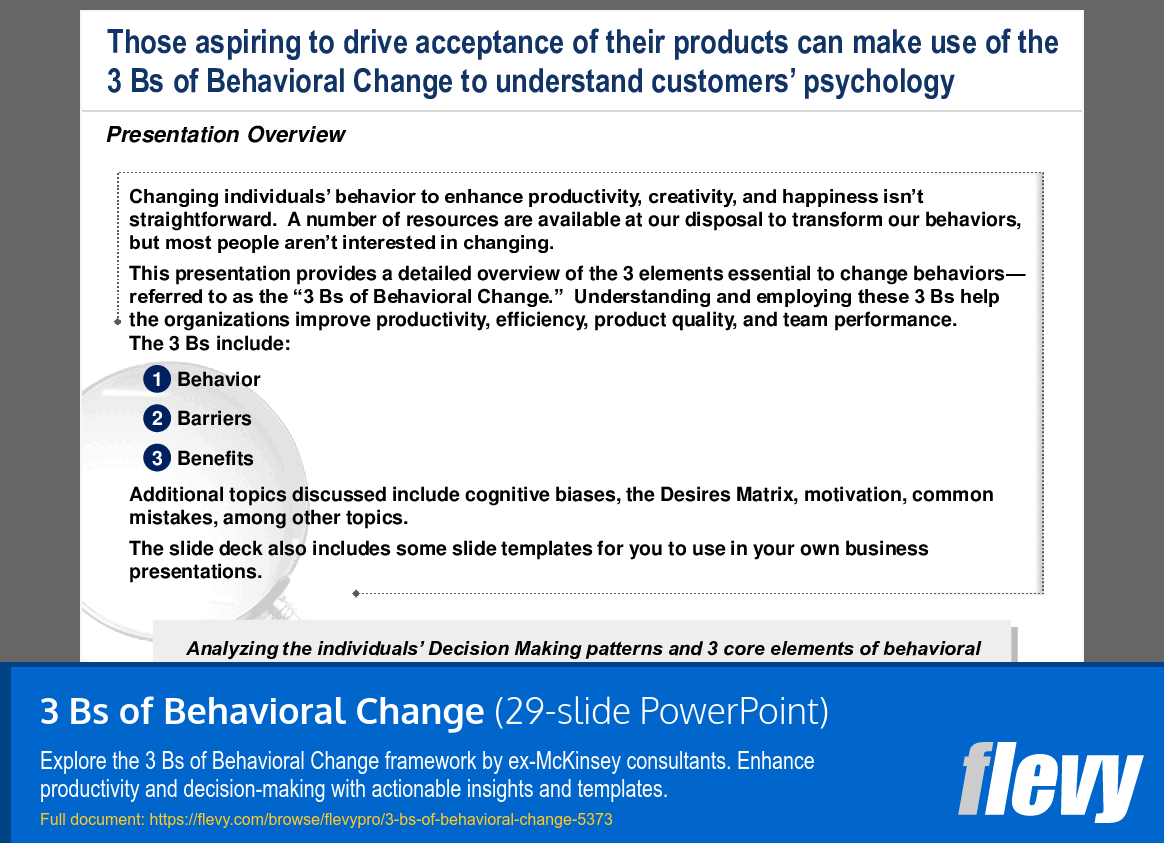
Changing individuals' behavior to enhance productivity, creativity, and happiness isn't straightforward. A number of resources are available at our disposal to transform our behaviors, but most people aren't interested in changing.

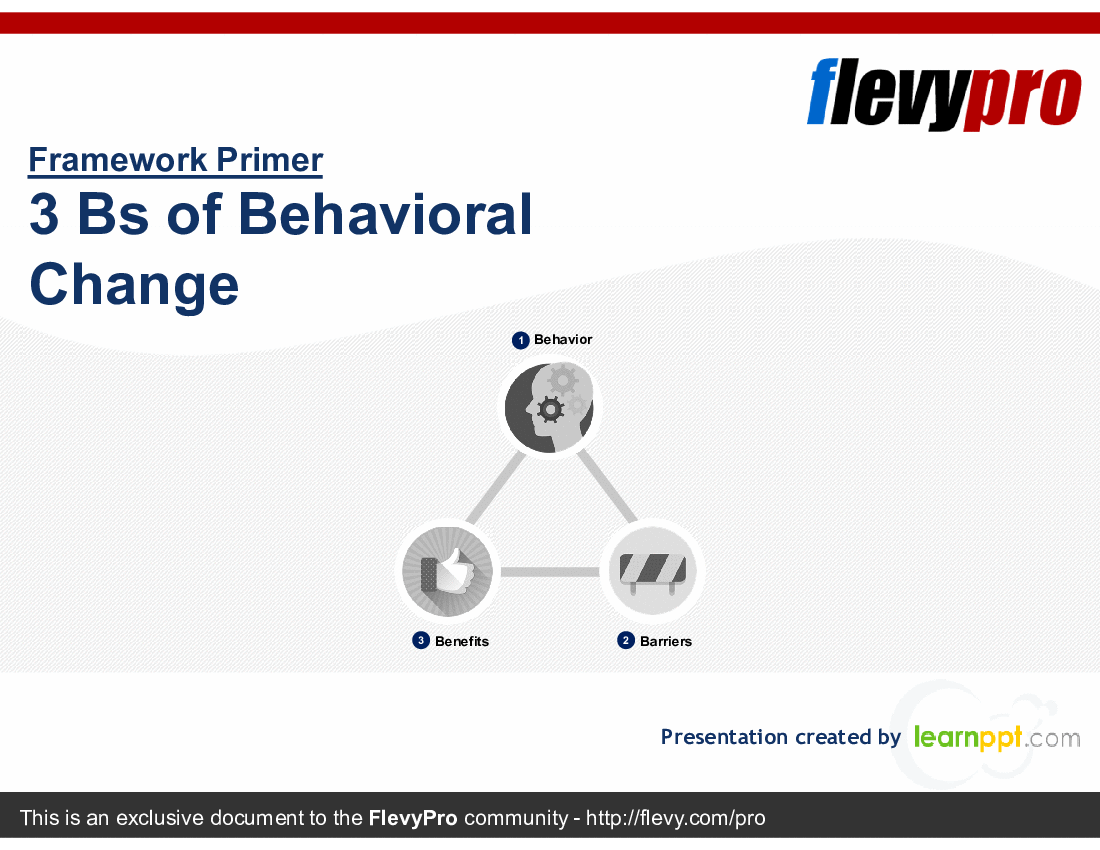
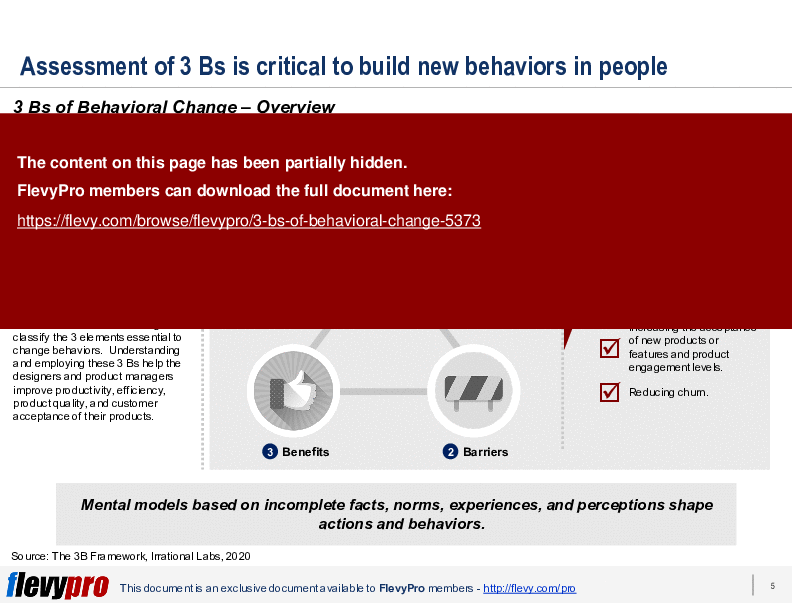
This presentation provides a detailed overview of the 3 elements essential to change behaviors—referred to as the "3 Bs of Behavioral Change." Understanding and employing these 3 Bs help the organizations improve productivity, efficiency, product quality, and team performance. The 3 Bs include:

1. Behavior
2. Barriers
3. Benefits

Analyzing the individuals' Decision Making patterns and 3 core elements of behavioral change assist in designing better products.

Additional topics discussed include cognitive biases, the Desires Matrix, motivation, common mistakes, among other topics.

The slide deck also includes some slide templates for you to use in your own business presentations.

This PPT delves deep into the intricacies of human behavior, providing actionable insights for product managers and business leaders. It emphasizes the importance of identifying and reducing barriers to behavioral change, which can significantly enhance user engagement and reduce churn. By understanding cognitive biases and their impact on decision-making, organizations can develop more effective strategies to influence customer behavior positively.

The presentation also highlights the critical role of benefits in motivating behavioral change. It explains how immediate rewards often outweigh long-term benefits in the eyes of consumers. This knowledge is crucial for designing products and services that align with user motivations and drive desired actions. The Desires Matrix is a valuable tool included in the document, helping businesses map out and leverage the functional and emotional needs of their customers.

Behavioral change is not just about understanding what drives people, but also about creating an environment that supports and sustains new behaviors. The document provides practical templates and frameworks that can be customized for various business contexts. These tools are designed to help organizations systematically approach behavioral change, ensuring that interventions are both effective and sustainable.

Got a question about this document? Email us at flevypro@flevy.com.

MARCUS OVERVIEW

This synopsis was written by Marcus [?] based on the analysis of the full 29-slide presentation.


Executive Summary
The "3 Bs of Behavioral Change" presentation, crafted by ex-McKinsey consultants, provides a strategic framework for understanding and influencing customer behavior. This document delves into 3 critical components—Behavior, Barriers, and Benefits—that are essential for driving behavioral change. By utilizing this framework, organizations can enhance productivity, improve product acceptance, and foster team performance. The presentation includes actionable insights and templates designed to facilitate the implementation of these concepts in real-world scenarios.

Who This Is For and When to Use
•  Product Managers aiming to enhance customer engagement and product acceptance
•  Marketers seeking to understand customer psychology for better targeting
•  Designers looking to create user-centric products that drive desired behaviors
•  Consultants advising organizations on behavioral change strategies

Best-fit moments to use this deck:
•  During product development phases to align team objectives with customer behavior insights
•  In marketing strategy sessions to refine messaging based on behavioral psychology
•  When conducting workshops aimed at improving team performance and productivity

Learning Objectives
•  Define the 3 core elements of behavioral change: Behavior, Barriers, and Benefits
•  Identify key behaviors that need to be influenced to meet business objectives
•  Analyze barriers that hinder the adoption of desired behaviors
•  Articulate the benefits that motivate customers to change their behavior
•  Develop actionable strategies to implement the 3 Bs framework in organizational practices
•  Create templates for tracking and measuring behavioral change initiatives

Table of Contents
•  Overview (page 3)
•  3 Bs of Behavioral Change (page 5)
•  Behavior (page 7)
•  Barriers (page 10)
•  Benefits (page 18)
•  Templates (page 22)

Primary Topics Covered
•  Behavior - Understanding the specific actions that need to be modified to achieve business goals.
•  Barriers - Identifying and mitigating obstacles that prevent the adoption of desired behaviors.
•  Benefits - Emphasizing immediate and emotional benefits that motivate behavioral change.
•  Cognitive Biases - Recognizing common cognitive biases that affect decision-making and behavior.
•  Desires Matrix - Analyzing how time and motivation impact the adoption of desired behaviors.
•  Common Mistakes - Identifying frequent errors in behavioral change initiatives and how to avoid them.

Deliverables, Templates, and Tools
•  Behavioral change tracking template to monitor progress and outcomes
•  Barrier identification worksheet to streamline decision-making processes
•  Benefits articulation framework for clearly communicating value propositions
•  Cognitive biases reference guide for understanding decision-making pitfalls
•  Desires Matrix template for analyzing user motivations
•  Common mistakes checklist to ensure effective implementation of behavioral strategies

Slide Highlights
•  Overview of the 3 Bs framework and its significance in behavioral change
•  Detailed breakdown of key behaviors that drive organizational success
•  Visual representation of barriers and how to simplify decision-making
•  Emotional vs. functional benefits analysis to enhance product appeal
•  Common cognitive biases that hinder rational decision-making

Potential Workshop Agenda
Introduction to the 3 Bs Framework (30 minutes)
•  Overview of the framework and its relevance
•  Discussion of how behavioral change impacts organizational goals

Behavior Identification Session (60 minutes)
•  Group activity to identify key behaviors to influence
•  Presentation of findings and alignment on objectives

Barrier Analysis Workshop (45 minutes)
•  Brainstorming session to identify barriers to behavior adoption
•  Prioritization of barriers and strategies for mitigation

Benefits Articulation and Strategy Development (60 minutes)
•  Workshop on defining and communicating benefits
•  Development of actionable strategies to enhance product acceptance

Customization Guidance
•  Tailor the behavioral change tracking template to fit specific organizational metrics
•  Modify the barrier identification worksheet to reflect industry-specific challenges
•  Adapt the benefits articulation framework to align with unique value propositions
•  Incorporate company-specific cognitive biases into the reference guide
•  Customize the Desires Matrix to reflect target customer segments
•  Update the common mistakes checklist based on organizational experiences

Secondary Topics Covered
•  The role of cognitive biases in decision-making
•  Strategies for overcoming decision paralysis
•  The impact of emotional benefits on customer behavior
•  Techniques for simplifying complex choices
•  The importance of stakeholder alignment in behavioral change initiatives

Topic FAQ

What are the core components of a behavioral change framework I should apply in product design?

A concise behavioral change framework focuses on 3 components: the specific Behavior to influence, the Barriers preventing adoption, and the Benefits that motivate change. Practical application maps desired actions, lists obstacles to remove, and tests benefit messaging; captured as Behavior, Barriers, and Benefits.

How do cognitive biases affect user decision-making and product adoption?

Cognitive biases create predictable deviations from rational choice, leading users to favor immediate or familiar options and avoid change. Recognizing biases like loss aversion or status quo bias helps designers counteract them when crafting choice architecture, as summarized in a cognitive biases reference guide.

What is a Desires Matrix and how is it used to prioritize features?

The Desires Matrix maps user motivation and time sensitivity to determine whether functional or emotional benefits will drive behavior. Teams use it to prioritize interventions that match user willingness to act, typically implemented via a Desires Matrix template for segmentation and prioritization.

How can I measure whether a behavioral change intervention worked?

Measure by tracking defined user actions, monitoring engagement metrics, and assessing impact on business outcomes. Effective measurement uses a behavioral change tracking template to record target behaviors, baseline and post-intervention values, and linkage to business metrics.

What should I look for when choosing a behavioral change toolkit for my team?

Look for diagnostic tools that identify target behaviors, worksheets to surface and prioritize barriers, a framework for articulating benefits, and references to common cognitive biases. A toolkit that includes a barrier identification worksheet and benefits articulation framework supports implementation decisions.

How much training is required to implement a basic behavioral change framework?

The framework is designed to be intuitive and usable with the included templates and guidance, though targeted training can improve consistency. Organizations can run initial workshops using the barrier identification worksheet and behavioral change tracking template without extensive formal training.

I need to increase product adoption after launch — what practical steps should I take first?

Start by defining the specific behavior you want users to perform, list and prioritize adoption barriers, and test benefit messages emphasizing immediate or emotional value. Use a barrier identification worksheet and benefits articulation framework to structure initial experiments.

How do I reduce decision paralysis for customers during onboarding?

Simplify choices, highlight immediate emotional or functional benefits, and remove unnecessary steps that act as barriers. Techniques include prioritizing options and using clear benefit messaging; these tactics are operationalized using the Desires Matrix template and barrier identification worksheet.

Document FAQ
These are questions addressed within this presentation.

What are the 3 Bs of Behavioral Change?
The 3 Bs are Behavior, Barriers, and Benefits, which are essential components for understanding and influencing customer behavior.

How can this framework improve product acceptance?
By addressing the specific behaviors customers need to adopt, identifying barriers to adoption, and clearly articulating benefits, organizations can enhance product acceptance and engagement.

What types of templates are included in the presentation?
The presentation includes templates for tracking behavioral change, identifying barriers, articulating benefits, and analyzing cognitive biases.

How do cognitive biases affect decision-making?
Cognitive biases can lead individuals to make irrational decisions that deviate from logical reasoning, impacting their behavior and choices.

Can this framework be applied to different industries?
Yes, the 3 Bs framework is versatile and can be adapted to various industries to improve customer engagement and product development.

What common mistakes should be avoided in behavioral change initiatives?
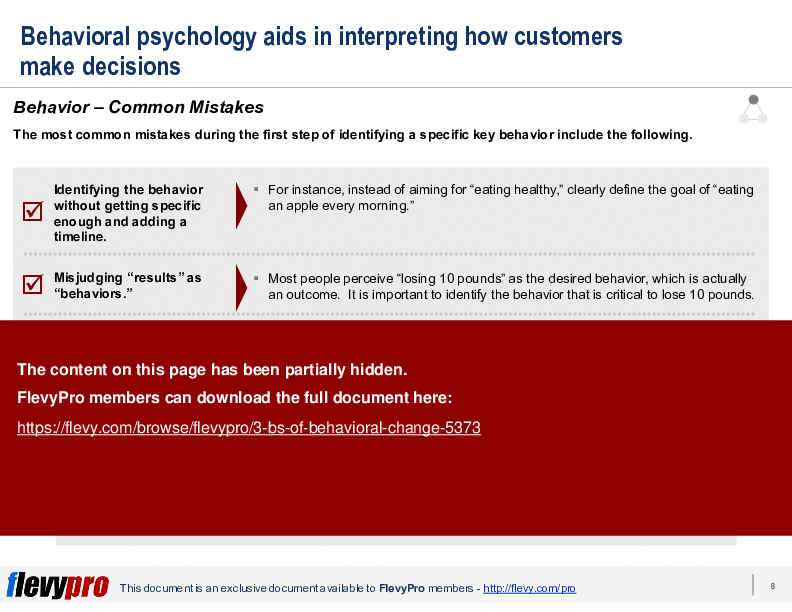
Common mistakes include overlooking psychological benefits, misjudging results as behaviors, and failing to secure stakeholder buy-in.

How can I measure the success of behavioral change initiatives?
Success can be measured through tracking specific behaviors, monitoring engagement levels, and assessing the impact on overall business objectives.

Is training required to implement this framework effectively?
While training can enhance understanding, the framework is designed to be intuitive and can be implemented with the provided templates and guidance.

What resources are available for further learning?
Additional resources include the FlevyPro library, which offers a variety of frameworks and templates related to behavioral change and customer-centric design.

Glossary
•  Behavior - The specific actions that need to be influenced to achieve desired outcomes.
•  Barriers - Obstacles that hinder the adoption of desired behaviors.
•  Benefits - The advantages that motivate individuals to change their behavior.
•  Cognitive Biases - Systematic patterns of deviation from norm or rationality in judgment.
•  Desires Matrix - A framework for analyzing user motivations based on time and emotional factors.
•  Stakeholder Alignment - The process of ensuring all relevant parties agree on objectives and strategies.
•  Decision Paralysis - A state where individuals are unable to make a decision due to overwhelming choices.
•  Emotional Benefits - Non-tangible advantages that appeal to feelings and sentiments.
•  Functional Benefits - Tangible advantages that provide practical value.
•  Behavioral Change Tracking - The process of monitoring progress in influencing specific behaviors.
•  Barrier Identification Worksheet - A tool for recognizing and prioritizing barriers to behavior adoption.
•  Benefits Articulation Framework - A guide for clearly communicating the value of a product or behavior change.

BEHAVIORAL ECONOMICS PPT TEMPLATES

Cognitive Biases: Understanding and Mitigation Strategies

Understanding Consumer Behavior through Emotional and Functional Motivations

Strategies for Influencing Customer Behavior Change

Identifying Key Behaviors: Common Pitfalls and Solutions

Source: Best Practices in Customer Behavior, Cognitive Bias, Behavioral Economics, Organizational Behavior, Behavioral Strategy PowerPoint Slides: 3 Bs of Behavioral Change PowerPoint (PPTX) Presentation Slide Deck, LearnPPT Consulting


$29.00
FlevyPro price: FREE (included in subscription)
This framework is developed by a team of former McKinsey and Big 4 consultants. The presentation follows the headline-body-bumper slide format used by global consulting firms.
Add to Cart
  

Did you need more documents?

Consider a FlevyPro subscription from $39/month. View plans here.

For $10.00 more, you can download this document plus 2 more FlevyPro documents. That's just $13 each.

ABOUT FLEVYPRO

This document is part of the FlevyPro Library, a curated knowledge base of documents for our FlevyPro subscribers.

FlevyPro is a subscription service for on-demand business frameworks and analysis tools. FlevyPro subscribers receive access to an exclusive library of curated business documents—business framework primers, presentation templates, Lean Six Sigma tools, and more—among other exclusive benefits.

Click here to learn more about FlevyPro and its benefits.

Did you know?
The average daily rate of a McKinsey consultant is $6,625 (not including expenses). The average price of a Flevy document is $65.


Trusted by over 10,000+ Client Organizations
Since 2012, we have provided business templates to over 10,000 businesses and organizations of all sizes, from startups and small businesses to the Fortune 100, in over 130 countries.
AT&T GE Cisco Intel IBM Coke Dell Toyota HP Nike Samsung Microsoft Astrazeneca JP Morgan KPMG Walgreens Walmart 3M Kaiser Oracle SAP Google E&Y Volvo Bosch Merck Fedex Shell Amgen Eli Lilly Roche AIG Abbott Amazon PwC T-Mobile Broadcom Bayer Pearson Titleist ConEd Pfizer NTT Data Schwab


Read Customer Testimonials

 
"As a young consulting firm, requests for input from clients vary and it's sometimes impossible to provide expert solutions across a broad spectrum of requirements. That was before I discovered Flevy.com.

Through subscription to this invaluable site of a plethora of topics that are key and crucial to consulting, I "

– Nishi Singh, Strategist and MD at NSP Consultants
 
"I have found Flevy to be an amazing resource and library of useful presentations for lean sigma, change management and so many other topics. This has reduced the time I need to spend on preparing for my performance consultation. The library is easily accessible and updates are regularly provided. A wealth of great information."

– Cynthia Howard RN, PhD, Executive Coach at Ei Leadership
 
"As a consulting firm, we had been creating subject matter training materials for our people and found the excellent materials on Flevy, which saved us 100's of hours of re-creating what already exists on the Flevy materials we purchased."

– Michael Evans, Managing Director at Newport LLC
 
"I like your product. I'm frequently designing PowerPoint presentations for my company and your product has given me so many great ideas on the use of charts, layouts, tools, and frameworks. I really think the templates are a valuable asset to the job."

– Roberto Fuentes Martinez, Senior Executive Director at Technology Transformation Advisory
 
"I am extremely grateful for the proactiveness and eagerness to help and I would gladly recommend the Flevy team if you are looking for data and toolkits to help you work through business solutions."

– Trevor Booth, Partner, Fast Forward Consulting
 
"One of the great discoveries that I have made for my business is the Flevy library of training materials.

As a Lean Transformation Expert, I am always making presentations to clients on a variety of topics: Training, Transformation, Total Productive Maintenance, Culture, Coaching, Tools, Leadership Behavior, etc. Flevy "

– Ed Kemmerling, Senior Lean Transformation Expert at PMG
 
"The wide selection of frameworks is very useful to me as an independent consultant. In fact, it rivals what I had at my disposal at Big 4 Consulting firms in terms of efficacy and organization."

– Julia T., Consulting Firm Owner (Former Manager at Deloitte and Capgemini)
 
"As a niche strategic consulting firm, Flevy and FlevyPro frameworks and documents are an on-going reference to help us structure our findings and recommendations to our clients as well as improve their clarity, strength, and visual power. For us, it is an invaluable resource to increase our impact and value."

– David Coloma, Consulting Area Manager at Cynertia Consulting


Customers Also Bought These Documents


Customers Also Like These Documents

Explore Templates on Related Management Topics


Your Recently Viewed Documents
Download our FREE Strategy & Transformation Framework Templates

Download our free compilation of 50+ Strategy & Transformation slides and templates. Frameworks include McKinsey 7-S, Balanced Scorecard, Disruptive Innovation, BCG Curve, and many more.